

For fans of domestic psychological thrillers, this will be right up your street. Someone once coined the phrase ‘anxiety porn’ and, without giving too much away, The Stalker fits the bill perfectly. Eloise is an academic at Cambridge. Her subject? Psychology. Her speciality? The phenomenon of stalking. She has published several serious research papers, is regularly called on by the criminal justice system and – naturally – has a social media presence with numerous followers.
She is now in the unfortunate position of having to apply her own professional wisdom to her own life. She has a stalker who, via messages, phone calls and letters, only ever says three words. “Me or you.” Her stalker attacks her from behind on a Cambridge street, causing Elly to crack her head on the pavement. When she discharges herself from hospital, Elly makes her way home, only to find evidence that her husband of 18 years, successful architect Rafe, has been unfaithful. And all this within the first 40 pages.
To add to Elly’s mental turmoil, her 17 year-old son Jamie is a troubled teenager par excellence. He frequently disappears without trace and is close to being thrown off his ‘A’ level course for failing to attend classes and complete coursework. Author Kate Rhodes is parsimonious with her clues, but she does suggest that the clue to Elly’s distress lies in a childhood where she was ostracised by her widowed mother, and brought up by a kindly aunt and uncle. By this stage in the book, most readers, like me, will have made one ‘fatal’ assumption, which will add spice to startling denouement of the novel.
If there were such a thing as an Angst Counter, rather like the device for measuring radioactivity, it would be crackling alarmingly as every page of this book turns. What can go wrong in Elly’s life, does. Yes, she wins a coveted prize for a textbook she has written, but then the university reception in her honour is disrupted by the enraged father of a young woman, now in intensive care, whose stalker was released from prison on Elly’s advice, but then returned to attack her. Elly’s annual report to her boss on her teaching and research, vital for retaining tenure, is wiped from her computer. Someone has also cancelled her college key-card. Obviously the stalker is someone close to Elly, and Kate Rhodes cleverly sets a few hares running, each in a quite different direction. The answer lies in Elly’s troubled past when she was just a girl and, despite a few clues, I didn’t see it coming.
 Kate Rhodes (left) makes clever use of the contrast between the enclosed streets and buildings of Cambridge, and their inescapable sense of learning and history, and the timeless sense of space and vastness of The Fens, just beyond the city to the north east. Most of the water that once made The Fen impenetrable to outsiders has gone, but the communities that grew up amid the sedge and reeds are still isolated, insular and inward looking. Elly is ever conscious, even as she sets up a second home in the old cottage once occupied by her aunt and uncle, that despite her investment in security cameras and state-of-the-art alarms, she is just as vulnerable here in the rural darkness as she is in her modernist glass and steel Cambridge home, designed by her husband.
The Stalker is a classy and absorbing thriller which sets the reader a beguiling challenge – to discover just who is the person who is relentlessly trying to destroy Elly’s life. The novel is published by Simon & Schuster, and is available now.



 Catherine Ryan Howard shines an unforgiving light on the way in which the media treats the parents and family of women or children who have been abducted or murdered. Jennifer Gold was the youngest of the three missing women. She was conventionally beautiful, a scholar, high achiever and photogenic. Likewise her mother Margaret is polished, well groomed and an assured media performer. By contrast, Tana Meehan – the first woman to be abducted – was overweight and something of a wreck of a person, having left her husband to go home to live with her elderly and ill parents. Nicki O’Sullivan, or so it was reported, had been last seen staggering around on the pavement after drinking too much at a party.

 Dr Augusta Bloom is a psychologist who specialises in the criminal mind. Her business partner is Marcus Jameson, a former British intelligence agent. Bloom is often employed by the police as a consultant when a particular case demands her particular skill-set. The killers Bloom is requested to track down have struck twice, leaving only burnt matches as a clue. I use the plural ‘killers’ advisedly, as we know they are a team, but Bloom and the police have yet to discover this.
 Augusta Bloom is an interesting creation. She is a loner, and not someone who finds personal relationships easy, not with Marcus Jameson nor with her notional boss, DCI Mirza, who is deeply sceptical about Bloom’s insights. When the police finally join all the dots, they realise that rather than two killings, there have probably been as many as eleven, which ramps up the pressure on Bloom and Jameson. Leona Deakin, (right) as one might expect from a professional psychologist, has constructed an complex relationship between Bloom, Walker and Jameson. As readers, we are not spoon-fed any moral certainties about the trio. Rather, we infer that their boundaries are, perhaps, elastic. As John Huston (as Noah Cross) said in Chinatown:






 After a few days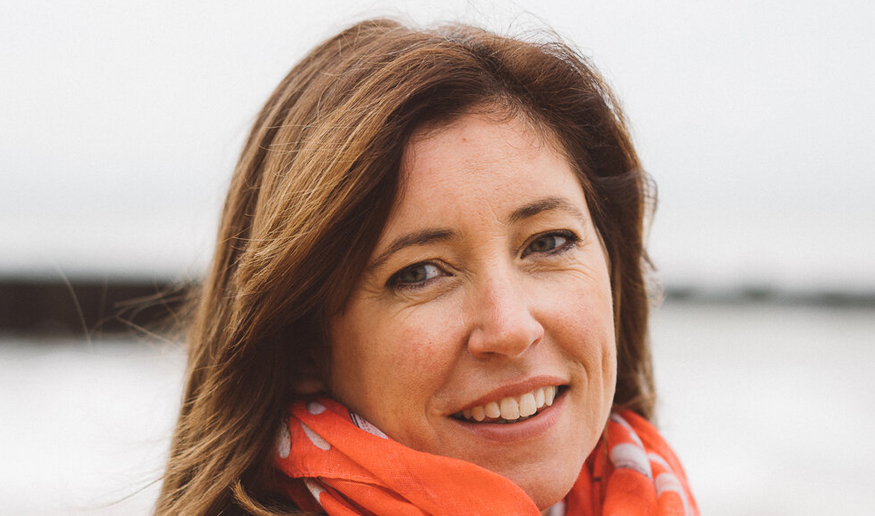






 The two women have little in common
 The structure of the book is intriguing;


 fullybooked2017