Back in the day, James Patterson’s Alex Cross books were my go-to choice for police thrillers with something just a little different. Along Came A Spider, Kiss The Girls, Jack & Jill and Pop Goes The Weasel were all sustenance for a hungry man. But round about the time when Patterson had exhausted his nursery rhyme references for the book titles, I began to lose interest. Maybe it was the Washington cop’s implausible bad luck in choosing wives and girlfriends. For such a demonstrably clever bloke, he was becoming a serial bad judge of character. Was it his Mother Teresa of a grandmother, Nana Mama? Apart from the fact that she must have reached the age of at least 130, had her unfailing wisdom and saintliness begun to grate? Whatever the reason, I moved on. When, however, the good people at Century sent me a crisp new hardback copy of The People vs Alex Cross, I thought it would be rude not to see what the good Dr Cross was up to in his 27th outing, almost a quarter of a century after his first appearance.
 Alex Cross is in trouble. Big trouble. He is the victim of a beyond-the-grave revenge attack from his very first opponent, Gary Soneji. Gary is long dead, blown up by his own bomb in a subway. It is not beyond Patterson’s audacity to resurrect someone, but in this case it is supporters of the late Mr Soneji who are responsible for Cross being accused of homicide. He is lured to a warehouse where members of the Soneji cult are waiting for him. In the fire fight that follows, members of the cult are killed and wounded, but when Cross summonses emergency backup, no weapons other than Cross’s own can be found. The words happy, trigger and cop are immediately rearranged into a well-known phrase or saying by the sensation-hungry media.
As Cross prepares for his trial he is, naturally, suspended from police duties. Again, perfectly naturally, since it is Dr Alex Cross we are dealing with, he becomes unofficially involved in the investigation into a series of kidnappings and murders. Whoever the kidnapper is, he or she has a penchant for willowy blonde young women. Cross’s best buddy, the almost indestructible cop John Sampson, is knee deep in the chase to find the missing girls, and the search leads the pair into the darker-than-black world of snuff movies and the mysterious cyber phenomenon known as the dark web.
 Hand on heart, I have to admit to really enjoying this book. Patterson (right) hasn’t achieved his world-wide pre-eminence as a best selling writer by not being able to tell a story. The action comes thick and fast and in this book at least, the portrayal of Cross disproves the old adage about familiarity breeding contempt. Yes, Nana Mama is still there, serving up delicious meals for all and sundry and being annoyingly stoical in the face of her grandson’s adversity. Yes, Cross’s annoyingly geeky nine year-old son spots something that a top FBI data analyst has missed, but at least our man’s current love interest seems to be a good sort.
The book pretty much turns its own pages. It is pure escapism, but a damn good read. Long time fans of the series will not be disappointed, and apostates like myself may well be converted back to the old religion. The People vs Alex Cross will be out on 2nd November in hardback, Kindle and as an audio CD. The paperback edition is due in April 2018.

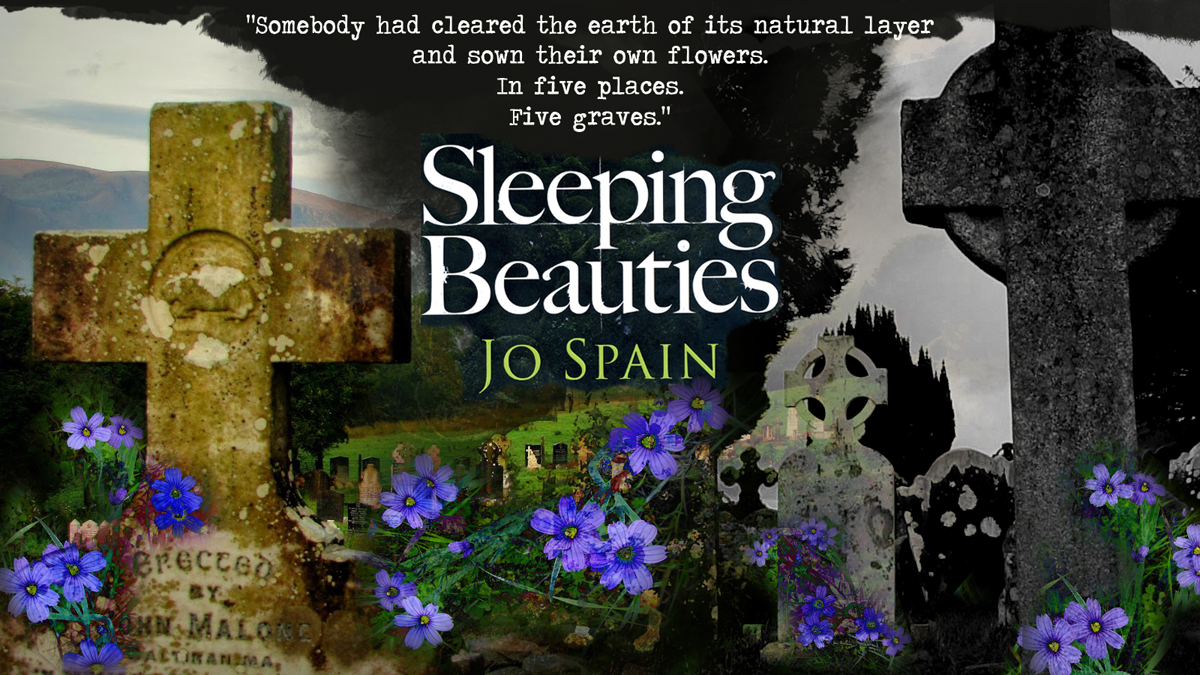

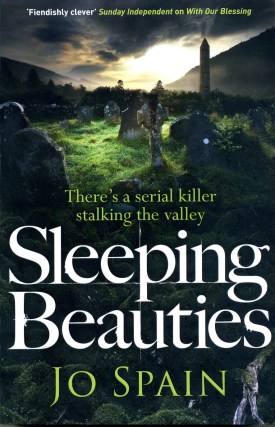 In the beautiful valley of Glendalough there are ancient stones, shades and spirits of the holy men who prayed in the monastery – and in the cemetery, lichen-covered headstones of generations of Byrnes, Cullens, Farrells, Nolans, Waldrons – all, both monks and villagers, at peace now. But the body of a young woman has been found. Interred without sacrament, beyond the gaze of those who would mourn her. In a shallow grave on a hillside, wearing the clothes she disappeared in. It is all that remains of Una Dolan, a twenty four year-old lass from Waterford. Last seen April 29th, 2011.
 Jo Spain writes like an angel. No fuss. No bother. No pretension. The narrative flows as smoothly as a glass of Old Bushmills slips down the appreciative throat, and she has us looking this way and that as we stand beside Tom Reynolds as he searches for the killer. This is, on one level, a police procedural, but Jo Spain doesn’t let methodology bog the story down. We know that she knows how the police operate, and that is more than enough. Her rural Ireland is beautifully described without unnecessary frills and furbelows, and she gives us as perceptive a story of the heights and depths of human behaviour as you will read all year. If you have come a little late to the Tom Reynolds party, the first episode of his career is


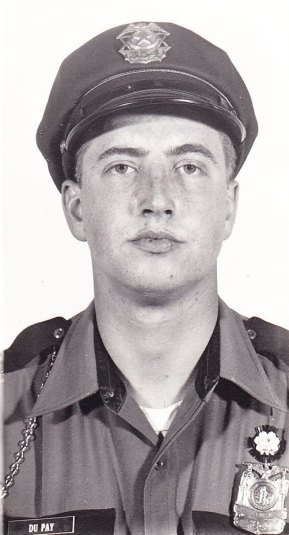 “April 6, 1961, I was sworn in as a brand new police officer in a ceremony held in the office of Ray Smith, the city auditor, in City Hall. I was nervous, proud of myself for passing all the tests, not least of all surviving an interview with the shrink, and now I stood with my hand up, swearing to serve the citizens in an honorable manner.”
 Dupay was convinced that Manning had been killed for some infraction or a bad debt in the violent and ruthless world of those who deal in narcotics. But why were senior officers of the Portland Police Bureau determined to bury the case? Why did Dupay arrive at the office the day after the body had been found, and found that all the details had been wiped from the status board listing ongoing and unsolved cases?
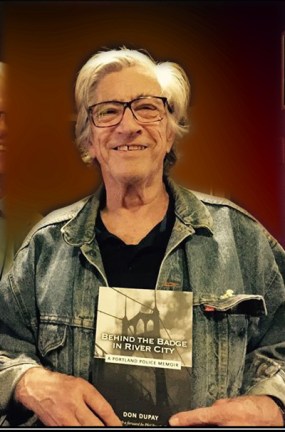 “I tossed my badge on the Captain’s desk, telling him that I was sick of the job and tired of the hypocrisy of people like him. I told him my health had been suffering and I hated the work, only because I hated some of the people I was forced to work with. I also hated being told that I could not investigate a particular 1975 ‘suicide’ that I knew to be a murder.”

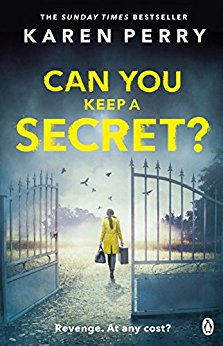 Lindsey Morgan is our narrator. She is a photographer with the Irish police, the Garda Síochána, and her frequent visits to gory crime scenes mean that she must don a cloak of cold objectivity as she looks through her camera at the damage people do one another. The distance between the person behind the viewfinder and the scene captured by the lens is a key motif in the story, as you will discover when you read the book.
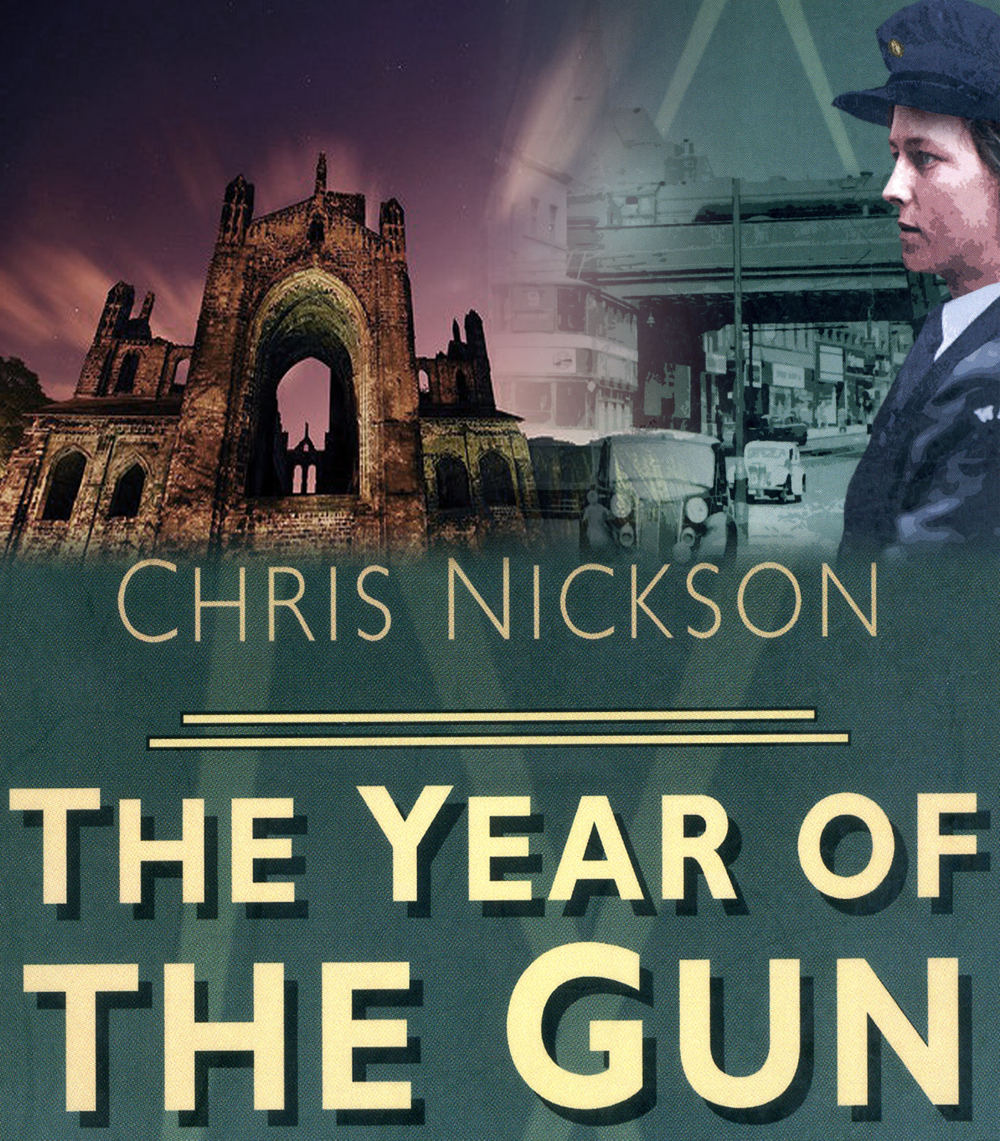
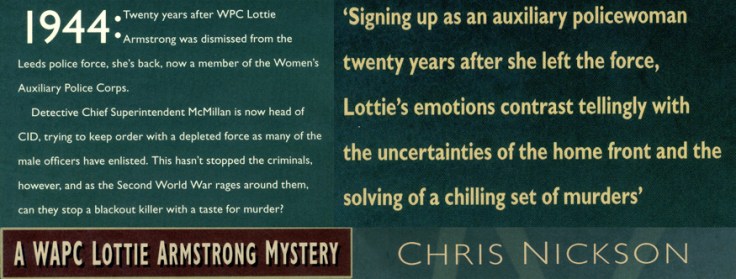
 So, Lottie is back in uniform again, but this time as a lowly member of the Women’s Auxiliary Police Corps. Her main job is to drive her boss, Detective Superintendent McMillan, to wherever he needs to go. McMillan, a veteran of The Great War, certainly needs his transport as a killer seems to be stalking vulnerable young women across the city. Kate Patterson, a Private in The Auxiliary Territorial Service (ATS) is found dead in the sombre ruins of the medieval Kirkstall Abbey. She is the first victim, but others follow, and Lottie and McMillan are soon convinced that the killer is a member of the American forces based in the city.
 You will note the date – spring 1944 – and will not need a degree in military history to work out what those ‘vital operations’ might be. Invasion or no invasion, McMillan still has a job to do, and the murderer is eventually cornered. Don’t anticipate a comfortable outcome, however. Nickson (right) doesn’t do cosy, and the conclusion of this fine novel is as dark as a blacked out city street.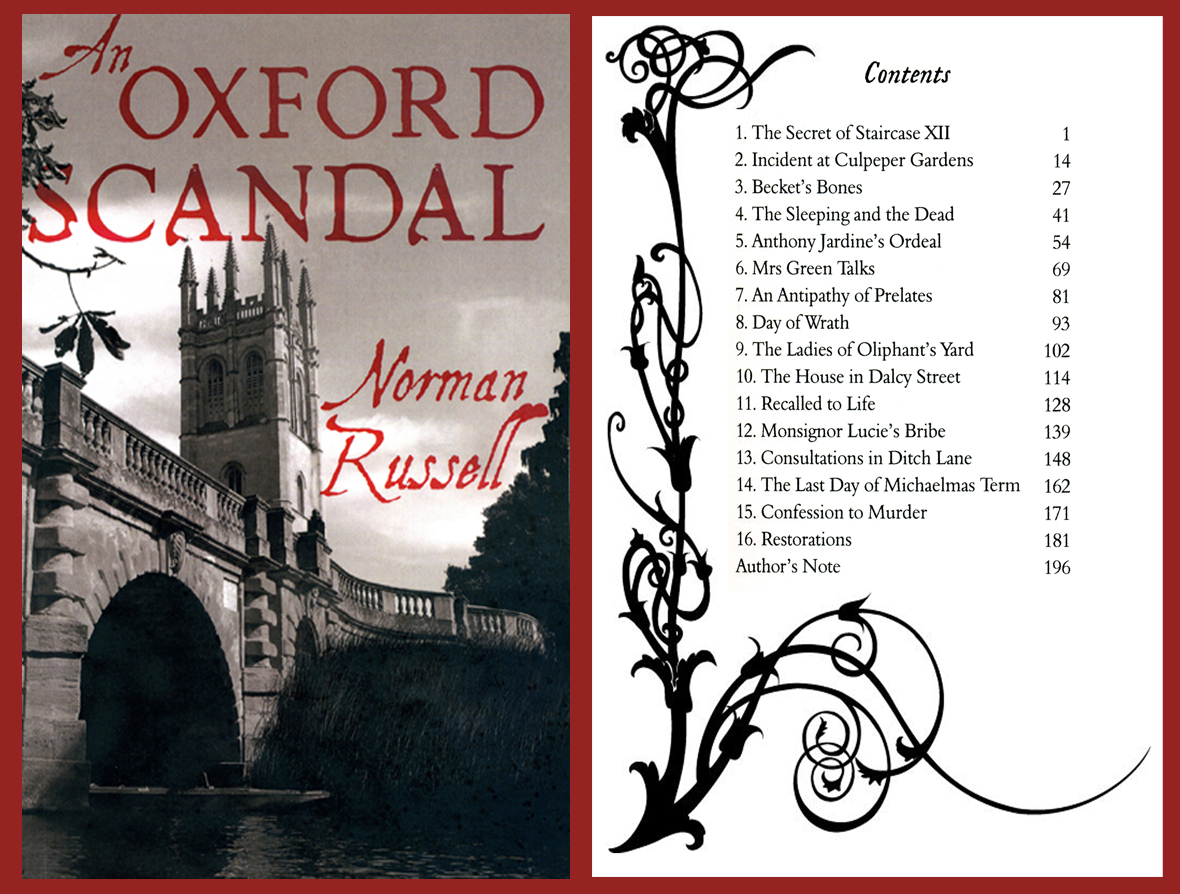

 Oxford, 1895. The spires may well be dreaming, but for Anthony Jardine, Fellow of St Gabriel’s College, the nightmare is just beginning. His drug addicted wife is found stabbed to death, slumped in the corner of a horse tram carriage. His mourning is shattered when his mistress is also found dead – murdered in the house she shares with her elderly eccentric husband. With a background story of an archaeological discovery threatening to shake the English religious establishment to its very roots, Inspector James Antrobus must avoid the temptation to make Jardine a swift and easy culprit. Helped by the uncanny perception of Sophia Jex-Blake, a pioneering woman doctor, Antrobus finds the answer to the killings lies in London, just forty miles away on the railway.
 Norman Russell (right) is a writer and academic, who has had fifteen novels published. He is an acknowledged authority on Victorian finance and its reflections in the literature of the period, and his book on the subject, The Novelist and Mammon, was published by Oxford University Press in 1986. He is a graduate of Oxford and London Universities. After military service in the West Indies, he became a teacher of English in a large Liverpool comprehensive school, where he stayed for twenty-six years, retiring early to take up writing as a second career.

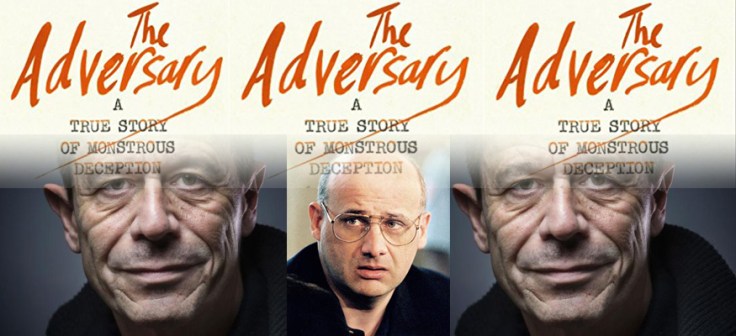
 To this farrago of lies and deception add fraud on a grand scale. Romand was able to keep himself and his family in relative prosperity by claiming that he had access to investment opportunities which would pay handsome dividends to those fortunate enough to be ‘in the know’. He relieved relatives and members of his wider family of hundreds of thousands of French francs – every one of which went into his numerous personal bank accounts. Separating his mistress and her vast personal fortune was his undoing. She was sharp enough – eventually – to call him out and, with his fantasy world on the verge of unraveling, Romand, on an icy weekend in January 1993, killed his wife, two children, and both of his parents.
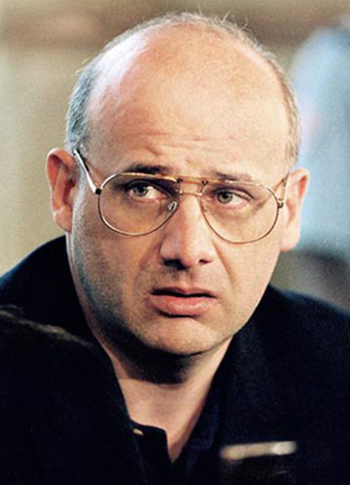 Inevitably, Romand was found guilty of murder, and in 1996 was sentenced to life imprisonment with no chance of parole for at least twenty two years. Prior to the trial, Carrère had begun a correspondence with Romand (right) with a view to writing an account of the case. In this account, aside from the factual detail, Carrère invites us to ponder the true nature of evil and insanity, and makes us wonder if the two states are totally separate, or whether or not they are actually bedfellows.
 Carrère (left) concludes:




 Kristy puts food on the table and tries to make sure that Ryan isn’t disadvantaged. She has a job, and it is one that demands every ounce of her compassion and every droplet of her sang froid. Her official title? Public Information Officer for the Texas Department of Criminal Justice. If that sounds like some bureaucratic walk-in-the-park, think again. Acting as mediator between inmates, the press and the prison system is one thing, but remember that The Lone Star State is one of the thirty one American states which retains the death penalty. Consequently, Kristy not only has to manage the fraught liaison between prisoners on death row and the media, but she is also required to be an official witness at executions.
 It will come as no surprise to learn that Hollie Overton (right) is an experienced writer for TV. In The Walls every set-piece, every scene is intensely visual and immediate. With consummate cleverness she sets up two story lines which at first run parallel, but then converge. Two men. One is definitely guilty. One possibly innocent. Both are condemned to death. One by the State of Texas. The other by his battered wife.