

This is the final part of Frank Westworth’s startling Killing Sisters trilogy, in which JJ Stoner – a black ops ex-SAS type – pits his wits against the physical wiles and mental agility of three violent sisters, known as Charm, Chastity and Charity. Readers new to the series are warned not to expect a hero they are likely to fall in love with any time soon. Stoner lives – unencumbered by the burden of empathy – in an existentialist world of which he is the deep dark blue centre.
“He simply appeared to lack both curiosity – which was famously fatal to felines – and appeared also to be wondrously capable of detaching himself from everything unimportant to him.”
 He has killed at the bidding of his masters, who are shadowy government types, but now things have changed. Stoner has been stitched up, people close to him have been badly hurt, and he has retreated from the his former world. He is shattered, mentally and physically.
Exactly what is Stoner’s world? In physical terms, it consists of a love for Harley Davidson motorcycles, a serious coffee addiction, and a passion for blues guitar. He still owns the Blue Cube, a jazz and blues nightspot, keeps many of the tools of his trade in a former workshop tucked away in an anonymous industrial estate, and has among his acquaintances many strange and shadowy people, including the enigmatic pair Menace and Mallis, who orchestrate violence in the smoky limbo which exists between the authorities and others who seek only subversion. Then, of course, we have the sisters.
Charity has died. She was not killed in the line of dubious professional duty, but from a particularly virulent cancer, although her actual death was at the hands of her sister, by way of a mercy killing. The two remaining sisters are polar opposites in looks and demeanour. Chastity is a blonde hardbody with a ripped physique and a penchant for violent – and sometimes bloody – sex. Charm, while equally amoral, sexually voracious and manipulative as her surviving sister, has the outward appearance and manner of an attractive middle class suburban housewife.
The plot is jarringly simple. It is a variation on the trope whereby a retired special operative comes back from his rural retreat to do one final job. This is by no means a criticism because the book is a long highway of intense dialogue and character, with rest areas offering wild violence and inventive eroticism. The final job in this case is the hunting down of an almost mythical Irish killer called Blesses, who served her apprenticeship in The Troubles.
“She has a way with her eyes – I can’t tell you how it works – because I don’t understand it – but it was brilliant as a way of getting information from reluctant Provos. She didn’t need to screw them, thus revealing to us how crap was the UK’s honey-trap technique, but somehow made them want to talk to her about … well … everything. I mean that. Everything. Anything.”
We learn that it is her manipulation of people’s minds and bodies which has led to Stoner’s retirement, before which he was forced to watch a video showing his girlfriend being first raped and then – literally – gutted.
I have to declare an interest here. In terms of motorcycles, I never advanced beyond an inoffensive Honda back in the 1970s, but I do love JJ Stoner’s passion for guitars, and his creator’s lovely name-dropping of snatches of 1960s pop lyrics. There’s even a series of chapter headings all taken from one of the great songs – She’s Not There. You aren’t that old? That’s no crime, but take a listen, while you ignore the awful miming. Click on the image to watch the video.

The novel is both stylish and stylised. The dialogue is mannered and full of whip smart responses and put-downs. Despite the immediate plot being simple, the backstory has more than just a drizzling of Twin Peaks about it. If we think we know what is going on, then we probably don’t, but we come to expect appearances by random enigmatic characters who must be significant, but we are never quite sure why.
 Like its two predecessors, The Redemption of Charm is immensely entertaining and another bravura performance from Frank Westworth (right), who shares his creation’s love of Harleys and fine guitars. We are led to believe that a love of killing and a knowledge of inventive ways to use an SAS dagger are skills that, to date, divide the two men.
Frank Westworth wrote an entertaining piece for Fully Booked, in which he outlined his favourite – theoretical – ways of killing people. Follow the link to read Killing Me Softly.
A Last Act of Charity was published in September 2014, details here.
The Corruption of Chastity was published in September 2015, details here.
The Redemption of Charm is out now, details here.
All three books are published by Book Guild Publishing.

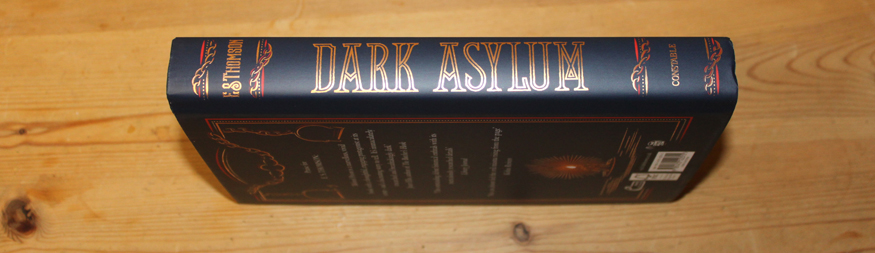

 The main character of ES Thomson’s Dark Asylum – the second in a series of Victorian crime novels – is Jem Flockhart. Jem is not who he seems to be. In fact, he isn’t ‘he’ at all. Jem is actually a young lady who is forced to transform herself into a man in order to be accepted in the medical profession. She first made an appearance in Beloved Poison (2016) and now she returns to investigate the murder of the principal physician at an insane asylum. Among all the usual tropes of Victorian London, including grim slum ‘rookeries’, brothels, violent convicts and brothels that cater for every depravity, Jem and her partner in solving crime, Will Quartermain search for the person who killed Dr Rutherford – after cutting off his ears and sewing his eyes and lips tight shut.
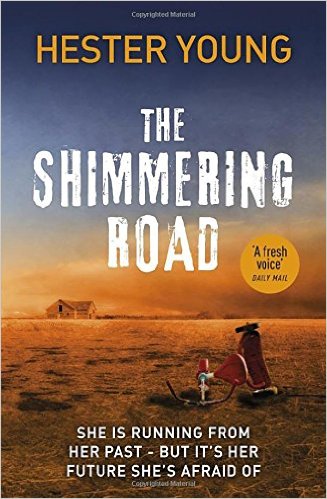
 Then, as Noah is trying to tempt Charlie into marrying him, and agree to their moving into a luxurious new home, comes the ‘phone call which triggers the enthralling next chapter in Charlie’s life. She takes a call from a distant aunt, and the news is that Charlie’s estranged mother Donna, and her half sister Jasmine, have been found shot dead in Jasmine’s Tucson apartment. There is another complication. Jasmine’s daughter Micky was also in the apartment but in another room. She is shaken, but very much alive, and has been taken into protective care.
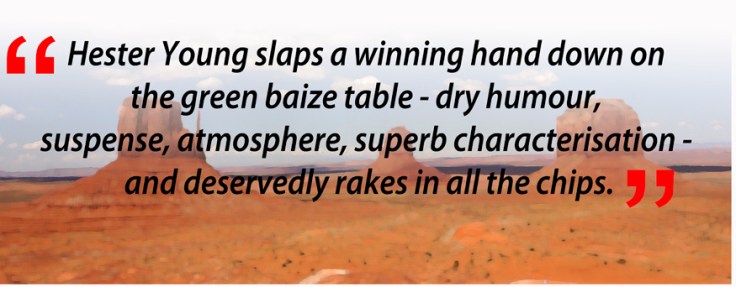
 The greatest strength of the book is the magical spell Hester Young (right) casts as she links the reader to Charlie Cates. As a cynical, autumnal English male, with a downbeat view of life and the tricks it can play, I am not the obvious candidate to be entranced by a slightly manic, conflicted and complex American female journalist, but by the time the novel reached its gripping conclusion in the Arizona desert, I was ready to crawl over broken glass to make sure that Charlie survived with body and soul intact. Hester Young slaps a winning hand down on the green baize table – dry humour, suspense, atmosphere, superb characterisation – and deservedly rakes in all the chips.
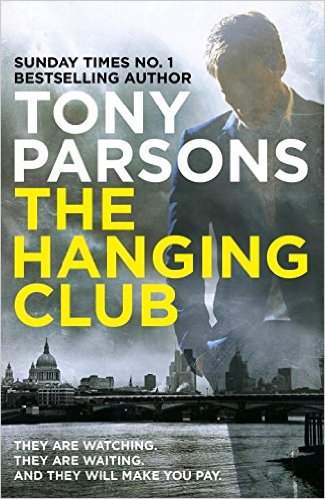

 The random murder of an innocent man? Not exactly. Mahmud Irani was part of a gang of men who groomed, raped and abused a number of white teenage girls. He served a jail term which many believe was too short, considering his crimes.

 Jill Dando was an elegant woman, a typical English Rose with more than a little of the Princess Diana about her. As on-screen partner to Nick Ross in BBC’s Crimewatch, she had become one of the best known faces in living rooms across the country. Dando had spent the night with her fiancee in Chiswick, West London, but as she turned the key to enter her own house in nearby Gowan Avenue, Fulham (right), she was attacked. The investigative journalist Bob Woffinden describes what he believes happened next.
 In a move which seems more bizarre as every day passes, police arrested a man named Barry George (left) for the killing. George had extensive mental problems, was a fantasist, and had form as being a total indaquate who was obsessed with celebrities. He was convicted of Jill Dando’s muder on 2nd July 2001 but, beyond the jury at his trial, and a few desperate police officers, no-one really believed that he was the killer. After a retrial, he was acquitted of the killing in August 2008. To say he was a loser is misleading, because since his acquittal he has won substantial damages from various newspapers and media outlets. How much of this money has been retained by the wronged man is uncertain: what is more likely is that opportunist lawyers and publicists have trousered much of the loot as a reward for their services.


 Inspector Kosuke Iwata’s personal life is as scarred and trauma-ridden as the human tragedies he faces daily as a member of the Homicide division of the Tokyo Municipal Police Department. He was abandoned by his mother in a bus station when he was a child, but has become partly Americanised since she reappeared, now married to a prosperous US citizen, to reclaim him. In the intervening years, Iwata grew up in a Catholic orphanage, and his sleep is frequently disturbed by fretful dreams of those days, with the voices of both his disturbed best friend, as well as the abusive head of the institution, forever whispering in his ear.
 This a superb novel and goes way beyond the restraints and conventions of crime fiction. In his afterword, Obregón says of Iwata:


 Not the least of Eva Dolan’s achievements in this remarkable novel is to pinpoint with painful accuracy and honesty what happens to children and wives when a father – originally Colin Sawyer – decides to abandon the male role and become a woman. Even after the nightmare scene where Sawyer’s daughters come back to the house unexpectedly, and find their father en femme at the sink, doing the dishes, Jessica and Lily have come to think of their dad as ‘mum’. The pain that this must cause a biological mother in this situation can only be imagined, and it is interesting that Nina Sawyer is drawn as a fairly unpleasant piece of work.
 Aside from the nuanced description of gender politics and psychological challenges faced by the characters in this novel, we have to ask the burning question. Does Watch Her Disappear work as a crime story? My answer is a resounding and emphatc ‘Yes”. The whodunnit aspect of the story is teasingly effective, with Dolan (right) scattering little hints, false leads and blind alleys in her wake as she races along ahead of us. Crime fiction is full almost to the brim with Detective Inspectors and their trusty Sergeants, but Dolan breathes on those particular embers and makes them fire up afresh in the shape of Detective Inspector Dushan Zigic and Detective Sergeant Mel Ferreira of the Hate Crimes Unit. The neat twist is, of course, that both Zigic and Ferreira are themselves children of immigrants, and the chemistry between the two is potent and complex.

 Being as this book is, in one sense, a police procedural, an introduction to the investigating officers is essential. Detective Sergeant Karen Willis is an elegant and well educated woman, whose personal life is complex. She is courted by two suitors; the first, Dr Peter Collins, is a consultant psychologist who, although undeniably clever, may not be entirely of sound mind himself, as he is prone to nervous attacks. When with Karen, he also tends to drop into a Lord Peter Wimsey persona and, yes, he does insist on calling Karen “Harriet”. The other claimant to the hand of Willis is Detective Inspector Bob Metcalfe, a much more grounded fellow who certainly does not mimic characters from Golden Age fiction. In fact, he could be said to be very worthy, but rather dull. Overseeing the investigations is Detective Superintendent Simon Collison, an urbane and civilised man who is regarded with a certain suspicion by more belt-and-braces officers such as Chief Inspector Tom Allen. One stock police character who is very much noticeable by his absence is a badly dressed, misanthropic and foul mouthed Detective Inspector type, much loved of many crime authors. If any such person did operate out of Hampstead nick, he must long ago have been transferred elsewhere.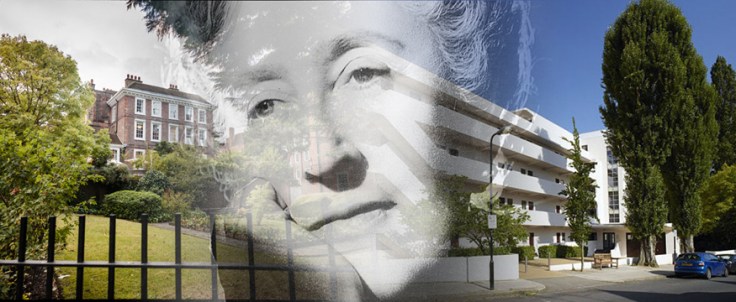

 The town of Kiewarra is a dusty five hour drive from Melbourne. Five hours. Six, maybe, if you weren’t that anxious to get there. Five hours, under the same relentless sun, but it might as well be fifty, for all the similarity there is. Melbourne, with its prosperity, its glass and steel central business district, its internationally renowned restaurants and its louche air as a cosmopolitan city. Kiewarra. A pub, a couple of bottle shops and a milk bar; a run-down school, starved of funds; a farming economy choked and parched by two years without rain; families turned bitter and taciturn by the shared misery of failed crops and burgeoning overdrafts. Author Jane Harper (left) takes us right into the deep dark blue centre of this community.
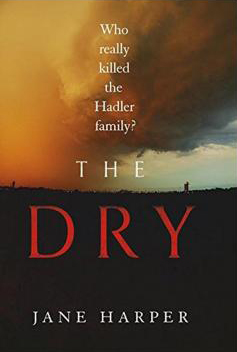 Seeing the coffin of a contemporary being carried through the church is bad enough for Falk, but when it is followed by two smaller ones, one being very much smaller, that is a different thing altogether. For the other two coffins are occupied by Hadler’s wife Karen, and his young son Billy. The story has played out across the mainstream media as a suicide-killing. Luke Hadler, driven mad by debt, failure, jealousy, despair – who knows? – has shot dead his wife and son, and then turned the gun on himself, albeit leaving his thirteen month old daughter Charlotte in her cot, screaming, terrified, but very much alive.


 fullybooked2017