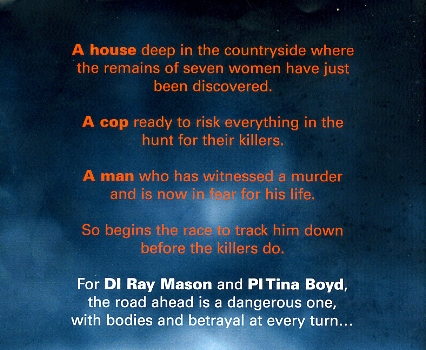

The tragic events described in Simon Kernick’s previous novel The Bone Field hang over this thriller like a pall of noxious smoke, darkening the landscape. Maverick police officer Detective Inspector Ray Mason staggers through the poisonous fog like Wilfred Owen’s soldier, “stumbling and flound’ring like a man in fire or lime…” He and his partner Dan ‘Dapper’ Watts are, once again, trying to bring to justice an implacable criminal gang for whom murder is just too quick and simple. The gang leaders Cem Kalaman, Alastair Sheridan – and their sinister enforcer known only as Mr Bone – use Satanic rituals and blood sacrifice to spice up their recreational violence.
 In The Bone Field, Mason tried – and failed – to bring the gang down. The bloody conclusion to the confrontation at a remote Welsh farm haunts him. His bitterness and sense of a score still not settled drive him on, but he is now working under the mandate of the National Crime Agency – and they play by the rules. The fire and desire for retribution burning in Mason’s soul will force him to abide by those rules only as far as they suit him. His personal background – a childhood shaped by violence and cruelty – has endowed him with a sense of what is right and what is wrong which diverges dramatically from the code followed by his boss, Sheryl Trinder.
The novel starts with the Kalaman gang attempting to silence Hugh Manning, a lawyer who has become entangled with their misdeeds but is, at heart, a decent man caught up in a toxic spiral of temptation and his own weakness. He escapes the killers sent to eliminate him and goes on the run, pursued by both the gang and the police. He knows all too well that the gang have insiders within the criminal justice system, and he would be signing his own death warrant simply to walk into the nearest police station and offer his wrists for the handcuffs.
 Mason has a girl-friend. Tina Boyd is a former copper herself, but fate has forced her to ‘go private’ and she is now a successful and well-known enquiry agent. As she tries to unravel the complex tangle of relationships and loyalties which bind together the various members of Kalaman’s gang, she puts herself in harm’s way. She is smart and has a nose for danger, but does she have the killer gene which will enable her to tackle Mr Bone on his own terms?
As Mason rides roughshod over police procedure in his drive to avenge those who died at The Bone Field, his partner, Dan Watts, tries to reign him in and see the bigger picture, which is the one depicting Kalaman and his underlings tried in a court of law, and sentenced for their crimes. Watts, however, has secrets of his own, and these secrets make him particularly vulnerable to the manipulations of the unscrupulous men – and women – who he is trying to bring down.
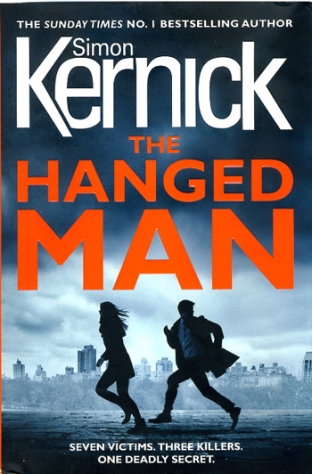
Who is ‘The Hanged Man’ of the title? Kernick keeps his cards very close to his chest, but a quick internet search into the significance of the melancholy Tarot card suggests that he is:
“A martyr, renouncing a claim, putting self-interest aside, going one step back to go two steps forward, giving up for a higher cause or putting others first.”
Or possibly:
“Having an emotional release, accepting what is, surrendering to experience, ending the struggle, being vulnerable and open, giving up control and accepting God’s will.”
I suspect that by the time you turn to the last page of this excellent thriller, you will have made up your own mind as the the identity of The Hanged Man. The book is published by Cornerstone/Century, and will be out in Kindle and hardback on November 16th.


 Alex Cross is in trouble. Big trouble. He is the victim of a beyond-the-grave revenge attack from his very first opponent, Gary Soneji. Gary is long dead, blown up by his own bomb in a subway. It is not beyond Patterson’s audacity to resurrect someone, but in this case it is supporters of the late Mr Soneji who are responsible for Cross being accused of homicide. He is lured to a warehouse where members of the Soneji cult are waiting for him. In the fire fight that follows, members of the cult are killed and wounded, but when Cross summonses emergency backup, no weapons other than Cross’s own can be found. The words happy, trigger and cop are immediately rearranged into a well-known phrase or saying by the sensation-hungry media.
 Hand on heart, I have to admit to really enjoying this book. Patterson (right) hasn’t achieved his world-wide pre-eminence as a best selling writer by not being able to tell a story. The action comes thick and fast and in this book at least, the portrayal of Cross disproves the old adage about familiarity breeding contempt. Yes, Nana Mama is still there, serving up delicious meals for all and sundry and being annoyingly stoical in the face of her grandson’s adversity. Yes, Cross’s annoyingly geeky nine year-old son spots something that a top FBI data analyst has missed, but at least our man’s current love interest seems to be a good sort.
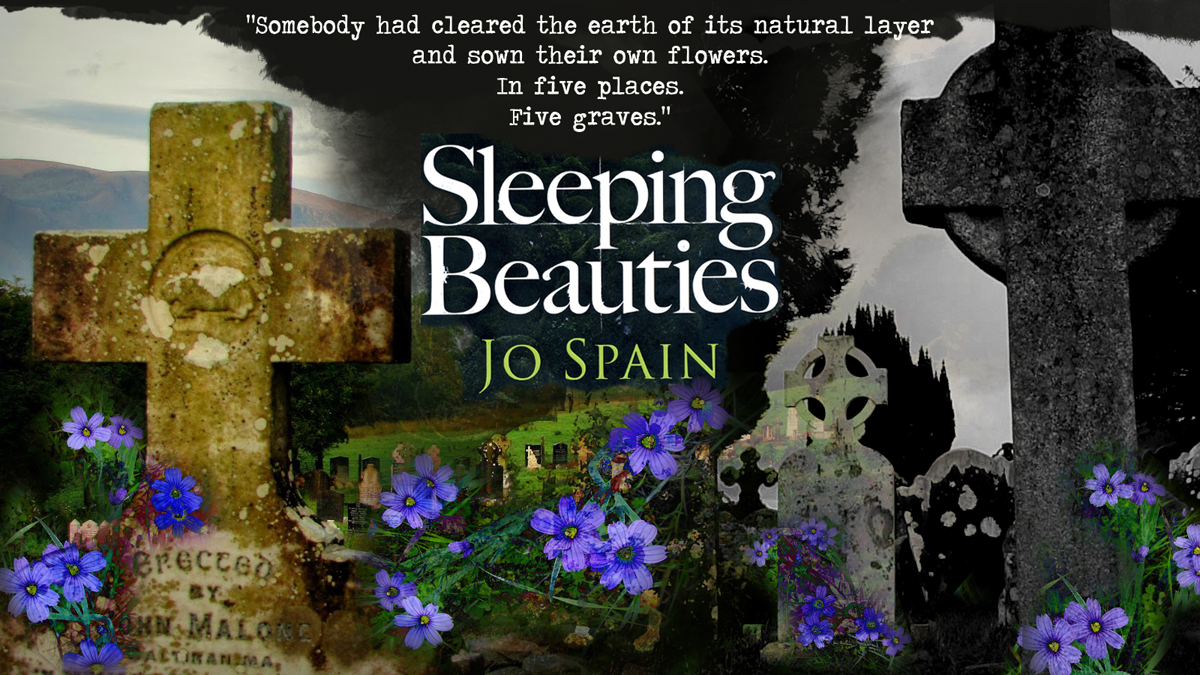

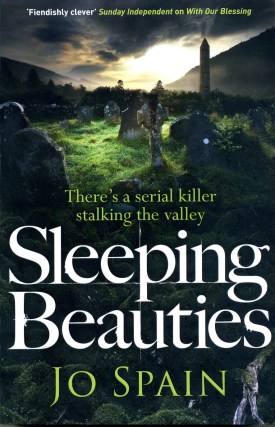 In the beautiful valley of Glendalough there are ancient stones, shades and spirits of the holy men who prayed in the monastery – and in the cemetery, lichen-covered headstones of generations of Byrnes, Cullens, Farrells, Nolans, Waldrons – all, both monks and villagers, at peace now. But the body of a young woman has been found. Interred without sacrament, beyond the gaze of those who would mourn her. In a shallow grave on a hillside, wearing the clothes she disappeared in. It is all that remains of Una Dolan, a twenty four year-old lass from Waterford. Last seen April 29th, 2011.
 Jo Spain writes like an angel. No fuss. No bother. No pretension. The narrative flows as smoothly as a glass of Old Bushmills slips down the appreciative throat, and she has us looking this way and that as we stand beside Tom Reynolds as he searches for the killer. This is, on one level, a police procedural, but Jo Spain doesn’t let methodology bog the story down. We know that she knows how the police operate, and that is more than enough. Her rural Ireland is beautifully described without unnecessary frills and furbelows, and she gives us as perceptive a story of the heights and depths of human behaviour as you will read all year. If you have come a little late to the Tom Reynolds party, the first episode of his career is


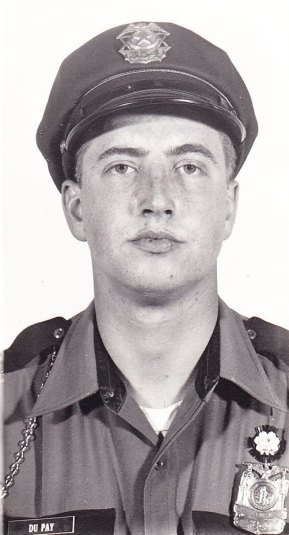 “April 6, 1961, I was sworn in as a brand new police officer in a ceremony held in the office of Ray Smith, the city auditor, in City Hall. I was nervous, proud of myself for passing all the tests, not least of all surviving an interview with the shrink, and now I stood with my hand up, swearing to serve the citizens in an honorable manner.”
 Dupay was convinced that Manning had been killed for some infraction or a bad debt in the violent and ruthless world of those who deal in narcotics. But why were senior officers of the Portland Police Bureau determined to bury the case? Why did Dupay arrive at the office the day after the body had been found, and found that all the details had been wiped from the status board listing ongoing and unsolved cases?
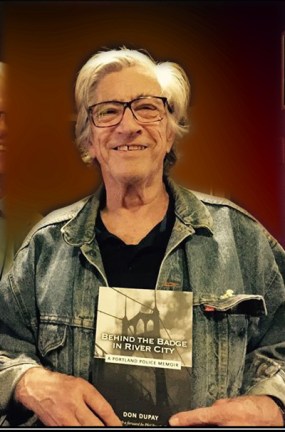 “I tossed my badge on the Captain’s desk, telling him that I was sick of the job and tired of the hypocrisy of people like him. I told him my health had been suffering and I hated the work, only because I hated some of the people I was forced to work with. I also hated being told that I could not investigate a particular 1975 ‘suicide’ that I knew to be a murder.”

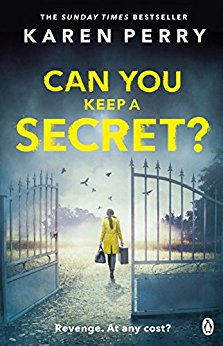 Lindsey Morgan is our narrator. She is a photographer with the Irish police, the Garda Síochána, and her frequent visits to gory crime scenes mean that she must don a cloak of cold objectivity as she looks through her camera at the damage people do one another. The distance between the person behind the viewfinder and the scene captured by the lens is a key motif in the story, as you will discover when you read the book.
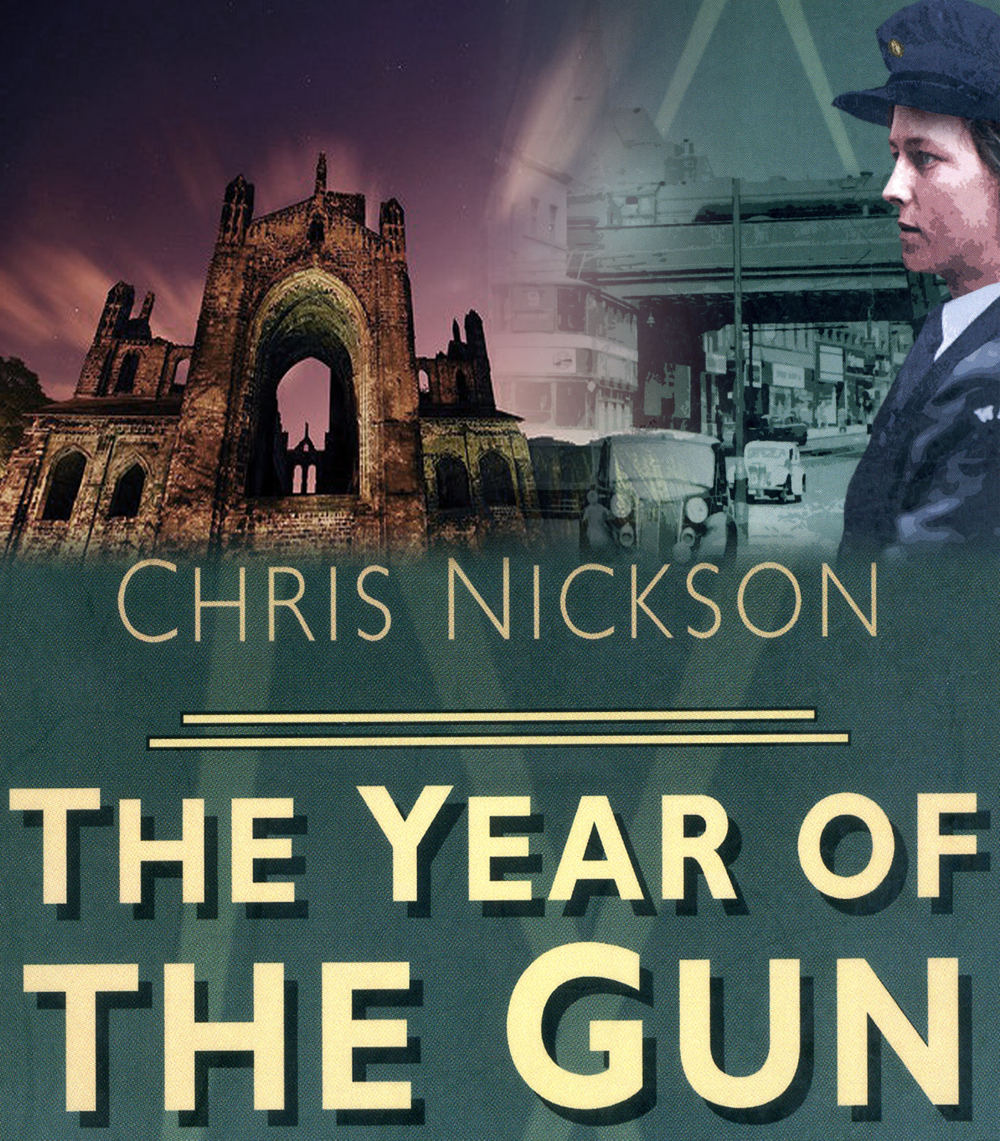
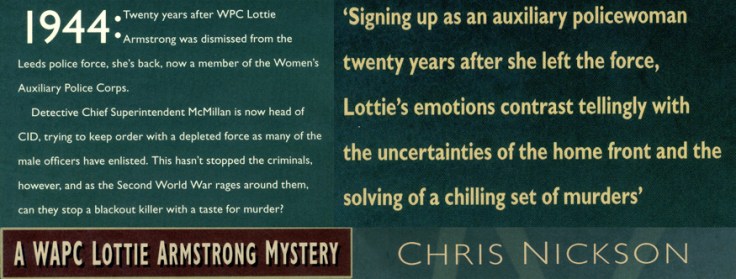
 So, Lottie is back in uniform again, but this time as a lowly member of the Women’s Auxiliary Police Corps. Her main job is to drive her boss, Detective Superintendent McMillan, to wherever he needs to go. McMillan, a veteran of The Great War, certainly needs his transport as a killer seems to be stalking vulnerable young women across the city. Kate Patterson, a Private in The Auxiliary Territorial Service (ATS) is found dead in the sombre ruins of the medieval Kirkstall Abbey. She is the first victim, but others follow, and Lottie and McMillan are soon convinced that the killer is a member of the American forces based in the city.
 You will note the date – spring 1944 – and will not need a degree in military history to work out what those ‘vital operations’ might be. Invasion or no invasion, McMillan still has a job to do, and the murderer is eventually cornered. Don’t anticipate a comfortable outcome, however. Nickson (right) doesn’t do cosy, and the conclusion of this fine novel is as dark as a blacked out city street.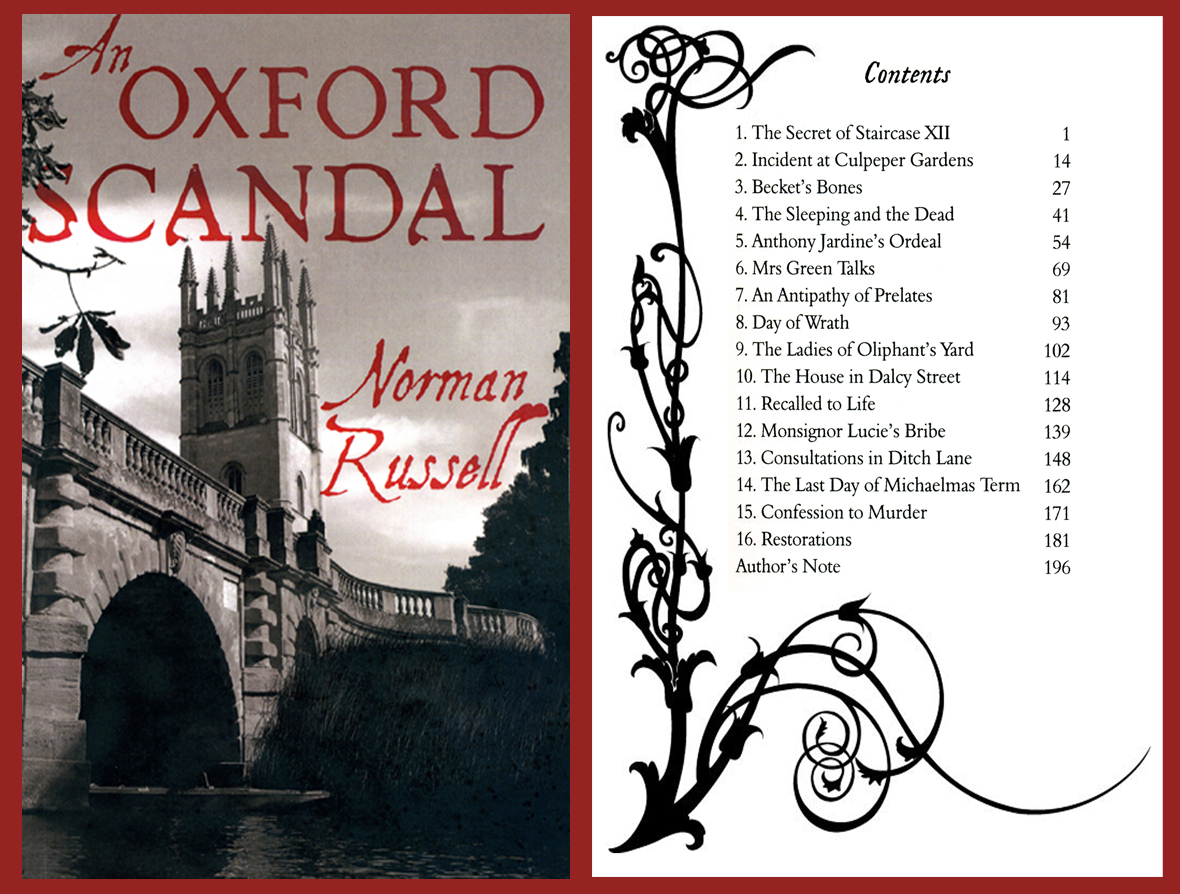

 Oxford, 1895. The spires may well be dreaming, but for Anthony Jardine, Fellow of St Gabriel’s College, the nightmare is just beginning. His drug addicted wife is found stabbed to death, slumped in the corner of a horse tram carriage. His mourning is shattered when his mistress is also found dead – murdered in the house she shares with her elderly eccentric husband. With a background story of an archaeological discovery threatening to shake the English religious establishment to its very roots, Inspector James Antrobus must avoid the temptation to make Jardine a swift and easy culprit. Helped by the uncanny perception of Sophia Jex-Blake, a pioneering woman doctor, Antrobus finds the answer to the killings lies in London, just forty miles away on the railway.
 Norman Russell (right) is a writer and academic, who has had fifteen novels published. He is an acknowledged authority on Victorian finance and its reflections in the literature of the period, and his book on the subject, The Novelist and Mammon, was published by Oxford University Press in 1986. He is a graduate of Oxford and London Universities. After military service in the West Indies, he became a teacher of English in a large Liverpool comprehensive school, where he stayed for twenty-six years, retiring early to take up writing as a second career.

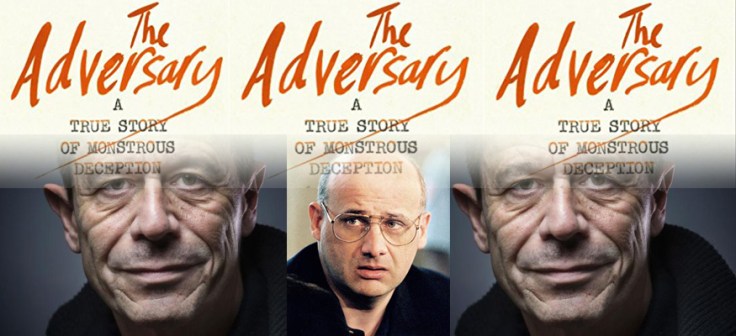
 To this farrago of lies and deception add fraud on a grand scale. Romand was able to keep himself and his family in relative prosperity by claiming that he had access to investment opportunities which would pay handsome dividends to those fortunate enough to be ‘in the know’. He relieved relatives and members of his wider family of hundreds of thousands of French francs – every one of which went into his numerous personal bank accounts. Separating his mistress and her vast personal fortune was his undoing. She was sharp enough – eventually – to call him out and, with his fantasy world on the verge of unraveling, Romand, on an icy weekend in January 1993, killed his wife, two children, and both of his parents.
 Inevitably, Romand was found guilty of murder, and in 1996 was sentenced to life imprisonment with no chance of parole for at least twenty two years. Prior to the trial, Carrère had begun a correspondence with Romand (right) with a view to writing an account of the case. In this account, aside from the factual detail, Carrère invites us to ponder the true nature of evil and insanity, and makes us wonder if the two states are totally separate, or whether or not they are actually bedfellows.
 Carrère (left) concludes:




 fullybooked2017