A police detective may like to think he can just walk away from the job that has consumed most of his adult life. He is entitled to believe that a new life in a remote Cornish cottage will wash away the blood of the countless victims whose cases he has investigated, and wipe the images of their broken bodies from his eyes. If anyone is entitled to joys of retirement, it is Frank Elder.
But being a copper isn’t the only thing he has walked away from. There is the wife who betrayed his trust, but more crucially there is the daughter, Katherine whose own life has been fractured, partly by her parents falling out of love, but more savagely by the fact that she herself was at the heart of one of Elder’s cases, when she was abducted, abused and violated by a psychotic killer.
 While Elder whittles away his time helping out the local police force with difficult cases, and his wife gets on with her own life, Katherine is eking out an existence in a North London flat share, trying to hide the scars – both real and figurative – of her abduction. She has taken to modelling for life drawing classes in an effort to pay the rent independent of her mother’s generosity, and this has led her into a relationship with a highly respected artist whose career is on a definite upward surge.
When the artist is found brutally murdered on the floor of his studio, Elder is drawn into the case, first as a suspect himself, albeit briefly, but then in defence of Katherine who the police, in the absence of any other suspects or motives, have decided is a person of interest.
What follows is a multi-faceted precious stone. We have a police procedural, viewed largely through the eyes of the investigating officer in London. We have a whodunnit? with a clever set of misdirections – and clues both false and real. We have John Harvey’s quietly elegant prose, clever observation of character and deep sympathy for decent but flawed individuals who have made wrong choices in their lives. But then – and it is an explosive “but then” – something happens, something unthinkable, something potentially life-changing for Elder and his family, and the whole focus of the novel swings violently in an unforeseen direction.
In my mind I am moving this fine novel from the shelf marked Crime Fiction to the place where I put memorable books that leave a lasting impression. Call them literary fiction if you will, but names and categories aren’t worth a penny piece. Body and Soul is an elegy on everlasting themes that have seared the hearts of great writers down the years. It is about death; it is about regret and longing; it is about duty, loyalty and people who do what they think to be right despite a chorus of lesser mortals who are chanting, “leave it – forget it – don’t get involved.”
 Body and Soul also takes an unflinching look at how love in itself is sometimes not enough – or possibly too much. I read elsewhere that this is to be John Harvey’s last novel. If this is the case then regret is permissible, but dismay would be churlish. We can only thank John Harvey (right) for his matchless legacy. Body and Soul is published by William Heinemann, and is available now.
HOWEVER – and here’s a thing – if you would like a hardback copy of this brilliant novel, I have one (just the one, sadly) up for grabs. The winner will be decided by a draw from a proverbial hat (actually a random number generator, but scrupulously fair!) How do you enter? Dead easy, and you have three ways to enter.
- Email me at fullybooked2016@yahoo.com putting Body and Soul in the subject box.

- On Twitter, just click the ‘heart’ box under one of the many posts about this book. My Twitter name is @MaliceAfore

- On Facebook, go to the Fully Booked page and ‘Like’ the post.

JUST A FEW TaCs:
(1) One entry per person, please.
(2) The competition closes at 10.00pm GMT on Sunday 13th May.
(3) Because of postage costs, the competition is open only to readers in Britain, the Irish Republic and mainland Europe.


 Colin’s day has already been bad enough. He has been summoned to the office of Frank Figgis, the News Editor, and given a daunting task. The newspaper’s Editor, Pope by name (dubbed “His Holiness”, naturally) has a brother called Gervaise. Gervaise is in trouble. He has been mixing with some rather unsavoury characters, namely the adherents of Sir Oscar Maundsley, the aristocratic former fascist leader. Interned by Churchill during the war, he now dreams of Making Britain Great Again.


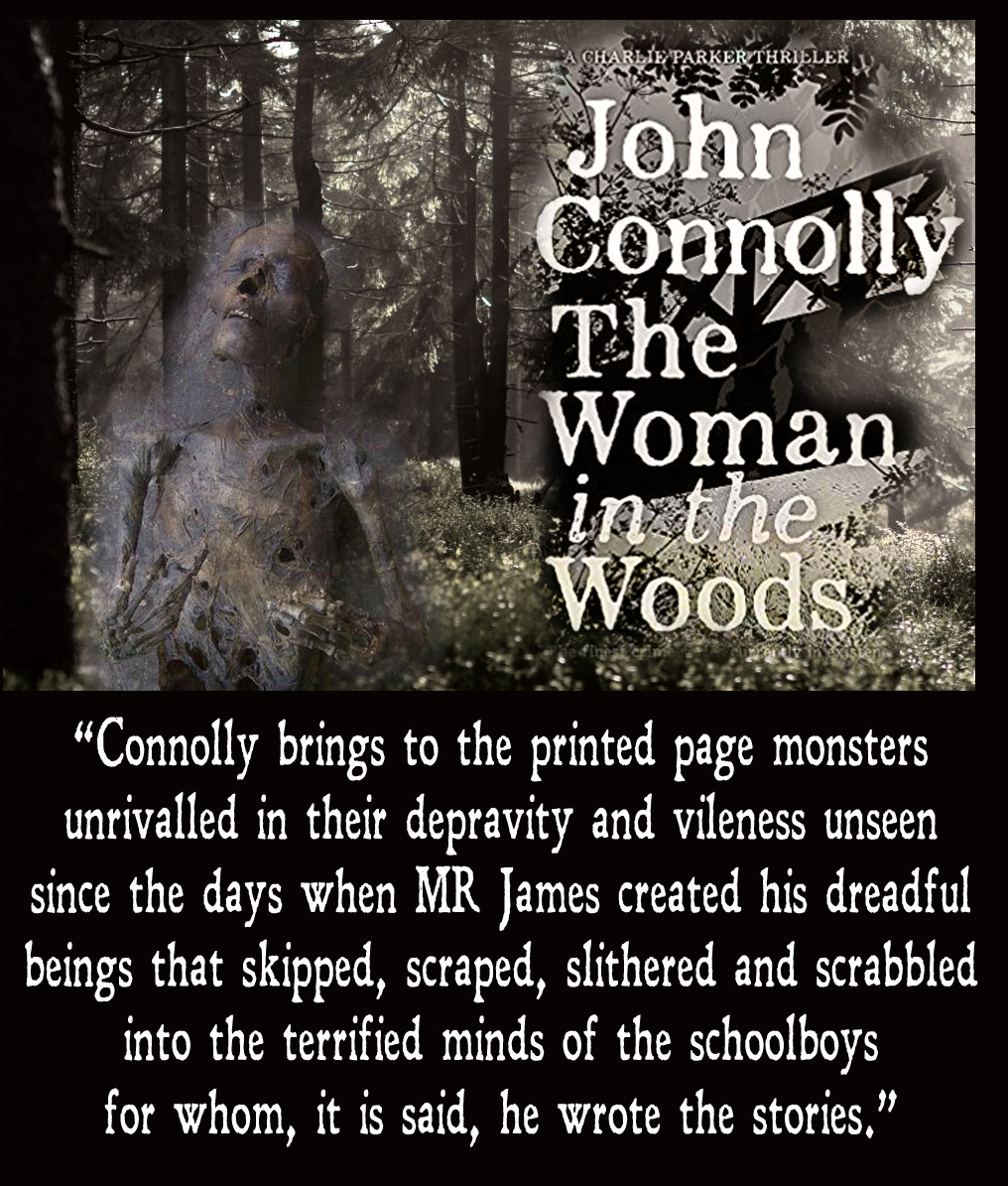

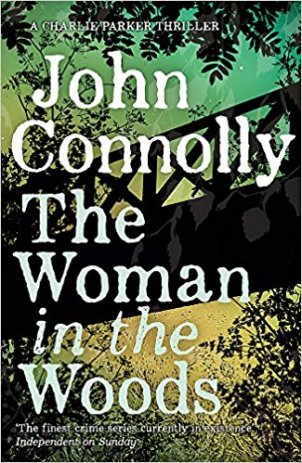 In the dark woods of Maine a tree gives up the ghost and topples to the ground. As its roots spring free of the cold earth a makeshift tomb is revealed. The occupant was a young woman. When the girl – for she was little more than that – is discovered, the police and the medical services enact their time-honoured rituals and discover that she died of natural causes not long after giving birth. But where is the child she bore? And why was a Star of David carved on the trunk of an adjacent tree? Portland lawyer Moxie Castin is not a particularly devout Jew, but he fears that the ancient symbol may signify something damaging, and he hires PI Charlie Parker to shadow the police enquiry and investigate the carving – and the melancholy discovery beneath it.
 In another life John Connolly would have been a poet. His prose is sonorous and powerful, and his insights into the world of Charie Parker – both the everyday things he sees with his waking eyes and the dark landscape of his dreams – are vivid and sometimes painful. Connolly’s villains – and there have been many during the course of the Charlie Parker series – are not just bad guys. They do dreadful things, certainly, but they even smell of the decaying depths of hell, and they often have powers that even a gunshot to the head from a .38 Special can hardly dent.
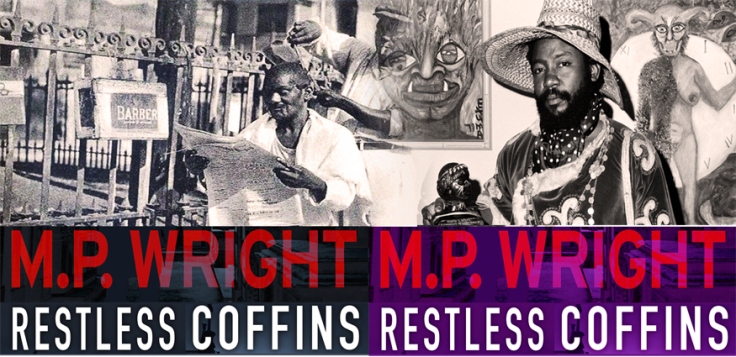
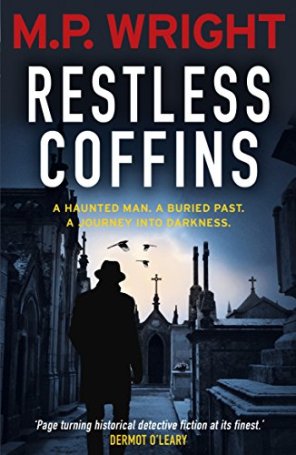 Ellington, broke and broken-hearted has ended up in 1960s Bristol, where he uses his police training to eke out a living as a private investigator. When he receives the news that his only sister, Bernice, has died in Barbados, he is compelled to return home to wind up her affairs. Hovering in the background, however, is Ellington’s violent criminal cousin Victor, who has reappeared after rumours of his tumbling to his death on the rocky slopes of Bristol’s Clifton Gorge prove to be greatly exaggerated. When Ellington arrives in New York after the first leg of his journey home, he rapidly realises that ‘born-again’ Vic is involved in something much more dangerous – and potentially lethal – than his previous mildly illegal entrepreneurship within the West Indian community in Bristol.
 Wright has made the decision to phonetically transcribe all the dialogue between the main characters in his books. I have to admit that in Heartman it was a source of irritation to me, but such is the pace and vigour of the action in Restless Coffins that it didn’t seem to matter as much this time around. The new ‘crime’ of Cultural Appropriation seems to me to be one of the most pointless, misguided and irrelevant of fashionable 21st century dogmas, so you will hear no complaint from me about a white Englishman writing a novel with an almost entirely black cast, complete with speech patterns, vocabulary and inflections.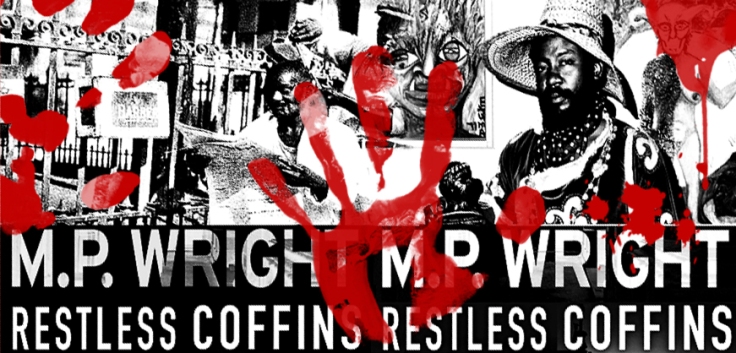
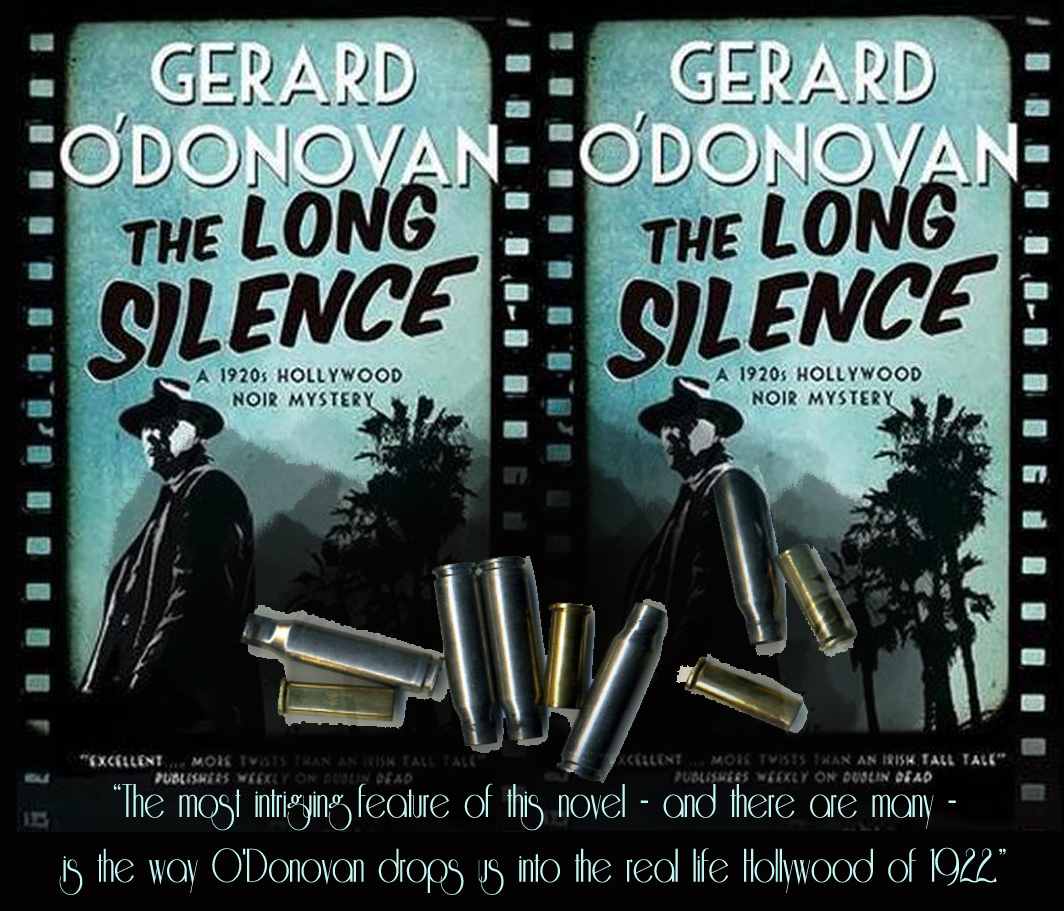
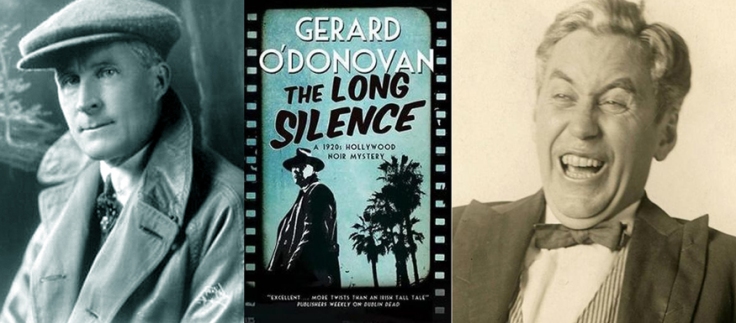
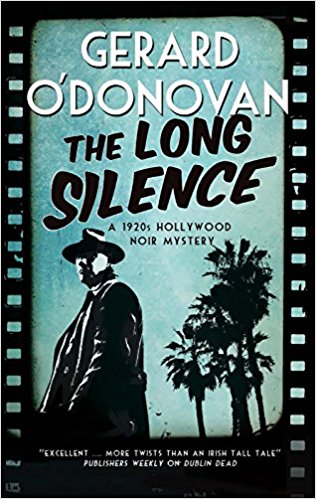 The most intriguing feature of this novel – and there are many – is the way O’Donovan drops us into the real life Hollywood of 1922. I knew something about the demise of Roscoe ‘Fatty’ Arbuckle, was aware of Mack Sennett and, of course, the names Douglas Fairbanks and Mary Pickford resonate with people of my generation who are reasonably well-read. But I had neither heard of – nor seen pictures of – Mabel Normand and, thanks to the wonders of Google, I could see instantly how she was able to mesmerise a generation of movie goers and readers of magazines. Those eyes! Tom Collins tells us about them quite early in the book.
 This is a cracker of a book. To the casual observer, looking on from the safe distance of the best part of a century, Hollywood in the 1920s appears innocent and other-worldly. We might smile at the fluttering eyelashes and coy gestures of the female stars, and the black-and-white (both figuratively and literally) lack of ambiguity of the male heroes and villains but in reality the movie world was just as venal, corrupt and hard nosed as it is today. Gerard O’Donovan (right) lifts the stone from the ground and we see all manner of unpleasant – and deadly – creatures scurrying around in the unwelcome light. The first pages of the book might suggest that Tom Collins has told us all that he has to say, but I hope this is not the case. The Long Silence is published by Severn House, is available now in hardback and will be
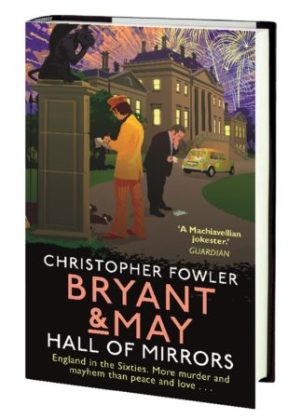 If a more extraordinary duo of fictional detectives exists than Christopher Fowler’s Bryant & May, then I have yet to discover them. The peculiar pair return in Hall of Mirrors for their fifteenth outing, and this time not only are they far from their beloved London, but we see a pair of much younger coppers on their beat in the 1960s. Fowler’s take on the period is typified by each of the fifty chapters of the novel bearing the title of a classic pop hit. We are also reminded of the strange fashions of the day.


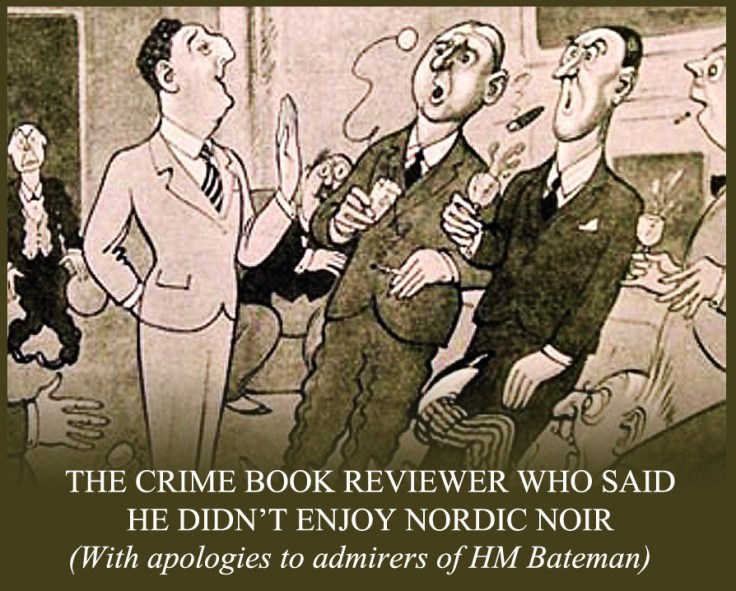
 Younger readers, please bear with me for a moment. People of my generation will need no introduction to the wonderful world of HM Bateman, a satirical cartoonist whose brilliance often matched that of Gillray and Hogarth. He was prolific and, like many cartoonists before and since, was a sublime draughtsman. One of his most popular series was ‘The Man Who ….” – and each featured someone who has committed a terrible social faux pas and provoked expressions of disdain, anger and astonishment on the faces of other characters in the picture. My personal solecism is that I remain lukewarm about much crime fiction which has its origins in Scandinavia. Not because I doubt the worth of the original, but more because of the insertion of a third party – the translator – into the relationship between reader and author. Yes, I know that puts me on shaky ground in many people’s opinions regarding writers such as Simenon and Vargas, but my stance is what it is, and I will happily defend my stance at another time and in another place.
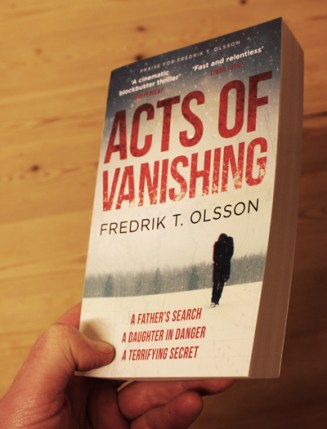
 That lengthy preamble is by way of an introduction to the latest book to be passed from my postman into my grateful hand. Acts of Vanishing by Fredrik T Olsson came out in Kindle in August 2017, but Sphere are publishing the paperback version in just a couple of days – 8th March – and those who love hardback editions will be able to buy it from Little Brown in April. Olsson (right) hails from the Swedish city of Gothenberg and is not only a successful novelist, screenwriter and director, but also a stand-up comedian.