
 James Lee Burke (left) turned 81 in early December 2017. When I picture the face of his majestic but flawed hero, Dave Robicheaux, it is his creator’s face I see. The Robicheaux books have been filmed several times but the best one I have seen is In The Electric Mist (2009) starring Tommy Lee Jones, and Mr Jones is good a ringer for Mr Burke – and my vision of Robicheaux – as you will ever see.
Dave Robicheaux is a police officer in New Iberia, Louisiana, a few miles down the road from its big sister, New Orleans. Burke introduced him in The Neon Rain (1987) and, since then, fans like me have followed Dave’s every move, in and out of alcoholism, sharing his visions of ghostly Confederate troops trudging their spectral way through the swampland and along the fringes of the bayous, and bringing down bad men with the help of his bail skiptracer buddy, the elemental force known as Cletus Purcell.
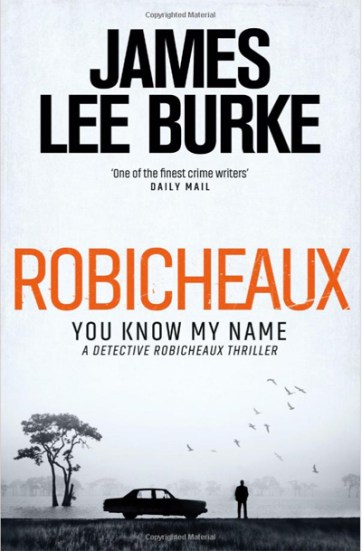
Robicheaux: You Know My Name has an end-of-days feel about it. Is this endgame for Robicheaux? Emotionally, he is in a bad way. His wife (the latest of several) Molly is dead, innocent victim in a case of reckless driving.
“I could not sleep Sunday night, and on Monday I woke with a taste like pennies in my mouth and a sense that my life was unspooling before me, that the world in which I lived was a fabrication, that the charity abiding in the human breast was a collective self-delusion …”
His adopted daughter Alafair is away writing her novels and making her way in the world. Even Tripod, his three-legged raccoon pal is no more. Choose your metaphor; a gathering wind bearing a scent of impending catastrophe, a cloud of retribution, a murmured lament for the dead and dying becoming louder by the minute? Robicheaux describes one of the characters;
“I was old enough to know that insanity comes in many forms, some benign, some viral and capable of spreading across continents, but I believed I had just looked into the eyes of someone who was genuinely mad and probably not diagnosable, the kind of idealist who sets sail on the Pequod and declares war against the universe.”
All very gothic and, perhaps, melodramatic, but fans of the series will know not to expect half measures. The overpowering Louisiana climate does not do pastel shades: it never drizzles – the rain comes down like magnum bullets clanging into tin roofs; the wet heat saps the spirit, and makes men mad, and women madder.
 “That weekend, southern Louisiana was sweltering, thunder cracking as loud as cannons in the night sky; at sunrise, the storm drains clogged with dead beetles that had shells as hard as pecans. It was the kind of weather we associated with hurricanes and tidal surges and winds that ripped tin roofs off houses and bounced them across sugarcane fields like crushed beer cans; it was the kind of weather that gave the lie to the sleepy Southern culture whose normalcy we so fiercely nursed and protected from generation to generation.”
The plot? Obviously there is one, and it is excellent, but such is the power and poetry of James Lee Burke’s writing that the action is often completely subsumed by the language. A grim ostinato to the story is Robicheaux’s bitter resentment towards the man whose reckless driving killed Molly. Said driver is found dead, and Robicheaux become prime suspect in a murder case..
“How do you handle it when your anger brims over the edge of the pot?You use the shortened version of the Serenity Prayer, which is “Fuck it”. Like Voltaire’s Candide tending his own garden, or the British infantry going up the Khyber Pass one bloody foot at a time, you do your job, and you grin and walk through the cannon smoke, and you just keep saying, “Fuck it”…..”Fuck it” is not profanity. “Fuck it” is a sonnet.”
As his problems mount, Robicheaux succumbs once more to his personal demon. It is , however, a demon shared by a great many other of his fellow citizens:
“If anyone tells you he he’s from New Orleans and doesn’t drink, he’s probably not from New Orleans. Louisiana is not a state;it’s an outdoor mental asylum in which millions of people stay bombed most of their lives. That’s not an exaggeration. Cirrhosis is a family heirloom.”

Bent fellow cop Spade Labiche is involved in all manner of dirty deals and deeds, while former top federal informant – and thoroughly vile human being – Kevin Penny is found dead in his trailer, slowly murdered by an electric drill. Meanwhile, as Clete Purcell plays foster parent to Penny’s young son, dying mobster Tony Nemo attempts to bankroll a Civil War movie written by an angry novelist whose wife may (or may not) have been raped by the charismatic Trump-like politician, Jimmy Nightingale. Robicheaux attends one of Nightingale’s campaign rallies.
“He gave voice to those who had none – and to those who had lost their jobs because of bankers and Wall Street stockbrokers and NAFTA politicians who had made a sieve of our borders and allowed millions of illegals into our towns and cities…..Was he race-baiting or appealing to the xenophopia and nativism that goes back to the Irish immigration of the 1840s? Not in the mind of his audience. Jimmy was telling it like it is.”
James Lee Burke is nothing if not passionate about how powerful people abuse the weak, the poor, the defenceless and the gullible. His bad men are satanic and implacable – until they meet the destructive force-field created when Robicheaux and Purcell – The Bobsy Twins – go into action. This is a bleak book emotionally, riven with anger, yet full of the poetry of loss and mortality.
“…the dead are still with us, like the boys in butternut marching through the flooded cypress at Spanish Lake, and the slaves who beckon us to remove the chains that bind them to the auction block, and all the wandering souls who want to scratch their names on a plaster wall so someone will remember their sacrifice, the struggle that began with the midwife’s slap of life, and their long day’s journey into the grave.”
Robicheaux: You Know My Name is out today, 2 January 2018, in Kindle and will be published as a hardback by Orion on 11th January.




 Thor scrapes by as a barman in a local pub, and has a rudimentary bedsit over the local post office, but his world is turned on its head when he discovers that someone is trying to kill him. Not without taking a knock or two, Thor survives, and concludes that the attempts on his life are connected to the efforts of developers to buy up his patch of the Loxley land to add to a much bigger chunk of Crook territory. The result will be thousands of newcomers to the area, complete with pressing demands for new schools, new infrastructure and new services.

 In this febrile atmosphere are many men and women who have memories of “the last lot”. One such is the latest creation from Jim Kelly, (left) Detective Inspector Eden Brooke. He saw service in The Great War, but were someone to wonder if his war had been ‘a good war’, they would soon discover that he had suffered dreadful privations and abuse as a prisoner of the Turks, and that the most physical legacy of his experiences is that his eyesight has been permanently damaged. He wears a selection of spectacles with lenses tinted to block out different kinds of light which cause him excruciating pain. For him, therefore, the nightly blackout is more of a blessing than a hindrance.

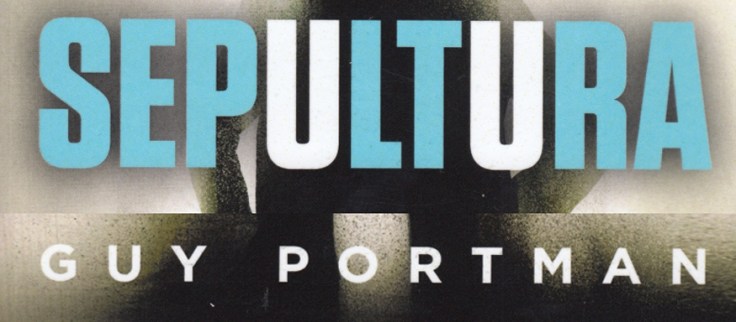
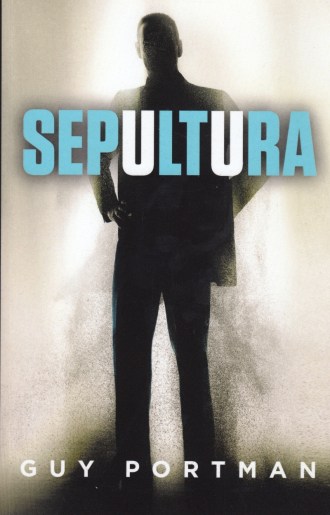 I must explain the apparent digression before you lose interest. Use your imagination. Conjure up a dreadful genetic experiment which breeds a being who, especially in his diarist’s style of first person narrative, shows very Pooteresque tendencies. But – and it is a ‘but’ the size of a third world country – the mad scientist has added Norman Bates and Hannibal Lecter into the mixing bowl, and then seasoned it with an eye-watering pinch of Patrick Bateman. What do you get? You get Dyson Devereux, Head of Cemeteries and Burials with Paleham Council.
 The trip to Italy temporarily removes Dyson from the cross-hairs of the local police, and also the relatives of the late lamented Jeremiah, who are out for vengeance. What follows is brilliantly inventive, murderous and breathtakingly funny. Guy Portman doesn’t reveal too much about himself, even on

 We are taken to an autumnal Boston. Initially, Warren has nothing more on her mind than the consequences of giving in to the demands of her young son that they should adopt a dog. Her domestic reverie is rudely and violently interrupted when she is called to a house in the Brighton district of the city, where she is confronted by a scene of carnage. Householder Charlie Boyd is sitting on his sofa, as dead as a doornail. His girlfriend Juanita Baez is in the kitchen, shot as she was taking something from the cupboard. In the bedroom, even worse horrors await. Lola and Manny Baez, two of Juanita’s children, are clasped in a protective embrace, but just as dead as the adults.


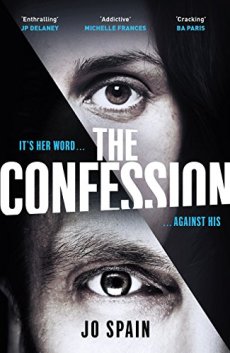 Jo Spain not only takes on the challenge, but she meets it head on and completes it with subsequent pages of The Confession which manage to be, as night follows day, bravura, intense, full of authentic and convincing dialogue, utterly mesmerising and, in places, literally breathtaking. A countryman of Spain’s began his most famous novel with “Stately, plump Buck Mulligan came from the stairhead, bearing a bowl of lather on which a mirror and a razor lay crossed.” She counters with:
 Of course, we get there in the end, and understand why JP Carney has exacted such an emphatic revenge on the handsome, charismatic and plausible Harry McNamara, but sometimes book reviews have to stop dead in their tracks, and say, “Trust me, this is a brilliant novel, but to tell you any more would be little short of criminal.” Yes, The Confession is a brilliant novel. Yes, I read it through in one sitting, deep into the early hours of a winter morning. Yes, I am a fan of Jo Spain (right). Yes, if you don’t get hold of your own copy of this, you will receive scant sympathy from me. The Confession is published by Quercus, and will be on sale as a Kindle from 11th January, and as a hardback from 25th January. Check online buying choices

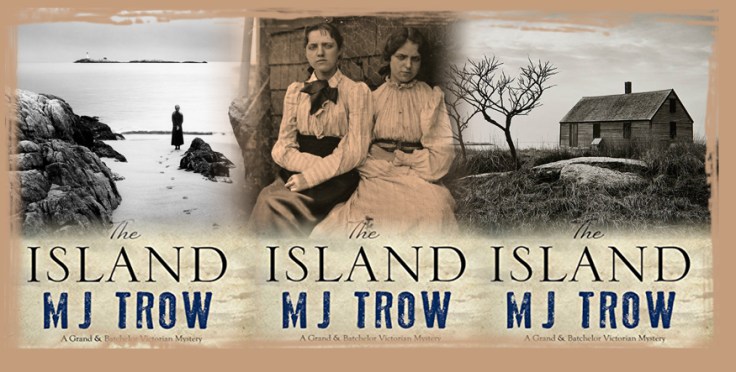
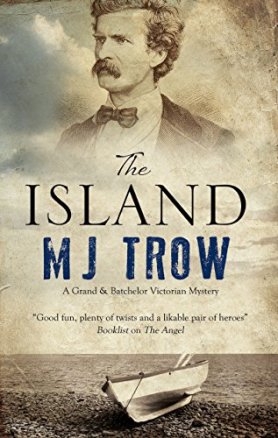 The Island is the latest episode in the eventful partnership between two gentleman detectives in Victorian London. James Batchelor is a former journalist, a ‘gentleman’ in manners and intelligence, if not by upbringing, while his colleague Matthew Grand is an American former soldier, and scion of a very wealthy patrician New Hampshire family. We first met them in
  A few words in praise of the author. Meiron Trow (right) is one of the most erudite and entertaining writers in the land. Over thirty years ago he began his tongue in cheek series rehabilitating the much-put-upon Inspector Lestrade, and I loved every word. I then became hooked on his Maxwell series, featuring a very astute crime-solving history teacher who, while eschewing most things modern, manages to be hugely respected by the sixth-formers (Year 12 and 13 students in new money) in his charge, while managing to terrify and alarm the younger ‘teaching professionals’ who run his school. I was well into the Maxwell series before I realised that MJ Trow and I had two things (at least) in common. Firstly, he went to the same school as I did, although I have to confess he was a couple of years ‘below’ me and would have been dismissed at the time as a pesky ‘newbug’. Secondly, and much more relevant to my love of his Maxwell books, I discovered that we were both senior teachers in state secondary schools, and shared a disgust and contempt for the tick-box mentality characterising the so-called ‘leadership’ of high schools.
 I digress, so back to New Hampshire in the early spring of 1873. The guests begin to arrive, and the ‘downstairs’ staff under the stern eye of the enigmatic butler, Waldo Hart, are emulating the proverbial blue-arsed fly. Trow, at this point, gleefully takes the template of the traditional country house mystery, and has his evil way with it. Despite the title of the book, we are not quite in Soldier Island (And Then There Were None) territory, but Rye is far enough from Boston to make sure that when the first murder happens, the real policemen are too far away and too engrossed with their city crime to pay much attention, even when when of the possible suspects is a certain Mr Samuel Langhorne Clemens. (left)

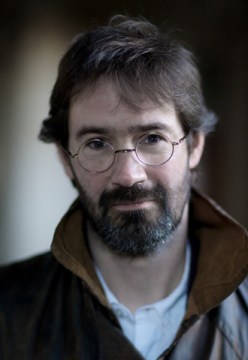 I should add, at this point, that James Oswald (left) is not your regulation writer of crime fiction novels. He has a rather demanding ‘day job’, which is running a 350 acre livestock farm in North East Fife, where he raises pedigree Highland Cattle and New Zealand Romney Sheep. His entertaining Twitter feed is, therefore, just as likely to contain details of ‘All Creatures Great and Small’ obstetrics as it is to reveal insights into the art of writing great books. But I digress. I don’t know James Oswald well enough to say whether or not he puts anything of himself into the character of Tony McLean, but the scenery and routine of McLean’s life is nothing like that of his creator.
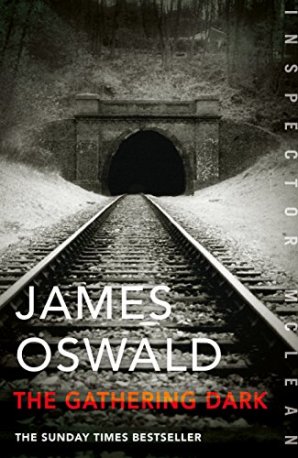 McLean is going about his daily business when he is witness to a tragedy. A tanker carrying slurry is diverted through central Edinburgh by traffic congestion on the bypass. The driver has a heart attack, and the lorry becomes a weapon of mass destruction as it ploughs into a crowded bus stop. McLean is the first police officer on the scene, and he is immediately aware that whatever the lorry was carrying, it certainly wasn’t harmless – albeit malodorous – sewage waste. People whose bodies have not been shattered by thirty tonnes of hurtling steel are overcome and burned by a terrible toxic sludge which floods from the shattered vehicle.


 fullybooked2017