
Search

fullybooked2017

Tag

murder

BETWEEN THE COVERS . . . The Final Straw (click for full screen)

TFS spine020

I had not come across anything by Jenny Francis before, so I did a little research before beginning The Final Straw, and discovered that the author isn’t one person, but a writing partnership between Patricia Scudamore and Hilton Catt. Furthermore, the pair’s day job, as it were, is writing self-help manuals for commerce and business. Titles such as Successful Career Change, Cover Letters In A Week and The Interview Coach didn’t initially indicate that I was about to read an entertaining crime novel, but I was wrong.

TFS cover019Charlie Moon is yet another fictional Detective Inspector, but slightly different in one or two ways from many of his fellow CriFi coppers. For a start, his patch is the rather unfashionable West Midlands, probably the city its locals affectionately refer to as Brummagem. Also, although he carries the cross born by most of his fictional counterparts – corrupt or incompetent bosses – he has a stable and happy family life, and neither drinks nor smokes to excess. When he goes home at night, it is to the solace of his wife and daughter, rather than the solitary vice of falling asleep on the sofa, whisky glass in hand, while something from his obscure CD collection plays in the background.

Moon is contacted by a notorious local criminal, currently a guest at HMP Winson Green. Denny Wilbur might shrink at being described as public spirited, but he has an injustice to share with Moon. A simple minded black man, Wilson Beames, was twenty years into a life sentence for murdering a teenage girl, Sharon Baxter, back in the 1970s, but he has been found hanged in his cell.

“He couldn’t read or write, yet they reckoned he’d signed a confession. Besides which, he wouldn’t have had the brains to know what he was signing anyway.”
“Are you suggesting he was stitched up?”
“We all know what went on the seventies, don’t we, Inspector? Some naughty people in your mob occasionally did some naughty things.”

When Moon suggests to his bosses that this needs investigating, he is warned off in no uncertain terms. Being a contrary so-and-so, Moon decides to do a little investigating on his own, with the help of Jo Lyon, a local journalist. Bit by bit, they fit the pieces of the jigsaw together, and the emerging picture is not a pretty one. It shows a desperately corrupt senior policeman, a paedophile ring, and a ruthless local businessmen prepared to provide certain services. As Moon closes in on Sharon Baxter’s killer, he is unaware that when he does solve the mystery, it will provide a shock that he could never have anticipated.

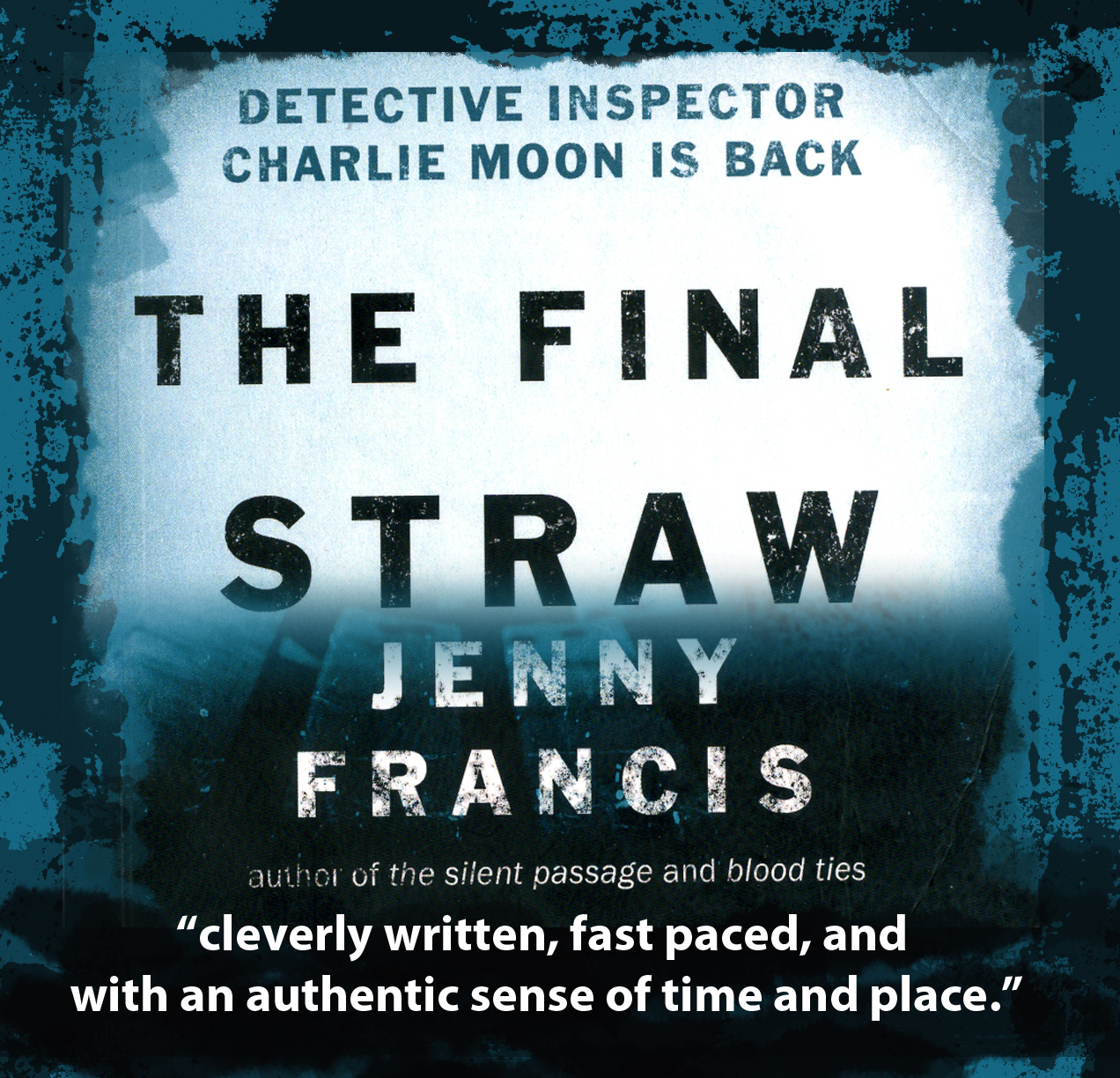
The Final Straw is cleverly written, fast paced, and with an authentic sense of time and place. If, like me, you are impressed with Charlie Moon, there are two previous novels to check out – The Silent Passage and Blood Ties. All three are published by Matador, and The Final Straw is out on 28th April.

Matador

THE POSTMAN DELIVERS . . . Making Wolf

MW3018

I don’t know how other reviewers are getting on, but here in the Fens the lock-down in publicity departments has meant that the normal flow of printed ARCs has shrivelled. I know of several launch dates that have been postponed until happier times, so I was especially pleased to receive an actual printed book this week.

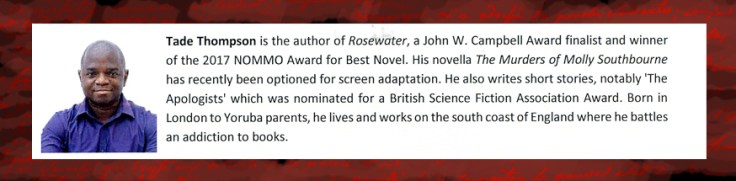
Making Wolf by Tade Thompson tells the tale of a London supermarket security bloke who travels to his former home in West Africa to attend a funeral. As the beer flows and he meets old friends, Weston Kogi can’t resist egging the pudding a little by telling his mates that he is a murder detective in far-off London.

His little charade explodes in his face, however, when he becomes involved in a bloody feud between two political factions, and made to investigate a real life killing.

Making Wolf is published by Constable, and will be out on 7th May. I will be reading the book soon, and writing a full review.

MW footer

THE MUSIC BOX ENIGMA . . . Between the covers (click for full screen)

TMBE header

Fans of period police procedurals are in for a treat at the end of the month when RN Morris’s distinctive London copper, Chief Superintendent Silas Quinn makes a welcome return. It’s December 1914, and the war that was meant to be over by Christmas is showing only signs of intensifying. DORA – the Defence of The Realm Act – has been enforced, and among the many strictures it imposes on the populace are imprisonment without trial, a ban on publishing any description of war or any news that is likely to cause any conflict between the public and military authorities and, bizarrely, an interdiction on buying rounds in pubs.

MBE coverBut Christmas is coming, and a rather upper-crust choir, The Hampstead Voices, is rehearsing for its seasonal concert, with all proceeds going to Belgian refugees, forced from their homes by the brutal Hun invaders. Directed by Sir Adrian Fonthill, the concert will include not only much-loved carols such as O Little Town of Bethlehem and Adeste Fideles, but choral works by Bizet and Handel. Special guest artistes will include dancers from Ballets Modernes and the distinguished violinist Emile Boland, but the evening will conclude with a performance of Sir Edward Elgar’s A Christmas Greeting, in the presence of the composer himself. It is also believed that Winston Churchill, First Lord of The Admiralty, will be in the audience at University College School on the evening of 24th December.

Silas Quinn may have many qualities, but a musical ear is not one of them, so how does he come to be involved in the doings of The Hampstead Voices? Rehearsals for the concert may not be going too well, perhaps due to the many tenors and basses who have answered the call to arms, but preparations take a distinct downturn when the Director of Music is found dead, slumped at his grand piano, with the sharpened handle of a tuning fork stuck into his ear. As boss of Scotland Yard’s Special Crimes Unit, Quinn is summoned to the scene of this musical murder.

It seems that the late Sir Adrian, despite his musical sensitivities, was not a paragon of virtue. He has a roving eye – and hands – for young sopranos and altos, and has a weakness for gambling which has left him in debt to some very dangerous people. But who stands to benefit from his death? Not those to whom he owes money,surely? A resentful husband, perhaps, who has been cuckolded?

MorrisAs Quinn tries to penetrate the wall of silence thrown up by Fonthill’s widow, his attention is drawn to a mysterious music box sent to Sir Adrian just before his death. When it is wound up and played, however, the resulting tune simply seems – even to Quinn’s tin ear – a haphazard sequence of random notes. But help is at hand. One of the Special Constables from Hampstead Police Station could be said to have an ear for music. He is none other than Sir Edward Elgar, celebrated composer of Salut d’Amour, Variations on an Original Theme and The Dream of Gerontius. Elgar takes the discordant melody and uncovers a message which rveals that Sir Adrian’s death is not to be the last associated with the ill-fated Christmas concert.

RN Morris (above right) gives us an inventive and delightfully improbable conclusion to this very readable novel. If you want something to lose yourself in for a few hours and a diversion to push to one side the misery and discomfort of the lock-down, then you will find nothing better than The Music Box Enigma. It is published by Severn House and will be out in hardback on 30th April.

For a review of an earlier Silas Quinn novel, The White Feather Killer, click here

THE DIRTY SOUTH . . . Between the covers

tds008

John Connolly’s private eye Charlie Parker rarely ventures south of the Mason Dixon line; his natural habitat is the brooding forest wilderness of Maine, a place where he communes with ghosts older than those of his murdered wife and daughter. As the name suggests, The Dirty South, his 18th case, sees him in Arkansas. The books begins and ends in the present day, but the greater part of the action takes place in 1997. The state’s former Governor and Attorney General has gone on to greater things, but his elevation has brought little in the way of material benefits to the small town of Cargill.

81hCyWuPLKLParker is still hunting the man who brutalised and then murdered his family and, thanks to former colleagues on the NYPD, he has a file on a girl murdered near Cargill, the manner of her death – and that of two others – give him cause to believe that her killer may be of interest to him. At this point, Connolly has a little fun with what might be called the In The Heat Of The Night trope. OK, so Parker isn’t black, but he is a stranger in town, asking questions. He is not inclined to say much about who he is and what his intentions are so he gets to spend a night in the town’s jail. While he is under lock and key, the body of another missing girl is found – horribly brutalised and left in woodland on the edge of the Ouachita mountains.

Parker’s back story is determined by a police civilian clerk making a call to New York:

“She picked up and listened as the caller identified himself. She wrote the name CHARLIE PARKER in block capitals across the top of a fresh page, and began taking notes.
‘Christ,’ she thought, as the lines began to fill with her handwriting, ‘Kel and the chief need to get back here, and fast. They need to let this man out of his cage before he has a mind to break out of it himself.’”

P Capitalarker is given an apology, and asked to help with the hunt for Donna Lee Kernigan’s killer. He soon learns that the Jurel Cade, a special investigator for Burden County, has been involved in the investigations – or lack thereof – into the earlier deaths. The Cade family are rich, influential and undoubtedly corrupt. They have also managed to entice Kovas, a massive defence procurement company, to build a plant in the vicinity, a deal which will put food on tables, dollars in wallets and hope in hearts for the long neglected locals. A few murdered black girls mustn’t be allowed to embarrass the PR machine that deals with the Kovas public image.

This is a very different Charlie Parker novel. The only supernatural element comes when Parker communes with his daughter who may be dead in physical terms, but is very much alive in his heart, mind and soul. The unspeakably malign villains of previous novels, all of whom were, in some way, connected with the paranormal, are absent. The disfunctional Cade family, and the malign shadow of serial child abuser Hollis Ward are bad enough, but they are flesh and blood. We do, happily for their fan club, have a brief appearance from Louis and Angel. They are as potent a force as ever, but Angel’s possibly terminal illness is many years away.

C Capitalonnolly writes like an angel, and there is never a dead sentence, nor a misplaced word. Occasionally, within the carnage, there is a wisecrack, or a sharp line which sticks in the memory:


“The radio was playing in Rhinehart’s back office: KKPT out of Little Rock, one of only two classic rock stations the device was able to pick up. Nobody was permitted to change the station for fear that it might never be located again, thereby leaving Rhinehart to subsist on a diet of Christian Contemporary Gospel, and Regional Mexican, until he eventually blew his brains out.”

If ever we needed an absorbing and substantial read to distract us from our nightmare, it is now. The Dirty South is published by Hodder and Stoughton and is out on 20th August. Buy it, blag it or borrow it – but don’t ignore it. It is a brilliant read which will provide a few hours of enchantment away from the miserable present.

More Fully Booked musings on John Connolly and Charlie Parker are available here.

tds010

THE KING’S BEAST . . . Between the covers


tkb007

The King’s Beast is the sixth novel in Eliot Pattison’s series featuring the Scottish exile Duncan McCallum, and his adventures in America before the Revolution. The story begins in 1769, just a few years before the start of the actual conflict which saw Americans shaking off what they saw as the dead hand of British colonialism. However, as Pattison points out in his preface, and as readers of the earlier novels will know, the events of 18th April 1775, and subsequent battles, were the culmination of years of political intrigue and discontent.

TKB coverSo who is Duncan McCallum? Like many of his countrymen, he fled his homeland to escape the brutal recriminations following the Jacobite defeat at Culloden in 1746. His father and brothers were not so fortunate. McCallum has nightmares about his kin swinging from an English gibbet, food for crows and ravens. McCallum is a trained physician, but open-minded enough to know that the natural remedies used by the Native Americans he meets can be extremely potent.

Earlier novels in the series have seen McCallum all over the parts of America which had been colonised – Massachusetts, Pennsylvania, Virginia – but now he is in Kentucky, overseeing the excavation of fossils, on the instructions of none other than Benjamin Franklin. Franklin – writer, polymath, journalist, scientist and political activist – has been in London since 1757, lobbying on behalf of Pennsylvania, and is anxious to have the fossils – relics of prehistoric mastodons.

The fossils, known at the time as American Incognitum, are not just historical artifacts but, with tensions rising between various political factions on both sides of the Atlantic, they become chips in an increasingly deadly game. By the time McCallum sets sail for London on the Galileo, blood has been shed, and brave men lie buried.

As McCallum and his friends try to avoid the malign intentions of British soldiers and get the fossils to Franklin, they are sidetracked by efforts to secure the release of McCallum’s mentor, a native American called Conawago, who has been incarcerated in the notorious Bethlehem Hospital – Bedlam. The hospital’s evil reputation is well-earned:

“…noxious smells wafted through the hall. The stench of excrement and urine mingled with those of soap, vinegar and strong black tea. Men in matching brown waistcoats and britches, apparently staff, were emerging from chambers at the back of the main gallery, shepherding patients out of a dining chamber and opening windows, which created new currents of air that seemed to just circulate the same foul odours.”

McCallum finally contacts Franklin, and realises that the American is viewed with some ambiguity by the British establishment. On the one hand his political activism makes him a figure of suspicion, while his learning and scientific mind link him to the most powerful man in the land – King George III. The King respects learning and research, but is surrounded by advisors who do not share his enthusiasm.

I am always slightly wary of historical fiction where some of the characters have remarkably modern attitudes to diversity and cultural tolerance, but McCallum is not a member of the ‘woke’ fraternity transported back two and a half centuries – he is decent, just, honorable, and a convincing man of his time. Pattison’s scholarship is immense, and his grasp of historical detail is formidable. This is to be expected from an international lawyer, perhaps, but this is a historian who can also tell a good tale. Readers will look long and hard before they find another writer who can teach us about a particular period, with all its social and political complexities, while at the same time entertaining and enthralling us. The King’s Beast is published by Counterpoint and is out today, 7th April.

For more about Eliot Pattison, click on the image below.

TKB footer

THE MOLTEN CITY . . . Between the covers

TMC header

TMCWe first met Leeds policeman Tom Harper in Gods of Gold (2014) when he was a young CID officer, and the land was still ruled by Queen Victoria. Now, in The Molten City, Harper is a Superintendent and the Queen is seven years dead. ‘Bertie’ – Edward VII – is King, and England is a different place. Leeds, though, is still a thriving hub of heavy industry, pulsing with the throb of heavy machinery. And it remains grimy, soot blackened and with pockets of degradation and poverty largely ignored by the wealthy middle classes. But there are motor cars on the street, and the police have telephones. Other things are stirring, too. Not all women are content to remain second class citizens, and pressure is being put on politicians to consider giving women the vote. Sometimes this is a peaceful attempt to change things, but other women are prepared to go to greater lengths.
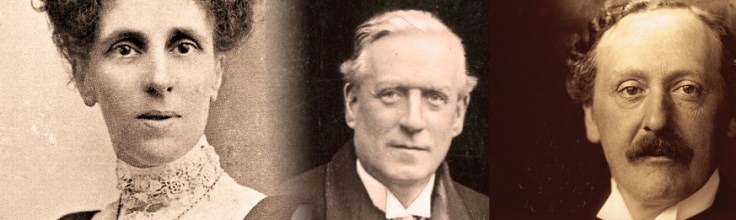
This small but increasingly vocal movement provides one of two plot threads in what is, to my mind, Chris Nickson’s finest novel yet. Prime Minister HH Asquith and his Home Secretary Herbert Gladstone are due to visit Leeds, and it will be Harper’s task to make sure that the visit passes off peacefully. He knows there is likely to be a protest from unemployed men whipped up by anarchist Alf Kitson, but his greatest fear is that a demonstration led by suffragette Jennie Baines will provoke more intense publicity. At this point, it is essential to point out the difference between suffragettes and suffragists. The latter have the same aims as the former, but they are avowedly peaceful in their methods. Harper’s wife Annabelle is a suffragist. She has worked for women’s rights for many years, and has passed on her zeal to their teenage daughter Mary.

The parallel thread in The Molten City begins when Harper receives an anonymous letter:

Letter

As he uses his local knowledge and that of his older officers, Harper begins to piece together a jigsaw. As the picture begins to take shape, it is clear that it is one that contains elements of tragedy, greed, desperation – and downright criminality, and that solving the puzzle will bring joy to no-one. As the past players in this old drama start to realise that the past is catching up with them, anxiety leads to violence,and violence leads to murder.

There are so many dazzlingly good elements to this novel. Nickson, like many of his readers is someone of the twentieth century, and he has a keen eye and ear for little social mannerisms that certainly struck a chord with me. As Annabelle imagines her husband in a Chief Constable’s uniform, she says:
You’d look a right bobby-dazzler.”
Only those of us who were brought up having their tea made in a pot will remember this gesture:
“She felt the side of the teapot and poured herself another cup.”
Teenagers were as hungry in 1908 as they are today, but few sit down with their parents at a set table and have their meal:
“She’d already cleaned her plate right down to the pattern and was working her way through the suet pudding.”

Tom Harper is still fit, active, and able to handle himself in a scrap, but like Tennyson’s Ulysses who laments tho we are not now that strength which in old days moved earth and heaven, that which we are, we are;” he is all too aware of the passage of time:
“And it was a detective’s job to follow every possibility. That was what his old boss, Superintendent Kendall, had instilled in him when he was starting out in CID. Another one who was dead now; Harper had filled his shoes at Millgarth. Billy, Kendall, so many others …very soon the dead in his life would outnumber the living.”

Nickson orchestrates the dramatic disorder – based on real events – of the Prime Minister’s visit with panache and the skills of a born storyteller. We know – as does Harper himself – that finding the truth about the child stealing will benefit no-one alive or dead, but he is a policeman who must do his duty while being all too well aware that the truth is frequently uncomfortable.

The Molten City is published by Severn House and is out now. If you want to find out more about Chris Nickson and his books, then click the image below.

ickson footer

THE EVIL WITHIN . . . Between the covers

TEW header

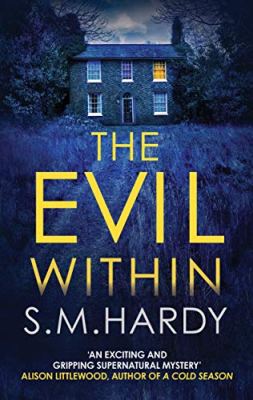
profile-750x750SM Hardy, aka Sue Tingey, has put together a thoroughly enjoyable and, at times, genuinely scary ghost story. The Evil Within tells the tale of Jim Hawkes, a young London banker who has an attack of conscience about the bloodthirsty nature of his trade, and tells his boss to go forth and multiply. This rush of blood to the head is not entirely unconnected to the fact that he is still grieving for his dead sweetheart, who drowned herself after breaking off their engagement in a calamitous row. Jim decides that a physical exit from London is essential, and so he takes out a short term lease on a cottage in England’s West Country.
When he arrives in Devon he finds that the cottage – and its immediate surroundings – have, shall we say, history. The back story involves a dead girl, who was found hanged from the banisters. While exploring the adjacent churchyard, Jim meets the vicar, and is invited in to the rectory for a welcoming chat and a nice cup of tea. All good so far, but when he meets two of the long term residents, widowed Emma and Jed, the local handyman, fixer of lawnmowers and general village sage and factotum, his equilibrium is seriously disturbed when they tell him that the rectory is not only unoccupied, but the reverend gentleman has been dead for some time.

TEWBy now, of course, we have to suspend disbelief, because this is going to be a book where weird things are going to happen. There is one key question, as it ever was in ghost stories. Are the strange events actually happening independent from the main character’s perception or, as the title hints at, are they in his mind? SM Hardy certainly gives Jim Hawkes plenty to cope with. We have a Don’t Look Now style figure in a red coat who not only flits in and out of Jim’s peripheral vision, but occasionally holds his hand in her dead, cold fingers. Again with a nod to Daphne du Maurier’s wonderful short story, there are also two sisters, who may possible be sinister as well as spinster. We mustn’t forget a mysterious and hulking man in grey who clearly wishes Jim harm and may – or may not – be an astral projection of a malevolent criminal who lies in a vegetative state at a mysterious local mental hospital.

Clichés only become clichés when they are wearisome, and there is nothing remotely wearisome about The Evil Within. Yes, SM Hardy mines deep into the seam of supernatural fiction and comes up with many recognisable elements, but she welds them together to make a compelling novel. Best of all, even though she deal in familiar tropes – the haunted cottage, the startling face in the window, the conversations with the dead and the events that no-one in the village pub will talk about – we genuinely care about Jim Hawkes and what happens to him. The possibility that Jim’s apparitions may be just the product of his own mental fragility in the wake of his fiancée’s tragic death doesn’t diminish our concern for him, nor prevent us from fearing the worst when events take a disturbing turn.

I have never written a novel, nor could I, but I have read many and I know from experience that if the author doesn’t forge that link between reader and character, the book may as well be cast aside and sent to the charity shop. SM Hardy ticks this box – and many other important ones – and ensures that The Evil Within is both entertaining, credible and enthralling – with a sharp sting in the very tip of its tail. It is published by Allison & Busby and is available now.

Click on the image below for a short but spooky video

spooky-church

THE SECOND WIFE . . . Between the covers

TSW header012
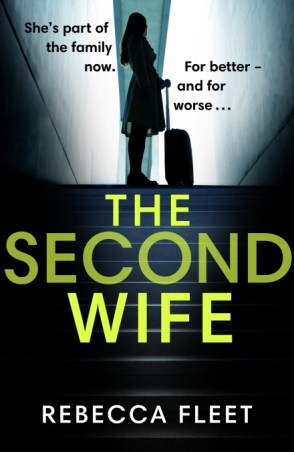
The Second Wife is Rebecca Fleet’s second novel. Her first, The House Swap, was well received and now she takes her skill at writing engaging domestic thrillers to the next stage. I will say at the outset that as much as I was gripped by The Second Wife, I was cursing quietly to myself because it contains a seismic plot shift towards the end which completely demolishes every assumption the reader may have made about what is going on, based on what he or she has been told by the different narrators. But why the curses? Simply because it makes a summary doubly difficult, because no reviewer wants to be known as the person who gave the game away. I loved the book, however, and I want you to love it too, so here goes – treading on eggshells.

TSWThere are three narrative viewpoints; centrally, there is Alex. He is a widower with a teenage daughter, Jade. He works in an advertising agency in Brighton, on England’s south coast. His first wife died from cancer when Jade was just a little girl, but he has remarried. The titular second wife Natalie is one of the storytellers, and she does her best to be a decent ‘second mum’ to Jade, although hormones have started to kick in and Jade is, like every modern teenage girl, obsessed with her social media profile and perceived slights from her step mum.

The novel begins with a serious fire in Alex’s house. Natalie, overcome by the smoke and flames, has been unable to rescue Jade, but the emergency services arrive in time to bring the teenager to safety. Temporarily relocated to a hotel, Alex and Natalie take turns at Jade’s hospital bedside as she slowly recovers from the ordeal. As Jade comes back to life, Alex is both puzzled and horrified at his daughter’s insistence that there was a strange man in the house at the time of the fire. Now, Alex’s disquiet turns to genuine alarm, and Natalie admits to him that she has a disturbing back-story.

RF014Her estranged sister, Sadie, has led a wayward and self-destructive existence which has forced Natalie to put some distance between herself and her sister, and reinvent herself using a different identity. Sadie’s obsession with a violent criminal has gone disastrously wrong, and Natalie is trying to lead a new life. By this time, Fleet (right) has given Sadie a voice of her own, and we listen to the musings of a sexually promiscuous young woman who has used men like Kleenex, and has a moral compass that barely makes the needle flicker beyond zero on the scale. But she has fallen under the spell of Kaspar, a London club owner who uses women in the same way that Sadie has come to use her queue of suitors.

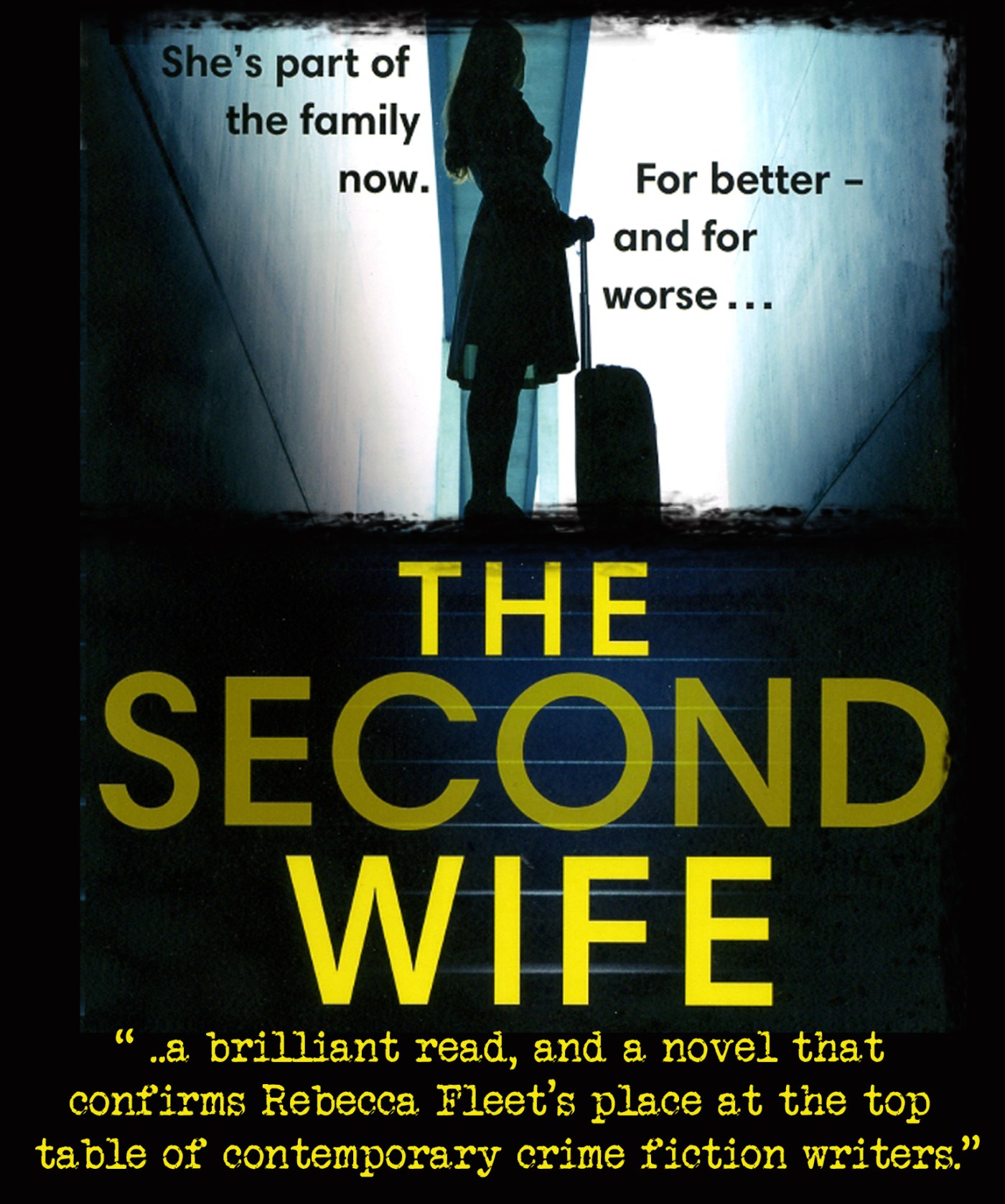
So, we have the three viewpoints. Timewise, they span almost a decade. All I can say is that one of them – and you have to choose – is telling the mother of all lies. The Second Wife is anxiety-on-a-stick and, although the plot twist left me wondering who on earth I could rely on to tell me the truth, this was a brilliant read, and a novel that confirms Rebecca Fleet’s place at the top table of contemporary crime fiction writers. The Second Wife is published by Doubleday and is out today, 5th March.

BLOOD WILL BE BORN . . . Between the covers

BWBB header

GDBelfast and its grim sectarian past is the epitome of noir. But, sadly, it is a non-fiction noir, as real events over the past fifty years or so would have been dismissed as preposterous had they been penned by a novelist. Such novelists would have to be writing historical fiction, though – wouldn’t they? Surely the momentous events of the spring of 1998 signaled a slow but irrevocable process of healing across the province? Gary Donnelly (left) has written a blistering debut novel Blood Will Be Born which says otherwise.

DCI Owen Sheen is a London copper born and brought up in the Sailorstown district of Belfast. His childhood was brutalised when an IRA car bomb devastated the street where he and his brother were playing. He survived, but his brother did not. Now, decades later, he has been seconded to work with the PSNI (Police Service of Northern Ireland assisting their historic crimes unit. He has a hidden agenda, though, and it is to track down the people who set the bomb which killed his brother.

His Belfast minder is to be DC Aoifa McCusker, an ambitious and headstrong young officer widely distrusted by her male colleagues. Even before Sheen and McCusker have the chance to discover how they each like their coffee, author Donnelly introduces us to two of the spectacularly grotesque villains of the story. First up is John Fryer, a brutal republican hitman with too many deaths to his name. Too many? Fryer’s murderous career has been haunted by a grisly mythical beast known as The Moley, who rises up from the primeval bog and is only placated by the shedding of fresh blood. Fryer is contained – for now – in a secure mental hospital.
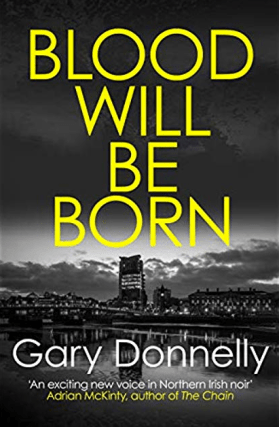

Fryer’s partner in crime also has his ghost, but the spectre is more personal for Christopher Moore. His father, a trusted and brave RUC (Royal Ulster Constabulary) officer, committed suicide when the changes forced upon policing by the Good Friday Agreement became too radical for him to cope with. Christopher Moore who, physically, looks as if he should be hunched up in his sweaty bedroom playing a computer game, is actually barking mad, as we learn when he butchers his own grandmother.

bwbb coverFryer and Moore, for their own reasons, are determined to set Belfast on fire. Not the triumphalist – but literal and containable – fire of The Loyalist bonfires on the eve of 12th July, but a fire which will lay waste to the fragile peace enjoyed in the divided city. Sheen and McCuskey, with different motives, are desperate to bring down Fryer and Moore.

It’s a certainty that no-one in mainland Britain today – nor their recent ancestors – has ever experienced anything as divisive and embedded with visceral hate as the social and religious conflict in Northern Ireland. We need to go back centuries to find anything remotely comparable. The English Civil War, perhaps, or the Wars of The Roses? Those two conflicts would certainly bear comparison in terms of casualties, but the dead of those wars were overwhelmingly soldiers killed in set-piece battles. What is euphemistically termed The Troubles has, over the decades, forced itself into homely living rooms, pub parlours, chip shops, trains and buses, public squares and almost every domestic nook and cranny across Ulster.

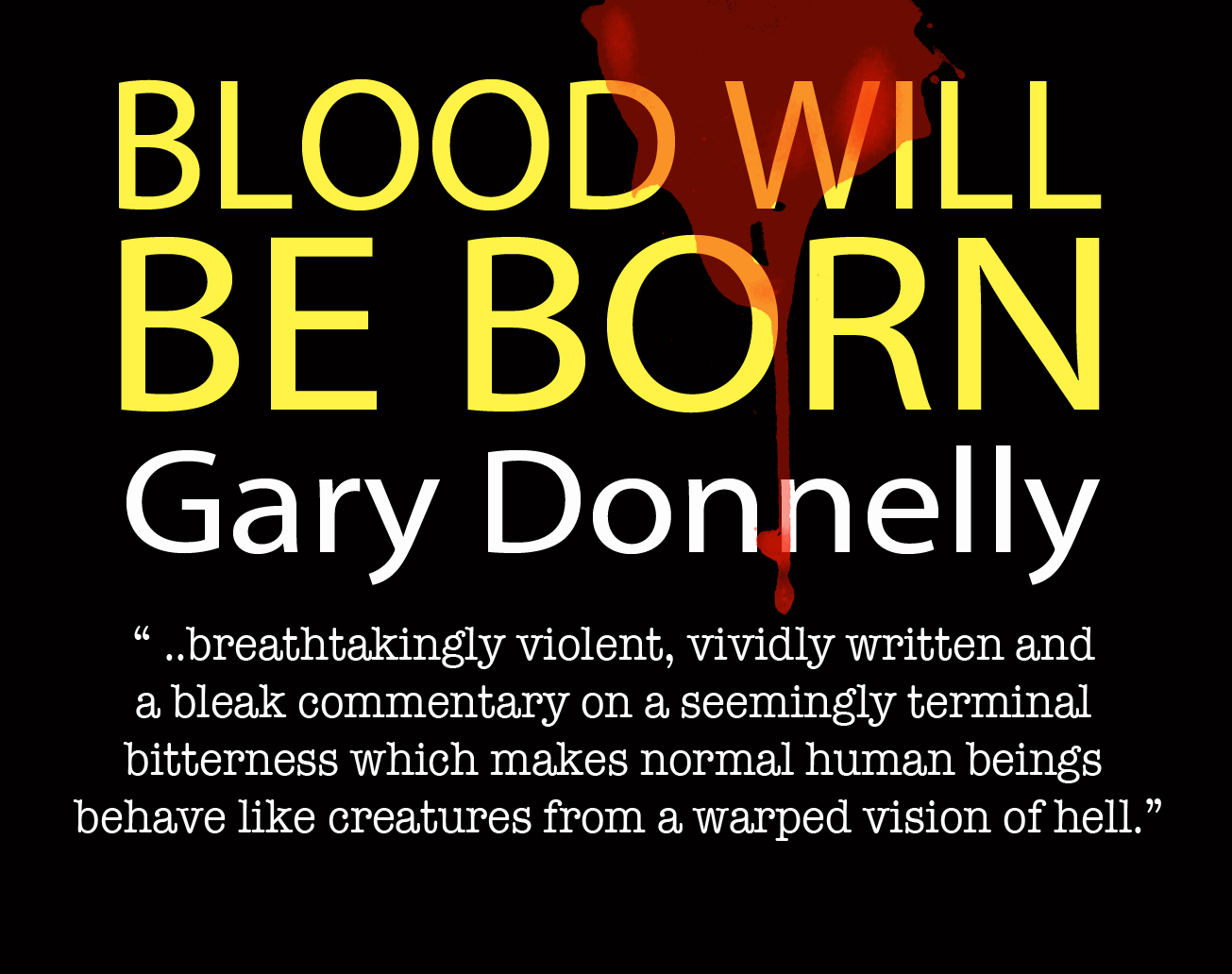
Blood Will Be Born is breathtakingly violent, vividly written and a bleak commentary on a seemingly terminal bitterness which makes normal human beings behave like creatures from a warped vision of hell. Not even Hieronymus Bosch at his coruscating best could have created monsters as fearsome as those who walk the streets of Donnelly’s Falls Road and Shankhill. Blood Will Be Born is published by Allison & Busby and is available now.

Blog at WordPress.com.

Up ↑