Search

fullybooked2017

Tag

murder

DEATH COMES TO NEWMARKET . . . A savage murder in Victorian Louth (1)

DCTN header

PART ONE

It is March 1875. Mr Disraeli is the Prime Minister, and in Louth, local architect James Fowler is Lord Mayor. At No. 29 Newmarket lives agricultural blacksmith John Hodgson, his wife Jane and their large family. Elder son Charles has moved out but there are still seven other young Hodgsons at home, the oldest being Louisa, aged 22.

For the last four years, Louisa has been courted by a young man called Peter Blanchard, aged 25, the elder of another large family who live at 29 Charles Street. Peter’s father, Peter senior, with whom he works was described as a fellmonger, an old word for someone who deals in animal skins. Peter the younger had moved out of the family home and was living in town with a woman called Mrs Baker who kept a lodging house on Eastgate.

Photograph of Free Methodist Church, Eastgate, Louth, Lincolnshire [c.1930s-1980s] by John Piper 1903-1992


The Hodgson family were devout churchgoers, and their chosen place of worship was the imposing Free Methodist church on Eastgate (above). This had been built in the 1850s after the so-called ‘Free’ Methodists split from the mainstream Wesleyan church. On the evening of Sunday 7th March, the Hodgson family attended the evening service in Eastgate. Peter Blanchard was standing across the way from the church, outside Mrs Baker’s house, and he came over to talk to Louisa but did not join them when they went into the church. At about 7.45 pm, the family left the church, to find Blanchard waiting for them. Mr and Mrs Hodgson went to visit friends in the town but Louisa, Blanchard and the two younger Hodgson girls – Alice and Harriet – walked up the hill to Newmarket.

Mr and Mrs Hodgson returned home at 9.15, along with another young man called John George Campion, a farmer who lived on Brackenborough Road. Louisa and Blanchard were  together in the sitting room, but the rest of the family were in the kitchen. Contemporary newspaper reports can do a much better job of describing what happened next that I can. These were the words of John Hodgson:

Body text1

In PART TWO – an arrest and a funeral

Blood Runs Thicker . . . Between the covers

BRT HEADERThis is the eighth book in a very popular series set in 12th century Worcestershire. I am a latecomer to the party, but I thoroughly enjoyed the previous book River of Sins, and you can read my review by clicking this link. Now, Under-Sheriff Hugh Bradecote and his grizzled ally Serjeant Catchpoll – along with apprentice lad Walkelin – investigate the murder of an irascible and little-loved nobleman, Osbern de Lench.

The late man had a habit of sitting on his horse atop a small hill near his house and gazing at his land. It was said that doing so calmed him down when he was in one of his more wrathful moods. On the fateful day the horse comes back alone and a search party finds de Lench stabbed to death. His family was certainly not a happy one. Baldwin, his son by his first wife (who died in a mysterious riding accident) has the same choleric temper as his father. There is a second son – the result of de Lench marrying again, but Hamo is very different from his half brother. He is studious and solitary and probably has what we now call Asperger’s Syndrome.

BRT DIVIDER

Incidentally, there are three real-life villages near Worcester which rejoice under the names Church Lench, Ab Lench and Rous Lench, but I believe Osbern de Lench exists only in Sarah Hawkwood’s vivid and blessed imagination. Back to the novel, and Bradecote & Catchpoll learn that de Lench had ‘history’ with other local landowners, but was this enough to link any of them to his death? And was Fulk, the family Steward providing home comforts to Lady de Lench, a woman not unused to being roughly dealt with by her husband? The seemingly pointless murder of Mother Winflaed, a harmless woman who ministers to the villagers with her herbal knowledge – and also delivers its babies – only adds to the confusion.

The ingredients that make up the chemistry between the three investigators is cleverly worked. Young Walkelin is callow, but clever and inquisitive, while Catchpoll’s world-wearness is an excellent counter balance to Bradecote’s more lofty idealism.

By no means is this a preachy or political novel, but Sarah Hawkswood has some pertinent points to make – via Hugh Bradecote – about the treatment and role of women, and the very real perils of childbirth. As a man of advanced years I can find much to moan about in current society, but modern obstetrics (at least in the western world) is something for which we should all be eternally grateful.

I am very much an amateur book reviewer, and there are probably hundreds of us who love to read, and are grateful for publishers and publicists who trust us to deal fairly with the books they send us. One of the downsides is that there is always a To Be Read pile, with deadlines to meet, and little chance to sit back and read purely for pleasure. I am determined, however, to find time to catch up with the previous books in this series. If they are all as good as this one, then my time will not be wasted

 This novel is thoroughly immersive and the blend of classic whodunnit, gritty historical detail and the sense of a glorious landscape now all but vanished is utterly beguiling. Blood Runs Thicker is published by Allison & Busby, and is available now.

THE THREE LOCKS . . . Between the covers

TTL006In a sappingly hot Indian Summer in central London, Dr John Watson is sent – by a relative he hardly remembers – a mysterious tin box which has no key, and no apparent means by which it can be opened. Watson and his companion Sherlock Holmes have become temporarily estranged, not because of any particular antipathy, but more because the investigations which have brought them so memorably together have dwindled to a big fat zero.

TTL007But then, in the space of a few hours, Watson shows his mysterious box to his house-mate, and the door of 221B Baker Street opens to admit two very different visitors. One is a young Roman Catholic novice priest from Cambridge who is worried about the disappearance of a young woman he has an interest in, and the second is a voluptuous conjuror’s assistant with a very intriguing tale to tell. The conjuror’s assistant, Madam Ilaria Borelli is married to one stage magician, Dario ‘The Great’ Borelli, but is the former lover of his bitter rival, Santo Colangelo. Are the two showmen trying to kill each other for the love of Ilaria? Have they doctored each other’s stage apparatus to bring about disastrous conclusions to their separate performances?

As for the missing young woman, Odile ‘Dilly’ Wyndham, she is only ‘missing’ because she has a pied-à-terre, unknown to her parents, where she can flirt with her admirers to her heart’s content, and it transpires that the thoughts of the young priest-in-waiting are not wholly as pure as the waft of incense. Was he responsible for the doll found on Jesus Lock footbridge, dressed to look like Dilly, but with its arm wrenched off?

TTL009

As an aside, this tale has Holmes and Watson as younger men, perhaps in their thirties. MacBird includes all the standard tropes – Watson’s bemused geniality and stiff upper lip, Holmes’s mood swings and reliance on cocaine when life becomes too dull, and even the stern but maternal presence of Mrs Hudson.

Much of the action takes place in Cambridge, and it is there that the murder which occupies much of the book is committed. MacBird does a fine job of keeping the two strands of the plot – the warring conjurors, and the love life of Dilly Wyndham – running together side-by-side, and she shows us some magic of her own by bringing them together by the end . Watson’s mysterious box? It does get opened eventually, and what it reveals is rather moving. Fans of the great detective will not be disappointed by The Three Locks – it has enough twists and surprises to satisfy even the sternest Holmesian.

TTL009
Is ‘pastiche’ the right word for this book? Maybe ‘re-imagining’, or ‘tribute’ might be kinder. Whichever word we use, the central problem facing modern writers of Sherlock Holmes stories is that of length. Even the four full length canonical novels – A Study In Scarlet, The Sign of The Four, The Hound of the Baskervilles and The Valley of Fear – are very short compared to modern books. The bulk of the Holmes canon are the short stories, which spark and fizz brilliantly for a few thousand words, and then are gone. Yes, short story writing is an art in itself (which very few have mastered) but maintaining pace and narrative drive for four hundred or more pages is a different challenge.  A writer of a Holmes and Watson homage has to spin out every gesture, comment and impression which, in the originals, crackle and then are gone in a moment. I haven’t read the previous three MacBird Holmes novels, but The Three Locks works as well as most other novels in the genre, and certainly better than some. It is published by Collins Crime Club and is out on 1st April. If you click on the image below, it will take you to Bonnie MacBird’s website, and a very entertaining set of annotations linked to the novel.

TTL008

LAST NOCTURNE . . . Between the covers

LN HEADER


I am a huge fan of MJ Trow’s books. We have some things in common. I don’t share his gifts as a writer but we did go to the same school and we both had long careers as teachers. We certainly share the same acerbic views of the bean counters and politically correct apologists who run schools these days. If you want first hand knowledge of these miserable characters, then read any of Trow’s wonderful Peter ‘Mad’ Maxwell series. They are great entertainment – very, very funny, but with a serious side, too.

Like his creator, Peter Maxwell has left the chalk face and retired to his Isle of Wight home, but Trow’s brilliance as a historian still shines in the Grand and Batchelor series, of which Last Nocturne is the seventh. Reviews of some of its predecessors are here, and the new book has the usual dazzling mix of real-life characters – try Oscar Wilde, GF Watts, John Ruskin and James McNeill Whistler for starters –  knockabout humour and murder most foul.

41xgC83kdoLGrand & Batchelor are private investigators based in 1870s London and – much to the relief of James Batchelor, who is a terrible traveller – Last Nocturne has its feet securely on home soil. Grand is from a wealthy New England family, and fought bravely for the Union in The War Between The States, while Batchelor is a journalist by trade. Murder – what else? – is the name of the game in this book, and the victims are, you might say ‘on the game’. Cremorne Gardens were popular pleasure gardens beside the River Thames in Chelsea, but after dark, the ‘pleasure’ sought by its denizens was not of the innocent kind. ‘Ladies of the Night’ are being murdered – poisoned with arsenic – but the killer doesn’t interfere with them, as the saying goes, but instead leaves books by their dead bodies.

As the two investigators become involved in the police hunt for the bookish poisoner, they are still doing the day job which, in this case, is being employed by Grand’s fellow countryman Mr Whistler – he of the painting of his mum – to dig out any dirt they can find on art critic John Ruskin who, ‘as any fule no’ (to quote Nigel Molesworth) wrote, of one of Whistler’s paintings, “never expected to hear a coxcomb ask two hundred guineas for flinging a pot of paint in the public’s face”


SCROLL
Trow has great fun
with John Ruskin’s back story, particularly his disastrous marriage to Euphemia ‘Effie’ Gray , and the disastrous first night of their honeymoon when he was so traumatised by her luxuriant pubic hair that he was unable to continue with his marital duties. The Pre-Raphaelite painter John Millais clearly had no such qualms, as he married Effie in 1855, and they produced eight children.

The search for the killer, however, continues, but G & B, along with the police, remain mystified. They even resort to a seance involving the well-known society medium, Miss Florence Cook, whose reputation has gone before her:

“The murmurs from the guests were mixed, but Florence was used to that. Speaking for herself, she couldn’t really see why people were always so surprised when she was from time to time exposed as a fraud. What did they expect? That the dead would turn up on cue to talk to people about the other side? Why would Uncle Norman come back to a seedy scullery in Acton to tell his niece that it was all very l, he was at peace, and he’d been talking to Beethoven only the other day, who told him to tell little Bessie to carry on with her piano lessons?”

SCROLL
Eventually G & B solve the mystery, but rather more by accident than design and the book comes to a dramatic and entertaining conclusion. Last Nocturne is published by Severn House, and is available in hardback and as a Kindle.

DEATH AT SANDOWN VILLA . . . True crime in Leamington Spa (2)

Header

PART TWO

The story so far. It is May, 1905, and 21 year-old Maida Warner, who had been working as a domestic servant for Mr and Mrs Patterson on Rugby Road, has been sent home to her parents in Stockton, after a mysterious medical emergency. Maida has taken the train from Milverton Station and once they are sure she has gone, John and Lizzie Patterson go up to the girl’s room. Let the newspaper report take up the narrative:

“In the bedroom, Mr Patterson found Maida Warner’s tin traveling trunk. It was strapped up, and appeared the same as when she first came to the house with it. There was also parcel of clothes on the top of the box, and on opening it he saw that which aroused his suspicions still further. He took up the tin box to see how heavy it was, and he found it heavier than he expected. On opening he found a lot of underclothing, and moving these he discovered a parcel, wrapped up in an apron and tied with string. He left the parcel on the floor. and from what saw he went and called Mrs. Moffat, a neighbour, and told her of his suspicions. Patterson asked her to examine the parcel and, with his wife, left the room. When Mrs Moffat returned downstairs she informed them that she had found a dead baby.”

Mary Moffat lived with her husband at Cliff Cottage, next door to the Pattersons, and her testimony at a later court hearing chills the blood, even today.

“I went into the servant’s bedroom. Mrs. Patterson pointed out a parcel to me, which I examined. It contained soiled linen, and evidence that a child had been born. I then examined the contents of the tin box. and found a fish basket, tied with string. Cutting the string, I found a parcel fastened with a safety pin and tied round with a necktie. This I also cut, and on unwrapping the parcel saw the body of a child. It was quite blue in the face, but I did not notice whether anything was tied round the neck. I thought the body looked as it had been washed.”

In a state of shock, Patterson sent for the police. Detective-Sergeant Matthews arrived and went into the back bedroom, and there saw two bundles as described by John Patterson and Mary Moffat. The second bundle contained the body of a male child, wrapped in towels and apron. Matthews removed the body to the mortuary, where Dr Rice made a post-mortem examination. The next day, accompanied by Chief Constable Earnshaw, Matthews went to Stockton and saw the girl, Maida Warner, at her father’s house in Elm Row (below).

Elm Row

He took her to Leamington Police Station, and, after cautioning her, charged her with the wilful murder of the male child on or about May 31st. She replied, “I am innocent of that.” When he saw her first at Stockton she was walking about, and he did not notice anything unusual about her. Warner was subsequently removed to the Warneford Hospital, and from there to the Infirmary at Warwick Gaol.

Dr. Rice’s post mortem report to the Coroner at the inquest into the baby’s death makes for grim reading:

“On the evening of June 3rd I saw the body of the child at the mortuary. I made a post-mortem examination on Sunday, and found that it was a male child, fairly well developed, weighing 51bs. 6oz. On Saturday I had come to the conclusion that the child had lived, but had been dead one or two days. I found a string tied three times round the neck, and firmly knotted at the end of the second round, and again at the end the third round. The child’s face was livid, the tongue protruding, and the fingers clenched. The body was wrapped in an apron which was marked M. Warner.

I made the post-mortem in company with Dr. Ross. Decomposition was just beginning. There were two small punctures of the skin on the left of the stomach, such might have been caused a large pin, but they did not penetrate deeplv. The brain was healthy, but congested, and there was good deal of blood under the scalp, which was the natural process of child birth. The heart was healthy and the lungs inflated. I am of the opinion that the child was healthy child, at, or near, full time, that it had lived and breathed freely. The cause death suffocation by strangulation, which might have been caused the cord round the infant’s neck. The child was alive when this constriction was put round it. It was impossible to say that the child was wholly born, at the time it was done.”

THE FINAL PART WILL BE AVAILABLE
AT 6.00pm ON MONDAY 1st MARCH

MURDER AT THE RITZ . . . Between the covers

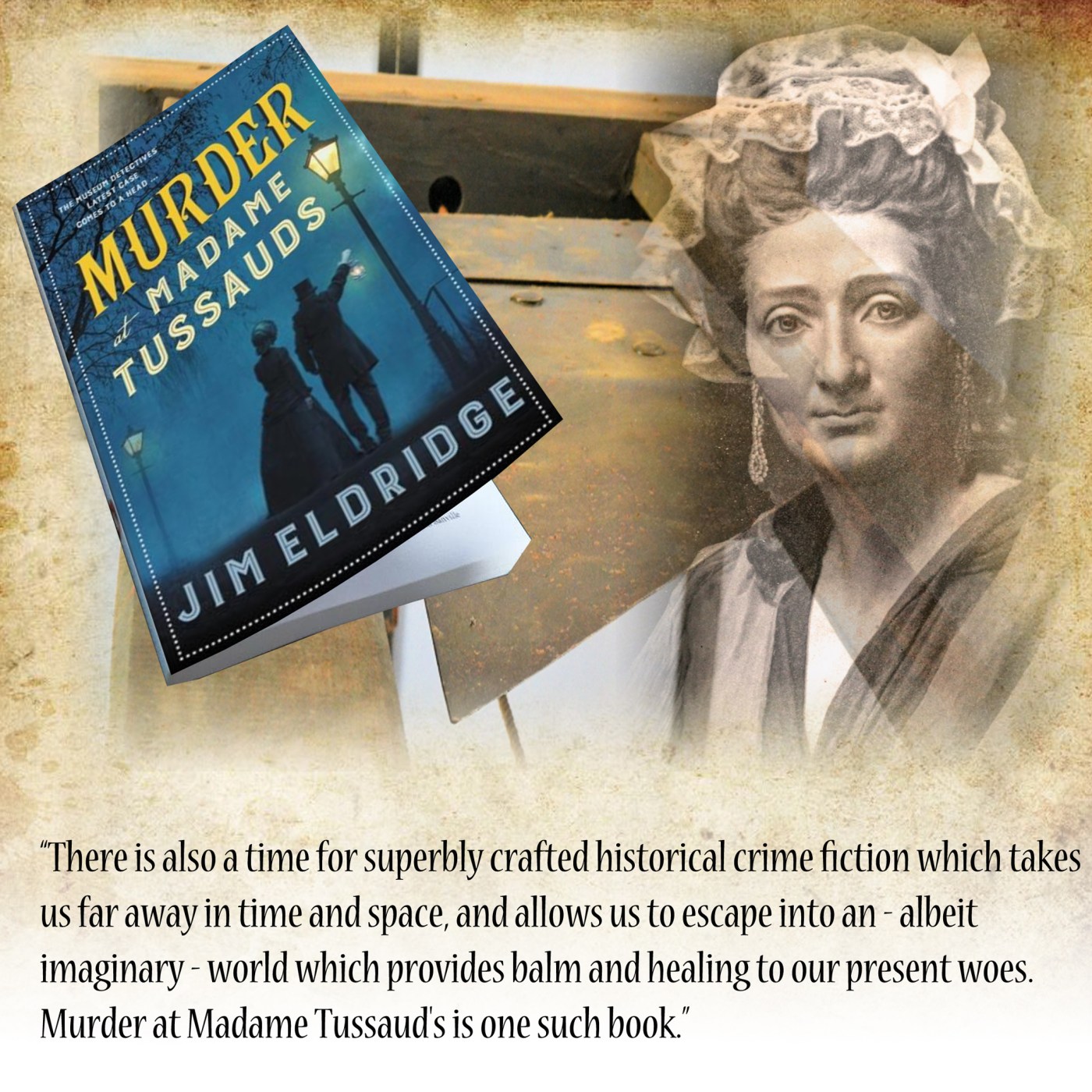
MATR headerZogAny novel which features – in no particular order – Commander Ian Fleming, King Zog of Albania, a dodgy lawyer called Pentangle Underhill, and a Detective Chief Inspector named The Hon. Edgar Walter Septimus Saxe-Coburg promises to be a great deal of fun, and Murder At The Ritz by Jim Eldridge didn’t disappoint. It is set in London in August 1940, and Ahmet Muhtar Zogolli, better known as King Zog of Albania (left) has been smuggled out of his homeland after its invasion by Mussolini’s Italy, and he has now taken over the entire third floor of London’s Ritz Hotel, complete with various retainers and bodyguards – as well as a tidy sum in gold bullion.

Anyone who has studied the history of Albania will know that it has always been a chaotic place. In the 1920s, while working at the League of Nations, the famous sportsman CB Fry was reputedly offered the throne. For a rather more serious memoir of Albania during WW2, Eight Hours From England (click for the review) by Anthony Quayle is well worth a read, and we all know – thanks to the Taken franchise, starring Liam Neeson, that Albania’s chief export to the rest of the world is organised crome, drug-running, money laundering and people trafficking.

Screen Shot 2021-02-25 at 19.08.38Back to the story, and when a corpse is discovered in one of the King’s suites, Coburg is called in to investigate. The attempt to relieve the Albanian monarch of his treasure sparks off a turf war between two London gangs who, rather like the Krays and the Richardsons in the 1960s, occupy territories ‘norf’ and ‘sarf’ of the river. After several more dead bodies and an entertaining sub-plot featuring Coburg’s romance with Rosa Weeks, a beautiful and talented young singer, there is a dramatic finale involving a shoot-out near the Russian Embassy. This is a highly enjoyable book that occupies the same territory as John Lawton’s Fred Troy novels (click to read more). It is nowhere near as dark and dystopian as those books, but Murder At The Ritz is none the worse for that.

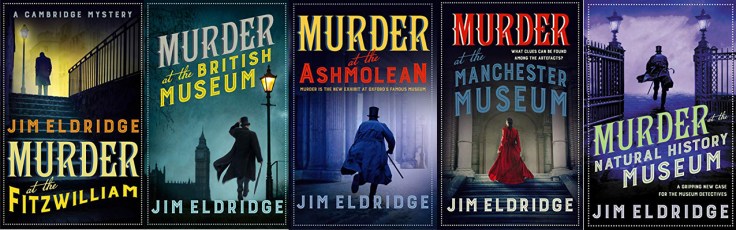
Since 2016 Jim Eldridge has concentrated on writing historical crime fiction for adults. Previously he worked as a scriptwriter and wrote books for children and young adults. As a scriptwriter he had over 250 TV and 250 radio scripts broadcast in the UK and internationally. In 2019 I read, enjoyed and reviewed an earlier book by this writer, and if you click on the title – Murder At The British Museum – you can see what I thought. Murder At The Ritz is published by Allison & Busby and is out now.

THE ST MICHAEL’S ROAD MURDER . . . The madness of a daughter (part 2)

Gladys header

Louth. February 1950. Gladys Hirschberg is living with her mother Alice Wright at 32 St Michael’s Road (below). 55 year-old Gladys has had an eventful life. She married a soldier, Victor King, in 1916, was widowed the next year, and then went to Rhodesia with a new husband, and took his name, von Hirschberg. Gladys returned to England at the beginning of World War Two and served with the ATS. After a brief return to Rhodesia, she came back to Louth in 1946.

32 St Michaels

On the morning of Sunday 19th February, Mrs Lena Gibson who was a neighbour of Gladys and her mother answered a frantic knocking on her door to find Gladys, shaking and white faced. Gladys said to Lena:
You had better come and see. I have killed my mother. I hit her on the head with a hammer.”
Entering No.32, Lena was horrified to see Alice Wright unconscious on the sofa, with a dreadful head wound.

Todd

An ambulance was summoned and the police came and took Gladys into custody, She was formally charged with attempting to kill her mother. The senior officer who read the charge was none other than Superintendent George Todd (above), Gladys Hirschberg’s co-star in the Louth Playgoer’s production of The Winslow Boy in April the previous year.

Alice Wright never recovered consciousness and died two days later, so when Gladys Hirschberg appeared at Louth Magistrates Court on 21st February, the charge was murder. After another hearing on 11th March, Gladys was committed for trial at Lincoln Assizes in June.

It seems that Gladys was in such a bad way
that she was sent to Winson Green prison in Birmingham, because it had a secure mental unit, and it was from there that she came to trial at Lincoln on Tuesday 6th June. The presiding judge was George Lynskey.

This is the newspaper report of proceedings:

In court she wore a black coat and a grey jumper. She looked pale but seemed composed. She pleaded not guilty in a clear voice. While the Jury was sworn in she stood with bowed head and downcast eyes between two women prison officers. The courtroom was crowded, the majority there being women.

Hirschberg was defended by Mr. R. C. Vaughan. K.C.. and Mr. W. K Carter. Mr S.L.Elborne, prosecuting, said that Hirschberg had been living in Rodesia and had returned to England to look after her mother. Later, after living at home and then working in London, she had an offer of another job in Rhodesia, and her mother was going with her. The home and furniture were to be sold. Mrs Wright was over 80, and apparently the accused thought she was doing right by moving her to Rhodesia.

Hirschberg then became more troubled about the situation, and February 19th she told a neighbour that she had hit her mother on the head with a hammer and had killed her. Mrs Wright was found with severe head injuries and died later in hospital.

The neighbour, Lena Marjorie Gibson said Hirschberg had worried about taking her mother to Rhodesia and felt she was taking away her security by selling the house. Hirschberg had been widowed in the first war, married a Belgian and had said this marriage was unhappy. She had sought refuge in Army work during the war and became a junior commander in the ATS.

Mrs. Gibson described how Hirschberg became more worried, had financial worries when her husband stopped her allowance, and felt she was a failure and her life futile.

She had fits of depression and on one occasion was seen crouching in an animal attitude with staring eyes and twitching face.

“I was afraid she was no longer sane.” said Mrs. Gibson. She had also said herself she felt her mind was going. In statements to the police Hirschberg was alleged to have said that her mental state made her want to escape from her responsibilities. She tried to gas herself, and then decided it would be best if they both “went out” because some aspects of her life had been a failure.


“Quite suddenly a cloud came over me and 1 felt I must end it all for both,” Something in her brain told her she must do it but only part of her knew what she was doing with the hammer. She had hit herself on the head with the hammer. The last few weeks had been a terrible effort as if her hands and brain had not co-operated without terrific effort.

Clipping

Called for the defence, Dr J Humphreys of Birmingham prison said Hirschberg considered herself a failure in her job in London and had a feeling of guilt that her friends were having to do things for her mother which she felt she should have been doing. She was suffering from an acute sense of chronic depression which was a mental disease. While in prison,said the doctor, Hirschberg swallowed five needles because she said she wanted to suffer physical pain instead of the anguish she was feeling.

She had told him she was an outcast and dare not approach God in prayer – which was born out by the fact that she refused to go to the prison chapel or see the chaplain.

When she committed the act she would not know that what she was doing was wrong. Evidence that she was suffering from a mental disease was also given by Dr. M. Sim, a psychiatrist at a Birmingham hospital.


The prosecution didn’t challenge the assertion that Gladys Hirschberg did murder her mother whie insane, and she was sentenced to be detained “at Her Majesty’s Pleasure.”

There is a poignant postscript to this sad tale. A few years later, Messrs Falkner & Co, Solicitors, of 17 Cornmarket, Louth acted for Gladys Hirschberg as she applied to change her surname to King. This was of, course, in remembrance of Victor Algernon Robert King, her young husband who had perished in Flanders thirty seven years earlier. In this legal claim, her address was given as Crowthorne, Berkshire, which is home to the secure mental hospital known as Broadmoor.

Screen Shot 2021-02-17 at 14.45.50


THE ST MICHAEL’S ROAD MURDER . . . The madness of a daughter (part 1)

Gladys header

Gladys Wright was born in Louth in 1894. Her father, Edward Wright was a schoolmaster, and the census of 1911 has the family living at Egmont – No. 4 South Street, Louth. Edward Wright went on to become Headmaster of St Michael’s School, where his wife Alice also taught.

Wright census
In December1916, Gladys married a young man named Victor King, in Richmond, Surrey. Their marriage was to be short lived, however. Victor was Second Lieutenant in The Machine Gun Corps, and on 29th September, he was killed during the Third Battle of Ypres, better known perhaps as the Battle of Paschendaele. His name is one of 34,000 others inscribed on the Tyne Cot Memorial to the Missing, which indicates that if he was given a battlefield burial, his grave was later lost. A grimmer option is that his body was simply destroyed by shellfire.

Like so many other young widows, Gladys had the rest of her life to live, and at some point between the end of the Great War and the beginning of World War Two, she met and married a man called von Hirschberg. It seems that they tried to begin a new life in what was then Rhodesia, where the von Hirschberg family had lived for decades. Whatever happened to the marriage was never recorded publicly, but by World War Two, Gladys was back in England and serving in the Auxiliary Territorial Service – the ATS – a volunteer unit for women. After the war, the ATS became the WRAC, but Gladys chose not to continue with service life and, after another brief spell in Rhodesia, returned to Louth to live with her widowed mother Alice in her house in St Michael’s Road.

Gladys, now in her 50s, was a keen amateur actress and a member of the Louth Playgoers group. The only surviving photograph of her dates from 1949, when she played the role of Mrs Winslow in Terence Rattigan’s 1946 play, The Winslow Boy. One of the strange ironies of this story is that the gentleman playing Mr Winslow in the play was George Todd. When he wasn’t learning his lines, Todd was better known as Superintendent Todd of Louth police. He and his co-star were to meet again a year later in rather different circumstances.

Gladys031
Part two of this story will go live at 6.00pm on Sunday 21st February

WHAT WILL BURN . . . Between the covers

WWB030

As the title suggests, What Will Burn is all about fire. It begins with an old woman, badly beaten and then set alight. There are passages which hark back to the late sixteenth century, and describe the dreadful end of women who were accused of witchcraft and burnt at the stake. A man apparently spontaneously combusts as he sits in his basement flat. It ends with a grim parallel to those scenes when one of the book’s main characters, suffers a similar fate in a grim parody of those historical executions.

So, what has all this to do with James Oswald’s Edinburgh copper
, Detective Chief Inspector Tony McLean? Or, to be more accurate, Detective Inspector McLean, as he returns to duty busted down a rank after a lengthy investigation into misconduct.

His ‘welcome back Tony” case is that of the agonising death of Cecily Slater, an elderly member of an aristocratic family, who has lived alone in a crumbling cottage in the woods above Edinburgh. Her charred remains have gone unnoticed for some time, until an estate worker who runs the odd errand for the old woman makes a grisly discovery.

McLean also becomes involved with a controversial campaign called Dad’s Army. They are not the avuncular dodderers from Walmington-on-Sea, but a group of embittered men who, for one reason or another, have been denied access to their children. They are led – and empowered – by a lawyer called Tommy Fielding, a man who who has a seemingly pathological hatred of women, and is undeterred by the fact that many of his clients have been separated from their children due to allegations of serious sexual abuse.

All good police procedural series
need a repertory company of regular characters, and the Tony McLean books are no exception. There’s Grumpy Bob, guardian of the cold case records down in the basement, Detective Constable Janie Harrison – now Acting Detective Sergeant Harrison, the lugubrious Detective Constable ‘Lofty’ Blane. McLean himself is a fascinating character. Thanks to a legacy, he has the luxury of being financially independent of his job, but loves the work. He also has the mixed blessing of being someone who is sensitive to things paranormal, and beyond the ken of the Police Scotland operational handbook. Away from the station, there is the strange character of Madame Rose, a transexual psychic who can always be relied upon to provide a sense of things “not dreamt of in our philosophy”.Last but not least, there is Mrs McCutcheon’s cat. We never see the owner, but the moggie is a permanent resident in McLean’s house.

There is a new member of the cast
in this novel, in the person of Chief Superintendent Gail Elmwood, freshly signed from the Metropolitan Police to head up Tony’s team. Let’s just say that she is not your conventional senior police officer.

WWB029

As the reviewers’ cliché has it, the body count gets higher. Readers expecting a conventional solution to the criminal activity in What Will Burn will search in vain. James Oswald takes this book to a new level of dark imaginings, intrigue, human venality and sinister happenings which, if they don’t scare you, it perhaps means that you are in a persistent vegetative state. What Will Burn is published by Wildfire, and is out today, 18th February.

I am a confirmed and long-standing fan of the Tony McLean series. To read reviews of earlier novels, click here.

Blog at WordPress.com.

Up ↑