Search

fullybooked2017

Tag

London

MURDER AT THE RITZ . . . Between the covers

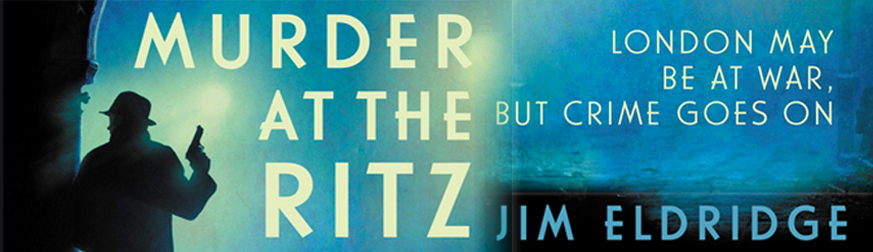
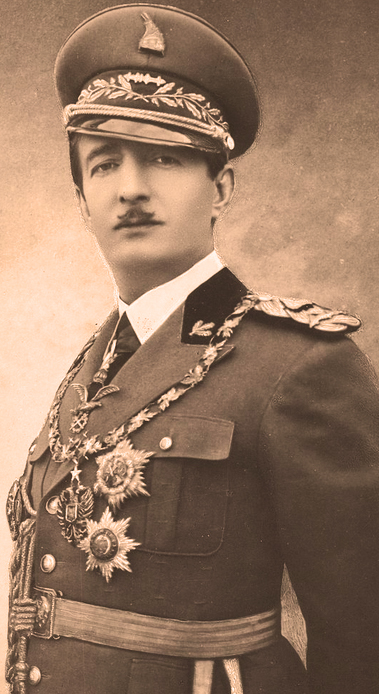
MATR headerZogAny novel which features – in no particular order – Commander Ian Fleming, King Zog of Albania, a dodgy lawyer called Pentangle Underhill, and a Detective Chief Inspector named The Hon. Edgar Walter Septimus Saxe-Coburg promises to be a great deal of fun, and Murder At The Ritz by Jim Eldridge didn’t disappoint. It is set in London in August 1940, and Ahmet Muhtar Zogolli, better known as King Zog of Albania (left) has been smuggled out of his homeland after its invasion by Mussolini’s Italy, and he has now taken over the entire third floor of London’s Ritz Hotel, complete with various retainers and bodyguards – as well as a tidy sum in gold bullion.

Anyone who has studied the history of Albania will know that it has always been a chaotic place. In the 1920s, while working at the League of Nations, the famous sportsman CB Fry was reputedly offered the throne. For a rather more serious memoir of Albania during WW2, Eight Hours From England (click for the review) by Anthony Quayle is well worth a read, and we all know – thanks to the Taken franchise, starring Liam Neeson, that Albania’s chief export to the rest of the world is organised crome, drug-running, money laundering and people trafficking.

Screen Shot 2021-02-25 at 19.08.38Back to the story, and when a corpse is discovered in one of the King’s suites, Coburg is called in to investigate. The attempt to relieve the Albanian monarch of his treasure sparks off a turf war between two London gangs who, rather like the Krays and the Richardsons in the 1960s, occupy territories ‘norf’ and ‘sarf’ of the river. After several more dead bodies and an entertaining sub-plot featuring Coburg’s romance with Rosa Weeks, a beautiful and talented young singer, there is a dramatic finale involving a shoot-out near the Russian Embassy. This is a highly enjoyable book that occupies the same territory as John Lawton’s Fred Troy novels (click to read more). It is nowhere near as dark and dystopian as those books, but Murder At The Ritz is none the worse for that.

Since 2016 Jim Eldridge has concentrated on writing historical crime fiction for adults. Previously he worked as a scriptwriter and wrote books for children and young adults. As a scriptwriter he had over 250 TV and 250 radio scripts broadcast in the UK and internationally. In 2019 I read, enjoyed and reviewed an earlier book by this writer, and if you click on the title – Murder At The British Museum – you can see what I thought. Murder At The Ritz is published by Allison & Busby and is out now.
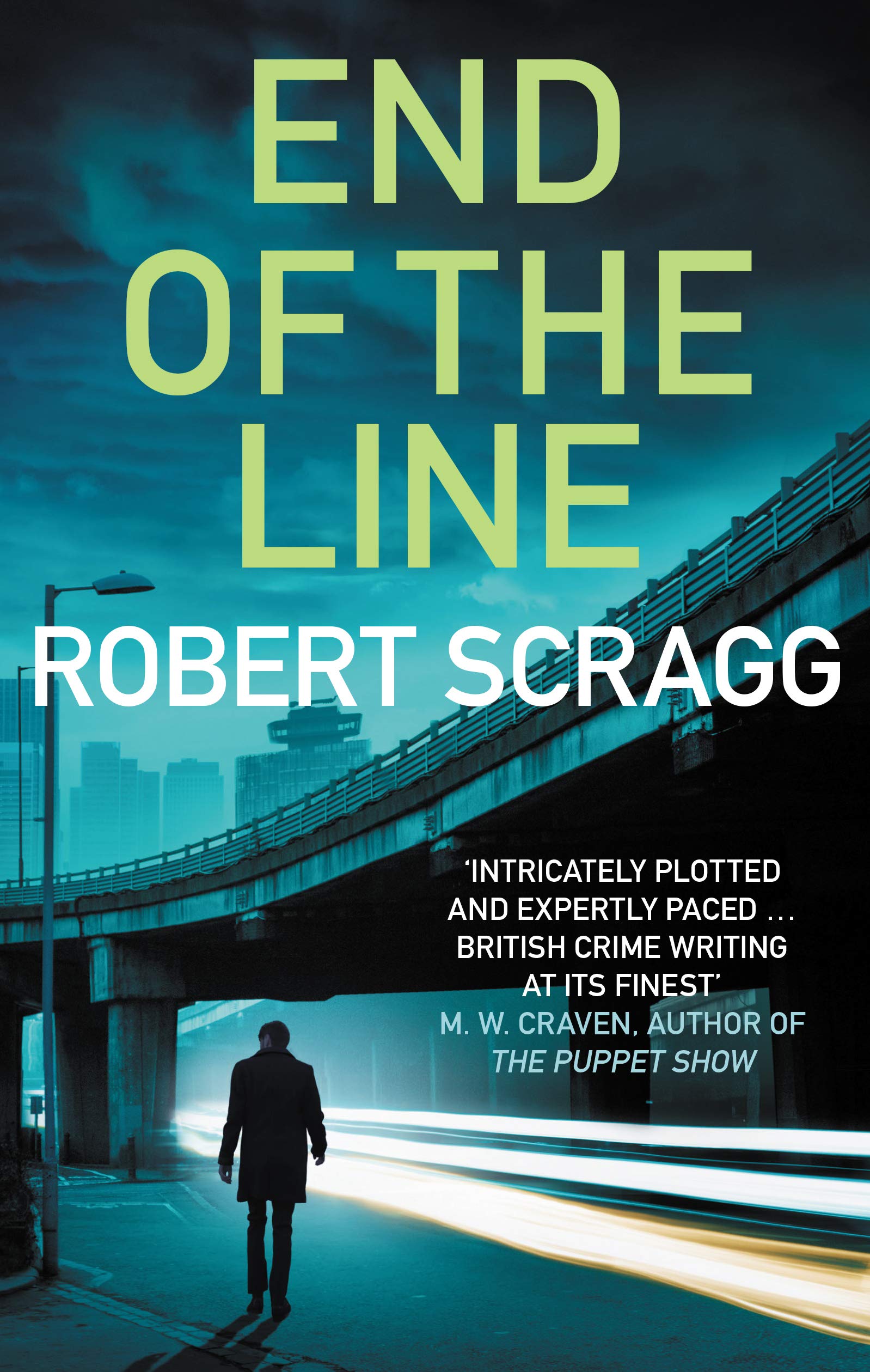
END OF THE LINE . . . Between the covers

Screen Shot 2021-02-01 at 18.30.51

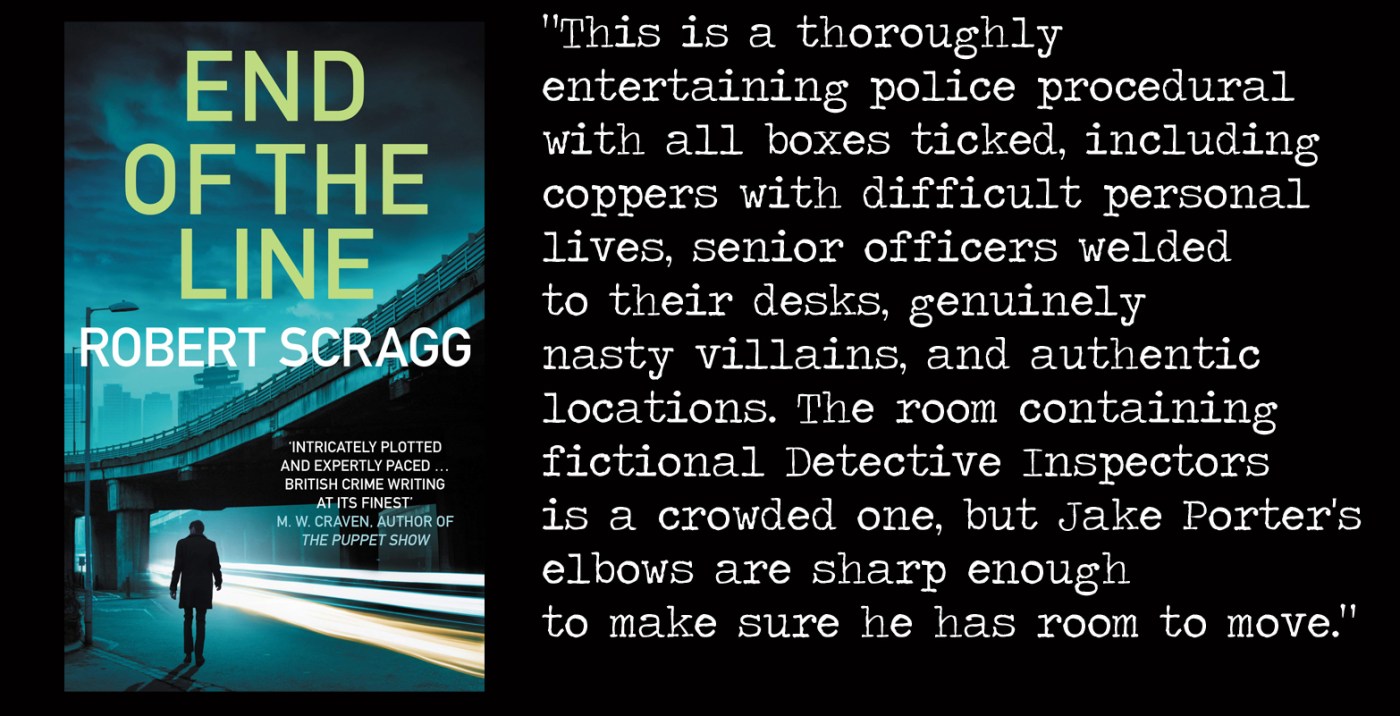
This is the fourth in Robert Scragg’s popular police procedural series featuring London DI Jake Porter and his trusty Sergeant, Nick Styles. The story so far: Porter still grieves for his wife Holly, killed in a hit-and-run incident a few years earlier. The driver remains unidentified, and it preys upon Porter’s mind. He has cautiously begun a new relationship with fellow cop Evie Simmons. Styles is married, with a young child, and is intensely loyal to his boss.

81TTdj6ywMLThe book starts in gory style. Ross Henderson, a young left wing activist, has a YouTube channel on which he posts regular videos denouncing his bête noire, a movement called the English Welfare Party. The EWP are right wing Nationalists vehemently opposed to immigration. As Henderson is setting up his latest live video stream from an abandoned magistrates’ court, proceedings are interrupted by a group who appear to be Islamic extremists. Live and on screen, the young man is killed using the jihadists’ favourite method – decapitation. By the time the police arrive,the killers are long gone, but the shocking video has been seen by millions on social media.

At the same time that Porter and Styles are assigned to the case, Porter hears that there is something of a breakthrough in his personal hunt for the person who killed his wife. Fingerprints from the abandoned vehicle that did the damage have finally been matched to that of a minor criminal, Henry Kaumu. All good then, except that Kaumu is lying in an intensive care unit, comatose and swathed in bandages after being battered around the head with a baseball bat, wielded by an angry homeowner whose house Kaumu was trying to burgle. Porter learns that Kaumu is an employee of Jackson Tyler, a notorious London gangster. Because the case is so personal, Porter is forbidden to take any part in it and so he goes ‘rogue’ to try to find the identity of the person who was driving the fatal car. His clashes with Tyler are painful and unproductive, until he receives information from an unlikely source.

ScraggPorter’s four year search for the person who killed his wife finally ends in a violent encounter on a suburban industrial site, and the hunt for Ross Henderson’s killer takes one or two wrong turns, but eventually Porter gets his man. Or does he? There is a clever twist at the end which I didn’t see coming. Robert Scragg clearly has a strong political stance, but that’s fine – it’s his book, and readers can take it or leave it.

I have to be honest and say that I smelled a rat from the word go. Why would Islamists murder a left wing activist who would have held all the ‘correct’ views on such topics as immigration, Palestine and cultural diversity? It takes Porter & Co. rather a long time to realise they are being played, but maybe that’s just me being a curmudgeon. That caveat aside, this is a thoroughly entertaining police procedural from the author (right) with all boxes ticked, including coppers with difficult personal lives, senior officers welded to their desks, genuinely nasty villains, and authentic locations. The room containing fictional Detective Inspectors is a crowded one, but Jake Porter’s elbows are sharp enough to make sure he has room to move.

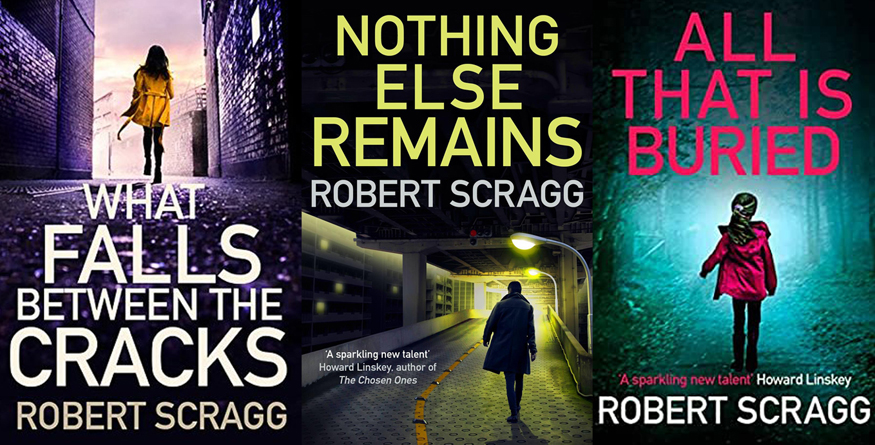
End of The Line is published by Allison & Busby, and is out now. To find reviews of the three earlier books in the series, click on the image below.

Scragg link

I KNOW WHAT I SAW . . . Between the covers

ikwis021

Imagine having a perfect memory. Being able to replay words, sounds, situations – from years ago. It’s all there, in your head, ready to be recalled. Great for exams when you were younger, but what about when something unpleasant happened to you, and it won’t ever go away? Nicola Walker has Hyperthymesia. She has been the subject of scientific studies and examinations, but her condition is what it is. Now, it’s 2020 and, at the age of 51, she has a humdrum job in London’s British Library. Sher marriage ended half a lifetime ago, and now she lives from day to day with only her cat for company. Until she receives an alarming telephone call.

The call is from a Metropolitan Police detective. Her former husband, Declan, has been arrested on suspicion of murdering his father, years earlier. And his only witness? Nicola and her perfect memory.

We are basically in two time zones. The present day, 2020, and a summer Sunday in June 1985, which is Arty Robbins’s 50th birthday. The event is being celebrated at a pub called The Mary Shelley, and the landlord is Arty’s father, Vincent. Nicola, aged 16, and Declan Robbins, aged 18, son of Arty, are ‘an item’. A list of the other characters is not something I normally compile, but it might be useful in this case.

Craig Walker, Nicola’s father
Susan Walker, Nicola’s mother
Dave Crane, friend of the Walkers. He married Susan after Craig’s death from cancer.
Kat Clarke, Nicola’s contemporary, and best friend. Her father Daniel, Arty Robbins’s brother, walked out on them years earlier.
Chloe Clarke, Kat’s mother
Gary Barclay, Kat’s boyfriend. They later marry.
Anne Robbins, wife of Arty, mother of Declan

ikwis022Arthur Robbins is a pillar of the community. Successful estate agent, all-round diamond geezer and school governor. But then, he just disappears. He was last seen in the small hours on the night of his birthday party. Lost for 35 years – until his remains turn up in the foundations of a building being demolished to make way for a new development.

We have, in one sense, a traditional whodunnit, but it is unconventional insofar as  the usual police work, while still taking place, is secondary to the agonising replays going on inside Nicky’s head. What did she see? Who did she see? Where were they? How do these memories stack up against the ticking clock on that warm summer night 35 years ago? Has she mis-remembered? What if she is shutting out some memories in order to protect someone she loves? There’s no shortage of suspects, as the real Arty Robbins is far from the jovial character he pretends to be.

The killer of Arty Robbins is eventually unmasked, and SK Sharp leads us down many a blind alley as the narrative unfolds, and Nicola finally completes the jigsaw of her memories. It’s clever stuff, and gripping – I read it in two enjoyable sessions – but for me, the strength of the novel is the relationship between Declan and Nicola, both then and now. I don’t remember a more sensitive and perceptive account of teenagers falling in love with each other, but the most moving and effective counterpoint to this is how it all plays out, decades later, with so much water under the bridge, so much hurt, so many mistakes and so much misunderstanding.

This is a fine novel, a thriller, yes, but full of compassion and telling insights into what people do to each other, and how secrets corrode trust. I Know What I Saw was first published in October 2020 by Cornerstone Digital. This paperback edition is from Arrow, and is out now.

SK Sharp (aka Stephen Deas) is on Twitter

Screen Shot 2021-01-29 at 19.12.18

House With No Doors . . . Between the covers

HWND header007

HWND cover008This has the most seriously sinister beginning of any crime novel I have read in years. DI Henry Hobbes (of whom more presently) is summoned by his Sergeant to Bridlemere, a rambling Edwardian house in suburban London, where an elderly man has apparently committed suicide. Corpse – tick. Nearly empty bottle of vodka – tick. Sleeping pills on the nearby table – tick. Hobbes is not best pleased at his time being wasted, but the observant Meg Latimer has a couple of rabbits in her hat. One rabbit rolls up the dead man’s shirt to reveal some rather nasty knife cuts, and the other leads Hobbes on a tour round the house, where he discovers identical sets of women’s clothing, all laid out formally, and each with gashes in the midriff area, stained red. Sometimes the stains are actual blood, but others are as banal as paint and tomato sauce.

Hobbes makes a more thorough investigation of the strange house, and finds a cellar in which he discovers something even more disturbing. Author Jeff Noon introduced us to Hobbes in Slow Motion Ghosts (2019 – click for the review) and, like that earlier novel, this one is set in the 1980s. Hobbes is a bit of a misfit. He is certainly not ‘one of the lads’ back at the station. He is quiet, cerebral and single, his marriage to Glenda being certainly on the rocks and close to being sunk. As he tries to work out what secrets lie within the walls of Bridlemere, he has personal problems, the chief of which being the fact that his 17 year-old son has left home to live in a squat, where both his health and sanity are threatened.

Hobbes believes that although Leonard Graves did probably take his own life, an enigmatic note he left suggests that there is a body concealed somewhere in the house.. While an intensive search produces no human remains, what Hobbes calls The Case of The Thirteen Dresses becomes a genuine murder enquiry when the body of the old man’s son is found, battered to death in Richmond Park.

Kusozu

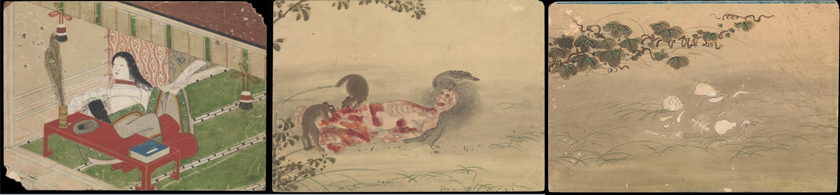
The more Hobbes learns about the Graves family, the more he feels drawn into their sinister world. Mary Estelle, Leonard’s wife, a former actress of renown, is living out her days in an old folk’s home, absorbed in her glittering memories, but was she responsible for corrupting her three children Rosamund, Camilla and Nicholas? Was there a fourth child, Adeline, mentioned in Leonard’s suicide not? And what of the grandson, David, and his obsession with Kusozu, the macabre Japanese art form that depicts the very corruption of death?

Jeff NoonMy verdict on House With No Doors? In a nutshell, brilliant – a tour de force. Jeff Noon (right) has taken the humble police procedural, blended in a genuinely frightening psychological element, added a layer of human corruption and, finally, seasoned the dish with a piquant dash of insanity. On a purely narrative level, he also includes one of the most daring and astonishing final plot twists I have read in many a long year.
Jeff Noon takes us to places unvisited since the days of the late, great Derek Raymond. This novel is crime fiction, yes, but also a journey into the darkest corners of the human soul. Raymond’s nameless copper also walked the bleaker streets of London, and he had a passion verging on obsession for avenging the victims of crime by finding the people who killed them. Henry Hobbes shares this single mindedness. House With No Doors is a chronicle of madness wearing a mask of normality. It is deeply moving and as Hobbes mines deeper and deeper into history of the Graves family, he shows us that it is not only the dead who are victims. The book is published by Doubleday and is out on 14th January.

SMOKE CHASE . . . Between the covers

Jack Callan’s debut novel Smoke Chase introduces John Chase, a six foot, sixteen stone army veteran of colonial wars, now working with the embryonic Special Branch, a police department set up to combat the violent threat of Fenian revolutionaries in late 19th century London. It is the winter of 1885 and, as always, Chase is operating very much undercover, dressed as a working man.

smoke001After a long night shift, Chase is having his breakfast in a cafe when he is alerted to a bomb going off in the vicinity of nearby Tobacco Dock. When he arrives on the scene he finds a dead man – or, at least, what remains of him – but in what is clearly a set-up he is pounced on by a number of police officers, and hustled off in manacles to 26 Old Jewry, the HQ of The City of London Police.

Despite providing his warrant card, Chase – and a union official called Burns are taken to a rotting prison hulk moored in the Thames. Chase soon worked out that he and Burns are being targeted because they have come too close to a huge web of corruption involving a gang of bent import-export fraudsters aided and abetted by senior police officers.

Chase overpowers his guards and escapes to the shore where he begins to plot the downfall of Mordecai and Elisha Smithson, the gangsters who are in charge of the smuggling ring. We have pretty much everything served up from this point on including, in no particular order, rape, torture, Russian thugs, suicide, enough stabbings and shootings to fill a morgue, families being kidnapped and depraved assassins. Participants fall like flies, even unto the last paragraph of the last page

John Chase is rather like a modern-day Bulldog Drummond, and the novel, despite the gore, harks back to a more innocent time when characters like Dick Barton overcame even the most beastly assailant – “with one bound he was free!”

Jack Callan has certainly done his homework, however. The topographical background – London’s dockland when it was it was a rough and tumble working environment, the Lea Valley and the sordid nooks and crannies of East London – is enthusiastically painted,and we even have fleeting acquaintance with the music hall singer Bessie Bellwood and the women’s rights campaigners Annie Besant and Elizabeth Garrett Anderson.

women

To borrow a cliché beloved of football commentators, Jack Callan leaves nothing in the changing room. Smoke Chase has enough blood and thunder to satisfy the most demanding addict. Callan’s debut novel is published by Matador and is out now.

For more novels set in Victorian England,
just click on the image of Her Majesty.

editrs571723_2105800-lpr


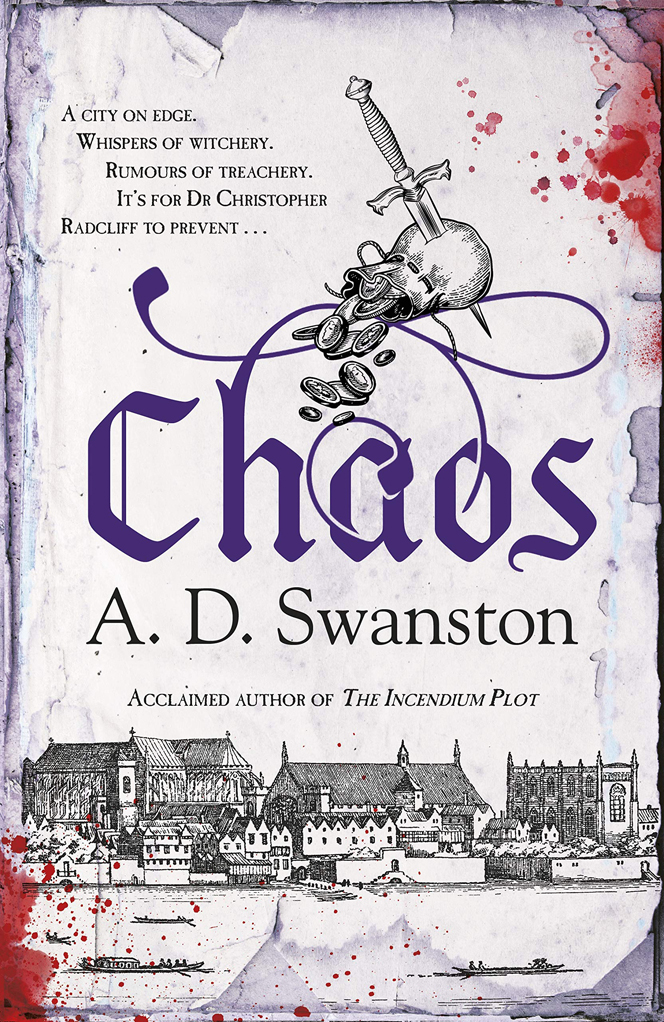
CHAOS . . . Between the covers

Chaos header

Christopher Radcliff is a Doctor of Law and he is also what  sixteenth century England called an ‘intelligencer’. We might say ‘spy’, ‘secret agent’ or, at a pinch, ‘private eye.’ He is employed by two of the most powerful men in Queen Elizabeth’s service – the brothers Dudley. Robert is the Earl of Leicester and Ambrose the Earl of Warwick.

91c5yMTPQkLRadcliff, the creation of author AD Swanston, made his literary debut in The Incendium Plot (2018). The blurb for that book said that the country was “a powder keg of rumour, fanaticism, treachery and dissent.” Well, a few years on, and things haven’t changed a great deal. The big threat to Good Queen Bess still comes from those devious and malignant Papists, but the adherents of ‘the old religion’ have changed tack. Military conquest by Spain or France has proved ineffectual, so has a more subtle method has been chosen?

Pretty much every one of us is too young to remember a time when our currency was suspect. Yes, there have been periods of inflation (I can remember PM Harold Wilson and ‘The pound in your pocket.”) but we have never doubted that the coins in our pockets or the notes in our wallet were suspect. In February 1574, however, someone has been minting fake testons. They were, in old money, shillings, and the most common coin in circulation for everyday transactions.

BearThe fake testons also bear the image of the bear and ragged staff (right), the emblem of the Earl of Warwick. Clearly, the forgers have a double headed plan. They intend to paralyze normal day to day trade by making shop-keepers wary of accepting coins, but they also seek to diminish the status and power of the Dudley brothers by linking them to worthless coins.

When Radcliff eventually tracks down the person behind the counterfeit coins he discovers not a Papist plot, but a personal search for revenge, fired by a dreadful betrayal and a bitterness so deep that only death can sweeten it. Without giving any more away, I can say that part of this vengeance involves, strange to relate, that most delicate and ethereal of Renaissance instruments, the lute.

Pagano1

Swanston has great fun immersing us in all the contrasting glory and squalor of Elizabethan England. We are led through the magnificent Holbein Gate into the Palace of Whitehall with its tapestries, panelled chambers and priceless paintings, but we also have to tread gingerly amid the horse muck (and worse) as we walk along Cheapside, and try to avoid the grasping hands of its whores and beggars.

Chaos is as authentic and swashbuckling as anyone could wish for – a must for lovers of period drama. It is published by Bantam in hardback, and by Transworld Digital as a Kindle. Both formats are available now.

CRY BABY . . . Between the covers

CB header

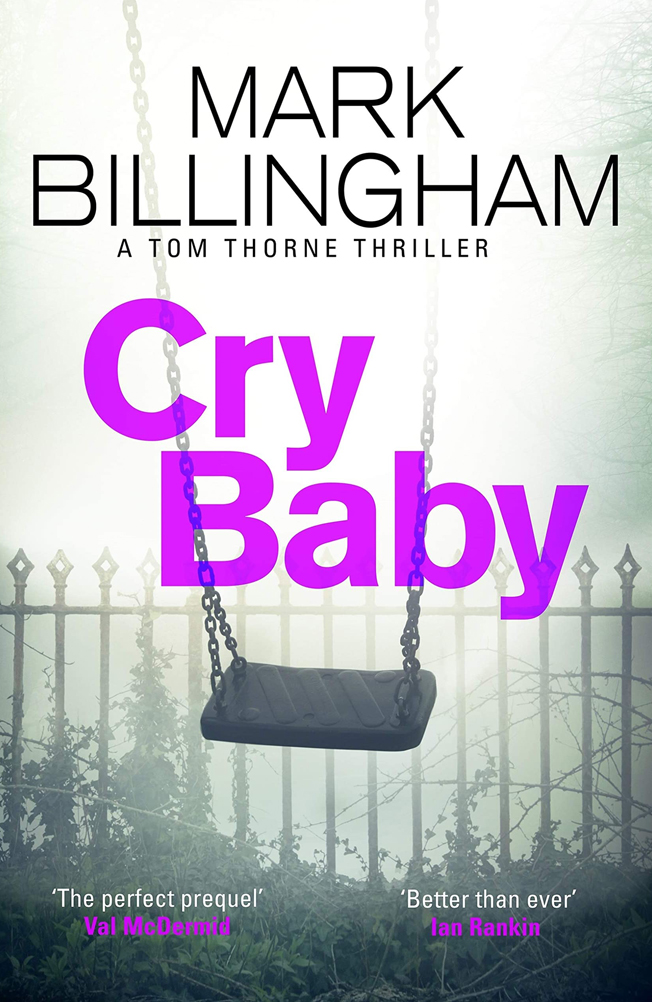
Mark Billingham is certainly a man of many parts. To name a few, there is Gary, the dim-but-lovable stooge to the Sheriff of Nottingham in Maid Marian and her Merry Men, stand up comedian and scriptwriter, acoustic guitarist with Fun Lovin’ Crime Writers and, of course, best selling crime novelist. But author of historical fiction? Well yes, in a manner of speaking. In his afterword to his latest novel Cry Baby, Billingham says that in writing this prequel to the Tom Thorne series he had to imagine a world of clunky computers the size of refrigerators, telephone boxes and ‘phone cards, and pubs where people smoked.

We are, as ever in London, but it is the summer of 1996. The city and the country – at least many of the menfolk thereof – are transfixed with the European Cup. Crosses of St George flutter from the aerials of Mondeos up and down the land and pubs are rammed with supporters of Shearer, Sheringham, Southgate and company. Detective Sergeant Tom Thorne is trying to schedule his work around the matches, but when a boy is abducted from a London park, football has to take a back seat.

54502348._UY2560_SS2560_Kieron Coyne is playing with his mate Josh under the watchful eyes of their mothers, Cat and Maria. Cat goes off for a pee, Maria settles back on the park bench and lights a fag. One minute Kieron is there, the next he has disappeared. Josh emerges from the little wood where the boys were playing hide and seek. He neither saw nor heard anything of his friend.

A major police investigation kicks in, with Thorne doing the leg work at the best of his incompetent boss. We learn that Cat and Maria are both single mothers – had ‘lone parents’ been invented in 1996? – but in different circumstances. Kieron’s father is doing a long spell in a maximum security prison, while Maria’s doctor husband divorced her a couple of years back.

Hours turn into days and there is no sign of Kieron, dead or alive. A birdwatcher thinks he saw a boy getting into a car with a man he obviously knew, and a Crimewatch presentation by the late lamented Jill Dando turns up nothing more useful than imagined sightings the length and breadth of the country, and the usual false confessions from the mentally ill.

Thorne does find a suspect – a neighbour of Cat’s with a suspicion of ‘form’ for dodgy sexual activity – but the arrest of Grantleigh Figgis does not go well for either the police of the suspect.

Billingham manages the historical details very well, and we meet one or two regular characters from the Thorne series for the first time, none more dramatically than Phil Hendricks, the much-tattooed and oft-pierced pathologist. In a rare droll moment in a seriously dark book, Billingham has gentle fun with making Thorne’s gaydar so wonky that he has our man making enquiries as to why Hendricks hasn’t found the right woman to settle down with. We also meet Thorne’s soon-to-be-ex wife Jan, and fellow copper Russell Brigstocke who, as lovers of the series know, manages subsequently to keep his CV much cleaner than Thorne.

Fans of Billingham’s novels, both the Tom Thorne series and the stand-alones, know that he likes nothing better than a dramatic twist in the final few pages, and he doesn’t let us down here. There is something of a ‘where the **** did that come from’ moment when all the patient door-knocking, statement-taking and deduction of the coppers is spun on its head in a few dazzling pages of revelation. Cry Baby is published by Little, Brown and is out now.

ORANGES AND LEMONS . . . Between the covers

OAL header027

For a good part of its long and curious history, it seems that The Peculiar Crimes Unit of London’s Metropolitan Police has been under threat. Civil servants and box-tickers without number have tried to close it down; it has endured bombs (courtesy of both the Luftwaffe and those closer to home); it has suffered plague and the eternal pestilence of whatever vile tobacco Arthur Bryant happens to stuffing into his pipe at any particular moment. The PCU has become:

“..like a flatulent elderly relative in a roomful of
millennials,a source of profound embarrassment..”

But now, yet another crisis seems to be the fatal straw that will break the back of the noble beast. Bryant’s partner John May (the sensible one) is on sick leave recovering from a near-fatal gunshot wound. Mr B has gone AWOL (trying to have his memoirs published), and the office has been invaded by a tight lipped (and probably ashen-faced) emissary from the Home Office who has instructions to observe what he sees and then report back to Whitehall.

The PCU creaks into arthritic action when Arthur Bryant puts his literary ambitions on hold, and links three apparently random deaths. A Romanian bookseller’s shop is torched, and he dies in police custody; a popular and (unusually) principled politician is grievously wounded, apparently by a pallet of citrus fruit falling from a lorry; a well-connected campaigning celebrity is stabbed to death on the steps of a notable London church. For Bryant, the game is afoot, and he draws on his unrivaled knowledge of London’s arcane history to convince his colleagues that the killer’s business is far from finished. His colleagues? Regular B&M fans will be relieved to know that, in the words of the 1917 American song (melody by Sir Arthur Sullivan) “Hail, Hail – The Gang’s All Here!”

roster

An intern in the PCU? Yes, indeed, and in the words of Raymond Land;

“You may have noticed there’s an unfamiliar name attached to the recipients at the top of the page. Sidney Hargreaves is a girl. She’s happy to be called either Sid or Sidney because her name is, I quote, ‘non gender specific in an identity-based profession.’ It’s not for me to pass comment on gender, I got lost somewhere between Danny la Rue and RuPaul.”

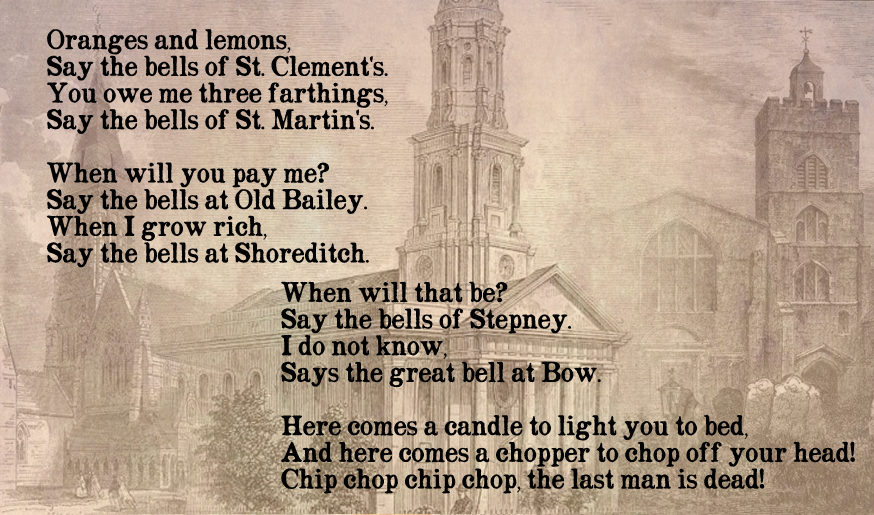
There are more deaths and Arthur Bryant is convinced that the killings are linked to the London churches immortalised in the old nursery rhyme, with its cryptic references:

Poem

But what links the victims to the killer? Beneath the joyous anarchy Arthur Bryant creates in the incomprehending digital world of modern policing, something very, very dark is going on. Fowler gives us hints, such as in this carefully selected verse between two sections of the book:

“The past is round us, those old spires
That glimmer o’er our head;
Not from the present are their fires,
Their light is from the dead.”

Also, underpinning the gags and joyfully sentimental cultural references there are moments of almost unbearable poignancy such as the moment when the two old men meet, as they always have done, on Waterloo Bridge, and think about loves won and lost and how things might have been.

There is no-one quite like Christopher Fowler among modern authors. He distills the deceptively probing gaze of John Betjeman, the sharp humour of George and Weedon Grossmith, the narrative drive of Arthur Conan Doyle and a knowledge of London’s darker corners and layers of history quite the equal of Iain Sinclair and Peter Ackroyd,  The result? A spirit that is as delicious as it is intoxicating. Oranges and Lemons is published by Doubleday and is out now.

More about the unique world of Arthur Bryant and John May can be found here, while anyone who would like to learn more about the origin of the rather sinister verse quoted earlier should click on the picture of its author, below, Letitia Elizabeth Landon.

Letitia_Elizabeth_Landon_-_Pickersgill

THE MUSIC BOX ENIGMA . . . Between the covers (click for full screen)

TMBE header

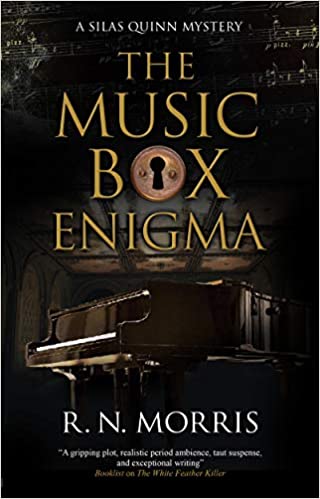
Fans of period police procedurals are in for a treat at the end of the month when RN Morris’s distinctive London copper, Chief Superintendent Silas Quinn makes a welcome return. It’s December 1914, and the war that was meant to be over by Christmas is showing only signs of intensifying. DORA – the Defence of The Realm Act – has been enforced, and among the many strictures it imposes on the populace are imprisonment without trial, a ban on publishing any description of war or any news that is likely to cause any conflict between the public and military authorities and, bizarrely, an interdiction on buying rounds in pubs.

MBE coverBut Christmas is coming, and a rather upper-crust choir, The Hampstead Voices, is rehearsing for its seasonal concert, with all proceeds going to Belgian refugees, forced from their homes by the brutal Hun invaders. Directed by Sir Adrian Fonthill, the concert will include not only much-loved carols such as O Little Town of Bethlehem and Adeste Fideles, but choral works by Bizet and Handel. Special guest artistes will include dancers from Ballets Modernes and the distinguished violinist Emile Boland, but the evening will conclude with a performance of Sir Edward Elgar’s A Christmas Greeting, in the presence of the composer himself. It is also believed that Winston Churchill, First Lord of The Admiralty, will be in the audience at University College School on the evening of 24th December.

Silas Quinn may have many qualities, but a musical ear is not one of them, so how does he come to be involved in the doings of The Hampstead Voices? Rehearsals for the concert may not be going too well, perhaps due to the many tenors and basses who have answered the call to arms, but preparations take a distinct downturn when the Director of Music is found dead, slumped at his grand piano, with the sharpened handle of a tuning fork stuck into his ear. As boss of Scotland Yard’s Special Crimes Unit, Quinn is summoned to the scene of this musical murder.

It seems that the late Sir Adrian, despite his musical sensitivities, was not a paragon of virtue. He has a roving eye – and hands – for young sopranos and altos, and has a weakness for gambling which has left him in debt to some very dangerous people. But who stands to benefit from his death? Not those to whom he owes money,surely? A resentful husband, perhaps, who has been cuckolded?

MorrisAs Quinn tries to penetrate the wall of silence thrown up by Fonthill’s widow, his attention is drawn to a mysterious music box sent to Sir Adrian just before his death. When it is wound up and played, however, the resulting tune simply seems – even to Quinn’s tin ear – a haphazard sequence of random notes. But help is at hand. One of the Special Constables from Hampstead Police Station could be said to have an ear for music. He is none other than Sir Edward Elgar, celebrated composer of Salut d’Amour, Variations on an Original Theme and The Dream of Gerontius. Elgar takes the discordant melody and uncovers a message which rveals that Sir Adrian’s death is not to be the last associated with the ill-fated Christmas concert.

RN Morris (above right) gives us an inventive and delightfully improbable conclusion to this very readable novel. If you want something to lose yourself in for a few hours and a diversion to push to one side the misery and discomfort of the lock-down, then you will find nothing better than The Music Box Enigma. It is published by Severn House and will be out in hardback on 30th April.

For a review of an earlier Silas Quinn novel, The White Feather Killer, click here

Blog at WordPress.com.

Up ↑