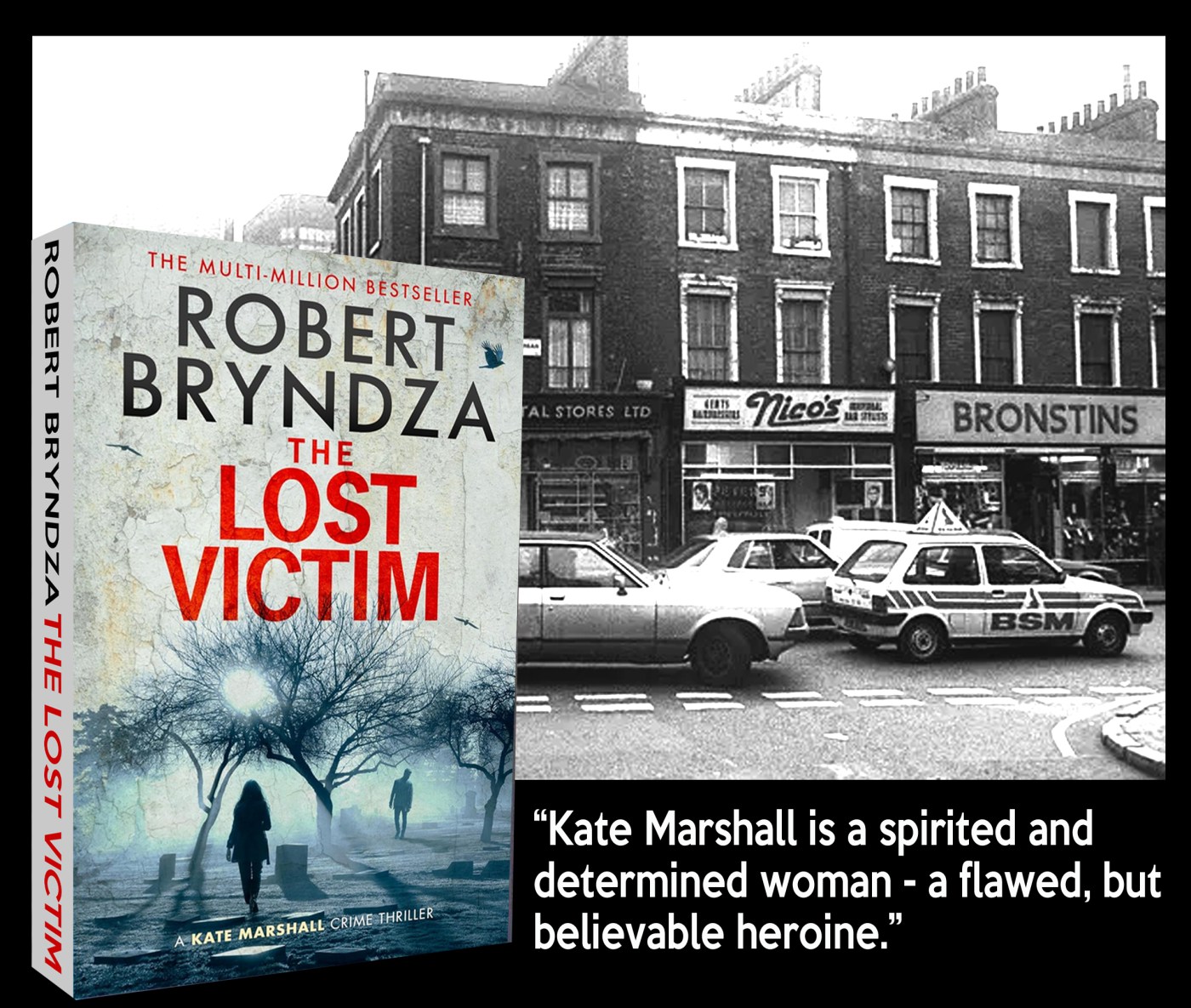

The search for the killer of a child long dead is a recurring trope in crime fiction, and it carries with it all manner of similar plot strands. There will be dusty police files, parents – probably elderly by now – and still clinging to the faint hope that there might be answers; almost certainly we will meet police officers who made mistakes, made the wrong call, or took crucial short-cuts; there will be intriguing glimpses into what life was like twenty, thirty years earlier, and a sense of the truth being buried under too many lies, too many errors, too little police time, and – perhaps – a victim who was not attractive enough to the media.
We get all this – and more – from Robert Bryndza’s The Lost Victim. Three decades earlier, before King’s Cross in London was a dazzling hub of boutique restaurants, state-of-the-art apartments and conference venues, a teenage girl named Janey Macklin was sent by her mum to buy a packet of fags from a newsagent’s shop, which sat among the grim streets, derelict warehouses, dark railway arches, smoke-filled pubs and knocking shops that made up London N1C 4AX in 1988. Janey never returned to the pub with her mum’s cigarettes. Her body was never found, despite traces of her blood being recorded in and around the places where she was last seen.
On the balance of probability, Robert Driscoll was convicted of her murder, but after a decade in jail, his case was reviewed and with a much smarter barrister than he was given at his first trial, Driscoll was released. Contemporary with Janey’s disappearance, a series of girls were being abducted and savaged by a man the press dubbed ‘ The Nine Elms Cannibal’. This time , there was no miscarriage of justice, and Peter Conway was caught, tried and convicted. He was a police officer, and married to Kate Marshall. Kate, also a copper, survived a bout of alcoholism brought about by the trauma, left the force, but has now reinvented herself as a private investigator, partnered by Tristan Harper, and based in Devon.
When she is contacted by a media agency who say they are preparing a True Crime series based on Janet’s disappearance, and need her to provide material, she reluctantly agrees. Since the case overlaps the story of her murderous husband, she senses that she might be about to be exploited, but it is the middle of winter, and her case load is not so heavy that she can afford to refuse.It does not take long for Kate Marshall to realise that she is being played by these media spivs. Not only that, a man in a relationship with one the agency’s employees was, almost certainly, a person of interest in the original investigation into Janey Macklin’s disappearance.
With awful scenes from her own past flitting in and out of her mind, Kate digs deeper and deeper into what happened on that chilly December evening, all those years ago. She is working for nothing, and running on fumes. Robert Bryndza doesn’t spare us from the numbing sense of loss felt by the people who knew and loved Janey, and when her remains are eventually found, we are left with an almost tangible sense of loss. We know her as a person; the girl who liked a bag of chips on a Friday night; the girl who went to ballet classes, perhaps dreaming of a future that could never have been realised.
I first encountered Kate Marshall in Nine Elms, which goes some way to putting her life into perspective. Click this link to read my review of that novel. In The Lost Victim we come face to face with truly vile human beings, thankfully behind bars for desecrating the lives of young people. Kate Marshall is a spirited and determined woman – a flawed, but believable heroine. The Lost Victim is published by Raven Street Publishing, and will be available on 11th July.
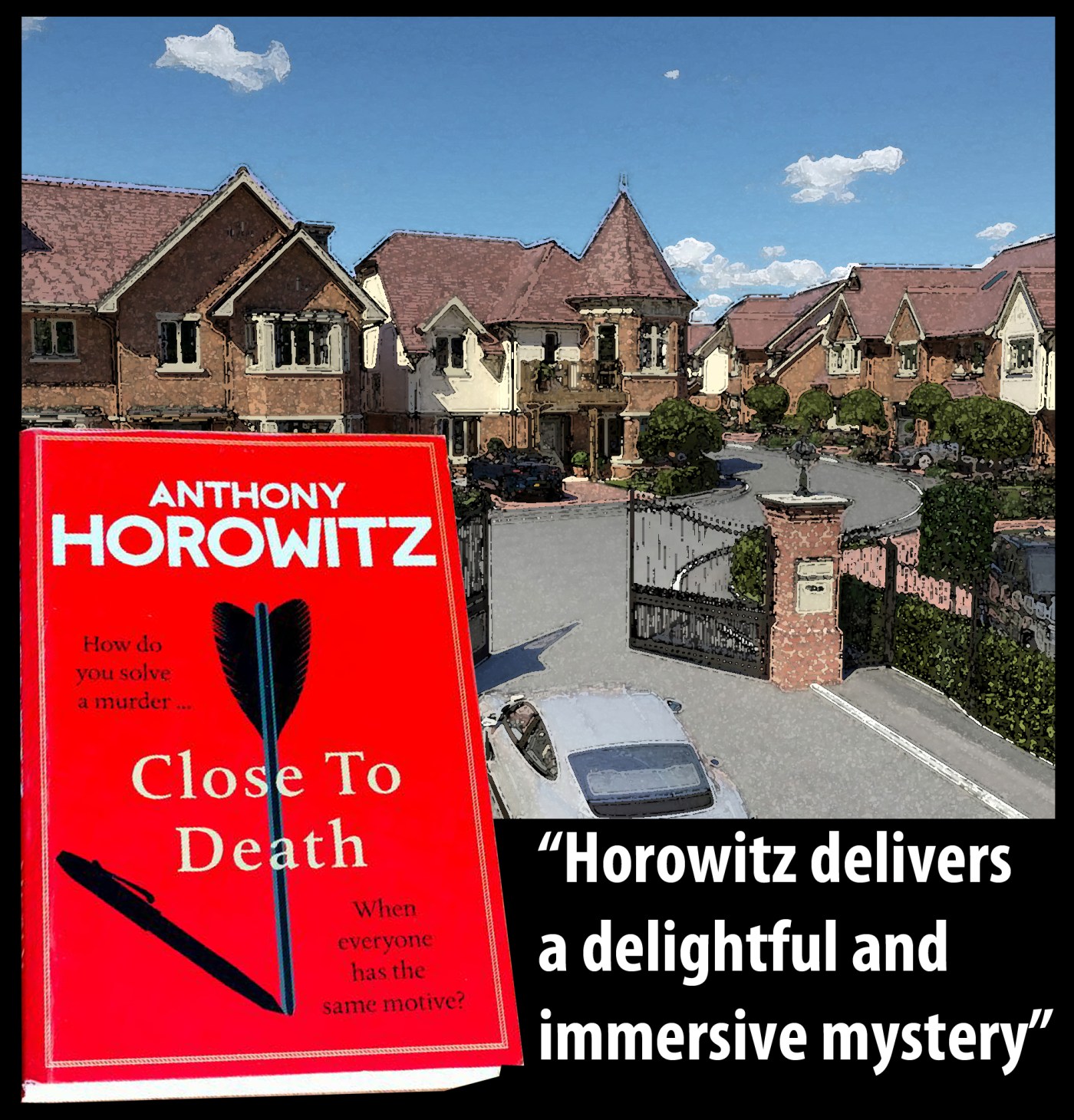



 Durnie’s plot trajectory which, thus far, had seemed on a fairly steady arc, spins violently away from its course when he reveals a totally unexpected relationship between two of the principle players in this drama, and this forces Cunningham into drastic action.




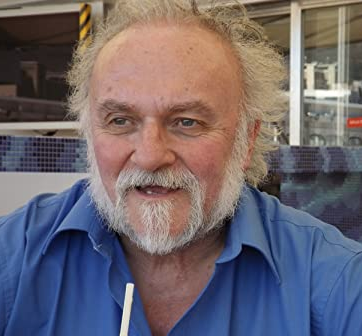


 In far-off Norfolk, men repairing flood defences near Denver Sluice have discovered what appears to be the remains of a child inside the rotted skeleton of a boat. Hunt, accompanied by Colonel Michael Field, a grizzled veteran of Cromwell’s army, and Hooke’s niece, Grace. When the trio arrive in Norfolk, Hunt soon determines that the remains are not those of a child, but the mortal remains of Jeffrey Hudson, who was known as the Queen’s Dwarf – the Queen in question being the late Henrietta Maria (left), wife of Charles I. The situation becomes more bizarre when Hunt learns that Hudson is not dead, but living in the town of Oakham, 60 miles west across the Fens. Hunt and his companions’ journey only delivers up more mystery when they find that ‘Jeffrey Hudson’ has left the town. Hunt knows that the jolly boat* which contained the skeleton belonged to a French trader, Incasble, which worked out of King’s Lynn.
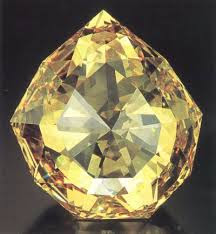 Hunt’s odyssey continues. In King’s Lynn, Hunt and his companions are summoned to the presence of the Duchesse de Mazarin. Hortense Mancini is one of the most beautiful women in Europe. She is highly connected, but also notorious as one of Charles II’s (several) mistresses. She reveals that the mysterious dwarf – or his impersonator – may be in possession of a a legendary gemstone – the Sancy – a diamond of legendary worth, and the cause of centuries of intrigue and villainy. The Duchesse bids Harry to travel to Paris, but once there, his fortunes take a turn for the worse.







 fullybooked2017