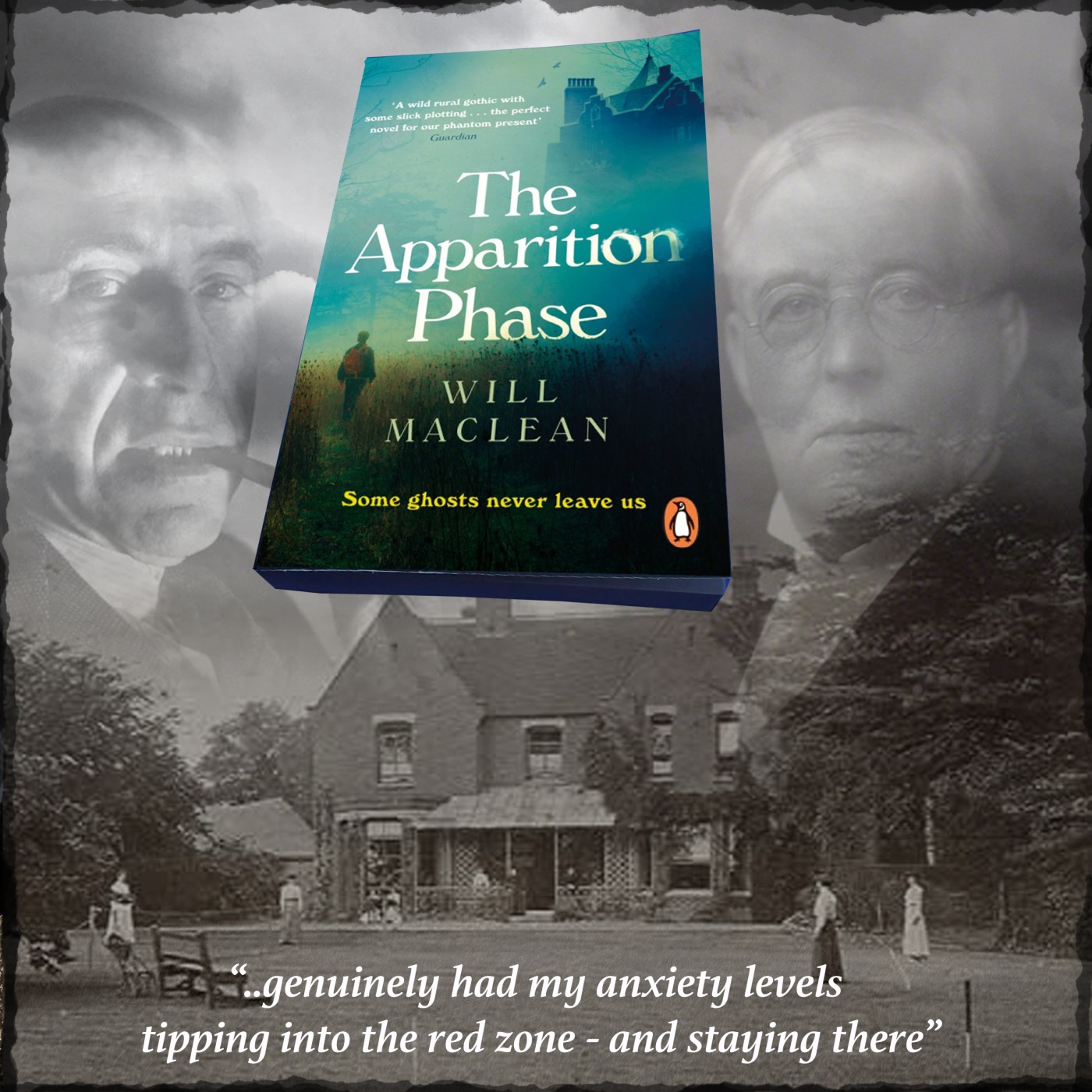

 I don’t review too many non-crime novels on here, but this one really appealed to me. It begins in the 1970s in an unnamed English town. Tim and Abi are teenage twins and, like many such siblings, have an almost preternatural bond that often transcends the spoken word and visual communication. They also have what might be called an unhealthy fascination with ghosts and the paranormal. One of Tim’s hobbies is painting pictures of bygone execution methods, and their favourite book is a well worn copy of The End of Borley Rectory (1946) by Harry Price. Price was a well-known ‘ghost-hunter’ in the 1930s and 1940s and although he is widely regarded as a charlatan these days, he was a celebrated and popular author, particularly on the topic of Borley Rectory in Suffolk, once known as “the most haunted house in England”.

The twins are also keen photographers, but bear in mind that this is the 1970s, and unless you had a home darkroom, photography for most people involved taking the roll of film from the camera and handing it over to Boots to be developed and printed. Tim and Abi are connoisseurs of paranormal photography and, even though they do not have the expertise to create elaborate fakes such as the celebrated ghost that haunted The Queen’s House Greenwich (right), they have imagination to spare. They have sole use of the attic in their house, and their well-meaning but rather ‘hands-off’ parents seldom venture up the ladder into Tim and Abi’s terrain.
 On a blank wall, they draw a rather convincing image of a tormented woman, and take a whole roll of photographs of it. Harmless fun? Yes, it might have been, until they decide to take one of the more convincing images to school, and show it to a classmate, backed up with an elaborate story that Abi has seen the ghost of a former occupant of their house, a young woman who, shamed by her cheating fiancé, hanged herself in that very attic. The victim of their prank is Janice Tupp, a seemingly unremarkable girl who the twins despise because of her very ordinariness. Rather like those who tormented Carrie White, they have picked the wrong victim. Janice collapses at school after being shown the photograph, and when, some days later, the twins invite her round to their house in order to explain their deception (and to avoid getting into serious trouble) Janice shocks them by making a puzzling prediction which Tim and Abi can make no sense of. A few weeks later, however, something shocking happens which will change everything – for ever.
Further references by me to specifics of the plot will be, perforce, cautious, as I have no wish to diminish readers’ enjoyment – if that is the right word. I add that caveat, because Will Maclean takes us into very dark territory. Suffice it to say that Tim becomes involved with two researchers and a group of people more or less his own age who have rented an old Suffolk manor house with the purpose of conducting experiments into the paranormal. At this point, cynical readers are entitled to use the cliché “And what could possibly go wrong…?” but Maclean skillfully avoids the more obvious pitfalls, and steers an intriguing course between Hamlet’s famous statement to Horatio, and our knowledge of the nature of reality and deception.
I wouldn’t say that I am a blasé reader, but any reviewer of mostly crime and thriller novels encounters fictional grief and trauma on a daily basis. The Apparition Phase genuinely had my anxiety levels tipping into the red zone – and staying there. Will Maclean references the unrivaled master of ghost stories – MR James – but in a sense, he goes one better. James wrote short stories, and therefore had only to keep the menace going for twenty pages or so, but to keep us engaged and anxious for four hundred is something else altogether.
This deeply unsettling novel, published by William Heinemann, came out in paperback earlier this month and will be available in Kindle and hardback on 29th October

 Many readers have come to associate Rob Parker with his energetic thrillers featuring the redoubtable runaway Special Forces operative
 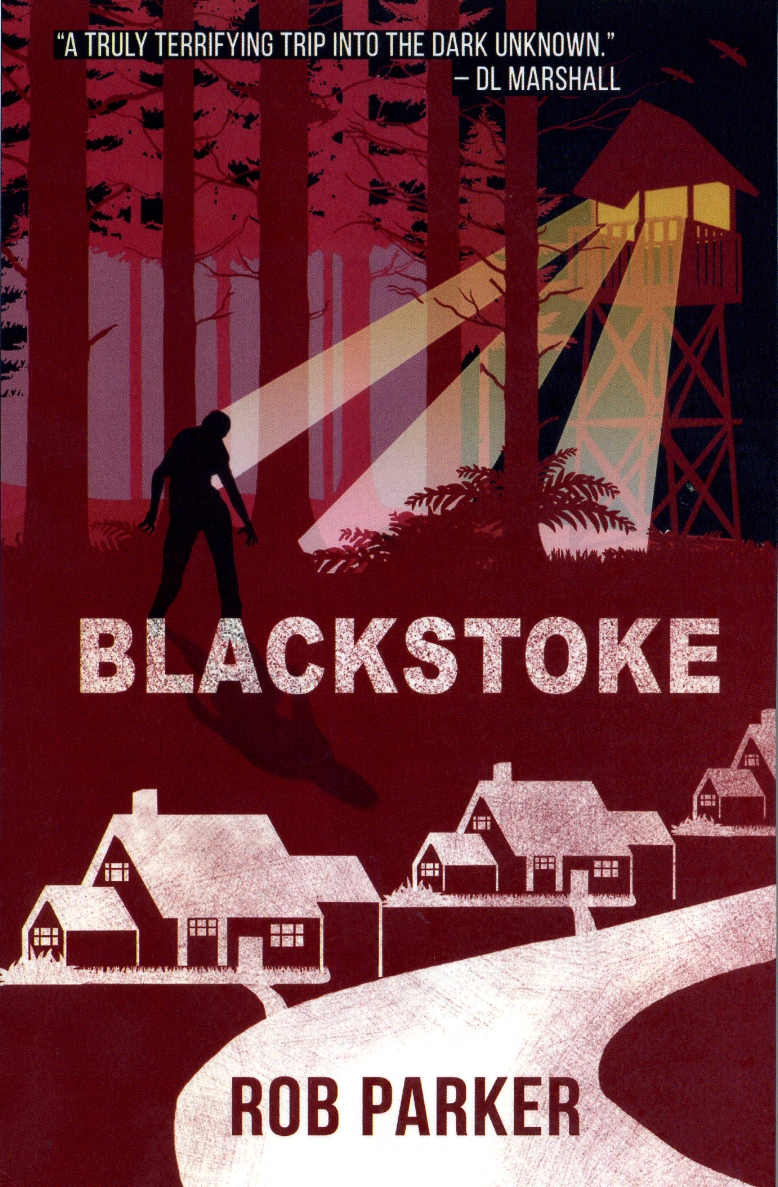 Parker ratchets up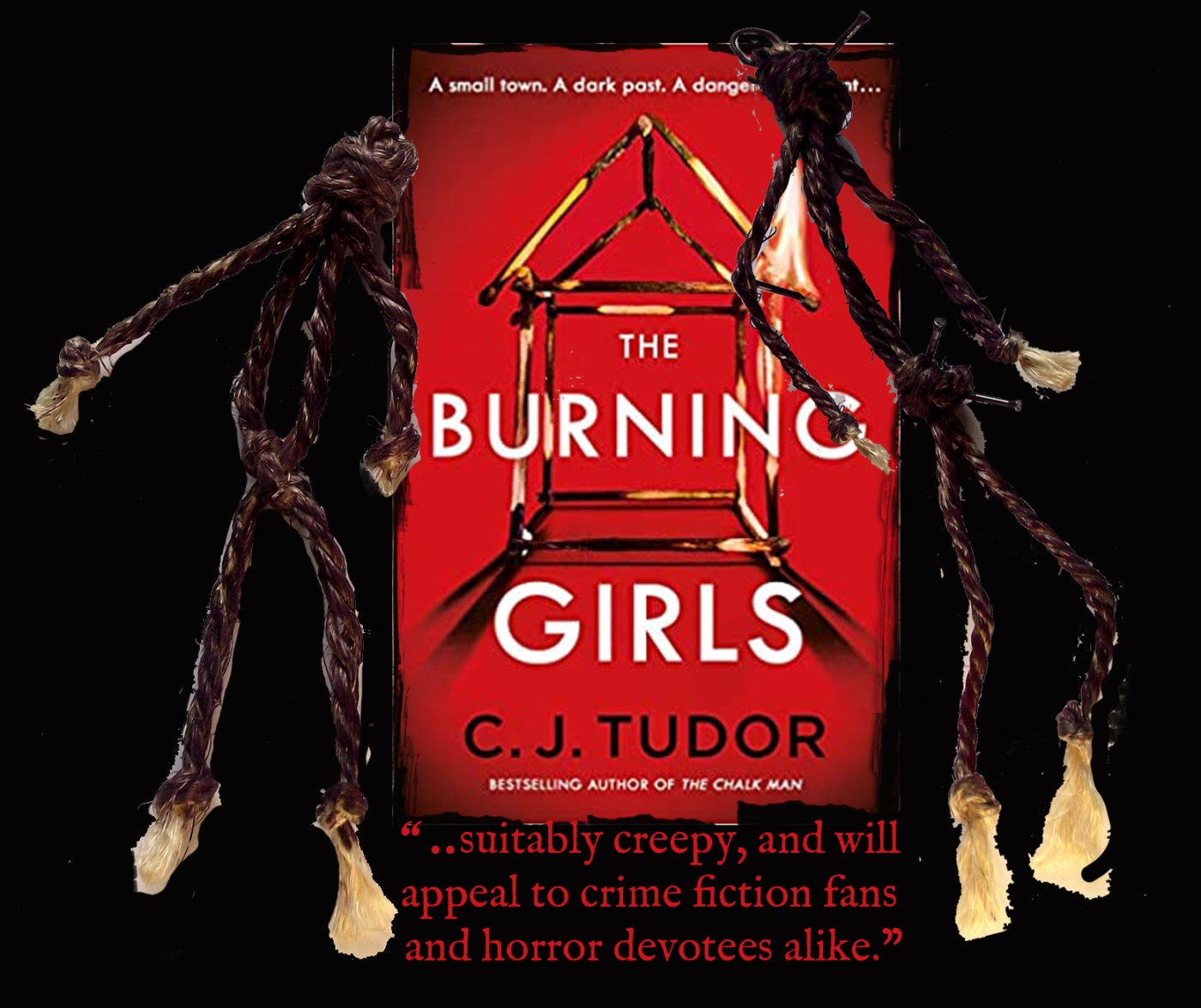





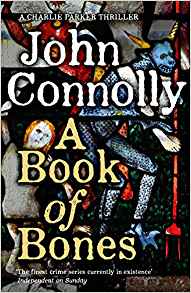 In the previous Charlie Parker novel, The Woman In The Woods, John Connolly introduced us to a frightful criminal predator, Quayle, and his malodorous and murderous familiar, Pallida Mors. Even those with the faintest acquaintance with Latin will have some understanding what her name means and, goodness gracious, does she ever live up to it! Both Quayle and Mors are seeking the final pages of a satanic book, The Fractured Atlas which, when complete, will deliver the earth – and all that is in it – to the forces of evil.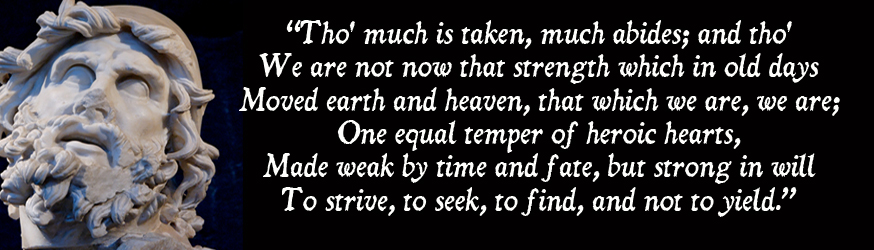

 A Book of Bones is a tour de force, shot through with the grim poetry of death and suffering. Connolly (right) takes the creaky genre of horror fiction, slaps it round the face and makes it wake up, shape up and step up. He might feel that the soubriquet literary is the kiss of death for a popular novelist, but such is his scholarship, awareness of history and sensitivity that I throw the word out there in sheer admiration. Jostling each other for attention on Connolly’s stage, amid the carnage, are the unspeakably vile emissaries of evil, the petty criminals, the corrupt lawyers and the crooked cops. Charlie Parker may be haunted; you may gaze into his eyes and see a soul in ruins; his energy and motivation might be fueled by a desire to lash out at those who murdered his wife and daughter; what shines through the gloom, however, is the tiny but fiercely bright light of honesty and goodness which makes him the most memorable hero of contemporary fiction.


 Thus begins another case for Professor Matt Hunter, a university lecturer in religion and belief. He has previously helped the police in cases which involve sacred or supernatural matters (see the end of this review) and he is called in when it becomes clear that the wielder of the axe was none other than the teenage son of the Reverend David East, and that the boy was under the spell of a cult of deviant Christians whose central belief is that God The Father is a brutal tyrant who murdered his only son. They are also convinced that all other humans but them are ‘Hollows’ with evil in their eyes. Consequently, they shun all contact with the outside world, and live in a remote farmhouse, deep in the hills at the end of a rutted farm track.
 One of the most intriguing aspects of the Matt Hunter books is the relationship between the fictional former man of God and the very real and present minister in the Baptist church, the Reverend Peter Laws himself . We get a very vivid and convincing account of how Hunter has lost his faith, but also the many facets of that belief that he has come to see as inconsistent, illogical, or just plain barbaric. It suggests that Laws has identified these doubts in his own mind but, presumably, answered them. In these days of CGI nothing is impossible, so a live debate between Reverend Laws and Professor Hunter would be something to behold.
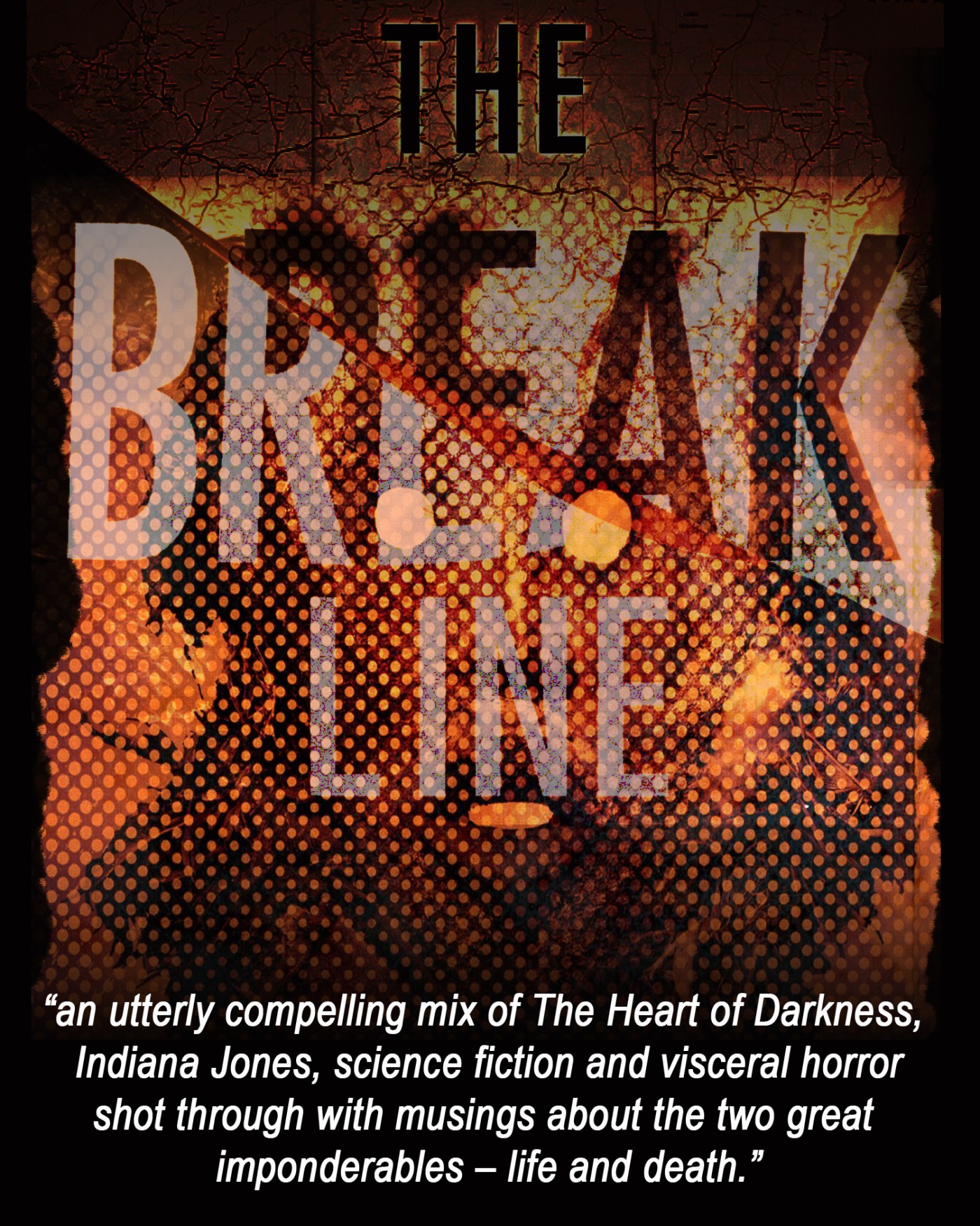

 One of my sons was, in his teens, an avid fan of the Andy McNab books and acquired several signed copies of the SAS man’s adventures, and even had a couple of autographed photos of the great man (complete with the obligatory black rectangle across his features, naturally). I have to confess that I didn’t share his enthusiasm, and military thrillers are not normally high on my TBR pile. When the publicists at Michael Joseph sent me a copy of The Break Line by James Brabazon two things aroused my interest. The first was the frankly terrifying background of the author, a documentary film maker and journalist who has been to some of the darkest and most dangerous spots in the world and lived to tell the tale. Second was my admiration for the team at Michael Joseph and my awareness that they don’t, in my experience, publish bad books. If The Break Line had convinced their editorial team, then maybe I should take a closer look?
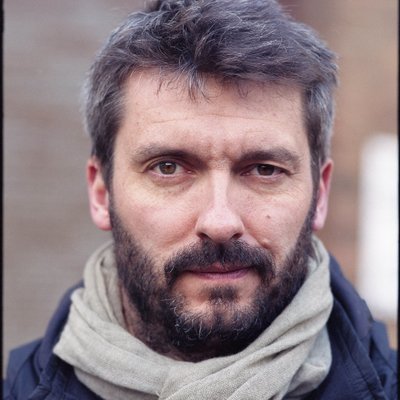 Exactly what it is that McLean faces will only be learned when you read the book. The instant you begin to read the first-person narrative, you will rightly assume that McLean survives his ordeal, as an action novel has yet to be written where the protagonist convincingly records his own death, but what happens between the first page and the last is a curious but utterly compelling mix of The Heart of Darkness, Indiana Jones, science fiction and visceral horror shot through with musings about the two great imponderables – life and death. Thriller fans will be able to fill their boots with the usual tropes; Le Carré style double and treble dealing at the highest level, fierce fire-fights, fascinating military detail, treacherous Russians and a cataclysmic body count. Brabazon (right) is not, however, simply ticking genre boxes. He shows an assured and convincing style of writing that puts him way above many of his contemporaries in the genre.

 I have a close friend who keeps himself fit by walking London suburbs searching charity shops for rare – and sometimes valuable – crime novels. On one particular occasion he was spectacularly successful with a rare John le Carré first edition, but he is ever alert to particular fads and enthusiasms of mine. Since I “discovered” PM Hubbard, thanks to a tip-off from none other than
 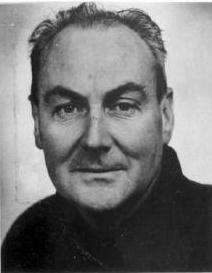 Seldom, however, can a treasure have been protected by two more menacing guardians in Aunt Elizabeth and her maid-of-all-work Coster. Remember Blind Pew, one of the more terrifying villains of literature? Remember Tod Browning’s Freaks (1932) and the decades that it was hidden from sight? With a freedom that simply would not escape the censor today, Hubbard (right) taps into our visceral fear of abnormality and disability. Hubbard has created two terrifying women and a dog which is makes Conan Doyles celebrated hound Best In Show. The dog first: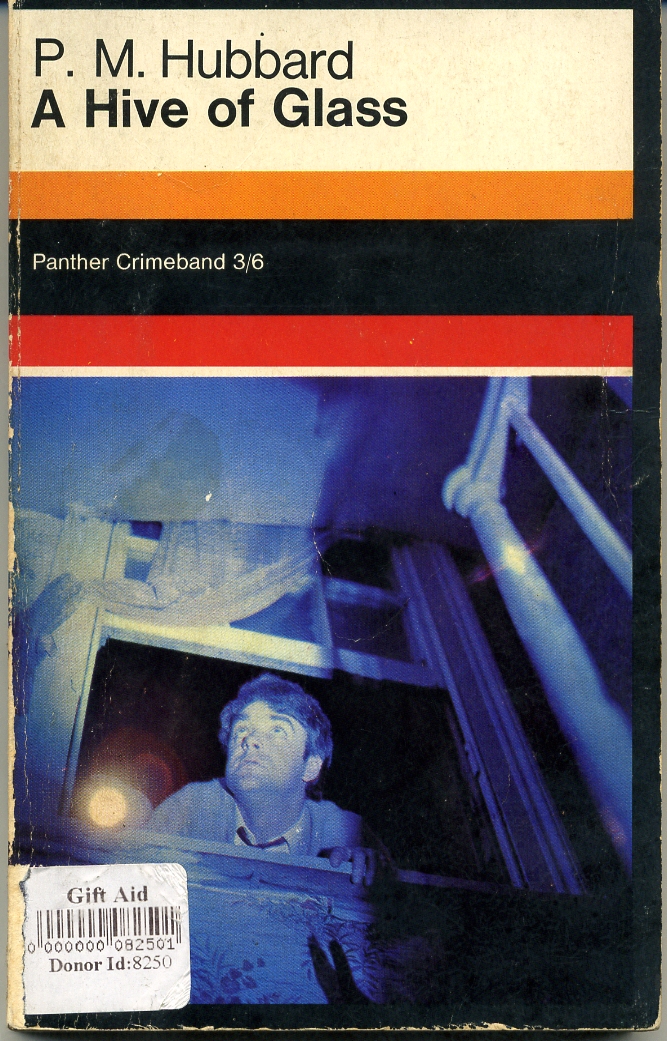

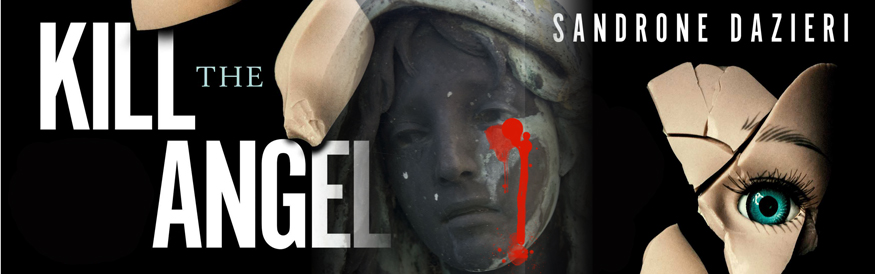
 Side by side with a pharmaceutically-addicted genius called Dante Torre she attempts to solve a grotesque mass murder. The express train from Milan to Rome arrives safely. Safe, that is, except for the passengers in the first class compartments who have all died in grotesque agony. Their bodies are discovered by an officer of the Railway Police and when he alerts his superiors,“la merda colpisce il ventilatore..” as they might (but probably don’t) say in Rome. Ironically, it is the fan from the air conditioning unit which has spread the deadly gas.
 Kill The Angel, translated from the Italian by Antony Shugaar (right), is ridiculously entertaining. The narrative constantly breaks the speed limit, and Colomba Caselli and Dante Torre are wonderfully imagined character. We can boo and hiss as Colomba is screwed – in all senses of the word – by sinister global forces, but she is a truly modern kick-arse (‘ass’ for US readers) heroine and she scorches her way across the pages of this gripping novel.


 If the South London suburb of Menham could be described as unremarkable, then we might call the down-at-heel terraced houses of Barley Street positively nondescript. Except, that is, for number 29. For a while, the home of Mary Wasson and her daughters became as notorious as 112 Ocean Avenue, Amityville. But the British tabloid press being what it is, there are always new horrors, fresh outrages and riper scandals, and so the focus moved on. The facts, however, were this. After a spell of unexplained poltergeist phenomena turned the house (almost literally) upside down, the body of nine year-old Holly Wasson was found – by her older sister Rachel – hanging from a beam in her bedroom.
 Laws (right) takes a leaf out of the book of the master of atmospheric and haunted landscapes, M R James. The drab suburban topography of Menham comes alive with all manner of dark interventions; we jump as a wayward tree branch scrapes like a dead hand across a gazebo roof; we recoil in fear as a white muslin curtain forms itself into something unspeakable; dead things scuttle and scrabble about in dark corners while, in our peripheral vision, shapes form themselves into dreadful spectres. When we turn our heads, however, there is nothing there but our own imagination.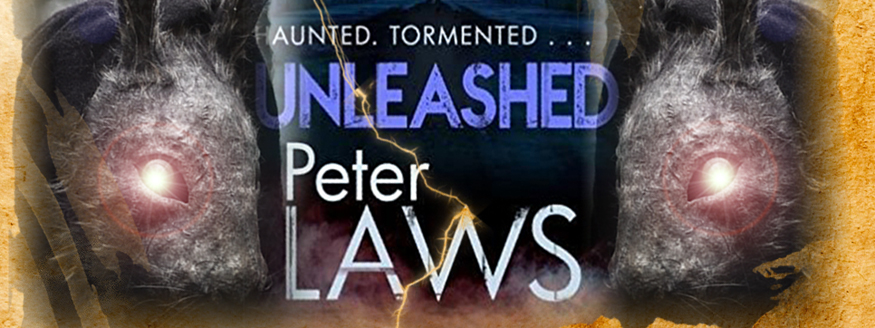


 fullybooked2017