

 It’s the summer of 1966 and Brighton journalist Colin Crampton – he’s the crime reporter for the Evening Chronicle – gets a tip off from a friendly local copper that there has been a murder in Embassy Court, an upmarket block of flats on the seafront. Racing to the scene to try to out-scoop his rival from the Evening Argus, he ducks under the crime scene tape and learns that the dead man is Claude Winterbottom, a financial consultant.
Reporters are sometimes accused of muck-raking, and Crampton does literally that as he holds his nose and sifts through Winterbottom’s dustbin. He soon finds a motive for the man’s death. The so-called ‘financial consultant’ was actually a fraudster, selling get-rich-quick schemes to people with more money than sense. The list of people Winterbottom has scammed is quite impressive, and it even includes Crampton’s landlady, the redoubtable Mrs Gribble.
 Peter Bartram (right) doubles up on the enjoyment by giving us a parallel plot (which eventually weaves in with the murder of Winterbottom) involving an off-shore pirate radio station, Radio Sea Breeze. Younger readers used to the communication free-for-all we have today may be puzzled by the concept. Back in the 1960s licences to transmit radio were not readily available in the UK and record companies had a tight grip on who played their music. Taking their cue from America, enterprising broadcasters exploited a loophole in the law by using ships anchored in international waters as their radio stations. The most famous was probably Radio Caroline which was on the air, using five different ships with three different owners, from 1964 to 1990. It still exists, but is now fully digital – and legal.
The Beach Party Mystery is a highly entertaining merry-go-round involving, in no particular order, The Rolling Stones, the FBI, the KGB, MI5, auditions for a James Bond movie, a Mary Whitehouse soundalike – and the world’s most insanitary pub. Unsurprisingly, for a man who has spent his life as a journalist, Peter Bartram has a nice turn of phrase, and a keen eye:
“It was one of those picture book places you find in the Sussex countryside. There were ancient houses with oak beams and sagging roofs. There were moss-encrusted flint walls. There was an old stone church and graveyard with weathered headstones. There was a village hall with a noticeboard. It carried news of scouts’ picnics’ Women’s Institute keep-fit sessions and parish council meetings.”
I make no apology for being a huge fan of the Colin Crampton novels. Yes, they may be light in tone, and they don’t set out to examine the darker recesses of the criminal mind, but I love them. The Beach Party Mystery is published by The Bartram Partnership and is out now, For reviews of the previous novels in the series, and also feature articles by Peter Bartram, click on the image below.



 The story begins in a blinding December snowstorm, as Vera takes a wrong turning on her way home, and unwittingly steps onto the stage of a murder mystery. For newbugs like myself, this gives Cleeves a chance to flesh out part of Vera’s back story. The early action in The Darkest Evening takes place near a crumbling stately home – Brockburn – to which Vera has familial connections via her father Hector who, we learn, was rather a bad lot. The current residents of Brockburn are Harriet, the widow of Crispin Stanhope, and her daughter Juliet and husband Mark. Mark has thrown a party for the local gentry in order to get them on board with his plan to turn the old house into a vibrant regional theatre. The evening takes a turn for the worse when the body of Lorna Falstone is found outside in the snow. She has been bludgeoned to death.


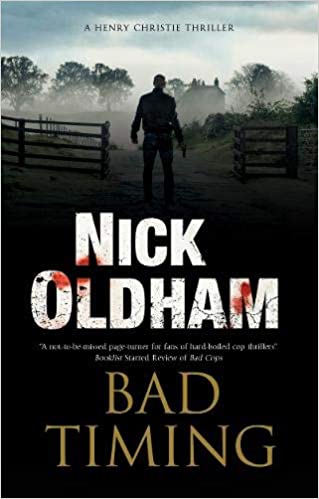


 Fictional police officers come in an almost infinite number of guises. They can be lowly of rank, like Tony Parsons’ Detective Constable Max Wolfe, or very senior, such as Detective Superintendent William Lorimer, as imagined by Alex Gray. Male, female, tech-savvy, Luddite, happy family folk or embittered loners – there are plenty to choose from. So where does Peter Lovesey’s Peter Diamond fit into the matrix? As a Detective Superintendent, he pretty much only answers to the Assistant Chief Constable, but for newcomers to the well established series, what sort of a figure does he cut? Lovesey lets us know fairly early in The Finisher, the nineteenth in a series that began in 1991 with The Last Detective. Diamond is on plain clothes duty keeping a wary eye on a half marathon race in the historic city of Bath:
 There’s a dazzling array of characters to act out the drama. We have an earnest school teacher who forces herself to run the race in order to make good a lost donation to a charity; there is a statuesque Russian, wife of a cynical businessman, determined to lose weight and gain her husband’s respect; instant villainy is provided by a paroled serial seducer and sex-pest who has taken on a new role as personal trainer to the rich; at the bottom of the pond, so to speak, are a pair of feckless Albanian chancers who have escaped from an illegal work gang, and are trying to avoid the retribution of their controllers.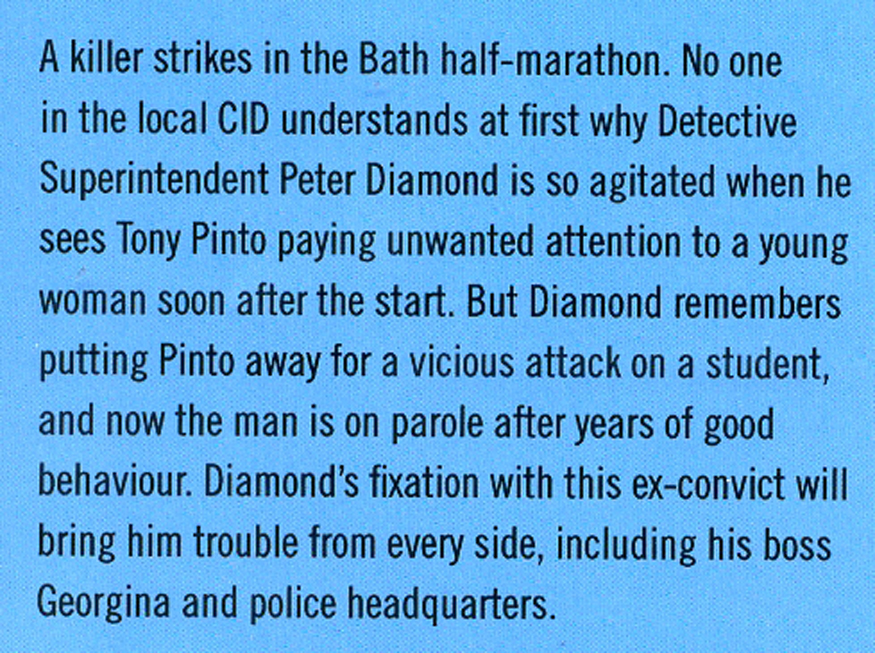


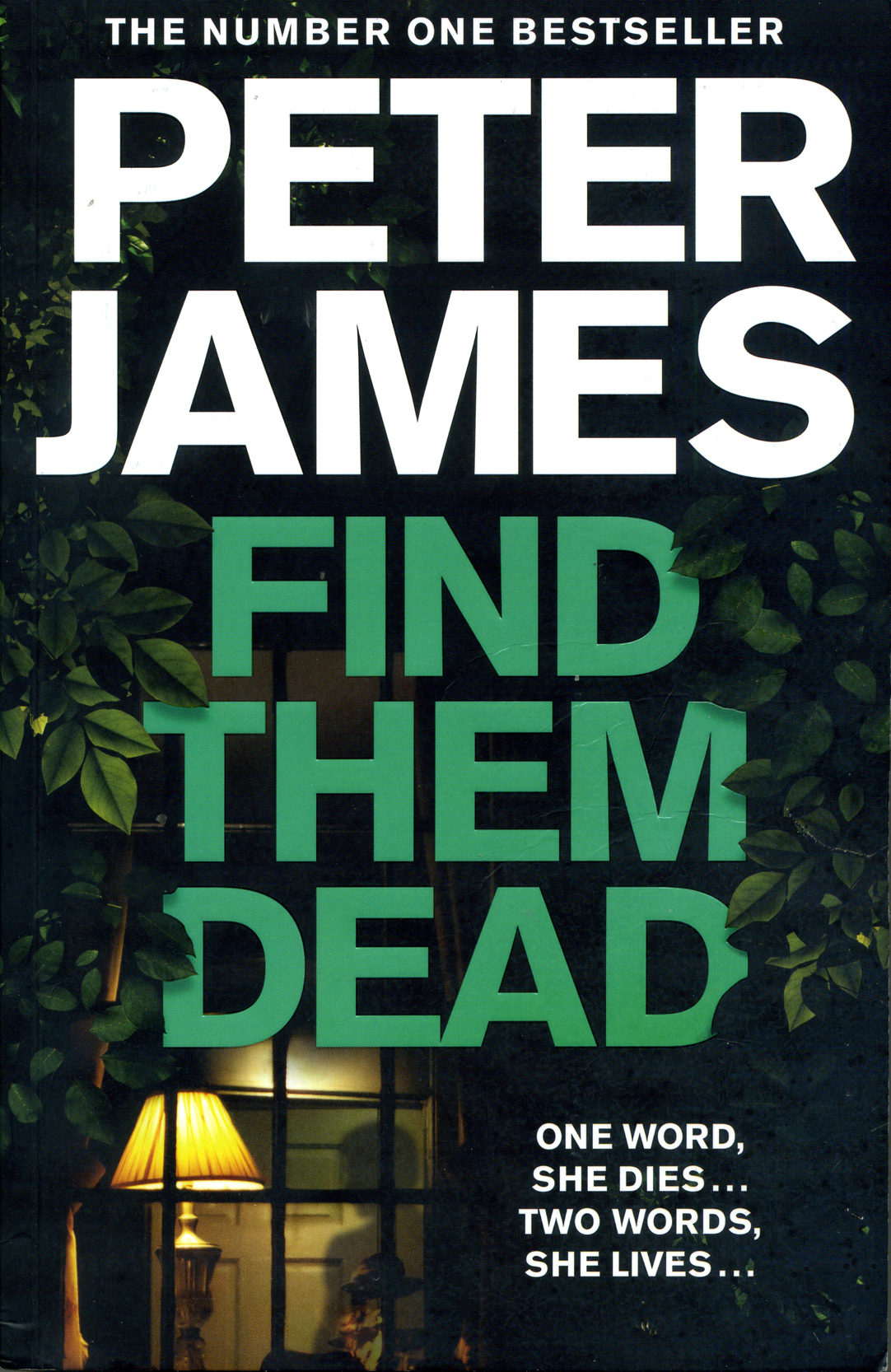 Strangely though, Find Them Dead sees Roy Grace rather in the background. He binds the narrative together by his presence, of course he does, but he mostly takes a back seat in this tale of drug dealers, bent lawyers and jury-nobbling. He has returned to Sussex after a spell working with the Metropolitan Police in London. The sheer depth and depravity of London’s crime has been an eye-opener, but the south coast is not without its villains.

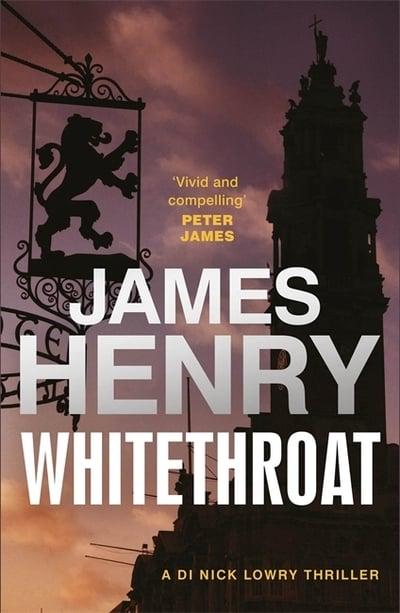 Essex has become something of a trigger word in recent years, conjuring up images such as lavish mansions owned by London gangsters and dumb bottle-blondes with their perma-tanned, medallioned boyfriends. James Henry, however, takes us back forty years to the 1980s. DI Nick Lowry and his boss, Chief Superintendent Sparks, inhabit a police HQ which leaks, has rotten floorboards, and is maybe only months away from the demolishers’ wrecking ball. Sparks contemplates his desk:
 The plot is the least important part of this fine novel, but it unfolds gradually. The woman whose favours are being fought over by the duellists is not a woman at all, but a fifteen year-old schoolgirl, the daughter of a local businessman. He, in turn, has unfinished business with a local enrepreneur, and business that dates back to a racial attack three decades earlier. We are in a world of simmering resentment born out of old slights, and the result? The proverbial dish that is best served cold.


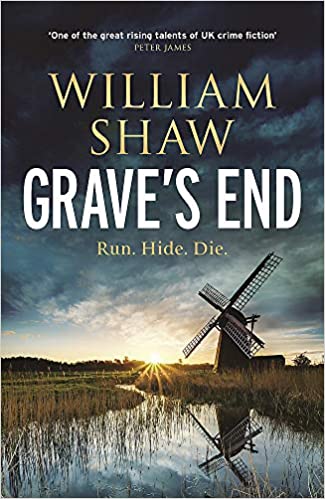



 came late to the party regarding Angela Marsons and her Kim Stone series of police procedurals set in England’s West Midlands, but I thoroughly enjoyed
 eanwhile, Stone’s assistant, DS Bryant, has his own fixation to deal with. He was involved in the capture, trial and conviction of a notorious killer, Peter Drake, and has become involved with Richard Harrison, father of one of Drake’s victims. A previously unrepentant Drake has, suspiciously, turned over a new leaf in jail and has become a model prisoner, thus transforming his application for parole from a forlorn hope into a distinct probability. Both Harrison and Bryant are powerless to prevent Drake’s release. Both have a sense of foreboding about what may follow.
 hen Stone makes the decision to send one of her younger officers into Unity Farm, posing as a distressed and unhappy young woman, things do not turn out according to plan and Marsons orchestrates a tense and nerve-shredding finale to the book. When the murderer is unmasked, it came as a cleverly constructed surprise. Killing Mind is published by Bookouture, and


 Adam Nunn is a decent enough fellow, but like all of us, he has made his mistakes. He lives with Zara, a struggling restaurant owner, but has a child of his own, Tilly, who lives with Grace, her mother. Adam has discovered that he is adopted, and has employed a fairly seedy private investigator to try to trace his birth parents.
 Along the way, Mark (right) introduces us to some loathsome individuals who have all played their part in Adam Nunn’s terrible back story. There’s local politician Leo Riley, for example:


 fullybooked2017