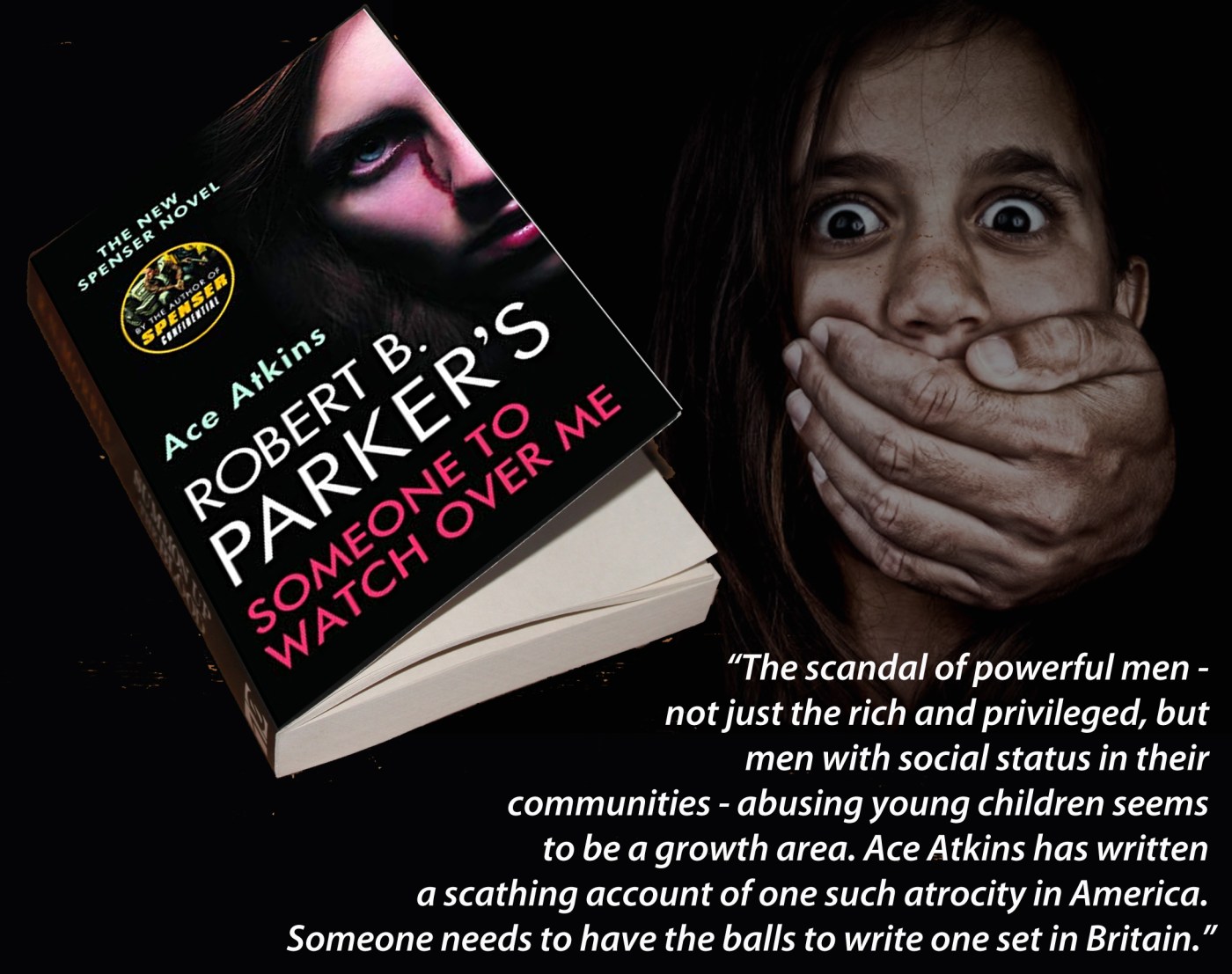

This is a strange one, and no mistake. Not the book itself, which is perfectly readable, but the title. Mainly because the one thing it isn’t is Robert B Parker’s. It’s Ace Atkins, re-imagining the world of the tough wise-cracking Boston PI, Spenser. I suppose it must be some legal stipulation from the estate of Spenser’s creator (1932-2010), but it certainly makes for an unwieldy title. I was a huge fan of the forty canonical Spenser novels and, also, the equally readable Jesse Stone and Sunny Randall books, but let’s remember that Spenser was himself something of a reinvention of Philip Marlowe: a few decades later, for sure, more up for a fist fight, but still with a good line in wise-cracks and sarcastic put-downs. Unlike Marlowe, however, Spenser had a reliable repertory company of helpers, notably his alluring psychologist girlfriend Susan and the implacable and intimidating Hawk.
So, to the novel. The characters are all present and correct including (regrettably, as far as I am concerned) the latest manifestation of the dog Pearl. Pearl and her little ways used to irritate me in the original books but, to be fair, Spenser simply wouldn’t be Spenser without the doggy love, so Ace Atkins gets a reluctant star for authenticity. Spenser is asked to investigate a sex crime. Not his normal bread and butter, but a very much under-age friend of a friend has been used and abused by someone much richer and infinitely more powerful. Peter Steiner and Poppy Palmer are disgustingly rich – and have disgusting moral values. To put it bluntly, Peter likes under-age girls, and Poppy likes that he likes them, and gets her kicks from sucking them into their decadent whirlpool.
 The Steiners are also well-connected. Politicians great and small, financiers, socialites, fund-raisers – mostly anyone who is anyone in Boston and further afield – all tip their hats to the Steiners. Neither does it hurt that the Steiners’ clout enables them to hire serious muscle from the criminal underworld and, as most of the child rape is conducted on a private island somewhere in the vicinity of the Bahamas, neither the Boston Police Department nor the FBI can do anything to intervene.
Spenser is, if nothing else, an extremely moral man, and the plight of the youngsters stirs him to put his hands into the hornets’ nest. He has important allies in the shape of two other long-standing members of Spenser Inc. – tough and honest cup Quirk, and the voluptuous campaigning lawyer, Rita Fiore. Despite their authority, however, neither Quirk nor Fiore can lay a glove on the Steiners while they are despoiling young lives on their Caribbean hideaway.
Clearly, in real life, things work differently. Or maybe they don’t? Much closer to home we have witnessed the appalling abuse of thousands of young girls across English towns and cities, while those in authority, like the Jew and the Levite in the parable, passed by on the other side. Maybe they weren’t swayed by money directly, but their livelihoods in social services, the police and local government would have been under threat if they had done or said “the wrong thing”. Back to the fiction, Ace Atkins sets up a terrific finale here, with Spenser and Hawk travelling to an island close to the Steiners’ lair. Not only do they face a small army of minders and gunmen, but a man known as Ruger who, a few books ago, bested Spenser and left him for dead.
Spenser’s crusade is flawed, however, because someone he counts on is working for the bad guys, and the plans to liberate the youngsters goes pear shaped. Just when you think that this is finally “it” for Spenser and Hawk, something totally unexpected happens and a certain amount of rough justice is meted out. The scandal of powerful men – not just the rich and privileged, but men with social status in their communities – abusing young children seems to be a growth area. Ace Atkins has written a scathing account of one such atrocity in America. Someone needs to have the balls to write one set in Britain. Someone To Watch Over Me is published by Oldcastle Books and is out now.
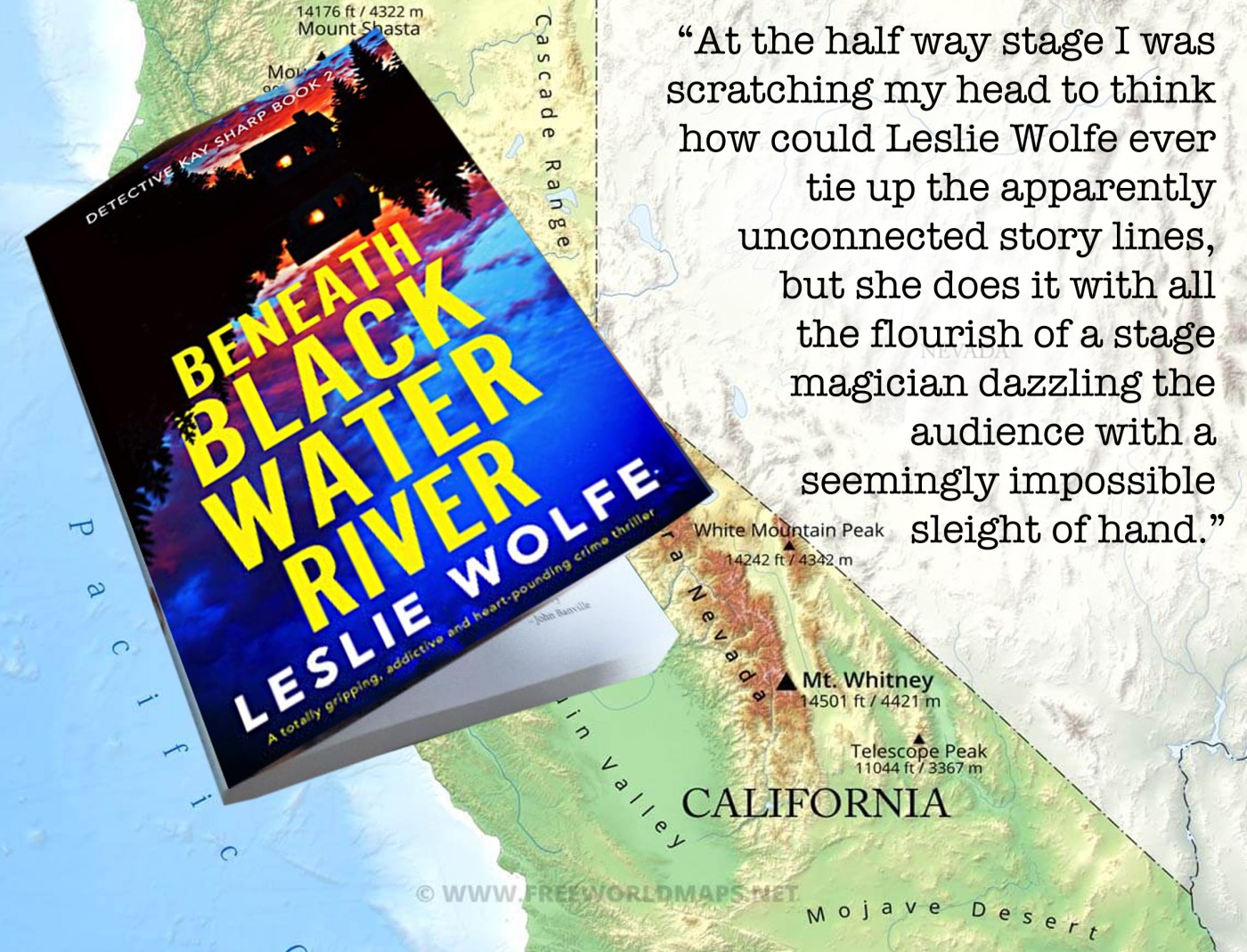

 Leslie Wolfe has, then, set several hares running, to use the venerable English metaphor. The rogue cop – Herb Scott – is a truly nasty piece of work, and seems to have half the Sheriff’s Department under his thumb, as when his wife, Nicole, has reported her many beatings as a crime, nothing ever happens. The mis-identification of the murdered girl is a seemingly unsolvable mystery. Were there ever two girls, or are they one and the same? Does the conundrum stem from a complex inheritance issue involving the wealthy Caldwell family? The Caldwells are magnificently disfunctional, riven with bitterness and jealousy, and to spice matters up even more, there is the deadly whiff of incest in the air.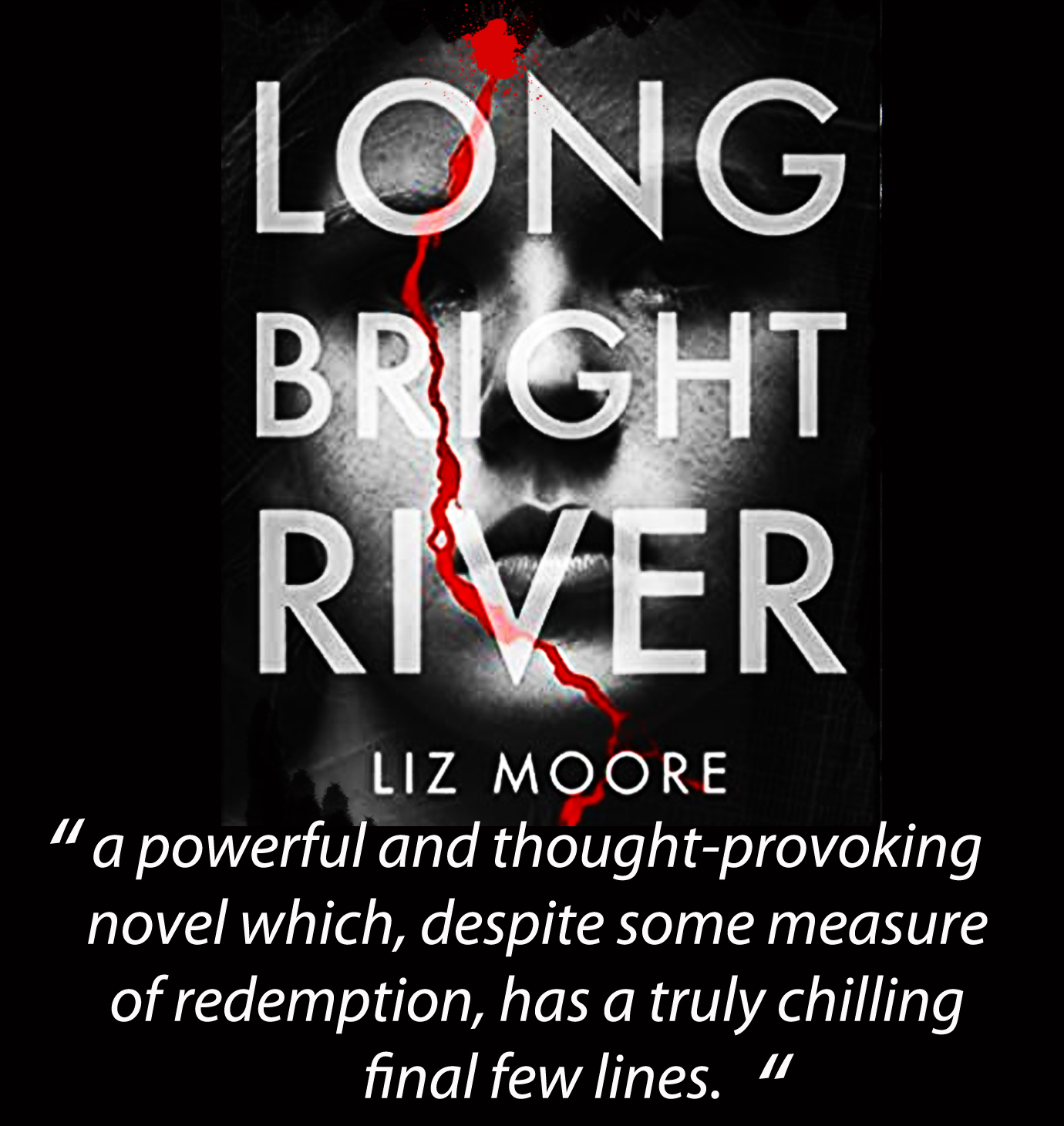
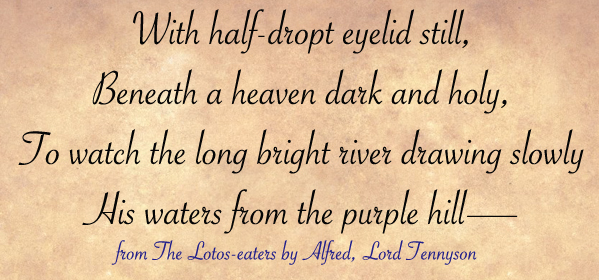
 This is not a crime novel in the traditional sense, and it certainly isn’t a police procedural, despite Mickey’s profession. The plot partly involves the search for someone who is killing young women who have been forced into prostitution to feed their drug habit but, although this is resolved, it is eventually incidental to the main thrust of the novel.
 Liz Moore (right) treats Mickey’s search for her sister on two levels: the first, and more obvious one, is a nightmare trip through the squats and shoot-up dens of Kensington in an attempt to find Kacey – a search, find and protect mission, if you will. On a more metaphorical level, the books becomes a journey through Mickey’s own past in the quest for a more elusive truth involving her family and her own identity.

 I was working in Australia when Peter Weir’s 1975 film Picnic At Hanging Rock premiered. I remember pub and dinner party talk for months after being dominated by interpretations and explanations about what might have happened to the ‘lost girls’. In the endpapers of Last Time I Lied American author Riley Sager, (left) acknowledges his debt to this film (and the short story on which it was based). Instead of a 1900 Melbourne, Sager beams us into up-country New York State in, more or less, our times.
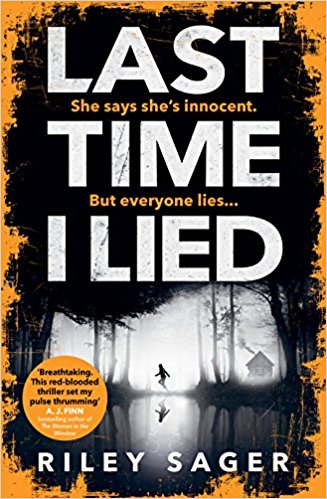 Emma’s summer idyll is destined to come to an abrupt and tragic end, however, when the three older girls in the cabin disappear one night, never to return. Despite the massive search and rescue operation, Vivian, Natalie and Allison remain missing, and Franny is forced to close the camp in disarray.


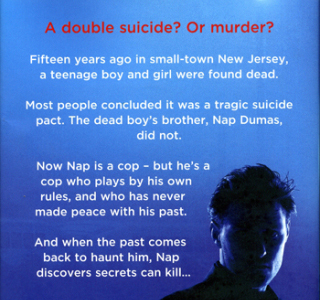
 Alex Cross is in trouble. Big trouble. He is the victim of a beyond-the-grave revenge attack from his very first opponent, Gary Soneji. Gary is long dead, blown up by his own bomb in a subway. It is not beyond Patterson’s audacity to resurrect someone, but in this case it is supporters of the late Mr Soneji who are responsible for Cross being accused of homicide. He is lured to a warehouse where members of the Soneji cult are waiting for him. In the fire fight that follows, members of the cult are killed and wounded, but when Cross summonses emergency backup, no weapons other than Cross’s own can be found. The words happy, trigger and cop are immediately rearranged into a well-known phrase or saying by the sensation-hungry media.
 Hand on heart, I have to admit to really enjoying this book. Patterson (right) hasn’t achieved his world-wide pre-eminence as a best selling writer by not being able to tell a story. The action comes thick and fast and in this book at least, the portrayal of Cross disproves the old adage about familiarity breeding contempt. Yes, Nana Mama is still there, serving up delicious meals for all and sundry and being annoyingly stoical in the face of her grandson’s adversity. Yes, Cross’s annoyingly geeky nine year-old son spots something that a top FBI data analyst has missed, but at least our man’s current love interest seems to be a good sort.

 “Mr Nice Neighbour. See, I am that rarest of creatures in suburban towns – a straight, single, childless male is about as common out here as a cigarette in a health club – so I work hard to come across as normal, boring, reliable.”
 Coben is never anything but readable and he is great form here. This was one of those books which pose a delicious dilemma – do I carry on reading as the hook of the action bites deeper and deeper, or do I put it down for a couple of hours to make it last longer? As a regular reader of Coben’s books I knew that the big reveal – in this case the truth about the deaths of Leo and Diane – would be a definite “Oh, my God!” moment, but try as I might, I didn’t get close to guessing the actual shocking detail.
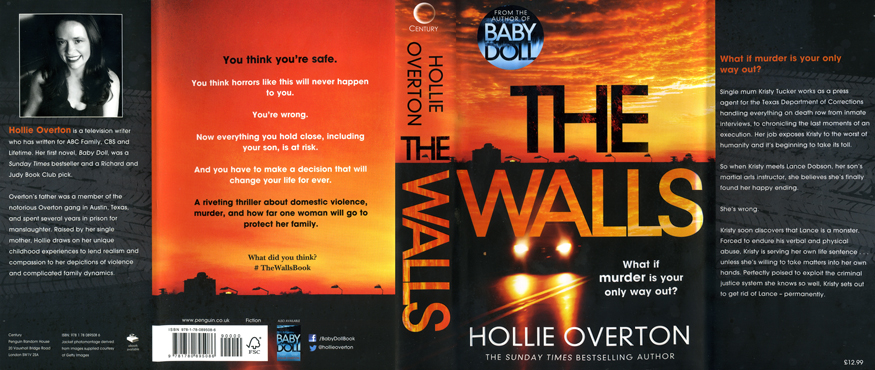
 Kristy puts food on the table and tries to make sure that Ryan isn’t disadvantaged. She has a job, and it is one that demands every ounce of her compassion and every droplet of her sang froid. Her official title? Public Information Officer for the Texas Department of Criminal Justice. If that sounds like some bureaucratic walk-in-the-park, think again. Acting as mediator between inmates, the press and the prison system is one thing, but remember that The Lone Star State is one of the thirty one American states which retains the death penalty. Consequently, Kristy not only has to manage the fraught liaison between prisoners on death row and the media, but she is also required to be an official witness at executions.
 It will come as no surprise to learn that Hollie Overton (right) is an experienced writer for TV. In The Walls every set-piece, every scene is intensely visual and immediate. With consummate cleverness she sets up two story lines which at first run parallel, but then converge. Two men. One is definitely guilty. One possibly innocent. Both are condemned to death. One by the State of Texas. The other by his battered wife.
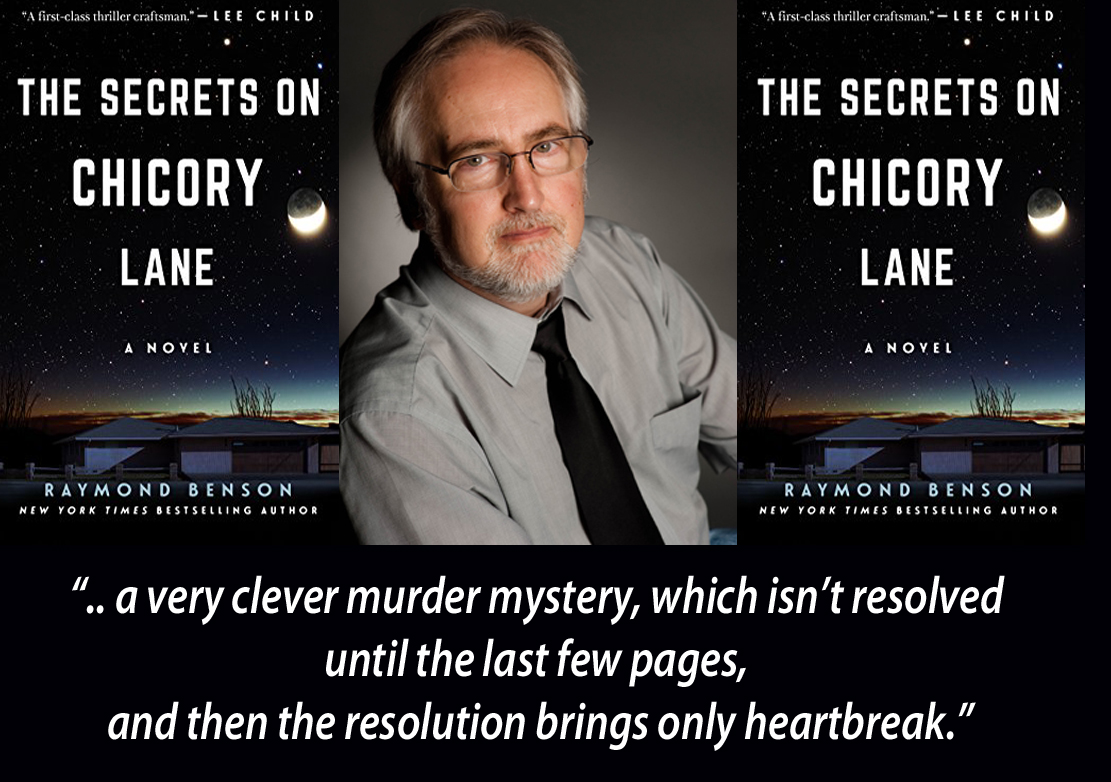

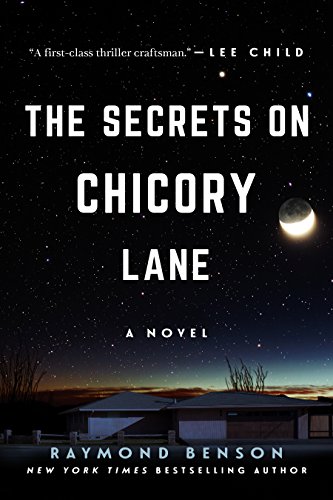 Eddie is Eddie Newcott, the boy who used to live across the street in Chicory Lane, Limite. The boy who was just a bit different from all the other kids at school. The kid whose dad was a rough and abusive oilfield mechanic. The kid whose mom turned to the bottle to escape her violent husband and the beatings he handed out to their only child. But that was then. Now sees Eddie fallen on hard times. Times so hard that he achieved brief notoriety in the tabloid press, and has now been sentenced to death by lethal injection for murdering his pregnant girlfriend, slashing her open, dragging the foetus out and then arranging the two corpses on his front lawn, posed in an obscene mockery of a Nativity tableau. And it was Christmas Eve.
 Like Shelby Truman, Raymond Benson (right) is a highly successful writer. He has written thrillers under his own name, most notably his Black Stiletto Saga, and has also written novels based on video games. He has taken up the baton from authors who are no longer with us, like Tom Clancy, and has written several James Bond stories which have either been based on established screenplays – like Die Another Day – or standalone original stories such as The Man With The Red Tattoo.
 The muster room of hard-nosed female cops and investigators is not exactly a crowded place on Planet CriFi. Victoria Iphigenia Warshawski, Fiona Griffiths, Kate Brannigan, Cordelia Gray, Kay Scarpetta and Jane Marple have already taken their seats, but Temperance Brennan has, temporarily, given up hers for another child of her creator, Kathy Reichs (left). Sunday ‘Sunnie’ Night is a damaged, bitter, edgy and downright misanthropic American cop who has been suspended by her bosses for being trigger happy. She sits brooding, remote – and dangerous – on a barely accessible island off the South Carolina coast.
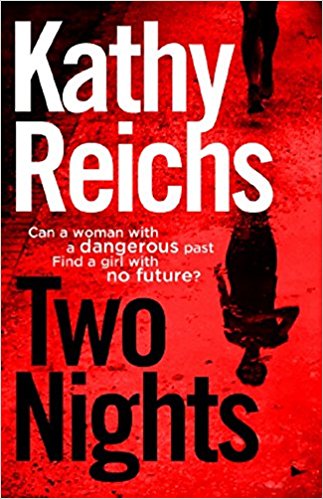 Half way through the novel we realise the significance of the title. Sunnie Night is not waging this war alone: her twin brother Augustus ‘Gus’ Night is also on the case and, to use the cliche, he ‘has her back’. Together they are certainly a deadly combination. By this point, though, Reichs has bowled us an unreadable googly – or, for American readers, thrown us a curveball – and it isn’t until the closing pages that we realise that we have been making incorrect assumptions. Which is, of course, exactly what the author planned! Those last few pages make for a terrific finale, as the twins desperately try to prevent an atrocity being carried out at one of America’s most celebrated sporting occasions.