

In the last Harlan Coben book I read, Think Twice, the DNA of a man who died decades ago turns up at a recent murder scene. Coben loves these ‘impossible’ scenarios, and here, he sets us another one. When he was on a gap year trip to Europe twenty-two years earlier, Sami Kierce had a passionate fling in a Spanish resort with a young fellow American called Anna. It all ended grimly when, after yet another evening fueled by booze, drugs and sex, Sami wakes, as usual, in Anna’s arms. Problem. He is covered in Anna’s blood and clutching a knife.
Now, Sami, thrown off the police force for various indiscretions, scratches a living as a PI in New York, also turning a more-or-less honest buck giving evening classes in criminology to a bunch of weirdos. When one of his classes is joined by a woman who, if not Anna is, surely, a clone, Sami does a classic double-take. So many questions, already. First up is how Sami managed to get back Stateside after the Costa del Sol incident with Anna. We do find out, eventually. Second is how ‘Anna’ appears to be living in a Connecticut mansion, deep in a forest and protected by armed heavies and belligerent dogs.
As if having one dramatic backstory weren’t enough, Sami has two. Before he had to throw in his badge, Sami was engaged to a fellow officer, Nicole Brett. Then she was murdered by a nasty piece of work called Tad Grayson, who was arrested, tried, and given a life term. But now, thanks to nifty footwork by his legal team, Grayson is out, and determined to prove that he did not kill Nicole. All of which, naturally enough, does not improve Sami’s sunny demeanour. ‘Anna’ is actually Victoria Belmond who, back in the day featured in the mother-and-father of all ‘missing heiress’ stories. Victoria disappeared on New Years Eve after a party, and what happened in the next eleven years – until she turned up sitting in a corner booth of a Maine diner – remains a mystery. Victoria was – literally – mute for many months thereafter and even, when speech returned, remembered nothing of where she had been and with whom.
After his abortive attempt to follow ‘Anna‘ on the night she came to his class, Sami has become a person of interest to the Belmond family and, much to his surprise, he is offered a small fortune to do what the police and FBI failed to do – discover the truth about Victoria’s disappearance. He even uses the Belmond’s largesse to take a quick trip to Spain along with wife Molly and their baby son, and here he finds the police officer who dealt with the case back in the day. He learns that he was the victim of a very clever scam involving ‘Anna’ and her drug hustling boyfriend.
Just when this particular reader was reflecting that this was just one more engaging – but slick and formulaic – American thriller, something truly awful happens and, 308 pages out of 414, everything I thought I understood about the plot is turned on its head. Reviewers are forever trying to think up new metaphors and catchy phrases to explain astonishing plot twists, so all I can say is that this one is up there with the best. I can also say that in the hands of a lesser writer that Harlan Coben, it would probably be a disaster, but he pulls it off with his customary flair. Nobody’s Fool was published by Penguin on 27th March.



 When their father dies after a long illness, Leslie sets out to find Robin and eventually tracks her down to a seedy apartment block in Las Vegas.One slight problem. Robin is face down on the bed in the cockroach infested room, dead of a drug overdose.
 Alert readers may well figure out what is actually going on well before we get the big reveal, but even if you do, it won’t spoil the enjoyment. Tanen Jones (right) takes a wry look at modern obsessions, including a single mom who earns a living for herself and two little boys by posting stuff on Instagram, the debilitating half life lived by relative strangers messaging each other on social media, and the grim reality of women hooked into relationships with parasitic and abusive men.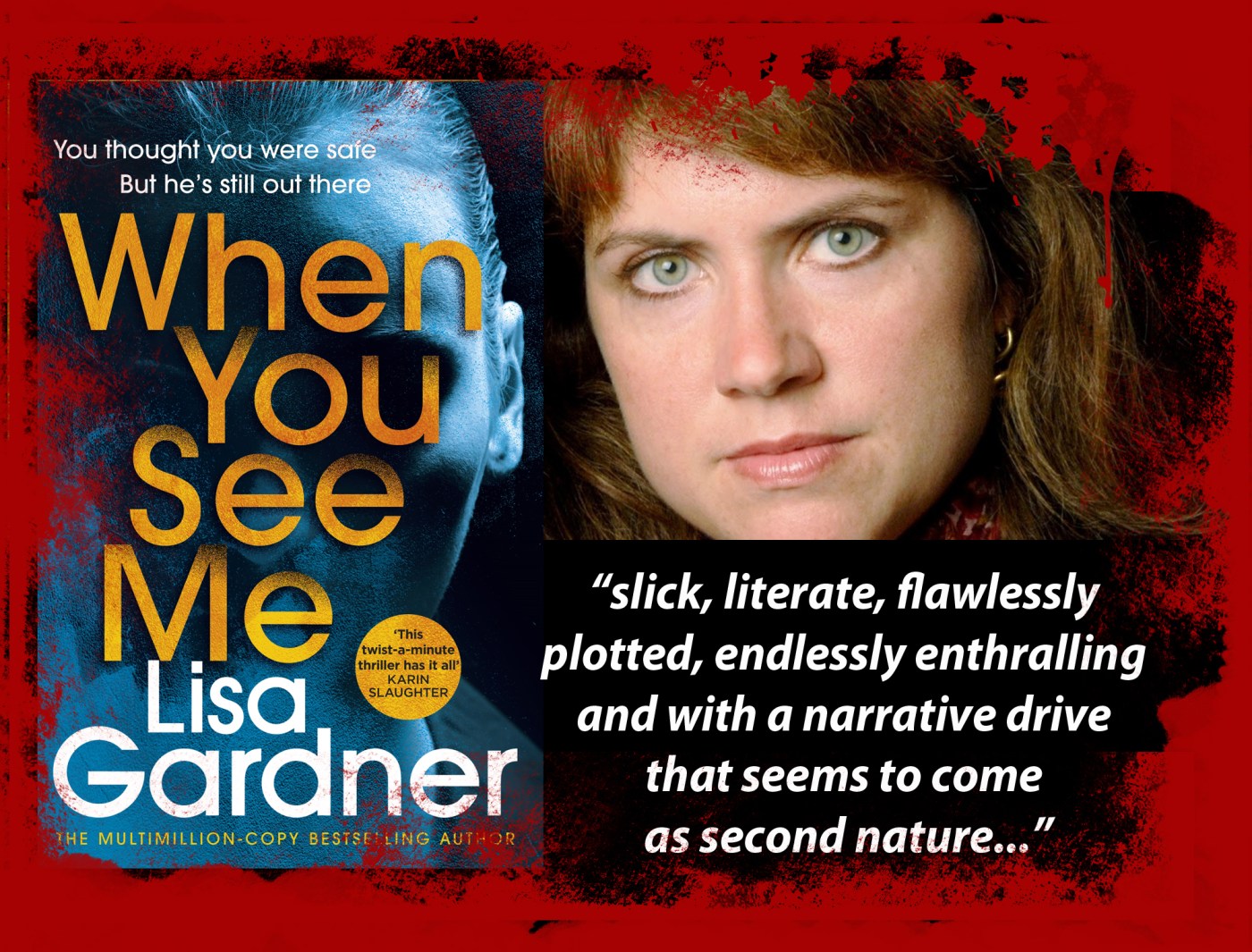

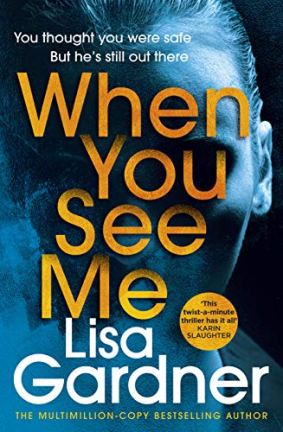 I first encountered Lisa Gardner’s entertaining ensemble of law enforcers just over a year ago in
  he storytelling technique which uses multiple narrators is much used and, it must be said, often abused, but Kisa Gardner nails it here, particularly through the eyes of Bonita, a Mexican girl maimed in childhood, unable to speak and used as a maid-of-all-work in an ostensibly respectable Victorian mansion, now an upmarket Bed & Breakfast facility in Niche, Georgia – the nearest settlement to where the human remains have been uncovered. Bonita is not her real name. Only her late mother knows what it is, but when D.D. Warren meets her during the investigation, she says:
 Almost inevitably, the dreadful goings on in the mountains surrounding Niche must involve some of the locals, but Lisa Gardner (right) lays out several enticing red herrings before revealing precisely which of the eminent townsfolk are involved in a dreadful conspiracy, a toxic cocktail of abduction, sexual slavery and-ultimately-murder. Flora, D.D. and the other members of the team eventually corner the evil genius at the centre of Niche’s darkest secret, but not before we are treated to a spectacularly violent finale involving secret tunnels, torture and, intriguingly, death-by-dishwasher.
 merican crime fiction is a huge, diverse and somewhat unwieldy beast, but at its best it is slick, literate, flawlessly plotted, endlessly enthralling and with a narrative drive that seems to come as second nature to such writers as Lisa Gardner. When You See Me will be out in Kindle,

 Atlee Pine has anger management issues, and A Minute To Midnight begins as she is put on gardening leave for kicking the you-know-what out of a child rapist. She decides to use this enforced leisure time in another attempt to find out what happened on the fateful night when her sister was abducted and she was left with a fractured skull. Accompanied by her admin assistant Carol Blum, she revisits the scene of the trauma, the modest town of Andersonville, Georgia. Tumbleweed is the word that first comes to mind about Andersonville, but it scrapes a living from tourists wishing to visit the remains of the Confederate prisoner of war camp which, in its mere fourteen months of existence, caged over thirty thousand Union prisoners of whom nearly thirteen thousand were to perish from wounds, disease and malnutrition.
 A series of apparently motiveless murders in Andersonville diverts Pine from the search for her own personal truth, and she is soon enlisted to help the understaffed and under-resourced local cops. The first murder victims – a man and a woman – are killed elsewhere but then delivered to Andersonville bedecked as bride and groom respectively. When it turns out that they were both involved in the porn industry, what first appears to be a significant lead runs into a brick wall.

 Alyssa Wyatt is pretty much your showcase American Mom. Not Middle American geographically, as she lives in New Mexico, but she ticks most of the other boxes; handsome successful husband, two teenage kids, nice house and a fulfilling career – as a cop. Like so many fictional law enforcement types, she has a dark past centred in childhood trauma, but what is done is done, and she lives for Holly, Isaac and husband Brock.
 harly Cox reveals to us the identity of the bad guy fairly early in the piece. Or, rather, she doesn’t. Over enigmatic? Quite probably, but to say more would ruin the fun. Alyssa and Cord chase their tails with more determination than success, while the sadist at the centre of the mayhem plans his next atrocity.
 on’t be misled, however, into thinking that All His Pretty Girls is Chick Lit. Yes, a female is the central character, but there’s no shortage of graphic violence and enough of the ‘mean streets’ to satisfy fans of hard-boiled crime.
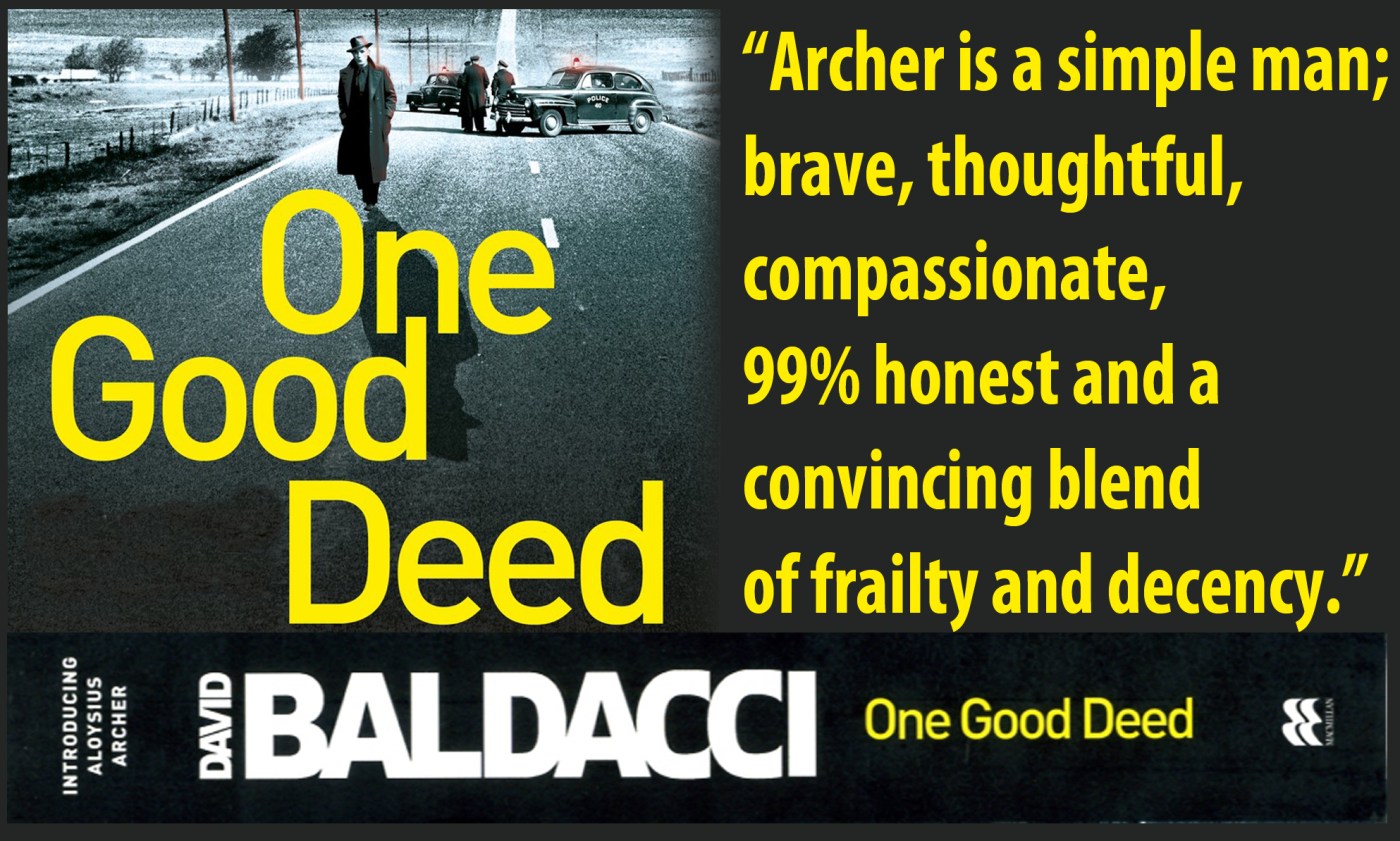

 rcher served his country with distinction in the war, fighting his way up the spine of Italy, watching his buddies die hard, and wondering about the ‘just cause’ that has trained him to shoot, throttle, stab and maim fellow human beings while, at the same time, preventing him from being at the deathbeds of both parents.
 Wearing a cheap suit, regarded as trash by the local people, and with every cause to feel bitter, Archer checks into the Derby Hotel and contemplates the future. His immediate task is to check in with his Probation Officer, Ernestine Crabtree. Quietly impressed by her demeanour – and her physical charm – Archer goes, in spite of his parole restrictions, for a drink in a local bar, The Cat’s Meow
 ven before Lucas Tuttle answers the door to Archer’s knock by pointing a cocked Remington shotgun at his unwelcome visitor, Archer has learned that the floozie on Pittleman’s arm in the bar is none other than Jackie, Tuttle’s estranged daughter. Archer finds the coveted motor car hidden away on Tuttle’s ranch, but it has been deliberately torched. Cursing his involvement in this blood feud, Archer’s equilibrium and freedom both take a severe knock when Pittleman’s body is found in a bedroom just along the floor from Archer’s room in The Derby. Thrown into the cells as the obvious suspect, Archer is released when he meets up with Irving Shaw – a serious and competent detective – and convinces him of his innocence.
 Pretty much left on his own to solve the case after a violent attempt to silence Jackie, Archer has to summon up very ounce of his military experience and his innate common sense to put himself beyond the reach of the hangman’s noose.
 mplausible as it may sound, given the body count – stabbings, shootings, people devoured by hogs – One Good Deed is a wonderfully warm and feel-good kind of novel. Archer is a simple man; brave, thoughtful, compassionate, 99% honest and a convincing blend of frailty and decency. Baldacci (right) is such a skilled storyteller that the pages spin by, and anyone who loves a crime novel where goodness prevails would be mad to miss this. Mr B also gives us a rather unusual romance – for 1949, at least. One Good Deed is published by Macmillan and is


 teph Maddox is something of an Alpha female. She has punched her way through the law enforcement glass ceiling during her training at the legendary Virginia military training base known as Quantico, and now she is a senior operative at the HQ of The Federal Bureau of Investigation which, as the organisation’s website tells us, helpfully, is:
 For Agent Maddox, however, The FBI Experience is something other than a theme park visit. Gender equality has come at a price, and she is viewed with a certain degree of suspicion by many of her male colleagues, particularly as she is – and feel free to use the ‘woke’ description of your choice – a single mother, lone parent or head of a one-parent family. The blunt truth is that Steph has brought up Zachary largely on her own from day one. Not only that, but she has steadfastly refused to reveal the identity of his father.

 aren Cleveland, to say the very least, knows of what she writes. She is a former CIA analyst herself, and her experience translates into a swiftly moving and convincing narrative. Steph Maddox is torn between fighting her son’s corner – he is innocent, surely? – and preventing a major terrorist assassination attempt. As in the real world of political and military intelligence gathering, nothing is what it seems, and no-one is above suspicion.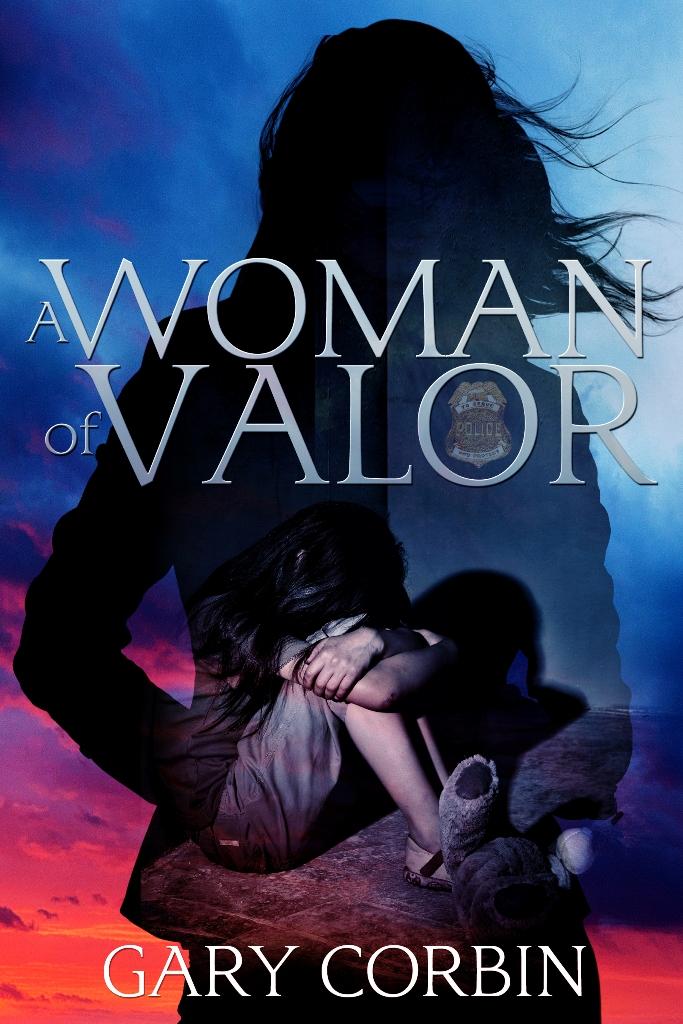

 Okay, so this was the ePostman rather than the local Royal Mail employee, but US writer Gary Corbin has a new book out, and his stuff is always worth a mention.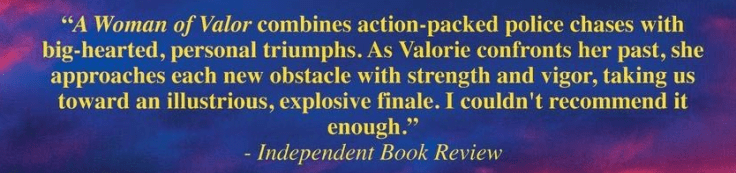


 ccasionally I miss out on ARCs and book proofs, and so when I realised the magisterial James Lee Burke had written another Dave Robicheaux novel, and that I was not on the publicist’s mailing list, I went and bought a Kindle version. Just shy of ten quid, but never has a tenner been better spent.
 To be blunt, JLB is getting on a bit, and one wonders how long he can carry on writing such brilliant books. In the last few novels featuring the ageing New Iberia cop, there has been a definite autumnal feel, and The New Iberia Blues is no exception. Like his creator, Dave Robicheaux is not a young man, but boy, is he ever raging against the dying of the light.
 ith writing that is as potent and smoulderingly memorable as Burke’s, the plot is almost irrelevant, but in between heartbreakingly beautiful descriptions of the dawn rising over Bayou Teche, visceral anger at the damage the oil industry has done to a once-idyllic coast, and jaw-dropping portraits of evil men, Robicheaux patiently and doggedly pursues the killer, and we have a blinding finale which takes The Bobbsey Twins back to their intensely terrified – and terrifying – encounters in the jungles of Indo China.


 fullybooked2017