
OH….SEPTEMBER … Such a cause for melancholy. Even though it is six years since the end of August, for me, meant one terrible truth. The days ahead would mean a return to work. A return to the classroom. A return to hour upon hour of dreadful, pointless and unproductive staff meetings. A return to the sight of six hundred – well maybe twenty or thirty – shining young faces turned in my direction, desperate to hear my wise words, to share my hard-earned wisdom, to rejoice in a mutual love of learning. (Spot the bare-faced lie or three)
OH….SEPTEMBER … even though I am retired your first dawns still bring a little shiver of fear, but then I roll over in bed, hug my Teddy, and lapse into a smug sleep, safe in the knowledge that I am no longer responsible for shaping the lives of Britain’s future leaders, scientists, composers, authors and philosophers. Nor the lives of apprentice muggers, drug dealers, drunk drivers, sex pests, wife beaters and Jeremy Kyle guests.
OH….SEPTEMBER … thank you for new books, new plots, new writers and the prospect of afternoons spent feet up on the sofa, worlds away from the beige mundanities of small town Cambridgeshire, transported to the world of murder, deception, intrigue and violence. New books, then.
Renée Knight worked for the BBC directing arts documentaries before beginning her writing career. She has written television and film scripts for the BBC, Channel Four and Capital Films. Her first screenplay, Mother’s Day, made it onto the 2010 Brit List of best unproduced scripts of that year.
Her first novel, Disclaimer, was published by Transworld in 2015, and she is currently adapting for the screen for Fox Searchlight. Renée lives in London with her husband and two children.
Her new novel, The Secretary, is a psychological thriller based around the concept of someone who is largely ignored and taken for granted, but is always there listening, making mental notes of indiscretions, weaknesses and fallibility. What if that someone, Christine Butcher for example, is pushed to her limit and needs to strike out? Her knowledge and little book of secrets may well prove to be fatally powerful. The Secretary is published by Doubleday, and will be out in early 2019.

What Falls Between The Cracks is the first published novel from Robert Scragg.He is a northerner born and bred, and has had a random mix of jobs to date, including bookseller, pizza deliverer, Karate instructor, and Football Coach. He originally intended to join the legal profession, but after getting his degree, ended up with a job in Telecoms.
Writing was something he hadn’t done much of since he left school, until around seven years ago when an idea for a book popped up that he found too interesting to ignore, and his lead character, Jake Porter, plus his partner Nick Styles started to nag him to write it. His first novel, What Falls Between the Cracks, is the first in the Porter & Styles series. It was pitched during the 2016 Theakston’s Crime Festival at the “Dragon’s Pen”, to a panel of agents and editors, managing to get four ‘yes’ votes, and has since been picked up by Allison & Busby. It was released in hardback and e-book on 19th April 2018, and the paperback follows on 20th September.
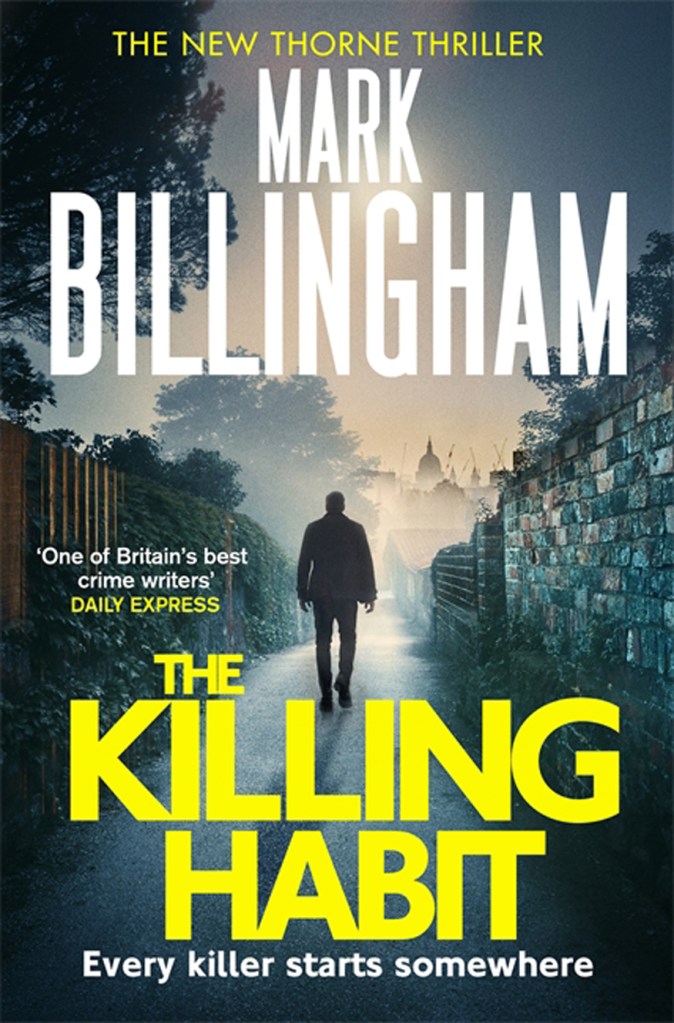
Robert lives in Tyne & Wear, with his wife, children and dog. Away from work and writing, he’s a long-suffering follower of Newcastle United, fan of all things martial arts, scuba diving and mountain climbing, and self-confessed crime fiction junkie. His favourites in the genre include Harlan Coben, Robert Crais, Linwood Barclay, Lee Child, Michael Connelly, Sarah Hilary, Mari Hannah, Mark Billingham and Howard Linskey to name but a few.


James Barlow was a Birmingham-born novelist who served as an air gunner with the RAF in WWII. Invalided out of service when he contracted tuberculosis, he faced a long convalescence. He began writing at this time, and after he worked in his native city as, of all things, a water rates inspector, he made the decision to write for a living. His first novel, The Protagonists, was published in 1956, but made little impact. It wasn’t until Term of Trial (1961) that he began to make a decent living from writing, and then more because film director Peter Glenville saw the cinematic potential in the story of an alcoholic school teacher whose career is threatened when he is accused of improper behaviour with a female pupil. The subsequent film had a star-studded cast including Sir Laurence Olivier, Simone Signoret, Sarah Miles, Terence Stamp, Hugh Griffith, Dudley Foster, Thora Hird and Alan Cuthbertson.
Term of Trial was a powerful and controversial film, but clearly had nothing to do with crime fiction. Barlow’s 1968 novel The Burden of Proof was another matter. By the time it was published, the Kray twins’ days as despotic rulers of London’s gangland were numbered. They were arrested on 8th May in that year and the rest, as they say, is history. The Burden of Proof is centred on a Ronnie Kray-style gangster, Vic Dakin. Dakin is psychotic homosexual, devoted equally to his dear old mum and a succession of pliant boyfriends, while finding time to be at the hub of a violent criminal network.
In the city which is portrayed as little more than a moral sewer, we have the vile Dakin and his criminal associates; we have an earnest and incorruptible copper, Bob Matthews who Barlow sets up – along with Bob’s mild-mannered and decent wife Mary – as the apotheosis of what England used to be before the plague took hold. We have Gerald Draycott, a dishonest and manipulative MP who flirts with the dangerous world of gambling clubs, casinos, girls-for-hire and drugs-for-sale, but still dreams of becoming a cabinet minister.

It is tempting to add the cliché “who needs no introduction” but it won’t hurt to remind potential readers that the man known as Andy McNab is, in real life, a highly decorated soldier. You don’t receive the Distinguished Conduct Medal for services to military administration, nor is the Military Medal awarded for excellence in ceremonial drill. McNab’s most popular fictional hero returns in Line of Fire, and former Special Forces operator Nick Stone is, as usual, up to his eyes in trouble. He has been given the job of taking out an unusual target. One, it’s a woman and, two, she is a hacker so skilled that her clattering keyboard can potentially disrupt commerce, destroy communications and bring down governments. Line of Fire is published by Corgi/Transworld/Penguin Random House and will be available
Ex Met-Police detective Winchester says of his debut novel:

This is a curious and quite unsettling book which does not fit comfortably into any crime fiction pigeon-hole. I don’t want to burden it with a flattering comparison with which other readers may disagree, but it did remind me of John Fowles’s intriguing and mystifying cult novel from the 1960s, The Magus. I am showing my age here and, OK, The Gilded Ones is about a quarter of the length of The Magus, it’s set in 1980s London rather than a Greek island and the needle on the Hanky Panky Meter barely flickers. However we do have a slightly ingenuous central character who serves a charismatic, powerful and magisterial master and there is a nagging sense that, as readers, we are having the wool pulled over our eyes. There is also an uneasy feeling of dislocated reality and powerful sensory squeezes, particularly of sound and smell. Author Brooke Fieldhouse (left) even gives us female twins who are not, sadly, as desirable as Lily and Rose de Seitas in the Fowles novel.
Lloyd Lewis is the Magus-like figure. He is so thumpingly male that you can almost smell him, and he rules those around him, with one exception, with an almost feral ferocity. So who are ‘those around him’? Ever present psychologically, but eternally absent physically, is his late wife Freia, the subject of Pulse’s dream. Martinique is Patrick’s girlfriend, and loitering in the background are his children, step-child and office gofer Lauren. Lauren, who has “thousand-year-old eyes”, is of the English nobility, but quite what she is doing in the Georgian townhouse we only learn at the end of the book. The one person to whom Patrick defers is his Sicilian friend Falco. Equalling the Englishman’s sense of menace, the sinister Falco appears briefly but is, nonetheless, memorable.

Also Sprach, in no particular order (put the name to the quote for a bit of fun, but no prizes, sadly) Napoleon, Jack Nicholson, Hitler, Sartre, and Nietzsche. In this brilliant new novel by Simon Lelic we have, in theatrical terms, an intense two-hander between Susanna (a counsellor) and Adam (a troubled young man). Just a couple of problems here, though. First, neither person is exactly who they claim to be and, second, Adam has abducted Susanna’s daughter Emily and, for reasons which emerge as this extraordinary dialogue develops, wants her dead.
is a writer who views the human condition with what some might term a jaundiced eye, as witnessed in his previous novel, 

Lowery sets out his narrative stall with those four threads which will eventually weave together to powerful effect. Ibrahim, his puppet strings pulled from afar courtesy of the internet, plans a terrorist bomb attack which goes spectacularly wrong and he goes on the run. A revered and respected fighter, Karl, has to watch in frustration while his ISIL soldiers are outgunned and overwhelmed by coalition forces, and his position is undermined by over-promoted jobsworths in his own organisation. Faqir has finally had enough of living in the shell-torn morgue that Mosul has become, and gathers together his hard-earned savings and is determined to find a better life for his family. Battling German privacy laws which prevent him from publishing photos of his suspect, Kellerman presses on and is determined to bring his man to justice.
This is a big, sprawling novel – nearly 450 pages – but it is grimly readable. I say ‘grimly’ because it goes behind bland newspaper headlines and ten-second TV news video clips, to reveal the whole Iraq – Syria situation as the ruinous, depressing and insoluble shambles it has become. It would be impossible to write a novel like this with it being political, but I don’t think Lowery (right) allows himself to become partisan. For sure, he pulls no punches in his scathing depiction of the social intolerance of many Muslim communities, and the genocidal fanaticism of ISIL which is as close to mental illness as makes no difference. He is, however, just as clear sighted in his scepticism about the real reasons why America and its allies – most pointedly Britain – became involved in Iraq in the first place.

Born and educated in the United Kingdom, Marion Leigh (left) has lived in France, Germany, Indonesia, Canada, the USA and, latterly, Spain. She has also spent time in Australia and the Far East, India, Africa, South America and the Caribbean. Her debut novel, The Politician’s Daughter, was the first in a series of adventure thrillers featuring feisty globetrotting Petra Minx of the Royal Canadian Mounted Police. Dead Man’s Legacy followed, but now Petra is in South Africa, accompanying her buddy, Carlo, to his cousin’s wedding. She becomes involved in the hunt for the attacker of two teenage girls in Cape Town and finds among her foes, in no particular order, a wicked step-brother, a phony priest, and a reluctant bride. This is out now, from 
Here, though, Lowery (right) turns his attention to an equally violent centre of rage and recrimination – post-Sadam Iraq. This hard hitting and meticulously researched thriller focuses on two contrasting pairs of Iraqis. The first pair are bitter and vengeful jihadists who travel west determined to wreak havoc with bomb and bullet on a world they blame for the destruction of their homeland and an assault on their religion. The other two. a married couple – Hema and Faqir Al-Douri – flee the Mosul death trap with only one intention – to find peace and safety in Western Europe. The Mosul Legacy is published by Urbane Publications and will be out on

One of my sons was, in his teens, an avid fan of the Andy McNab books and acquired several signed copies of the SAS man’s adventures, and even had a couple of autographed photos of the great man (complete with the obligatory black rectangle across his features, naturally). I have to confess that I didn’t share his enthusiasm, and military thrillers are not normally high on my TBR pile. When the publicists at Michael Joseph sent me a copy of The Break Line by James Brabazon two things aroused my interest. The first was the frankly terrifying background of the author, a documentary film maker and journalist who has been to some of the darkest and most dangerous spots in the world and lived to tell the tale. Second was my admiration for the team at Michael Joseph and my awareness that they don’t, in my experience, publish bad books. If The Break Line had convinced their editorial team, then maybe I should take a closer look?
Exactly what it is that McLean faces will only be learned when you read the book. The instant you begin to read the first-person narrative, you will rightly assume that McLean survives his ordeal, as an action novel has yet to be written where the protagonist convincingly records his own death, but what happens between the first page and the last is a curious but utterly compelling mix of The Heart of Darkness, Indiana Jones, science fiction and visceral horror shot through with musings about the two great imponderables – life and death. Thriller fans will be able to fill their boots with the usual tropes; Le Carré style double and treble dealing at the highest level, fierce fire-fights, fascinating military detail, treacherous Russians and a cataclysmic body count. Brabazon (right) is not, however, simply ticking genre boxes. He shows an assured and convincing style of writing that puts him way above many of his contemporaries in the genre.

Dania Gorska has come to work in Dundee after starting her career in London with the Met. A divorce from husband Tony (watch out for the clever twist) has left her footloose and fancy free. Her exemplary record has meant she has enjoyed a swift and welcome transfer to Police Scotland. She lodges with her brother Marek, who is an investigative journalist.
The Polish Detective is in some ways a standard police procedural which chugs along nicely on its accustomed rails. All the usual characters are present and correct; no such story would be complete without a dyspeptic senior officer, the obligatory post mortem scene with a sarcastic medical professor wielding the bone saw, the male junior detective who thinks he’s Jack – or perhaps Jock – the Lad, and the mind numbing tedium of the door knocking and CCTV scanning that sits behind every brilliant solution to a murder mystery. What lifts this book above the average is the character of Dania Gorska herself, and in particular her musical passion for, naturally, her great countryman Frédéric François Chopin and his sublime piano music. Hania Allen (right) describes herself as a pianist who makes up in enthusiasm what she lacks in talent, but under the fingers of DS Gorska, the great man’s preludes and nocturnes shimmer and sparkle throughout the pages, and the darker notes of the Polish soul are never far away.