

The Mosul Legacy by Christopher Lowery puts us firmly into the mid-teens of the 21st century. We have four narrative anchors. Ibrahim is a devout but deluded Muslim living in Koln, Germany. He is an Iraqi exile, his father has been killed while serving with ISIL, and he is determined to ‘do his bit’ to establish The Caliphate. Karl is a battle-hardened and indisputably brave ISIL soldier. He has seen his forces capture the ancient city of Mosul against tremendous odds, but now, courtesy of Western firepower, his men are about to be overwhelmed. Faqir-al-Douri is a restaurant owner in Mosul. He and his family are, unfortunately for them, Christians. He has traded food, accomodation and money with the ISIL conquerors. Their part of the bargain? They let him live. Max Kellerman is a German police officer with particular responsibility for preventing or – in the worst case, finding those responsible for – acts of terror.
 Lowery sets out his narrative stall with those four threads which will eventually weave together to powerful effect. Ibrahim, his puppet strings pulled from afar courtesy of the internet, plans a terrorist bomb attack which goes spectacularly wrong and he goes on the run. A revered and respected fighter, Karl, has to watch in frustration while his ISIL soldiers are outgunned and overwhelmed by coalition forces, and his position is undermined by over-promoted jobsworths in his own organisation. Faqir has finally had enough of living in the shell-torn morgue that Mosul has become, and gathers together his hard-earned savings and is determined to find a better life for his family. Battling German privacy laws which prevent him from publishing photos of his suspect, Kellerman presses on and is determined to bring his man to justice.
Understandably, the geographical action involving Faqir and Ibrahim darts about like a firefly, while the doomed Karl and the determined Kellerman, fight on their own ground, be it of their own choosing or not. Of course, the various strands of the book are fated to converge, but just how, when and where is not for me to reveal.
 This is a big, sprawling novel – nearly 450 pages – but it is grimly readable. I say ‘grimly’ because it goes behind bland newspaper headlines and ten-second TV news video clips, to reveal the whole Iraq – Syria situation as the ruinous, depressing and insoluble shambles it has become. It would be impossible to write a novel like this with it being political, but I don’t think Lowery (right) allows himself to become partisan. For sure, he pulls no punches in his scathing depiction of the social intolerance of many Muslim communities, and the genocidal fanaticism of ISIL which is as close to mental illness as makes no difference. He is, however, just as clear sighted in his scepticism about the real reasons why America and its allies – most pointedly Britain – became involved in Iraq in the first place.
Sometimes the ironies in the novel are cruel in the extreme, most pointedly as we watch the deluded zealot Ibrahim waltz through Europe unimpeded, thanks to the Schengen Agreement and his German passport, while Faqir and his family have to creep across borders at the dead of night, pay off unscrupulous traffickers at every turn, and suffer harrowing mental and physical torment caused, principally, by people such as Ibrahim and Karl.
Novels dealing with large scale political and military cruelty don’t have a duty to explain why men commit the evil deeds they do. Despite the brilliant writing of Philip Kerr in his Bernie Gunther novels I am no clearer now as to why Heydrich and Goebbels acted as they did. Lowery has written a deeply disturbing account of Islam’s revenge on ‘infidel’ Europe, but my understanding of the motives of his characters remains a blur. I can see that Karl does what he does because he believes ‘x’. Why does he believe ‘x’? Next question, please.
Sometimes, novels entertain in a transitory and peripheral sense. We enjoy the language, shiver at the thrills and bite our nails at the suspense, and then say to ourselves, “Well that was fun – thank goodness it’s only fiction.” This is a book which lies heavy on the soul, to be honest, because it takes no liberties with reality. We gaze into an abyss which has been created by our own governments, and has engulfed real people. Don’t read The Mosul Legacy as a holiday diversion or an imagined escape from whatever world enfolds you. This is now. This what we have created. The Mosul Legacy is published by Urbane Publications and will be available on 27th September.


 Born and educated in the United Kingdom, Marion Leigh (left) has lived in France, Germany, Indonesia, Canada, the USA and, latterly, Spain. She has also spent time in Australia and the Far East, India, Africa, South America and the Caribbean. Her debut novel, The Politician’s Daughter, was the first in a series of adventure thrillers featuring feisty globetrotting Petra Minx of the Royal Canadian Mounted Police. Dead Man’s Legacy followed, but now Petra is in South Africa, accompanying her buddy, Carlo, to his cousin’s wedding. She becomes involved in the hunt for the attacker of two teenage girls in Cape Town and finds among her foes, in no particular order, a wicked step-brother, a phony priest, and a reluctant bride. This is out now, from
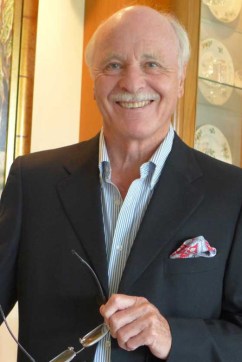 Here, though, Lowery (right) turns his attention to an equally violent centre of rage and recrimination – post-Sadam Iraq. This hard hitting and meticulously researched thriller focuses on two contrasting pairs of Iraqis. The first pair are bitter and vengeful jihadists who travel west determined to wreak havoc with bomb and bullet on a world they blame for the destruction of their homeland and an assault on their religion. The other two. a married couple – Hema and Faqir Al-Douri – flee the Mosul death trap with only one intention – to find peace and safety in Western Europe. The Mosul Legacy is published by Urbane Publications and will be out on
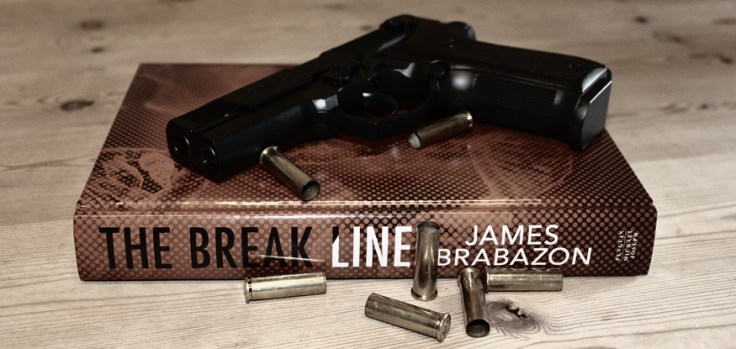
 One of my sons was, in his teens, an avid fan of the Andy McNab books and acquired several signed copies of the SAS man’s adventures, and even had a couple of autographed photos of the great man (complete with the obligatory black rectangle across his features, naturally). I have to confess that I didn’t share his enthusiasm, and military thrillers are not normally high on my TBR pile. When the publicists at Michael Joseph sent me a copy of The Break Line by James Brabazon two things aroused my interest. The first was the frankly terrifying background of the author, a documentary film maker and journalist who has been to some of the darkest and most dangerous spots in the world and lived to tell the tale. Second was my admiration for the team at Michael Joseph and my awareness that they don’t, in my experience, publish bad books. If The Break Line had convinced their editorial team, then maybe I should take a closer look?
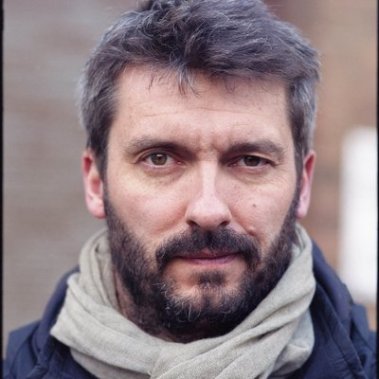 Exactly what it is that McLean faces will only be learned when you read the book. The instant you begin to read the first-person narrative, you will rightly assume that McLean survives his ordeal, as an action novel has yet to be written where the protagonist convincingly records his own death, but what happens between the first page and the last is a curious but utterly compelling mix of The Heart of Darkness, Indiana Jones, science fiction and visceral horror shot through with musings about the two great imponderables – life and death. Thriller fans will be able to fill their boots with the usual tropes; Le Carré style double and treble dealing at the highest level, fierce fire-fights, fascinating military detail, treacherous Russians and a cataclysmic body count. Brabazon (right) is not, however, simply ticking genre boxes. He shows an assured and convincing style of writing that puts him way above many of his contemporaries in the genre.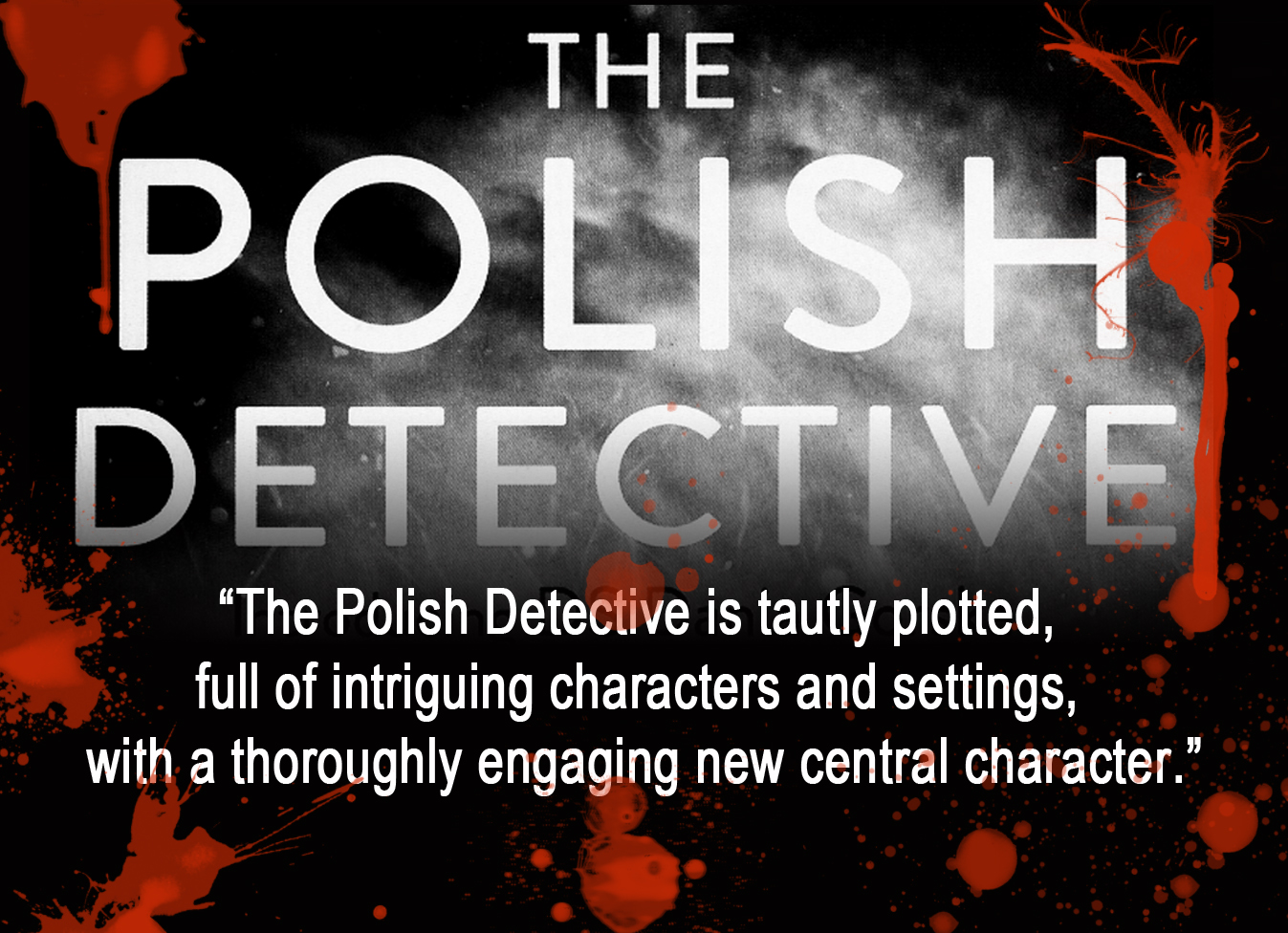
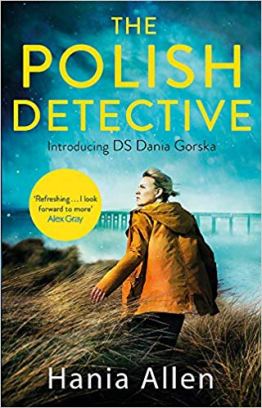 Dania Gorska has come to work in Dundee after starting her career in London with the Met. A divorce from husband Tony (watch out for the clever twist) has left her footloose and fancy free. Her exemplary record has meant she has enjoyed a swift and welcome transfer to Police Scotland. She lodges with her brother Marek, who is an investigative journalist.
 The Polish Detective is in some ways a standard police procedural which chugs along nicely on its accustomed rails. All the usual characters are present and correct; no such story would be complete without a dyspeptic senior officer, the obligatory post mortem scene with a sarcastic medical professor wielding the bone saw, the male junior detective who thinks he’s Jack – or perhaps Jock – the Lad, and the mind numbing tedium of the door knocking and CCTV scanning that sits behind every brilliant solution to a murder mystery. What lifts this book above the average is the character of Dania Gorska herself, and in particular her musical passion for, naturally, her great countryman Frédéric François Chopin and his sublime piano music. Hania Allen (right) describes herself as a pianist who makes up in enthusiasm what she lacks in talent, but under the fingers of DS Gorska, the great man’s preludes and nocturnes shimmer and sparkle throughout the pages, and the darker notes of the Polish soul are never far away.
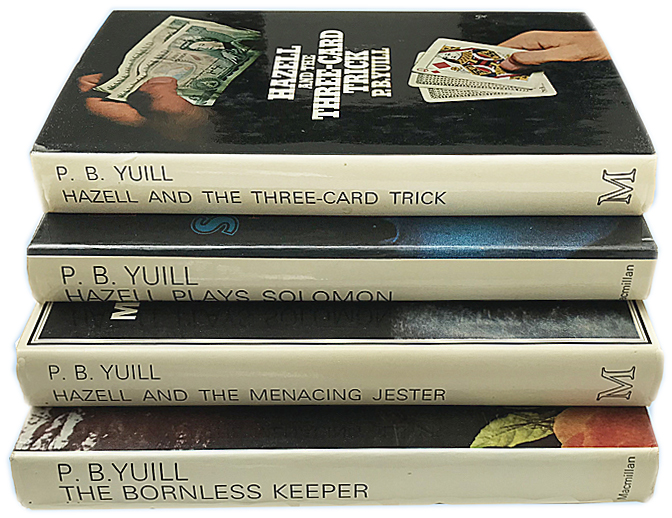 Something we do all too rarely on Fully Booked, mea culpa, is to feature articles and reviews by guest writers. I am delighted that an old mate of mine, Stuart Radmore (we go back to the then-down-at-heel Melbourne suburbs of Carlton and Parkville in the 1970s, where he was a law student and I was teaching art at Wesley College) has written this feature on a writer who, as an individual, never actually existed. Stuart’s knowledge of crime fiction is immense, and so I will let him take up the story.
 Their first joint outing (published under their own names) was They Used To Play On Grass (1971). Described, not incorrectly, on the paperback cover as “the greatest soccer novel ever”, it’s still an enjoyable read, with each man’s contribution being pretty obvious.
 The authors were keen to develop the Hazell character into a possible TV series, and the later two books seem to be written with this in mind. This duly came to pass, via Thames Television, and the first series was broadcast in 1978, starring Nicholas Ball as a youthful James Hazell. Gordon Williams, with Venables (right) and other writers, was responsible for a number of the episodes (including ‘Hazell Plays Solomon’), and it remains a very watchable series. The second, and final, series broadcast in 1979/80 was not so successful. The hardness was gone, Hazell and Inspector ‘Choc’ Minty had become something of a double act and, while not outright comedy, it came close at times. It’s not surprising to learn that Leon Griffiths, one of the second series screenwriters, went on to create and develop the very successful series Minder later that year.

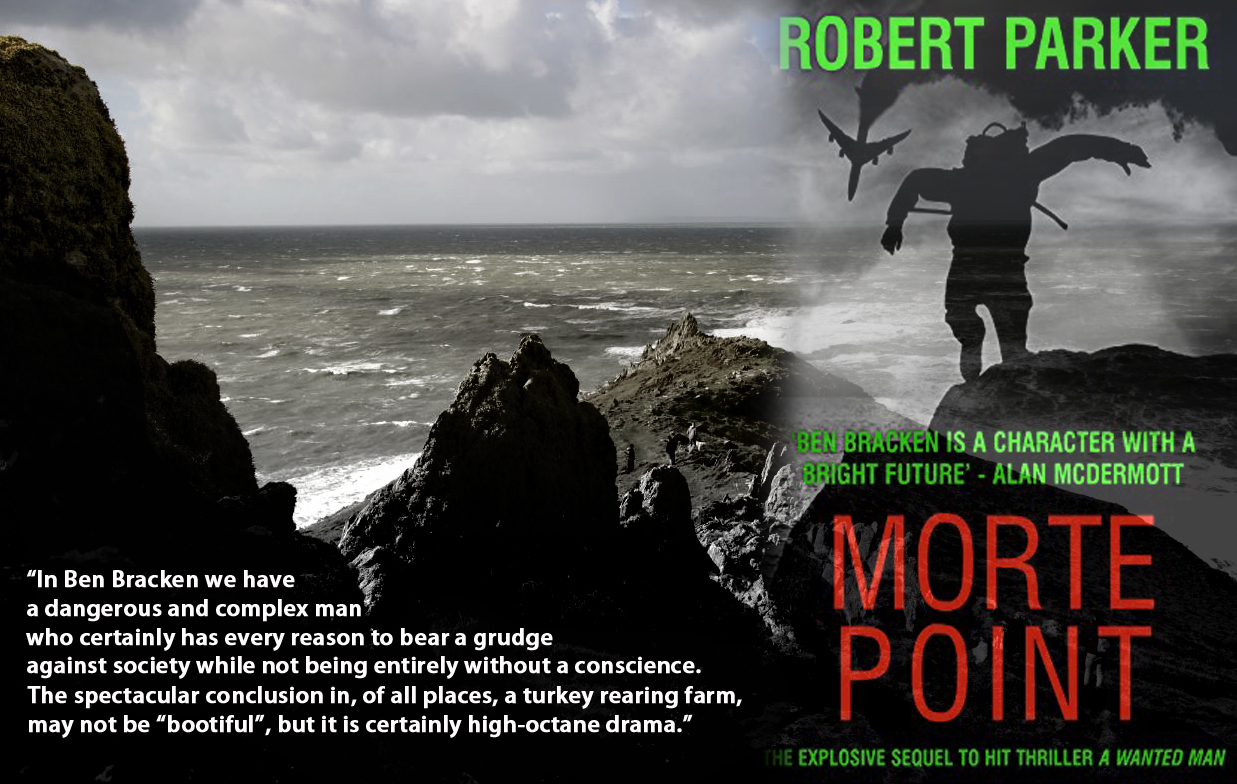
 Parker is on similar form here in Morte Point which, as Devonians know, is a rocky peninsula on the north west coast of that county. Rather than the bitterly feuding rural families in Crook’s Hollow, Mr P gives us a jailbird ex SAS soldier, a mysteriously beautiful Kosovan biochemist, a sunken plane wreck containing only the body of a woman (minus her head), a senior British government minister determined to engineer the biggest international shock since Hitler declared war and Stalin, a bloody shoot-out in London’s most prestigious hotel and – at the centre of the drama – a phial containing a synthesised botulism capable of killing millions.
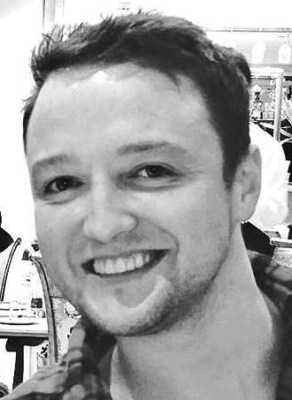 What follows is, to my mind, the best part of the book. Back in the day when the mysterious Andy McNab (and his ever-present black rectangle) was the media’s darling, survival skills, initiative in the wild and hiding in plain sight were familiar tropes in thrillers and on the screen, but Parker (right) has revitalised the idea. Bracken manages to stay half a step – but no more – ahead of his pursuers as he travels rough on his way north to meet up with Salix. You might scoff, and say that rural Devon is hardly the Iraqi desert, but Bracken realises that he is Britain’s most hunted man and, in these days of 24 hour news coverage on a bewildering range of devices, he knows that he has no friends, and no ally except his own resources and awareness of nature. He comes unstuck, however, after a chance encounter with vipera berus, and from this point the story takes a very different direction.


 In his debut thriller, James Brabazon enlists that familiar but effective trope, the elusive and anonymous killer who does unpleasant things for his country’s government, despite the knowledge that he ever gets caught, his paymasters will, like the biblical Peter, deny him thrice. Max McLean is one such ‘invisible man’ but when his bravest and most reliable colleague falls foul of the official machine, Max tears up his contract and goes to the violent wastelands of Sierra Leone in search of the men who have destroyed his best friend. The Break Line is published by
 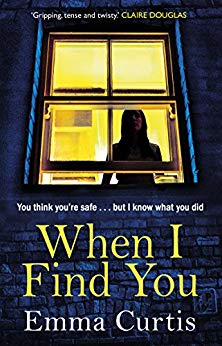 There is a bona fide medical condition called face blindness, and sufferers lack the vital mental ability to retain data about another person’s appearance in order to recognise them at a future meeting. Laura is one such, but she can relate people to clothing. When she wakes up, hungover after a woks Christmas bash, she remembers that she slept with a man in a pink shirt. Or did she? When she realises that the shirt on her bedroom floor is blue, her troubles are only just beginning. Transworld Digital publish the Kindle version of
 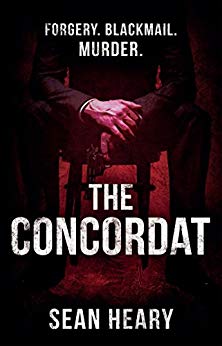 Central to the story is an all-powerful Russian President who sits like a spider at the centre of a web which is designed to snare unwary political and military flies across the world. Sounds familiar? Well, maybe, but this guy is called Alexander Volkov, and he plans to boost his power by revealing a potentially damaging historical pact between the Vatican and Hitler’s Germany. Lorenzo Rossi is the Head of the modern day Vatican police and his quest to limit Volkov’s malign intentions leads him into clear and present danger. If you are minded to grab this thriller, it is available now in paperback and as a Kindle, courtesy of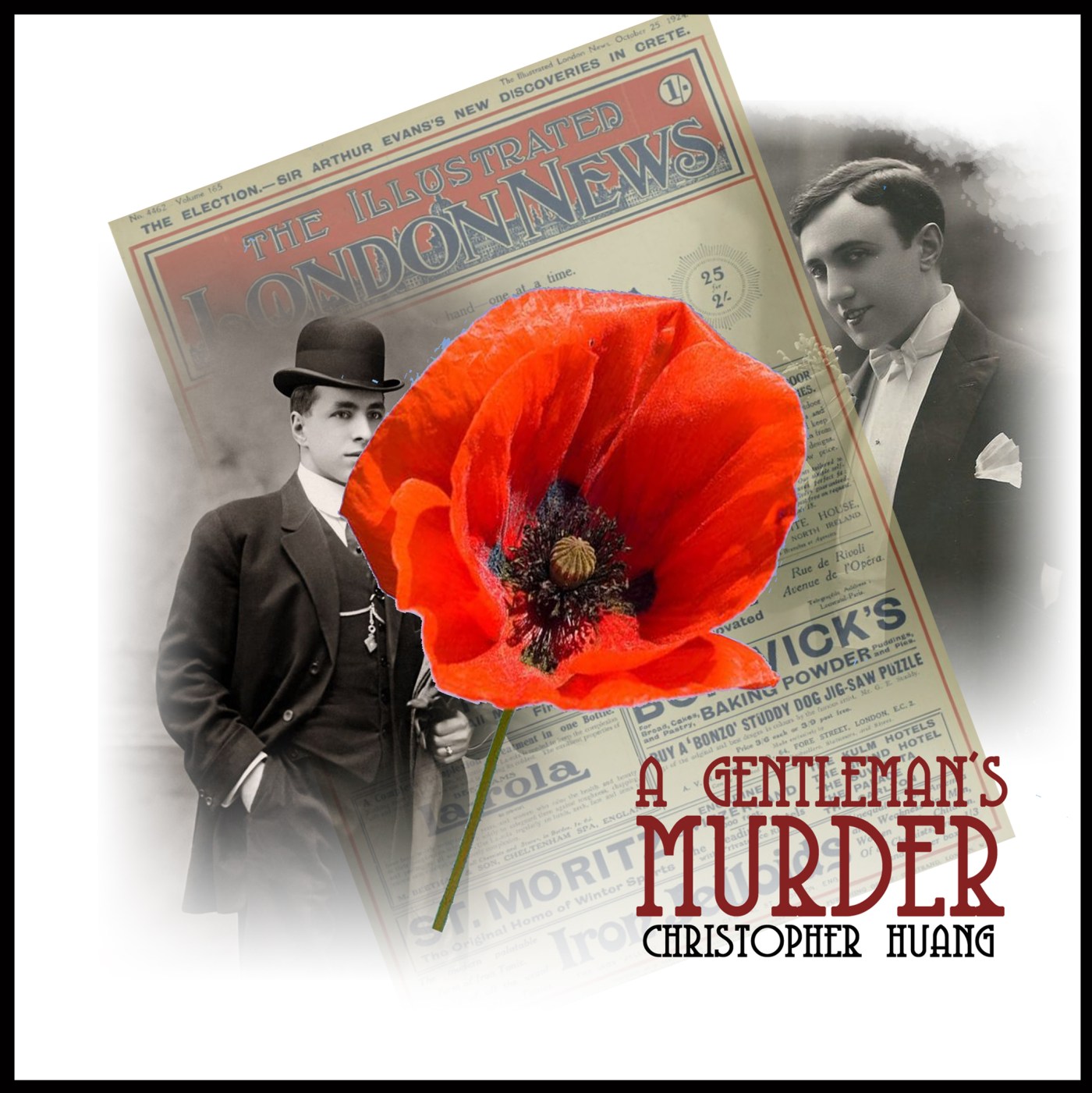
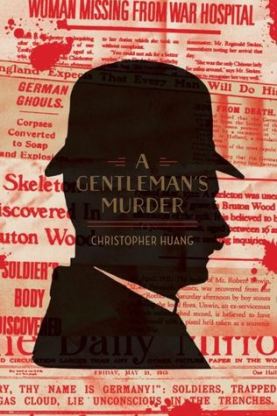 Eric Peterkin is one such and, although he carries his rank with pride, he is just a little different, and he is viewed with some disdain by certain fellow members and simply tolerated by others. Despite generations of military Peterkins looking down from their portraits in the club rooms, Eric is what is known, in the language of the time, a half-caste. His Chinese mother has bequeathed him more than enough of the characteristics of her race for the jibe, “I suppose you served in the Chinese Labour Corps?” to become commonplace.
 Christopher Huang (right) was born and raised in Singapore where he served his two years of National Service as an Army Signaller. He moved to Canada where he studied Architecture at McGill University in Montreal. Huang currently lives in Montreal.. Judging by this, his debut novel, he also knows how to tell a story. He gives us a fascinating cast of gentleman club members, each of them worked into the narrative as a murder suspect. We have Mortimer Wolfe – “sleek, dapper and elegant, hair slicked down and gleaming like mahogany”, club President Edward Aldershott, “Tall, prematurely grey and with a habit of standing perfectly still …like a bespectacled stone lion,” and poor, haunted Patrick “Patch” Norris with his constant, desperate gaiety.
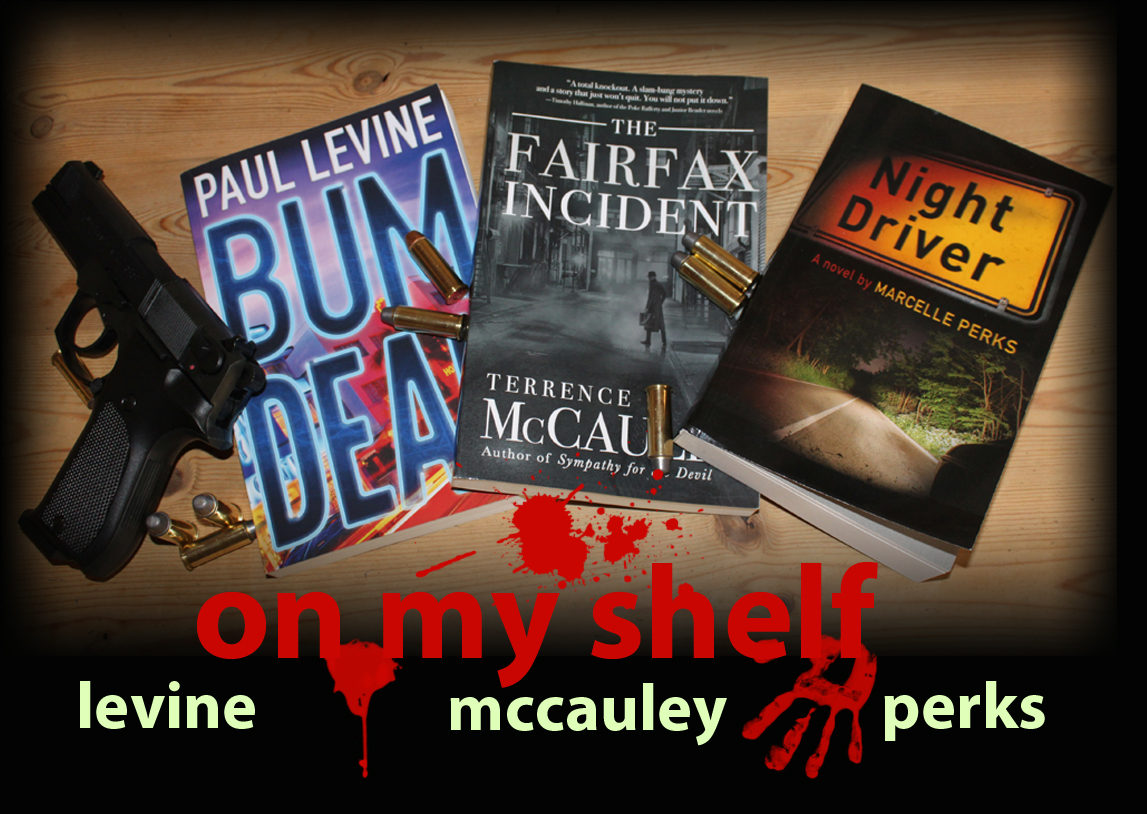

 Paul Levine is an American author of crime fiction, particularly legal thrillers. He has written two series, known generally by the names of the protagonists: Jake Lassiter and Solomon vs. Lord. In Bum Deal, published by Thomas & Mercer
  Terrence McCauley is an enthusiastic contributor to Thuglit, which describes itself thus:
 Marcelle Perks is no novice writer, but with earlier titles such as Incredible Orgasms: Yes, Yes, Yes, Yes and Secrets of Porn Star Sex: Brilliant Ideas for No-holds Barred Pleasure, this thriller signals a temporary change of direction. Perks lives and works in Germany, and it is there that we meet Frannie, an English expat, heavily pregnant and with her marriage on the rocks. Having learnt to drive in a bid to boost her self esteem, she takes to deserted early-hours roads to build her confidence at the wheel. Fate takes a hand, however, and when her path crosses that of Lars Stigelegger, a homicidal truck driver, Frannie is drawn into a world of trafficking, prostitution and violence. Pre-publication comments suggest that Night Driver is: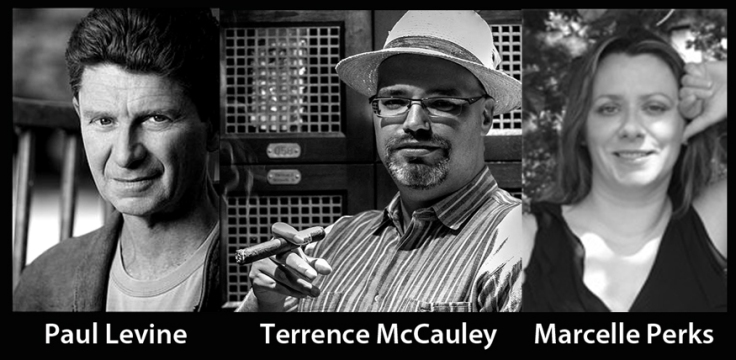


 fullybooked2017