Search

fullybooked2017

THE BULLET TRAIN . . . Between the covers

Kōtarō Isaka (and his translator Sam Malissa) have created an story that is totally improbable, manic – but quite wonderful. Five killers board the Shikansen (Bullet Train to us) which goes from Tokyo to Morioka. I use the word ‘manic’ because the journey only takes just over two and a half hours, and this is a book of over four hundred pages, so you immediately know we are pretty much operating in real time. The five passengers are:

  • Kimura. He is a drunk, a former gangster, and his six year old son lies in a coma after being pushed from the roof of a department store by –
  • Satoshi ‘The Prince’ Oji, a teenage psychopath.
  • Lemon and Tangerine, two villains who are working for Mr Minegishi, a crime boss. They have rescued his kidnapped son and have retained the intended ransom money, which is packed in a suitcase. Incidentally, Lemon is obsessed with Thomas the Tank Engine and its different characters.
  • Nanao, a hapless minor gangster, and a walking example of Murphy’s Law, but still a killer. His job is to relieve Lemon and Tangerine of the suitcase full of cash.

By page fifty, it’s all happening, and it is all about the suitcase full of cash. Satoshi is expecting Kimura, stuns him with a home made taser, and has him trussed up with tape in the seat next to him. Nanao has stolen the suitcase, but is prevented from leaving at the first stop, Ueno, by the arrival of another gangster called Wolf who has a score to settle with Nanao. Wolf barges him back into the train before he can leave, but Nanao kills him in a struggle. Lemon and Tangerine have discovered that the cash is missing, but return to their seats to find Minegishi Junior has, inexplicably, expired.

Two simple graphics add to the fun. The first (left) is a schematic of the stations on the journey itself. Though simple, this is a very clever device, because it allows the author to have the characters – albeit briefly – engage with the world outside the confines of the ten coach train. The second is of the coaches in the train (below) and is used as chapter headings as events play out.
BTSatoshi ‘The Prince’ Oji is the darkest character of the five. He is utterly without compassion. Other human beings – school teachers, teenage friends, other adults – only have value to him in the sense that they can be used for his entertainment. He is highly intelligent, but one of the more malevolent fictional villains I have encountered in recent times. Everything is thought through and planned in the minutest detail, such as his grip on Kamura. The grizzled gangster could, physically, chew up Satoshi and spit out the bones, but the teenager convinces Kamura that he has an insider in the hospital where the man’s son is lying in a coma, and should Satoshi fail to answer periodic calls to his mobile ‘phone, then this insider will find a way to disconnect the little boy’s life support system.

There is a thread of darker-than-dark comedy running through the chapters. Nanao’s attempts to rearrange Wolf’s corpse to make it look as if he was just taking a nap put me in mind of Basil Fawlty in The Kipper and the Corpse, while Lemon’s obsessive knowledge of Percy, Gordon, and James the Red Engine is like something that Flann O’Brien might have dreamt up given that, with Tangerine, Lemon has just left a crime scene where, between them, they have shot dead at least fifteen men. Add to the mix a couple of random cross-dressers, a stolen wig – and an escaped snake – and you have two and a half hours of mayhem. As passengers become corpses, one by one, the unlikely intervention of a pair of grandparents brings matters to a bloody conclusion.

I don’t doubt that other reviewers have used this analogy, but it is still worth saying that Bullet Train is something of a cross between a Tarantino movie and a Manga comic. There is the same implausible detachment from reality found in both, but also the same joyful sense of anarchy. The train itself, hurtling onwards at 200 mph, echoes the sense of high speed forward movement and drive in the narrative. The internet tells me that Hollywood have snapped up the book, and a film is being produced starring Brad Pitt. As whom? – I have genuinely no idea, but this brilliant and daring novel is published in Britain by Harvill Secker, and is available now.

WEDDING STATION . . . Between the covers

ws header018

Coming late to a well-established series can pose problems for a reviewer but, happily, this book is a prequel to the six published previously. The series is known as the Station Series, written by David Downing, and featuring the investigative crime reporter John Russell. The titles all take their names from railway stations around Berlin. They are Zoo Station (2007), Silesian Station (2008), Stettin Station (2009), Potsdam Station (2010), Lehrter Station (2012), and Masaryk Station (2013).

Fans of the books will have to excuse me while I paint a quick background picture. It is early 1933, and Hitler has been Chancellor for just a few weeks. We begin just hours after the Reichstag fire, and the SA – Sturmabteilung – are going about their grisly business with renewed vigour. Russell is English, a veteran of WW1 – and a former communist – but due to his marriage (now failed) to a German woman, he can happily say, “Ich bin ein Berliner.

WS coverWhile reporting on the death and mutilation of a young rent boy, Russell is asked by a friend to take on another case, this time on behalf of a senior army officer whose daughter is missing. It is a delicate business, because there is a strong suspicion that Lili Zollitsch has run off with a boyfriend who is an active member of the Kommunistische Partei Deutschlands.

Russell seems to collect mysterious deaths and disappearances like some men collect stamps. Hard on the heels of the Colonel’s missing daughter, he hears that a prominent genealogist has been killed in what seems to be a case of hit-and-run. One of Herr Mommsen’s most popular services had been producing evidence of racial purity – as in no trace of Jewish blood – for his clients. Had he made a rather unfortunate discovery and signed his own death warrant? If this weren’t enough, a well-known astrologer has gone missing – believed permanently – and when Russell investigates via one of Harri Haum’s customers he is astonished when she tells him that in a crystal ball-reading session a few days before the event, the seer had predicting the burning of the Reichstag.

But there is yet more for Russell to deal with. One of the friends of the murdered rent boy contacts the journalist and hands him the dead lad’s diary, in which he has faithfully recorded the names of his clients, as well as intimate physical descriptions. As Russell turns the pages, he finds the names of prominent members of the SA. Now while homosexuality is – along with communism, and being Jewish – a big no-no in the eyes of the Schutzstaffel (SS) it is a different matter in the rival organisation, the SA. The SA’s head, Ernst Röhm along with a good number fellow brownshirts are, as coy newspaper obituaries used to say, “confirmed bachelors.”

The final straw for Russelland one that very nearly breaks the back of the proverbial desert beast of burden – is when a knock on the door of his apartment reveals a young woman called Evchen who, years earlier, was a communist comrade. Not only is she still a party member, she has just shot dead one SA trooper and seriously injured another. And now she seeks shelter. How Russell gets himself out of these various pickles is gripping stuff. Some of the tension is obviously diminished by the fact that we know that the journalist survives to feature in six further books, but it is still a very good read.

We are clearly in Bernie Gunther territory here, and comparisons are inevitable, but in no way negative. This is a compelling read and a chill reminder – if any were necessary – of the gathering storm facing Germany and the wider world in the 1930s. Wedding Station is published by Old Street Publishing. The hardback is available now, and the paperback version will be out on 4th May.

HARDCASTLE’S SECRET AGENT . . . Between the covers


Before I became a reviewer
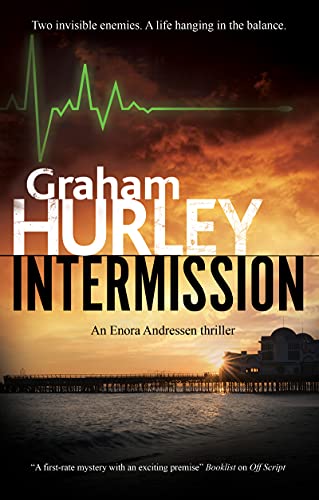
, and earned (I hope) the privilege of being sent books and .mobi files by publishers, I had been a lifetime library user. Crime Fiction was my first and last love, and in my regular Saturday afternoon trawl through the shelves, there were certain authors whose names I always sought out. In no particular order, these would include Jim Kelly, Phil Rickman, John Connolly, John Sandford, Val McDermid, Mark Billingham, Jonathan Kellerman, James Lee Burke, Graham Hurley, Christopher Fowler – and Graham Ison.

The Graham Ison books were slimmish-volumes, usually the Brock and Poole series, but my favourites were always the Hardcastle books. Ernie Hardcastle was a London copper in and around the years of The Great War. He could come over brusque in his dealings, but other might use the word ‘avuncular’. He distrusted innovations such as the telephone, but had a true copper’s nose for villains. A couple of his books are reviewed here, but inevitably, ‘time, like an ever-rolling stream, bears all its sons away..‘ Thankfully, in Hardcastle’s Secret Agent, Ernie is still with us, but long since retired, and the Hardcastle concerned is his son Walter, now a rising star in the Metropolitan Police.

HSAWe are, as ever, in London, but it is 1940. The Phony War is over, and the Luftwaffe are targetting industrial sites they believe to be involved in making parts for military aircraft. When several important employees of one such factory are burgled – clearly by an expert – but with nothing other than trinkets stolen, Hardcastle believes he may be on the track of a German spy on the look-out for plans, blueprints or important military information. Hardcastle has to deal with The Special Branch, but finds them about as co-operative as they were with his father a couple of decades earlier. This has a certain tinge of irony, as part of the author’s distinguished police career was spent as a Special Branch Operative.

The search for the German spy withers on the branch, but Hardcastle has other fish to fry. A prostitute – or at least, a young woman who was free with her favours –  has been found beaten to death, and the hunt for her killer takes Hardcastle into military quarters.

Eventually, Walter Hardcastle gets both of his men, and on the way we have a vividly recreated world of an England struggling to come to grips with a new world war. Not one that is being fought far away on some foreign field, but one which is brought to people’s very hearths and homes every single night. Hardcastle’s Secret Agent is published by Severn House/Canongate Books and will be out on 1st May.

Sad to relate, Graham Ison died suddenly in late 2020 before he could complete this book. It was finished with the help of his son Roger. Graham Ison was prolific, certainly, and critics might argue that he stuck to a reliable formula in each of his series, and never ventured into unfamiliar territory. Neither was he a darling of the crime fiction festival circuit, but I suspect after decades working as a policeman that never bothered him. What he was, however, was a reliable name for readers who bought his books and – importantly – library borrowers, who knew that they could rely on him for a story well told, and if his words took them into familiar territory, then that was nothing for either reader or writer to be ashamed about.

THE POSTMAN DELIVERS . . . Deakin & Kurian

The only remote downside to me for having received these two beauties in today’s post, is that they are both marked September 2021. I have always thought September to be the saddest month, for a variety of reasons: the dying of the summer light, the wretched return to the classroom ( I was a teacher for forty years) where I would cast artificial pearls before real swine, the looming end of the cricket season, and the girding up of loins to face yet another winter. By the time September comes I will have exceed my biblical span by four years, and I will be thinking of that beautifully sad poem by JRR Tolkein, where Bilbo says:

“I sit beside the fire and think
Of how the world will be
When winter comes without a spring
That I shall ever see.”

Enough of such morbid musings. There are books to look at! Leona Deakin’s character Dr Augusta Bloom first appeared in Gone (December 2019) – click to read the review – and then in Lost (October 2020). Now, Dr Bloom returns with another case, this time involving politics and counter terrorism. No less a figure than the Foreign Secretary is being held by the police on suspicion of terror offences. He will only talk if he is allowed to speak to Augusta Bloom. This results in Augusta having to put herself in the line of fire as a decoy. Does she have the skills to operate undercover? The Kindle is available now, but you will have to hang on until the summer fades to get the paperback. It will be published by Black Swan, which is a Penguin imprint, and will be on sale from 16th September

Vera Kurian’s book, according to the publicity, couldn’t be more different and, if I can be permitted to invent a triple-barreled genre, sounds as if it’s domestic-psycho-noir. Kurian, who is based in Washington DC, has penned a tale of a first year university student named Chloe. The blurb is very effective:

Meet Chloe. First-year student, ordinary, legging-wearing, girl next door and diagnosed psychopath with an !Q of 135. Her hobbies include yogalates, parties, and plotting to kill Will Bachman.

Quite what Will Bachman has done to incur Chloe’s wrath is not clear; neither is it down to me to say whether or not he survives her attentions. She says, however:

“I’ve never met someone like me, but when I do, eventually, I think it will be like two wolves meeting in the night, sniffing and recognising another hunter,”

Never Saw Me Coming will be published by Harvill Secker on 9th September.

SUMMON UP THE BLOOD . . . Between the covers


This is a recent edition of a book that was first published by Severn House in 2012, and was the first in a continuing series featuring an unusual Metropolitan Police detective, Inspector Silas Quinn. We are in 1914, a few months before the outbreak of The Great War. I have reviewed two others in the series, and the links are below.

The White Feather Killer (2019
The Music Box Enigma (2020)

Is Summon Up The Blood any good, even if it is a reissue? An absolute and unequivocal “Yes!” from me. Quinn is an intriguing fellow. never at ease socially, particularly with women. He seems driven by his own demons – if demons they are – as he seeks to investigate the crimes that other men on the payroll of The Metropolitan Police can’t fathom (or perhaps can’t be bothered with) His  superior officers realise that Quinn has a certain talent, but one that does not fit well into the the day-to-day operations of the force. So, he has been shunted off into a siding where he can pursue his own lines of investigation, but not make himself an irritant to the establishment. Quinn is The Special Crimes Department of Scotland Yard and with the assistance of his sergeants Inchcape and Macadam he ploughs his own furrow.

When a rent boy is found dead, his throat cut from ear to ear, there is initially little interest by the police, as the lad is just assumed to have paid the price for being in a risky line of business, but when the post mortem reveals that he has had every drop of blood drained from his body, Quinn is summoned and told to investigate. After a droll episode where Quinn decides to pose as a man smitten by “the love that dare not speak its name”, and blunders around in a dodgy bookshop, but he does find out that the dead youngster was called Jimmy, and had links to a ‘gentleman’s club’ where he would find men appreciative of his talents.

After the episode in the bookshop, Quinn decides to take things one step further and, armed with a distinctive brand of cigarettes favoured by the homosexual demi-monde, he sets out to impersonate a potential customer of Jimmy and his friends. Let’s just say that this does not go well, but he manages to emulate the News of The World reporters of later decades, who used to pass themselves off as punters in brothels, strip clubs, drug dens and the rest, and would then close the resultant exposé with the words, “I made an excuse and left.

There are more deaths among what were known as renters, and Quinn’s frustration mounts. One of the enigmas is that the victims each possessed a silver cigarette case, inscribed with what appear to be literary quotes: it is not until Quinn learns that they all come from De Profundis, Oscar Wilde’s letter, written in Reading Gaol, to his lover Bosie, and subsequently published, that pieces of the proverbial jigsaw start to fit together.


Thankfully
, Morris makes no attempt to get in the politics of homosexuality and the law: his characters simply inhabit the world in which he puts them, and their thoughts, words and deeds resonate authentically. In 1914, remember, the trial of Oscar Wilde and the Cleveland Street Scandal were still part of folk memory. It’s an astonishing thought that had Morris been writing about similar murders, fifty years later in 1964, virtually nothing would have changed – think of the scandals involving such ‘big names’ as Tom Driberg, Robert Boothby and Ronnie Kray, and how their lives have been written up by such novelists as Jake Arnott, John Lawton and James Barlow.

As ever, Shakespeare said it first, but RN Morris has written a chilling and convincing murder mystery with an impeccably researched historical background. The book is an intriguing – and sometimes unnerving – mixture of grim violence, gallows humour, literary research, sexual degradation – and old fashioned detective work. Silas Quinn’s London of Spring 1914, blithely ignorant of the horrors that were to begin later in the year, is hypnotic and addictive. Summon Up The Blood is published by Canelo, and is out now.

THE STRANGE AFFAIR AT NEEDHAM HALL (2)

Continue reading “THE STRANGE AFFAIR AT NEEDHAM HALL (2)”

THE STRANGE AFFAIR AT NEEDHAM HALL (1)

Needham Hall copy

Screen Shot 2021-04-21 at 18.20.35In Wisbech, we are not particularly well blessed with what could be called stately homes. Peckover House is very grand, but the next in line might be Needham Hall in Friday Bridge. The present building is on the site of a much older house which was pulled down in 1804. The last owner of the old house was Dr. John Fountayne, Dean of York, and his daughter Catherine lived in the new house until her death in 1824, at which point it passed to her nephew, Richard Fountayne Wilson, M.P. for Yorkshire 1826–30. The 1861 census records that the house was occupied by Frederick Easton Fryer, his large family and a house full of servants. By 1901 the house – and farm – had been bought by Walter Wooll West (left), and it is with the West family we shall stay.

Montague

Walter Montagu West (above), elder son of Walter Wooll, was killed at Ypres in 1915, and eventually ownership of the farm passed to the younger son, Charles. Incidentally, Walter senior was knighted for public service, and seems to have retired to 75 Harecroft Road (just two doors on from my house) where he died in 1952. It is Charles West who is at the centre of a story which made headlines in many national papers in 1956.

The story, as you will soon see, is not one of the tragedies of which I have written before. Rather, it has elements of comedy about it, and it has at least two of the elements that would have instantly attracted newspaper editors – a blonde, and a gun.

Charles West (59) was divorced, and lived with a woman – Ella Grundman – who had been cited as “the other party” in the divorce case. His father, Walter Wooll West was a farmer, yes, but also someone of substance in the county, and kept a large household and employed dozens on the farm, as the photo below (copyright Wisbech & Fenland Museum)  reveals. It was taken on the occasion of Sir Walter and Lady Grace’s Golden Wedding anniversary in December 1940.

Screen Shot 2021-04-21 at 18.35.08

It seems that by 1956 social niceties at the Hall were not so much Upstairs Downstairs as Kitchen Sink. One evening in late April, Charles West was having drinks in a downstairs room with his cowman and a gardener. They were apparently celebrating a very pleasing evaluation of the Hall, farm and estate. Things, however, went rather pear-shaped. The emerging story tickled the fancy of more than one newspaper editor, and The Birmingham Mail reported:

A wealthy Fenland farmer was threatened with a shotgun and a carving knife by his 38 year-old lover a court was told yesterday (Friday 27th April). It happened in a tiff over cigarettes at his family seat said the prosecution at Wisbech.

The farmer, 59 year-old Charles West, of Needham Hall, Wisbech, said that he had accused her of stealing cigarettes. Afterwards, they were found in his desk. I would like to apologise,” he said.

But Mrs Ella Grundman, smartly dressed in a pink grey-dotted suit, did not glance at him as he gave his evidence.

She is accused of shooting with intent to murder, and of causing Mr West grievous harm. Mr David Hopkin, prosecuting, said that the couple were celebrating with a gardener and a cowman at the Hall.

A quarrel began over the cigarettes.Mrs Grunman asked West to open a roll-top desk. He refused.

She fetched a carving knife, put it to his back and pushed him round the room until one of the men took the knife away. Ten minutes later, she was back with a shotgun. She pointed it at West and said:Now you’re going to give me the keys, or else.”

One of the men struggled with her, but the gun went off, peppering the wall and telephone with shot. Mr Alec Whitwell, the cowman, said that later he found her scratching his employer’s face, holding him by the hair, and banging his head on the sofa. Mr West, son of a former High Sheriff, said he could not remember much of what had happened –I wasn’t drunk, but I had a lot more to drink than was good for me.

Haltingly, he said,In the washroom I was being hit by Mrs Grundman with either the candlestick, or the ash tray stand, or both.”

Mr West told Kenneth Land, defending, that he had known Mrs Grundman for two years. She had lived at the Hall since last December and before that had lived in his houseboat at Hilgay, Norfolk.

Mr Land said,She is a hefty woman and strongly built. If she had really wanted to do him harm, she could easily have done so. Neither knew the police had been called, and as far as they were concerned, the quarrel was over, and they were all tucked up for the night.

As, inevitably, Wisbech magistrates decided that Ella Grundman must be tried at the next Cambridge Assizes, the Sunday Mirror couldn’t resist a bit of fun.

Headline

SOMEONE TO WATCH OVER ME . . . Between the covers

This is a strange one, and no mistake. Not the book itself, which is perfectly readable, but the title. Mainly because the one thing it isn’t is Robert B Parker’s. It’s Ace Atkins, re-imagining the world of the tough wise-cracking Boston PI, Spenser. I suppose it must be some legal stipulation from the estate of Spenser’s creator (1932-2010), but it certainly makes for an unwieldy title. I was a huge fan of the forty canonical Spenser novels and, also, the equally readable Jesse Stone and Sunny Randall books, but let’s remember that Spenser was himself something of a reinvention of Philip Marlowe: a few decades later, for sure, more up for a fist fight, but still with a good line in wise-cracks and sarcastic put-downs. Unlike Marlowe, however, Spenser had a reliable repertory company of helpers, notably his alluring psychologist girlfriend Susan and the implacable and intimidating Hawk.

So, to the novel. The characters are all present and correct including (regrettably, as far as I am concerned) the latest manifestation of the dog Pearl. Pearl and her little ways used to irritate me in the original books but, to be fair, Spenser simply wouldn’t be Spenser without the doggy love, so Ace Atkins gets a reluctant star for authenticity. Spenser is asked to investigate a sex crime. Not his normal bread and butter, but a very much under-age friend of a friend has been used and abused by someone much richer and infinitely more powerful. Peter Steiner and Poppy Palmer are disgustingly rich – and have disgusting moral values. To put it bluntly, Peter likes under-age girls, and Poppy likes that he likes them, and gets her kicks from sucking them into their decadent whirlpool.

The Steiners are also well-connected. Politicians great and small, financiers, socialites, fund-raisers – mostly anyone who is anyone in Boston and further afield – all tip their hats to the Steiners. Neither does it hurt that the Steiners’ clout enables them to hire serious muscle from the criminal underworld and, as most of the child rape is conducted on a private island somewhere in the vicinity of the Bahamas, neither the Boston Police Department nor the FBI can do anything to intervene.

Spenser is, if nothing else, an extremely moral man, and the plight of the youngsters stirs him to put his hands into the hornets’ nest. He has important allies in the shape of two other long-standing members of Spenser Inc. – tough and honest cup Quirk, and the voluptuous campaigning lawyer, Rita Fiore. Despite their authority, however, neither Quirk nor Fiore can lay a glove on the Steiners while they are despoiling young lives on their Caribbean hideaway.

Clearly, in real life, things work differently. Or maybe they don’t? Much closer to home we have witnessed the appalling abuse of thousands of young girls across English towns and cities, while those in authority, like the Jew and the Levite in the parable, passed by on the other side. Maybe they weren’t swayed by money directly, but their livelihoods in social services, the police and local government would have been under threat if they had done or said “the wrong thing”. Back to the fiction, Ace Atkins sets up a terrific finale here, with Spenser and Hawk travelling to an island close to the Steiners’ lair. Not only do they face a small army of minders and gunmen, but a man known as Ruger who, a few books ago, bested Spenser and left him for dead.

Spenser’s crusade is flawed, however, because someone he counts on is working for the bad guys, and the plans to liberate the youngsters goes pear shaped. Just when you think that this is finally “it” for Spenser and Hawk, something totally unexpected happens and a certain amount of rough justice is meted out. The scandal of powerful men – not just the rich and privileged, but men with social status in their communities – abusing young children seems to be a growth area. Ace Atkins has written a scathing account of one such atrocity in America. Someone needs to have the balls to write one set in Britain. Someone To Watch Over Me is published by Oldcastle Books and is out now.

ON MY SHELF . . . April 2021

The book deliveries have been pretty healthy lately so, helped by a few successful fishing expeditions on Netgalley, my TBR pile is looking good.

DOWN IN THE COUNTRY by James Bowring
Book Guild Publishing 28th April

When a couple return to their home in rural England from their holiday in Italy (remember when we could do that?) their welcome home present is a dead body – a woman,strangled – in their garden. The local senior police officer has been badly injured in an accident, and Acting Inspector Beauregard is the man who has to step up and investigate the murder. Unfortunately, Beauregard is soon overwhelmed by the case. Help is at hand, however. A nearby luxury hotel is run by a former policeman, ex Detective Inspector Clive Walsingham. Walsingham is finding the relative sanity, safety and security of civilian life something of a bind, and he leaps at the chance to help Beauregard solve the  crime. The dead woman, however, had “something of a past”, and was connected to a notoriously crooked local businessman. When the case is further complicated by the disappearance of the daughter of a local aristocrat, Walsingham has to use every ounce of his experience to bring the case to a close.

PATHFINDERS by Cecil Lewis
Imperial War Museum 20th May

Lewis was one of the band of brothers who served with distinction in both world wars. He joined the Royal Flying Corps in 1915, after lying about his age and learned to fly at Brooklands. In 1916, he flew with No. 3 Squadron and was awarded the MC for his actions during the Battle of the Somme. Flying over the battlefield on 1st July 1916 to report on British troop movements, he witnessed the blowing of the mines at La Boiselle. He later described the early morning scene in his book “Sagittarius Rising”. Pathfinders focuses on just one night in 1942, when each member of the crew of a Wellington bomber prepares for a raid in his own way, with his own hopes and fears.

SUMMON UP THE BLOOD by RN Morris
Severn House 22nd April

I have become a firm fan of RN Morris’s likeably eccentric London copper, Detective Silas Quinn. Click this link to read my reviews of a couple of earlier novels in the series. We are, as before, in that fateful year 1914, but it is March; the events  of June in far-off Serbia were still months away, and that last long Edwardian summer of innocence was yet to begin, but in London, however, there is a bizarre precursor of the ensuing bloodshed – except there is no blood. A killer is claiming victims in the dark alleys and byways of the city – and each corpse is found to have been completely exsanguinated. Quinn, considered something of an oddball by most of his colleagues, is in charge of Scotland Yard’s Special Crimes Department, and if ever there were a case that called for Quinn’s peculiar skill-set, it is this one.

BLACKSTOKE by Rob Parker
Red Dog Press out now

Parker is a gifted writer who injects energy and vitality into every paragraph he writes. He has an ongoing series of action thrillers (see below), but he obviously enjoys exploring the darker divisions between the world we inhabit and the nameless beings of the supernatural world. Blackstoke is a high-end housing development, but the land on which it has been built has a history all of its own, and is not a happy one. As the eager new owners move into their luxury homes, ancient and bloodstained memories, thought to be safely buried, begin to stir, and a nightmare becomes a reality for terrified families.

THE WATCHMAN by Rob Parker
Lume Books 24th June

Ben Bracken is an ex-special forces operative who has done jail time for a crime he didn’t commit, has escaped from prison, and has lived a precarious life of aliases, assumed identities – and forever looking over his shoulder. Like all the best action heroes who try to avoid trouble, it usually finds him. The previous Ben Bracken books (click here for reviews of a couple) have been firmly rooted on home soil, but now Ben – newly settled down to family life –  decides to do a favour for an old military chum, and this takes him across the Atlantic to New York, where all he has to do is to collect an envelope from someone in Central Park. Big mistake, Mr Bracken. Pursued by the FBI, the CIA – not to mention The Mob – Ben’s little overseas jolly turns into a fight for survival.

SWORD OF BONE by Anthony Rhodes
Imperial War Museum 20th May

The author served in the British Army during World War II and was involved with retreat of the British Army from Dunkirk. Sword of Bone is his account of the evacuation, in a style that reminded reviewers of Evelyn Waugh’s Sword of Honour trilogy in its account of the minutiae of military life. After being promoted to captain he lectured in Canada and the United States, where he met and married a niece of Gustav Mahler. The marriage was short-lived and led to a nervous breakdown. He was invalided out of the Army in 1945. Dunkirk is a potent word, and is often evoked to conjure up images of pluck, resolution and indomitable spirit, but it was also a significant military defeat, with the BEF out manoeuvred by the German army.

FALSE TRUTH by CD Steele
Book Guild Publishing 28th April

CD Steele’s debut thriller introduces us to former MI6 agent – and now private investigator – Joe Wilde. As he investigated the disappearance of a young and promising football star, his path crosses that of DI Carl Whatmore of the Met Police. As is ever the case when PIs and regular coppers meet, sparks fly, at least initially. The young footballer – Liam Devlin – seemed to have led a blameless life, but with the help of old MI6 buddy Mark Thompson, Wilde turns over a few stones, and what they see scuttling about spells problems for the investigators, the police – and Devlin’s worried mother Sally.

Blog at WordPress.com.

Up ↑