Search

fullybooked2017

THE HANGMAN’S SONG – Executions in 19th century Warwick (1)

THS header

PART ONE

I was at Warwick School in the 1960s, and our regular cross-country running route was up Gallows Hill, which runs between the Banbury Road and Heathcote Lane. It is certain that it was a place of execution long ago, but my story here is about relatively more recent times when executions at Warwick Gaol were a source of great entertainment for the population. The gaol was situated in what is now Barrack Street, and was rebuilt on that site in the late 18th century. You could be executed for all manner of crimes back in the day (see closing paragraphs of Part Two) but I am focusing on several executions for murder which were carried out between 1820 and 1900.

Dial House

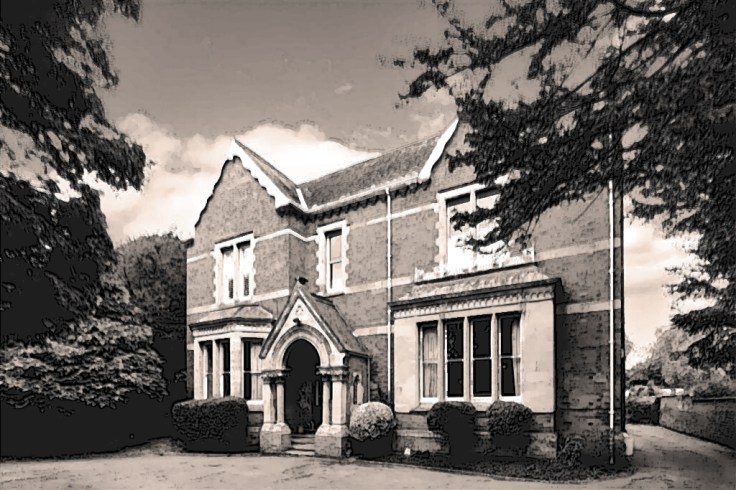
To be a parent and have to suffer the pain of having one of your grown-up children executed for murder must be considered, at the very least, unfortunate, but to have two offspring die in the same way is a tragedy. Such, however, was the fate of a Mrs Heytrey, a widow living in Charlecote. Her daughter Ann, 21, was a servant in the house of Mr and Mrs Dormer who lived at Dial House, Ashow (above). On the evening of 29th August 1819, while other members of her family were out for a walk, Mrs Sarah Dormer was sitting in a chair, reading. For no apparent reason, and without any provocation, Ann Heytrey came up to Mrs Dormer and punched her hard on the head, knocking her onto the floor. Dazed, Mrs Dormer staggered upstairs, but Ann Heytrey, wielding a large kitchen knife followed her, and slit her throat from ear to ear.

Screen Shot 2021-07-14 at 13.27.12

When the family returned, they found Heytrey “in a great state of perspiration” with blood on her apron. Mrs Dormer’s body was discovered, Heytrey was arrested and duly tried for murder and Petty Treason – the crime of violating the authority of a social superior. She was found guilty and, as decreed for any crime of treason, bound to a hurdle (a kind of gate woven with sticks) which was then drawn by a horse to the place of execution. She was hanged in front of Warwick Gaol on 12th April 1820, and a final indignity was visited on the hapless woman’s body in death, as while her body was still warm, it was cut down and sent to Kenilworth to be dissected by doctors. The travails of her mother in Charlecote were not over, however.

On 14th April 1821, the Warwick crowd was entertained by a quadruple hanging. Henry Adams, Thomas Heytrey (brother of Ann), Nathaniel Quinney and Samuel Sidney had been convicted of the murder of a wealthy landowner, Thomas Hiron, in November the previous year. The reports of the killing were sensational:

“On Saturday, the 4th instant, at an early hour in the evening, a ferocious and murderous robbery was committed within a few miles of the borough of Warwick, upon Mr. William Hiron, a gentleman residing at Alveston, about two miles from Stratford-upon-Avon. The deceased had on that day dined with his nephew, Mr. Thomas Hiron, surgeon, of Warwick, and set out from his house, to return home, about seven o’clock. Between seven and eight the next morning, Mr. Hiron’s horse was found at the stable door, when search was instantly made after its master.”

Hunscott

“”On the road leading from Wellesbourne to Alveston, near to Little Ham Bridge, about half mile from the house, his keys, gloves, and stick, were found upon the ground, near to which lay a quantity of blood. A short time afterwards the unfortunate gentleman was found lying in a senseless state, without his hat, in a deep ditch in Hunscott Lane, by a woman who was passing that way. She immediately procured assistance, and he was conveyed home. It is supposed that he had been attacked by some villains at the place where the blood, and other articles belonging to him, were discovered, and that, after beating him about the head in a most dreadful manner, they had robbed and then left him. It was also supposed that Mr. Hiron, after lying some time, recovered a little, and had attempted to find his way home, but, from the state of confusion which he must have been in from the nature of his wounds, instead of taking the road for Alveston, went towards Charlecote, and becoming faint from the loss of blood, had fallen into the ditch. The deceased, we most sincerely regret to add, lingered till Tuesday night, nearly in a senseless state, and then expired. His executors immediately offered a reward of two hundred guineas to any person who would give such information as should lead to the conviction of the offenders. Four men were apprehended in the neighbourhood of Alveston, on Thursday, on suspicion of having committed the murder, and, it is added, that they have confessed the horrid deed.

The account of the closing day of Warwick Spring Assizes for 1821 begins with this:

Warwick Assizes

And continues:

“Thursday was principally occupied with the trial of Quinney, Adams, Heytrey, and Sidney, for the murder of Mr. William Hiron, in the parish of Alveston On the 7th November last. lt appeared in evidence that Mr. Hiron had been in Warwick on the day in question, to give his vote to Mr. Lawley in the late county election, and left that place about eight o’clock in the evening, on his return home. When he got to Little Ham Bridge, six miles from Warwick, and about half mile from his mother’s house, the prisoners attacked him, put a large hook, in the form of a shepherd’s hook, round his body and pulled him off his horse. Mr. Hiron sprung upon his feet, when three of them attacked him. (Heytrey being hid behind the hedge) and beat him with large bludgeons until he was senseless. They then robbed him of two or three pound notes and his pocket book, and left him in the road to all appearances dead. Mr. Hiron, in the course of the night, recovered a little, got up, and endeavoured to go home, but missing his way, he went up Hunscott lane, where fell into a ditch. In this situation, nearly senseless from his wounds, loss of blood, and cold, he was found about eight o’clock the next morning, lying upon his back. The prisoners had made separate confessions before the coroner, Mr. Hunt, acknowledging the murder, and the part each of them had taken in the barbarous deed. These confessions, added to the corroborative evidence given by the respective witnesses, left no doubt whatever in the minds the Jury, or on a very crowded Court, of their having committed the murder. The Jury found them all guilty, and in pursuance of their sentence the unhappy men underwent the dreadful penalty of the law shortly before twelve o’clock on Saturday morning.”

As a sad postscript, it was reported that Mrs Heytrey had “died of a broken heart” even before her son had breathed his last.

IN PART TWO …. The last public hanging and a new gaol

ARROWOOD AND THE MEETING HOUSE MURDERS . . . Between the covers

Arrowood

The publicity blurb says, “London Society takes their problems to Sherlock Holmes. Everyone else goes to Arrowood.” This is, indeed, a very different world to that of the occupant of 221B Baker Street.

“The Guvnor lived in rooms behind the pudding shop on Coin Street, just down the road from Waterloo Station. There were five of them there. His sister Ellie and wife Isabel slept in the bedroom with their two babies, Mercy and Leopold. Arrowood had a mattress on the parlour floor. Since I’d last been there, the Christmas decorations had been put out.: some holly and twigs strung up to nails on the wall, a few painted baubles hanging from the mantel, a little model of a manger with the baby Jesus on the dresser. The babies slept in their boxes on the table.”

ArrowoodThe narrator is Norman Barnett, William Arrowood’s equally impoverished assistant. Neither man is a stranger to tragedy. Barnett’s wife, ‘Mrs B’ died some months previously, while Isabel Arrowood left her husband to live with a richer man in Cambridge. He died from cancer, leaving her with his baby in her womb. She has since been taken back by her husband, but all is far from well between them. We are in the final years of the 19th century, a few decades since Gustave Doré produced his memorable – and haunting – engravings of the darker side of London, but Arrowood’s London is hardly a shade lighter. Poverty, death and illness are everywhere – in the next room, or just around the corner.

The plot has the lurid and fantastical quality of a magic lantern show. Four black South Africans have escaped the grinding poverty and oppression of their homeland and somehow made their way to Europe. They have been hired to part of a circus cum freakshow run by an unscrupulous showman called Capaldi. Billed to perform as Zulus, the quartet have escaped. Capaldi, having fed and housed them in anticipation of capitalising on their curiosity value to his audiences, is aggrieved and wants them back. They have taken refuge with Mr Fowler, a well-meaning Quaker who works with The Aborigines’ Protection Society 1

Fowler hires Arrowood and Barnett for a few days to act as night-time bodyguards to the Africans  who are sheltering in the Quaker Meeting House, but when they arrive for duty, they find Fowler shot dead and one of the Africans, Musa, tied up, his face battered, and dead from strangulation.  Inspector Napper of the Metropolitan Police takes charge of the murder enquiry but, short staffed, he asks Arrowood for help. The finger of suspicion points at Capaldi and his enforcers, but life is never that simple.

As the case becomes ever more complex, Arrowood faces professional failure, but tragedy looms at home. Finlay has created a complex character. He is physically unprepossessing, overweight, a face like a bloodhound and he is a martyr to piles. When, in order to earn the money for some quack medicine for one of the poorly babies back in Coin Street, he is forced to deputise for one of Capaldi’s freaks – The Baboon Woman – I didn’t know whether to laugh or cry.

MFThere is a rather melancholy soundtrack to the plot, including The Violet I Plucked From Mother’s Grave, reputedly a song frequently sung by the Ripper’s last victim, Mary Lane Kelly. Finlay’s research into the darker aspects of late Victorian life is impressive, particularly in the kinds of medicine available to the general public. Two such potions that probably killed as many as they cured were Godfrey’s Cordial and Black Drops2

Eventually, and with fatal consequences for more than one of the participants, the case is solved, but to no-one’s particular satisfaction. It being late December, there is barely a chink of daylight on the London Streets, and this is echoed by the sombre mood of the narrative. I don’t suppose there is such a thing as Victorian Noir, but if there were, it is here. It’s superbly written, and both chills and grips like a London fog. Arrowood and the Meeting House Murders is published by HQ, an imprint of Harpr Collins, and is out now. Author Mick Finlay has an informative website. Click on his image (right) to go there.

1.The Aborigines’ Protection Society (APS) was an international human rights organisation founded in 1837, to ensure the health and well-being and the sovereign, legal and religious rights of the indigenous peoples while also promoting the civilisation of the indigenous people who were subjected under colonial powers, in particular the British Empire.

2. Godfrey’s Cordial was a patent medicine, containing laudanum (tincture of opium) in a sweet syrup, which was commonly used as a sedative to quieten infants and children in Victorian England. Black Drop was a 19th-century  medicine made of opium, vinegar, spices, often sweetened with sugar and made into something resembling a boiled sweet.

DEAD SORRY . . . Between the covers

Dead Sorry Header

I am new to Helen H Durrant’s Calladine and Baylis mysteries, but I do love a good police procedural, and this fits the bill nicely. My heart did sink (for a nanosecond) when I saw the first chapter was headed ‘Twenty five years earlier’, as split time narratives are something of a bête noire for me, but in this case it ended up working quite well.

Detective Tom Calladine and his partner DS Ruth Bayliss work in the fictitious town of Leesdon, which seems to be in the north west of England, with views of the Pennines and somewhere on the border between the counties of the Red and White Rose. They are called to a seedy block of flats where the decaying corpse of a woman is found but, as neighbourliness in the flats is in short supply, so no-one had reported her missing or noticed anything untoward.

Dead SorryAs the plot develops we learn that the dead woman, Becca O’Brien, was pretty much human wreckage, drug addicted and feckless. Interestingly, her daughter (who now lives in sheltered accommodation0, was involved in an act of criminality which happened twenty five years earlier (see first paragraph) at a moorland location called Gorse Farm, where human bones have recently been discovered. In an ostensibly separate plot thread, Calladine is being threatened by a criminal adversary (something of a stage eastern European gangster) called Lazarov. When Lazarov threatens to harm Calladine’s grand-daughter if he doesn’t facilitate the Bulgarian’s take-over of the Leesdon drug scene, the tension ratchets up several notches.

So far, the plot has something of a “we’ve been here before feel” to it, but Helen Durrant plays her strongest cards relatively late in the story, and the narrative becomes anything but straightforward as ‘knowns” become “unknowns” and several assumptions made by Calladine and his team (and us) are proved to be very wide of the mark. The quest to unravel what actually happened at Gorse Farm a quarter of a century earlier meshes in nicely, plot-wise, with the Leesdon coppers search for a trigger-happy criminal with a Glock automatic.

Tom Calladine is an interesting character and, like many another fictional Detective Inspector, his personal life is something of a mess. Sometimes, he doesn’t always seem to be the sharpest knife in the drawer, but Ruth Baylis is usually there to put him right.

Another interesting feature of the book (I read the KIndle version) was that it ended with a ‘Glossary of English Usage For US Readers’. I don’t know if this is something peculiar to the series, or to crime books from this publisher, as it contained explanations of words and terms as diverse as Bun: small cake, Desperate Dan: very strong comic book character, Lovely jubbly: said when someone is pleased, and War Cry: Salvation Army magazine. Most odd!

Dead Sorry is a well crafted and engaging police procedural which proves that even if detective duos are something of an old dog, this particular one still has plenty of life in it. Published by Joffe Books, it is out now. Helen has a Facebook page and is also on Twitter. You can find her by clicking on the icons below.

TwitterFacebook_icon.svg

BRASS LIVES . . . Between the covers

Brass Lives header

The prolific and ever-reliable Yorkshire author Chris Nickson has been writing his Tom Harper series since 2014 when he introduced the Leeds copper in Gods of Gold. Since then he has stuck to the  theme of metal in the book titles, and now we have Brass Lives. Harper is now Deputy Chief Constable of the city where we first met him as a young detective in the 1890s.

As is customary, the action doesn’t stray much beyond the city and its surrounding (and rapidly diminishing) countryside, but a slightly exotic element is introduced by way of two American gangsters. One, Davey Mullen, was born in Leeds, but emigrated across the Atlantic, where he has found infamy and wealth as a New York gangster. He has returned to his home town to visit his father. Louis Herman Fess, on the other hand has no interest in Leeds other than the fact that it is the current whereabouts of Mullen. Fess is a member of the delightfully named Hudson Dusters gang. They shot rival hoodlum Mullen eleven times, but he survived, and it seems as if Fess has come to West Yorkshire to resolve unfinished business. When Fess is found shot dead, Mullen is the obvious suspect, but try as they may, Harper and his team can find no evidence to link Mullen to the killing.

BrassPolitics are never far away in Chris NIckson novels, and in this case it is the enthusiasm of his delightful wife, Annabelle, for the Suffragist cause that takes centre stage. Note the word ‘Suffragist’ rather than ‘Suffragette’, a term we are more familiar with. The Suffragists were the earliest group to seek emancipation and electoral parity, and they believed in the power of persuasion, debate and education, rather than the direct action for which the Suffragettes were later known. Annabelle has always been careful not to embarrass her husband by falling foul of the law, but she plans to march alongside other campaigners in a march which is shortly due to enter Leeds. (See footnote * for more details) Annabelle’s plans are, however, thwarted at the last moment by a cruel  twist of fate.

There is more murder and mayhem on the streets of Leeds and Tom Harper finds himself battling to solve perhaps the most complex case of his career, made all the more intractable because he faces a personal challenge more daunting than any he has ever faced in his professional life. Guns have played little part in Harper’s police career thus far, but the theft of four Webley revolvers – plus ammunition – from Harewood Barracks, and the subsequent purchase of the guns by members of the Leeds underworld, adds a new and dangerous dimension to the case.

Nickson’s love for his city – with all its many blemishes – is often voiced in the thoughts of Tom Harper. Here, he declines the use of his chauffeur driven car and opts for Shanks’s Pony:

“A good walk to Sheepscar. A chance to idle along, to see things up close rather than hidden away in a motor car where he passed so quickly. All the smells and sounds that made up Leeds. Kosher food cooking in the Leylands, sauerkraut and chicken and the constant hum of sewing machines in the sweatshops. The malt from Brunswick brewery. The hot stink of iron rising from the foundries and the sewage stink of chemical works and tanneries up Meanwood Road. Little of it was lovely. But all of it was his. It was home.”

Harper, rather like WS Gilbert’s Ko-Ko, has a little list. It contains all the victims – and possible perpetrators – of the spate of crimes connected to Davey Mullen. One by one, through a mixture of persistence, skill and good luck, he manages to put a line through most of them by the closing chapters of Brass Lives. The book ends, however, on a sombre note, rather like a funeral bell tolling: it warns of a future that will have devastating consequences not only for Tom Harper, his family and his colleagues, but for millions of people right across Europe.

I believe that this series will be seen by readers, some of whom are still learning to read, as a perfect sequence that epitomises the very best of historical crime fiction. The empathy, the attention to detail, and the raw truth of how our ancestors lived will make the Tom Harper novels timeless. Brass Lives is published by Severn House in hardback, and is available now. It will be out as a Kindle in August. For reviews of other novels in this excellent series, click on the graphic below.

Harper

*The Great Pilgrimage of 1913 was a march in Britain by suffragists campaigning non-violently for women’s suffrage, organised by the National Union of Women’s Suffrage Societies (NUWSS). Women marched to London from all around England and Wales and 50,000 attended a rally in Hyde Park.

THE POSTMAN DELIVERS . . . Curtis, Handsford and Japrisot

sideways copy

INVITE ME IN by Emma Curtis

Emma Curtis is no stranger on the pages of Fully Booked,and if you click this link you can see more of her earlier work. She specialises in domestic thrillers where – for want of a better phrase – anxiety porn is the order of the day. Her milieu is the ostensibly happy home, the devoted couple, the perfect family, but where a tiny but lethal psychological time bomb is ticking away, ready to destroy everything. In this book, we meet Eliza Curran, and her delightful children, colour supplement home and wealthy husband. Who happens to be a control freak. When the charismatic, charming and sensitive Dan Jones enters the family circle. Eliza senses a breath of fresh air, so what could possibly go wrong? Invite Me In is published by Penguin, and will be out in Kindle on 22nd July, and in paperback on 2nd September.

STRANGER FROM BERLIN by Beverley Hansford

There can be few cities in Europe that are more at home with literary intrigue, danger and mystery than Berlin. Its unique history, particularly in the 20th century has made it an ideal setting for novels. Beverley Hansford tells the tale of an Englishman, Tim Mallon, who falls in love with Lena, the partner of Boris Smirnov, an old friend of Tim’s from university days. When Lena is abducted and taken back to Berlin, Tim is determined to find her and find the truth about her mysterious past. He soon finds himself out of his depth, and at the mercy of political and criminal undercurrents that will be familiar to readers of books by Philip Kerr, Len Deighton and Christopher Isherwood. This novel is published by Matador and is available now in Kindle and paperback.

RIDER ON THE RAIN by Sébastien Japrisot

This was the final novel (originally Le Passager de la pluie) by Sébastien Japrisot (1931 – 2003) a French author, screenwriter and film director. His pseudonym was an anagram of Jean-Baptiste Rossi, his real name. The origins of the novel go back to 1970 when Japrisot wrote the screenplay for a film of the same name, starring Charles Bronson and Marlène Jobert. It is the story of a young housewife, Mellie Mau,  in a rainy autumnal Riviera resort. Mellie Mau is raped, but then kills her assailant. Dobbs, a mysterious American arrives in town, and becomes involved with the young woman. His real identity is not revealed until later in the narrative, but his interest in Mellie Mau – and her rapist – involves drugs and huge sums of money. Published by Gallic Books, Rider On The Rain is translated by Linda Coverdale will be available in Kindle and paperback on 22nd July.

KYIV . . . Between the covers


HEADERGraham Hurley is, for me, one of the outstanding crime writers of this generation. His Joe Faraday series was simply wonderful, and the Jimmy Suttle spin-off books were just as good. His Enora Andresson series is very different, but equally compelling. It is only relatively recently, though, that I became aware of Hurley’s fascination with military history, and so I jumped at the chance to read and review Kyiv. We know the city as Kiev, the capital of Ukraine, and in this novel Hurley starts with the fateful day, 22nd June 1941 when Adolf Hitler, desperate for Ukraine’s agricultural riches, but with an eye on the oil fields of the Caucuses beyond, launched Operation Barbarossa.

Screen Shot 2021-06-16 at 18.48.16Knowing, as we do now, that the invasion of Russia was a disastrous strategic mistake which eventually brought the downfall of the Third Reich, shouldn’t diminish our appreciation of this book. In some ways, we are in John Lawton and Philip Kerr territory here, with the complex mixture of real life characters and fictional creations. For some of the real people, please see the infographic at the end of this review. The novel focuses on two (fictional) people, Isobel ‘Bella’ Menzies and Tam Moncrieff. Both work for British intelligence. Moncrieff is loyal to Britain, but Bella’s allegiance is more ambiguous. She works for both Russia and Britain, and both states seem to be well aware of this. Naturally, before the launch of  Barbarossa, Stalin was – on paper, at least – an ally of Hitler, so what now?

Bella is sent on a mysterious mission to Moscow but, with the fearsome NKVD (Narodny Komissariat Vnutrennikh Del, People’s Commissariat of Internal Affairs) on her case, she diverts to Kyiv, with the German Army Group Centre just days away from capturing the city. Soon, the shattered remains of the Red Army (and party officials like Nikita Kruschev) are scrambling eastwards over the River Dnieper and the bemused Ukranians, most of them no fans of the departing Soviets, look on as the Germans arrive and start what seems to be a fairly peaceful Nazification of Kyiv. This soon changes, however. Pro-Soviet agents have planted huge bombs in many of the city’s major buildings, and in particular those they knew that the new German administration would appropriate as accommodation for their army of bureaucrats. These bombs are detonated, one by one, by radio signal, and all hell breaks loose.

Back in Britain, Tam Moncrieff has been made a fool of by fellow intelligence officer Kim Philby, and is then abducted and drugged. When he finally finds himself free, much of his memory has gone. Someone has used him to send a mocking message to the British intelligence agencies, but who?

Bella, meanwhile, has met Larissa, a Ukranian journalist, and they have become lovers. As the SS attempt to end the bombings Bella falls foul of sadistic Standartenführer Kalb, but with the help of Wilhelm Strauss, a sympathetic Abwehr officer she knew from her days in Berlin before the war, she and Larissa play a dangerous cat and mouse game with Kalb.

Hurley depicts Strauss as a “good German’ in a similar way that Philip Kerr treated Bernie Gunther, but for all his disgust at the tactics of the SS, Strauss is unable to prevent one of the most horrific and bestial acts of the war being visited on the Jews of Kyiv.

William Tecumseh Sherman famously stated, “There is many a boy here today who looks on war as all glory, but, boys, it is all Hell.” Graham Hurley paints as hellish a picture of war as you could wish to read, and spares neither the Germans or the Soviets as he describes their predilection for barbarity. Onto this grim background, he paints a haunting picture of human love and suffering. Kyiv is published by Head of Zeus and is out on 8th July.

Characters

</p

MURDER AT MADAME TUSSAUDS . . . Between the covers

Murder header

This is the sixth book in the delightful series from Jim Eldridge set in the last years of Queen Victoria’s reign, and featuring a private investigator partnership between Daniel Wilson and Abigail Fenton. The pair are so mismatched that they make a delightful fit, if that makes any sense. Former policeman Daniel is short, stocky and of solid working class London stock, while Abigail is of more ‘noble birth’,  tall, elegant, and an expert in archaeology, particularly that of the classical world. As you can see from the banner above, they have worked their way around the major museums of England, but now they are called to a slightly less academic venue – Madame Tussaud’s waxworks on Baker Street.

One of the night watchmen is found decapitated, his body (and head) posed next to the instrument of death that caused Anna Maria “Marie” Tussaud née Grosholtz to fear for her own life during the French Revolution – the guillotine. Wilson and Fenton immediately smell a rather large and malodorous rodent. The dead man – Eric Dudgeon – and his fellow watchman, Walter Bagshot, were lifelong friends, and former army colleagues. Now Dudgeon is dead and Bagshot is missing. Even stranger is the fact that some months earlier the previous watchmen, Donald Bruin and Steven Patterson, both left at the same time and, within days, Dudgeon and Bagshot arrived at the exhibition asking if there were any vacancies for security staff.

BigWigs

Meanwhile, Eldridge has introduced some real life characters (pictured above) – Prime Minister the Marquess of Salisbury, Sir Matthew White Ridley the Home Secretary, and William Melville head of the Special Branch. The men are concerned about a series of successful bank robberies, each of which has been carried out by the robbers tunneling into the bank vault from the cellar of an adjoining building. The sums taken have been eye-wateringly huge – so much so that the government is concerned about a run on the banks. Dedicated Sherlockians, when hearing about the robbers’ method, will raise an eyebrow and say, “A-hah – The Red Headed League!*

The murder plot becomes more twisted, when a young man, working on the basis that if he can scare his girlfriend she will succumb to his advances, hides with her in a Tussaud’s broom cupboard at closing time, and then sneaks out into The Chamber of Horrors. What they find is a genuine horror rather than a wax version, and all thoughts of dalliance go out of the window. Abigail, meanwhile, is courted (in a gentlemanly way) by none other than Arthur Conan Doyle, who wants her to lead an expedition to excavate an obscure group pf pyramids in Egypt. Both she and Daniel have their lives threatened, however; Abigail by an obsessed young woman who lusts after Daniel, and Daniel himself by a powerful and seemingly untouchable crime boss, Gerald Carr. But is Carr the real spider at the centre of this web, or is it someone much more closely connected to high society?

Screen Shot 2021-06-20 at 19.30.31This shouldn’t be dismissed as ‘comfort reading’. Yes, we know what we are going to get – the atmospheric late Victorian setting, the warm human chemistry between Daniel and Abigail, the absence of moral ambiguity and the certainty that good will prevail. Any genuine reader of fiction – and in particular, crime fiction – will know that, rather in the manner of Ecclesiastes chapter III , there is a time for everything; there is a time for the dark despair of Derek Raymond, there is a time for the intense psychological dramas of Lisa Jewell, and a time for workaday police procedurals by writers like Peter James and Mark Billingham. There is also a time for superbly crafted historical crime fiction which takes us far away in time and space, and allows us to escape into an – albeit imaginary – world which provides balm and healing to our present woes. Murder at Madame Tussaud’s is one such book. It is published by Allison & Busby and is available now.

*The Red-Headed League” is a short story by Sir Arthur Conan Doyle in which Sherlock Holmes takes the case of a businessman who feels that he’s been duped. A small business owner named Wilson tells Holmes how a man named Spaulding convinced him to take a job with The Red-Headed League. The League pays Wilson to copy out the Encyclopedia Britannica in longhand. Wilson does this for seven weeks, until the League is disbanded. Holmes realizes that Spaulding just wanted Wilson out of the shop so that he could dig a tunnel into the nearby bank.

PAST TIMES – OLD CRIMES . . . Whatever’s Been Going On In Mumblesby? by Colin Watson

Screen Shot 2021-06-08 at 18.31.22

I make no apology for returning to one of my all time favourite authors, the unassuming and hugely underrated Colin Watson. For a closer look at the man and his work, you can have a look at my two part study which is here. Whatever’s Been Going On In Mumblesby? was published in 1982, a year before Watson died and is the last of The Flaxborough Chronicles. This, then, is the final appearance of Detective Inspector Walter Purbright, and his earnest assistant Detective Sergeant Sydney. Love. The fun begins with this announcement in the local newspaper.

OBITUARY

Mr Loughbury had since remarried, as they used to say, a much younger model, the undoubtedly attractive but ostensibly rather vulgar Zoe. Purbright becomes involved when, after the funeral of her husband, Zoe Loughbury, née Claypole, is discovered locked in the bathroom of The Manor House while someone seems to have set fire to the building. The fire is soon put out, but Purbright becomes aware (with the help of Miss Lucy Teatime, a local antique dealer who may not be entirely honest, but is scrupulously observant) that the late solicitor had in the house a collection of very valuable artifacts and paintings, all of which seem to have been ‘acquired’ from former clients, without a single bill of sale involved. Most bizarre among this collection is a piece of wood supposed to be a remnant of the True Cross.

Screen Shot 2021-06-08 at 18.43.59The true provenance of this is only revealed when Purbright investigates an apparent suicide which happened in the village church. Bernadette Croll, the wife of a local farmer was, in life, “no better than she ought to be”, and in death little mourned by the several men who shared her charms. Purbright eventually sees the connection between Mrs Croll’s death and  Mr Loughbury’s collection of valuables, when he discovers that the wood came from somewhere far less exotic than Golgotha.

One of Colin Watson’s more unusual achievements is that he is supposed to be one of the few people to have successfully sued Private Eye. He took exception to their writer describing his work as ‘Wodehouse without the jokes.’ He took them to court, and was awarded £750 in damages. Watson was no Wodehouse nor, I am sure, would he have claimed to be, but his jokes are not bad at all. Here. he reacts to a report from Sergeant Love:

“Love’s accounts were robbed of dramatic point somehow by his customary obliging, pleased with life expression. He would have described a public execution or a jam-making demonstration with equal cheerfulness.”

Purbright has a good but wary relationship with his boss, Chief Constable Chubb. They are discussing the vagaries in the behaviour of one of the females in the case:

“Mr Chubb waved his hand vaguely. ‘Who can say? Nervous trouble? Change of life?’ Menopause loomed as large in the chief constable’s mind as central heating and socialism.”

The owner of Mumblesby’s main restaurant has a wife who is not in the first flush of youth, but maximises her charms:

“She wore a dress of such deep cleavage that it resembled a long pair of partly drawn curtains, with a glimpse of navel at the bottom of the V, like the eye of an inquisitive neighbour, peeping out.”

As ever, Purbright’s mild manner and courtesy are totally underestimated by the criminals and schemers in and around Flaxborough. He has a steely perception which is more than a match for the rich but vulgar farmers who are up to their necks in the death of Bernadette Croll and, to show that he is no respecter of persons, he is equally merciless with the impoverished gentry. The jokes and comedy aside, for Walter Purbright justice is, indeed, blind – at least to class divisions and the county social hierarchy.

The Flaxborough novels are redolent of another time, certainly, and I suspect that they may well have been even when they were first published. Watson is a craftsman rather than a showman, but his plots are  clever and intricate. His humour, which failed to impress the literary critic of Private Eye, is in the indisputably English vein of George and Weedon Grossmith, and JB (Beachcomber) Morton, and I suggest it has modern echoes in the Bryant and May books by Christopher Fowler. Flaxborough is a place I continue to visit, and it never fails to please. Finally, thanks to Peter Hannan and Stuart Radmore for the lovely map of Flaxborough used in the feature image, which was originally created by Salim Patel.

THE KILLINGS AT KINGFISHER HILL . . . Between the covers

KIngfisher header

I am delighted to host a guest review from Andrew Mann. You can find him on Twitter at @YorkshireBook48. He is a fan of Sophie Hannah and her Hercule Poirot books.

Screen Shot 2021-06-20 at 10.35.43This is the fourth Hercule Poirot novel by Sophie Hannah (left), The Killings at Kingfisher Hill is a whodunnit written in the style of legendary crime writer Agatha Christie and captures all the magic of the books first published in the the 1920’s. At 330 pages it is a very enjoyable read and I personally flew through it in a few short days.

The story begins with Poirot and his assistant, Inspector Catchpool boarding a coach to Kingfisher Hill, a country estate with several grand houses one of which we soon learn was the scene of a murder. Frank Davenport, disgraced son of the houses owner Sydney, has been pushed to his death from a balcony. As with many crime books the reader is challenged along with Catchpool and Poirot to work out the identity of the murderer along the way by placing together the clues littered throughout by author Hannah, however this one has a slightly unique twist in that from the off we know that one of the characters has already confessed to being the culprit, although of course all is not as it seems.

In the first chapter we meet Joan Blythe, another passenger boarding the coach who reveals that she has been warned previously if she sits in a certain seat she will be murdered. This of course ends up being the case although in typically genius circumstances and the mystery of how this scenario came about runs alongside the murder and is brilliantly unraveled by Poirot and explained in the conclusion of the book.

As the chapters unfold we meet more characters, all of whom come under suspicion from the various Davenport family members, friends Verna and Godfrey to Oliver, fiancée of the deceased mans sister. To further add to the plot a second murder takes place within the house during the investigation which adds further mystery to the plot.

I absolutely loved this book. I found it very funny in places especially the dialogue between Poirot and Catchpool at times. I felt as though I could relate to the narrator Catchpool who is always one step behind in his thinking and never quite works it all out until the very end. The ending for me was very satisfying and gave a watertight explanation to all the events of the book, in an ingenious manner that I would never have guessed.

If you like classic crime mysteries, I would definitely recommend this book for you. It is a great read that more than does justice to the style and character made famous by Agatha Christie and can of course be read as a stand alone novel if you have not read any Poirot before. The Killings at Kingfisher Hill is published by Harper Collins, and is available now.

Kingfisher cover

Blog at WordPress.com.

Up ↑