
Many will tutt and nod their heads sagely when told I confess that I am a direct descendant of a criminal. “I thought as much,” might be the common response. The crime for which this ancestor of mine – John Prestidge – was sentenced brings to mind the old adage that suggests someone might as well be hung for a sheep as a lamb, and in this case the reference is literal.

This first child of John Prestidge and Elizabeth Hickerson was named John like his father and grandfather before him, and was baptized in the Church of St. Mary at Moreton Pinkney (left) on 6 January 1765. Also, like most of his forebears John would have no formal education and was therefore unable to read and write. He would have worked as a casual farm labourer on farms in the district from quite an early age, perhaps 8 or 10 years, at whatever suitable employment was available. At the age of 22 John married Elizabeth Lovell in the parish church of St. Mary Magdalen in Wardington, Oxfordshire (below) on 9 July 1786.

Some three months before their marriage, the first of the couple’s eight children, a daughter Esther was baptized on 8 April 1786 at Moreton Pinkney. If life had been hard for John before his marriage it became harder still as his family increased. On 23rd November 1795, by this time John and Elizabeth had five children and another on the way, John appeared at the Northampton Quarter Sessions before Samuel Blencowe convicted of stealing several faggots of thorn wood, the property of Joseph Gilkes. John’s friend Robert Talbot was also accused of the same offence at the Quarter Sessions at Thorpe Mandeville,.
Six years after the first offence, the Northampton Mercury of 14th November 1801 reported. “On Tuesday was committed to the gaol of this county, by Samuel Blencowe Esq. John Prestidge,charged with having feloniously stolen a wether sheep, the property of Wm. Painter, farmer of Sulgrave”. By this time John and Elizabeth had eight children, and faced with so many hungry mouths to feed John was tempted to steal a sheep. He was tried at the Northampton Assizes in March 1802, found guilty, and sentenced to death. He was later reprieved by the Lord Chief Justice, Baron Graham (right)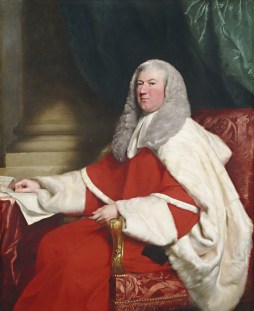 , and sentenced to transportation for life. John was subsequently transferred from gaol to a prison hulk at Langston, Portsmouth to await transportation.The ship was HMS Calcutta, commanded by Captain Woodruff.
On 9th October 1803 after a stormy passage across the Indian Ocean, the Calcutta arrived at Port Phillip Bay (modern Melbourne) After disembarking, the fledgling colony was set up at the site that the Governor, David Collins, named Sullivan Bay near present day Sorrento in the State of Victoria.

Governor Collins (left) soon became aware that the site chosen for the colony at Port Phillip was less than ideal. Searches had failed to discover adequate supplies of fresh water, the soil was poor and he was aware of increasing antagonism between elements in his party and the local aboriginal tribes. He therefore sought permission from Governor King to abandon Sullivan Bay and remove the settlement to Van Diemen’s Land.
Arriving in what is now Tasmania, the convicts were quickly put to work helping to build shelters and clear land and establish the permanent camp that eventually grew into the township of Hobart. Clearing of land to plant crops must have been a priority and convicts like John Prestidge who were experienced in agricultural work would have been valued. Perhaps it should be mentioned here that the Calcutta convicts appear to have been selected as being non-violent and indeed larceny was the crime of which most were convicted.
The colony was becoming desperately short of food. Supplies coming in by sea arrived irregularly and were often in poor condition and of indifferent quality. Much of the salted meat arrived unfit to eat and the colony depended on supplies of kangaroo and emu meat, and whatever else in the way of birds and fish that could be caught. Gov. Collins could see the necessity to restrict the taking of too much wild life, in order to ensure future food supplies for both the colonists and the local aboriginal population.However, seeing the problem and being able to control it was a different matter.Problems with the local aboriginal population over diminishing supplies of game soon became evident.
On Wednesday 8th May 1805 eight convicts, including John Prestidge, were apprehended.They were accused of conspiring to make away with the new government whaleboat and escape in it to New Zealand.The eight were brought before Lt. Gov. Collins and the appointed magistrates, Rev. Robert Knapweed and William Sladden Esq., at 11 am on the 9th May. Although thoroughly questioned they were not convicted. Perhaps hunger and fear of starvation was the reason for this attempted escape. During August 1805 Rev. Knapweed, the Chaplain to the colony, records in his diary that the ration allowance per person from the government store was 2 lbs 10oz of very bad salt pork, 2 lbs flour, 2lbs wheat and 2 lbs fresh kangaroo meat per week.The threat of starvation must have been a very real and frightening one.
Despite all the difficulties, the food shortage and the constant hard labour John Prestidge seems to have managed to keep out of trouble and worked satisfactorily. He was granted one of the earliest conditional remissions in 1806.This conditional pardon meant that whilst he remained in Tasmania he was no longer a convict, but a free man. However he was unable to legally return to England unless he obtained a full pardon.

In 1813 he was granted 40 acres of land at Iron Creek in the District of Gloucester, present day Sorell. The grant document signed by Gov. Lachlan Macquarie (above) declares that the land is “granted unto John Prestage, his heirs and successors to have and to hold forever”. This must have seemed a monumental step to John, by now aged 49, taking him from convicted felon to free man, farmer and landowner in just ten years. Never in England could he have achieved land ownership, and one can sense his determination to succeed, for, from this time on John became as he is described in the Hobart Town Gazette on 31st May 1817, “an industrious settler”.

There is evidence to suggest that John had been in communication with his family in England from time to time during the sixteen or so years that he had by now been in exile. Although he could not read or write, it seems that verbal messages were passed on by ex-convicts and others returning to England or coming back again to Van Diemen’s Land for whatever reason. However on at least one occasion John had a letter written for him, which was sent to his second son Thomas, by then aged about 30, married to Maria Wells and still living in Moreton Pinkney. In this letter dated 5th January 1821 at Hobart Town, John tells Thomas that he intends to return to England when he is able to arrange his affairs in Van Diemen’s Land, however the “state of his property would detain him abroad for some years longer”.
Several reasons present themselves for John’s delay in returning to England, if that was truly his intention. The life he had built for himself in Tasmania must have seemed like paradise compared with the poverty which had led him to commit the original crime, and he must have suspected that his family would – in many ways – have become strangers to him.
Throughout this long period of her husband’s exile, Elizabeth had a life to lead and a family to raise. Six years after her husband was transported “Anne daughter of Elizabeth Prestidge” was baptized on 21st February at Moreton Pinkney, but no name is given for the father of the child. Edward Franklin and his wife Susannah nee Haddon were neighbour of John and Elizabeth and had raised their families in Morten Pinkney at about the same time. Susannah died in early 1821 and less than six months later Edward and Elizabeth made arrangements to marry. However at a reading of the banns John and Elizabeth’s second son Thomas objected, declaring before the congregation that he knew of just cause why Elizabeth and Edward Franklin should not be married.
On the 12th August 1821 Rev. J.L. Tyler, then Vicar of St. Mary’s in Moreton Pinkney wrote a Memorandum concerning the event.Thomas stated that his father was still alive in Van Diemen’s Land, and in a letter had said he was “desirous of returning to his wife and family, when he could arrange his affairs.” This letter, written for John was from Hobart Town and dated 5th January 1821. The memorandum concluded that it would be impossible for Elizabeth and Edward to have their relationship sanctified by a church wedding.
Elizabeth Prestidge was certainly a woman of distinction, by village standards. Tyler wrote:
“I had not at first identified the object of this long attachment; but I did soon, for I must have seen her, and much admired her, every day from my arrival. I frequently saw from my window a tall, thin, singularly upright, graceful figure, twirling a mop before a cottage door.” A hundred yards off she might still be thought young. She was near eighty, and, including husbands and wives, had a hundred descendants.She was the mother of most of the Prestidge including five large families bearing her name”

Elizabeth Prestidge died in Moreton Pinkney in 1848 aged 78 and was buried on 20th July 1848. Such was the concentration of the Prestidge family in Moreton Pinkney, that a row of cottages bears the family name to this day. The supreme irony is that the cottages are now top drawer real estate, an estate agent’s dream, a far cry from the grinding poverty of the families who once lived there.
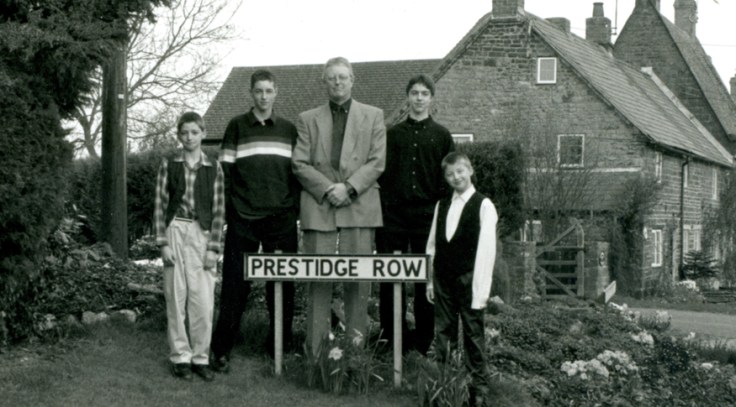
Sadly for the family name, the Prestidge clan had an unenviable reputation for villainy throughout the 19th century, and regularly made the court reports for the Northampton Mercury.


Much of the information in this feature is taken from research conducted by Margaret Prestege and Sheila Frewin.

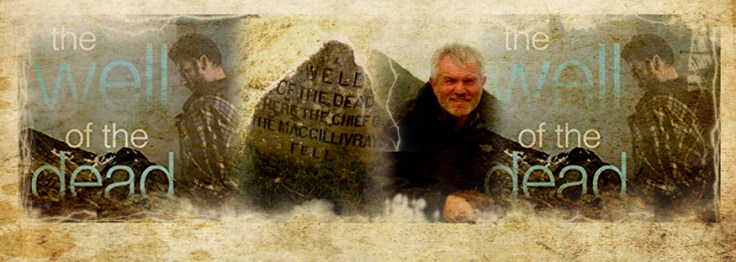
 In the icy Scottish dawn of 16th April 1746, the last battle to be fought on British soil was just hours away. The soldiers of the Hanoverian army of William Duke of Cumberland were shaking off their brandy-befuddled sleep, caused by extra rations to celebrate the Duke’s birthday. Just a mile or two distant, the massed ranks of the Scottish clans loyal to Charles Edward Stuart, the Young Pretender, were shivering in their plaid cloaks, wet and exhausted after an abortive night march to attack the enemy.
 The Well Of The Dead is a winning combination of several different elements. It’s a brisk and authentic police procedural, written by someone who clearly knows how a major enquiry works. For those who enjoy a costume drama with a dash of buried treasure, there is interest a-plenty. Military history buffs will admire the broad sweep of how Allan (right) describes the glorious failure that was the Jacobite rebellion, as well as being gripped by the detailed knowledge of the men who fought and died on that sleet-swept April day in 1746, bitter both in the grim weather conditions and what would prove to be a disastrous legacy for the Scottish Highlanders and their proud culture.

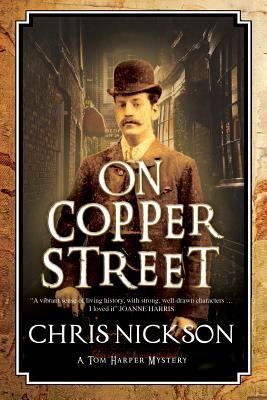 On Copper Street opens in grim fashion, with death and disfigurement. The dead pass in contrasting fashion. Socialist activist Tom Maguire dies in private misery, stricken by pneumonia and unattended by any of the working people whose status and condition he championed. The death of petty crook Henry White is more sudden, extremely violent, but equally final. Having only just been released from the forbidding depths of Armley Gaol, he is found on his bed with a fatal stab wound. If all this isn’t bad enough, two children working in a city bakery have been attacked by a man who threw acid in their faces. The girl will be marked for life, but at least she still has her sight. The last thing the poor lad saw – or ever will see – is the momentary horror of a man throwing acid at him. His sight is irreparably damaged.
 Nickson is a master story teller. There are no pretensions, no gloomy psychological subtext, no frills, bows, fancies or furbelows. We are not required to wrestle with moral ambiguities, nor are we presented with any philosophical conundrums. This is not to say that the book doesn’t have an edge. I would imagine that Nickson (right) is a good old-fashioned socialist, and he pulls no punches when he describes the appalling way in which workers are treated in late Victorian England, and he makes it abundantly clear what he thinks of the chasm between the haves and the have nots. Don’t be put off by this. Nickson doesn’t preach and neither does he bang the table and browbeat. He recognises that the Leeds of 1895 is what it is – loud, smelly, bustling, full of stark contrasts, yet vibrant and fascinating. Follow this link to read our review of the previous Tom Harper novel,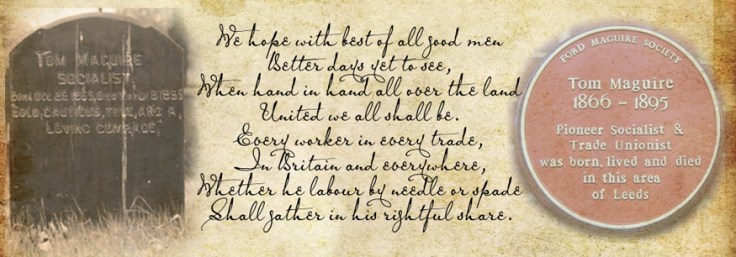

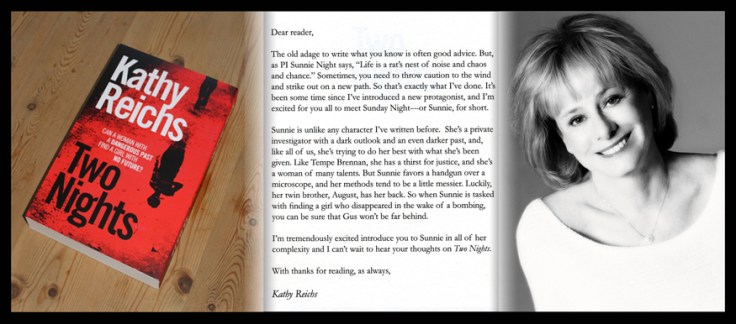
 Fans of Kathy Reichs and Dr Tempe Brennan will be relieved that Dr Brennan is merely resting, and will be intrigued by the new girl on the block, PI Sunnie Night. Sunnie – which is short for Sunday, by the way – has a seriously traumatic back story which includes physical and mental scars inflicted while in the military.


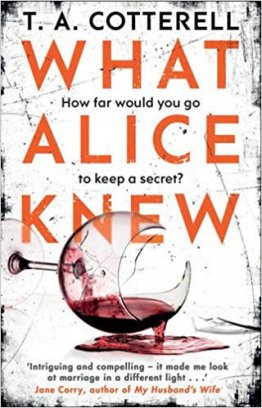 Back in late 2016, I had the pleasure of listening to T A Cotterell read an extract from his debut novel, What Alice Knew. He made it clear that this was a book about secrets, and about that strange beast, family life. Family life. The words are anodyne, mild and reassuring, but we all know that many families are not what they seem to be to an outsider. Cotterell’s question, though, is simply this: “How well do members of a family know each other?”
 From this point on, the dreamy soft-focus life of the Sheahan family descends into a nightmare reality, all jagged edges and harshly grating contrasts. The visual metaphor is actually totally appropriate, as one of the great strengths of the novel is how Alice sees much of life through her painterly eyes. Rose madder, cadmium yellow, viridian, alizarin crimson and flake white. Alice’s world is the world of the quaintly named oil paints on her palette. It came as no surprise to me to learn that Cotterell (right) studied History of Art at Cambridge.

 Barbara Nadel (left) has created one of the more adventurous pairings in recent private eye fiction. The pair return for another episode set in the modern East End of London. Lee Arnold is a former soldier and policeman but now he is the proprietor of an investigation agency, partnered by a young Anglo Bengali widow, Mumtaz Hakim. Abbas al’Barri was an interpreter back in the first Gulf War, where he became close friends with Arnold. He escaped from Iraq with his family, and settled in London, but now he has a huge problem for which he requires the services of Arnold and Hakim. Fayyad – Abbas’s son – has become radicalised and gone to wage jihad in Syria. After receiving a mysterious package containing a significant religious artifact, Abbas and his wife are convinced that it represents a cry for help from Fayyad who, they believe, is desperate to return home.
 Their plan, it must be said, is fraught with danger and is almost bound to go pear-shaped, but within the confines of crime fiction thrillers, makes for a nail-biting narrative. What could possibly go wrong with Hakim befriending Abu Imad on Facebook and pretending to be a starstruck Muslim lass called Mishal who would like nothing better than to travel out to Syria to be at her hero’s side? Facebook leads to Skype, and with the help of make-up and a head covering, ‘Mishal’ arranges to travel to Amsterdam, complete with Abu Imad’s shopping list from Harrods. As you might expect, everything then goes wrong, in bloody and spectacular fashion.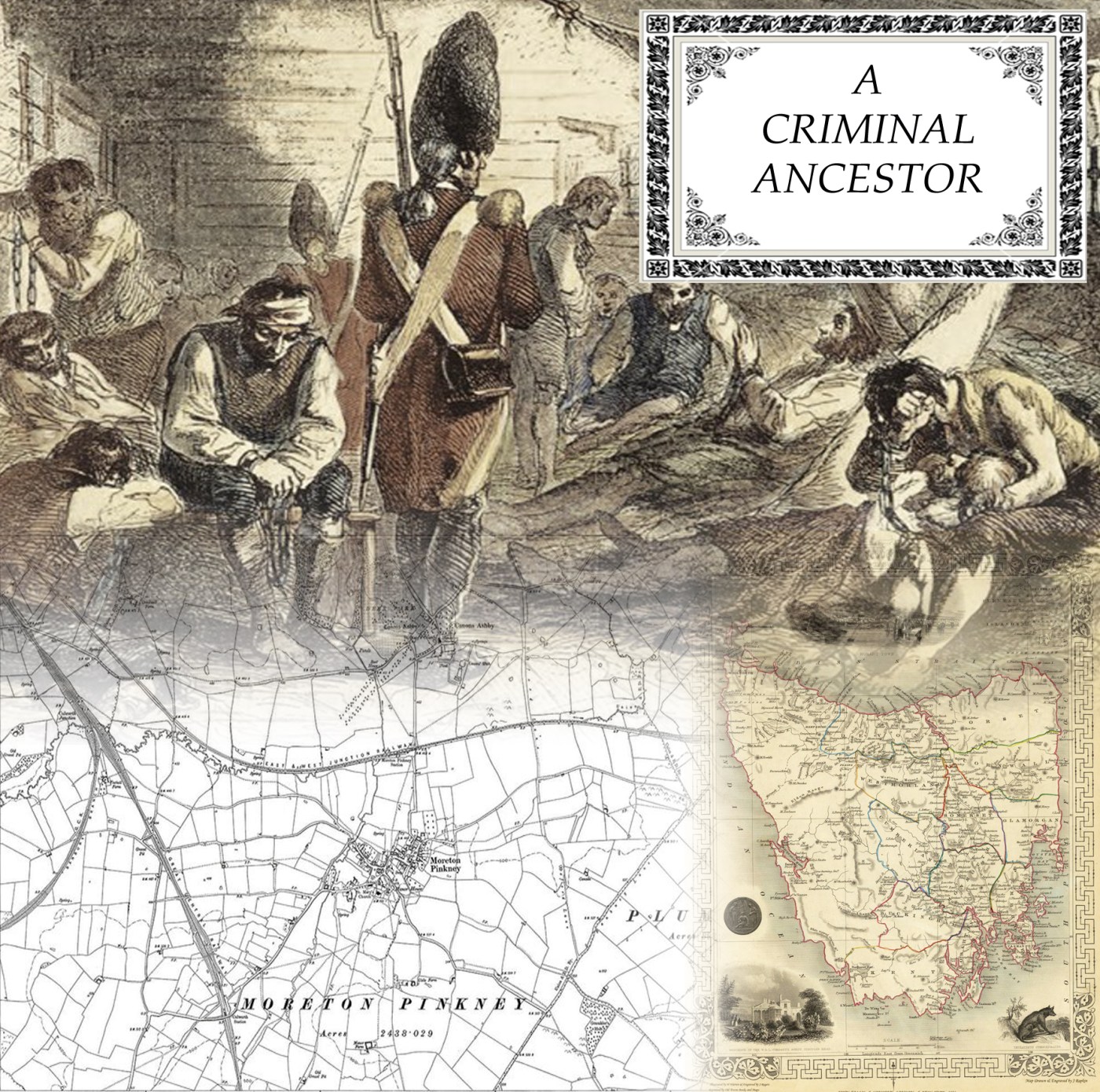



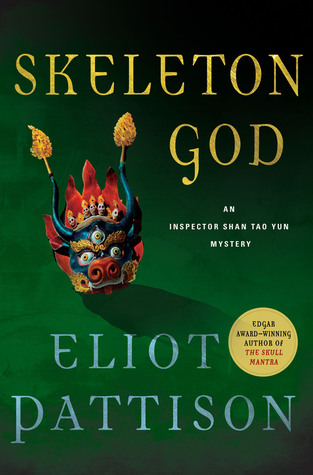

 The book actually begins with Shan rescuing one of the aforementioned yaks, but events take a more sinister turn. An ancient grave is uncovered, but the inhabitants are unlikely bedfellows. The original occupant is a long dead priest, mummified and gilded. But his companions are the remains of a Chinese soldier, and the very recent corpse of an American visitor. There is cultural confusion when a mobile ‘phone, presumably not the property of either the priest of the soldier, chimes out Handel’s Hallelujah Chorus across the chill mountain air and into the ears of alarmed Yangkar locals.
 masters far away to the east is described with wit and a certain degree of compassion. I am never completely convinced by the regular use of italicised foreign language nouns in novels, particularly when the original words would have used an entirely different alphabet, but this is a tiny complaint dwarfed by what is a brilliant and evocative police procedural, albeit one set in a world as far away from our European certainties as it is possible to recreate. Pattison (right) has written a novel which reminds us that China’s eminence as a world power has not been achieved painlessly.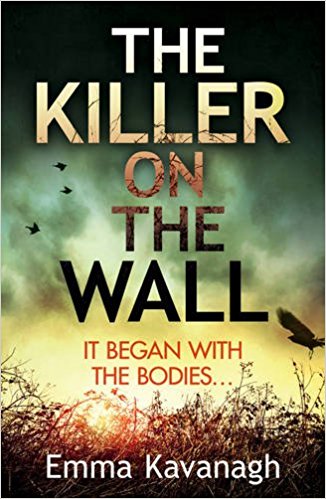
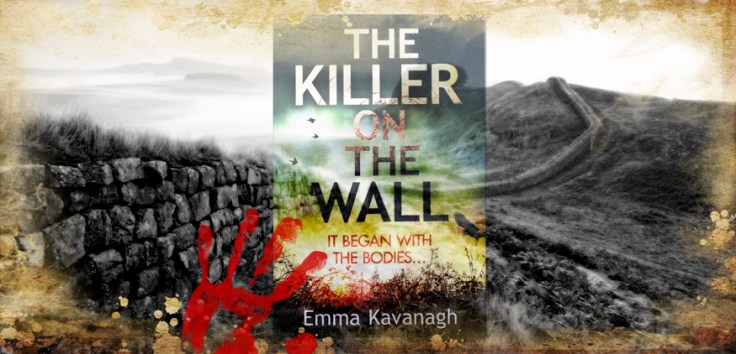
 The name Briganton, to most British people, conjures up a series of murders, where the victims were dragged up the steep hillside and posed, in death, gazing with sightless eyes out over the windswept moorland. But all that was long ago. The killer, Heath McGowan, was brought to justice by the determination of Eric Bell, a local policeman who has since been promoted and has achieved national celebrity due to his solving the case. His triumph had added poignancy because it was his teenage daughter, Isla, who discovered the first bodies while out for an early morning run.


