

II. MARCHE FUNEBRE
 Jean-Jacques ‘JJ’ Stoner is a stone cold killer. His creator, Frank Westworth gives us a first glimpse of him as an army sergeant serving in Iraq. One of his squad has just been fatally wounded by a knife thrown by one of a group of Iraqis who:
“….. plainly considered that the knife’s flight was the result of heavenly intervention and that they were all witnesses to a miraculous act, rather than a clever murderous attempt.”
The sergeant quietly but forcefully demands information:
“His words produced only more theatrical incomprehension. Five sets of open palms were paraded before the sergeant; all of them as innocent as the other, was the suggestion. A single shot interrupted the stage grief; one of the Iraqis sagged from seated to fallen, his dark blood draining from his exploded head into the sands of his native home. The sergeant held his smoking handgun in plain view, spread his arms wide to express his regret, his masculine sorrow.”
Sergeant Stoner assassinates the remaining Iraqis with neither hesitation nor sentiment. Shortly after, he is recruited by a government official we come to know as The Hard Man. Stoner’s new job is to use sharp blades and blunt instruments to discreetly resolve difficult situations for the British government. If Stoner has a gruesome talent for taking life, he also has a paradoxical skill which requires sensitivity, a delicate touch and an awareness of the human soul and its emotional depths; he is a gifted guitarist. In one of Westworth’s short stories, First Contract, Stoner uses his musical ear to imitate a Belfast accent when in a pub full of staunch Republicans:
“Beaming broadly, Stoner took a seat with the band. His lady companion ….. watched with some surprise as Stoner changed the tuning on the borrowed acoustic guitar, acknowledged a generous introduction from the leader of the band, then launched into a medley of furious Provo protest songs, familiar to all in that Catholic bar, all with their choruses to share.”
In the short story Two Wrongs Stoner is in America and we are introduced to a character who appears regularly in the Stoner stories, the navy SEAL known as Stretch. He and Stoner are in a bar, tangling with an agent from the FBI. Stoner, though, always has time for music:
“ Stoner finished his Bud, smacked his lips, and moved smoothly through the quietened attentive crowd to the stage, where he picked up the borrowed Fender Telecaster, smacked it a little to confirm the inaccuracy of its tuning, and launched into a spontaneous version of Johnny B. Goode set to a strange rolling rockabilly rhythm which found Stretch running, actually running from the restrooms to the stage in what proved to be a successful attempt to save the song from the amused Englishman’s attempt to publicly destroy such an important icon of American history.”

Westworth’s skill as a writer of quirky thrillers is shown to best effect in his Killing Sisters trilogy. In A Last Act of Charity (2014), The Corruption of Chastity (2015) and The Redemption of Charm (2017) Stoner encounters three sisters who are just as deadly and homicidal as he is. We also learn that in his downtime, when he is not despatching people who are being an embarrassment to HM Government, he is running a jazz and blues club called The Blue Cube. The closest thing that Stoner has to a girlfriend is a diminutive bass player called Bili who plays in the house band from which Stoner is often conspicuously absent due to his murderous day job.
“Bili swung her big red Rickenbacker bass into what might have been a comfortable playing position, and all three looked to far stage left, where Amanda rolled her eyes, took a deep breath and surprised them all by blasting from her shiny tenor saxophone the opening stanza of Baker Street, one of the most recognisable lumps of sax music of all time.”
 It doesn’t take a genius to work out that Westworth (right) is deeply immersed in the lore and legend of pop music as well as knowing his guitars. The Killing Sisters books are scattered with references – some subtle, but others more obvious – to great songs and singers. Later in The Redemption of Charm, Stoner renews his acquaintance with his favourite guitar:
“His old Fender guitar sat easily in his lap as he tuned, fingered a few chords, tuned again, hummed a few verses, tuned some more, strangely restless. The guitar felt odd … polished maybe. The strings were certainly new enough, although of the correct weight for his taste. He replaced it in its case, wandered around and discovered another case, standing by the closed piano, this one containing an acoustic guitar, a fine blonde Gibson model unfamiliar to him.”
Stoner is gloomy, and overcome with melancholy, states of mind with which he is unfamiliar, and strange moods sit heavy on his shoulders:
“He played a finger-picked instrumental tune he half remembered from the days before his playing focused entirely on electric solid-bodied guitars. A famous tune by Davey Graham dedicated to some woman called Anji. Unbidden and unwelcome somehow, his memory unearthed a series of images of women to whom he’d dedicated the song down the years.”
You can follow the blue links to the Amazon pages for Westworth’s novels, and on Fully Booked we have a detailed review of The Redemption of Charm, and an entertaining piece by the author on how to kill people, again borrowing from the title of a classic song – Killing Me Softly.
Next up in our musical journey is the story of a gifted singer-songwriter whose career has been shattered by depression and stage fright, and the sombre tale of a band whose obsession with the Dakota Building and the death of John Lennon takes them to a very dark place.
 Colin Dexter’s stories of the wonderful curmudgeon are among the widest read in the last quarter of the 20th century, but less well known are the Vienna-set novels of Frank Tallis featuring policeman Oskar Rheinhardt and his young pyschiatrist friend Dr Max Liebermann. The younger man often plays piano for Rheinhardt melodic baritone as they seek solace from the stresses and strains of catching murderers.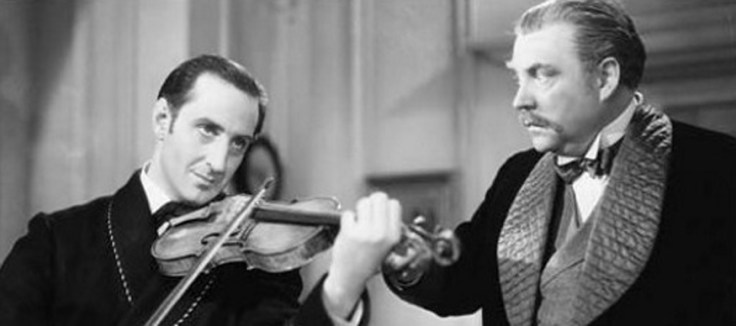


 Annemarie Neary gives us a chilling sense of separate events which are not fatal in themselves but deadly when they collide, and while Ro is making his way to Clapham, the normally self-assured Jess is in trouble at work. She has rejected the advances of a senior partner at an office social, and he uses the rebuff to light a fire under Jess’s professional life.

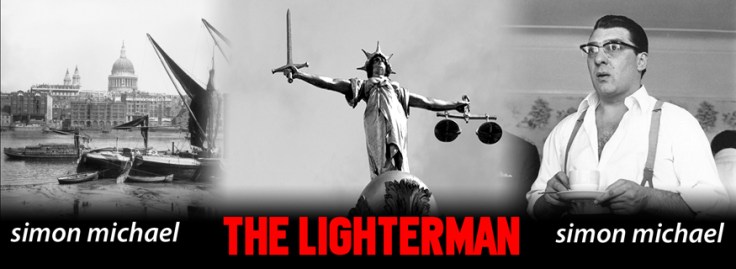
 When we next meet Charles it is 1964, and much has changed. The streets of the old East End, having been substantially rearranged by Hitler’s bombs, have been redeveloped. More significantly, the Jewish people have largely moved on. Many families have prospered and they have moved out to the comfortable suburbs. Charles Horowitz has also prospered, after a fashion. His chosen career is Law, and in order to rise through the ranks of the socially and ethnically tightly knit Inns of Court, he has abandoned Horowitz and reinvented himself as Charles Holborne.
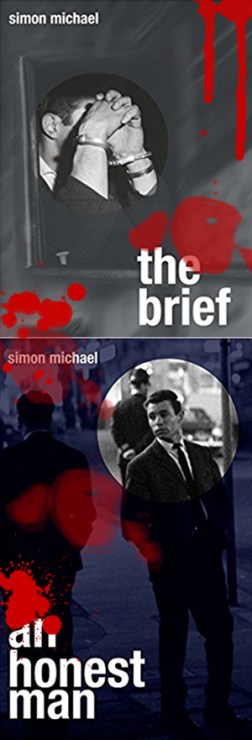 for those who want to complete the picture, but with The Lighterman it is sufficient to say that Charles has made a very undesirable enemy. It is probably merely an exercise in semantics to distinguish between the equally awful twin sons of Charles David Kray and Violet Annie Lee, but most casual observers agree that Ronnie was the worst of two evils. The homosexual, paranoid and pathologically violent gangster has a list of people who have upset him. The first name on that list is none other than Charles Holborne aka Horowitz, and the brutal East End hoodlum is determined that Charles must be done away with.
 Simon Michael (left) combines an encyclopaedic knowledge of London, with an insider’s grasp of courtroom proceedings. I cannot say if it was the author’s intention – only he can concur or disagree – but his writing left me with a profound sense of sadness over what London’s riverside and its East End once were – and what they have become. This is a beautifully written novel which succeeds on three different levels. Firstly, it is a superb recreation of a London which is just a lifetime away, but may as well be the Egypt of the pharaohs, such is its distance from us. Secondly, it is a tense and authentic legal thriller, with all the nuances and delicate sensibilities of the British legal system pushed into the spotlight. Thirdly – and perhaps most importantly – we meet characters who are totally convincing, speak in a manner which sounds authentic, and have all the qualities and flaws which we recognise in people of our own acquaintance. The Lighterman is published by Urbane Publications and is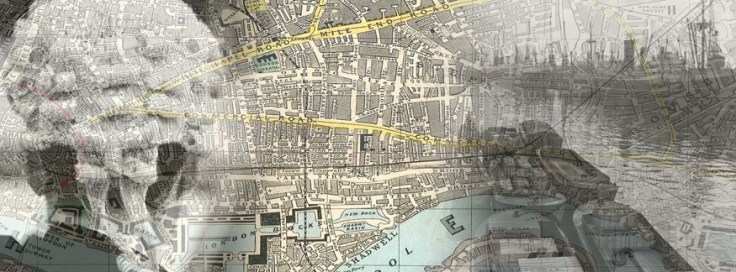
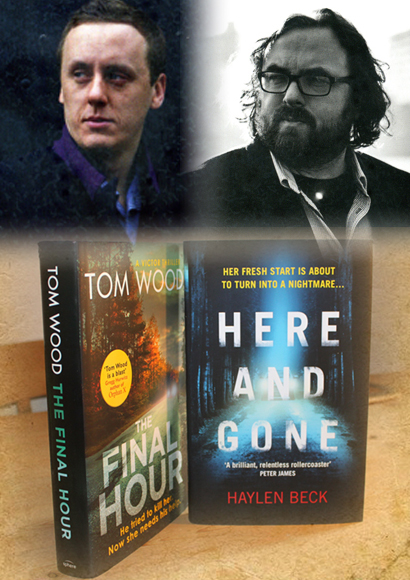
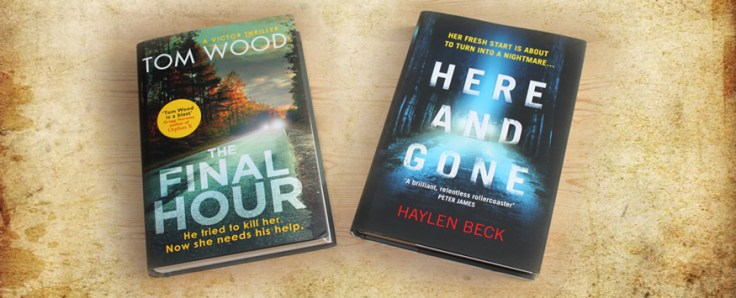

 The first is The Final Hour by Tom Wood. It is apparently the seventh in a series of thrillers centred on an international assassin called Victor. I confess that I am new to the books, but it seems that Victor, after a string of successful ice-cold hits has developed a painful affliction for any paid killer – he has started to show remorse. CIA man Antonio Alvarez is as remorseless a hunter – but in the cause of good – as Victor, but now circumstances dictate that their orbits will collide, with devastating effect. The Final Hour is published by Sphere, and is out on 29th June.
 As I flicked through the pages of Here and Gone I saw the author photo on the back inside cover, and I thought, “hang on, I know that bloke..” I’ve not had the pleasure of meeting Stuart Neville in person, but I have become a great admirer of his crime thrillers set in Ireland, both north and south of the border. But now, here he is, under the name of Haylen Beck, with a novel which he says is inspired by his love of American crime fiction.

 The muster room of hard-nosed female cops and investigators is not exactly a crowded place on Planet CriFi. Victoria Iphigenia Warshawski, Fiona Griffiths, Kate Brannigan, Cordelia Gray, Kay Scarpetta and Jane Marple have already taken their seats, but Temperance Brennan has, temporarily, given up hers for another child of her creator, Kathy Reichs (left). Sunday ‘Sunnie’ Night is a damaged, bitter, edgy and downright misanthropic American cop who has been suspended by her bosses for being trigger happy. She sits brooding, remote – and dangerous – on a barely accessible island off the South Carolina coast.
 Half way through the novel we realise the significance of the title. Sunnie Night is not waging this war alone: her twin brother Augustus ‘Gus’ Night is also on the case and, to use the cliche, he ‘has her back’. Together they are certainly a deadly combination. By this point, though, Reichs has bowled us an unreadable googly – or, for American readers, thrown us a curveball – and it isn’t until the closing pages that we realise that we have been making incorrect assumptions. Which is, of course, exactly what the author planned! Those last few pages make for a terrific finale, as the twins desperately try to prevent an atrocity being carried out at one of America’s most celebrated sporting occasions.
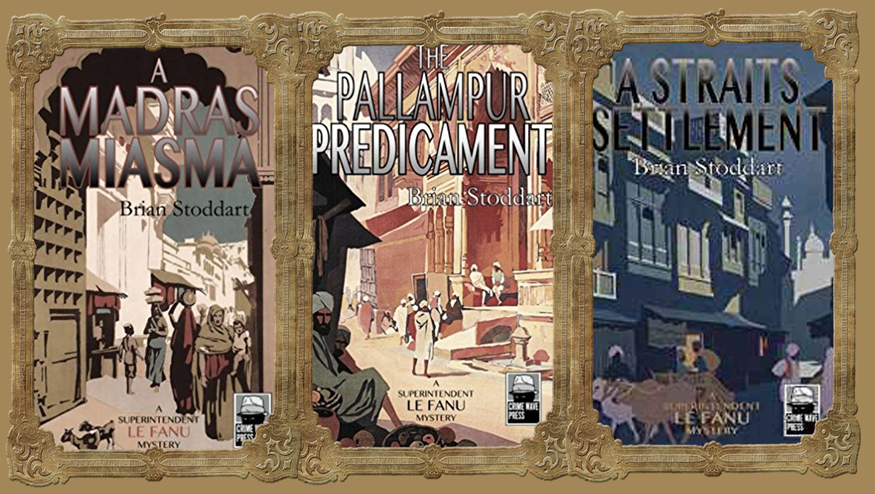

 Stoddart wears his scholarship lightly in the crime novels, but he is a gifted and compelling writer when dealing with the real world. In A House in Damascus – Before the Fall (2012) he examines the tragedy of the Syrian conflict and its effect on ordinary people for whom the complex political issues mean nothing but shattered lives, hardship – and death.
 steel and bullets with nothing but their manly chests. Don Bradman and Bill Woodfull, plucky Australian lads, direct descendants of the ANZACS, faced the barrage of Larwood and Voce with nothing but a small piece of shaped willow wood. Stoddart co-authored, with Ric Sissons, Cricket and Empire, an account of this bitter battle.


 Readers of the two previous books in the Hampstead Murders series, Death In Profile and Miss Christie Regrets, will know what to expect, but for readers new to the novels here is a Bluffers’ Guide. The stories are set in modern day Hampstead, a very select and expensive district of London. The police officers involved are, principally, Detective Superintendent Simon Collison, a civilised and gentlemanly type who, despite his charm and urbanity, is reluctant to climb the promotion ladder which is presented to him. Detective Sergeant Karen Willis is, likewise, of finishing school material, but also a very good copper with – as we are often reminded – legs to die for. She is in love, but not exclusively, with Detective Inspector Bob Metcalfe, a decent sort with a heart of gold. If he were operating back in the Bulldog Drummond era he would certainly have a lantern jaw and blue eyes that could be steely, or twinkle with kindness as circumstances dictate.
 Collison, Metcalfe, Willis and Collins have an ever lengthening list of questions to be answered. Why was Ann Durham brandishing a bottle of cyanide as she presided over one of the convention panels? Who actually wrote her most popular – and best selling – series of novels? Fraser-Sampson (right) spins a beautiful yarn here, with regular nods to The Golden Age during a convincing account of modern police procedure. Not only is the crime eventually solved, but he provides us with a delightful solution to the Willis – Metcalfe – Collins love triangle.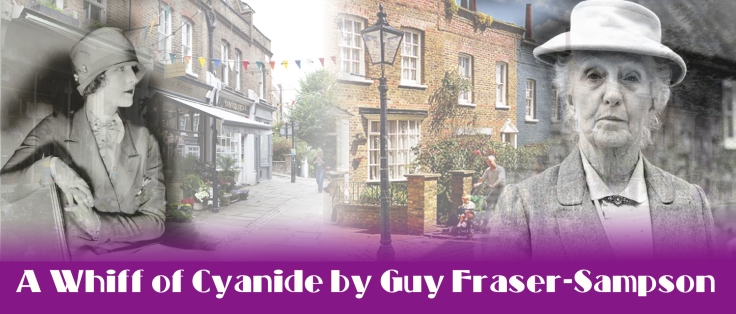


 Now, Thorne becomes involved in another kind of hell on earth, and one where all absent devils have been called home, all leave cancelled, and any recently retired fallen angels pressed back into duty. The fires stoked in this particular hellish pit illuminate the ghastly world inhabited by some British Asian communities who sanction murder in the name of their warped concept of family honour. Among the ghosts which inhabit the darker parts of Thorne’s memory is that of Meena Athwal. She was killed, he is certain, at the behest of her family, but her death remains unavenged in a court of justice.


