III. RONDO
Existing fans of Phil Rickman’s superbly evocative Merrily Watkins novels can skip this paragraph. As in all the best fiction series, there is a stable cast of recurring characters. So, for new readers, the Rickman Repertory Company is led by the Reverend Merrily Watkins: widow, mother, parish priest and Dioceson Deliverance officer (modern C of E speak for exorcist). Then comes Jane, her teenage daughter and inveterate dabbler-into-things-she-oughtn’t-to-be-dabbling-in. Gomer Parry, local drainage contractor, voice of common sense and elderly savant. Representing the forces of law and order is Frannie Bliss, detective with the Herefordshire Constabulary, scouser and all-purpose square peg. The musical director of this ensemble is Lawrence ‘Lol’ Robinson, dazzling guitarist, singer songwriter, sometime depressive, sufferer from paralysing stage fright – and the long term boyfriend of Merrily.
Lol has a serious back-story. In To Dream of The Dead, Rickman spells it out in stark clarity:
“Barely twenty and convicted of sexually assaulting a fourteen-year-old girl while on tour with Hazey Jane. An offence actually committed, while Lol was asleep, by the band’s bass player, who’d walked away, leaving Lol on probation, unjustly disgraced, disowned by his creepy Pentecostalist parents, swallowed by the psychiatric system. His career wrecked, his spirit smashed.”
As he creates Lol’s complex character, Rickman wants us to think of a real-life singer and guitarist, Nick Drake. Cynics might say that when the Gods take young musicians, it is a cast iron guarantee that both victim and music will achieve a kind of immortal celebrity that they may not have reached had they lived. Who can say with certainty that Eddie Cochran, Buddy Holly, Janis Joplin, Marc Bolan, Jimi Hendrix and others in the pantheon of dead rock stars would now be as famous in life as they have become in death?
Lol Robinson shares Nick Drake’s intensity, delicate guitar playing, haunting voice and sense of sublime anxiety about himself and the world he lives in. But, thanks to the support of Merrily Watkins and others, Lol comes through his bad times and lives to perform and record again. As he emerges from the darkness, he almost becomes as one with his guitar. Like Frank Westworth, Phil Rickman clearly knows, loves and plays the instrument, and he gifts Lol a beautiful hand-made guitar. Its maker is Al Boswell, a unique craftsman; part gypsy, part mystic and a man whose hands seem guided by forces older than any skills learned in a school woodwork class.

Not content with making one of the spear-carriers in his ensemble a fascinating and compelling character, Rickman goes one step further. He has actually recreated Lol’s band Hazey Jane, and they have made videos and sound recordings to prove the point.
https://www.youtube.com/watch?v=5ND_CkcUb78
Click on the image below to visit Phil Rickman’s own site, and learn more – and hear more – about Lol Robinson and Hazey Jane II.

 Before he had the brainwave which gave us Merrily Watkins in The Wine of Angels (1998), Rickman wrote several standalone novels. The most music-centred one was December (1994). It begins on the evening of Monday 8th December, 1980. For most people of a certain age, that date will be an instant trigger, but Rickman (right) sets us down in a ruined abbey in the remote Welsh hamlet of Ystrad Ddu, which sits at the foot of one of The Black Mountains, Ysgyryd Fawr – more commonly known by its anglicised form The Skirrid. Part of the medieval abbey has been fitted out as a recording studio and, in a cynical act of niche marketing, a record impresario has contracted a folk rock band, The Philosopher’s Stone, to record an album of mystical songs in the haunted building, and he has stipulated that the tracks must be laid down between midnight and dawn.
Shortly before 4.00am, as the band are playing a song which relates the tragic story of Aelwyn, a young Celtic man who was hacked to death in the abbey grounds by Norman invaders in 1175, what was already a fractious and uneasy atmosphere turns distinctly sinister. Acoustic guitarist Dave Reilly is overcome by disturbing visions and, as he escapes the studio to shelter under an ancient oak tree, over three thousand miles away it is 10.50 pm and a disturbed young Hawaiian man called Mark David Chapman is pumping four bullets into former Beatle and musical legend, John Lennon.
As if the ill-fated recording session is not already attracting enough malevolent vibrations, things are about to get worse – much, much worse. Lead guitarist Tom Storey – as notorious for his abuse of drink and drugs as he is celebrated for his guitar virtuosity – has had enough. He has left his pregnant wife Deborah in a nearby hotel and, angry at the shambolic and disturbing recording session, commandeers a Land Rover and storms off to be with her. Deborah, meanwhile has decided to come out to Ystrad Ddu to ‘rescue’ her husband. As John Lennon is bleeding to death in the back of a police car, Tom’s Land Rover smashes into Deborah’s Lotus sports car.
“Twenty yards away, the old blue Land Rover driven by Tom Storey has brought down a low, sleek Lotus Elan, like a lion with a gazelle. The Land Rover has torn into the Lotus and savaged it and its guts are out and still heaving, and Dave can see flames leaping into the vertical rain …..”

Rickman takes us forward to the present day. The Philosopher’s Stone is no more. It died on that fateful December night. Tom Storey has remarried, but lives as a recluse in a Cotswold mansion with his second wife and daughter Vanessa, removed from the dying body of her mother but afflicted with Down’s Syndrome. Singer Moira Cairns has flirted with the folk music scene, but has largely retreated from public life. Dave Reilly has eked out a threadbare living as a musician, but is cursed with an ability to sense the supernatural, and his ‘gift’ has done him no favours. Bass player Simon St John has abandoned music altogether (apart from in the privacy of his own room) and has taken holy orders.
Novels and, indeed, films, would not be able to create their magic were it not for the priceless ability of fictional characters to make decisions which turn out to be disastrous – and often fatal – mistakes. So it is in December. An unscrupulous music executive, desperate for something that will give his flagging career an edge, discovers a box of tapes, all that remains of the fatal pre-dawn music making in December 1980. A highly respected producer, Ken ‘Prof’ Levin (who features as a mentor to Lol Robinson in the Merrily Watkins novels) is persuaded to restore the tapes. To say that all hell breaks loose as a consequence is putting it mildly. Ghosts don’t like being woken from their dreamless sleep by money-grubbing mortals, and they exact a high price for their inconvenience.
Amid all the psychic mayhem, this is unashamedly a novel about guitars and their magic. We have Stratocasters, Martins, Takemines, Ovations, Telecasters and Les Pauls. Rickman’s fascination with his chosen instrument shines through, and his enthusiasm will inspire many a lapsed player to blow the dust off their guitar case, open it up and coax an old tune from their neglected lover.
Check out the buying options for December, and other Phil Rickman novels, here.
You can also read the Fully Booked review of the most recent Merrily Watkins novel
All Of A Winter’s Night
You can catch up with the previous parts of this series by clicking the links.


 The Nutting Girl by Fred de Vecca
 Lights Out Summer by Rich Zahradnik
 Dadgummit by Maggie Toussaint
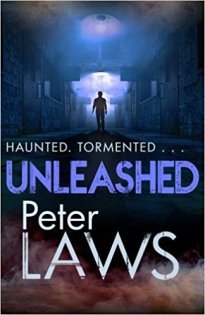 In Unleashed, his scepticism is shaken by events at an otherwise unremarkable terraced house in South London where, several years ago, a troubled nine-year-old girl committed suicide in the midst of a troubling sequence of poltergeist phenomena.
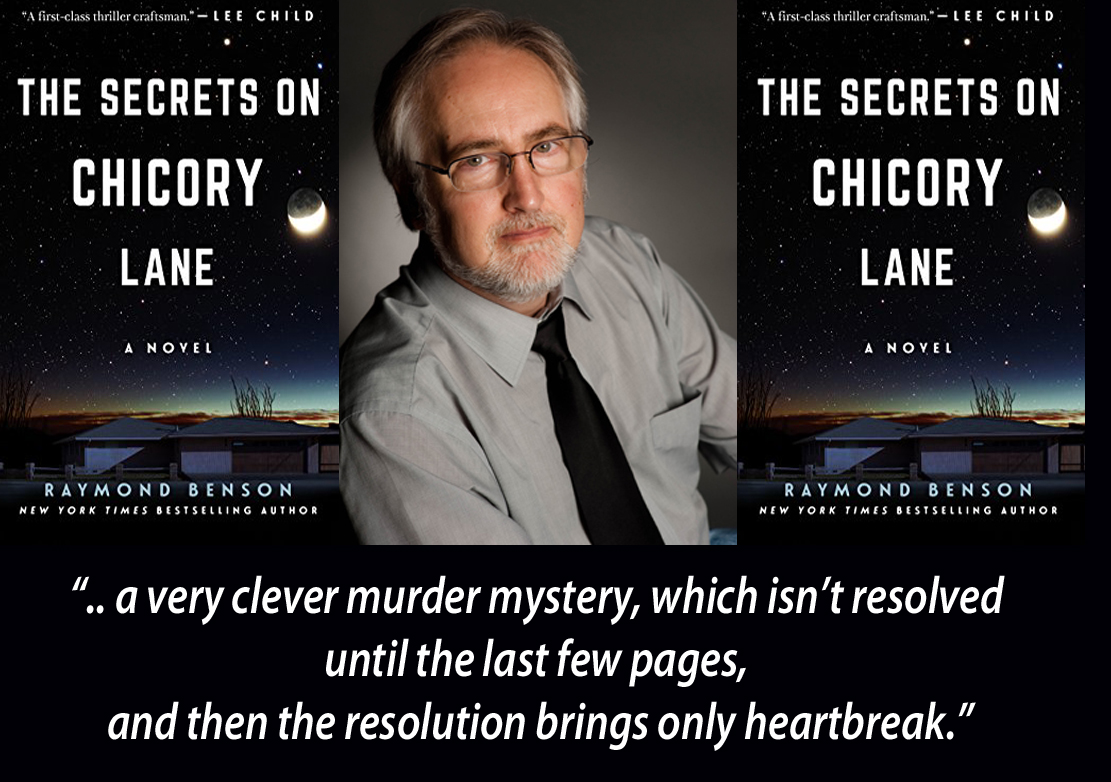

 Eddie is Eddie Newcott, the boy who used to live across the street in Chicory Lane, Limite. The boy who was just a bit different from all the other kids at school. The kid whose dad was a rough and abusive oilfield mechanic. The kid whose mom turned to the bottle to escape her violent husband and the beatings he handed out to their only child. But that was then. Now sees Eddie fallen on hard times. Times so hard that he achieved brief notoriety in the tabloid press, and has now been sentenced to death by lethal injection for murdering his pregnant girlfriend, slashing her open, dragging the foetus out and then arranging the two corpses on his front lawn, posed in an obscene mockery of a Nativity tableau. And it was Christmas Eve.
 Like Shelby Truman, Raymond Benson (right) is a highly successful writer. He has written thrillers under his own name, most notably his Black Stiletto Saga, and has also written novels based on video games. He has taken up the baton from authors who are no longer with us, like Tom Clancy, and has written several James Bond stories which have either been based on established screenplays – like Die Another Day – or standalone original stories such as The Man With The Red Tattoo.

 So, when Gabriel answers the door bell one day only to behold the wedge-shaped and granite faced personage of Farrelly – chauffeur, enforcer and general gofer for Frank Parr – he is led, like a naughty boy tweaked by his ear, to Parr’s sumptious office building. To say that Parr – now a respectable media mogul – has something of a history, is rather like saying that Vlad The Impaler was someone of interest to Amnesty International. Parr made his money – loads of it, and of the distinctly dirty variety – by publishing magazines which were not so much Top Shelf as stacked in the stratosphere miles above the earth’s surface.
 “For a while, I wandered the streets of Soho, as I had on the day I’d first visited forty years ago. Doorways whispered to me and ghosts looked down from high windows.”

 When the battered body of teenager Melanie Cooke is found amid the garbage bins in a seedy Bristol alleyway, it is obvious that she has been murdered. Only fourteen, she is dressed in the kind of clothes which would be considered provocative on a woman twice her age. Vogel goes to make the dreaded ‘death call’, but he only has to appear on the doorstep of the girl’s home for her mother and father to sense the worst. Like many rebellious teenagers before her, Melanie has told her parents that she is going round to a mate’s house to do some homework. When she failed to come home, their first ‘phone call confirmed Melanie’s lie, and thereafter, the long dark hours of the night are spent in increasing anxiety and then terror, as they realise that something awful has happened.
 The book actually starts with a prologue which at first glance appears to be nothing to do with Melanie’s death. It is only later – much later – that we learn its true significance. Bonner (right) is determined not to give us a straightforward narrative. The progress of Vogel’s attempts to find Melanie’s killer are sandwiched between accounts from three different men, each of whom is living a life where all is not as it seems.


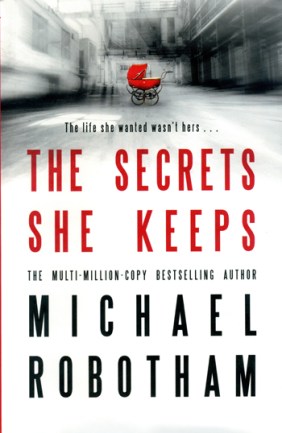 Agatha Fyfle works for peanuts in a ‘Village’ supermarket but Mr Patel, her boss, is not the kind of man to be offering generous maternity leave. He is so tight that he once docked her pay for putting the wrong price on a tin of peaches. The father of her baby is far, far away on a Royal Navy ship patrolling the Indian Ocean, chasing Somali pirates. Despite her nothing job and the desperate ordinariness of her life, Agatha has her imagination and her dreams:


 I do love Operas, though – at least those written up to the death of Giacomo Antonio Domenico Michele Secondo Maria Puccini (who would be just as wonderful even if he didn’t have six christian names.) I would add the personal caveat that for me it is sometimes better heard than seen, as stage productions can sometimes demand too much suspension of disbelief. Our chosen book, then, is Spur Of The Moment by David Linzee, and it is set around the St Louis Opera company as they prepare a performance of Bizet’s wonderful, preposterous, exhilarating four-act classic, Carmen.
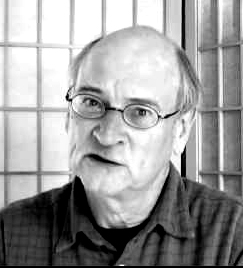 David Linzee has himself been a ‘supernumary’ – basically the opera equivalent of a spear carrier – and he enjoys several digs at the way an opera company in a mid-sized city is run. I particularly enjoyed his jibes at the ubiquitous need for sponsorship. Linzee (right) explains that the SLO has to make sure that literally every brick in the building has corporate support. Thus we have the Peter J Calvocoressi Administration Building, the Charles Macnamara III Auditorium and – best of all – the Endeavour Rent-a-Car Endowed Artist. In this case it’s Amy Song, the woman playing Carmen.



 Charles Harris (right), a best-selling non-fiction author and writer-director for film and television sets in train a disastrous serious of mishaps, each of which stems from Kati’s ostensibly harmless error. Too exhausted from her daily grind making sure that Every Little Helps at everyone’s favourite supermarket, she sends her hapless son, Liam, off to the cashpoint, armed with her debit card and its vital PIN. Sadly, Liam never makes it home with the cash, the pizza guy remains unpaid, and Kati Glass is pitched into a nightmare.
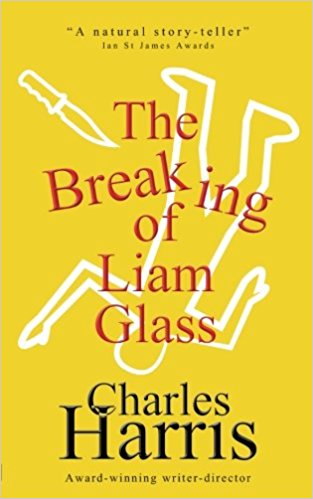 Trying to find out who stabbed Liam Glass is Detective Constable Andy Rackham. He is a walking tick-box of all the difficulties faced by an ambitious copper trying to please his bosses while being a supportive husband and father. The third member of this unholy trinity is Jamila Hasan, an earnest politician of Bengali origin who senses that the attack might be just the campaign platform she needs to ensure that she is re-elected. But what if Liam’s attackers are from her own community? Sadly, in her efforts to gain credibility on the street, Jamila has been duped.