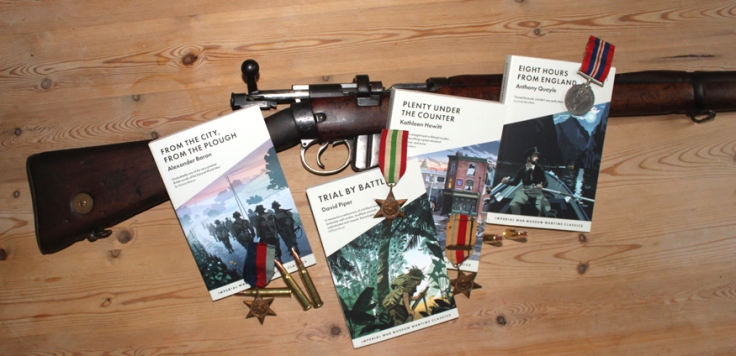
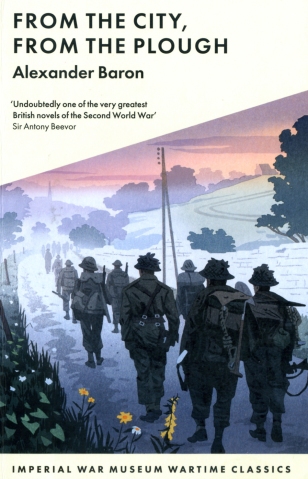
 his 1948 best seller echoes Alexander Baron’s own military career as it follows a battalion of a fictional infantry brigade as they prepare for – and then take part in – D Day in the summer of 1944. The Fifth Wessex is, as the book’s title suggests, made up of a mixture of clumsy red-cheeked farm boys from the chalk uplands, well-read introverts who keep themselves to themselves, streetwise chancers and bewildered lads who are virgins in both bedroom and battlefield. They could be soldiers from earlier wars, and their ancestors might have known Agincourt, Marston Moor, Malplaquet, Talavera, Spion Kop and Arras. Baron has no time for the thinly veiled homo-eroticism of some of the Great War writers. His men can be uncouth, foul-mouthed, brutalised by their social background, yet given to moments of great compassion and charity.
 The British officer class have been long the object of scorn in both poetry and prose, but Baron deals with them in a largely sympathetic way. Those leading the Fifth on the ground are decent fellows; people who are only too aware of the frequently uneven struggle between shards of steel and the breasts of brave men. Even the Brigadier, whose plans prove so costly, is well aware of what he asks. He is, however, resolute in the way he shuts down his personal qualms in order to maintain the integrity of the battle plan. The one exception is the odious Major Maddison, a cold and sexually troubled narcissist whose demise is as satisfying as it is inevitable.
It is worth comparing From The City, From The Plough to another deeply moving novel of men at war, Covenant With Death, (1961) by John Harris. Both deal at length with preparation for an assault; both conclude with the devastating outcome. In Harris’s book the ‘band of brothers’ is a thinly fictionalised Pals Battalion from a northern city. Their Gehenna is the morning of July 1st 1916 and if it is just as brutal as the fate of the Fifth Wessex, it is perhaps more shocking for its suddenness. Harris concludes his book with the words;
“Two years in the making. Ten minutes in the destroying. That was our story.”
 aron writes lyrically about the midsummer grace of the French countryside, its orchards and abundance of wild flowers, some of which grace the helmets and tunics of the passing soldiers, their fragility which will contrast cruelly with the total vulnerability of the crumpled and shattered bodies of the men who wore them. For the driven and exhausted men of the Fifth Wessex, unlike their fathers before them, there is always a new unspoiled hillside, a grove of trees untouched by shellfire, a fresh sunken lane lined with roses and willow herb. For the war in Normandy is a war of movement. A field reeking with the blood of dead horses and cattle is soon left behind, as the Brigadier stabs his finger at the map and finds another bridge, another crossroads and another copse that must be taken.
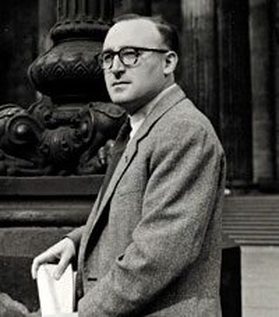 The heroes in From The City, From The Plough come in all shapes and sizes, but there are no winners. Let Alexander Baron (right) have the last word.
“Among the rubble, beneath the smoking ruins, the dead of the Fifth Battalion sprawled around the guns they had silenced; dusty, crumpled and utterly without dignity; a pair of boots protruding from a roadside ditch; a body blackened and bent like a chicken burnt in the stove; a face pressed into the dirt; a hand reaching up out of a mass of brick and timbers; a rump thrust ludicrously towards the sky. The living lay among them, speechless, exhausted, beyond grief or triumph, drawing at broken cigarettes and watching with sunken eyes the tanks go by.”


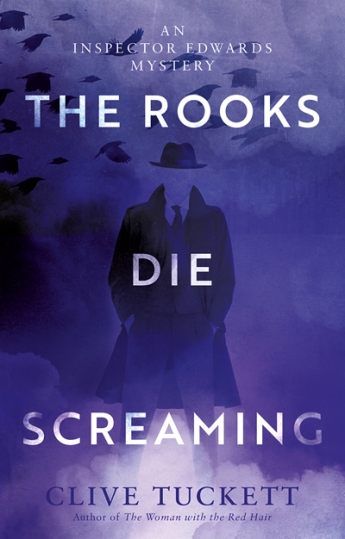 Morag is now Lady Frobisher. Her husband Harry, heir to The Fobisher Estate on the outskirts of Bodmin, is blind, victim of a grenade in the Flanders trenches. In the previous novel, Frobisher Hall was the scene of great torment for Morag, as she fell into the clutches of Morgan Treaves, an insane asylum keeper and his evil nurse. Treaves has disappeared after being disfigured with a broken bottle, wielded my Morag in a life or death struggle.
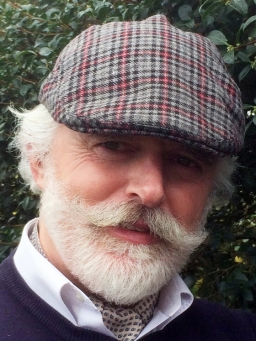 That said, The Rooks Die Screaming is inspired escapist reading. It would be unfair to say that Tuckett (right) writes in an anachronistic style. This is much, much better than pastiche, even though there are elements of Conan Doyle, the Golden Age, John Buchan and even touches of Sapper and MR James. So, eventually, to the plot, but we need to know a little more about Cyril Edwards. Like many a fictional detective inspector he is his own man. In another nice cultural reference Tuckett adds a touch of Charters and Caldicott as Edwards explains to the bumptious Standish, a mysterious officer from Military Intelligence;
 tandish orders Edwards to investigate the possibility that Harry Frobisher is one of the Rooks, but one who has betrayed his country. Arriving in Bodmin his first task is to explain to the local police how a corpse found on a train is that of a notorious London contract killer. Tuckett’s Bodmin is full of stock characters, including a stolid police sergeant, an apparently tremulous clergyman and a punctilious but respected solicitor who is privy to all the secrets of the local gentry, but is oh, so discreet. To add to the fun, Frobisher Hall also has its requisite roll call of faithful retainers.


 al McDermid was anxious that over-enthusiastic reviewers and fans might give away the ending of her previous Carol Jordan and Tony Hill novel,
 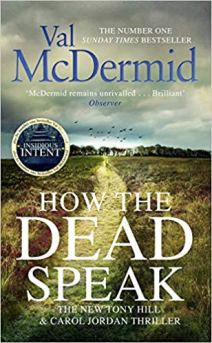 After the events of which we will not speak, Jordan’s Regional Major Incident Team has been disbanded while the woman who was its beating heart and soul keeps her fragile psyche from harm by continuing to renovate her home, a former barn on a heather covered northern hillside. Visitors are few and usually unwelcome, but none more so than Tony Hill’s vindictive and manipulative mother Vanessa who, after inflicting her abrasive personality on her son in a prison visit, coerces Jordan into using her investigative skills to track down a fraudster who has conned her out of a small fortune. Only slightly less welcome is Bronwen Scott, Tony Hill’s solicitor. She also has a job for Jordan, but this time it is to establish grounds for an appeal against a murder conviction handed down to a gay man who, the jury believes, has murdered a rent boy.
 eanwhile, back in the fictional city of Bradfield (which I have always assumed to be Leeds/Bradford) Jordan’s old ReMIT has been given the kiss of life. Its first post-resuscitation job, under the ambitious but box-ticking leadership of DCI Ian Rutherford, is to investigate the gruesome discovery of dozens of human remains in the grounds of a former Roman Catholic children’s home. I am not privy to Val McDermid’s religious beliefs, if she has them, but she certainly gets stuck into the darker side of Roman Catholicism’s social policy. OK, perhaps it’s something of an open goal these days, but as the RMIT try to discover the why and when of the St Margaret Clitherow Refuge skeletons, we learn some dark and unpalatable truths about the ‘Brides of Christ’ whose singular duty is to obey, no matter what the command.
 nd there is a bonus. McDermid – who, as fans of her band will know, is no mean singer – might just be performing a cover version of one of my favourite songs Save The Best For Last (below). If any potential readers are sentimental old (or young) sods like me, you will be permitted a little sniffle and a dab at a moist eye when you read the final pages.

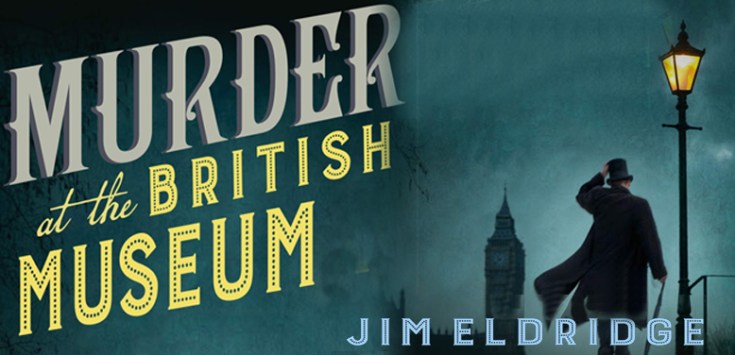
 London. 1894. The British Museum has become a crime scene. A distinguished academic and author has been brutally stabbed to death. Not in the hushed corridors, not in the dusty silence of The Reading Room, and not even in one of the stately exhibition halls, under the stony gaze of Assyrian gods and Greek athletes. No, Professor Lance Pickering has been found in the distinctly less grand cubicle of one of the museum’s … ahem …. conveniences, the door locked from inside, and the unfortunate professor slumped over the porcelain.
 This is a highly readable mystery with two engaging central characters, a convincing late Victorian London setting, and a plot which takes us this way and that before Daniel and Abigail uncover the tragic truth behind the murders. Jim Eldridge (right) is a veteran writer for radio, television and film as well as being the author of historical fiction, children’s novels and educational books. Murder At The British Museum is published by Allison & Busby,


 ince she first appeared, sixteen years ago, in Driftnet, forensic scientist Dr Rhona MacLeod has lived out the words of her infamous Scottish compatriot, the former Thane of Glamis:
 Indeed, her creator Lin Anderson has included the fatal ‘D’ word in the titles of each successive novel from number eight, Picture Her Dead (2012) to this latest novel, the thirteenth in the series. For readers new to the novels, and I am one such, Anderson wastes no time in letting us know that Dr MacLeod is recovering physically and mentally from a terrible ordeal. She is on enforced sick leave, has taken herself away from her Glasgow base and rather than endure a spell in the official police rehabilitation unit at Castlebrae, has decided to revisit her teenage summer holiday haunts on the Isle of Skye.
 t is now winter on Skye, and it is a very different place from the sunlit island Rhona knew as a teenager. As ever, the Black Cuillin broods over Glen Brittle and Sligachan, but now the crests of the peaks are white with the first snows. Rhona is reunited with Jamie McColl, a summer holiday friend and, through him, she meets the proprietors of A.C.E Target Sports, an outdoor adventure facility – and their dog, Blaze. Rhona takes Blaze for a walk – or vice versa – but as the December light begins to fail:
 We are now on page 29 of 425, but Lin Anderson (right) has already established an intriguing parallel narrative, the significance of which we can only guess at this stage. As the novel unfolds, however the mists begin to clear, although the full significance of this sub-plot, and how it converges, horrifically, with Rhona MacLeod’s supposed recuperation, only becomes clear in the last few pages.
 ithout, I hope, giving away any of the beautiful intricacies of this novel, I can say that a group of serving RAMC medics, on leave, have decided to visit Skye to see if the resilience and courage they showed in the face of the implacable brutality of Helmand Province and the Taliban will be, in any way, tested by the wintry glens and screes of Skye. What befell them in Afghanistan, and how those events play out on Eilean a’ Cheo, the Misty Isle, is for you to discover.


 olitical disagreement in modern mainland Britain is largely non-violent, with the dishonorable exceptions of Islamic extremists and – further back – Irish Republican terror. For sure, tempers fray, abuse is hurled and fists are shaken. Just occasionally an egg, or maybe a milkshake, is thrown. You mightn’t think it, given the paroxysms of fury displayed on social media, but sticks and stones are rarely seen. Scottish writer SG MacLean in her series featuring the Cromwellian enforcer Damian Seeker reminds us that we have a violent history.
 In the last of England’s civil wars, forces opposed to King Charles 1st and his belief in the divine right of kings have won the day. 1656. Charles has been dead these seven years and his son, another Charles, has escaped by the skin of his teeth after an abortive military campaign in 1651. He has been given sanctuary ‘across the water’, but his agents still believe they can stir up the population against his father’s nemesis – Oliver Cromwell, The Lord Protector.
 tells us that Seeker succeeds, but along the way SG MacLean (right) makes sure we have a bumpy ride through the mixture of squalor and magnificence that is 17th century London.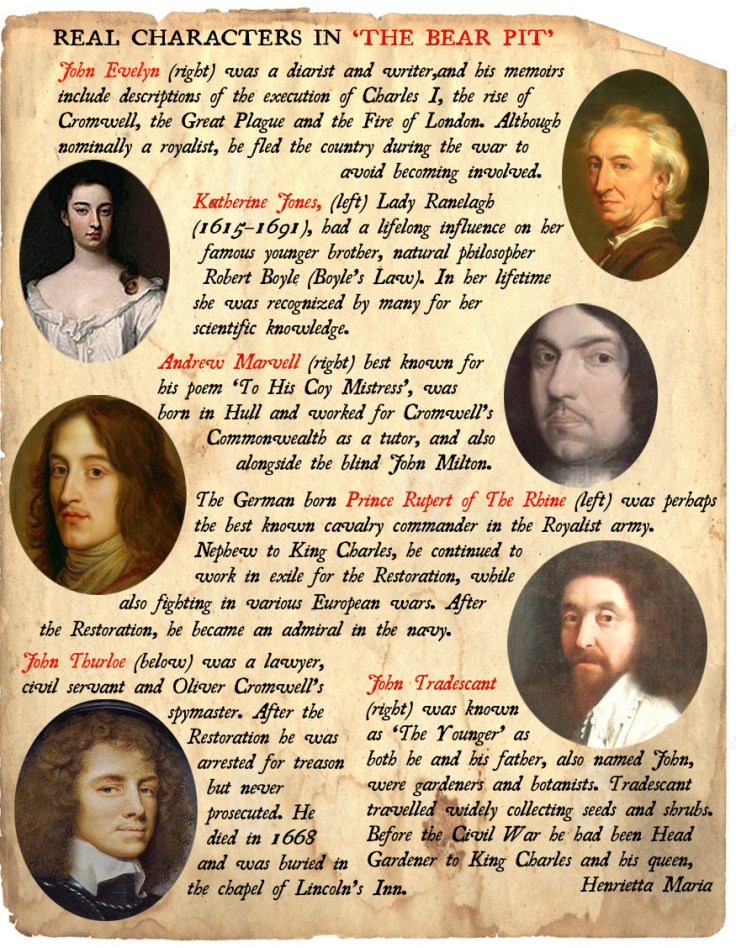


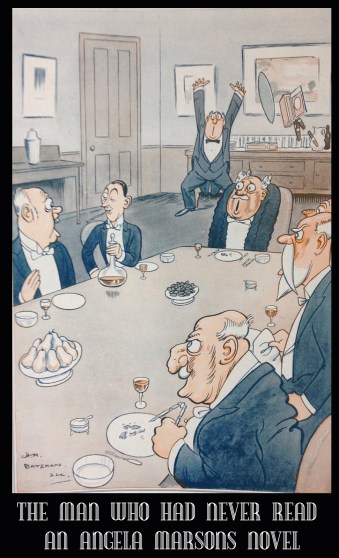 I’m new to the Angela Marsons Kim Stone series, which is good a cue as any to adapt a cartoon by one of my favourite illustrators, HM Bateman. It is clear that the Kim Stone novels, which began in 2015 with Silent Scream are hugely popular and although her millions of existing readers will not give a hoot what I think, I can now see why.
 Unsurprisingly, her chosen mode of transport is a powerful Kawasaki motorbike, the ultimate solo kick where all that exists is the rushing road, the wind and the scream of the engine:
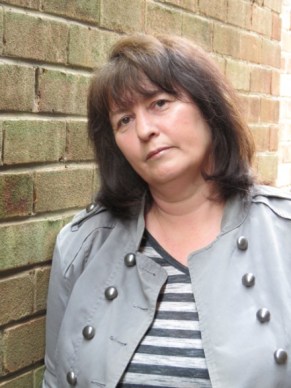 Marsons (left) takes us down and dirty into the visceral world of police work:
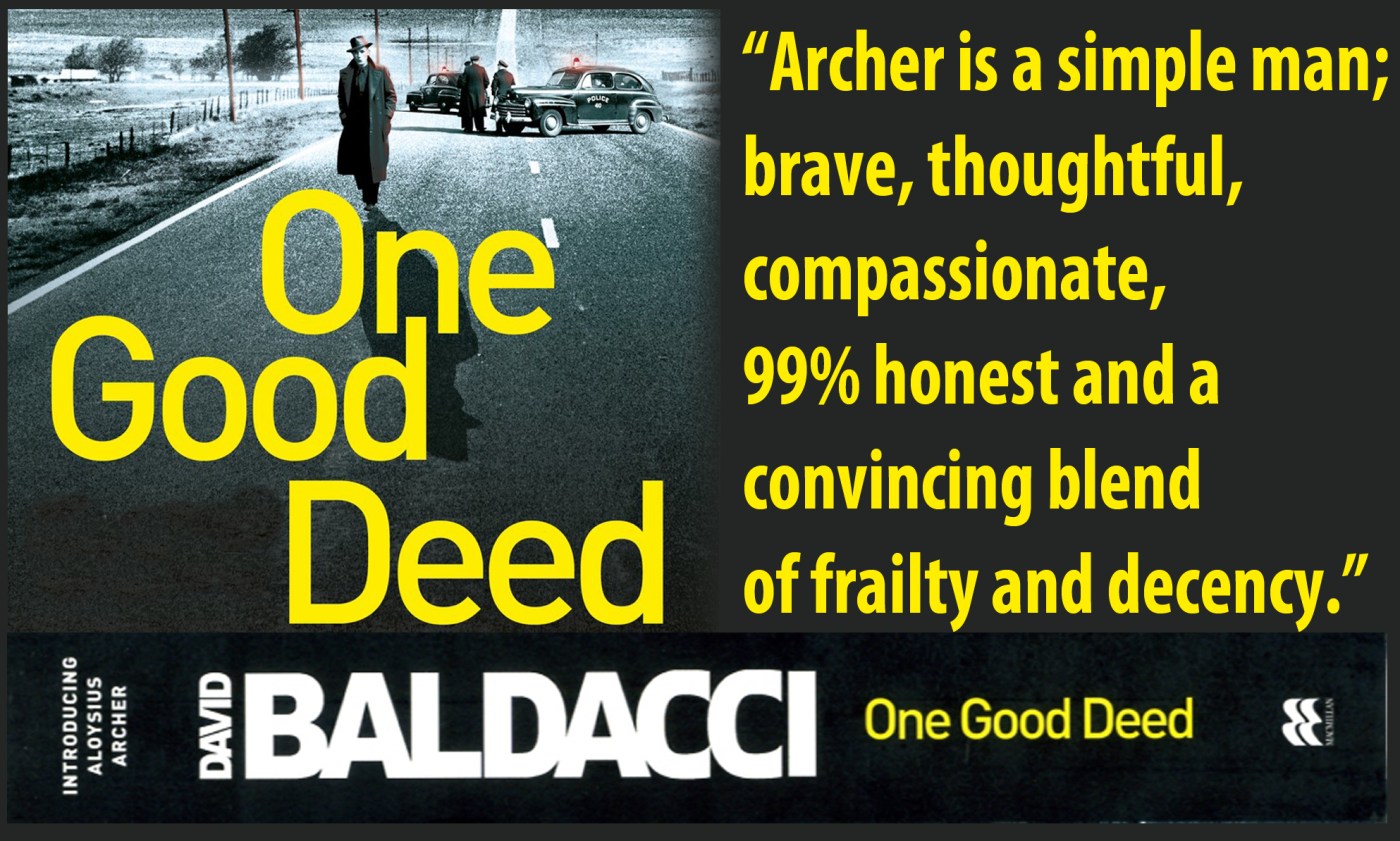

 Wearing a cheap suit, regarded as trash by the local people, and with every cause to feel bitter, Archer checks into the Derby Hotel and contemplates the future. His immediate task is to check in with his Probation Officer, Ernestine Crabtree. Quietly impressed by her demeanour – and her physical charm – Archer goes, in spite of his parole restrictions, for a drink in a local bar, The Cat’s Meow
 ven before Lucas Tuttle answers the door to Archer’s knock by pointing a cocked Remington shotgun at his unwelcome visitor, Archer has learned that the floozie on Pittleman’s arm in the bar is none other than Jackie, Tuttle’s estranged daughter. Archer finds the coveted motor car hidden away on Tuttle’s ranch, but it has been deliberately torched. Cursing his involvement in this blood feud, Archer’s equilibrium and freedom both take a severe knock when Pittleman’s body is found in a bedroom just along the floor from Archer’s room in The Derby. Thrown into the cells as the obvious suspect, Archer is released when he meets up with Irving Shaw – a serious and competent detective – and convinces him of his innocence.
 Pretty much left on his own to solve the case after a violent attempt to silence Jackie, Archer has to summon up very ounce of his military experience and his innate common sense to put himself beyond the reach of the hangman’s noose.
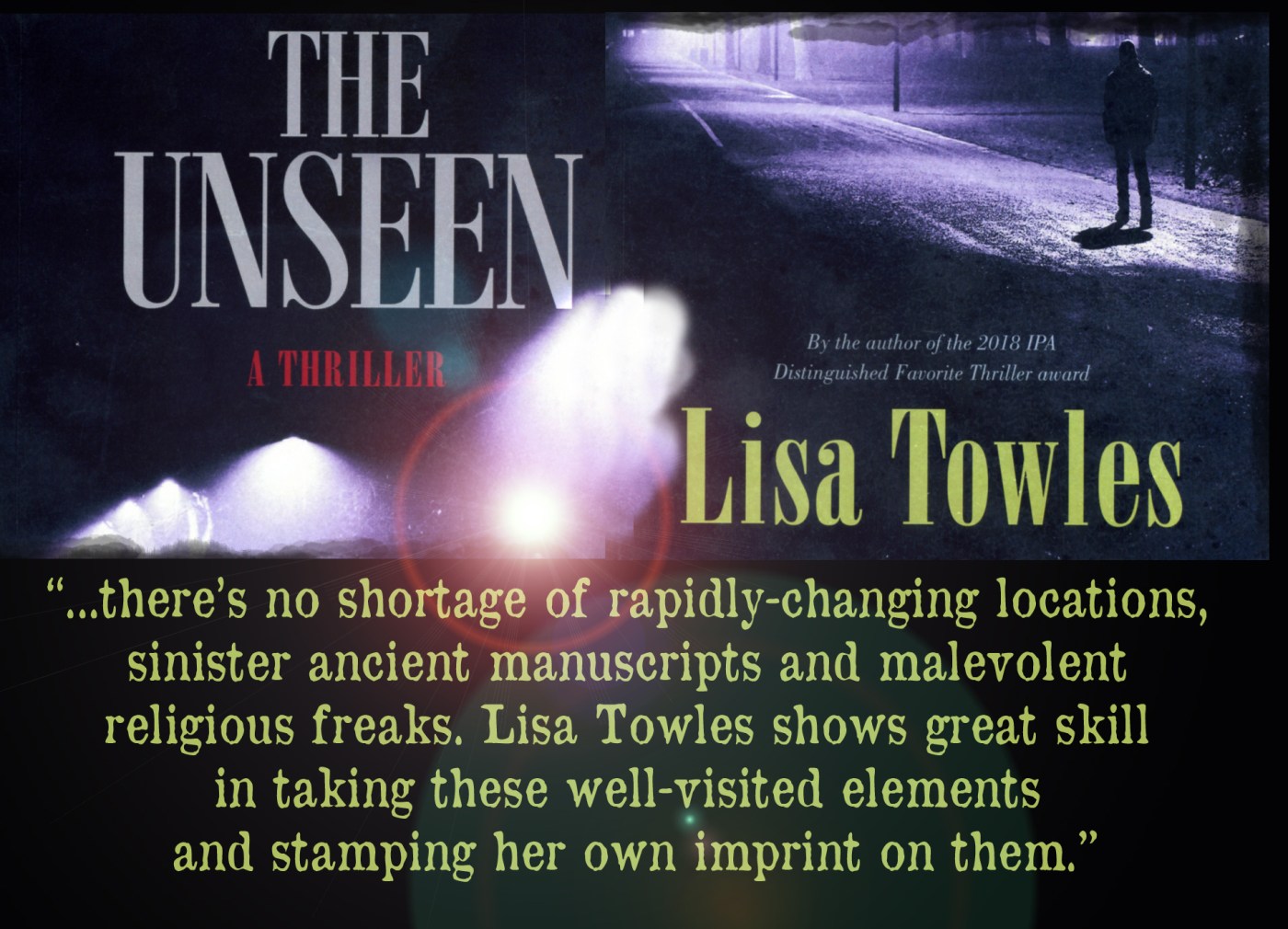

 isa Towles is a California Girl by residence, but she hails from New England. She writes crime novels when she isn’t putting her IT Management MBA to good use in The Sunshine State’s tech industry. Long time followers of Fully Booked will recall my enthusiastic review of her earlier book Choke (2017) and will remember that I began that review with the words:
 She is back with a vengeance – and that same imaginative flair – with her new mystery thriller The Unseen and the action is just as breathless. We have a story that spans five decades and whirls us between Dublin, the Egyptian desert, Boston Massachusetts, London and Rome. With a cast of larger-than-life characters including archaeologists, journalists, hit men – and a direct descendant of an Eastern Orthodox Pope – the story is never short of surprises and dramatic twists.