

 ince she first appeared, sixteen years ago, in Driftnet, forensic scientist Dr Rhona MacLeod has lived out the words of her infamous Scottish compatriot, the former Thane of Glamis:
“I am in blood
Stepped in so far that, should I wade no more,
Returning were as tedious as go o’er.”
 Indeed, her creator Lin Anderson has included the fatal ‘D’ word in the titles of each successive novel from number eight, Picture Her Dead (2012) to this latest novel, the thirteenth in the series. For readers new to the novels, and I am one such, Anderson wastes no time in letting us know that Dr MacLeod is recovering physically and mentally from a terrible ordeal. She is on enforced sick leave, has taken herself away from her Glasgow base and rather than endure a spell in the official police rehabilitation unit at Castlebrae, has decided to revisit her teenage summer holiday haunts on the Isle of Skye.
Back in Glasgow, sometime colleague DS Michael McNab is carrying out duty of care for Rhona, of a sort, by daily Skype calls, but it is a close run thing which of the two is the more uncomfortable with these encounters.
 t is now winter on Skye, and it is a very different place from the sunlit island Rhona knew as a teenager. As ever, the Black Cuillin broods over Glen Brittle and Sligachan, but now the crests of the peaks are white with the first snows. Rhona is reunited with Jamie McColl, a summer holiday friend and, through him, she meets the proprietors of A.C.E Target Sports, an outdoor adventure facility – and their dog, Blaze. Rhona takes Blaze for a walk – or vice versa – but as the December light begins to fail:
“They had reached a small break in the tree cover. Rhona registered the sound of a burn running somewhere close by. A bird rose with a harsh call that startled her, raising her heartbeat.
As she drew alongside the dog, it turned to lick her hand, whining a little.
‘What is it boy? What’s wrong?’
Everything, the answering whine told her. Everything about this place is wrong.‘Show me, Blaze. Show me what you’ve found.’”
 We are now on page 29 of 425, but Lin Anderson (right) has already established an intriguing parallel narrative, the significance of which we can only guess at this stage. As the novel unfolds, however the mists begin to clear, although the full significance of this sub-plot, and how it converges, horrifically, with Rhona MacLeod’s supposed recuperation, only becomes clear in the last few pages.
 ithout, I hope, giving away any of the beautiful intricacies of this novel, I can say that a group of serving RAMC medics, on leave, have decided to visit Skye to see if the resilience and courage they showed in the face of the implacable brutality of Helmand Province and the Taliban will be, in any way, tested by the wintry glens and screes of Skye. What befell them in Afghanistan, and how those events play out on Eilean a’ Cheo, the Misty Isle, is for you to discover.
Time For The Dead is a brilliantly written thriller, as hard as nails in places, but also gloriously Romantic, in the nineteenth century sense of nature being a formidable force, with mountain chasms, storm washed beaches and human beings clinging on by the skin of their teeth. It is a police procedural at its heart, but one that is as black as the sand on Skye beaches. Published by Macmillan, it is out on 8th August.



 olitical disagreement in modern mainland Britain is largely non-violent, with the dishonorable exceptions of Islamic extremists and – further back – Irish Republican terror. For sure, tempers fray, abuse is hurled and fists are shaken. Just occasionally an egg, or maybe a milkshake, is thrown. You mightn’t think it, given the paroxysms of fury displayed on social media, but sticks and stones are rarely seen. Scottish writer SG MacLean in her series featuring the Cromwellian enforcer Damian Seeker reminds us that we have a violent history.
 In the last of England’s civil wars, forces opposed to King Charles 1st and his belief in the divine right of kings have won the day. 1656. Charles has been dead these seven years and his son, another Charles, has escaped by the skin of his teeth after an abortive military campaign in 1651. He has been given sanctuary ‘across the water’, but his agents still believe they can stir up the population against his father’s nemesis – Oliver Cromwell, The Lord Protector.
 tells us that Seeker succeeds, but along the way SG MacLean (right) makes sure we have a bumpy ride through the mixture of squalor and magnificence that is 17th century London.


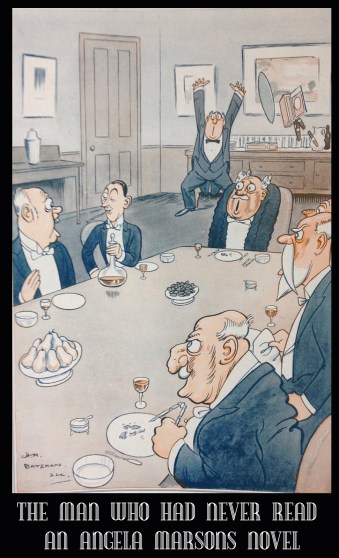 I’m new to the Angela Marsons Kim Stone series, which is good a cue as any to adapt a cartoon by one of my favourite illustrators, HM Bateman. It is clear that the Kim Stone novels, which began in 2015 with Silent Scream are hugely popular and although her millions of existing readers will not give a hoot what I think, I can now see why.
 Unsurprisingly, her chosen mode of transport is a powerful Kawasaki motorbike, the ultimate solo kick where all that exists is the rushing road, the wind and the scream of the engine:
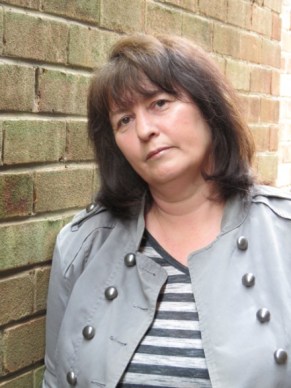 Marsons (left) takes us down and dirty into the visceral world of police work:
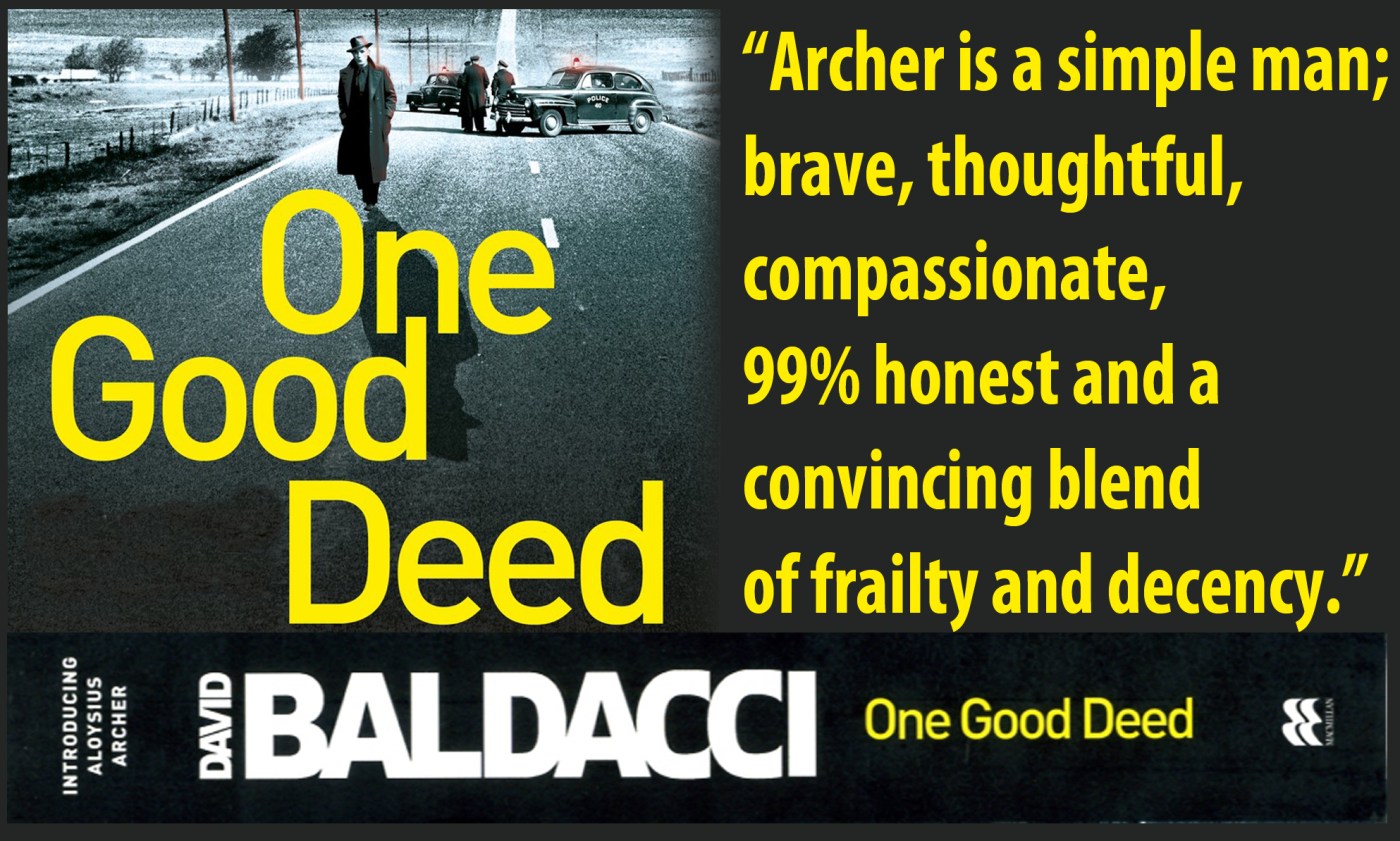

 rcher served his country with distinction in the war, fighting his way up the spine of Italy, watching his buddies die hard, and wondering about the ‘just cause’ that has trained him to shoot, throttle, stab and maim fellow human beings while, at the same time, preventing him from being at the deathbeds of both parents.
 Wearing a cheap suit, regarded as trash by the local people, and with every cause to feel bitter, Archer checks into the Derby Hotel and contemplates the future. His immediate task is to check in with his Probation Officer, Ernestine Crabtree. Quietly impressed by her demeanour – and her physical charm – Archer goes, in spite of his parole restrictions, for a drink in a local bar, The Cat’s Meow
 ven before Lucas Tuttle answers the door to Archer’s knock by pointing a cocked Remington shotgun at his unwelcome visitor, Archer has learned that the floozie on Pittleman’s arm in the bar is none other than Jackie, Tuttle’s estranged daughter. Archer finds the coveted motor car hidden away on Tuttle’s ranch, but it has been deliberately torched. Cursing his involvement in this blood feud, Archer’s equilibrium and freedom both take a severe knock when Pittleman’s body is found in a bedroom just along the floor from Archer’s room in The Derby. Thrown into the cells as the obvious suspect, Archer is released when he meets up with Irving Shaw – a serious and competent detective – and convinces him of his innocence.
 Pretty much left on his own to solve the case after a violent attempt to silence Jackie, Archer has to summon up very ounce of his military experience and his innate common sense to put himself beyond the reach of the hangman’s noose.
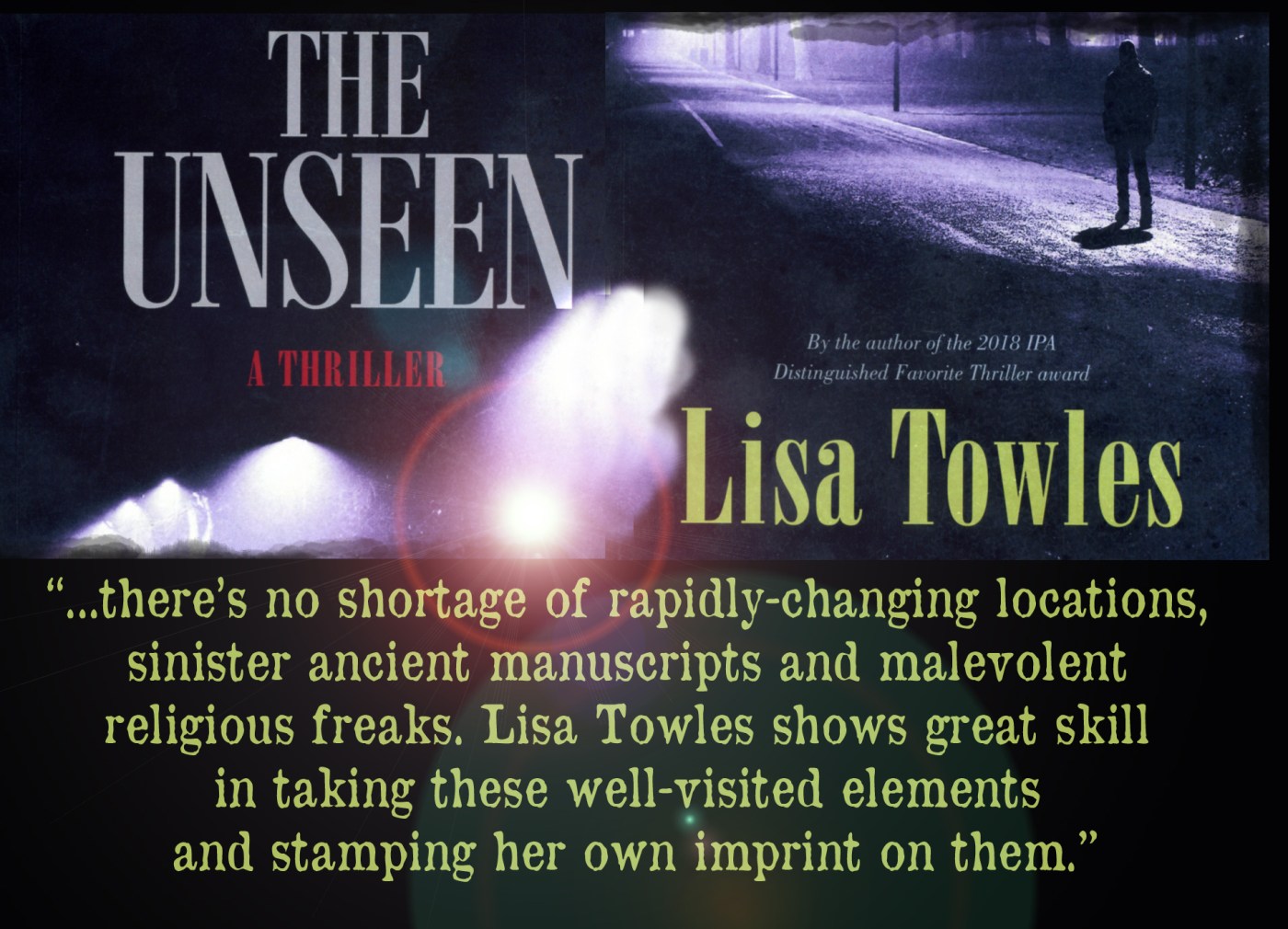

 isa Towles is a California Girl by residence, but she hails from New England. She writes crime novels when she isn’t putting her IT Management MBA to good use in The Sunshine State’s tech industry. Long time followers of Fully Booked will recall my enthusiastic review of her earlier book Choke (2017) and will remember that I began that review with the words:
 She is back with a vengeance – and that same imaginative flair – with her new mystery thriller The Unseen and the action is just as breathless. We have a story that spans five decades and whirls us between Dublin, the Egyptian desert, Boston Massachusetts, London and Rome. With a cast of larger-than-life characters including archaeologists, journalists, hit men – and a direct descendant of an Eastern Orthodox Pope – the story is never short of surprises and dramatic twists.
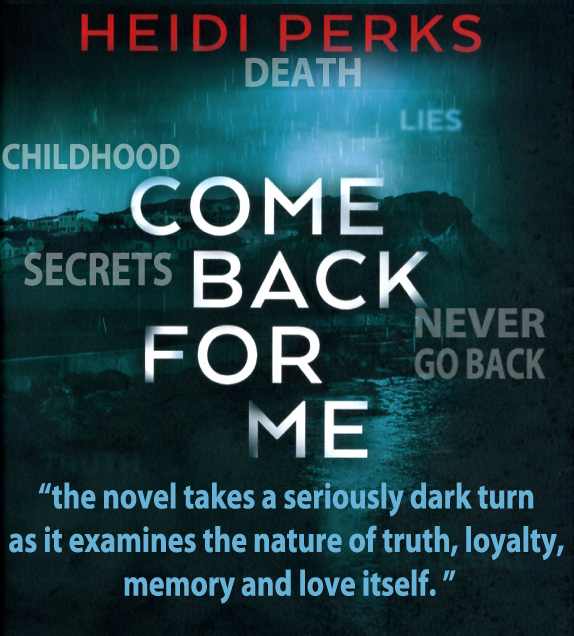
 On a tiny island off the Dorset coast of southern England, a little girl lives a dream childhood. Loving parents, the beauty of the sea and the sky, and the cloudless blue optimism of the young. But then, one terrible night, Stella Harvey’s idyll is shattered. On a September evening, with a violent storm lashing the tiny harbour of Evergreen Island, David Harvey ushers his family on board the ferry he runs for a living, and takes them away to the mainland. For ever.
 ears have flown by. Stella is now a consulting psychotherapist. Sister Bonnie is married with children. Their mother, Maria, is long dead, killed in a road accident. Father David, having left Maria for another woman, is now in the throes of dementia.
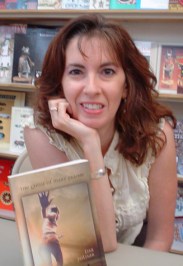
 When Stella’s long-since-estranged brother, Danny, is drawn into what has become a murder investigation, the novel takes a seriously dark turn as it examines the nature of truth, loyalty, memory and love itself. Heidi Perks (right) has written a novel which will entrance readers who like a good psychological thriller, and she leaves us with a sense of sadness, certainly, but also an affirmation that, in the words of St Paul:
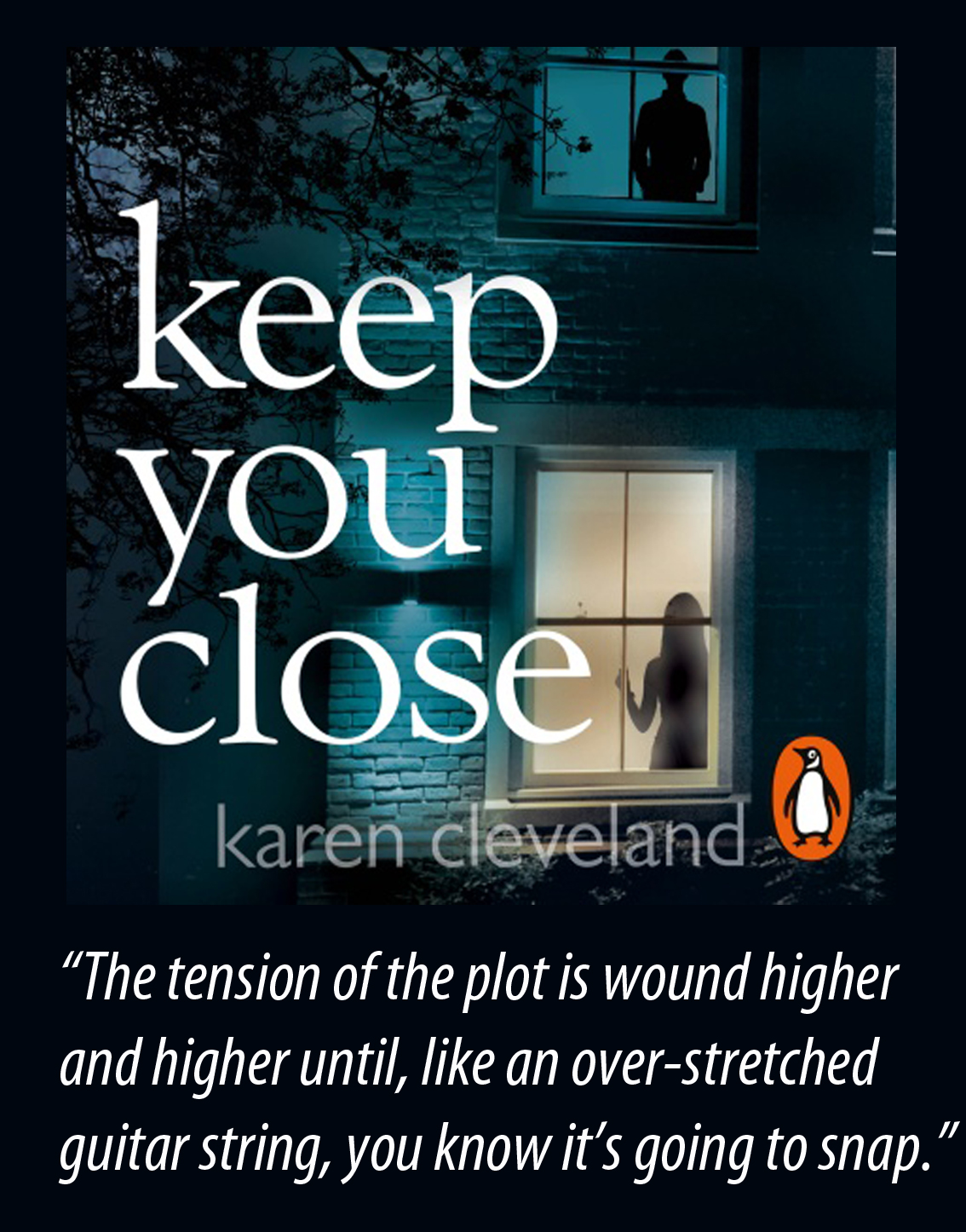

 For Agent Maddox, however, The FBI Experience is something other than a theme park visit. Gender equality has come at a price, and she is viewed with a certain degree of suspicion by many of her male colleagues, particularly as she is – and feel free to use the ‘woke’ description of your choice – a single mother, lone parent or head of a one-parent family. The blunt truth is that Steph has brought up Zachary largely on her own from day one. Not only that, but she has steadfastly refused to reveal the identity of his father.

 aren Cleveland, to say the very least, knows of what she writes. She is a former CIA analyst herself, and her experience translates into a swiftly moving and convincing narrative. Steph Maddox is torn between fighting her son’s corner – he is innocent, surely? – and preventing a major terrorist assassination attempt. As in the real world of political and military intelligence gathering, nothing is what it seems, and no-one is above suspicion.

 Together with his grotesque partner and immediate boss, DI Peter Sutcliffe, Waits always gets the shitty end of the stick. ‘Sutty’ Sutcliffe is, you might say, a good old fashioned copper. Waits goes to meet him in a dingy rock-and-roll boozer:
 Joseph Knox writes like an angel. Possibly an Angel of Death, but he grasps the spluttering torch of English Noir once carried by such writers as Derek Raymond, and runs with such vigour that the flame burns brightly once again. He is not without humour, and there are many – if unrepeatable – gags exchanged between the cynical cops and their low-life prey. The politically correct nature of modern policing doesn’t escape his attention, either:
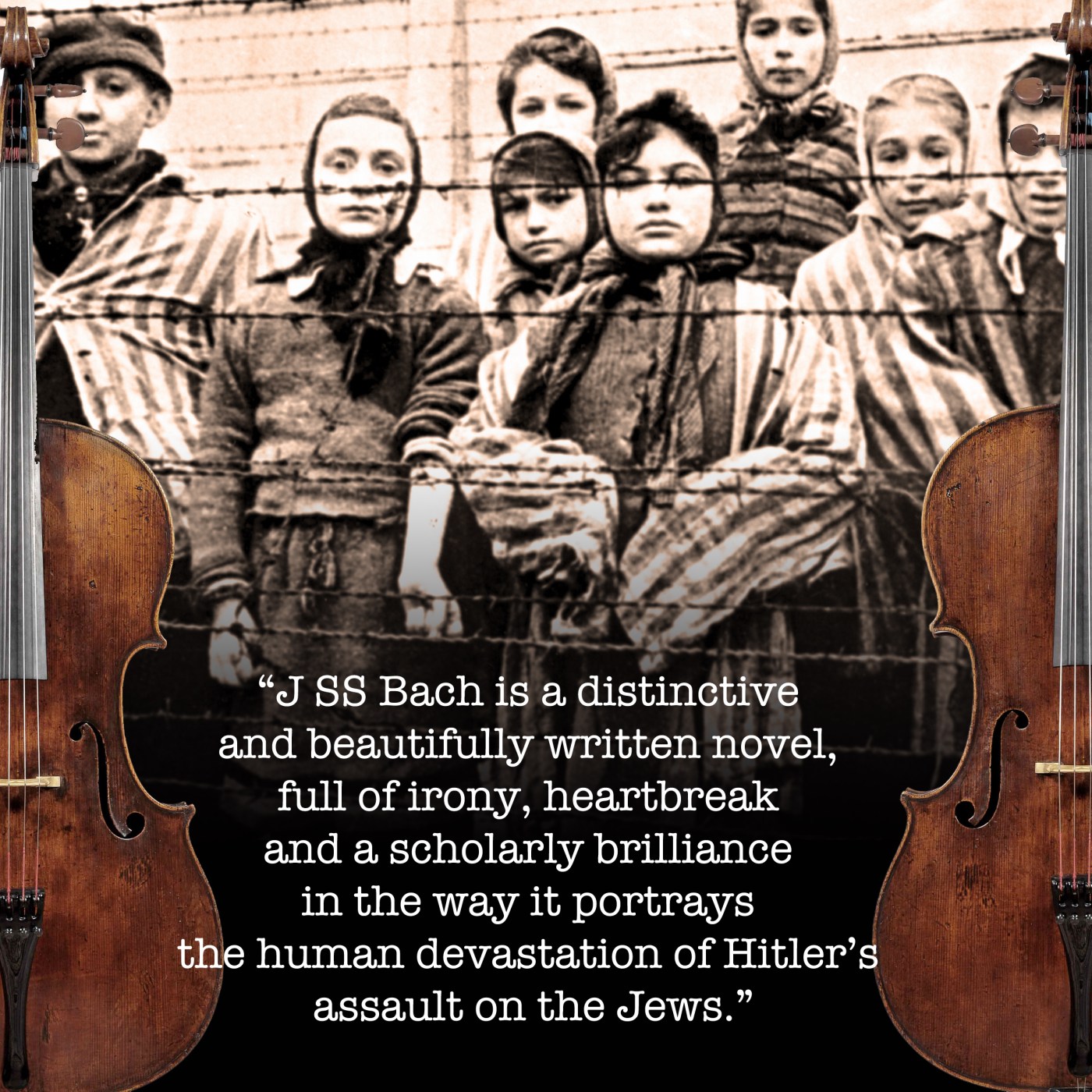

 his is not a conventional crime novel. There are victims, for sure, and perpetrators of terrible acts which still, when described, take the breath away in their depravity and cold, organised manifestation of evil. English academic Martin Goodman (right)
  has written a starkly brilliant account of Nazi oppression in Central Europe in the late 1930s. He achieves his broad sweep by, paradoxically focusing on the fine detail. One family. One teenage boy, Otto Schalmek. One fateful knock on the door while Vienna and most of Austria are waving flags to welcome ‘liberation’ in the shape of the Anschluss.
 The Schalmek family are Jewish. That is all that needs to be said. The family becomes just a few lines on a ledger – immaculately kept – which records the ‘resettlement’ of Jewish families. Otto is taken to Dachau and then to Birkenau. His ability as a cellist precedes him, and he is sent to play in the house of Birchendorf, the camp Commandant. His wife Katja is the artistic one, and her husband merely seeks to keep her entertained by using Schalmek as a kind of performing monkey who plays Bach suites on the cello in between sanding floors and mopping up shit in the latrines.
 oodman’s book spans the years and the continents. Having been shown the shattering of the Schalmek family we go from the Nuremburg trials to late 1940s Canada and then, via Sydney in the 1960s, on to 1990s California, where Katja’s grand-daughter Rosa, an eminent writer and musicologist, seeks an audience with the elusive and very private genius Otto Schalmek. Rosa Cline is determined to write the definitive biography of Otto Schalmek, but their relationship takes an unexpected turn.
 is a distinctive and beautifully written novel, full of irony, heartbreak and a scholarly brilliance in the way it portrays the human devastation of Hitler’s assault on the Jews. Yes, there is the almost obligatory account of the depravity and sheer horror of the camps, but Goodman also brings a sense of great intimacy and a telling focus on the small personal tragedies and discomforts – an interrupted family meal, a tearful and hurried “goodbye”, and a new grandchild never to be cuddled by grandparents. Crime fiction? Probably not, in the scheme of things. Thrilling, often painful, and full of psychological insight? Certainly. J SS Bach is published by


 fullybooked2017