
 s she gazes up at her bedroom ceiling, Lily Bell daydreams of becoming an actress. She is, to be sure, beautiful enough, with her long almost-white blond hair and her flawless complexion, but for the stepdaughter of a struggling artist in the London of 1851, her dreams of becoming Ophelia, Juliet or Desdemona are just foolish fantasies. Until the day her penniless stepfather receives a visit from one of his creditors, a mysterious self-styled Professor – Erasmus Salt. Salt is actually a theatrical showman, with a macabre interest in that overwhelming Victorian obsession, communicating with the dead. He offers Alfred Bell respite from the debt in return for Lily accompanying Salt and his spinster sister Faye to become the star of a new production, in which he will convince audiences that he has raised the dead.
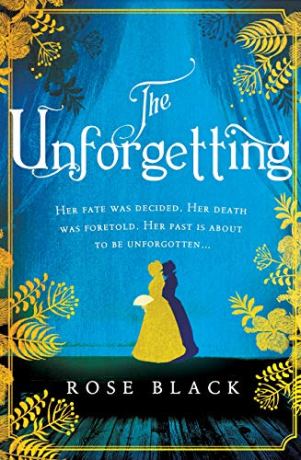 Despite her misgivings, Lily is intrigued by what appears to be a chance to achieve her ambition. After all, Salt’s theatrical illusion may be faintly sinister, but who knows what career doors it might unlock? Bell, despite the tears and misgivings of his wife, cannot get Lily out of the door fast enough, and soon the girl is on her way south, to the seaside town of Ramsgate, where Salt’s production is due to be presented at The New Tivoli theatre.
Salt’s production is, literally, smoke and mirrors. Lily is not to appear on stage at all, but is confined to a cubicle, where her image is projected onto the stage via a huge mirror and the swirling aura produced by the burning of quicklime. On stage, an actor plays the role of a grieving husband trying to summon up the image of his dead wife. When she ‘appears’, he tries to clasp her to his arms but her wraith vanishes, and he ends it all, courtesy of a knife and a bladder of pig’s blood concealed under his shirt.
At first, Lily does not object to her new career, strange though it might be. Things take a turn for the worse, however, when Salt – in order to further foster the illusion of Lily’s miraculous reincarnation – publishes notices announcing her death, and has a headstone bearing her name erected over an (empty) grave in a nearby cemetery.
 y now we, as readers, know much more about Salt than does the hapless Lily. Having experience a terrible trauma in his youth, the balance of his mind has been disturbed; he may also be a murderer, and his obsession with the dead could be leading further than simply the creation of a melodramatic theatrical illusion.
Lily is an admirable character and becomes more resilient as her fortunes take a downturn at the hands of Salt, but the most intriguing part of the story is the way that Rose Black brings Faye Salt more and more centre stage, from being a slightly forbidding Mrs Danvers-like character, to becoming a vivid and compassionate woman. In the end the book was, for me, more about Faye than it was about Lily.
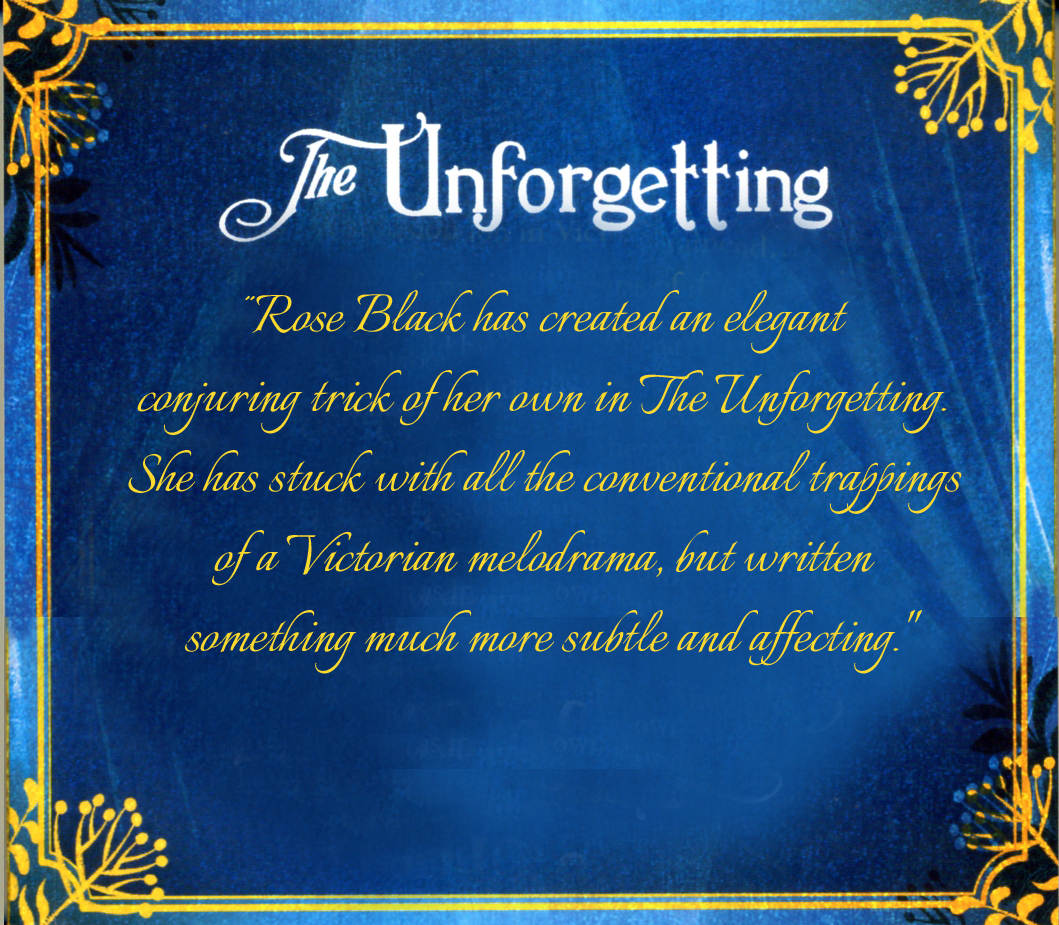
Rose Black has created an elegant conjuring trick of her own in The Unforgetting. She has stuck with all the conventional trappings of a Victorian melodrama, but written something much more subtle and affecting. Yes, we have a sneering villain, his grotesque henchman, a gothic mansion witness to a terrible tragedy, a wronged woman, a dying mother, exotic travelling gypsies, a noble young man who turns the tables on the degenerate despoiler – but there is more, so much more than that. The Unforgetting is published by Orion and is out now.


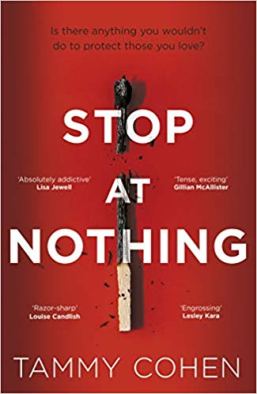 Poor Tessa is a mess, actually. Struggling to cope with the physical and psychological effects of the menopause and her self-esteem battered by redundancy, she is prey to all manner of fancies, midnight imaginings and “the thousand natural shocks that flesh is heir to.” Much of Stop At Nothing is pure anxiety porn, as Tessa makes bad judgment after bad judgment, wrong call after wrong call. Readers will see the picture – at least part of it – way, way before she does, and in places the narrative reminded me of the frequent moments in Hammer horror films where the heroine (usually scantily clad) insists on going down into the cellar clutching only a flickering candle. We want to grab Tessa by the arm and say. “Do. Not. Do. This!”
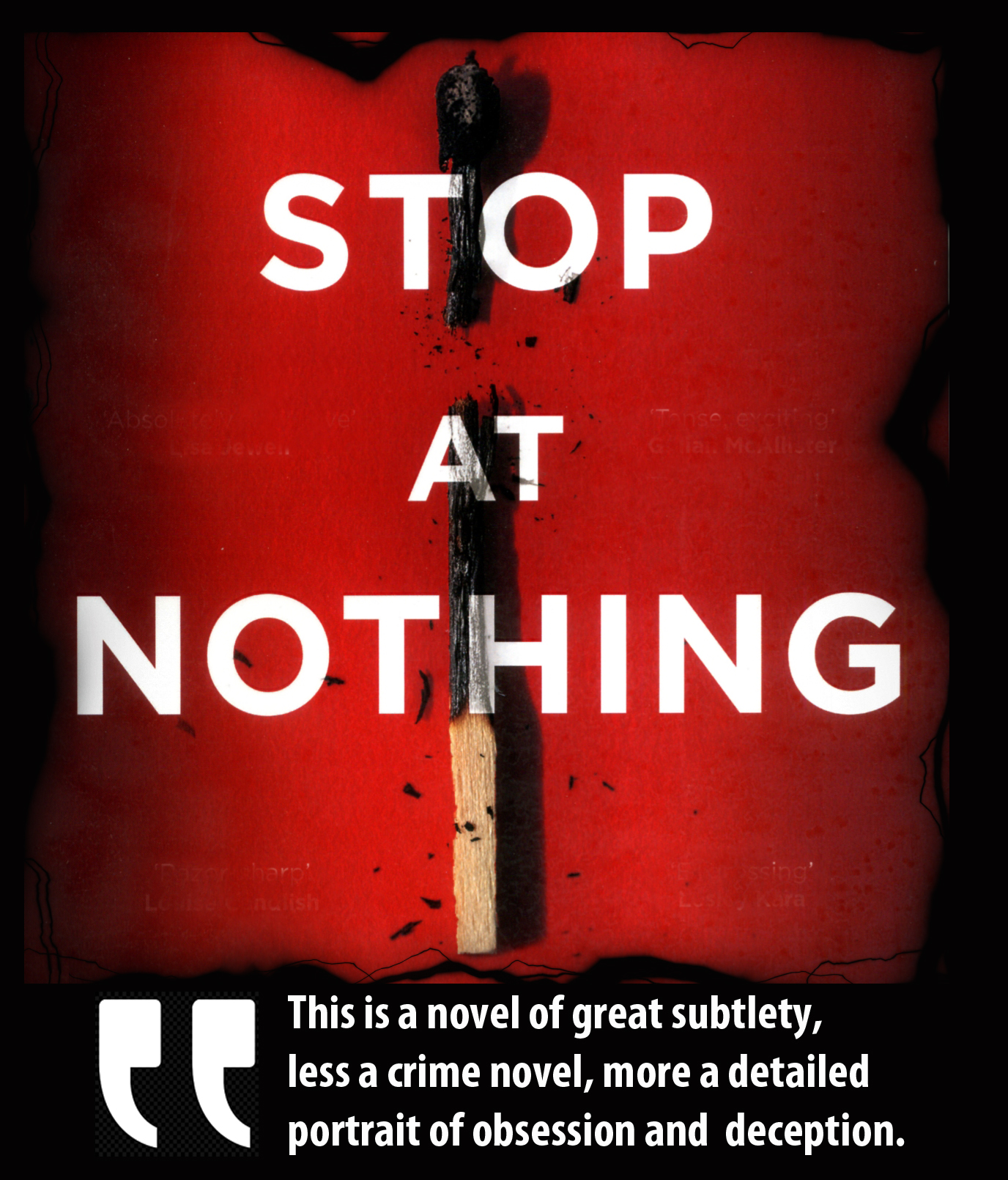
 Personally, I warmed to Tessa – and her unfailing knack of getting things wrong – much more when her relationship with her elderly parents moved to centre stage. The tragedy of dementia is a natural cruelty that makes even the most devout religious person want to howl with rage at the heavens, and Tammy Cohen (right) handles this poignant mix of frustration and fury with a deft touch.
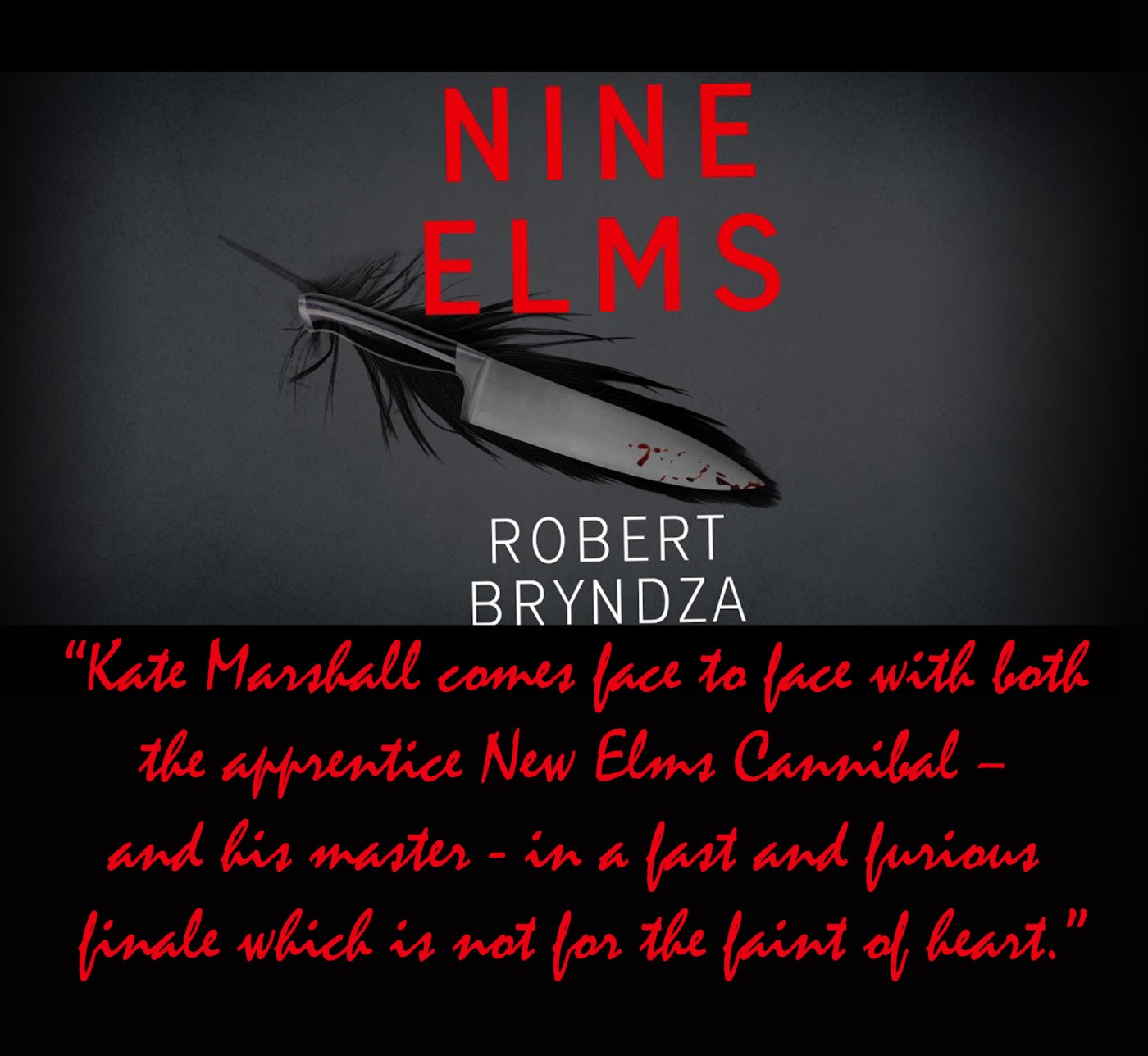

 ate Marshall lectures in criminology at a university in the south west of England, but when she speaks to her students it is not as an academic, making judgments based purely on the research of others; neither does she approach the subject as an outsider, albeit one who is well read and well prepared. Fifteen years earlier, when she was a humble detective constable with London’s Metropolitan Police, she brought to justice one of the country’s most prolific and perverted serial killers. In doing so, she paid a heavy price; only skilled surgeons prevented her death from terrible injuries, but her career – and personal reputation – were both beyond saving.
 Fifteen years on, the former police officer dubbed The Nine Elms Cannibal is serving multiple life sentences in a secure mental institution, and Kate Marshall, if not exactly dining out on her experiences, uses her involvement in the case as part of the course she delivers. She lives alone and while not exactly lonely, she is a changed woman from her days as part of London’s police force. She battles alcoholism, but with the support of Alcoholics Anonymous and, in particular, a local AA member called Myra, Kate sips her iced tea and pretends it contains a hefty shot of Jack Daniels.
 ith her research assistant Tristan Harper, Kate tries to reassemble the pieces of an increasingly complex puzzle, but it is not until events take a spectacular turn that she comes face to face with both the apprentice New Elms Cannibal – and his master – in a fast and furious finale which is not for the faint of heart.
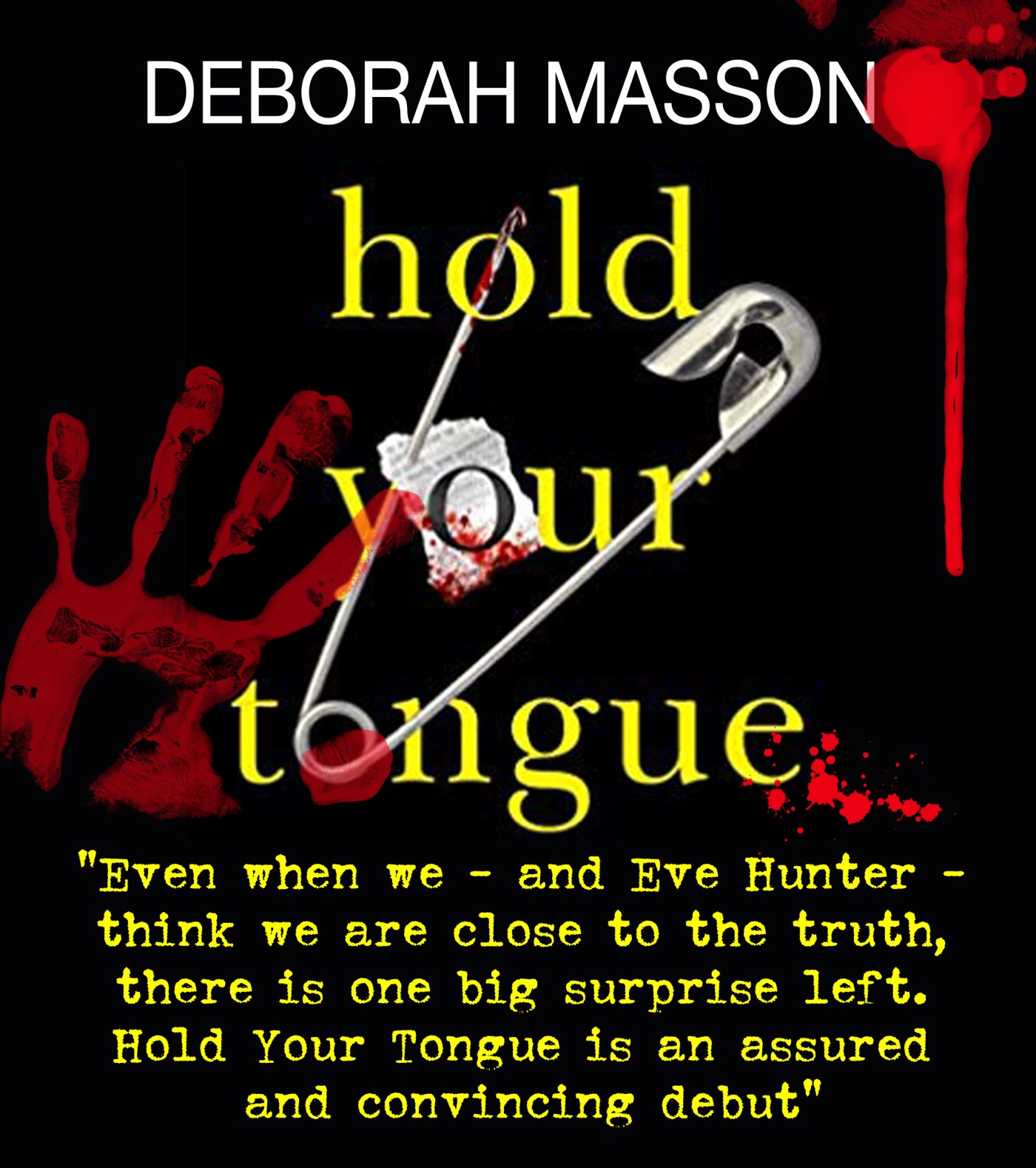

 Deborah Masson’s police procedural Hold Your Tongue is as gritty as the granite in the Aberdeen where it is set. Fictional Detective Inspectors tend to be brilliant, yet with fatal flaws; perceptive, but incapable of managing calm personal lives; honest and principled, but concealing their own dark secrets. Masson’s Eve Hunter ticks all the boxes, and adds a few of her own. She is returning to work after a catastrophic encounter with a notorious criminal family. After the son of the crime gang’s Capo sustains life changing injuries in a car chase, Johnny MacNeill has exacted brutal revenge resulting in Hunter’s partner DS Nicola Sanders being paralysed from the neck down, while Hunter herself has a permanently damaged leg and intense psychological scarring.
 As the killer works towards the Sabbath Day child, Hunter and her colleagues dash this way and that, always vital hours behind the murderer. Masson (right) contributes to the mayhem with some elegantly clever misdirection. Early in the piece she teases us with the suggestion that the series of murders has something to do with brothers and sisters, but even when we – and Eve Hunter – think we are close to the truth, there is one big surprise left. Hold Your Tongue is an assured and convincing debut, and I hope there will be more cases to come for Eve Hunter. The book is out now, and
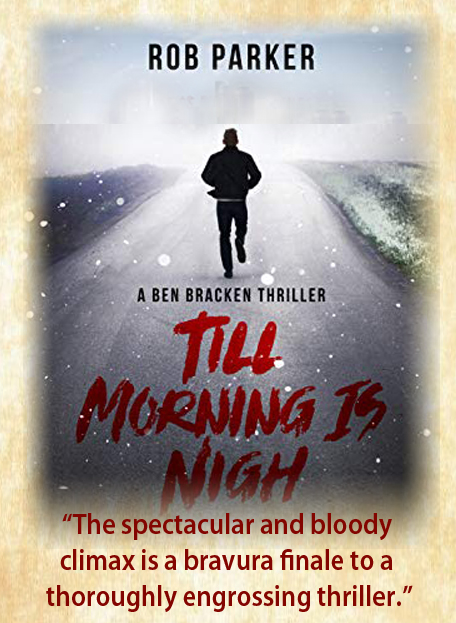

 here is an debate in the Twittersphere at this time of year about whether Die Hard is, or isn’t a Christmas movie. Maybe there is also a discussion to be had as to whether this latest adventure for Rob Parker’s invincible iron man, Ben Bracken, is a Christmas thriller. Those with young children, or fond memories of their own childhood, will surely recognise the source of the book’s title. Preface it with the words “And stay by my cradle ..” and you should have the answer.
 We are in a wintry Manchester. The time is the present. As usual, the giant plastic Santa is hoist by his breeches on the Victorian gothic façade of the town hall, dispensing silent jollity to the shoppers and merry-makers scurrying beneath his furry boots. In Albert Square, homeless men try to find solace in their threadbare coats, wondering where the next coffee, the next Greggs pasty – or the next fix of chemical oblivion – is going to come from.
 Parker is a fine young writer. He can muse ruefully on the inadequate protection the human body has against steel wielded with extreme malice:



 Jameson’s sister Claire has, for some time, fulfilled a mixed role of aunt, mother and babysitter to a teenage girl called Jane. Jane’s mother Lana, is a single mum, loving but chaotic, perhaps suffering from PTSD after several tours in conflict zones when she was a soldier in the army. Now she has disappeared, leaving Jane with no money for food or rent. Knowing of her mum’s fragile mental state. Jane was not initially alarmed, but when she began to investigate, after receiving no help from the police, she made several disturbing discoveries.
Lana disappeared on her birthday. Immediately before her disappearance she had received a mysterious card inviting her to play a game. The beautifully presented card bore the words, elegantly embossed in silver on cream:
Jameson’s sister Claire has, for some time, fulfilled a mixed role of aunt, mother and babysitter to a teenage girl called Jane. Jane’s mother Lana, is a single mum, loving but chaotic, perhaps suffering from PTSD after several tours in conflict zones when she was a soldier in the army. Now she has disappeared, leaving Jane with no money for food or rent. Knowing of her mum’s fragile mental state. Jane was not initially alarmed, but when she began to investigate, after receiving no help from the police, she made several disturbing discoveries.
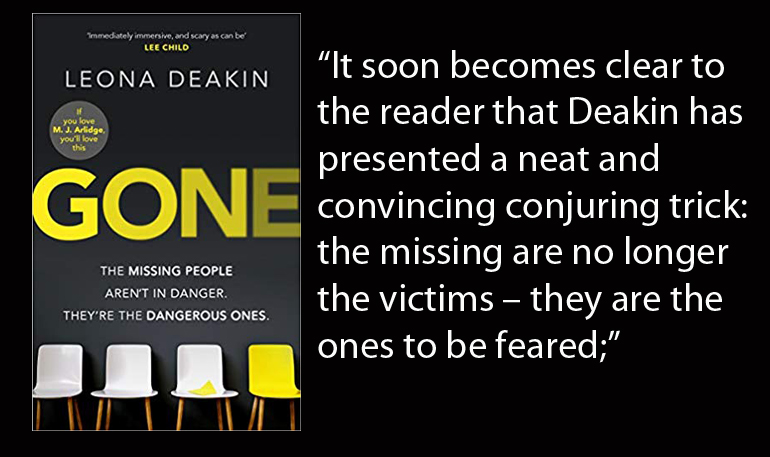
Lana disappeared on her birthday. Immediately before her disappearance she had received a mysterious card inviting her to play a game. The beautifully presented card bore the words, elegantly embossed in silver on cream: Leona Deakin’s own experience and training in psychology gives this novel a framework of authenticity to which the more fanciful parts of the narrative can cling. It soon becomes clear to the reader that Deakin has presented a neat and convincing conjuring trick: the missing are no longer the victims – they are the ones to be feared; those left behind have become the prey.
The relationship between Bloom and Jameson is intriguing. It reminded me of the unresolved tension and undeclared love between Val McDermid’s doomed lovers Tony Hill and Carol Jordan. We are left to decide for ourselves what Augusta Bloom looks like; Deakin (right) suggests that she might be rather dowdy, an academic in flat shoes. She is certainly razor sharp mentally, however, and she plays a devastating human chess game with the organisation behind the birthday card disappearances.
Leona Deakin’s own experience and training in psychology gives this novel a framework of authenticity to which the more fanciful parts of the narrative can cling. It soon becomes clear to the reader that Deakin has presented a neat and convincing conjuring trick: the missing are no longer the victims – they are the ones to be feared; those left behind have become the prey.
The relationship between Bloom and Jameson is intriguing. It reminded me of the unresolved tension and undeclared love between Val McDermid’s doomed lovers Tony Hill and Carol Jordan. We are left to decide for ourselves what Augusta Bloom looks like; Deakin (right) suggests that she might be rather dowdy, an academic in flat shoes. She is certainly razor sharp mentally, however, and she plays a devastating human chess game with the organisation behind the birthday card disappearances.
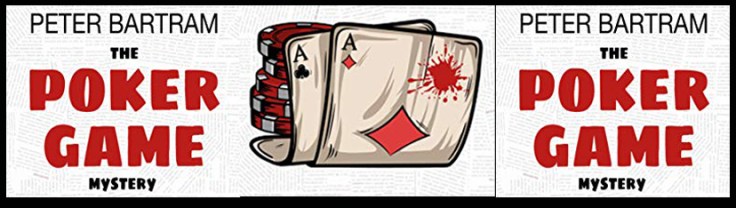
 istorical crime fiction is all the more accessible when the history is recent enough for readers such as I to recognise it as authentic, and give a nostalgic sigh when some piece of popular consumer ephemera – a brand of chocolate, a radio programme or a make of car – crops up in the narrative. Colin Crampton may possibly be the autobiographical alter ego of author Peter Bartram, himself a distinguished and experienced journalist who remembers the deafening sound of the printing presses, the smell of ink, the jangle of telephones in the press room, the scratch of a pen on the paper of a notebook, and the overiding miasma of Woodbines and Senior Service drifting on the air. The Poker Game Mystery is the latest episode in the eventful career of Colin Crampton, crime reporter for the Brighton Evening Chronicle.
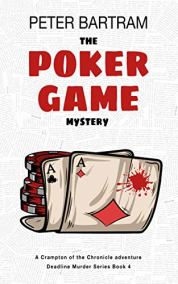 One of the many joys of the Colin Crampton novels is that Peter Bartram usually manages to set the tales against actual circumstances appropriate to the period and, sometimes, we have a very thinly disguised version of a real person. In this case, we meet an outlandish minor aristocrat, heir to daddy’s millions but, more luridly, a fancier of young women. He collects them, rather like a lepidopterist collects butterflies, but rather than sticking his prizes into a display case with a pin, he keeps his young lovelies in cottages the length and breadth of the extensive estate, and has managed to organise one for each day of the week. For the life of me, I can’t think of whom Peter might have as his template for this roué, but I expect it will come to me in the middle of the night, rather like Ms Monday and the others do to their lord and master.
 hen the body of a widely disliked local bouncer is found – his face a rictus of horror and agony – with a suspiciously large sum of used notes beside him, Crampton is sucked into a case which involves a shadowy WW2 home defence unit known as The Scallywags. Crampton discovers that they were a strange combination of Dad’s Army and the SAS – trained to wreak havoc on the Germans should they ever succeed in invading Britain. To enliven matters further, the aforementioned noble Lothario becomes the new owner of The Chronicle on the death of his father, but then promptly signs away the paper as a stake in a losing card game, this threatening the existence of The Chronicle – and those who sail in her.
 ided by his feisty (and rather beautiful) Australian girlfriend, Crampton is up to his neck in a sea of trouble involving, among other things, dead bodies, wartime gold bullion, a predatory newspaper baron, and the arcane skill of doctoring a set of playing cards. It’s wonderful stuff – not just a crime caper, but another fine novel from a writer who wears his learning lightly.
 Colin Crampton’s Brighton is slightly down at heel but all the more charming for not yet having succumbed to the deadening hand which has now made it the world capital of all things green, ‘woke’, diverse and inclusive. There are still saucy postcards to be bought at the sea-front newsagent, and incorrect jokes to be delivered by Brylcreemed comedians in faded variety halls. Peter Bartram (right) has set the bar very high with his previous Crampton novels but he just gets better and better, and The Poker Game Mystery clears that bar with loads to spare. We even have a finale worthy of Indiana Jones, albeit in a murky tunnel somewhere in Sussex rather than in some more exotic location. A word of warning. If the words Atrax Robustus make you feel queasy, then you might need someone to mop your fearful brow while you read the final pages. Clue – not all of Australia’s exports are as cuddly as Crampton’s gorgeous girlfriend, Shirley Goldsmith.


 Guy Portman (left) introduced us to Dyson Devereux in Necropolis (2014). I gave it 5* when writing for another review site, and I’ll include a link to that at the end of this post. Dyson was Head of Burials and Cemeteries in a fictional Essex town, and a rather individual young man. He is narcissistic, punctilious, cultured and, outwardly polite and thoughtful, but with an anarchic mind and a terrible propensity for extreme violence. The book both horrified and fascinated me but made me laugh out loud. Dyson Devereux was a Home Counties version of Patrick Bateman and his antics allowed Portman to poke savage fun at all kinds of modern social idiocies.
 When he finally has his day in court, Dyson scorns the efforts of his lack-lustre lawyer and relies on his own charm and nobility of bearing to convince the court that he is an innocent man. He escapes the clinging arms of Alegra and returns to England without delay, anxious to be reunited with something from which separation has become a cruel burden. A loving family? A childhood sweetheart? The clear skies and careless rapture of an English summer day? No. A tin box containing several memento mori of his previous victims. Little oddments that he can sniff, fondle and treasure. Little bits of people who have had the temerity to upset him, and have paid the price.


 eaders of a Simon Kernick thriller should know by now what they are getting. There will be violence a-plenty, betrayal, corrupt cops, unscrupulous politicians, improbable escapes from certain death and a narrative style which grips the reader from start to finish. Like many popular writers he has separate series on the go, but Kernick isn’t averse to cross-referencing characters. By my reckoning, Die Alone is the eleventh book to feature the abrasive and resourceful Tina Boyd – once a copper but, in this novel a private investigator. The main man I Die Alone is another copper – Ray Mason. He first featured in The Witness (2016). Then came The Bone Field (2017) and The Hanged Man (2018) but with Tina Boyd – and her former lover Mike Bolt – in attendance.
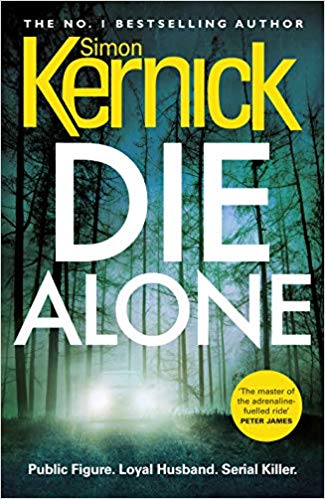 We start with Mason in the Vulnerable Prisoner wing at a high security British prison. He is serving life sentences for the killing of two deeply unpleasant characters in the course of his duties. The deaths were judged not to be judicial, and so Mason inhabits a world shared with paedophiles, rapists, child pornographers – and disgraced coppers. When he is injured on the periphery of a prison riot, he is taken off to hospital in a supposedly secure van, which is then hijacked – the target being Mason himself. He is taken to what seems to be some kind of safe house run on government lines and, after being well fed and housed for a couple of days, he is given an ultimatum by the masked official who is in charge of things – carry out a hit on a Very Important target. He is left in no doubt as to what will happen if he refuses, but he takes little persuading, as the intended victim is someone whose life Mason would have little compunction in ending.
 y now Kernick has introduced us to the repulsive Alastair Sheridan, a millionaire former hedge fund manager who has found his niche in politics and is regarded as everyone’s favourite to reach the top because of his affable style, movie star good looks and undoubted charisma. What the adoring public, and a bevy of fellow MPs who are about to support his leadership don’t now is that Sheridan is a sadistic sexual killer with links to organised crime and some of the most evil people in Europe.
 ecuring the help of former colleague Tina Boyd gets Mason out of one scrape, but as he avoids the clutches of one set of villains, the next shootout or escape in the boot of someone’s car is just around the corner, with the action ranging from oily Tottenham car workshops, to rural Essex and then via Brittany to the bloodstained hills surrounding Sarajevo.


 fullybooked2017