

 ames Oswald’s Edinburgh copper Tony McLean is something of a fixture in the crime fiction firmament these days, and Bury Them Deep is the tenth in the series. For those readers picking up one of his cases for the first time, a little of his back story might be helpful. He is based in Edinburgh and now, of course, works for Police Scotland. He was (unhappily) educated in English independent schools thanks to his wealthy family, some of whose riches he has inherited, thus making him ‘a man of means’. He lives in an old and impossibly roomy house, left to him by his grandmother. He has a fragile relationship with partner Emma, and it is fair to say that their life together has been punctuated by both drama and tragedy. McLean drives a very plush Alfa Romeo, enjoys an occasional glass of cask-strength single malt whisky and, aside from his instinct for police work, has been known to be susceptible to stimuli and influences that are not, as Hamlet remarked, “dreamt of in your philosophy.” After many successful cases, he is now Detective Chief Inspector McLean, but if his superiors imagine he will settle for a life behind a desk, they are very much mistaken.
 Anya Renfrew is a rather dowdy and dull police civilian worker who seems devoted to her job, which is mastering the many databases which keep investigations fed with information. She has never had a day off in her life, and so when she goes missing it is considered rather unusual. Her mother is a former – and legendary – police superintendent, but Grace Ramsay is now old and infirm, living in a care home. Police are never more active than when investigating actual or possible harm to one of their own, and when McLean searches Anya’s house, what he finds hidden in her wardrobe indicates that Ms Renfrew’s private life was more exotic – and dangerous – than colleagues might have imagined.
A chance bit of tomfoolery by two schoolboys, bored out of their minds during the long hot summer holiday, leads not only to the discovery of Anya Renfrew’s car, but a moorland wildfire of tinder-dry heather. When the fire service manage to douse the flames, they make a disturbing discovery. Bones. Human bones. Bones that the post-mortem investigation reveals have been deliberately stripped of their flesh.
 cLean’s professional life already has one big complication. A five-times serial killer called Norman Bale is in a secure mental hospital, thanks to McLean’s diligence and bravery. Now, he asks to speak to McLean, and what he has to say is both shocking and improbable. Are his words just the ramblings of a psychological disturbed killer, or does his suggestion – that Anya Renfrew’s disappearance and the moorland bone-pit are linked to a sinister piece of folklore – have any substance?

 t takes a bloody good writer to mix crime investigation with touches of the supernatural. John Connolly, with his Charlie Parker books is one such, but James Oswald (right) makes it work equally as well. The finale of this novel is as deeply frightening as anything I have read for a long time. Despite the drama, Oswald can use a lighter touch on occasions. There is dark humour in the way McLean sometimes needs to ingratiate himself with Edinburgh’s smart set. At an art gallery opening night he listens politely as two guests discuss one of the objets d’art:
“Fascinating how she blends the surreal and the horrific in a melange of sensual brushwork, don’t you think?”
“It all seems a bit brutal to me. The darkness crushes your soul, sucks it in, and you become one with the oils.”
Definitely Tranent, by way of the Glasgow School of Art department of pseudo-intellectualism. He’s been just as much of a twat at that age of course; in his case a student trying to impress with his rather flawed knowledge of basic psychology…”
Bury Them Deep is published by Wildfire (an imprint of Headline Publishing) and will be available on 20th February.
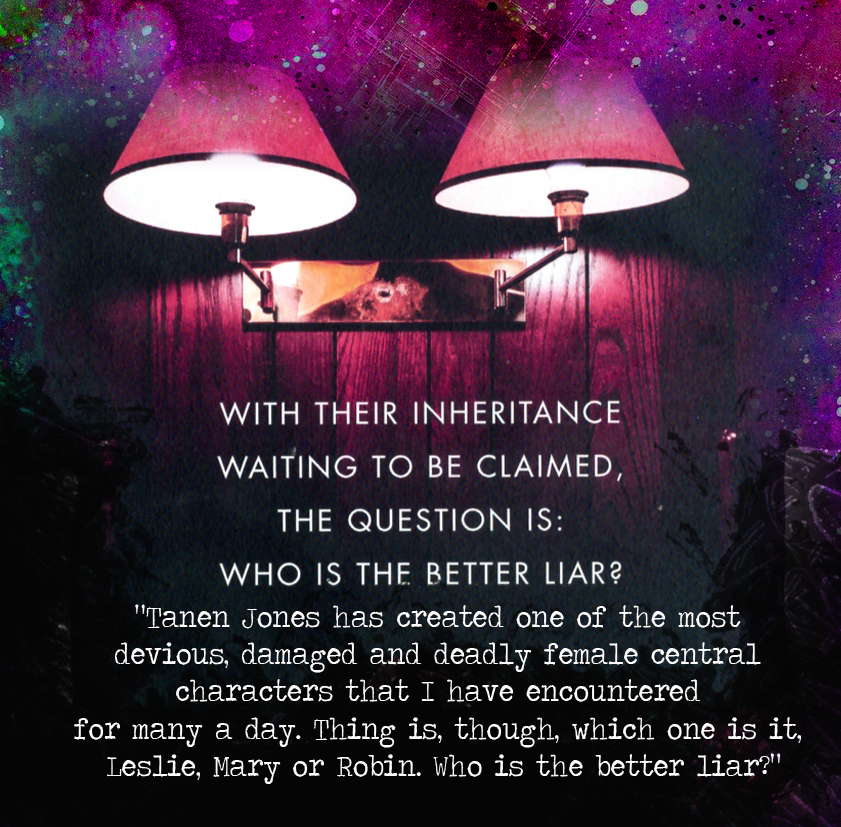

 When their father dies after a long illness, Leslie sets out to find Robin and eventually tracks her down to a seedy apartment block in Las Vegas.One slight problem. Robin is face down on the bed in the cockroach infested room, dead of a drug overdose.
 Alert readers may well figure out what is actually going on well before we get the big reveal, but even if you do, it won’t spoil the enjoyment. Tanen Jones (right) takes a wry look at modern obsessions, including a single mom who earns a living for herself and two little boys by posting stuff on Instagram, the debilitating half life lived by relative strangers messaging each other on social media, and the grim reality of women hooked into relationships with parasitic and abusive men.
 eing a middle class British father and grandfather, the concept of abandoning a newly born baby is totally beyond my experience of life and (the fault is perhaps mine) my comprehension. The fact is, however, that since Adam had his way with Eve, biology has trumped human intention, and babies have come into the world unloved and unwanted. Thankfully, there have been charitable institutions over the centuries which have done their best to provide some kind of home for foundlings. Abandoning babies is not something consigned to history: modern Germany has its Babyklappe, and Russia its Колыбель надежды – literally hatches – rather like an old fashioned bank deposit box – built into buildings where babies can be left. Back in time, Paris had its Maison de la Couche pour les Enfants Trouvés while in Florence the Ospedale degli Innocenti is one of the gems of early Renaissance architecture. London had its Foundling Hospital, and it is the centre of The Foundling, the new novel by Stacey Halls.
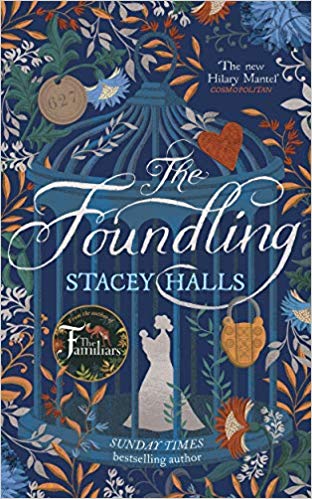 Bess Bright is a Shrimp Girl. Her father gets up at the crack of dawn to buy Essex shrimps from Billingsgate Market, and Bess puts the seafood in the brim of a broad hat and, clutching a tiny tankard to measure them out, she walks the streets of
  elling shrimps from the brim of your hat is not an occupation destined to provide sufficient funds to keep a growing child, and so Bess presents herself and baby Clara at
 ow – and where – Bess finds her missing daughter is for you to discover, but I promise that The Foundling is ingenious, delightful, and the author’s skills as a storyteller are magnetic. The attention to detail and the period authenticity are things to be wondered at, but what elevates this novel above the humdrum is how Stacey Halls conjures up our sheer emotional investment in the characters, each one beautifully observed. Art lovers will recognise the painter – and the title – of the picture below and, were he alive to read it, the great observer of London life would thoroughly approve of The Foundling, which is published by Manilla Press and is out on

 ack in the day, before authors and their publishers trusted me with reviewing novels, I did what the vast majority of the reading public did – I either bought books when I could afford them or I went to the local library. I had a list of authors whose latest works I would grab eagerly, or take my place in the queue of library members who had reserved copies. In no particular order, anything by John Connolly, Jim Kelly, Phil Rickman, Frank Tallis, Philip Kerr, Mark Billingham, Christopher Fowler and Nick Oldham would be like gold dust.
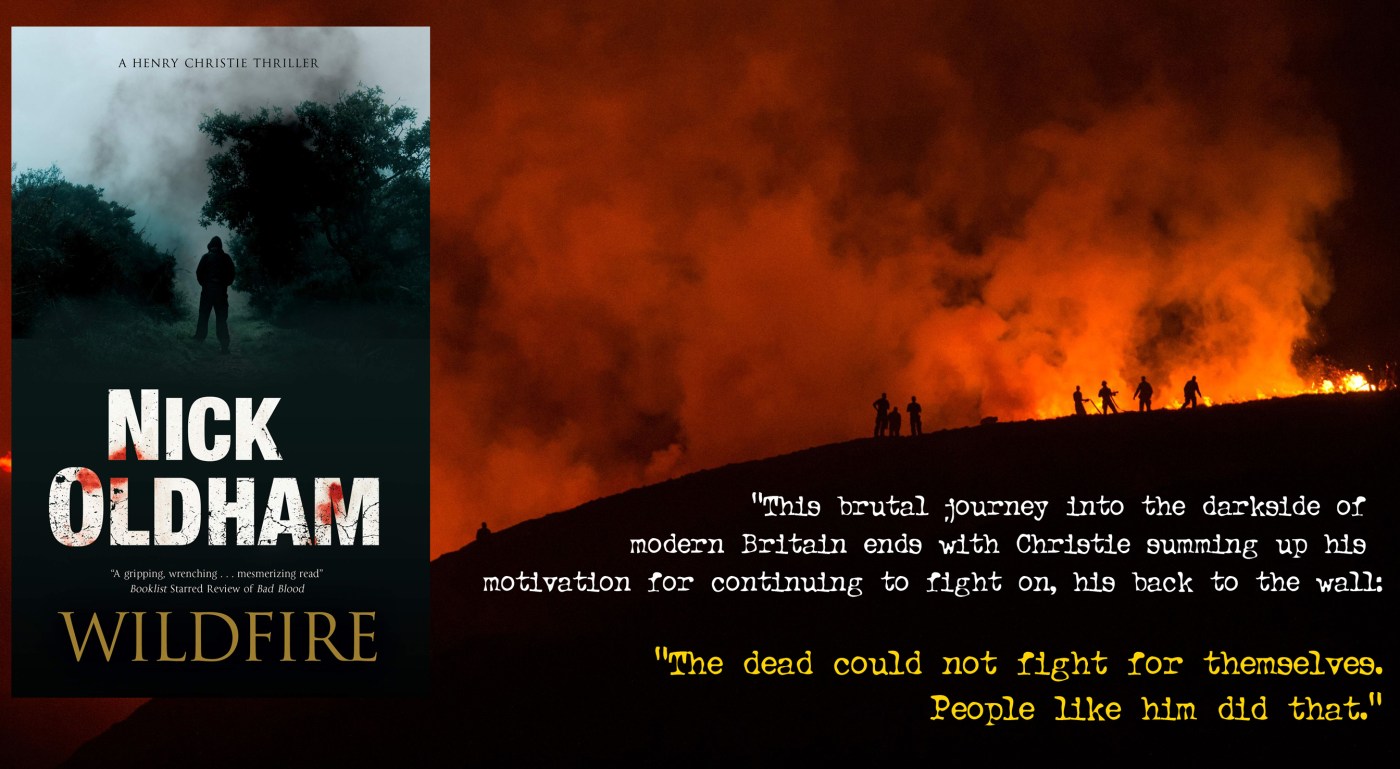
 Oldham’s Henry Christie was a particular favourite, as his adventures mixed excellent police procedure – thanks to Oldham’s career as a copper – a vulnerable and likeable hero, and an unflinching look at the mean and vicious streets of the Blackpool area in England’s north-west. Wildfire is the latest outing for Henry Christie, who has retired from the police and now runs a pleasant village pub set in the Lancashire hills.
 ventually, the wildfires of both kinds are extinguished, at least temporarily, but not before Henry Christie is forced, yet again, to take a long hard look at himself in the mirror, and question if it was all worth the effort.
 his brutal journey into the darkside of modern Britain ends with Christie summing up his motivation for continuing to fight on, his back to the wall:

 The idea of the female spy has attracted writers and dramatists over the years with its unbeatable combination of danger and sexual allure. Pete Langman comes to the party with his enjoyable new novel, Killing Beauties set in the England of 1655. Remember those old historical movies that began with a dramatic piece of text scrolling over the opening titles, giving us a lurid and enticing potted background to whatever we were about to watch? The blurb for Killing Beauties might say something like,
  he beautiful woman is Susan Hyde, whose brother Sir Edward Hyde, Earl of Clarendon is principle advisor to the King in exile. With the aid of another young woman, Diane Jennings, Susan – and other members of the secret society known as Les Filles d’Ophelie – work with The Sealed Knot, coordinating underground Royalist activity in England and preparing for a general uprising against the Protectorate. Readers may be aware that the modern version of The Sealed Knot is a popular organisation of English Civil War re-enactors, but their historical namesakes were in deadly earnest, and organised two major rebellions before Charles II was finally crowned in 1661.
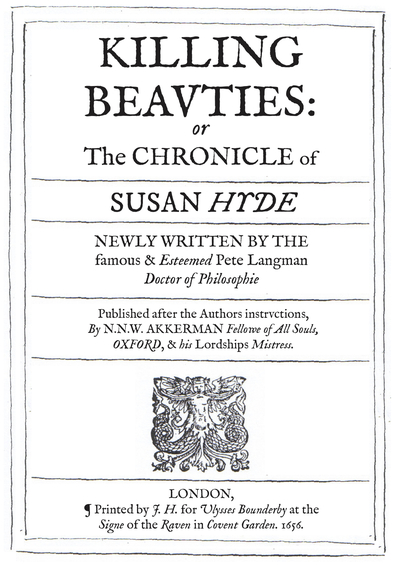 In order to succeed in her mission, Susan must use the deadliest weapon at her disposal – her sexuality. The beneficiary of her attention is none other than John Thurloe himself. Thurloe is a fascinating historical figure, and has featured in several other novels, most notably in the Thomas Challoner series by Susanna Gregory, and in the SG MacLean’s Seeker stories. I reviewed MacLean’s
  ne of the problems facing writers of historical fiction is how to handle dialogue. We know how they wrote to each other in letters, but what were conversations like? Despite one or two of his characters occasionally lapsing into more recent vernacular, Langman negotiates this particular minefield successfully. Killing Beauties is an engaging and well researched piece of costume drama acted out on a turbulent and dangerous stage. It is published by Unbound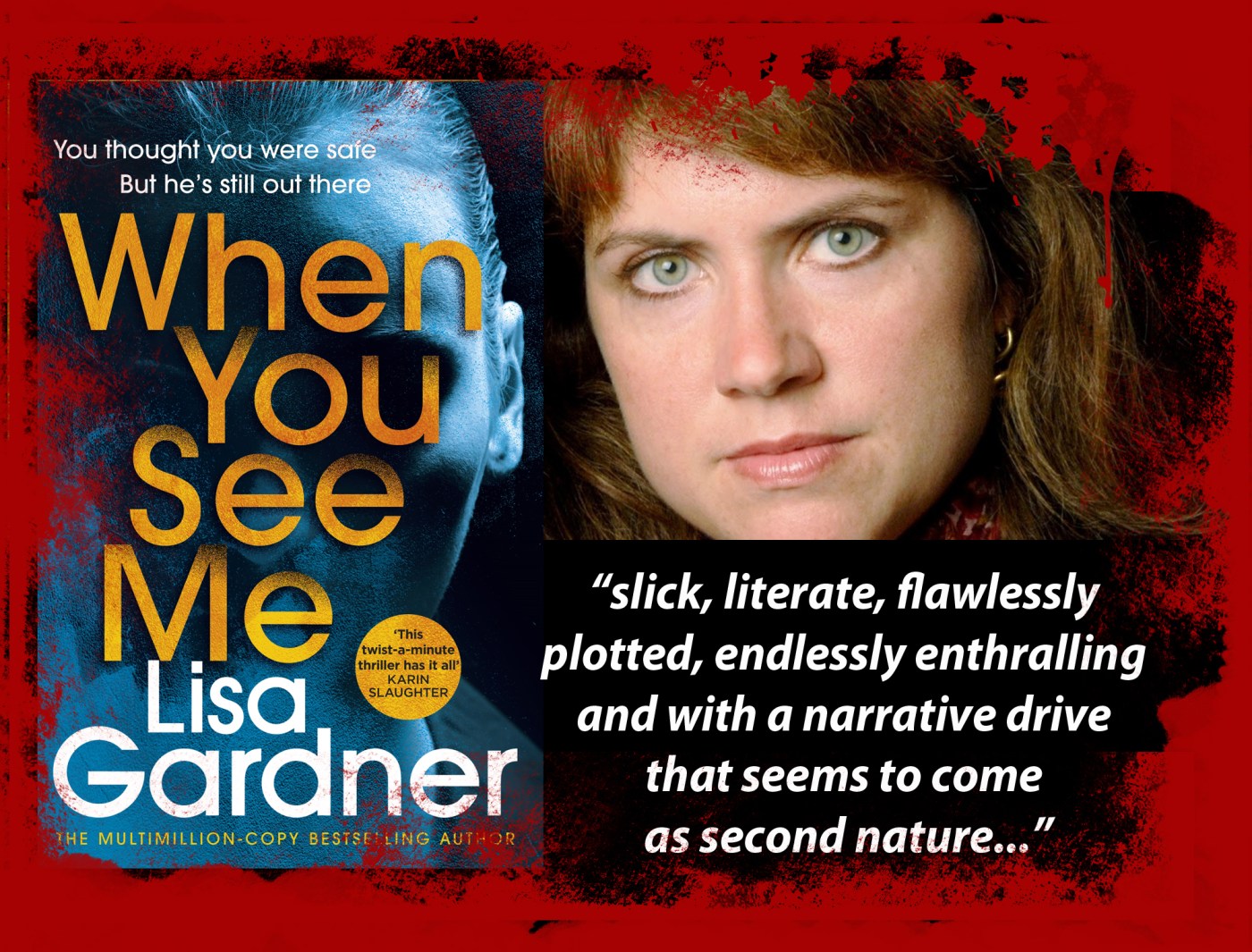

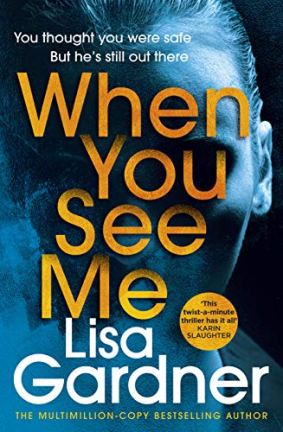 I first encountered Lisa Gardner’s entertaining ensemble of law enforcers just over a year ago in
  he storytelling technique which uses multiple narrators is much used and, it must be said, often abused, but Kisa Gardner nails it here, particularly through the eyes of Bonita, a Mexican girl maimed in childhood, unable to speak and used as a maid-of-all-work in an ostensibly respectable Victorian mansion, now an upmarket Bed & Breakfast facility in Niche, Georgia – the nearest settlement to where the human remains have been uncovered. Bonita is not her real name. Only her late mother knows what it is, but when D.D. Warren meets her during the investigation, she says:
 Almost inevitably, the dreadful goings on in the mountains surrounding Niche must involve some of the locals, but Lisa Gardner (right) lays out several enticing red herrings before revealing precisely which of the eminent townsfolk are involved in a dreadful conspiracy, a toxic cocktail of abduction, sexual slavery and-ultimately-murder. Flora, D.D. and the other members of the team eventually corner the evil genius at the centre of Niche’s darkest secret, but not before we are treated to a spectacularly violent finale involving secret tunnels, torture and, intriguingly, death-by-dishwasher.
 merican crime fiction is a huge, diverse and somewhat unwieldy beast, but at its best it is slick, literate, flawlessly plotted, endlessly enthralling and with a narrative drive that seems to come as second nature to such writers as Lisa Gardner. When You See Me will be out in Kindle,

 aomi is a feature writer of some sort, while Charlie is an entrepreneur designer in the tech industry. While a succession of sharp-intake-of-breath builders and carpenters transform the neglected house into a Sunday supplement paradise, Naomi is desperate to conceive a second child. Naturally, both she and Charlie have smartphone apps which track her fertility cycle and give the couple vital windows when hurried coupling should produce little Prue’s sibling. Sadly, none of the digital wizardry seems to work. Charlie is all-too-often not up-to-snuff, and Naomi’s obsessive quest is becoming counter productive.
 While on her daily run there and back to Prue’s nursery school, Naomi meets a stunningly attractive alpha male called Sean, and his bluff insouciance is such a contrast with Charlie’s needy self-absorption that she is smitten. One thing leads to another – the ‘another’ being hurried stand-up sex in the shower cubicle at a local leisure centre – and guess what? Sean’s urgent thirty seconds has done the job, and Naomi is, at last, pregnant, but possibly by the wrong man.
 Any sense of lifestyle mockery, gentle or otherwise, dissipates once we reach the final quarter of the book. Naomi discovers that whoever Sean really is, his plans for her and her family involve much than a few moments of lust. I certainly didn’t see the plot twist coming, and MacDonald (right) springs one surprise after another, right up to the final paragraphs. If you can’t make sense of the brief chapter interludes which consist of MSN messages (remember them?) between some bitchy schoolgirls, don’t fret – you will.
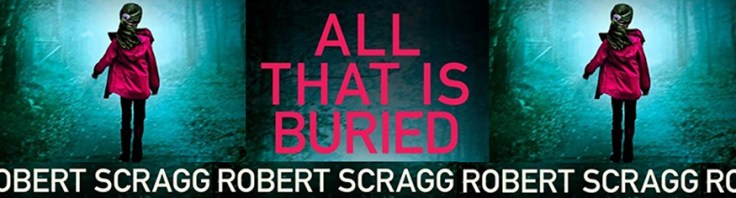
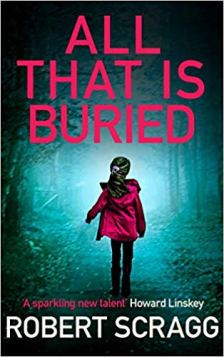 All the fun of the fair? They are strange throwbacks to an earlier, perhaps more innocent time, these funfairs that travel the country setting up in this or that town for a few days of loud music, strings of multicoloured light bulbs swinging in the wind, the shrieks of excited children and the unique smell of candyfloss and toffee apples. All That Is Buried, the latest case for Robert Scragg’s coppers Jake Porter and Nick Styles begins with an abduction in one such fair, pitched on a field in a London suburb. We see some of the story through the eyes of the killer. Our man – if he is indeed the culprit – describes the fair:

 artre insisted that the celebrated line from his 1944 play Huis Clos (No Exit), “L’enfer, c’est les autres.” was forever misinterpreted, but the idea that hell is other people has stuck, despite the protestations of the Great Existentialist. Some, like Jo Spain in her latest novel Six Wicked Reasons, would suggest – to mix and match poets – that Dante’s Nine Circles of Hell could be condensed into an overpowering tenth – Family.
 The Lattimer family, patriarch Frazer, sons James, Adam and Ryan, daughters Ellen, Kate and Clíodhna – Clio – have assembled at the family home in south east Ireland overlooking the waters of Spanish Cove in the Irish Sea, so called because of its earliest recorded casualties – sailors from a Spanish galleon blown adrift from the Armada and then shattered on the hidden rocks.
 eaders new to Jo Spain’s novels will welcome the apparently straightforward back-stories of Frazer Lattimer’s children, and their motives for wanting him dead. Those who know that the author is The Mistress of Misdirection will suspect, correctly, that this is only the start. But, for the record, I give you the Lattimer children. James is a big media name, with TV screenwriting and production credits on his CV. Lives in Dublin, of course with ex-model wife and step daughter. Adam – now there’s a tale. He now lives abroad, making money for fun, but he disappeared ten years earlier, broke the heart of his late mother Kathleen, and has now re-appeared, equally mysteriously, and it is his return ‘from the dead’ which has prompted the reunion. Ryan, alas poor Ryan. Drug addicted as a teenager, he has somehow survived industrial intakes of pharmaceuticals, and now lives in Italy, just about getting by as an odd-job man.
 llen Lattimer is the female equivalent of the Prodigal Son’s brother. Remember, the bloke who stayed at home while his brother was out on the town, giving it all away? Ellen has stayed at home, cleaning, cooking, dusting – and paying for the upkeep of the house. She is prim, joyless, and what Private Eye used to call “tight-lipped and ashen-faced.” Kate, on the other hand, has spread her wings and learned to fly. Having overcome a teenage weight problem which caused her to be known locally as King Kong, she is now svelte, lean and lovely. Also, married to a filthy rich Chinese businessman with a chain of luxury hotels. Clio, though has been in the wars. Summoned from a dingy bedsit in downtown New York to attend the family gathering, she is the most volatile of the children, the antithesis of the line from the old hymn which described Our Lord as “slow to chide and swift to bless.”
 s an amateur wordsmith I can only guess at Jo Spain’s writing technique; her prose is so assured, so fluent and has that sense of flair that cannot, surely, be the result only of endless hours of editing. No matter how long you spend polishing a piece of coal, you will never transform it into a gem stone. Six Wicked Reasons is a diamond, multi-faceted and reflecting both the light and the darkness of the human soul. It is


 fullybooked2017