The strange-looking empty mansion in the dry hills above Los Angeles is rented out as a venue for everything from cancer charity fundraisers to wild parties. As the much put-upon guy from the agency wearily pushes his cart of cleaning materials up the hill, he is expecting the usual joyless cocktail of spilled food, used needles and condoms. What he actually finds causes him to part company with his breakfast burrito.
In a stretch limo parked in front of the house, he finds four people, each very, very dead, and with the floor of the car swimming in blood. Cue another case for LAPD Detective Milo Sturgis and psychologist Dr Alex Delaware. Veterans of the long-running series (this is book number 35 since When The Bough Breaks in 1985) will know the basic set-up. Delaware’s day job is in child psychology, while Sturgis is, in now particular order, gay, unkempt, a brilliant cop and eternally hungry.
The four corpses in the limo seem to have nothing at all in common aprt from being dead; a thirty-something professional bachelor with an insatiable – but perfectly legal – love life, and elderly chauffeur, a gentle and harmless man with mental problems who lives in sheltered accommodation, and a rather unprepossessing middle-aged woman who, it transpires, had drink and drug issues, and lived mostly on the streets. To add to the mystery, the forensic team analyses the blood on the floor of the car – and it is canine.
Delaware and Sturgis are convinced that the killings took place elsewhere, and the interior of the limo was an elaborate stage set. But who is the director of this hellish drama, what is the message of the play, and who was the intended audience?
 Bit by bit, one slender thread at a time, the tangle of the mystery is unpicked. As per usual Kellerman (right) gives us a spectacularly complex solution to the quadruple murder. It’s almost as if we are passengers on a train journey, and some of the sights that flash by the window before we reach our destination include erotic Renaissance paintings, a chillingly damaged autistic teenager and a brief glimpse of Herman Göring’s fabled collection of looted art.
There will be, no doubt, some people who will look down their noses at this book – and others like it – while dismissing it as formulaic. Of course it is written on a certain template, but that’s what makes it readable. That’s why readers turn, again and again, to books that are part of long running series. We don’t want John Rebus to start behaving like Jack Reacher, any more than we will be happy for Carol Jordan to turn into Jane Marple. The Museum of Desire is slickly written, for sure, but I think a better word is ‘polished’. Both the dialogue and interaction between Delaware and Sturgis crackle with their usual intensity, and we are not short-changed in any respect in terms of plot twists and deeply unpleasant villains.
The Museum of Desire is published by Century/Arrow/Cornerstone Digital, came out in hardback and Kindle earlier this year, but this paperback edition will be available from 12th November.




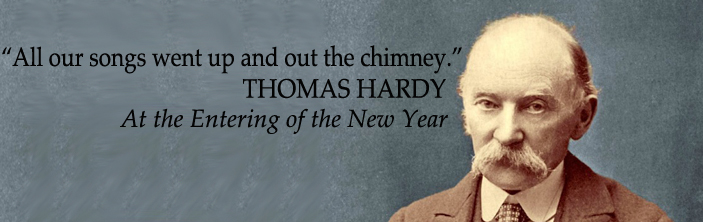


 The poet Vernon Scannell, himself a veteran of WW2 wrote a haunting poem he called The Great War. The closing lines are:
 In her 2014 novel Those Measureless Fields she began her own personal exploration of what happened to the men and families who had to pick up the pieces of their lives after the Armistice. She followed this in 2019 with what was, for, me one of the books of the year,
 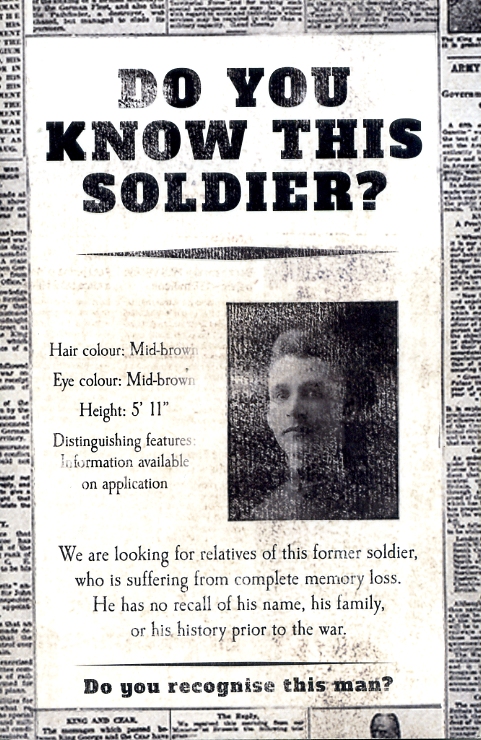 At a rehabilitation centre in the Lake District, Haworth tries to find the key that will unlock Adam’s memory. James and his boss, Alec Shepherd, take a bold decision. They release a photograph of Adam, and what little they know of him, to the national press. This triggers a wave of mothers, wives and sisters who yearn for the impossible – a virtual resurrection of their lost son, husband and brother. From the tragic queue of broken hearted souls, three women seem to be the most convincing. They are Celia Daker, who believes that Adam is her missing son, Robert, Anna Mason, a young wife who dares to dream that she is no longer a widow, and Lucy Vickers a sister who is now bringing up the children of her lost brother.






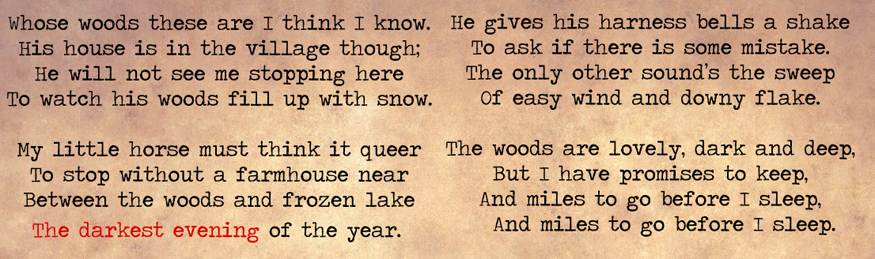
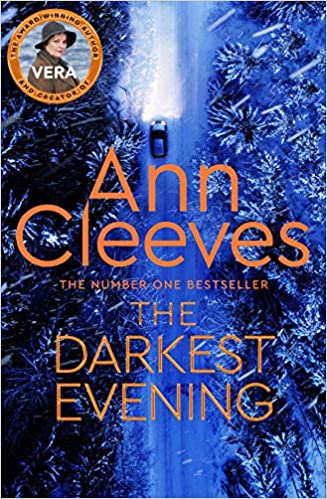 The story begins in a blinding December snowstorm, as Vera takes a wrong turning on her way home, and unwittingly steps onto the stage of a murder mystery. For newbugs like myself, this gives Cleeves a chance to flesh out part of Vera’s back story. The early action in The Darkest Evening takes place near a crumbling stately home – Brockburn – to which Vera has familial connections via her father Hector who, we learn, was rather a bad lot. The current residents of Brockburn are Harriet, the widow of Crispin Stanhope, and her daughter Juliet and husband Mark. Mark has thrown a party for the local gentry in order to get them on board with his plan to turn the old house into a vibrant regional theatre. The evening takes a turn for the worse when the body of Lorna Falstone is found outside in the snow. She has been bludgeoned to death.