I reviewed an earlier book in this series, Final Term, in January 2023 and thoroughly enjoyed it, so it was good to become reacquainted with York copper, DI Geraldine Steel. Revenge Killing is a little bit different in that DI Steel is off on maternity leave. As much as she loves baby Tom, she is feeling very much out of the loop in terms of her police career. When her friend and colleague DI Ariadne Moralis asks for her advice, she leaps at the chance to help.
Moralis has a complete puzzle of a case on her hands. Initially, her husband – Greek, like Ariadne – has been visited by a friend and compatriot called Yiannis Karalis. Yiannis owns a property where one of the tenants – a small time drug dealer called Jay Roper – has been found dead at the foot of the stairs leading up to his flat. Ariadne assures him that he has nothing to worry about, but when the post mortem examination reveals that Jay was suffocated, things become more complicated.
Ariadne discovers that Yiannis is something of a fugitive, as he fled Greece during the fallout from the murder of his older brother and a subsequent vengeance death. Did he visit Jay to remonstrate with him about the drug dealing? Did the visit turn violent. One of Jay’s girlfriends, Lauren Shaw, has gone missing. What does she know? Another girlfriend, Carly, who works in what is euphemistically known as a gentleman’s club, is located, and she is completely antagonistic towards the police. Despite claiming that she and Jay had an ‘open’ relationship, was jealousy simmering just below the surface, and did she kill Jay on the grounds that if she couldn’t have him, no-one else would?
Leigh Russell cleverly lets us spend some time with Lauren, who has panicked. We know. from the early pages of the book that she and Jay had a blazing row which ended in him falling down the stairs. Now, terrified that the police will blame her for his death, she goes on the run, and we share her misery as she her meagre savings run out, and she discovers that life on the streets is miserable and dangerous.
Revenge Killing is, at its heart, an excellent and engaging police procedural, but Leigh Russell has an intriguing little subtext ticking away in the background, and it centres on Geraldine’s misgivings about her life trajectory. She dutifully attends a mothers and toddlers group, but feels only alienation:
“But the other mothers at the toddler group had never dealt with murder investigations in the real world. None of them had watched a post-mortem, knowing the cold flesh on the slab had once been a living breathing human being, whose life had been snatched away by someone in the grip of an evil passion. The other mothers had never learned to close their minds to the horrors of every day human brutality, so shock couldn’t prevent them from doing the job. Gazing at the cheerful faces around her, she regretted her choice of career and wished her life could be as simple as it was for the other women in the room. But her experience had cut her adrift from these chattering young women, with their sheltered upbringing and cosseted lives. They discussed their various tribulations as the infants crawled or toddled around the room, or sat propped up watching warily, like Tom.”
As with all good whodunnits, we are presented with just the right blend of surprise at the identity of the killer, and a few helpful nudges to point us in the right direction. Revenge Killing is published by No Exit Press and is available now.



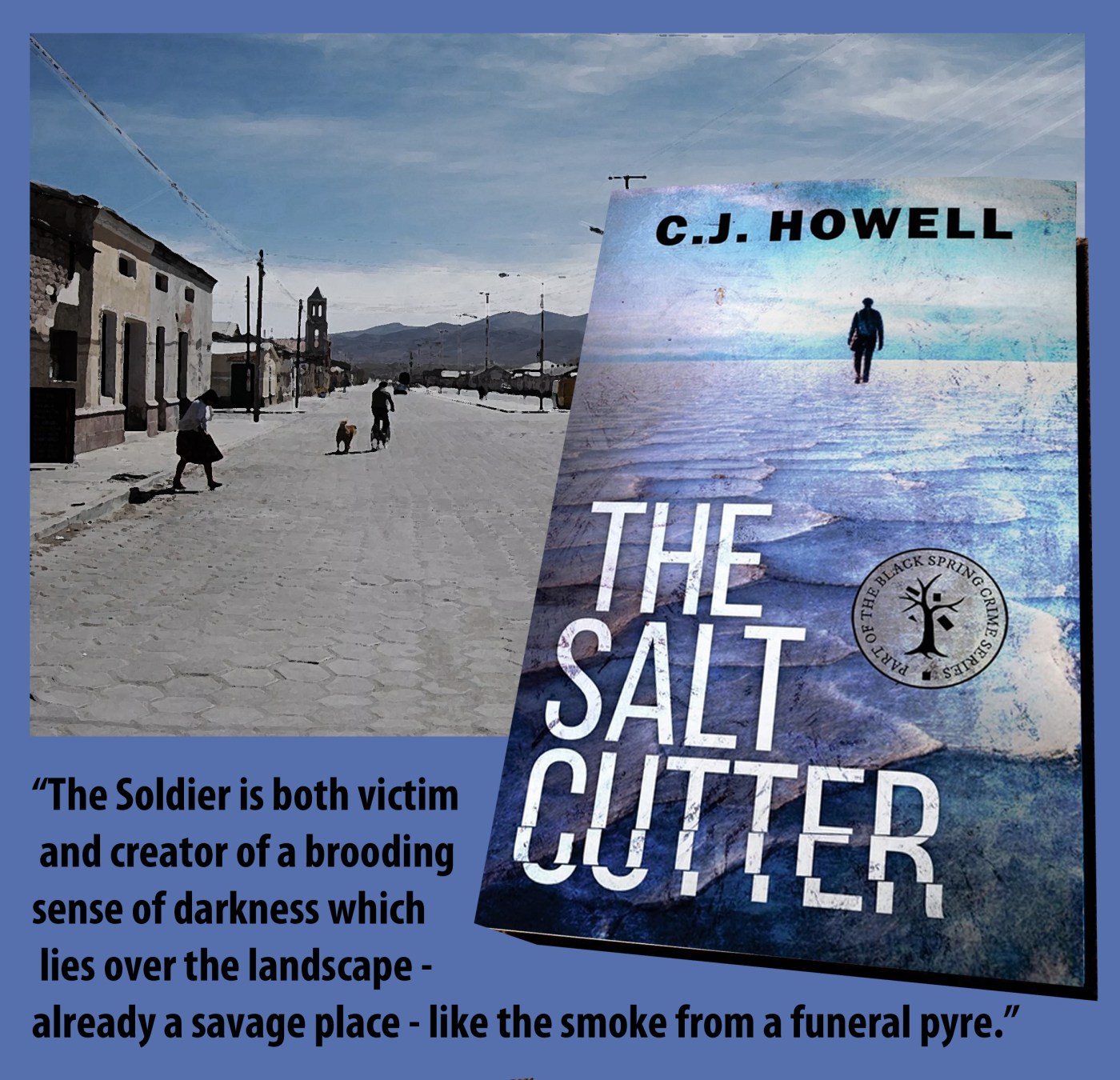

 Ask ten different readers what they think qualifies as ‘noir’ and you will get ten different answers. Is it that everything is framed in a 1950s monochrome? Is it because all the participants behave badly towards each other, and have zero respect for themselves? Is it because we know that when we turn the final page, there will be no outcome that could be described as optimistic or redemptive? One quality, for me, has to be an unremitting sense of bleakness – both physical and moral – and this novel by CJ Howell (left) certainly has that.