Search

fullybooked2017

Category

REVIEWS

THE LONGEST GOODBYE . . . Between the covers

TLGspine

This tough and unflinching Tyneside police thriller is the latest outing for Mari Hannah’s DCI Kate Daniels. The Longest Goodbye is the ninth in a series which began in 2012 with The Murder Wall. We are in late December 2022, and in Newcastle, like other cities across Britain, revellers are raising two fingers to the recently discovered Omicron variant of the Coronavirus, and are out in the clubs and pubs wearing – because it is Newcastle, after all – as little as possible, despite the freezing weather. Two lads in particular – homeward bound from overseas, and just off the plane –  are determined to have  a few beers before being reunited with mum and dad.

However, neither the two bonny lads nor mum and dad quite fit the ‘home for Christmas’ template. Lee and Jackson Bradshaw are only in their twenties, but have already done serious time for violence, and are returning from a European bolthole where they have been hiding from British police. Mum and Dad? Don Bradshaw is a career criminal, but pales into insignificance beside his wife Christine, who is the ruthless boss of the region’s biggest crime syndicate.

When the two prodigal sons are gunned down on the doorstep of their parents’ (recently rented) home just as they are about to sing ‘Silent Night‘, la merde frappe le ventilateur (pardon my French) The police are called and Don Bradshaw, brandishing the handgun dropped by one of his sons, is shot dead by a police marksman. No-one on the staff of Northumbria police will mourn three dead Bradshaws, but for Kate Daniels, the incident opens up a particularly unpleasant can of worms. Three years earlier, her best friend and police colleague Georgina Ioannou was found dead in a patch of woodland. Shot in the back. Executed. And it was the Bradshaw boys who were prime suspects.

Kate is forced to think the unthinkable: that Georgina’s twins, Oscar and Charlotte, now both police officers, were involved; even worse is the thought that Georgina’s husband Nico, although ostensibly a peaceful restaurateur, has avenged his wife’s murder. Revisiting old cases is never easy, and this one is made even worse by the fact that the Senior Investigating Officer at the time, was lazy, incompetent, and all-too-willing to cut corners.

Mari Hannah does not spare our sensibilities. She takes us through the painful process of self-examination one uncomfortable step at a time. It isn’t just Kate Daniels who must own up to past mistakes and errors of judgment, it is the whole Major Incident Team. Meanwhile, although the appalling Christine Bradshaw is safely behind bars facing a murder charge (the Firearms Officer she brained with a baseball bat has since died) like a badly treated tumour, malignant cells remain, and these men, enabled by her corrupt lawyer, are hard at work on the streets and in the pubs, clubs and private homes of Newcastle, determined to prevent the police from discovering the truth.

The Longest Goodbye, with its gentle nod to the Raymond Chandler thriller of almost the same name, grips from the first page, and we are fed the reddest of red herrings, one after the other, until Mari Hannah reveals a murderer who I certainly had not suspected. While few mourn the two dead criminals, when their killer is finally unmasked it is heartbreaking on so many levels. This is superior stuff from one of our finest writers. The Longest Goodbye is published by Orion and was published on 18th January.

THE RUNNING WOLF . . . Between the covers

trw spine005 copy

In Helen Steadman’s Solstice (click to read the review) she showed us the astonishing capacity for malice that lurked in the hearts of some Puritan Christians. In The Running Wolf, set slightly later in time, sectarian divisions are more in the background as she draws us into a Britain in the late years of the 17th century and the first decades of the 18th century.  In 1688, when the Catholic King James II was replaced by the hastily imported Protestant William of Orange, the sectarian divide was not healed, but merely temporarily bridged.

Central to the story is an unusual migration – that of sword makers, based in the German town of Solingen who, in 1688, moved, lock stock and barrel, to the tiny settlement of Shotley Bridge in County Durham. The reason for their move was basically economic. Solingen was almost literally bursting at the seams with sword makers, and work was becoming increasingly hard to come by. The departing craftsmen and their families, however, faced the wrath of the exclusive town guilds – to whom they had sworn an  oath never to reveal the crucial secret techniques which made a Solingen sword one of the best in the world.

Hermann Molle (who actually existed) makes the journey, with his family,  to Shotley Bridge, and slowly builds his business again. As Lutherans they are, to an extent, on the right side of the ‘Protestant Angels’, but the supporters – the Jacobites –  of the exiled King James are growing in strength and, particularly across the English Channel, their numbers begin to pose a significant threat. Check this historical timeline:
TRW TIMELINE

We watch as Hermann, his family – and the other German exiles – gradually rebuild their lives in Shotley Bridge, integrating as necessary, but preserving their own culture and customs. Their swords are, initially much sought after, but as the century draws to a close the craftsmen begin to feel the winds of change. While some men of wealth are still prepared to pay for a well made sword, the blades are beginning to be valued more for ornamental use than as lethal weapons, and the smiths of the future will have to turn their hands to fashioning gun barrels rather than cutting edges.

The men of Shotley Bridge have another problem – what we would nowadays call cash flow. Customers are not paying their bills, but the dealers who provide the raw material insist on being paid in full and on time. Hermann takes a risk, returns to Solingen and attempts to smuggle a consignment of German blades back into England. He is caught, and thrown into Morpeth gaol, with every expectation that he will be hanged for his pains.

Helen Steadman tells a gripping story, using the twin timelines of the Germans establishing their craft alongside the River Derwent and, using a corrupt gaoler as narrator, Hermann’s time of misery as he languishes in the squalor of his prison cell. There is fascinating detail about the craft of sword making, set against the rumbling of military and political events far away, but equally mesmerising is the way Helen Steadman captures the minutiae of the daily lives of Hermann and his family. This is historical fiction of the first order. The Running Wolf is published by Impress Books and is available now.

THE ESSENTIAL HARLEM DETECTIVES . . . Between the covers

Himes Header

TEHD spine011

To say that Chester Himes lived the life he wrote about is not strictly true, but his life was full of incident. His childhood was fraught with unhappy events, including being indirectly responsible for his brother’s blindness, and as a young man he did serious jail time for armed robbery. Fired from his job as a Hollywood screenwriter because Jack L Warner didn’t like black people, he eventually quit America for good, disgusted at the racism he faced every single day. He wrote:

I would sit in my room and become hysterical about the wild incredible story I was writing. And I thought I was writing realism. It never occurred to me that I was writing absurdity. Realism and absurdity are so similar in the lives of American blacks one cannot tell the difference.

Himes moved to France in  the 1950s, and lived among the Bohemian set in Paris. He eventually moved to the south of France, and then to Spain, where he died in 1984.

There were to be eight completed novels featuring Harlem detectives Grave Digger Jones and Coffin Ed Johnson, and one – Plan B – remained unfinished at Himes’s death. This compendium, from  Everyman’s Library, includes A Rage In Harlem (1957), The Real Cool Killers (1959), The Crazy Kill (1959) and Cotton Comes to Harlem (1965). The book is beautifully bound and presented, and even has a book-mark ribbon. This is a definite keeper, to be dipped into during the long-haul nights from January through to springtime. For good measure, there’s an introduction by SA Cosby and – this I really did like – a triple chronology of Himes’s life set against other literary events of the time and what was going on in America and the wider world, socially and politically.

book inside

The style of the novels is bleakly comic and, at times, very violent. As their nicknames suggest, the Jones and Johnson live with death as a daily companion and they themselves have no compunction about matching force with force when it comes to serious criminality, although they are generally relaxed in the company of petty criminals such as card sharps, whores and lottery spivs. Despite the sharp banter between the pair, Harlem is a pretty grim place most of the time:

This was the neighborhood of the cheap addicts, whisky-heads, stumblebums, the flotsam of Harlem; the end of the line for the whores, the hard squeeze for the poor honest laborers and a breeding ground for crime. Blank-eyed whores stood on the street corners swapping obscenities with twitching junkies. Muggers and thieves slouched in dark doorways waiting for someone to rob; but there wasn’t anyone but each other. Children ran down the street, the dirty street littered with rotting vegetables, uncollected garbage, battered garbage cans, broken glass, dog offal — always running, ducking and dodging. God help them if they got caught.

There was a new Penguin edition of A Rage In Harlem a couple of years ago, and you can read my review of it by clicking this linkThe Essential Harlem Detectives is available now.

LOST AND NEVER FOUND . . . Between the covers

LANF header

Screen Shot 2023-12-14 at 17.40.34If the tags “Oxford”, “Murder” and “Detective” have you salivating about the prospect of real ale in ancient pubs, choirs rehearsing madrigals in college chapels, and the sleuth nursing a glass of single malt while he listens to Mozart on his stereo system, then you should look away now. Simon Mason (left) brings us an Oxford that is very real, and very now. The homeless shiver on their cardboard sleeping mats in deserted graveyards, and the most startling contrast is the sight of Range Rovers and high-end Volvos cruising into car washes manned by numerous illegal immigrants from God-knows-where, all controlled by criminals, probably embedded within the Albanian mafia.

Against this background, meet Detective Inspector Ryan Wilkins, and his partner DI Ray Wilkins (no relation to Ryan or the late footballer). Ray is from a wealthy Nigerian family, happily married, photogenic and a rising star in the police hierarchy, while Ryan is – to put it bluntly – what some people might call a Chav. His idea of workwear is silver shell-suit bottoms, baseball cap and knock-off Nike hoodie. He is working hard to revive his career after being suspended. His former girlfriend died of a drug overdose, while his son – Ryan junior, – is largely looked after by Wilkins’s sister.

I missed the first novel in the series, but enjoyed the second, The Broken Afternoon, which I reviewed in December last year. Now the unlikely partners are faced with a new mystery. A formerly wealthy heiress, who has frittered away most of her privilege on drugs and a hedonistic lifestyle, has gone missing. Her Rolls Royce is found abandoned after colliding with the gates of the station car park. The tabloids, who have a huge library of back copy on Zoey Fanshawe, sniff a sensation, and they are not wrong. When Ryan finds her body, brutally strangled in an empty Oxford property owned by her former husband, the world and his wife are leaning on him to find the killer.

The concept underpinning this series is the contrast between Ray and Ryan, and that Ryan – the anarchic slob – is the one with the real detective’s brain. He is also unlucky in love. His current girlfriend, ostensibly a flourishing florist, has a dark past. We meet an officer who seems to be everyone’s favourite copper, the charismatic Assistant Chief Constable, Chester Lynch. There isn’t a contemporary box she doesn’t tick. Female?√ Black?√ Media friendly?√ Wears leather and designer shades?√ So far, her career trajectory has not been impeded by awkward bastards like Ryan Wilkins, who has a habit of asking difficult questions. This is all about to change.

While Ray seems mesmerised by Lynch (who has just offered him a serious promotion) Ryan is immune to the hype, and suspects she is a player in the murky back-story of the late Zoe Fanshawe. The plot of Lost and Never Found is beautifully crafted, and the description of the underbelly of Oxford life – the homeless camping in the graveyards of its ancient churches, and the women plying their trade in the derelict garages of its bleak outer suburbs – is a salutary contrast to the “Dreaming Spires” trope. Another part of the spell that Simon Mason casts is the difference between what Ray and Ryan face when they go home at night. Ray is met by his eminently sensible and forbearing wife Diane, while Ryan faces only the wrath of his sister, and the fact that Ryan junior has fallen asleep yet again without a bed-time story from his dad. This book will be published by Riverrun on 18th January.

THE TEACHER . . . Between the covers

Teacher header

This is a welcome return for Tim Sullivan’s distinctive copper, Detective Sergeant George Cross. Based in Bristol, the series is centred upon this unusual police officer – unusual in that he has a mental condition variously described as Autism, or Aspergers Syndrome. Common symptoms of the condition include lavish attention to detail, the inability to understand figurative speech and an intense reliance on pattern and repetition in personal life. I loved the previous book, The Monk, and you can read what I thought by clicking the link.

Now, in a village not far from Bristol an elderly man has been found dead at the foot of the stairs in his cottage. Alistair Moreton was not well-loved in Crockerne . The former headmaster of a private school was abrupt and aloof – except at parish council meetings when he objected to anything and everything on the agenda, mainly because he could, and because he took pleasure at being a contrarian.

A few years previously, he had been wrongfully implicated in the disappearance of a local schoolgirl, and much damage was done before she presented herself at a London police station, admitting she had just run away from home. Moreton had managed to alienate almost everyone in Crockerne, particularly the London couple – the Cockerells – who had a weekend cottage next to his, and with whom he had engaged in several lengthy – and expensive – legal battles.

Moreton’s son Sandy is an MP whose right-wing views have resulted in his being ‘recalled’ by his constituents, and so he faces a by-election. When George Cross’s temporary boss, DI Bobby Warner makes a premature arrest, and organises a press conference alongside Sandy Moreton, Cross quietly continues his own investigations, troubled by the fact that Alistair Moreton’s ‘set-in-stone’ daily routine had changed significantly over the two weeks prior to his death.

Cross discovers that Moreton’s tenure as headmaster of All Saints was characterised by brutality and a cruel disregard, and that there are many grown men whose childhoods were disfigured by beatings at the school – and the almost universal disbelief of their parents when they were told what was going on. A Facebook group of All Saints ‘survivors’ has been set up, and Cross comes to think that Moreton’s killer may be one of the members.

Along the way we have an intriguing glimpse into Cross’s family life. His father came out as gay later in life, but his partner has died, while Cross’s mother has remarried. A local priest is perhaps the closest thing Cross has to a friend and the cleric – Stephen – acts as an unofficial master of ceremonies in this unusual ménage.

The Crown Prosecution Service have been persuaded to put Barnaby Cotterell on trial for murder, but the case falls apart. Meanwhile disturbing information has come to light about the professional behaviour (or otherwise) of DI Bobby Warner.

Tim Sullivan leads us a merry dance and we whirl through a plethora of potential killers until, with just a few pages to go, we finally learn just who – from a classroom full of suspects – did away with the vicious and sadistic former schoolmaster. George Cross is a remarkable character – resolute, hugely intelligent, baffling to many of his colleagues, but blessed with insights that make him unique among modern fictional coppers. The Teacher is published by Head of Zeus and will be available on 18th January.

HUNTS . . . Between the covers

HUNTS HEADER

The first thing to say is that the title won’t make much sense if you just randomly saw it on a shelf, but pick it up and you will see it is the first part of a trilogy, the two following novels being Skins and Kills. We meet Arran Cunningham, a young Scot. He is a Metropolitan Police officer working in Hackney, East London. Not being a Londoner, I have no idea what Hackney is like these days. I suspect it may have become more gentrified than it was in the spring of 1988. What Cunningham sees when he is walking his beat is something of a warzone. There is a large black population, mostly of Jamaican origin, and the lid is only just holding its own on a pot of simmering racial tensions, turf wars between drug gangs and a general air of despair and degeneration.

The pivotal event in the novel is a mugging (for expensive trainers) that turns into rape. The victim is a black teenager called Nadia Carrick. The attackers are a trio of young white men, led by a boy nicknamed Spider. They are unemployed, drug addicted, and live in a squat. Nadia tries to conceal the attack from her father, Stanton, but eventually he learns the true extent of her nightmare, and he seeks retribution. Stanton Carrick is an accountant, but a rather special one. His sole employer is Eldine Campbell, ostensibly a club and café owner, but actually the main drugs boss in the borough, and someone who needs his obscene profits legitimised.

Carrick is also a great friend of Arran Cunningham, who learns what has happened to Nadia. Purely by luck he saw Spider and his two chums on the night of the incident, but was unaware at the time of what had happened. Rather than use his own men to avenge Nadia’s rape, Eldine Campbell has a rather interesting solution. He has what could be called a “special relationship’ with a group of police officers, led by Detective Chief Inspector Vince Girvan, and he assigns them the task of dealing with with the perpetrators.

Meanwhile, Girvan has taken a special interest in Arran Cunningham, and assigns him to plain clothes duties, the first of which is to be a part of the crew eliminating Spider and his cronies. In at the deep end, he is not involved with their abduction, but is brought in as the trio are executed in a particularly grisly – but some might say appropriate – fashion. There is problem, though, and it is a big one. He recognises Spider’s two accomplices, but the third man is just someone random, and totally innocent of anything involving Nadia.

The three bodies are disposed of in the traditional fashion via a scrapyard crushing machine, but Cunningham is in a corner. His dilemma is intensified when his immediate boss, DI Kat Skeldon, aware that there is a police force within a police force operating, enrols him to be ‘on the side of the angels.’ As if things couldn’t become more complex, Cunningham learns that Stanton Carrick is dying of cancer.

JLDDurnie’s plot trajectory which, thus far, had seemed on a fairly steady arc, spins violently away from its course when he reveals a totally unexpected relationship between two of the principle players in this drama, and this forces Cunningham into drastic action.

The author (left) was a long-serving officer in the Met, and so we can take it as read that his descriptions of their day-to-day procedures are authentic. In Arran Cunningham, he has created a perfectly credible anti-hero. I am not entirely sure that he is someone I would trust with my life, but I eagerly await the next instalment of his career. Hunts is published by Caprington Press and will be available on 8th January.

THE CHARTER OF OSWY AND LEOFLEDE . . . Between the covers

CHARTER HEADER

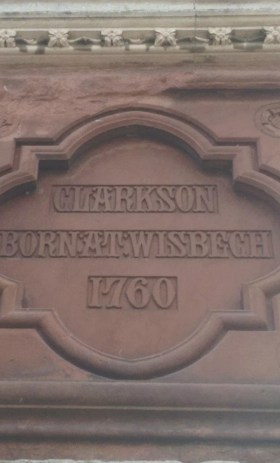
We are in the final decade of the twelfth century, in the market town of Wisbech, a place dominated by its Norman castle, and split by two rivers: the smaller, the Wysbeck is little more than a gentle stream, and can be crossed on stepping stones; the larger, the Welle Stream is more significant, and can only be crossed at high tide by ferry.

In the 124 years since England was conquered by the Normans, the old native tongue of the Saxons has become a foreign language, in both written and spoken forms. Sir John of Tilneye, a young man who was schooled in the old language by monks when just a boy, is called upon to translate an old manuscript which appears to be at the centre of a criminal conspiracy. Ostensibly, it is dull and tedious stuff relating transfers of land and property in the days before the Normans came. Someone, however, is convinced that it contains a clue to something extremely valuable.

Wisbech is neither more nor less lawless than other towns in the area, but when a series of fires and break-ins follow one after the other, the Bishop of Ely’s seneschal Sir Nicholas Drenge is determined to discover what is going on. Each of the incidents seems connected to a fatal fire which destroyed a house in the town. Its owner, Aelfric, who perished in the blaze, was Saxon nobility, but like most of his countrymen, all he had left was his memories. His lands and riches had long been appropriated by the descendants of the 7000 men who landed at Pevensey on 28th September 1066. So why burn down his house? What was he hiding? Drenge and his men-at-arms eventually catch the man who they think is the killer, but when he is murdered while in their custody, the mystery deepens.

Insofar as this is just a detective novel, Drenge is the principle character. No genius, perhaps, but steady and unwavering as he slowly unpicks the knot of lies, legends and loose connections that surround the mystery of Aelfric’s death. Diane Calton Smith gives us some fairly innocent romancing between Sir John and Rose de Hueste, the old man’s granddaughter, but above all she describes a place that is, literally, buried beneath the feet of townsfolk of modern Wisbech. The two rivers have traded identities to an extent. The inoffensive Wysbeck is now the deep and powerful tidal River Nene, while The Welle Stream – thanks to major 17thC drainage – shrank to being a canal in the 1800s, but was eventually filled in and is now a dual carriageway. As for the castle, it still carries the name, but is now merely a dilapidated Georgian house which no-one is quite sure what to do with.

Calton Smith weaves her plot this way and that, and doesn’t surrender the answers until the final pages. This is superior story-telling, and a magical glimpse into a world long since gone; that world created echoes, however, and if you listen attentively, they can still be heard. The Charter of Oswy and Leoflede is published by New Generation and is available now. I reviewed an earlier book by this author, and this link will take you there.

THE BURNING TIME . . . Between the covers

TBT header

After David Mark starts his latest novel with a nod to the celebrated first three words of Herman Melville’s masterpiece, the first chapter of The Burning Time made me wonder if I had slipped off the page and fallen into a visceral nightmare straight out of the Derek Raymond playbook displayed in I Was Dora Suarez – there was blood, pain, death, distortion, madness, fire – and human disintegration.

Chapter two reminds readers that we are accompanying Inspector Aector McAvoy on his latest murder investigation. Bear-like McAvoy – based in Hull –  and his beguiling gypsy wife Roisin, have been invited to an all-expenses-paid stay at a luxury hotel in Northumbria  to celebrate the seventieth birthday of McAvoy’s mother. Mater and filius have become somewhat estranged over the years, mainly due to mum dispensing with Aector’s dad when her son was young, and opting for a newer, richer husband – who insisted on Aector being sent away to boarding school, causing mental scars which have not healed over the years. Aector, via this arrangement, has a step brother called Felix, older than he, and a person who subjected his younger step sibling to all kinds of mental and physical bullying back in the day. It is Felix who has organised the family gathering.

Part of the carnage in chapter one involves  Ishmael Piper – a middle-aged hippy living with a twin curse, the first part being that he was the son of the late and legendary rock guitarist Moose Piper, and the second being that he is suffering from Huntington’s Chorea, the degenerative disease whose most famous victim was the American musician Woody Guthrie. Ishmael inherited much of his father’s wealth, guitars and memorabilia, but his life has become a protracted car crash. His life comes to an end when his remote cottage on the Northumberland moors is gutted by fire. He is found dead outside, his daughter Delilah clutching his hand, while one of his female companions, asleep in an upstairs room, is the second fatality. Delilah has been badly burned. Later, McAvoy sees her:

He wants to look away; to jerk back – to not have to see what the flame has done on half of her face. He thinks of wormholes at low tide. He can’t help himself: his imagination floods with memories; so many twisted worm-casts in the soft grainy sand.’

McAvoy is an intriguing creation. He is physically massive, but suffers from debilitating shyness and a chronic lack of social confidence. He is, however, formidably intelligent and a very, very good policeman. Crime fiction buffs will know that there is a certain trope in police novels, where the newly promoted detective becomes frustrated with paper work, and longs to be out on the street catching villains. McAvoy is more nuanced:

‘It always surprises his colleagues to realise that, in a perfect world, McAvoy would never leave the safety of his little office cubicle at Clough Road Police Station.’

The Puccini aria from Tosca, Recondita Armonia, can be translated as ‘strange harmony’, and no harmony is stranger than that between McAvoy and his wife Roisin. They share a fierce intelligence, but David Mark portrays her as slender, captivatingly beautiful and blessed – or cursed – with an intuition and silver tongue inherited from her Irish gypsy ancestors, and a dramatic contrast to her physically imposing but socially gauche husband.

McAvoy realises that he has been invited to the family gathering, not out of any desire for reconciliation, but because Felix wants him to find out the truth behind Ishmael’s death, a task at which the local police have failed. McAvoy, of course – after bouts of epic violence involving various bit-players in the drama – does find the killer, but in doing so illustrates that the birthday party was nothing other than a bitter charade. The Burning Time – a powerful and sometimes disturbing read –  is published by Severn House and is available now. For more reviews of David Mark novels, click the image below.

Screen Shot 2023-12-09 at 19.36.32

CLASSICS REVISITED . . . Blue Murder

BM HEADER

It is a sad reflection on modern tastes in crime fiction – and marketing – that, although his books are still in print, if you click on the author bio bit of the Amazon page for Colin Watson’s Blue Murder, there is nothing there. Truth is, by the time the book was published, in 1979, Watson had all but given up writing as a bad job. There were just two books in his Flaxborough series to come before his death in 1983. After a lifetime in provincial journalism, he had retired to he “the Lincolnshire village of Folkingham, where he spent most of his time engrossed in his hobby as a silversmith. You can read more about his career as a writer here.

The book opens with a long – but wonderful – paragraph describing the fictional town of Flaxborough. It has little to do with the plot of Blue Murder, but it is a shining an example of Watson’s skill as a writer, and I make no apologies for quoting it in its entirety.

“Friday was market day in Flaxborough. It was a somewhat tenuous survival, perhaps, but not yet an anachronism. Long departed, certainly, were the little wheeled huts – not unlike Victorian bathing machines – in which corn and seed chandlers shook samples from small canvas bags into the palms of farmers, each the size of a malt shovel, and invited them to “give it a nose:, whereupon the farmer would inaugurate the long and infinitely casual process of making a deal by observing unrancorously that he’d seen better wheat dug out of middens. Nor were animals any longer part of the market day scene. The iron railings and corridors; the weighbridge;, the show ring, pooled with the pungent staling of bullocks and stained here and bear with dried-off urine that looked like lemonade powder; the raised, half round, open pavilion with a clock tower on top, where the auctioneers impassively interpreted twitches, nods and glances from the stone faced butchers and dealers: all these had disappeared from the market place. So, too, had the drovers, those wondrously misshapen but agile men, who hopped, loped and darted among the sweating beasts and intimidated them with wrathful cries and stick waving. In the long black coat, roped around the middle, that they wore in all conditions of weather, the drovers of Flaxborough had looked like demented mediaeval clerics, bent on Benedictine and buggery.”

Screen Shot 2023-12-06 at 17.58.51Watson (pictured) spent years working for provincial newspapers, writing up endless articles on civic functions, what passed for ‘society’ weddings, bickering councillors, glimpses of local scandals, and petty offenders appearing before bibulous local magistrates. This gave him a unique insight into what made small-town England tick. He could be acerbic, but never vicious. he usually found space to write about fictional versions of himself – local journalists. In this case, a Mr Kebble, editor of the local rag.

“Mr Kebble rode a cycle with as much panache as a squire might ride his hunter. Instead of field gear, though, he wore his unvarying costume of leather elbowed tweed jacket, trousers like twin bags of oatmeal and the editorial waistcoat whose host of pockets accommodated useful equipment that ranged from a portable balance for weighing fish to a goldsmiths touchstone. His hat, a carefully preserved relic of journalism in the twenties, was stiff, creamy–grey felt, high-crowned and broad of brim, which perched far back on his head to give full display to the round, pink, mischievously amiable face.”

Screen Shot 2023-12-06 at 18.00.29In a strange way, the plot of Blue Murder is neither here nor there, as it is merely a vehicle for Watson’s beguiling way with words. It features – as do all the Flaxborough novels – the imperturbable Inspector Walter Purbright, a man benign in appearance and manner, but possessed of a sharp intelligence and an ability to spot deception and dissembling at a hundred yards distance. Long story short, a red-top national newspaper, The Herald,  has been tipped off that the redoubtable burghers of Flaxborough are implicated in a blue movie, what used to be known as a stag film. On arriving in Flaxborough, the investigating team, headed by muck-raker in chief Clive Grail, assisted by his delightful PA, Miss Birdie Clemenceaux. manage to fall foul of the combative town Mayor, Charlie Hocksley. Hocksley has his finger in more local pies than the town baker can turn out, for example:

“He was also a leading member of one of those bands of emigré Scotsman who gather once a year in every English town to mourn, in whisky, sheep-gut and oatmeal,  their sufferance of prosperity in exile.”

The blue movie is screened to the visiting journalists, projected onto the obligatory bed sheet pinned to the wall. Bizarrely, the soundtrack is in Arabic but, fear not, a translator called Mr Suffri is at hand, and he enlivens the visuals with his work:

“The gentleman says he intends to pulverise the lady in the pistol and the mortar of his lusting and she gives answer which please I wish to be excused.”

Grail and his team discover that the link between the stag film (a grotesque re-imaging of Puccini’s Madame Butterfly} and local worthies is flimsy and so, to create a story, they stage a fake kidnapping of Grail, after which the fake kidnappers demand a ransom Herald’s Australian owners have little option but to pay. Unfortunately, one of the news gatherers has a long standing wrong to avenge, and Grail is found dead. Purbright unpicks the knotted bundle of threads to expose the killer but, as I said earlier, this is all subsidiary to the main enjoyment to be taken from this little book – just 160 pages – that being Watson’s wonderful sense of the absurd, his pin sharp observations about English society, and his felicity with our language. 


Blog at WordPress.com.

Up ↑