

 I have a close friend who keeps himself fit by walking London suburbs searching charity shops for rare – and sometimes valuable – crime novels. On one particular occasion he was spectacularly successful with a rare John le Carré first edition, but he is ever alert to particular fads and enthusiasms of mine. Since I “discovered” PM Hubbard, thanks to a tip-off from none other than Phil Rickman, my friend has been on the lookout for for anything by this English writer (1910 – 1980) and his latest find, A Hive of Glass is a Panther Crimeband paperback, published in 1966. This was a year after Michael Joseph published the first edition (left), and Hubbard fans could have bought the paperback for the princely sum of 3s/6d (about 16.5p in modern money).
In his best works Hubbard gives us an ostensibly benevolent rural England; small towns, pretty villages, ancient woodlands, the warm stone of village churches and old parkland (always with a time-weathered manor or house at its centre). This England, however, invariably has something menacing going on behind the façade. Not simply, it must be said, in a cosy Midsomer Murders fashion, but in a much more disturbing way. Hubbard doesn’t engage with the overtly supernatural, but he teases us with suggestions that there might – just might – be something going on, an uneasy sense of what Hamlet was referring to in his celebrated remark to Horatio in Hamlet (1.5.167-8)
In A Hive of Glass, a gentleman of undisclosed means, Jonnie Slade, pursues his lifelong interest in antique glassware. He is an auctioneers’ and dealer’ worst nightmare, with an encyclopaedic knowledge of styles, techniques – and market value. He becomes aware of an important piece of sixteenth century glass – to the uninitiated, not much more than a glass saucer – whose provenance includes the crucial involvement of none other than Gloriana herself. Looking to find more information on the tazza, made by the legendary Giacomo Verzelini, he visits an elderly man whose knowledge of the period is legendary, only to find him dead in his study. With only a couple of amateurish photographs and a diary entry to guide him, Slade drives out of London to the remote village of Dunfleet.
In Dunfleet he meets a young woman called Claudia. Their erotically charged relationship is central to the story, as is the fact that she is the niece of Elizabeth Barton, the elderly woman in whose house the tazza is hidden. Even to himself, Slade’s motives are unclear. Does he want to steal the tazza? Does he just want to confirm its location? Does he suspect Claudia of attempting to defraud her aunt?
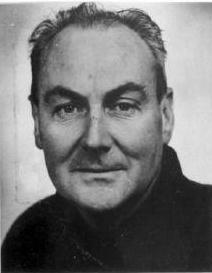
 Seldom, however, can a treasure have been protected by two more menacing guardians in Aunt Elizabeth and her maid-of-all-work Coster. Remember Blind Pew, one of the more terrifying villains of literature? Remember Tod Browning’s Freaks (1932) and the decades that it was hidden from sight? With a freedom that simply would not escape the censor today, Hubbard (right) taps into our visceral fear of abnormality and disability. Hubbard has created two terrifying women and a dog which is makes Conan Doyles celebrated hound Best In Show. The dog first:
“It was pinky-white all over and looked quite naked and scrofulous. Even from sideways its eyes were almost invisible behind puckered pink lids. It waddled and wheezed like a fat dog, but you could see most of the bones under the hanging skin. Its smell went past me as it it walked.”
Attached to the vile animal is blind Aunt Elizabeth:
“On the end of the lead came a long black glove and behind it Claudia’s Aunt Elizabeth. I had no idea, seeing her through a curtained window like that, how tall she was. She must have been all of six foot and her elaborately coiled hair put as much on her height as a policeman’s helmet…Her feet were as big as the rest of her. The skin was grey but clear and glossy and her smile, as she passed me, came back almost under her ear.”
Aunt Elizabeth’s maid, Coster, is equally terrifying. She is stone deaf, huge, and mutters to herself in a constant high-pitched monotone:
“She was a tall soldierly woman, with a frame much too big for that little thin, continuous voice. She wore a bunchy black skirt with a long apron over it and some sort of blue and white blouse over her great square top half. As it was, I could hear a continuous stream of sound, inflected and articulated like speech, but defying my analysis.:
I would have turned tail and ran as far from this trio of horrors as fast as my legs could carry me, but Slade is made of sterner stuff, and he stays to discover the hiding place of the Verzelini tazza, but not without considerable cost to his own sanity and sense of well-being.
A Hive of Glass is available as a Murder Room reprint, or you can search charity shops for an original version. For more on PM Hubbard and his novels, follow this link.

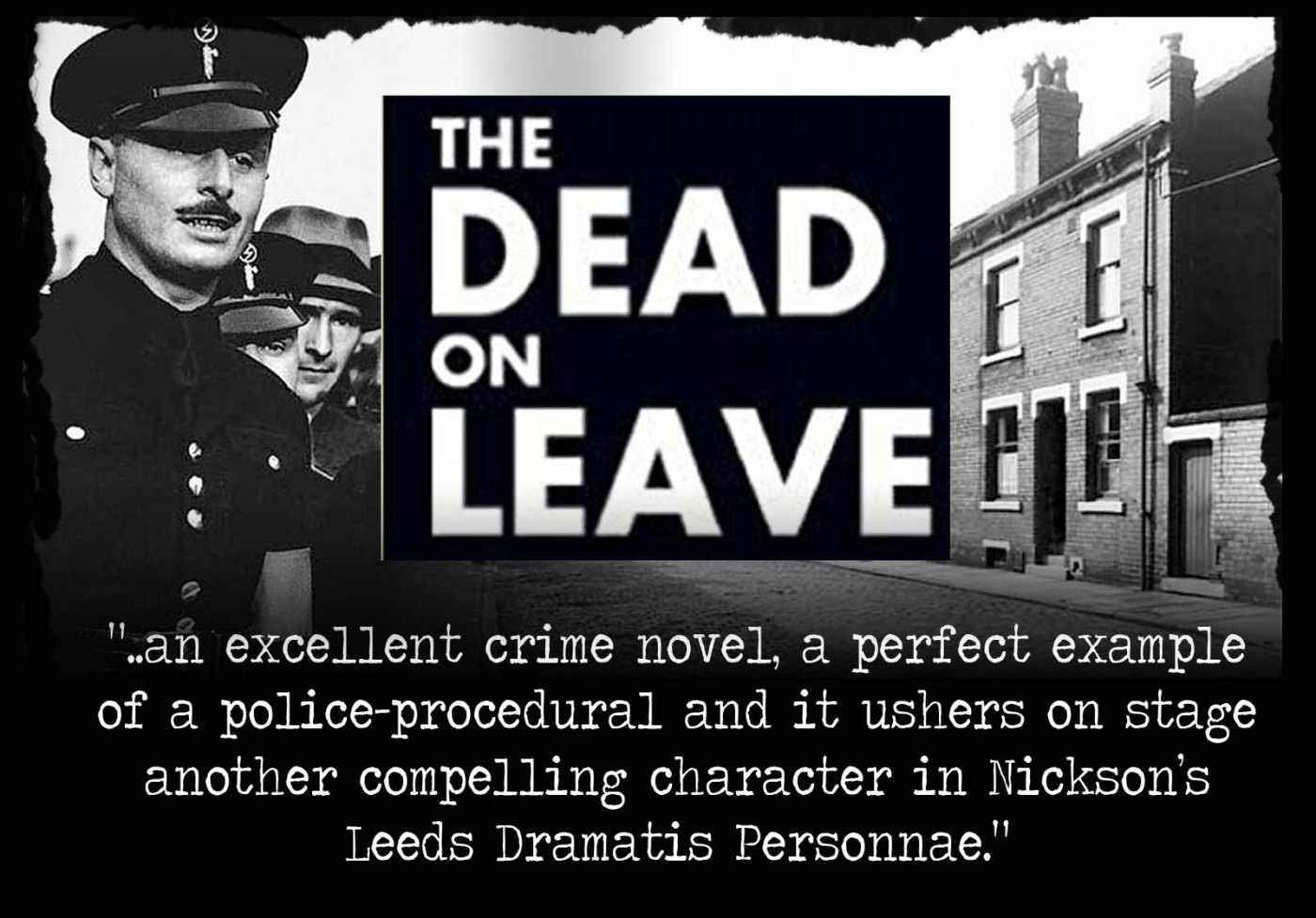

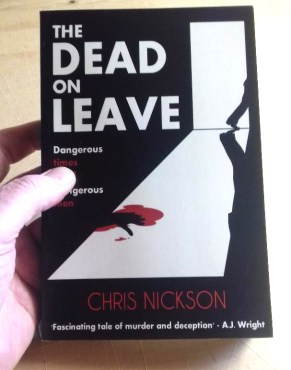 It appears the dead man is a would-be follower of Sir Oswald Mosley, charismatic leader of the British Union of Fascists and, after an appearance in Leeds by Mosley and his Blackshirts turns into a riot, it is tempting for the police to think that the murder is politically inspired. As Raven tries to make sense of the killing, he has his own demons to face. Like many other Yorkshiremen, Raven is a Great War veteran, even though his war was brief and horrific. Only able to see active service in the dog-days of the conflict, he was unlucky enough to be close to a fuel dump which was hit by a stray shell. There’s a line from a song about that war, which goes,
 The Dead On Leave is very bleak in places. Hope is in short supply among the working people in Leeds, and men have no qualms about building a wooden platform for Moseley to rant from, because a job is a job; consciences are a luxury way beyond the reach of folk whose families have empty bellies. Nickson (right) is a writer, with social justice at the front of his mind and he wears his heart on his sleeve. I doubt that he and I agree on much in today’s political world, but I can think of no modern British author who writes with such passion and fluency about historical social issues.

 Hal Westaway is no crook. She is not an opportunist. She has a conscience. She instinctively understands the difference between meum and teum. And yet. And yet. The gangster from whom she unwisely took out a desperation loan is angry and anxious for his 300%. Hal’s Brighton flat has already been turned over, and she knows that broken bones are next on the agenda. So, she accepts the invitation from the late Mrs Westaway’s solicitor to travel down to Cornwall to meet the family she never knew she had.
 Ruth Ware (right) is not the first writer – nor will she be the last – to explore the lurid charms of a decaying mansion, its ghosts both real and imagined, and the dusty terrors of death, but she makes a bloody good job of it in The Death of Mrs Westaway. Hal Westaway is a delightful character, and you would require a heart of the hardest granite not to sympathise with her and the exquisite dilemma she faces. The plot is a dazzling mix of twists, surprises, and just the right amount of improbability. The Death of Mrs Westaway is a thriller which makes you keep the bedroom light on, and long for the safety of daylight. It looks like being another bestseller for Ruth Ware, and you can judge for yourselves on June 28th, when the book will be published by


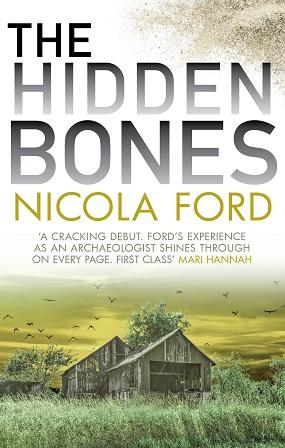 Clare Hills is an archaeologist who is struggling to hold her life together after the death of her husband. Her grief at his passing is tempered by the fact that he has left her virtually penniless. When she is invited by her former tutor, Dr David Barbrook, to help explore and archive the papers of Gerald Hart, she welcomes the chance to use her expertise. Hart was a gentleman archaeologist whose Palladian villa, Hungerbourne Manor, was the centre of his life’s work – investigating the Hungerbourne Barrows. The Bronze Age burial sites were Hart’s obsession, but whatever secrets they held, he seems to have taken them with him to his grave.
 I have many guilty pleasures, and one of them is being a sucker for a crime novel where the landscape plays a vital part in the plot. My two particular favourite writers in this regard are Phil Rickman and Jim Kelly, but with this excellent debut novel, Nicola Ford (right) has elbowed herself into their company.


 Detectives come in all nationalities these days. Anya Lipska in her Kiszka and Kershaw series has explored the Polish angle, while one of the most formidable female operators in fiction, Victoria Iphigenia Warshawski is, of course Polish on her father’s side. Now, Hania Allen (left) introduces us to DS Dania Gorska, described as “a stranger in a foreign land.” Crime however is multi-lingual and knows no national boundaries, and Gorska is assigned to the Police Scotland Specialist Crime Division in Dundee, on the banks of the River Tay. The Polish-born police officer becomes involved in the investigation of a bizarre series of killings which seem connected to a druidic cult.The Polish Detective is
  This international military thriller also has a Polish connection. A despotic Russian president has built a devastating new weapon, and its first strike is against Warsaw, via malware which destroys the country’s banking system. As the rest of Europe’s financial world goes into a fatal tailspin, the President of The United States has to meet fire with fire, and she calls in flying ace Brad McLanahan and his deadly Scion team to thwart the ambitions of the megalomaniac Gennady Gryzslov. Price of Duty, by Dale Brown (right) was previously published in hardback and Kindle, but will be available as a Corsair paperback
  When Josephine ‘Joey’ Mullen – plus her new husband – return from four years working abroad with nowhere to stay, they are grateful for the opportunity to crash in Joey’s brother’s house in Bristol, just until they get themselves settled. Joey’s older brother Jack is a respected consultant heart surgeon, with a staid and rather disapproving wife. As Joey looks for work, she becomes interested – too interested – in Jack’s next-door neighbour. Tom Fitzwilliam is a successful Head Teacher, brought in to re-invigorate a failing school. He is twice Joey’s age, but in spite of husband Alfie’s charm and good looks, she becomes obsessed with the fifty-five year old. What follows is a gripping and tense study in recklessness, obsession- and murder. This psychological thriller from Lisa Jewell (above left) will be published


 I was working in Australia when Peter Weir’s 1975 film Picnic At Hanging Rock premiered. I remember pub and dinner party talk for months after being dominated by interpretations and explanations about what might have happened to the ‘lost girls’. In the endpapers of Last Time I Lied American author Riley Sager, (left) acknowledges his debt to this film (and the short story on which it was based). Instead of a 1900 Melbourne, Sager beams us into up-country New York State in, more or less, our times.
 Emma’s summer idyll is destined to come to an abrupt and tragic end, however, when the three older girls in the cabin disappear one night, never to return. Despite the massive search and rescue operation, Vivian, Natalie and Allison remain missing, and Franny is forced to close the camp in disarray.


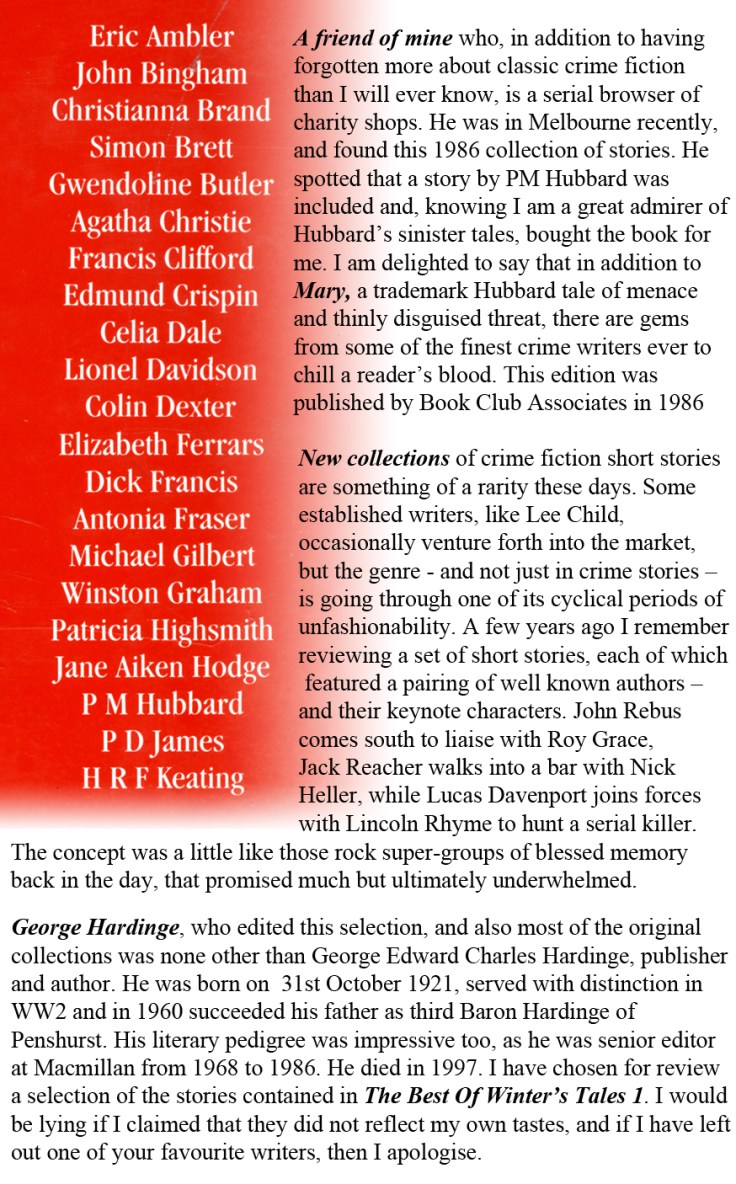
 Mr Bulmer is a uniquely repulsive little man who manages a dry cleaning shop in Mayfair, and uses the opportunity of searching through the jackets and trouser pockets of wealthy individuals to service his own very profitable blackmail industry. His malignant little sideline has provided him with a regular income – and driven at least one of his victims to suicide. When he seizes upon what he sees as the opportunity of a lifetime, he is unaware that is about to be snared by his own hook. John Bingham, in addition to being a writer of distinction, was also a highly placed official in British Intelligence operations.
 Crispin, aka Robert Bruce Montgomery, is best known for his Gervase Fen novels but here he spins a delightfully black tale of a struggling writer whose hospitality is impinged upon by a pair of runaways, both seeking a new life away from their spouses. Crispin intersperses the narrative with vivid accounts of a writer desperately searching for the words which will bring his latest novel to life. Sadly for the would-be lovers, their fate is to be organic fertiliser for Mr Bradley’s vegetable plot.
 Davidson’s internationally themed thrillers were his bread and butter, but we must not forget that he was a writer of immense sensitivity with a wide range of influences. His own upbringing as a child of a hard-scrabble Polish-Jewish family might have made it unlikely that he would compose a chilling tale of murder on the banks of s Scottish river frequented only by rich Englishmen with the money to buy the rights to snare incoming salmon. A man whose sexual abilities have been devastated by a potentially fatal illness plans revenge on a friend whose libido remains undiminished. The denouement takes place on the banks of Scotland’s sacred salmon river – the Spey.
 Colin Dexter? Cue Oxford, an irascible senior policeman, pints of English beer and crossword puzzles? Think on. When this story was published, Dexter was already four books into his Inspector Morse series, but the TV adaptations were still six years away. In this tale, Dexter takes us to, of all places, rural America, where a coach load of middle-aged and elderly tourists take a rest stop at the eponymous wayside hotel. The action is centred around a game of vingt-et-un, designed to empty the wallets of the gullible travellers. Dexter describes a scam-within-a -scam -but saves until the last few paragraphs a chilling finale in which the scammer becomes the scammed.
 People might forget that Antonia Fraser, as well as being the daughter of Lord Longford the widow of Harold Pinter and a superb historical biographer, is no slouch when it comes to crime fiction. Here, she taps into that strange love affair that English people have with their dogs. Richard Gavin is a successful barrister (is there ever another sort?) who has kept his upper lip stiff and tremble-free during the death of his first wife, and remarried. The new lady of the Gavin household is Paulina – young. bright and adorable. Her judgment, however is brought into question, when her decision to put an aged, smelly and incontinent spaniel out of its misery coincides with Richard opening an ominous letter from his London doctor.
 This is the most shocking and slap-in-the-face story in the collection. I would go as far as to suggest that it would not have been written – let alone published – today, with our heightened awareness of child abuse and domestic violence. As an account of casual violence, domestic cruelty, alcohol abuse – and the pervasive power of the Roman Catholic church – it makes for uncomfortable reading. Highsmith’s misanthropy can never have been more glaringly or honestly displayed. her publisher wrote:
 Like Hubbard’s longer works, which are examined in this feature, a dream-like quality pervades this story, but the dreams are not necessarily pleasant ones. The first words are:
 This exquisite masterpiece tells of a nameless girl, an orphan, who is brought up in a loveless terraced house in east London, the home of her Uncle Victor and Aunt Gladys. Her only joy is the adjacent cemetery which becomes a place of mystical and endless attraction:


 The ‘Bow’ in the title is not some fabric adornment, but the working class district in East London. If you were born within earshot of its church bells, then you were said to be a true Cockney. It’s December, and the nineteenth century is on its last legs. A dense morning fog, aided and abetted by the smoke of a million coal fires, swirls around the mean streets.
 The formidable lady has overslept, but after lighting the downstairs fire, she remembers to wake one of the lodgers. Arthur Constant is an idealist, and a campaigner for workers’ rights. She bangs on his bedroom door, then makes the day’s first pot of tea. Taking a tray upstairs, she calls again. Still no response. She peeps through the keyhole, but the key is firmly in place. As she pounds on the door once again, she has a premonition that something is very, very wrong. So she summons her neighbour, the redoubtable retired detective Mr George Grodman. He batters down the door, which was locked and bolted from the inside, and is forced to cover Mrs Drabdump’s eyes from the horrors within…
 Some contemporary critics were puzzled and irritated by Zangwill’s satirical style. They felt that there was no place for comedy in the tale of a young man, dead in his bed, his throat cut from ear to ear. The exchanges in the court scenes between pompous officials and outspoken ‘low life’ types on the jury are delightfully reminiscent of similar encounters between Mr Pooter and disrespectful tradesmen in that classic of English humour, The Diary of A Nobody.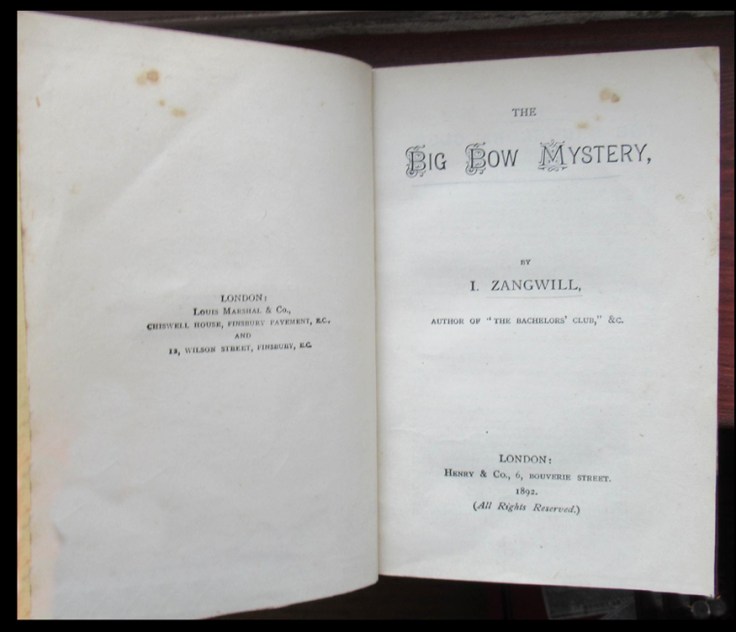


 fullybooked2017