Search

fullybooked2017

Author

fullybooked2017

A retired Assistant Head Teacher, mad keen on guitars. Four grown-up sons, two delightful grandchildren. Enjoys shooting at targets, not living things. Determined not to go gently into that good night.

SERPENTINE . . . Between the covers

Serpentine Header

No-one could ever accuse Jonathan Kellerman of not being industrious. It seems like only the other day that I reviewed The Museum of Desire (it was 9th November last year, in fact), but now Dr Alex Delaware and Milo Sturgis are back again in the hills and canyons of LA, solving another mystery. A quick bio. for readers new to the series. Delaware is a practicing child psychologist who often (this is the 36th book in the series) helps LAPD detective Milo Sturgis with cases. Delware lives with a woman who repairs stringed instruments, while Sturgis has a partner, and has come through the dark years when being gay was something of a no-no in police ranks. The plot is as wonderfully convoluted and labyrinthine as ever. So (takes a deep breath), here goes.
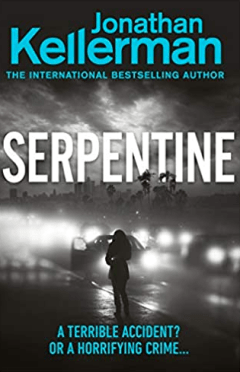
Screen Shot 2021-02-04 at 18.47.53Sturgis has reluctantly taken on the coldest of cold cases. His orders have come down from some very well-connected people in the political and civic life of LA, and so he has been pulled off all other work. The mystery? What is the truth behind the death of a woman decades earlier, found in the wreckage of her burnt out Cadillac at the bottom of a canyon bordering Mulholland Drive? Careless driving? Might have been, were it not for the fact that she had also been shot in the head.

The woman pulling the strings is Ellie Barker, a millionaire former businesswoman, and daughter of Dorothy Swoboda the lady in the canyon. She was only three at the time, has no recollection of her mother, and never knew her natural father, having been brought up by her stepfather, Stanley Barker.

Anton Des Barres was a wealthy industrialist who made his money manufacturing high quality surgical equipment. After his second wife died, he became something of a womaniser, inviting young women back to his mansion where he and his children still lived. Delaware and Sturgis learn that Dorothy was one of Des Barres’s ‘harem’. They also discover a strange coincidence. Arlette Des Barres, the man’s second wife died after a fall from her horse in the rugged country near where Dorothy died. Stanley Barker was found dead, possibly as a result of a fall, in the same area.

Historic deaths are one thing, but when Ellie Barker’s boyfriend is shot, Delaware and Sturgis are faced with the uncomfortable thought that whatever the truth behind Dorothy’s murder, it is far from being dead and buried. It is alive and well, and extremely dangerous.
Screen Shot 2021-02-06 at 13.50.48

PendantThe title of the book refers to a piece of jewellery, which Delaware and Sturgis eventually discover is deeply significant. Actually, the pair make many assumptions about the case, and most of them prove to be wrong, which only adds to the credibility as investigators. They are not super-sleuths; they are mortal, fallible – and consequently completely convincing.  It is only in the final pages that they – and we – learn the truth about the life and death of the woman who called herself Dorothy Swoboda, and it is dark stuff indeed.

Cynics might turn up their noses at this book and dismiss it as “formula fiction”. Fair enough, and, as the saying goes, “opinions are like (insert anatomical detail) – everyone has one”. What such critics find hard to cope with, I suggest, is that writers like Kellerman are rather like alchemists, in that they take base metal – cops, bad guys, slick dialogue, zooming around in cars, and turn it into gold – conviction, reading pleasure, empathy with the characters and a sense of “can’t wait for the next novel“. That is pretty impressive, at least in my book.

Serpentine is published by Century, and is out now.

THE POSTMAN DELIVERS . . . Katz, Perks & Spain

Postman Header

I haven’t done a ‘Postman Delivers’ feature for ages, mainly because during our annus horibilis of 2020, books have come in dribs and drabs. Maybe today’s “thump, thump, thump” of books hitting the doormat are a sign of better things to come, in all sorts of ways. Let’s hope so.

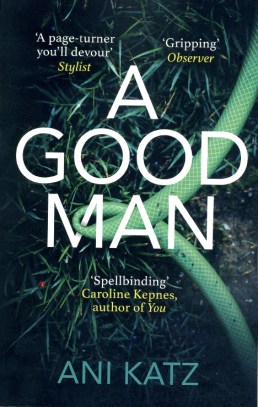
A GOOD MAN by Ani Katz

A Good Man023Fans of dark domestic drama should love this. The ‘good man’ in question is Thomas Martin. He was the perfect family man, husband, father son and brother. He had a dream job and a lovely home. But when disaster strikes, and dreadful suffering is inflicted on those he loves, he is forced to conduct the most forensic examination of his own personality, motivation and actions. Ani Katz is a writer, photographer and teacher. She was born and raised on the south shore of Long Island, and holds a MFA in photography from Columbia College, Chicago, and a BA from Yale. She lives in Brooklyn. A Good Man is published by Windmill/Penguin Random House. It came out in hardback in January last year and the paperback will be out on 11th February.
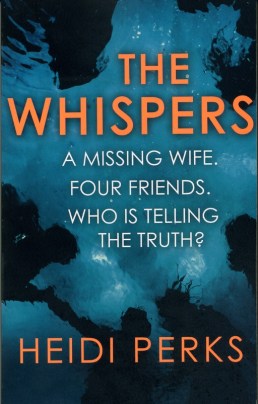
THE WHISPERS by Heidi Perks

The Whispers025I reviewed – and loved – an earlier Heidi Perks novel back in 2019, when Come Back For Me was published. Her latest novel tells the story of Anna Robinson, a woman with the perfect family, and everything in the world going for her. One night she goes out to have some fun with four old friends. And never returns. Why would she do this? What has happened to her? Are the rumours at school gates true?

Heidi Perks lives by the sea in Bournemouth with her husband and two children.She graduated from Bournemouth University with a BA (Hons) in Retail Management, and then enjoyed a career in Marketing before leaving in 2012 to focus on both bringing up her family and writing. The Whispers is published by Cornerstone Digital/Century and will be available from 18th March as a KIndle, and 15th April in paperback and hardback.

THE PERFECT LIE by Jo Spain

Perfect Lie024Jo Spain is, in my opinion, one of the most gifted writers we have. She is based in Dublin, and not content with creating a hugely popular police procedural series featuring Detective Tom Reynolds, she writes scripts and screenplays for television and cinema, and also managed to write superb standalone thrillers. The Perfect Lie belongs to the latter category, but moves the action from Ireland to America’s east coast. Erin Kennedy lives in Newport, Long Island with her detective husband Danny. Her idyllic life turns into a nightmare when he jumps to his death from their fourth-floor apartment.


In the traumatic months that follow his death, Erin learns that Danny was not the ‘regular guy’ everyone thought he was. If those revelations weren’t bad enough, she is then arrested and charged with his murder. Her previous life has morphed into something spectacularly dreadful – The Perfect Lie. Click this link to learn more about Jo Spain and her books.The Perfect Lie is published by Quercus and will be available in all formats from 13th May.

THE NIGHT HAWKS . . . Between the covers

Night Hawks header

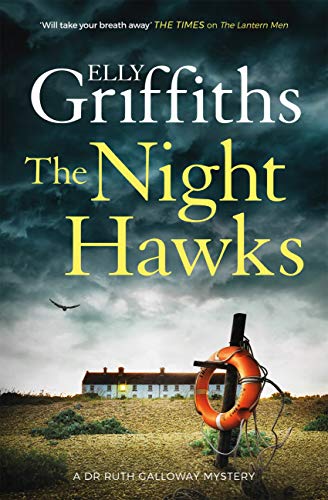
Screen Shot 2020-12-18 at 19.46.09Elly Griffiths, (left) whose real name is Domenica de Rosa, has created an endearing heroine in the person of Ruth Galloway, an English archaeologist who, over the course of a dozen novels, has managed to find herself at the centre of murder mysteries where the corpses are considerably more recent than the ones she normally excavates. She is a senior lecturer at the fictional University of North Norfolk, and the novels are set in and around the north and west of Norfolk. Griffiths uses real locations like King’s Lynn, Blakeney and Sheringham, and has also constructed a reliably entertaining cast of supporting players, principally Ruth’s once-upon-a-time lover, a refreshingly old fashioned married police detective called Harry Nelson. They have a child, Kate, who lives with Ruth, while Harry remains more-or-less happily married to Michelle, with whom he also has children.

In the thirteenth book in the series, The Night Hawks, we have the characters who long time readers of the series will recognise, including the middle aged druid who calls himself Cathbad. His real name is Michael Malone, but he can usually be relied upon to bring to bring a touch of the supernatural – imagined or otherwise – to the proceedings. The Night Hawks in this tale aren’t remotely sinister, despite their name. They are group of men whose hobby is traversing the ancient Norfolk landscape with their metal detectors, searching for buried artifacts. They operate at night, because it is quieter and they are less likely to be disturbed.

They get the story started with a classic Elly Griffiths trope – the finding of a Bronze Age hoard, including an ancient skeleton, alongside a body that is much more recently deceased. While the older gentleman can wait his turn to be studied and catalogued, the young man’s body is whisked off to King’s Lynn for the attention of the police pathologist.

51D4BGVpbxLShortly after the grim discovery, the police are called to a remote farmhouse a few miles inland, where there are reports of gunshots being heard. This time, there is no doubt about the identity or the cause of death of two dead people found inside Black Dog Farmhouse. Dr Douglas Noakes and his wife Linda are dead from gunshot wounds, and it appears to be a clear case of murder-suicide. This clear cut diagnosis becomes rather more tenuous when questions are raised about firearms technicalities, despite an apparent suicide note being found.

The plot becomes pleasantly complicated from this point on. The late Dr and Mrs Noakes had two children, from whom they had become estranged, but was the separation bitter enough to provoke murder? Noakes was not a GP, but a research scientist, and it seems that he had been working with a Cambridge lab developing vaccines. Was this why one of the rooms at Black Dog Farmhouse was kitted out like a doctor’s surgery, complete with bed? The dead young man – the twentieth century one – is eventually identified as Jem Taylor, a 25 year-old from Cromer, who had only recently been released from prison.

There is another murder. This time the victim is a member of The Night Hawks, a retired teacher with connections to several of the people in the story. He has been battered over the head with a lump of rock, and his death further complicates matters.

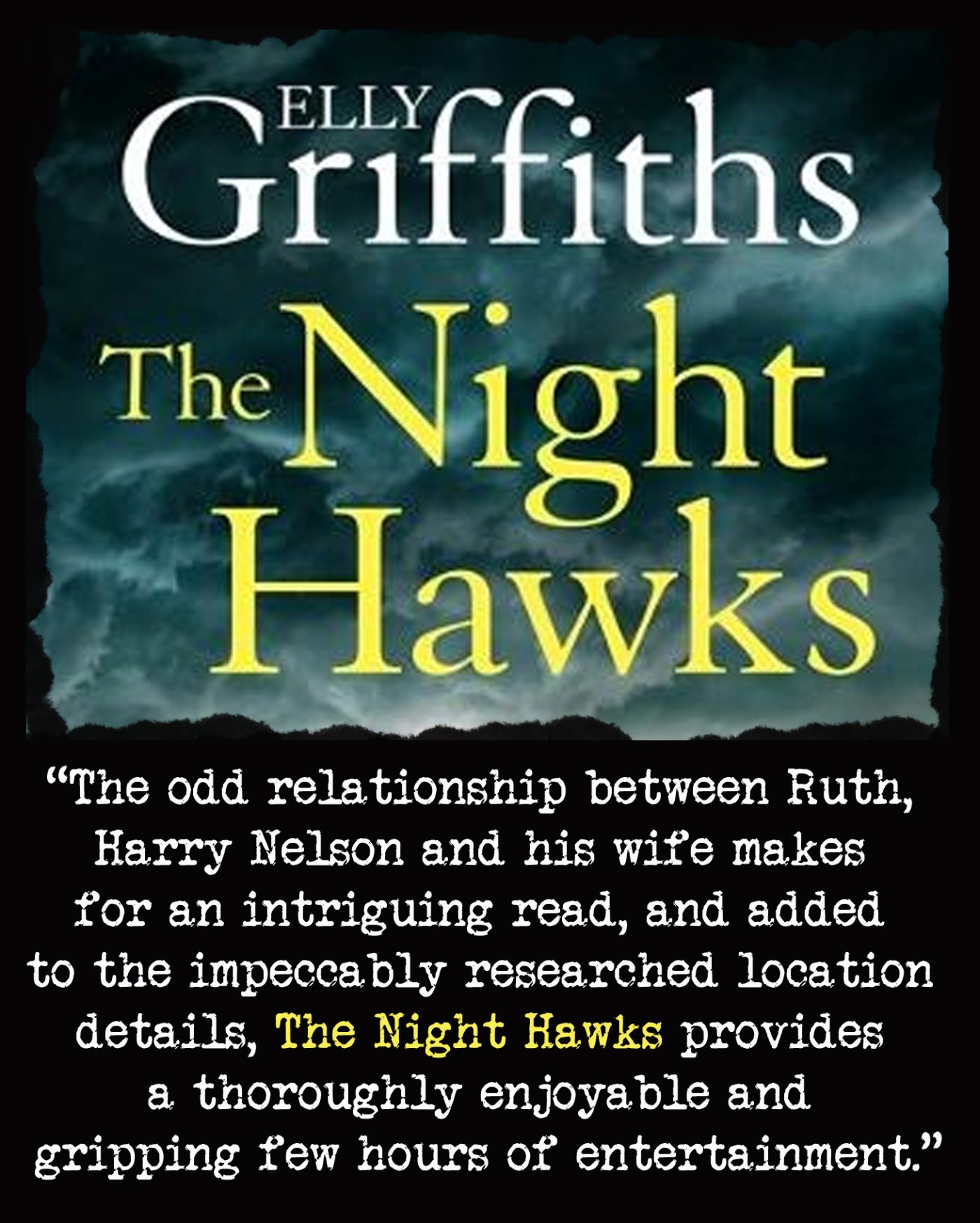
Elly Griffiths has great fun by introducing some ‘spookery’ by way of a local legend – that of Black Shuck. Tales of a ghostly hellhound are spread far and wide through English folklore, and this Norfolk version is equally menacing. Like all literary amateur sleuths, Ruth Galloway’s involvement with active police investigations is pretty implausible, but delightfully so. The odd relationship between Ruth, Harry Nelson and his wife makes for an intriguing read, and added to the impeccably researched location details, The Night Hawks provides a thoroughly enjoyable and gripping few hours of entertainment. The book is published by Quercus and will be out on 4th February.

END OF THE LINE . . . Between the covers

Screen Shot 2021-02-01 at 18.30.51

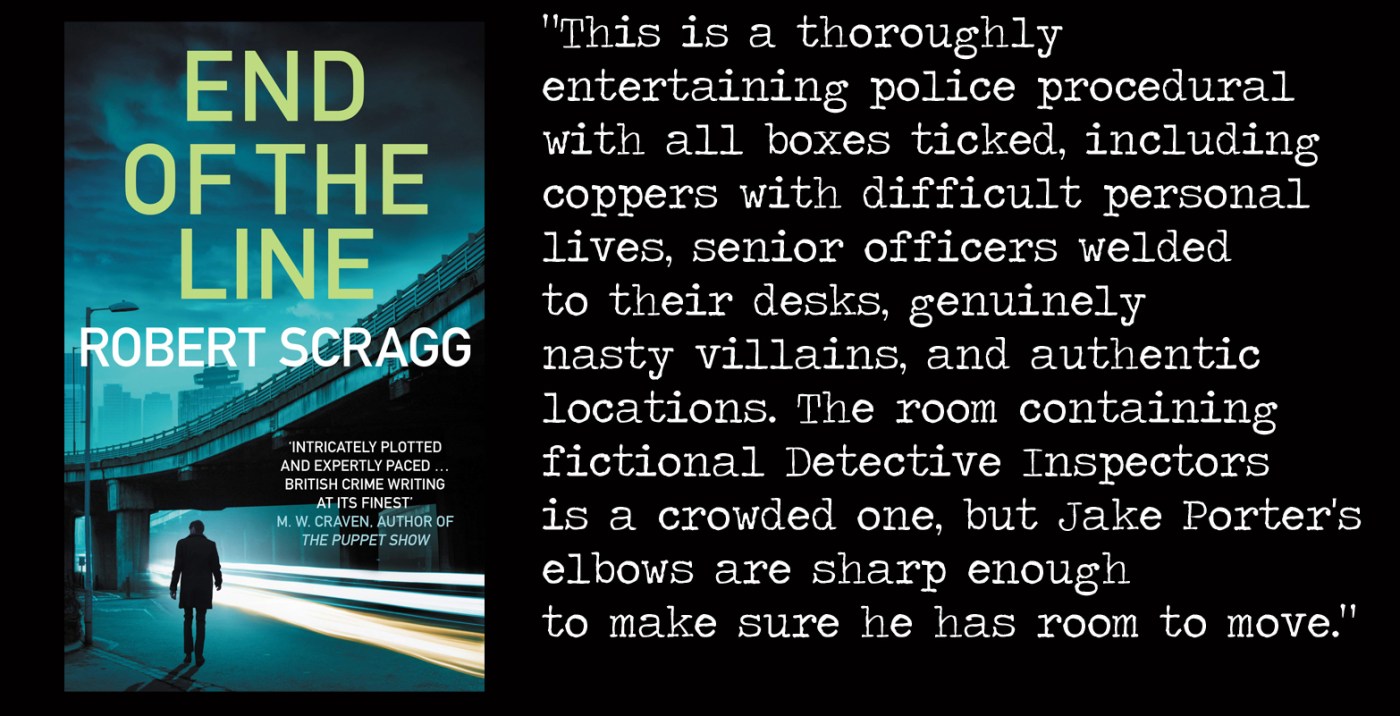
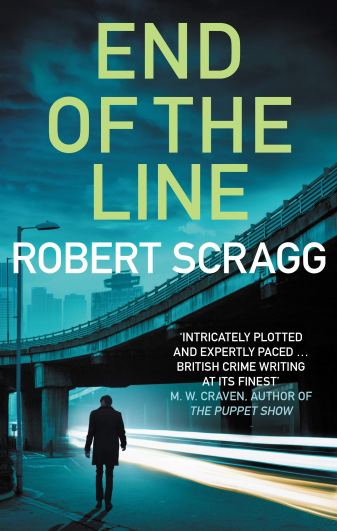
This is the fourth in Robert Scragg’s popular police procedural series featuring London DI Jake Porter and his trusty Sergeant, Nick Styles. The story so far: Porter still grieves for his wife Holly, killed in a hit-and-run incident a few years earlier. The driver remains unidentified, and it preys upon Porter’s mind. He has cautiously begun a new relationship with fellow cop Evie Simmons. Styles is married, with a young child, and is intensely loyal to his boss.

81TTdj6ywMLThe book starts in gory style. Ross Henderson, a young left wing activist, has a YouTube channel on which he posts regular videos denouncing his bête noire, a movement called the English Welfare Party. The EWP are right wing Nationalists vehemently opposed to immigration. As Henderson is setting up his latest live video stream from an abandoned magistrates’ court, proceedings are interrupted by a group who appear to be Islamic extremists. Live and on screen, the young man is killed using the jihadists’ favourite method – decapitation. By the time the police arrive,the killers are long gone, but the shocking video has been seen by millions on social media.

At the same time that Porter and Styles are assigned to the case, Porter hears that there is something of a breakthrough in his personal hunt for the person who killed his wife. Fingerprints from the abandoned vehicle that did the damage have finally been matched to that of a minor criminal, Henry Kaumu. All good then, except that Kaumu is lying in an intensive care unit, comatose and swathed in bandages after being battered around the head with a baseball bat, wielded by an angry homeowner whose house Kaumu was trying to burgle. Porter learns that Kaumu is an employee of Jackson Tyler, a notorious London gangster. Because the case is so personal, Porter is forbidden to take any part in it and so he goes ‘rogue’ to try to find the identity of the person who was driving the fatal car. His clashes with Tyler are painful and unproductive, until he receives information from an unlikely source.

ScraggPorter’s four year search for the person who killed his wife finally ends in a violent encounter on a suburban industrial site, and the hunt for Ross Henderson’s killer takes one or two wrong turns, but eventually Porter gets his man. Or does he? There is a clever twist at the end which I didn’t see coming. Robert Scragg clearly has a strong political stance, but that’s fine – it’s his book, and readers can take it or leave it.

I have to be honest and say that I smelled a rat from the word go. Why would Islamists murder a left wing activist who would have held all the ‘correct’ views on such topics as immigration, Palestine and cultural diversity? It takes Porter & Co. rather a long time to realise they are being played, but maybe that’s just me being a curmudgeon. That caveat aside, this is a thoroughly entertaining police procedural from the author (right) with all boxes ticked, including coppers with difficult personal lives, senior officers welded to their desks, genuinely nasty villains, and authentic locations. The room containing fictional Detective Inspectors is a crowded one, but Jake Porter’s elbows are sharp enough to make sure he has room to move.

End of The Line is published by Allison & Busby, and is out now. To find reviews of the three earlier books in the series, click on the image below.

Scragg link

THE BURNING GIRLS . . . Between the covers

TBG wiki

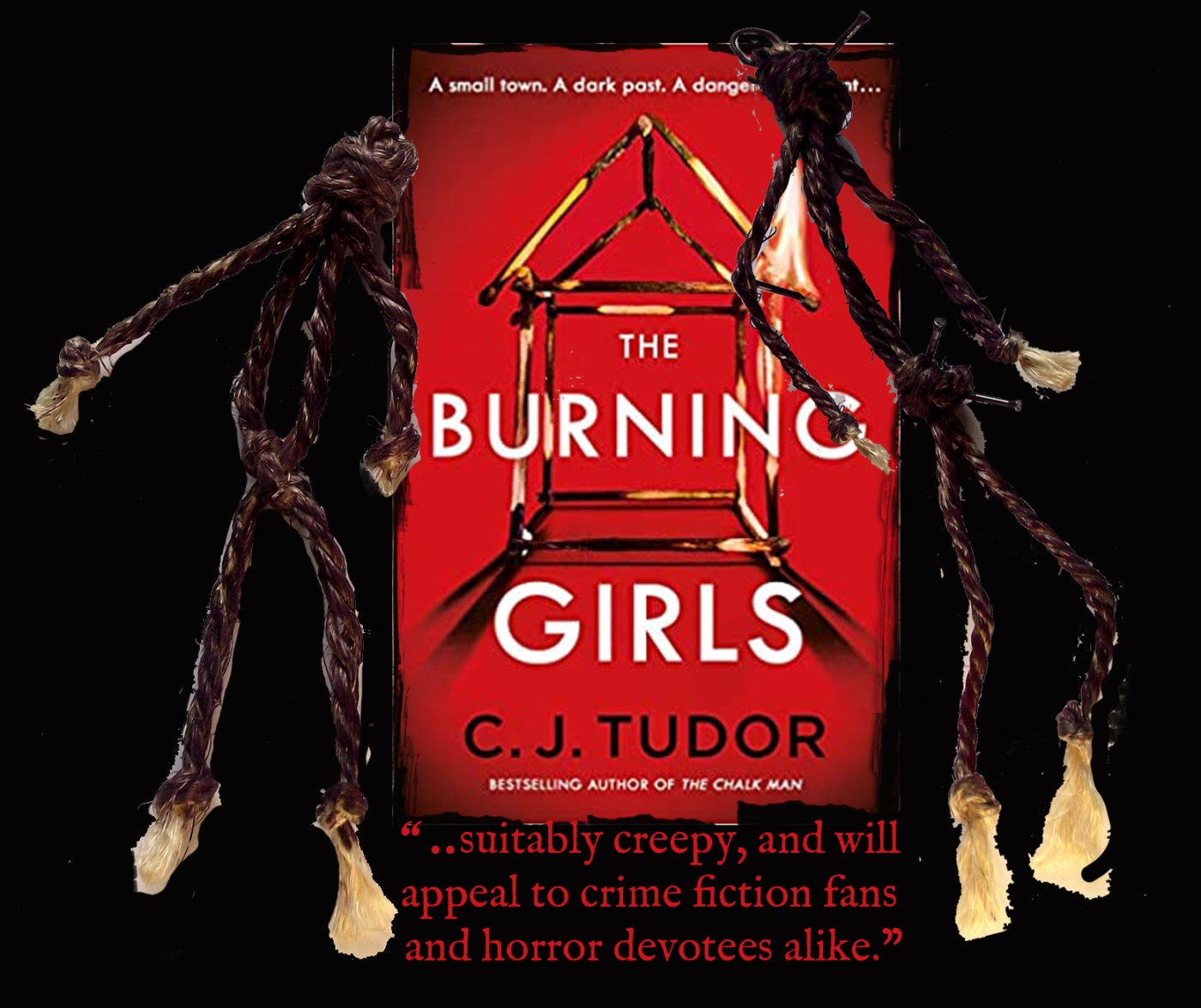
CJ Tudor gets the ball rolling by inventing a rather sinister legend  and an equally disturbing little community in Sussex. Enter, stage left, a priest called Jack (short for Jacqueline) Brooks and her teenage daughter Flo. Jack’s previous ministry was in a run-down but vibrant parish in Nottingham, but after she became involved in one of those tragic social services failures – think Victoria Climbie, Baby P, Lauren Wright – her oleaginous Bishop, more concerned about PR than prayer, moves her down to Sussex.

TBG coverWe also learn fairly early on that Jack has another skeleton in her closet, but more of that – or, more accurately, him – later. Jack’s first encounter with Chapel Croft residents is the appearance of a barefooted bloodstained child wandering towards her outside the little chapel which gives the village its name. This startling apparition, however, is not from hell, but from a nearby farm where the girl came rather too close to a pig being butchered in the farm’s abattoir.

Jack’s sense of unease about the community increases as the pages turn. In no particular order, we have a former vicar who committed suicide, two teenage girls who disappeared from the village a few years earlier, a cadaverous and saturnine churchwarden. daughter Flo’s involvement with a strange young man called Wrigley who once tried to burn down his school and who suffers from a nervous condition which makes him twitch uncontrollably. Oh yes – there is also something rather nasty buried beneath the floor of the chapel.

tbg020

As Jack tries desperately to do her job as a minister, she becomes tangled up in a sticky web which involves previous incumbents and how (and why) they died. The more she struggles, the closer the rather unpleasant spider that created the web comes; what we don’t know, however, is the name of the spider.

Screen Shot 2021-01-26 at 19.19.04One of CJ Tudor’s many talents is to lead her readers up the garden path in terms of what we think is happening. I certainly thought I knew what was what, but rather like Prospero, Tudor has the gift of sorcery, and uses it to telling effect, turning Chapel Croft into an enchanted island which is certainly “full of noises”, not all of them being pleasant. Like all good writers, she saves the biggest surprise until the final pages.

One of my early reactions while reading this was to think that we have already had a female vicar and her teenage daughter interacting with things supernatural in Phil Rickman’s Merrily Watkins series, but by the time you have reached the last page of The Burning Girls, you will be aware that we are talking about two very different beasts. This novel is suitably creepy, will appeal to crime fiction fans and horror devotees alike, and in Jack Brooks, CJ Tudor (right) presents us with a plausible and very human central character. One of the best things about the book is that the legend of the stick figures and the dark history of Chapel Croft makes one want to put it on the list of places to visit once the wretched virus recedes. Sadly, however, Chapel Croft, its haunted little church and disturbing villagers are, to return to Prospero:

“..all spirits and are melted into air, into thin air.”

The Burning Girls is published by Michael Joseph and is out now.

THE MURDER OF MINNIE MORRIS . . . The Walsoken Outrage (Part three)

Header

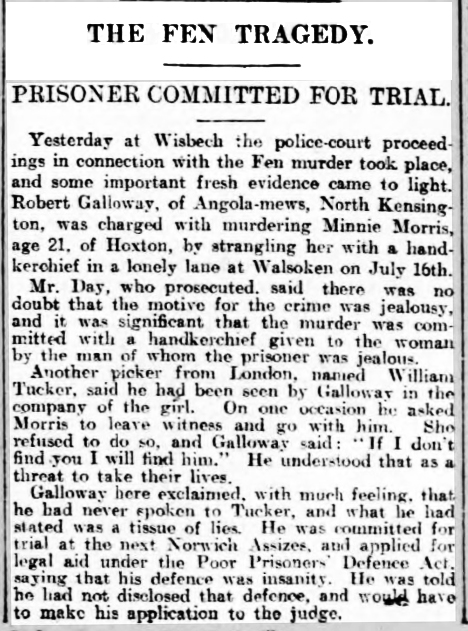
THE MORTAL REMAINS OF MINNIE MORRIS were laid to rest in Walsoken Cemetery on the afternoon of Friday 19th July 1912. The newspapers reported:

The officiating clergyman was the Rev. G. A. A. Finch, of Loughborough, who is in charge of the parish whilst the Rector (the Rev. J. Young) is on his holidays. The first part of the service was conducted in the church. The funeral was largely attended, it being estimated that there were quite 300 fruit pickers -from all parts of the district present.

The scene was a very impressive one, for many of the pickers, who are generally so light-hearted, were greatly touched by the solemn ceremony, and numerous were those who were moved to tears as the coffin was lowered into the grave. The chief mourner was the mother of the girl and for her much sympathy had been shown in the parish, a collection on her behalf amounting to £1. The girl’s sweetheart, a London bricklayer, came down to see her body, but was unable to wait for the funeral. There were nearly a dozen floral tributes, one from the mother, and the others, from pickers. Most of the wreaths were made by a Mrs. Love, wife of the copperman at Mr. J. S. Batterham’s farm, where the girl had been working.

On the spot where the body of Morris was found, a cross has been cut in the turf and flowers have been laid on the cross. On Sunday hundred, of people visited Burrett Road to see the spot. The charge of murdering Morris which has been preferred against Robert Galloway. – of No. I Angola Mews, Babington-road, North Kensington, to be investigated at a special sitting of the Marshland Magistrates at Wisbech today (Friday).

walsoken-ch-old

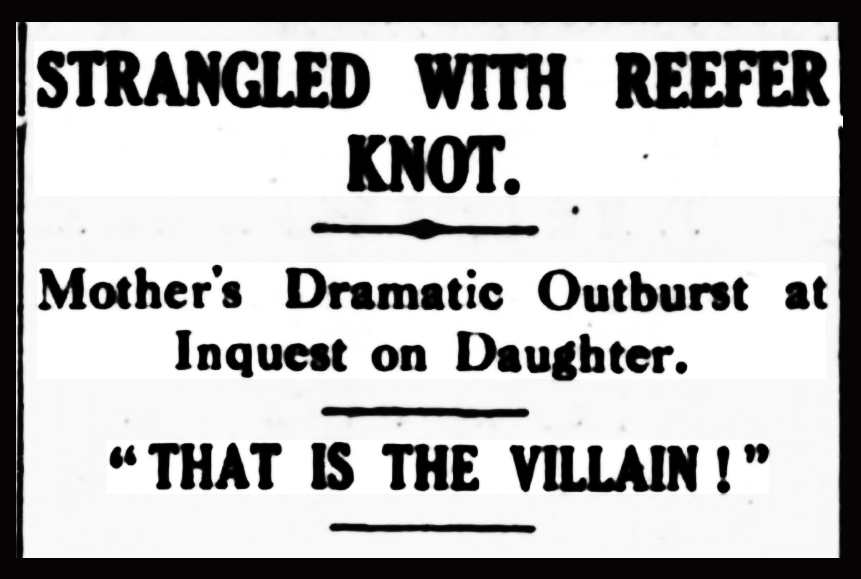
Headline2The inquest on the body of Morris was conducted at the Bell Inn, Old Walsoken, on Wednesday 24th July. Presiding was  the District Coroner (Mr. R. A. Wilkins). Supt. Powles represented the police. The morning was to be dramatic. The victim’s mother. Mrs. Springfield, was the first witness to be recalled, and when she entered the room she looked at Galloway, gasped for breath, and then crying said between her sobs:
“That is the villain.” Stating that her husband was outside ill. she signed the deposition. As she was rising from her seat she said:
“My sister said she would look after her; What this man wanted to kill my daughter for. I don’t know. She never did anyone any harm. He got into the company of the girl, and I quite understand he got jealous. Oh God love her.”
The Coroner: “Do not get excited.”
Mrs. Springfield: “It is cruel. Look at the man. (Then to Galloway): Look at me – look at her mother. (Lifting her hands as a warder stood in front of her, and between her and Galloway): I would if I dare. You scamp, you dirty dog, you villain.”

The witness, who was crying as she was speaking, then left the room. It transpired that the man who cut the cross on the spot where the body was found, and filled the cross with flowers, was James Long, an employee of Mr. Blunt. The Coroner said it was a very nice idea. and quite refreshing after the brutal things they had been listening to.

The grim wheels of the legal process ground ever onwards. The next stage in the process was the police court in Wisbech on 1st August. The findings were never in doubt, but Galloway’s behaviour remained bizarre. He had now decided to opt for an insanity plea.

Police Court
Mr Justice DarlingGalloway remained under lock and key for the next three months, but in October he had to face the finality of justice. At the Norwich Assizes in October his belated attempt to plead insanity cut no ice with either the jury or Mr Justice Darling (right). He was sentenced to death and on the morning of Tuesday 5th November he had no option but to keep his appointment with Thomas Pierrepoint and his assistant George Brown. Newspaper reports said:

“He walked firmly to the scaffold, and death was instantaneous.”

Prior to 1887, Norwich prison – and its gallows had been within the walls of the castle, but Galloway’s last days would have been spent in the institution on Knox Road, and his remains presumably lie therein.

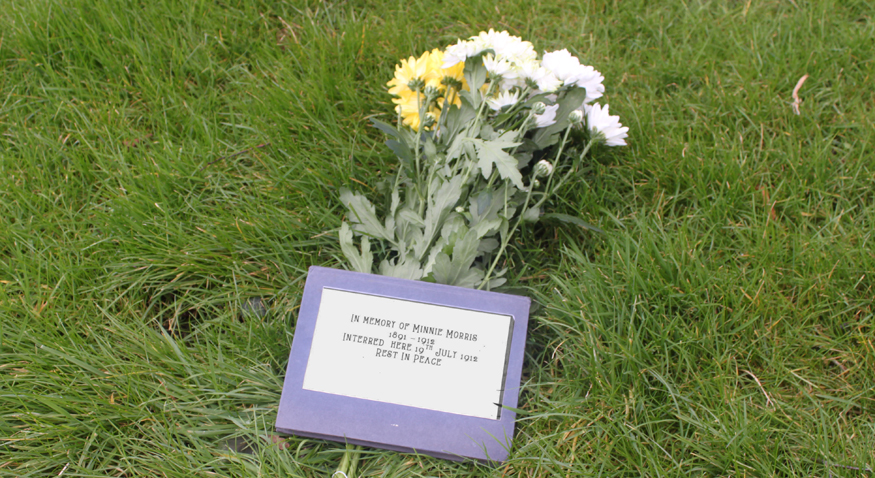
Minnie Morris’s body lies in a quiet corner of Walsoken cemetery, forgotten, unmarked and unvisited. Her family were poor, and unable to afford a headstone. Thanks to the efficiency of the District Council we know her last resting place, and I was able to put some flowers on the spot. If you click on the media player at the bottom of this feature, you will hear a lovely old hymn, written by Ira D. Sankey, which reminds us of our mortality.

Grave

Plaque

I KNOW WHAT I SAW . . . Between the covers

ikwis021

Imagine having a perfect memory. Being able to replay words, sounds, situations – from years ago. It’s all there, in your head, ready to be recalled. Great for exams when you were younger, but what about when something unpleasant happened to you, and it won’t ever go away? Nicola Walker has Hyperthymesia. She has been the subject of scientific studies and examinations, but her condition is what it is. Now, it’s 2020 and, at the age of 51, she has a humdrum job in London’s British Library. Sher marriage ended half a lifetime ago, and now she lives from day to day with only her cat for company. Until she receives an alarming telephone call.

The call is from a Metropolitan Police detective. Her former husband, Declan, has been arrested on suspicion of murdering his father, years earlier. And his only witness? Nicola and her perfect memory.

We are basically in two time zones. The present day, 2020, and a summer Sunday in June 1985, which is Arty Robbins’s 50th birthday. The event is being celebrated at a pub called The Mary Shelley, and the landlord is Arty’s father, Vincent. Nicola, aged 16, and Declan Robbins, aged 18, son of Arty, are ‘an item’. A list of the other characters is not something I normally compile, but it might be useful in this case.

Craig Walker, Nicola’s father
Susan Walker, Nicola’s mother
Dave Crane, friend of the Walkers. He married Susan after Craig’s death from cancer.
Kat Clarke, Nicola’s contemporary, and best friend. Her father Daniel, Arty Robbins’s brother, walked out on them years earlier.
Chloe Clarke, Kat’s mother
Gary Barclay, Kat’s boyfriend. They later marry.
Anne Robbins, wife of Arty, mother of Declan

ikwis022Arthur Robbins is a pillar of the community. Successful estate agent, all-round diamond geezer and school governor. But then, he just disappears. He was last seen in the small hours on the night of his birthday party. Lost for 35 years – until his remains turn up in the foundations of a building being demolished to make way for a new development.

We have, in one sense, a traditional whodunnit, but it is unconventional insofar as  the usual police work, while still taking place, is secondary to the agonising replays going on inside Nicky’s head. What did she see? Who did she see? Where were they? How do these memories stack up against the ticking clock on that warm summer night 35 years ago? Has she mis-remembered? What if she is shutting out some memories in order to protect someone she loves? There’s no shortage of suspects, as the real Arty Robbins is far from the jovial character he pretends to be.

The killer of Arty Robbins is eventually unmasked, and SK Sharp leads us down many a blind alley as the narrative unfolds, and Nicola finally completes the jigsaw of her memories. It’s clever stuff, and gripping – I read it in two enjoyable sessions – but for me, the strength of the novel is the relationship between Declan and Nicola, both then and now. I don’t remember a more sensitive and perceptive account of teenagers falling in love with each other, but the most moving and effective counterpoint to this is how it all plays out, decades later, with so much water under the bridge, so much hurt, so many mistakes and so much misunderstanding.

This is a fine novel, a thriller, yes, but full of compassion and telling insights into what people do to each other, and how secrets corrode trust. I Know What I Saw was first published in October 2020 by Cornerstone Digital. This paperback edition is from Arrow, and is out now.

SK Sharp (aka Stephen Deas) is on Twitter

Screen Shot 2021-01-29 at 19.12.18

THE MURDER OF MINNIE MORRIS . . . The Walsoken Outrage (Part two)

HeaderTHE STORY SO FAR . . .  July 1912. Wisbech, Cambridgeshire.Two Londoners in their 20s – Minnie Morris and Robert Galloway – have come to the Fenland town for the fruit-picking season, and are working for a local farmer. J.S. Batterham. They are in a relationship, of sorts, because Minnie is very attractive and enjoys male company. Sadly, Robert Galloway is prone to jealousy, and every word Minnie exchanges with other young men is a dagger in his heart.

On 16th July both had been drinking. Licensing restrictions were only to be introduced a few years later, as part of the effort to boost munitions production in WW1, and both The Black Bear and The Bell Inn in Walsoken were “open all hours”.

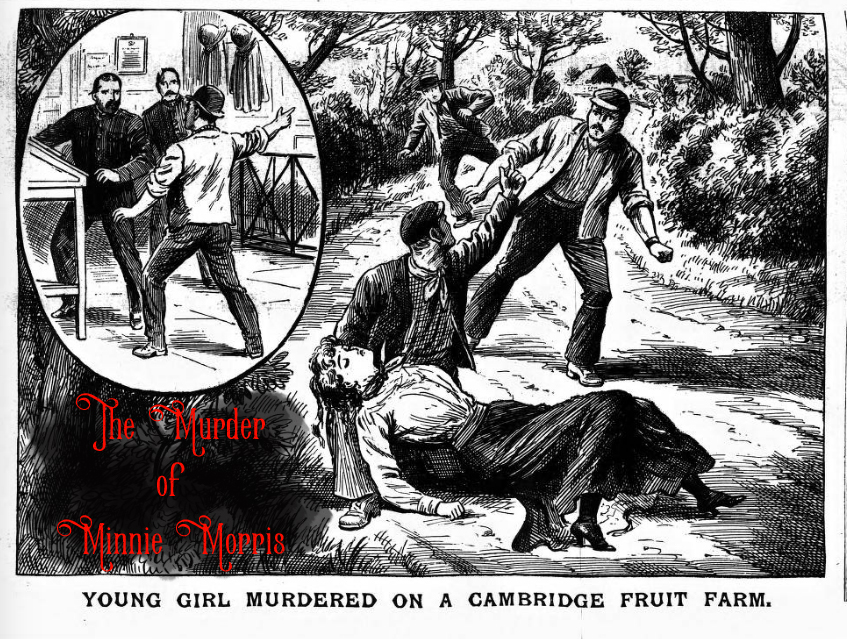
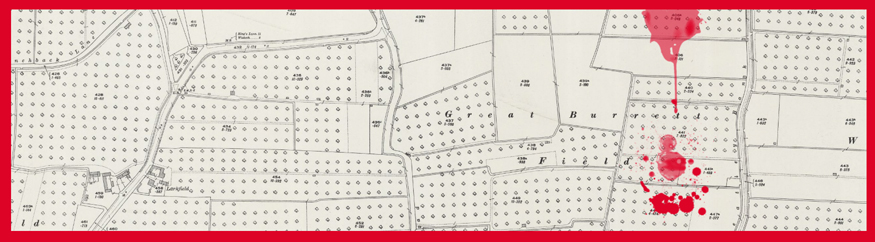
The pair went for a walk after a lengthy session in the pub. They followed Lynn Road. and then turned right into Burrett Road. At some point, Galloway’s jealousy and – perhaps – Minnie’s indifference triggered a violent response. Galloway throttled Minnie, using a handkerchief she had been given by another admirer to make a fatal tourniquet around Minnie’s neck. It seems that Galloway then headed back to seek solace in alcohol.

Witness reports in subsequent court hearings tell their own tale:

Bertie Ash, labourer, Walsoken, said that on Tuesday afternoon, 16th July, he was cycling along Burrett Road,. towards the Black Bear, and his attention was attracted by a woman lying flat on her back on the grass with a man kneeling over her. They were on the left-hand side of the road. He did not know what the man was doing. The man’s left hand appeared to be on the woman’s mouth or breast, and a cap was over the woman’s face. He did not stop, but proceeded to Mr. J. S. Batterham’s farm, where he stayed 10 minutes.

He returned the same way on his bicycle and that the woman was lying in the the same position, but the man had gone. She was not moving, and was alone. He did not stop. He thought they were a young couple courting, and that the woman was asleep. When he first passed the couple they did not appear to be struggling at all.

William Frusher, labourer, Old Walsoken, said that on Tuesday, 16th July, he was walking along Burrett Road in the direction of his home, which was away from the Black Bear. It was 5.10 p.m., and he saw woman lying on the left-hand side of the road. She was on her back, and was not moving. He stood for a moment and looked at the woman. He could not see her face as a man’s cap was over it. He felt her hands, and they were cold. He removed the cap and saw there was a lot of brown froth around her mouth. She was not breathing. He did not move the body, and left it just as it was.

He went away and returned with a sack to cover the woman. That was about ten minutes after he first saw her. He returned with a man named Lankfer and remained by the body until the police arrived. He did not notice a letter until P.C. Taylor came. It was in the waistband of her skirt. The woman’s head was bare and her hair was light coloured.

Galloway was either drunk or obsessed. Having walked into Wisbech he spoke to the first policeman he found:

PC. Jacobs, of Wisbech, said that at 6.45p.m. on Tuesday, 16th July, he was on duty on Wisbech Market Place, and the prisoner came up to him and said: “Have you heard of a murder on the Lynn road, Walsoken? I have strangled a woman. I thought you were looking for me. 1 am ready to suffer for what I have done.”

Galloway was arrested and secured in police cells, and at no time did he deny what he had done. In fact, Police Sergeant Arthur Webb, of Walsoken, stated that when he received the prisoner into custody, Galloway said: “Is she dead? I hope so. You can take that down.”

IN PART THREE

A Burial
A Trial
An execution

THE MURDER OF MINNIE MORRIS . . . The Walsoken Outrage (Part one)

HeaderThese days when Fenland fruit needs picking, the hands that do the work will belong to people who come from places like Vilnius. Klaipeda, Varna, Daugavpils, or Bucharest. Back in the day, however,the pickers came from less exotic places like Hackney, Hoxton or Haringey, and the temporary migration of Londoners to the Wisbech area was an established part of the early summer season. In the autumn, the same people – predominantly women and children, might head south to the hop fields of Kent, but in the July of 1912 the Londoners were here in Fenland.

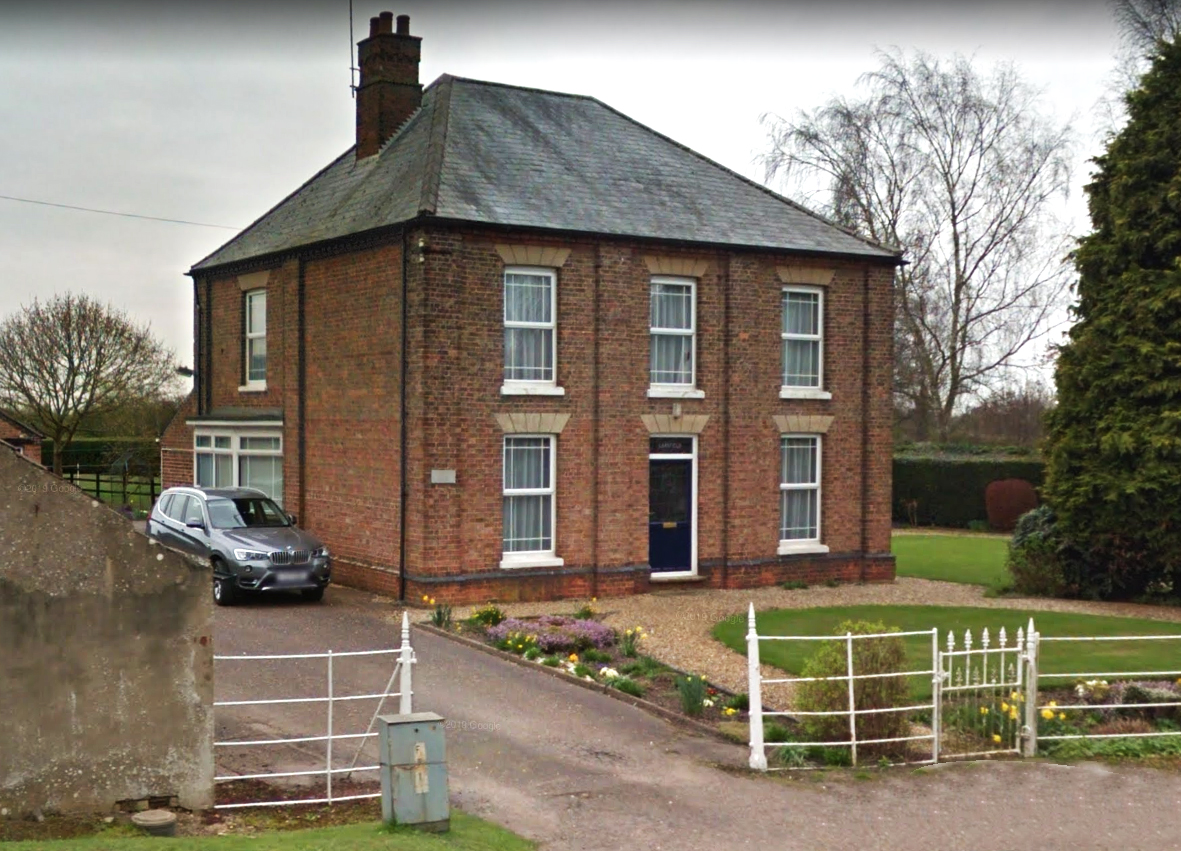
One of the farms in the area which welcomed the London visitors was that of John Stanton Batterham, of Larkfield, Lynn Road, Walsoken. His house still stands:

Larkfield

He was to play no direct part in the tragedy that unfolded on the afternoon of 16th July, 1912, but some of the people who worked for him – and two in particular – were key players.

Minnie Morris has been hard to trace using public records. Her mother, Minnie Gertrude Morris had married (a re-marriage) John M Stringfield in the autumn of 1911, but the 1901 census has her living with a Henry Morris (who was almost twice her age) in Grays Inn Buildings, Roseberry Avenue, Holborn. Also listed is a daughter, also called Minnie, born in Hoxton in 1891.

Screen Shot 2021-01-25 at 21.38.11

Minnie junior is hard to locate in 1911, but on the other side of town, in North Kensington, a young man named Robert Galloway was living with his large family in Angola Mews:

Galloway census

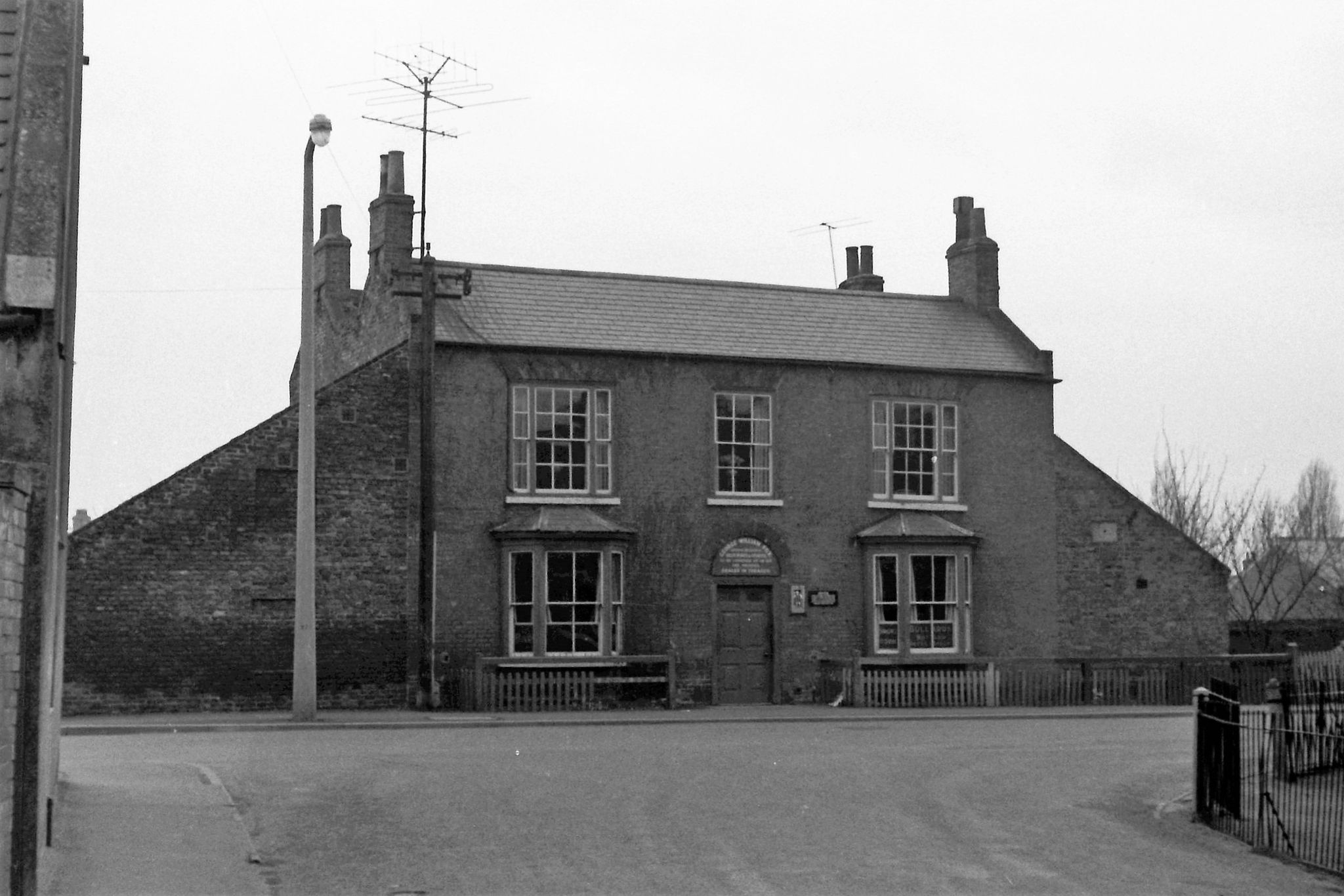
To call Robert and Minnie “star-crossed lovers” is probably pushing the Shakespeare analogy a step too far, but their paths crossed in the summer of 1912. Both turned up, from different parts of the country, to pick fruit for Mr Batterham. It seems that the hours were flexible, and there was money to be handed over the bar in The Black Bear, and the Bell Inn. The Black Bear still thrives, despite the curse of lock-down, but the Bell Inn is long gone. (below)

Old Bell

William Tucker, labourer, Old Walsoken, said he came from London in May last for fruit-picking. He knew Minnie Morris for a few months, and he met her in London. He saw her in the Bell Inn Walsoken, in June. He used to meet her about four times a week and was fond of her. He used to give her grub and spend evenings with her.”

Galloway was described as a seaman in contemporary reports, but there is no evidence to support this. Perhaps the term suggested something exotic and dangerous, and journalists at the time would be as aware of ‘clickbait’ as we are today, even though they might have used a different term. He was clearly violently jealous, and anyone paying court to Minnie Morris was regarded as a mortal enemy.

On 11th July there was a clashing of heads in the Black Bear inn.

Galloway saw William Tucker and Minnie Morris drinking together in the Black Bear inn. Galloway said: “Minnie. I want to speak to you.
She replied: “I’m all right where I am.”
Tucker and Minnie Morris then went out of the inn and stood talking. Galloway said the girl:

“If I don’t find you I’ll find him”, meaning William Tucker.

Over a century later, it is hard to come to any other conclusion other than that Robert Galloway was obsessed with Minnie Morris, and his feelings were that if he couldn’t have her, then no-one could.

IN PART TWO

A fateful stroll
A case for the police


Blog at WordPress.com.

Up ↑