

It is a November evening in 1856, and we are in Galway, the city on the west coast of Ireland. A mail train is due to leave to cross the country to Dublin, a distance of some 125 miles. On its way, the train will call at many stations, some no bigger than halts, and collect cash boxes containing the day’s takings. These boxes will, eventually, find their way into an office in Dublin’s Broadstone Station, the headquarters of the Midland Great Western Railway Company. Thee cash boxes will be emptied, the cash counted and the sums entered into the ledgers by 42 year-old George Little, the chief cashier.
Little was a modest man of good education, but the cruelties of fate had left him the sole provider for four widows – his mother, his aunt and his sister. His diligence, attention to detail and willingness to work whatever hours it took to get the job done had endeared him to his superiors, and he was highly thought of – if not lavishly well paid. Little was known to stay after hours if there was a particularly large amount of money to deal with, but was always at work on the dot the next morning.
It was lunchtime on Friday 14th November before anyone suspected that something might be wrong; Little’s sister, Kate, had come to the station to ask after her brother, who had not come home the previous evening. His office, however, is locked. When the worthies of the MGWR eventually manage to break in to George Little’s office, they are faced with a scene from hell.
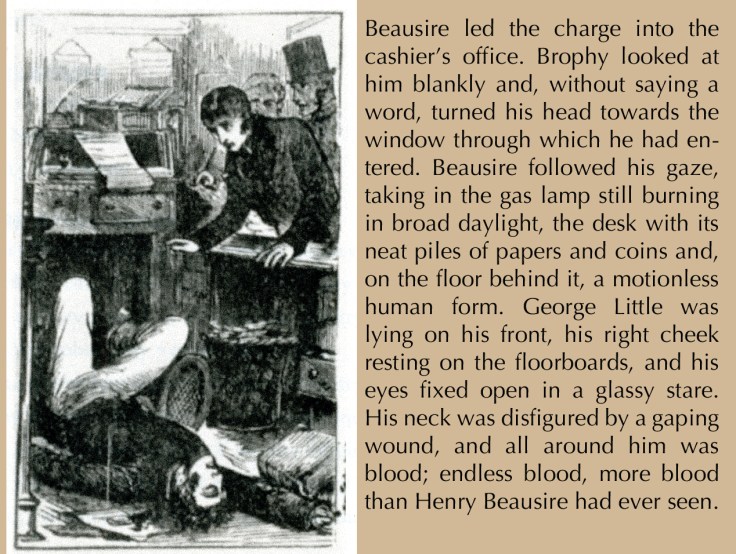
What follows is a classic locked room mystery as the police hunt for the killer of George Little. Even establishing a motive is a puzzle, as most of the money George had been counting was still there in various piles on his office table. The initial investigation is lead by three Dublin detectives – Acting Inspector Daniel Ryan and his two subordinates, Sergeants Craven and Murphy. Try as they might, their enquiries uncover more questions than answers, and Superintended Augusts Dye is brought in to head up the hunt for the killer.

Days, weeks and then months go by. Suspects come and go, and are released for lack of evidence and motive. Fast forward now to Wednesday 24th June 1857. Crown Solicitor Thomas Kemmis, who had initially been involved with the murder investigation was working from home – a handsome house in Kildare Street, Dublin. A servant announces that he has a visitor, and a middle aged woman is shown into the room. She is Mary Spollin, and she has an astonishing piece of news. She tells Kemmis that her husband James – a local painter and handyman – is the murderer of George LIttle. Her evidence is clear and damning, and James Spollin is arrested.
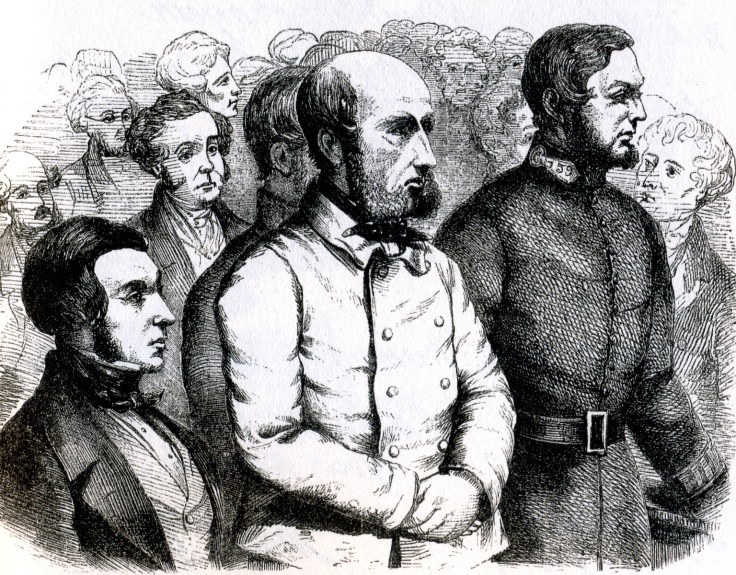
There is a problem, however, for the legal team. Under the law, a wife is not allowed to give evidence against her husband in a criminal trial unless she herself is the victim. It also becomes abundantly clear that the relationship between James and Mary Spollin is, to put it bluntly, a poisonous one. When Spollin’s trial, presided over by Lord Chief Justice Thomas Langlois Lefroy and Chief Justice James Henry Monahan, the accused man’s defence team are not slow to capitalise on this. A contemporary engraving (below) shows Spollin in the dock.
On Tuesday 11th August 1857, shortly after 4.00pm, the jury in the trial of James Spollin returned to the courtroom, having reached their verdict.
“Mr Alley, the clerk of the court, called out the names of the jurors to check they were all present.
When he was satisfied, he asked, ‘Gentlemen of the jury, do you agree on your verdict?’
‘Yes,’ said the foreman, handing him a piece of paper.
James Spollin had risen from his seat in the dock and leant uneasily on the railing in front of him. Mr Alley unfolded the slip and examined its contents carefully. The courtroom remained in breathless silence as he lifted his eyes and announced in a sonorous voice:
‘You say James Spollin is not guilty.'”
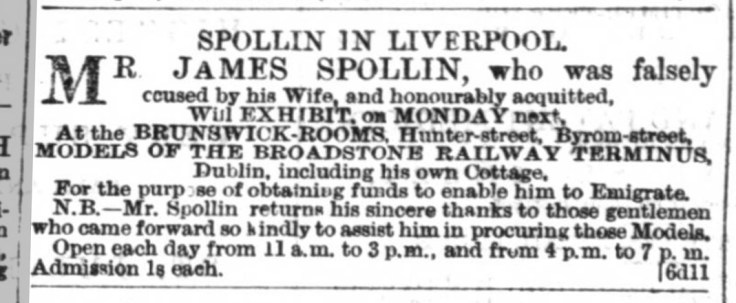
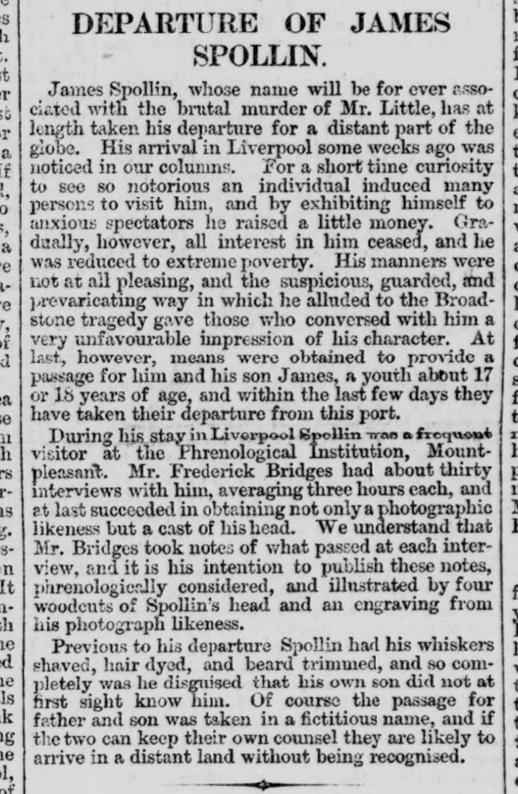
Astonishingly, James Spollin went on to capitalise on his notoriety by going on tour with a kind of celebrity show, which included, among other exhibits, a scale model of the scene of the crime. He then emigrated to America. Author Thomas Morris has written a book which brings Victorian Dublin to life, and he written as erudite, well researched and entertaining a True Crime story as you could wish to read. It is published by Harvill Secker and is out now.

 Zak Skinner is a pretty unremarkable guy in many ways. He’s bright enough, for sure – that’s why he is studying engineering at the University of Chicago. Why he moved there from NYU, we’re not sure at first, but we suspect that he lacks the essential ingredient of ‘stickability’. Or maybe he is running away from something? He and his old school buddy Riley room together, and Riley is most things that Zak is not. Like steady, reliable, unimaginative and not prone to destructive self analysis.



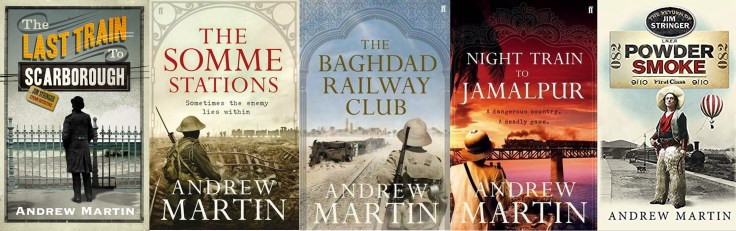
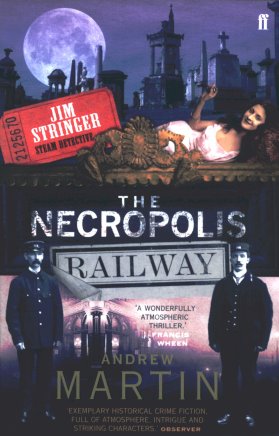 Ever onwards, and ever northward to the ancient city of York. For all that it houses the magnificent medieval minster and has a history going back to the Eboracum of Roman times, fewer people remember that York was also a great railway city, and there can be no more appropriate place to house the National Railway Museum. Like many men now in the autumn of their years I was an enthusiastic trainspotter back in the days of steam, so it is – I hope – perfectly understandable that I have chosen the Jim Stringer novels by Andrew Martin for this stop on our trip. Martin introduced Stringer in The Necropolis Railway (2002) when Stringer is very much at the bottom of the railway hierarchy, and working in London, but by 2004 in The Blackpool Highflyer, Stringer has married his landlord’s daughter – the beautiful Lydia – and has been promoted to a job in York.


 His creator, Nick Oldham, knows of what he writes, as he is a former police officer, and the 29th book in this long running and successful series is due out at the end of November. So, what can readers expect from a Henry Christie story? It depends where you start, of course, because if you go back to the beginning in 1996, Peter Shilton was still in goal, but for Leyton Orient, England lost to Germany (on penalties, naturally) in the Euros semi-final, the trial of men accused of murdering Stephen Lawrence collapsed and John Major was in his second term as British Prime Minister. In A Time For Justice Christie is a relatively junior Detective Inspector – and someone who is seriously out of favour with his bosses, and has to tackle a cocky mafia hitman who thinks the English police are a joke. As the novels progress over the years, Christie rises through the ranks, but he is still someone who is viewed with some suspicion by the few officers who outrank him – the chief constables and their assistants.
 Henry Christie is always hands on, and he has the scars – mostly physical, but one or two mental lesions – to prove it. His personal life has been a mixture of love, passion, tragedy and disappointment. His geographical battle grounds are usually confined to the triangle formed of Preston, Lancaster and Blackpool. This is an area that Oldham (right) himself knows very well, of course, thanks to his years as a copper, but it is also very cleverly chosen, because it allows the author to play with very different human and geographical landscapes. The brooding moorland to the east is a wonderful setting for all kinds of wrong-doing, while the seaside town of Blackpool, despite the golden sands, donkey rides, candy floss and cheerful seaside ambience, houses one of the worst areas of deprivation in the whole country, with run-down and lawless former council estates controlled by loan sharks, traffickers and criminal families of the worst sort.


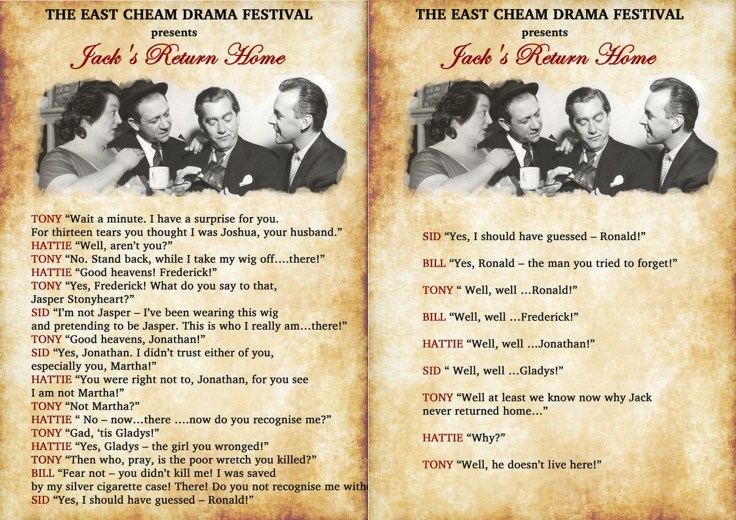
 A trip to Scunthorpe might not be too high on many people’s list of literary pilgrimages, but we are calling in for a very good reason, and that is because it was the probable setting for one of the great crime novels, which was turned into a film which regularly appears in the charts of “Best Film Ever”. I am talking about Jack’s Return Home, better known as Get Carter. Hang on, hang on – that was in Newcastle wasn’t it? Yes, the film was, but director Mike Hodges recognised that Newcastle had a more gritty allure in the public’s imagination than the north Lincolnshire steel town, which has long been the butt of gags in the stage routine of stand-up comedians.
 the river to attend Art college in Hull before moving to London to work as an animator. His novels brought him great success but little happiness, and after his marriage broke up, he moved back to Lincolnshire to live with his mother. By then he was a complete alcoholic and he died of related causes in 1982. His final novel GBH (1980) – which many critics believe to be his finest – is played out in the bleak out-of-season Lincolnshire coastal seaside resorts which Lewis would have known in the sunnier days of his childhood. In case you were wondering about how Jack’s Return Home is viewed in the book world, you can pick up a first edition if you have a spare £900 or so in your back pocket.


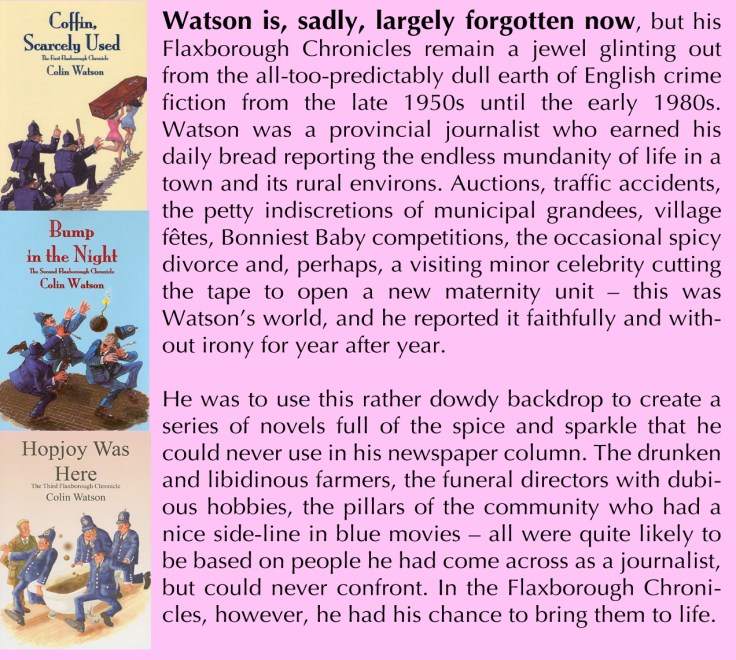
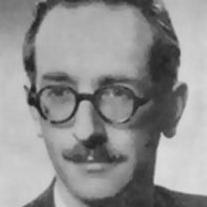
 The next stage of our journey is to a town that doesn’t exist – at least on an Ordance Survey map. Writers have always created fictional towns based on real places – think Thomas Hardy’s Casterbridge, Trollope’s Barchester, Arnold Bennett’s Bursley, Herriot’s Darrowby, and Dylan Thomas’s Llareggub – but remember that each was based on a real life place well known to the writer. Thus we drive along a road that skirts the windswept and muddy shores of The Wash until we arrive in Boston, Lincolnshire. It was here that the journalist and writer Colin Watson lived and worked for many years, and it was in Boston’s image that he created Flaxborough – the home and jurisdiction of Inspector Walter Purbright.


 Wiley Cash is at his best when describing the complex social history of his home state, and the ways in which it affects families and relationships, and he is on good form here. Where the book didn’t work so well, for me at least, was in the ending. In literally two and a half pages, everything we thought we knew about what was happening on Oak Island is turned violently on its head. Abrupt? Yes. Enigmatic? Certainly. There’s no rule that says every plot has to end neatly tied up like a parcel with every question answered, and many readers may enjoy the ambiguity at the end of this book. You could say that Cash (right) gives us the dots and leaves it up to us how we join them up. When Ghosts Come Home is published by Faber and Faber, and is

 We are left to imagine what he looks like. He never uses violence as a matter of habit, but his inner rage fuels a temper which can destroy those who are unwise enough to provoke him. Why is he so bitter, so angry, so disgusted? Of himself, he says:
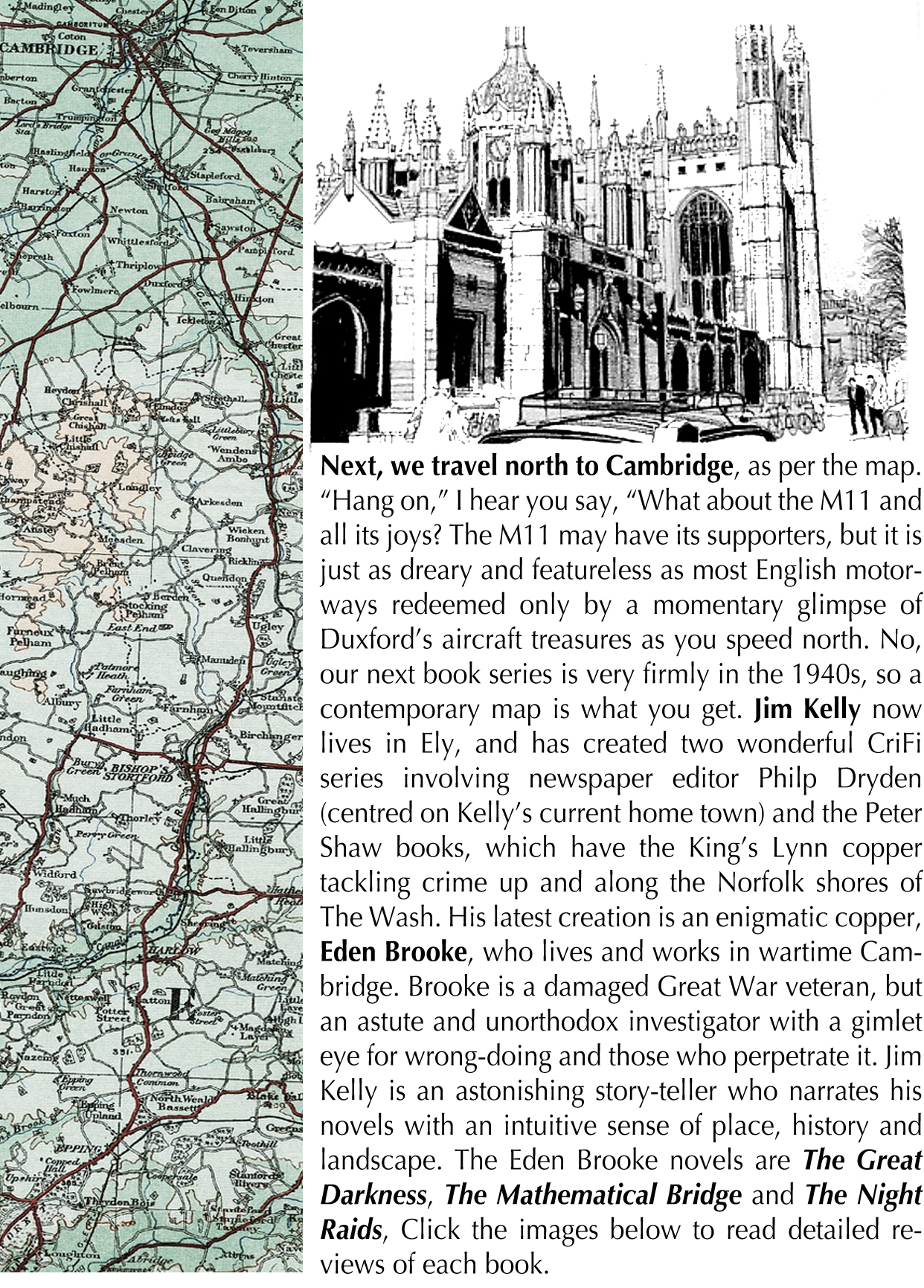
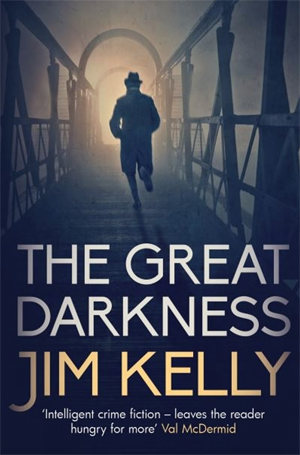
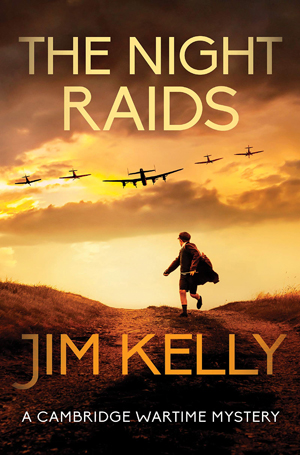


 This prelude takes place in 1942


