
The publisher’s website tells us:
“Tony Evans has been a full-time writer since 2008. He has written several novels of historical mystery, Gothic fiction and suspense, including the popular Jonathan Harker mystery series and the Hester Lynton detective novels, as well as study guides and novel adaptations. Tony lives in the Yorkshire Dales with his wife, and enjoys walking and the outdoors.”
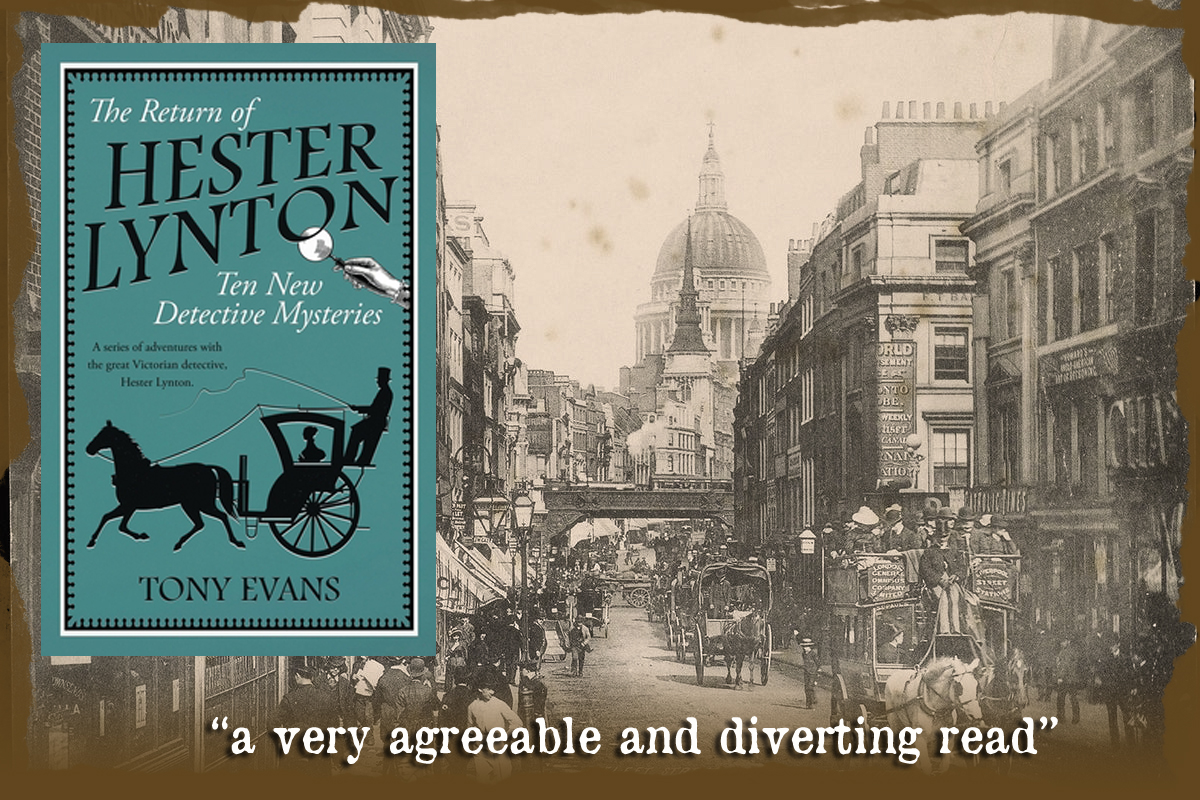
So, what do we have in this second volume of short stories, the follow up to The Early Hester Lynton Mysteries (2013) ? A female detective, obviously – and her companion Ivy Jessop – and the familiar backdrop of Victorian London and crimes carried out – for the most part – by the gentry, or sometimes by the impoverished middle classes. There are ten stories.
The Case of the Fanshaw Inheritance
 A rich widower, a self made industrialist, dies and leaves his fortune to be divided between his two nephews. One is a down-at-heel schoolmaster, the other a disreputable roué. The lucky man has to solve a cypher set by their late uncle. The good guy brings the cypher to Hester and Ivy. They solve the conundrum with by way of a knowledge of 18th century first editions, a journey to explore an ancient English church, and by breaking in to a family mausoleum.
The Case of the Stolen Leonardo
When a small, but obviously valuable painting by the great artist disappears from the Ronsard gallery, Hester’s cousin, Inspector Albert Brasher of the Metropolitan Police – who has been given the task of investigating the theft – is at his wits’ end, and turns to his relative for help. She solves the case, with the inadvertent help of an aristocratic dealer in stolen artwork. The culprit – who is also a very clever forger – is found, but his motive for the crime triggers Hester’s compassion, and she arranges a very equitable solution to the case.
The Case of the Missing Professor
When Professor Ambrose Dixon goes missing, Hester is summoned to the Directorate of Military Intelligence. Dixon – a distinguished chemist – has been working for the War Office on a revolutionary new explosive, the formula for which – if it fell into the wrong hands – could destabilise the delicate military and political balance of Western Europe. Hester discovers the whereabouts of the professor, a dangerous impostor at the heart of the country’s intelligence service, and – perhaps – the code which can unlock the formula to Dixon’s secret.
The Mystery of the Locked Room
The cases thus far have been relatively restrained affairs, but when Hester and Ivy are called in to investigate an apparent suicide in a genteel house just outside Maidstone, there is blood aplenty. We all know that suicides in crime novels are usually cleverly disguised murders, and this is no exception. Locked room mysteries usually involve mechanical ingenuity, and this case Hester is too clever for the would-be engineer, who also falls foul of Ivy’s skill with a pearl-handled revolver.
The Adventure of the Diamond Necklace
We are now in full melodrama mood, with swarthy “furriners” (in this case a particularly oily Italian), a criminal mastermind, young ladies being kidnapped by cosh wielding London low lifes, and the priceless piece of jewellery of the title. One of Hester’s many talents is to effortlessiy forge handwriting after the briefest glimpse at an example of the original, and she uses this skill to hoodwink a prestigious private bank into revealing the contents of a safe deposit box.
The Case of the Kidnapped Schoolboy
When a nine year-old lad disappears from his bedroom in a genteel Putney villa, Hester and Ivy play two of the oldest detective games in the book – cherchez la femme and follow the money. With the help of a couple of burly railway policemen the villains are unmasked on the Dover platform of Charing Cross Station.
The Puzzle of the Whitby Housemaid
 Here, Tony Evans (right) indulges in the first of two shameless – but entertaining – instances of name-dropping. Our two sleuths, weary after a succession of difficult investigations, are enjoying some well-earned R & R in the resort of Whitby. So who do they meet? Think Irish writer and man of the theatre, blood, fangs …..? Gotcha! They are engaged by a fellow holidaymaker, a certain Mr B. Stoker to investigate the disappearance of a housemaid. She has been induced to leave her present employment to go and work for a rather dodgy doctor. Much skullduggery ensues, the housemaid is saved, and Mr Stoker says, “Hmm – this gives me an idea for a story.”
The Case of the Russian Icon
Not so much blood and gore in this tale but more a case of a victimless crime. A widow is duped into selling what turns out to be a valuable religious artifact for a pittance, only to find it on sale in a smart London gallery for many times more than the unscrupulous dealer paid for it. No crime has been committed, but Hester Lynton takes it upon herself to exact some natural justice, and she does so by employing the craftsmanship of the forger who we met in The Case of the Stolen Leonardo.
The Case of the Naked Clergyman
My first image of this involved the legendary Parson’s Pleasure on the Oxford Cherwell, where naked vicars – and other chaps – were allowed to bathe, but this story is rather more sinister. An elderly widower cleric has been behaving strangely, and his exploits have included dancing around in the buff, bathed in moonlight. Hester and Ivy soon discover that a hefty inheritance and an access to mind-altering pharmaceuticals are the cause of the problem.
The Problem of Oscar Wilde
Another hefty name-drop concludes this selection of tales, and the Irish man of letters turns up on Hester’s doorstep and asks for help. The problem is letters, and these are missives sent by Oscar Fingal O’Flahertie Wills to someone he admires (a ‘gentleman’, of course). A sum of £200 is demanded for the return of the billets-doux. Hester and Ivy manage to derail this particular attempt to ‘out’ the great writer but, sadly, we all know his reprieve was to be only temporary.
This is a very agreeable and diverting read. Of course, we all know of another consulting detective in Victorian London, and one who also has a companion who writes up the cases, and often dashes about the Home Counties by train after consulting Bradshaw’s Handbook. Additionally, this fellow (with his astonishing powers of observation) and his friend also had a housekeeper who usually showed clients up to their rooms – but no matter. Hester Lynton may be a Holmes pastiche in skirts, but as long as these books are well written, then I – and thousands of others, I hope – will continue to enjoy them. The Return of Hester Lynton is published by Lume Books and is out now.



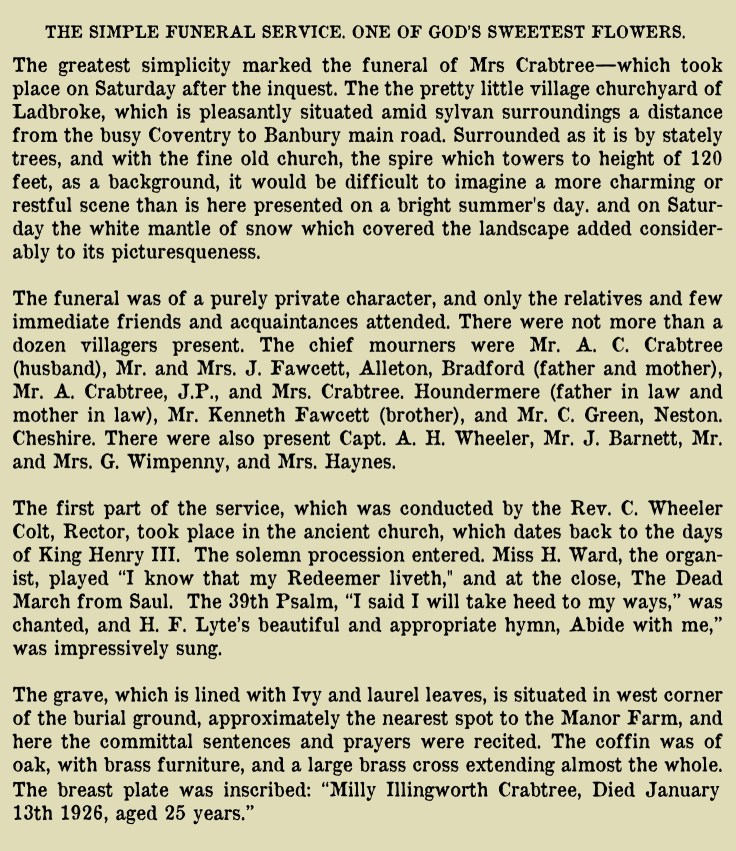
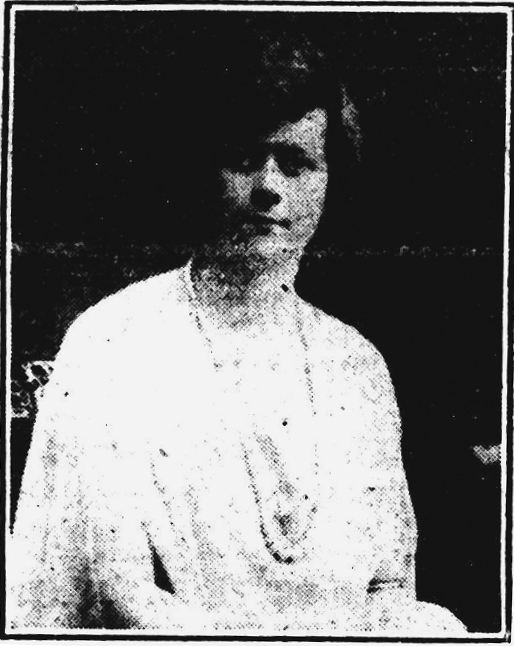
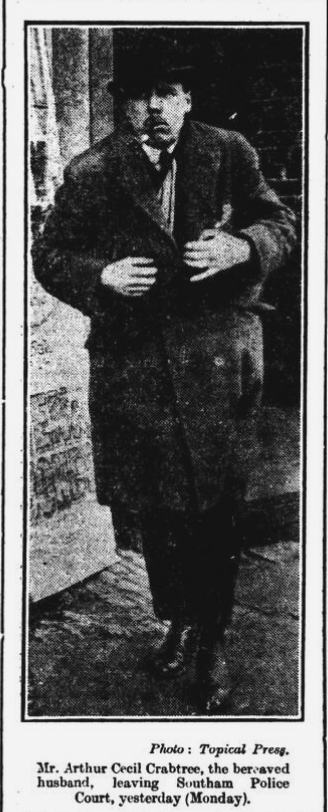 SO FAR – On January 13th 1926, Milly Crabtree, 25 year-old wife of Cecl Crabtree, is found battered to death at their home, Manor Farm in Ladbroke. 19 year-old George Sharpes is arrested for her murder. As is the way with these, things, the wheels of justice turn very slowly, and it was February before Sharpes came to face magistrates in Southam. The courtroom, normally used as a cinema (pictured above), was packed, and the onlookers were spellbound as a confession from George Sharpes was read to the court.
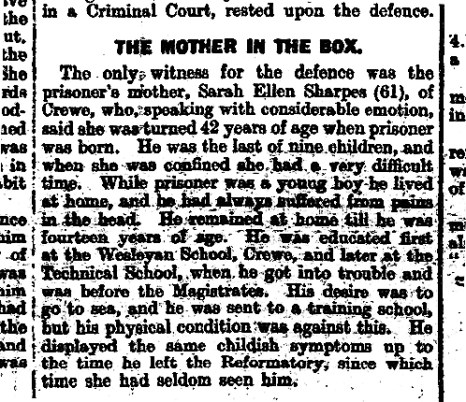 The magistrates wasted little time in stating that George Sharpes had a serious case to answer, and the case was moved on to be examined at the March Assizes in Warwick. The case was presided over by Mr Justice Shearman. The only possible line for the defence to take was that Sharpes was insane at the time at the time he committed the murder, and Sharpes’s mother was produced to state that her son had suffered an unfortunate childhood. Her pleas fell on deaf ears, however. Rejecting the claims that George Sharpes was insane, the judge donned the black cap and sentenced him to death. The execution was fixed for April and, as was almost always the case, a petition was set up to ask for clemency. The case was taken to appeal, in front of Lord Chief Justice Avory, who was perhaps not the most welcome choice for Sharpes’s defence team. Avory, a notorious “hanging judge”, had been memorably described:






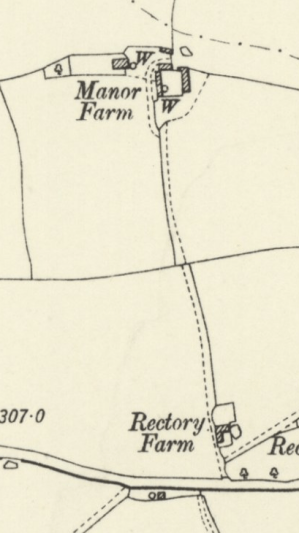 Manor Farm in Ladbroke dates back, according to the data on British Listed Buildings, to the mid 18th century. For architectural historians, it adds:

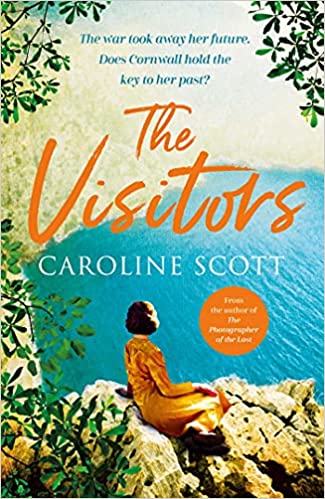 England, 1923. Like thousands upon thousands of other young women, Esme Nicholls is a widow. Husband Alec lies in a functional grave in a military cemetery in Flanders. His face remains in a few photographs, and in her memories. Left penniless, she ekes out a living by writing a nature-notes feature for a northern provincial newspaper, and serving as a personal assistant to an older widow, Mrs Pickering. Mrs P has the advantage of being able to visit her husband’s grave whenever she wants, as he was not a victim of the war.
 Caroline Scott (right) treats us to a high summer in Cornwall, where every flower, rustle of leaves in the breeze and flit of insect is described with almost intoxicating detail. Readers who remember her previous novel When I Come Home Again will be unsurprised by this detail. In the novel, she references that greatest of all poet of England’s nature, John Clare, but I also sense something of Matthew Arnold’s poems The Scholar Gypsy and Thyrsis, so memorably set to music by Ralph Vaughan Williams.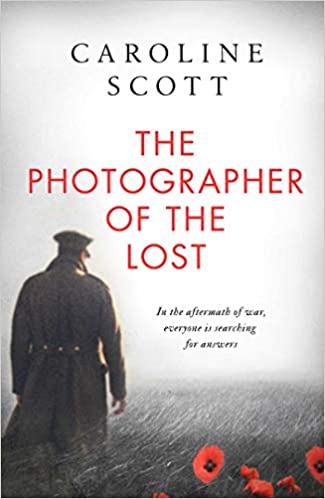





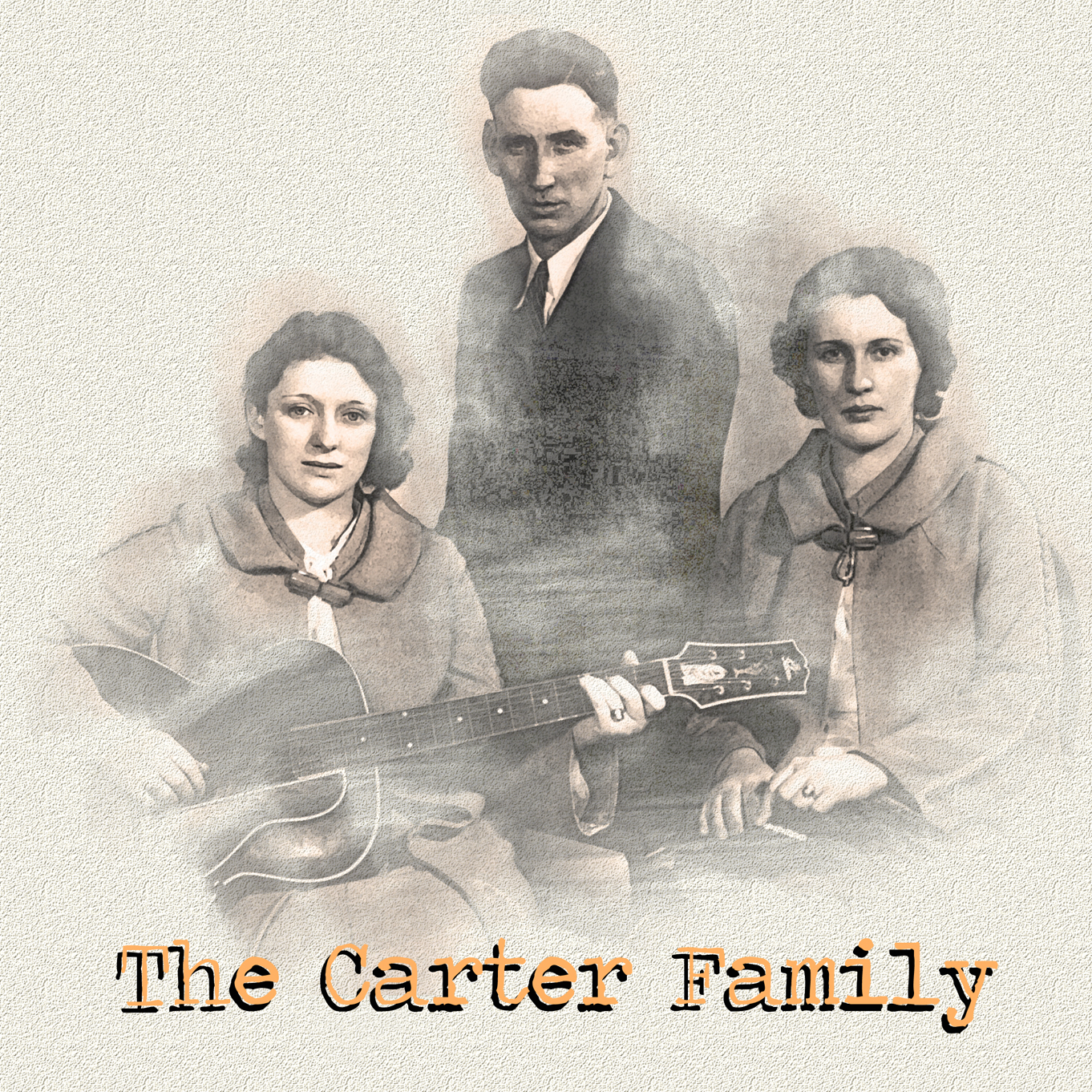
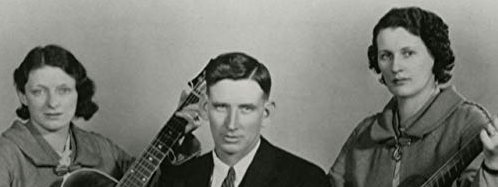
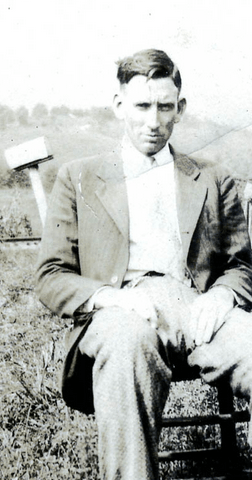 So, what is so special about the Carter Family and their songs? AP Carter’s ‘day job’ at one time, was traveling salesman.and he was a voracious collector of the songs that he heard as he moved from town to town. He clearly had a very good ear for melody. The words were almost certainly written down, but the tunes would have been just carried in his head. The songs are from a broad spread of different traditions. Some – in the lyrics at least – are clearly versions of songs that would have come over from the British Isles centuries earlier, while others are clearly 19th century American hymns and religious songs. Regarding the British songs, there is little or no sign of the modal tonality that you hear in later transcriptions of such songs by people like Ralph Vaughan Williams and Cecil Sharp. The astonishing thing is that overwhelming majority of Carter Family songs are what musicians call ‘three chord tricks’. In other words their harmonic structure is Tonic, Sub-Dominant and Dominant. Chord-wise, that means, if we are in the key of C, they use C major, F major G major and G seven. I have listened to dozens and dozens of recordings, and it is quite remarkable that they never seem to use a minor chord. The songs are almost always played using guitar chords in the key of C. That is not to say that the songs are in the absolute key of C, as Maybelle would use a capo. as well as detuning her guitar by as much as three or four semitones.
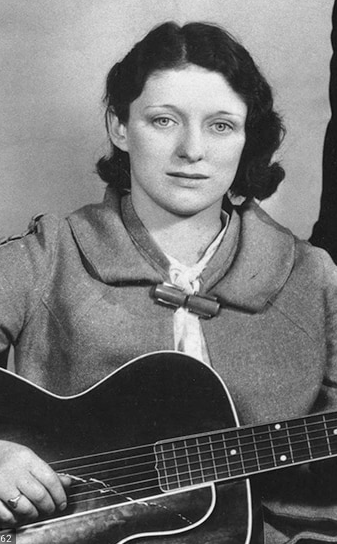 It is no exaggeration to say that Maybelle Carter was one of the great innovators of guitar music. In terms of what she achieved she is up there with the greats alongside Reinhardt, Hendrix, Clapton, Cooder and – in her own genre, players like Doc Watson and Chet Atkins. I am a guitarist myself, and have been playing for over fifty years. It’s a good job I never had to earn my living from it, but I consider myself a reasonable amateur player. What Maybelle Carter did sounds elementary on the records, but when one comes to try and copy the style it is very, very difficult. She had several different techniques, but her signature style was what is known as ‘The Carter Scratch’. She plays melody with her thumb on the lower guitar strings, while using her index finger to strum out a percussive rhythm of the higher strings. She occasionally uses a different finger picking style, picked up from black blues players, which is more akin to ragtime syncopation.
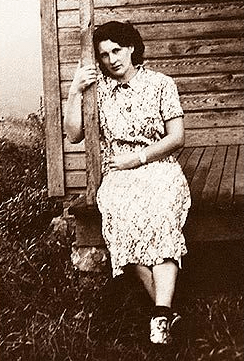 Sarah’s autoharp is an important feature on all the recordings. It backs up the incessant rhythm of Maybelle’s guitar, but because its strings are tuned much higher, it cuts through in the treble frequencies and provides an important texture to the music. Crucially, though, when you listen to a Carter Family recording it is mostly Sarah’s voice you hear. It would be wrong to call it a thing of beauty. It has a hard edge, with an almost masculine timbre. There is never any vibrato, but intonation-wise it is spot on every time, right in the middle of the note. The lyrics she sings are almost always shorn of pretension or ambiguity. They speak of simple truths – love, life, death, hardship, betrayal, joy and sorrow. Her voice tells it like it is. There is no doubt, no nuance but instead, utter conviction and sincerity.


 fullybooked2017