
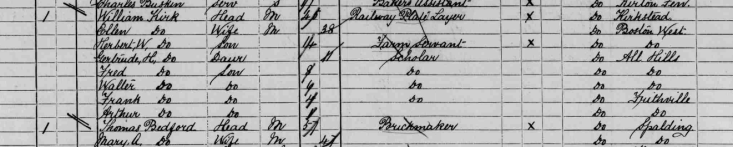
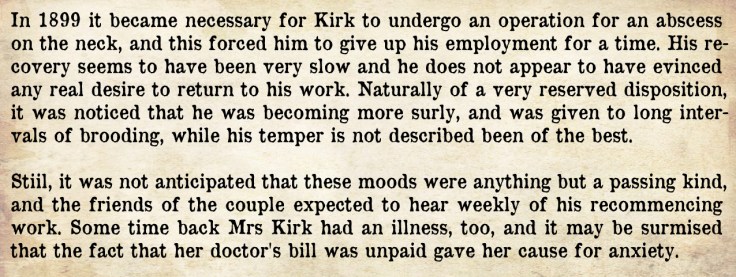
SO FAR – March, 1901. William Kirk, by trade a plate-layer for The Great Northern Railway lives with his wife and younger children in a modest cottage beside Frith Bank Drain, just north of Boston, Lincolnshire. He has been unable to work for some time, and is convinced that his wife Ellen is having an affair with a younger man – farmer Henry Robinson. Ellen has temporarily gone to stay with the Robinsons – just the other side of the Frith Drain – as Mrs Eliza Robinson is due to give birth, and has asked for nursing.
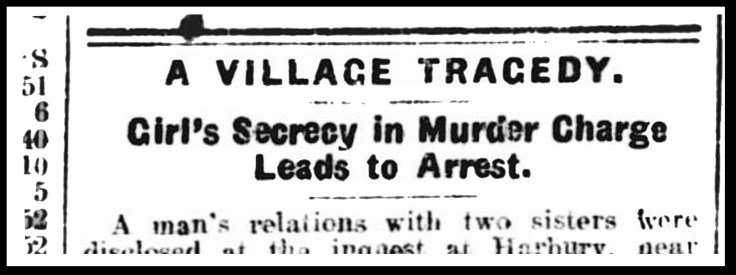
A newspaper reported on the violent events of Friday 22nd March 1901.

Kirk, having virtually decapitated his wife, and threatening to do likewise with Henry Robinson – the man he thought was cuckolding him – headed back to his own home, covered in Ellen’s blood, and with her desperate screams no doubt echoing in his head. Was he insane, as his legal defenders were to claim late, or was it that terrible male anger – repeated in murder after murder over the years – at his woman becoming more attracted to someone else?
Kirk made no attempt to escape the area, but put up a fierce struggle with the police and was soon in custody. The next step was the inquest into the death of Ellen Kirk, and it was held in a back room of The Malcolm Arms, a nearby pub (pictured below)

The proceedings were grim for all those present, but the law had to take its course. Unlike today, where news is instant and digital, court reports sold newspapers.
THE INQUEST AT SIBSEY. VERDICT OF WILFUL MURDER AGAINST KIRK
The inquest was opened by the District Coroner (Dr. F. J. Walker, at the Malcolm Inn, Anton’s Gowt, Sibsey, at three o’clock this afternoon. The inn is a quaint brick building, with an old-fashioned swinging sign standing up from pillar on a stone base in front of the house, and is in a picturesque situation. The gowt’s bridge, from which the neighbour takes its name, is close to hand. The inquiry was held in the large parlour, and Mr. Charles Gilliatt was foreman of the jury. Supt. Wood, of the Spilsby police, Supt. Costar, the North Holland police, and Supt. Adcock, of the Boston Borough police, were present. The Coroner having formally opened the inquiry, the jury retired to view the body. On their return Fred Kirk, the accused’s son, was the first witness called. He identified the body as that of his mother, and said she was 46 years of age. He last saw her alive on Friday night. He did not see her again until that day.
In reply to Supt. Wood, witness said was in service at a farm close by, and went home on Thursdays and Sundays. On Thursday night, in answer to a note from his mother, he visited her at the house of Mr. Robinson, Frith Bank. In the kitchen he found his father and mother with Mr. Robinson and the servant girl. Some unpleasantness had evidently occurred between his father and mother. His father said he should not. allow her to stay at Mr. Robinson’s until Tuesday. Witness tried to persuade his father to treat his mother more kindly.
After a time witness and his father left the house together, and went to his father’s house, where they slept, instead of witness returning to his situation. On the way his father promised to treat his mother more kindly, and said he would go and see after a job at Higdon’s. He would go there on Lady-day. On Thursday morning, at about 11.30, witness was passing Mr. Robinson’s house, and he saw his mother near the front gate. His father was standing also some distance off. His mother made complaint to witness of his conduct towards her. His father came up and said, “What is she she telling you now?” After further conversation, witness went along the road in the direction of his own home.
Henry Robinson, a pleasant-looking young farmer, was the next witness. He said he lived on Frith Bank. On Tuesday evening, Ellen came to nurse his wife. On Friday morning Kirk came into the house, and sat in the kitchen. Witness was in the room about a quarter of hour, and while he was there, there were some words between Kirk his wife. Witness afterwards went about the premises as usual about his work. At about 9.30 maid-servant, Amy Barber, called him into the house where he saw Ellen Kirk lying on the ground with her head on a block wood. Kirk was leaning over her with knife razor cutting the back of her neck, holding the head with his hand.
Witness at once shouted “What are you doing?” Kirk did not answer, but got up, and ran at witness with the weapon in his hand. Witness fetched a manure fork, and told Kirk leave his wife alone, he would knock him down. Kirk then went away. Witness fetched a man named William Bedford, who was at the brickyard close by. On looking at the body, witness found it was lifeless.
Dr. Reginald Tuxford was called. He said on Friday morning went see Mrs. Robinson and found he had already been sent for to see a woman who was lying in the back yard with her throat cut. She was quite dead, and death had taken place immediately. Witness had further examined the body that day and found a large gaping wound in the chin, running across the neck. The blood vessels on the left side were completely divided, and the wind pipe and gullet were separated. There were two or three gashes on the left of the face, near the jaw bone. In addition to these there was a wound at the back of the neck reaching nearly from ear to car, and also a wound down the vertebral column. Witness had also examined the internal organs of the deceased and found them healthy, with the exception of the kidney. The body was absolutely bloodless. He came to the conclusion that death was caused by shock following upon haemorrhage from the injuries caused to the threat.

 Inevitably, William Kirk was found guilty of murder, and his case was sent to the July Assizes in Lincoln. The trial, presided over by Mr Justice Wright (left) was a formality, and Kirk was sentenced to be hanged. Just days before he was due to meet James Billington for the first – and only time – the powers that be judged that he was insane at the time of the killed his wife, and he was reprieved, and sent to Broadmoor.
The future lives of the Kirk children are beyond the scope of this story, but one can only hope that they were not permanently traumatised by the killing of their mother. It is reported that Kirk wrote several letters to them while he was awaiting execution, but none of them ever came to visit him. Public records show that the death of a William E KIrk was registered at Easthampstead, Berkshire, in the summer of 1916. Easthampstead was almost certainly where deaths in Broadmoor were registered, so it seems Kirk reached his allotted three score years and ten without ever leaving the secure hospital. The one flicker of light in this sad tale is that the 1901 census records that the Robinson household now included Walter, aged just two weeks, so it is good to know that the murder of Ellen Kirk had no lasting effect on the woman she was nursing, or the baby she was hoping to help bring into the world.
FOR OTHER LINCOLNSHIRE MURDER STORIES, CLICK THE IMAGE BELOW



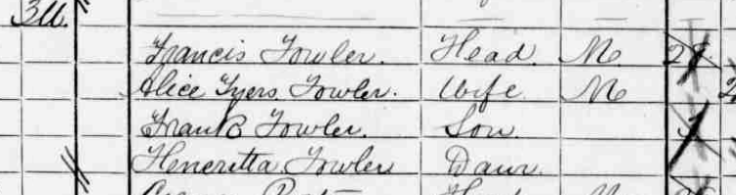
 By 1901, however, he is still living in Langtoft, but with his grandparents Henry and Alice Rosling. His parents, along with daughter Henrietta and a younger son, Robert, had moved to Pickworth, 8 miles east of Grantham. One can only speculate why they left Frank – still only fourteen – behind. It is possible that there was no sinister reason behind this, as by then he may have been working, but it is not mentioned on the census return. In 1911 he is still living with his grandfather – now a widower – and certainly working on a farm. It seems he was either conscripted or joined up to fight in The Great War (pictured left), survived, and returned to Lincolnshire. In 1922 he was managing a farm owned by his aunt, a Mrs Ormer, and was a regular customer at The White Horse. It also seems he had developed an interest in the landlady’s daughter – Ivy Dora D’Arcy.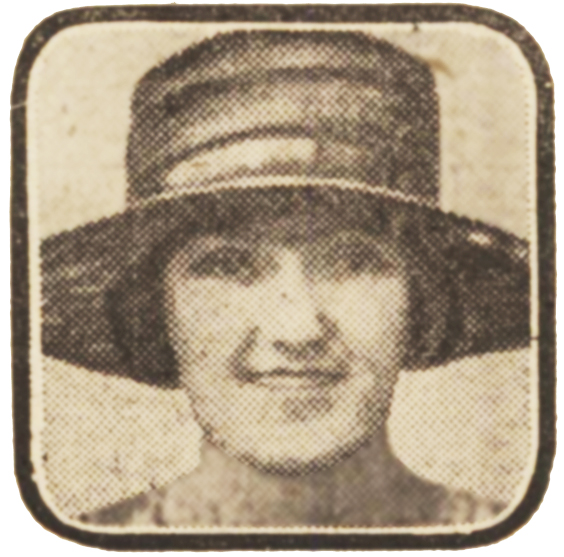


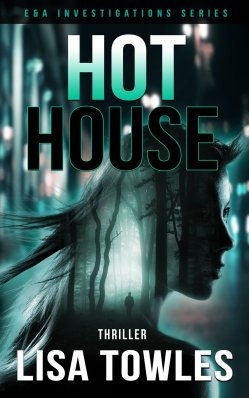 That is just a quick sample of the whip-crack dialogue in the book, which fizzles and sparks like electricity across terminals. Very soon Mari and Derek realise that the blackmailed judge is also connected to the unsolved murder of a French duel-passport student, Sophie Michaud, and the fate of two women journalists who investigated the case, one of whom is dead and the other missing.
 In the end, the blackmailer of the judge is located, and the killer of Sophie/Sasha is brought to justice, but with literally the last sentence, Lisa Towles poses another puzzle which will presumably be addressed in the next book. Hot House is everything a California PI novel should be. It has pace, great dialogue, totally credible characters and a pass-the-parcel mystery where Lisa Towles (right) has great fun describing how Ellwyn and Abernathy peel back the layers to get to the truth. Sure, the pair might not yet stand shoulder to shoulder with Marlowe, Spade and Archer, or even more modern characters like Bosch and Cole, but they have arrived, and something tells me they are here to stay.





 Late again! My excuse is that I am a one-man-band here at Fully Booked, and notwithstanding the occasional erudite contribution from Stuart Radmore (who has forgotten more about crime fiction than most people will ever know), there are only so many books I can read and review properly. My first experience of Peterborough copper DI Barton is the fifth of the series (written by Ross Greenwood), The Fire Killer. Peterborough is a big place, at least for us Fenland townies, but is rarely featured in CriFi novels. I am pretty sure that Peter Robinson’s DI Banks grew up there (The Summer That Never Was) and Eva Dolan’s Zigic and Ferreira books are certainly set in the city.
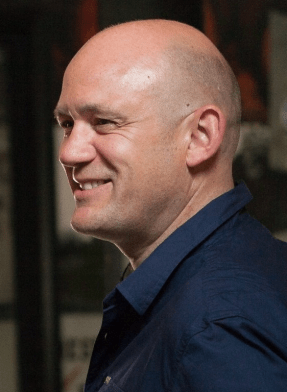 Ross Greenwood (right) has fun inviting us to make out own guesses, but also makes the game a little more interesting by giving us intermittent chapters narrated by The Fire Killer, but he is very wary about giving us too many clues. The dead girl, Jess Craven had been involved with a very rich dentist with links – as a customer – to the London drug trade.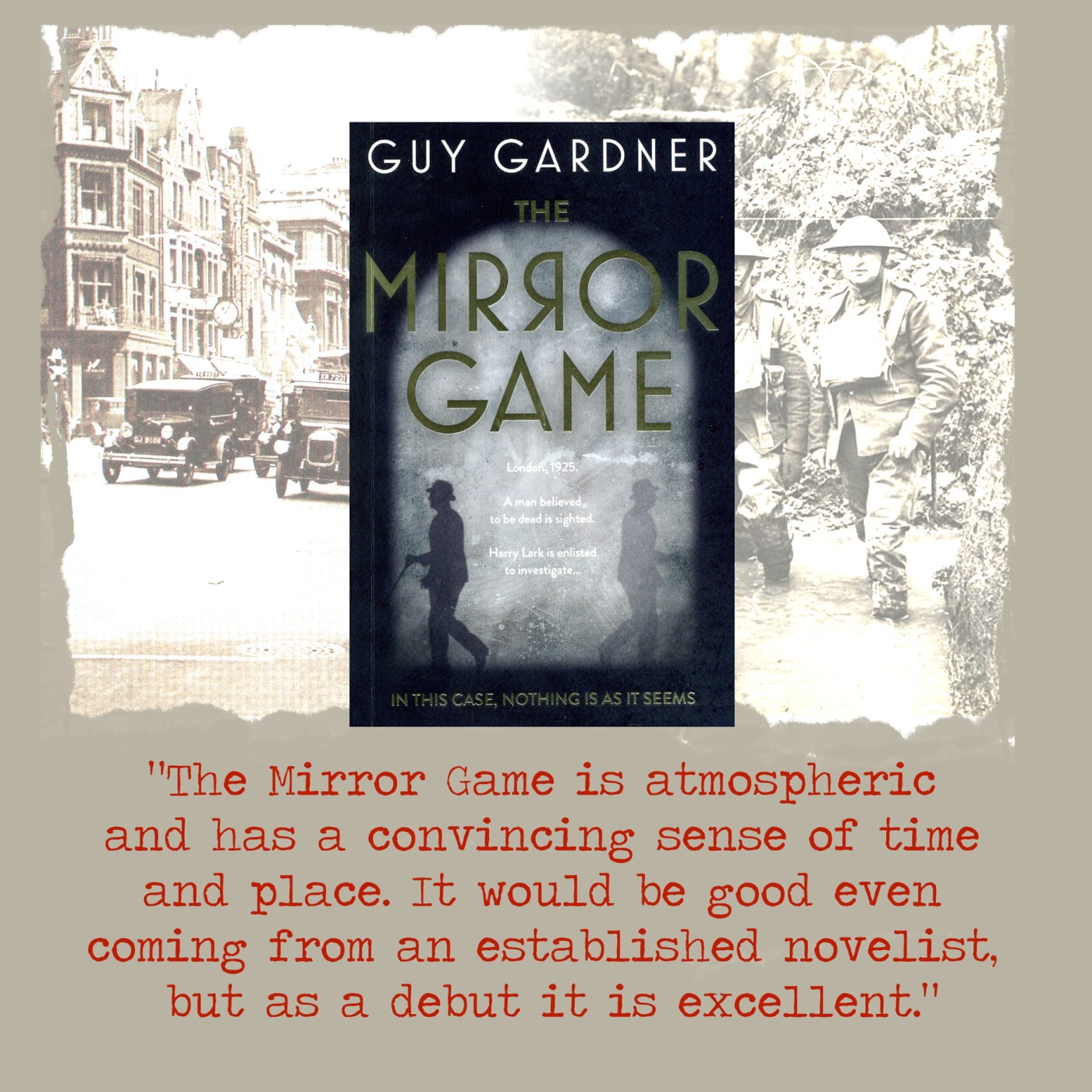

 Investigator and journalist Harry Lark fought for King and Country and emerged relatively unscathed although, like so many other men, the sounds, smells and images of the trenches are ever present at the back of his mind and he has also become addicted to laudanum – a tincture of opium and alcohol. When he is contacted by a friend and benefactor, Lady Charlotte Carlisle, she tells him that she thinks she has seen a ghost. Sitting in Mayfair’s Café Boheme, she has seen a man who is the image of Captain Adrian Harcourt, a pre-war politician who was killed on the Western Front in 1918, and was engaged to be married to her daughter Ferderica. But this man is no phantom who can fade into the wallpaper. Other customers notice him. He is flesh and blood, and approaches Lady Charlotte’s table, stares into her eyes, but then leaves without saying a word. She asks Lark to investigate.
 company, and that some seriously well-connected people have ensured that the truth about their demise has been successfully covered up. Iver’s son has been committed to an institution for mentally and physically damaged WW1 soldiers, and Filton Hall is Harry’s next port of call.


 Lesley Kara (left) specialises in creating tension between ordinary people in humdrum surroundings – in other words, normal circumstances experienced by the vast majority of us. I reviewed her excellent debut novel The Rumour, and her new book is centred around – as the name suggests – a murder that took place above Scarlett’s flat. The victim was her aunt, and as Scarlett tries to live as normal a life as possible with such a terrible event – almost literally – hanging over her head, it is up to her to make the funeral arrangements for her relative. As she does so, she meets Dee, the funeral director. Dee has problems of her own, but an unexpected link binds the two women together, and both are now in terrible danger.
  For the uninitiated, Merrily Watkins is a single mum, and vicar of a village in Herefordshire. She also serves as Diocesan Deliverance Consultant – aka an exorcist. The series began in 1998 with The Wine of Angels, and seemed to have terminated rather abruptly with All of a Winter’s Night in 2017. A new book titled For The Hell of It was billed to come out in 2020, but this seems to have been reimagined as The Fever of the World. Here, Merrily becomes involved in a murder investigation led by local copper David Vaynor who, in a previous life, was an expert in the poetry of William Wordsworth. Aficionados of the work of Wordsworth may well recognise the provenance of the book’s title, taken from the poem composed on the banks of the River Wye near Tintern Abbey:







 fullybooked2017