
As with most novels in a well established series, there is an extensive back-story here, and it is one than readers new to the books will just have to pick up as they go along. The action is set in Scotland, but in a rather mysterious prologue which seems to have little bearing on subsequent events, we are in London, and it is just before Christmas. A respected cosmetic dentist (married) has taken his mistress out for what should have been a delightful festive meal. Instead, he shatters her by saying that the relationship is over. Tongues are beginning to wag at work, and he needs to sell the flat in which he had installed her in order to pay for his daughters’ school fees. She leaves the restaurant in tears, but then she collapses on a West End street. Has she been stabbed? Poisoned? I am not a huge fan of prologues – they were best left to Frankie Howerd – but it will be while before this enigma is resolved.
Then, in rural Scotland, a corpse is discovered. It is of a man, and he appears to have been disembowelled. Normally DCI Christine Caplan would be on the case, but she is away on a Scottish island, for her daughter Emma’s wedding to the son of a wealthy landed family.
Chapter three sees us somewhere else again, this time a care home on Caplan’s home turf, where stroke victim, eighty two year-old Bernie Williams, is being prepared for – of all things – his engagement party. His soon-to-be fiancée is fellow resident, widow Janet Steele. We also meet Dorothy ‘Doro’ Holland, Bernie’s principal carer. She has a six year-old son with some kind of ailment that can only be treated in America, and Dorothy has no money. Late that evening, Janet’s body is found dead in the garden, with no apparent suspicious marks or symptoms, but how did she circumvent the home’s rigorous security doors? We also learn that Bernie Williams is very wealthy.
Back to the wedding island, an idyllic day is somewhat despoiled when, as the sun sets, a body is gently washed ashore on the incoming tide – and the dead man has a devastating wound across his abdomen. Caplan is In charge of a Major Incident Team based in seaside town of Cronchie, but she gets wind of bad news: her team is going to be broken up and merged with a bigger unit, named Bowbelle, dedicated to fighting a rising drug crisis headed by a man known as The Wasp. One of his favoured transport methods is to case the product in condoms, which are ingested by the carrier. To put it bluntly, instead of waiting for nature to do its work, The Wasp’s lieutenants have recently resorted to a rather more brutal method of accessing their merchandise.
While Caplan has been away, her area seems to have had a spate of strange deaths. There was the disembowelled man, who may have been the victim of a longhorned cow being protective of her calf. There was poor Janet Steele, dead on the night of her engagement. And (where would crime writers be without joggers and dog walkers) who is the elderly man found dead, slumped at the base of a tree, near a forest jogging trail? As if there weren’t enough dead bodies, we also have the mysterious death of Juniper Greene, an elderly recluse, her corpse eventually discovered after some of it had been gnawed away by starving cats. Was she, as rogue journalist Carrie Cowie-Browne suggests, on a witness protection scheme? Caplan is surrounded by death, and struggling not to be submerged beneath its finality.
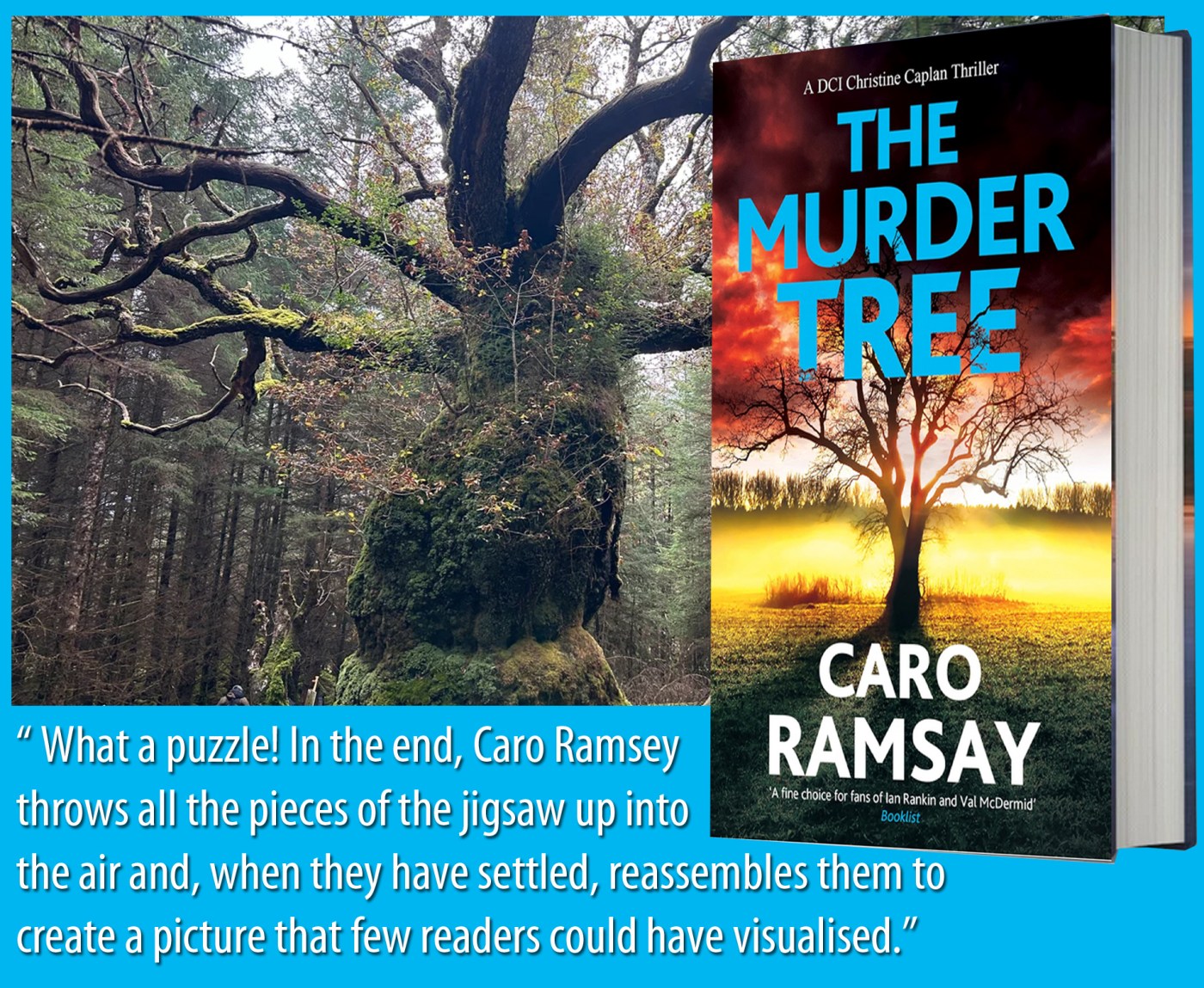
Just under half way through the novel, we learn the connection between the mysterious prologue and Caplan’s current caseload, and it lies in the identity of the dead dog walker who, as Caplan’s shrewd Sergeant points out, was wearing the wrong kind of shoes for such terrain. What a puzzle! In the end, Caro Ramsey throws all the pieces of the jigsaw up into the air and, when they have settled, reassembles them to create a picture that few readers could have visualised. Although The Murder Tree is much too grim and gritty to resemble anything from The Golden Age, it does share one characteristic of those mysteries, in that several key players are not who they claim to be. The novel is published by Severn House and is available now.


Leave a Reply