
Search

fullybooked2017

Month

November 2026

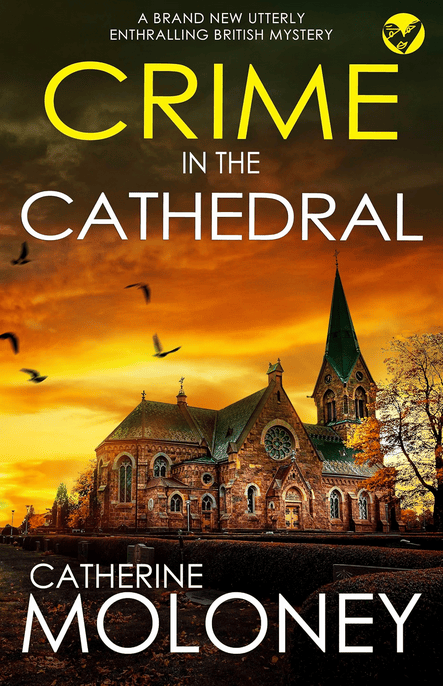
CRIME IN THE CATHEDRAL . . . Between the covers


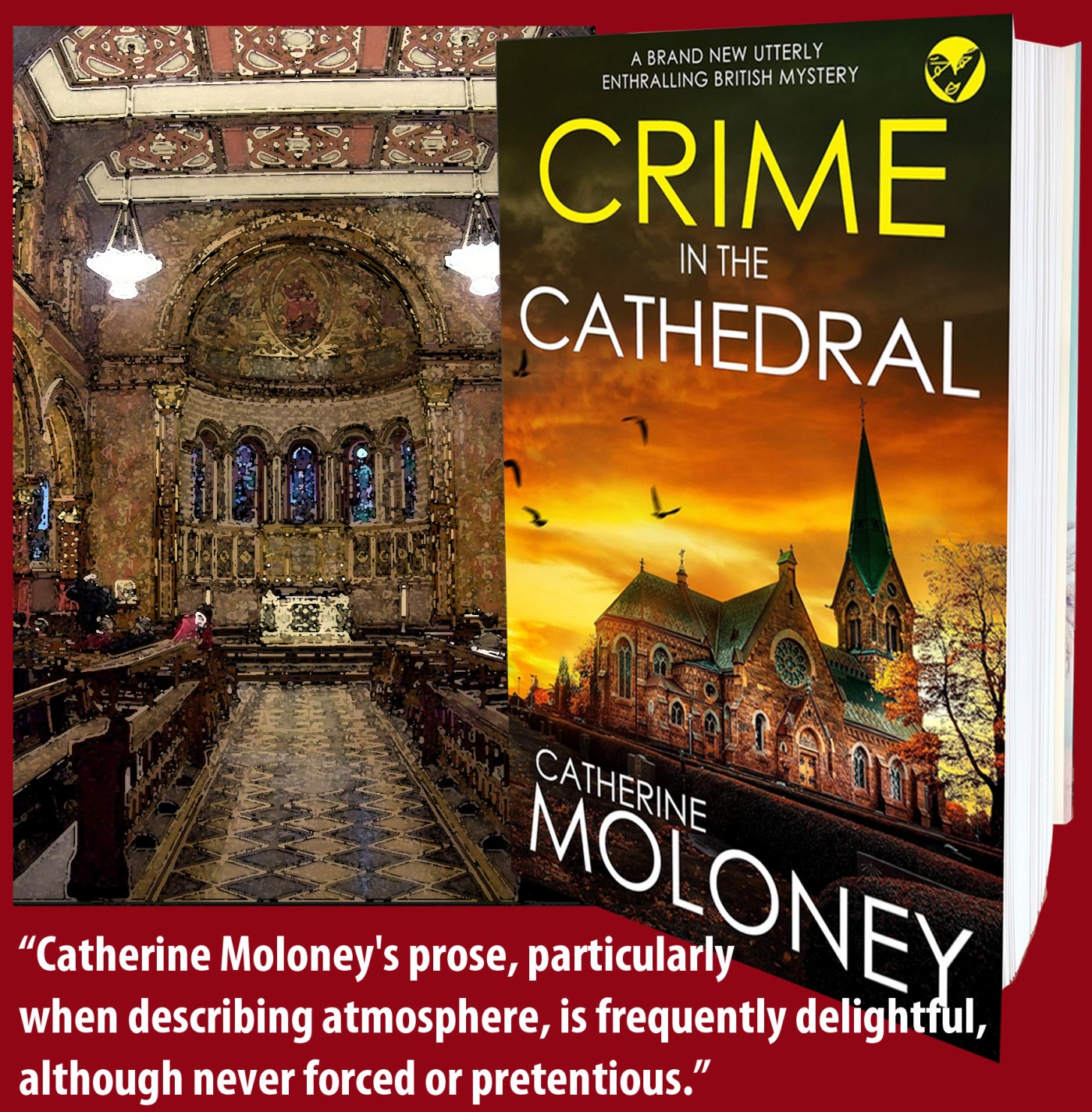
I read and reviewed Catherine Moloney’s Crime In The Gym back in July, and was struck by the sheer quality of the writing – the subtle and sympathetic portraits of the main characters – especially DI Gil Markham – the intelligent dialogue and, above all, the sense that we were in a real police station in modern Britain. Here, we are again in the fictional town of Bromgrove. It is a place that won’t be found on any OS map, but it is, perhaps, a city, as it has a Cathedral. St Mary’s is not ancient. Think along the lines of something 19thC and Byzantine in style, rather like Westminster Cathedral.

Despite being notionally Anglican
, the cathedral is very high Church, and has a centre housing supposed relics, items associated with venerated saints. The Church of England has a wide variety of worship traditions. At one end there is what used to called ‘low’ church, with very simple services and no love for elaborate symbolism. On the other extreme is the Anglo Catholic, or ‘high’ church, where Roman Catholic practices such as incense, fine robes and – in this case – an awareness of sacred relics.

It is in this centre that the body of its curator, Suzanne Haynes, is found strangled. The cathedral has a school, St Mary’s College, an elite independent school which contrasts in every way possible with the local state school, Medway High. The dead woman was a teacher of textiles at St Mary’s. Catherine Moloney’s prose, particularly when describing atmosphere, is frequently delightful, although never forced or pretentious.

“Even the larches which bordered the driveway up to St Mary’s College had a kind of clear, brave beauty, while snow diamonds spangled the two huge firs that stood on either side of the Jacobean-style arched entrance.”

Bromgrove is – as we are now – approaching Christmas and the views of Markham’s former sergeant, Noakes (now a civilian) resonate with me:

“Noakes had uncompromising views on everything from Christmas cards (robins were de rigueur, while anything PC was verboten) to carols (traditional organ music got the thumbs up, while secular ‘ Kumbaya BS and tambourines’ were out.)”

Noakes has left the force, but is employed by Markham as a consultant, much to the chagrin of his left-inclined DEI box-ticking bosses, but invariably to the advantage of his team’s crime clear-up statistics. Markham, too, has no time for the Common Purpose agenda of his superiors.

“Take no notice of me, Kate. It’s just that sometimes I get fed up of all the progressive woo-woo. The top brass always quantifying minorities and gamifying vulnerabilities, if you know what I mean.”

Frankly, the crimes – and who committed them – take second place to the wonderful writing. I would not want to deter crime fans from reading this excellent novel by suggesting it is literary fiction, but Ms Moloney is both highly literate and knows her literature, as the narrative is enriched by references to such diverse texts as Rebecca, Robert Frost,The Wisdom of Solomon and Shakespeare sonnets.

Markham’s love life
is conflicted. He still has intense feelings for his former partner, but has distinctly unprofessional regard for DI Kate Burton, who is of equal rank but with less experience.Here, Moloney describes Olivia, Markham’s currently estranged partner, as a woman with Pre-Raphaelite charms:

“…the abundant red hair, translucent pallor and witchy grey-green eyes.”

Now if that isn’t the doomed Elizabeth Siddal
, Dante Gabriel Rossetti’s wife, and model for Beata Beatrix, then strike me down. The other significant people in Markham’s team are his two sergeants, DS Doyle, ginger haired, lanky and affable, and DS Caruthers, a psychology graduate, with slick backed hair, a deathly pallor, and prone to sarcasm. Presiding over them is Detective Superintendent Ebury Clarke, known – with no affection- as Toadface.

Even superior crime novels, and this is one such, follow certain conventions, and the most common is to have a varied collection of people who may have murdered the victim. The list of suspects is diminished by more murders. First, Rev. Dr David Gillespie is found stabbed to death in one of the cathedral chapels, ironically in a position of prayer, kneeling on a prie dieu. Next, James Kershaw, former Head of St Mary’s, is found burned to death in a crypt of the cathedral which, with its over-exuberant decoration and the determination of its designers to make it more Catholic than Catholic, has become an almost malevolent presence in itself. Then, in an apparent murder-suicide, the bodies of art teacher Rowena Wardle and the college’s Second Master David Tucker are found, with Wardle having left a typed confession to the killings.

The confession is false, of course, and the killer is eventually unmasked in a horrifying finale. Crime In The Cathedral is published by Joffe Books, and is available now in Kindle. The paperback will be released on 24th November.

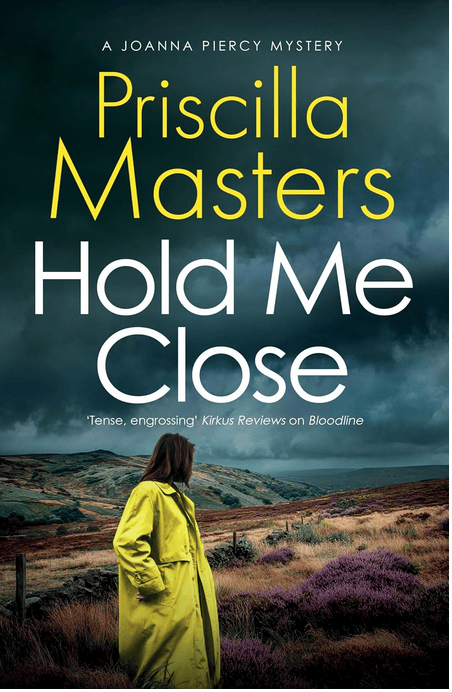
HOLD ME CLOSE . . . Between the covers

The best crime novels hit the ground running and start with a bang. Here, it’s less of a bang than a roar – that sound coming from a moorland peat fire in Staffordshire. The firefighters, trying to dig a firebreak trench disturb something:
“Two bodies lay in a bizarre parody, both horrific and romantic. They were dressed in loose, once white flowing garments, their arms wrapped around each other, her wrists bound around the man’s back with thick red cord. Their faces were pressed against each other, lips touching as though in a kiss. They looked long dead.”

DI Joanna Piercy (also known as Mrs Levin) is in charge of the case and, in a chilling reflection of the moors corpses, her husband Matthew Levin, a senior pathologist also contracted to the UN, has been summoned to the Middle East to investigate two corpses found in the Negev Desert. Given the current fraught atmosphere there, his findings will have profound political significance.

Although the dead Staffordshire couple seem to have been murdered, Masters taps into an ancient folklore image. I immediately thought of the haunting song The Drowned Lovers, where a young woman, distraught at the death of her sailor lover, throws herself into the waves to be reunited with him.

“And now every night at six bells they appear
When the moon it is shining, the sky it is clear,
These two constant lovers with all their young charms,
Rolling over and over in each other’s arms.“

Beneath the moorland bodies the police recover a strange painted stone. It is later identified as an Indalo, a shamanic symbol originating from Andalusia. The solution to the mystery of the buried lovers seems to lie in a now-abandon farmhouse, briefly leased by a New Age cult run by a man called Sam Lee. Here, Masters conjures up a beguiling mix of violent death, burial practices and ancient beliefs. The curse of COVID put an end to the hippy refuge, but where are its adherents now? Are two of them now lying in refrigerated trays in the local mortuary?

At the centre of the murder investigation is Lee, the wealthy, enigmatic and self contained man who rented out Renshaw Hall and presided over its residents, young people, most of them psychologically damaged, who were drawn there by the eternally worthless promises uttered by New Age philosophies. Lee’s overriding – and deeply cynical – motive for creating the commune was to provide himself source material for an academic thesis.

The bodies are eventually identified as those of two young people who stayed at Renshaw Hall. Piercy finds Lee unbearably insouciant, coldly indifferent to the fate of the two youngsters, but is he a killer? Priscilla Masters writes beautifully, with a keen ear for how real people talk to each other. Not the least of her achievements is to remind us that we are lucky to have a moorland landscape in England which is neither Cumbria, Northumberland, Yorkshire nor Lancashire but perhaps that most contrasting of counties – Staffordshire. It is a place that seldom features as a CriFi backdrop, but it is vividly brought to life here. Hold Me Close will be published by Joffe Books on 12th November.

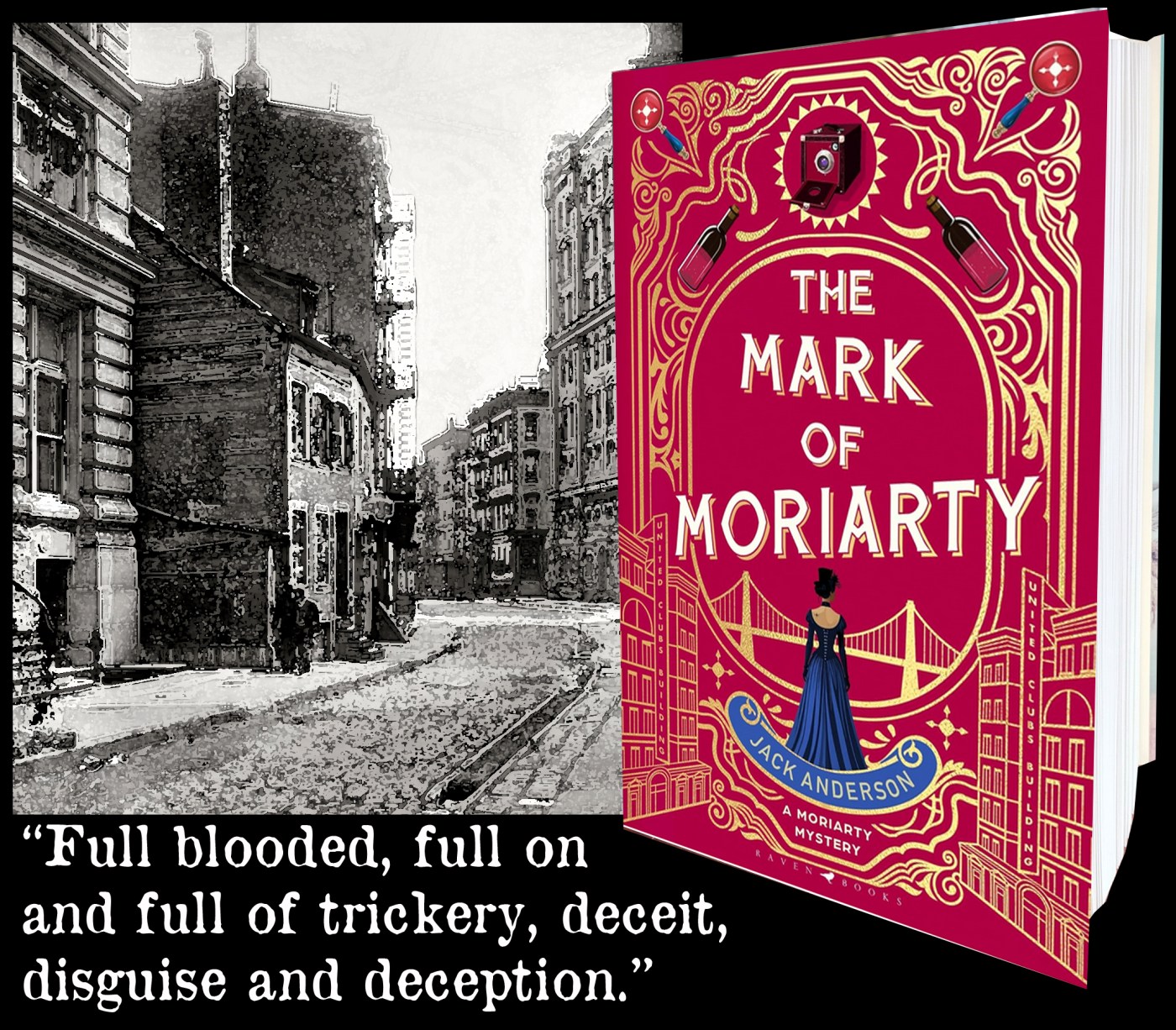
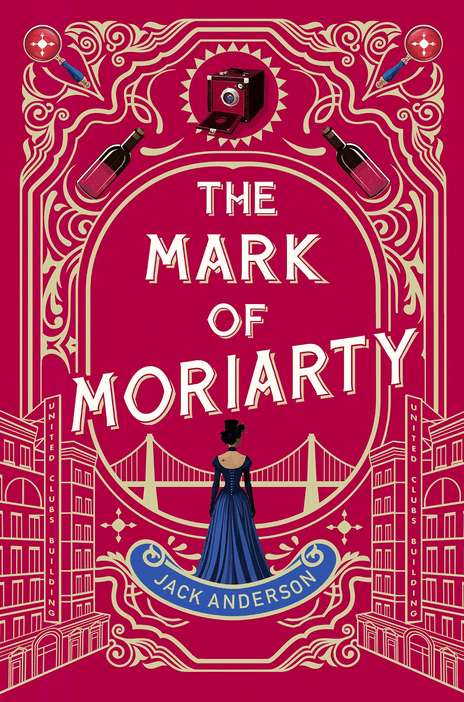
THE MARK OF MORIARTY . . . Between the covers

It is one of Crime Fiction’s oddities that American writers seem to be able to produce credible pastiches of our most famous detective, the best of which, by far, is Mitch Cullin’s A Slight Trick of the Mind. The series of Holmes tales written by Bonnie MacBird are also very readable.

So what do we have here? Not Holmes himself, for reasons which will become clear. After a couple of (sadly, now seemingly obligatory) prologues, we read a letter sent from New York to 221B Baker Street, asking for help. It is a bizarre tale. A well-to-do New York family has reluctantly taken into their home a distantly related orphan girl. She grows up to be clever, beautiful and entrancing. But the she falls from grace and disappears, only to mysteriously reappear some years later, in a snowy city alleyway, clad only in a chemise.

The best crime novels establish a sense of purpose early on. Readers like to learn about a crime, a perpetrator, and who is trying to solve the crime. This novel, to put it mildly, meanders at the start. We know the strange tale of Viola Bellman, and that her uncle’s letter to Sherlock Holmes has been opened and answered by Dr John Watson, because Holmes is dead. We initially observe things through the eyes of Clara Mendel, a psychiatrist who has been treating Viola. We also know that Mendel is, somehow, connected to James Moriarty. He eventually materialises, and Mendel forms an uneasy alliance with him.In the distant background is a sinister organisation called the Arcane Society.

Mendel, on returning from the Bellman home, where she has been treating Olivia, is shot and wounded just outside her apartment, but the next thing we know, we are in Amsterdam, where a young American, a professional punter on horse racing, had been imprisoned by a gang who put his knowledge of the turf to their own ends. Things become ever more mysterious. Back in New York and recovering in hospital from her gunshot wound, Mendel is visited by her friends from the Sabel Club, a group of like-minded mystics and ‘spiritual investigators’. They tell her that, in between the bullet being removed from her shoulder, the wound stitched and bandaged, and the dressing removed, a mysterious runic tattoo has appeared on her skin.

In Amsterdam, the captive American escapes by jumping from his rooftop into the flooded Keizersgracht, The Emperor’s Canal, but in Manhattan, Clara Mendel is close to being overcome by events. Members of her Sabel Club are being murdered – and her search for the Arcane Society is becoming shambolic.

I am not sure how well analogies between painting and novels work, but here goes. This book does not have the calm logic, cool sense of reality and human perception of a Constable, a Gainsborough or a Rembrandt. Instead, it is a feverish mix of Caravaggio, Richard Dadd and Goya. It is full blooded, full on and full of trickery, deceit, disguise and deception.The solutions to the Sabel Club murders are are either divinely complex – or prosperous – depending on your viewpoint, but what we do we make of Jack Anderson’s version of Moriarty? He is clearly capable of great brilliance of mind, and is clearly a mathematical genius, but he appears to lack any kind of moral compass. By most modern definitions he is, then, a psychopath, in that everything he does is controlled, calculated and manipulative. His complex relationship with Clara Mendel is best summed up in this quote:

“We shall not be travelling together, Dr Mendel”, James says.
“We infuriate each other. We deceive each other constantly. Neither of us is a desirable travelling companion.”


The deep seated reason
for all the intrigue and carnage? In fiction, as in life, it’s always one of two things – lust or lucre. In this case, the lucre is particularly filthy, as it consists of a vast hoard of gold, stolen by a ruthless West Coast gang years earlier. It had been hidden, and its location protected by a complex series of ciphers and obscure clues that make Long John Silver’s treasure map about as complex as the instructions on your car’s GPS system. This entertaining recreation of late 19th century New York was published by Raven Books on 5th November.

THE TAPER MAN . . . Between the covers

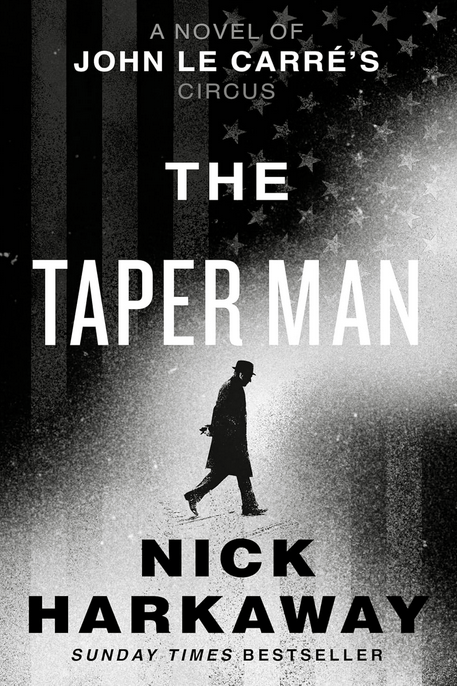
Nick Harkaway, aka Nicolas Cornwell, sets us down in the mid 1960s in this, his second re-imagining of the world of British Intelligence during the Cold War years, a world so memorably portrayed in his father’s novels about George Smiley and ‘The Circus’, properly known as MI6. When Bill Haydon, a field operative is shot and wounded in a Helsinki market, George Smiley is told to investigate. Haydon’s companion, a woman called Lara Koski, was killed in the exchange, as was a man who is later identified as Rolan Gusev, a Russian agent. Gusev was due to fly on to America, where he was booked in to stay at The Reconstruction Club, a luxurious Los Angeles establishment regarded by the CIA as a place with strong links to Soviet Russia.

Another Circus operator, Roy Bland, is meanwhile experiencing problems of his own in Leningrad, where he is staying in a health spa. Bland, officially employed in Bulgaria, is one of the more unusual Circus employees. Although highly educated and multilingual, he is of working class origins. He was brought up in east London, where his father was a docker. ‘Control’, the otherwise nameless boss of The Circus, believes that Gusev was on his way to California to make contact with a Russian spy deeply embedded within the American intelligence services, and he is anxious to find out who this person is. Why? Although Britain was still, notionally, an international power, its post – Suez reputation is not good, particularly in the eyes of the Americans.

To use a seasonal metaphor, it is Britain’s autumn, and the trees, with their leaves blasted away by strong winds, are nearly bare. The American CIA are blunt, disruptive and vigorous. They view the inherent caution and subtlety of MI6 as fey and ineffective. Roy Bland, almost by accident has discovered what might be a key to unmasking the American spy, and it is in Leningrad where most of the serious action takes place. Bland is on the verge of applying for Russian citizenship, more through expediency than conviction, because he realises that his high profile defection may give him the opportunity to help Control.

Smiley, meanwhile, is sent to California, ostensibly to attend a conference but, in reality, to discover why Gusev was headed to Los Angeles, and who he was scheduled to meet. Along the way, we rub shoulders with many of Le Carre’s stock characters, such as the fiercely intelligent Connie Sachs and the devious Toby Esterhase. The more vigorous action – shootings, seduction, film negatives hidden in waste pipes and other skullduggery all takes place in Leningrad, but the quiet and persistent wisdom of George Smiley – ostensibly a mere bookkeeper or accounts clerk – which unmasks the traitor.

Finland features tangentially in the narrative, and it is worth remembering its strange place in European history. Having valiantly resisted the Russians in The Winter War, they then cosied up to Hitler, but suffered a savage revenge by Stalin after the war. The title? It originated in England’s Gunpowder Plot. An unidentified participant had the job of accompanying Fawkes on his fatal mission, carrying a shielded flame to be used in an emergency. In modern espionage terms, it has been used to describe a survivor of a busted spy plot, who keeps his or her head down and keeps the faith while the network is being destroyed above their heads. This is not easy reading. The plethora of references to the original books keeps us on our toes, but Harkaway preserves the enigma of the ‘little round man’, the impenetrable and unknowable George Smiley. The Taper Man will be published by Penguin/Viking on 5th November.

MURDER BY DECREE . . . Between the covers

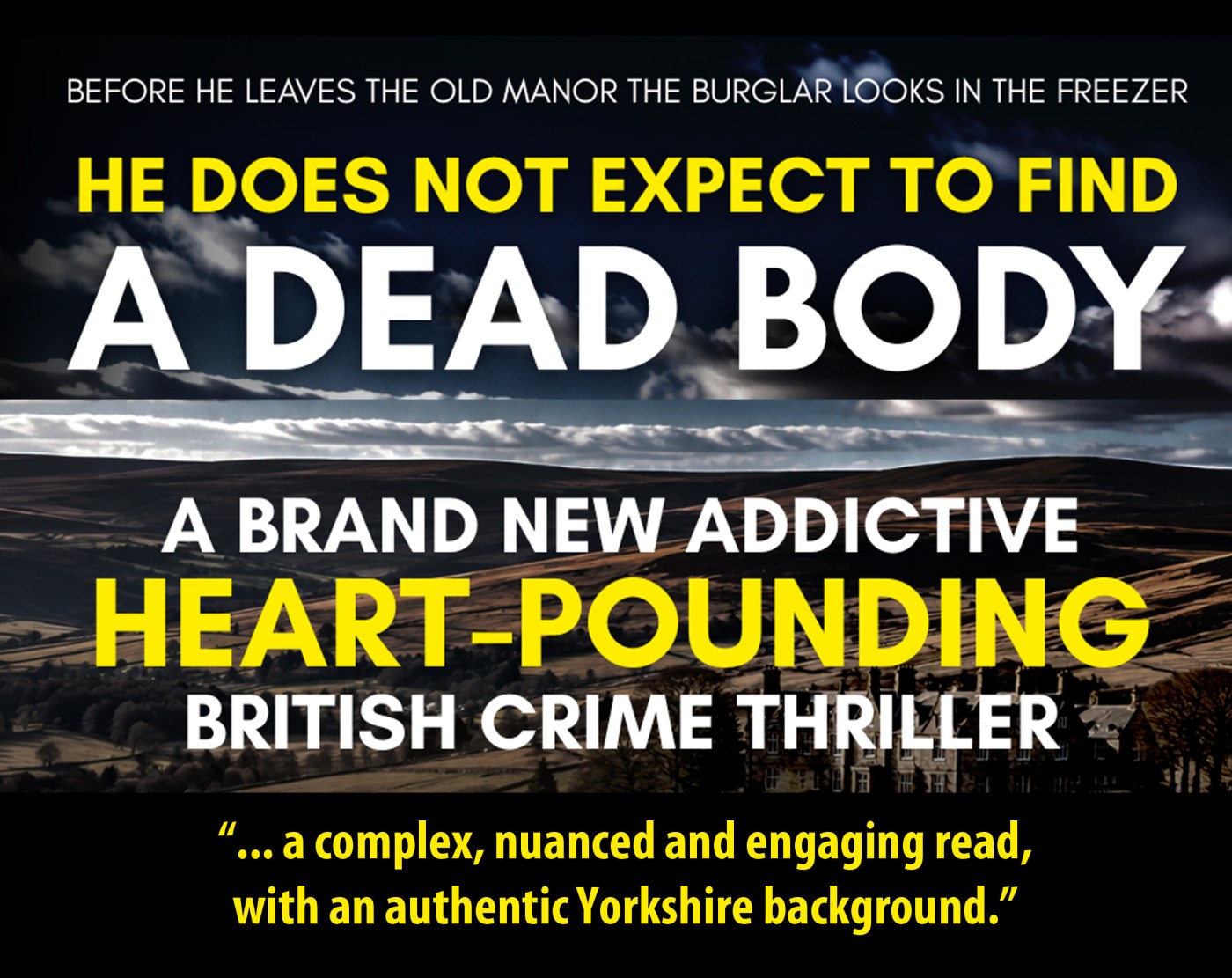
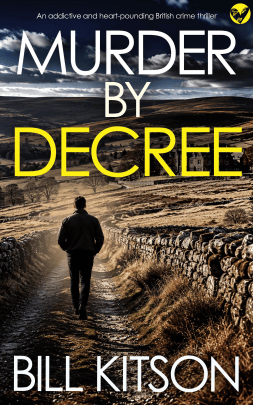
It is unfortunate, at least in terms of Amazon searches, that this book shares the name of the 1979 Jack the Ripper/Sherlock Holmes film, but it is a decent read nonetheless. The initial premise is a rather clever hook. We are in Yorkshire and a serial burglar, a predator of grand houses whose owners are on holiday, goes for the obvious stuff like jewellery and antiques, but he has a quirk. He has a growing family, and he always raids his victims’ freezers for the high end stuff he always finds there. Expensive cuts of meat, game and seafood are all welcome at home, but his latest find? Not so much. It is the body of a young woman, wrapped in a carpet. Eventually he does the right thing and makes an anonymous phone call to the police, where the case falls into the lap of DI Mike Nash.

The novel has, almost inevitably these days, a prologue, which involves a trio of high-end kidnappers who have made a good living from kidnapping children of wealthy parents, who pay the ransom for their child’s return. It seems to have worked well, but one of the trio has reservations about the latest operation. In the first chapter proper, we witness the shooting of a man on a remote Yorkshire farm track. Is this connected with the kidnappers? As ever, we have to wait a while before everything is revealed.

The woman in the freezer
is found to have died from a bullet wound, and then a third gunshot victim is found, this time in the unlikely location of a pheasant rearing cage on a local estate. For an ostensibly quiet rural area of Yorkshire, there seems to be rather a lot of handguns going off and killing people, and there is a fourth shooting. This time it is of the owner of an open-all-hours convenience store, and the victim has a rather dramatic past. Gunshots continues to resonate around The Dales, and the body of a man is found in a picturesque rental cottage. The discovery, by a Leeds couple, abruptly ends their hopes of a delightful weekend break, but their misfortune seems to draw a line under the convenience store shooting.

This is the twenty-first book
of a series that began a quarter of a century ago, but what does Murder By Decree tell us about Mike Nash? He has a Spanish wife, Alondra, and they have two children. Daniel, Nash’s son from his first marriage is away at boarding school, while Lucy is at a local pre-school. Nash used to be an officer with the Metropolitan Police, but moved north after he was traumatised by a particularly horrific serial killer investigation.

Even the most diligent police investigations need a stroke of luck, and here it comes through seventeen year-old Daniel going for a romantic stroll with his girlfriend in a local holiday park. They hear what sounds like a child crying, and what they discover turns the case on its head.

Bill Kitson is the author of the DI Mike Nash thrillers, plus the Eden House Mysteries featuring amateur sleuths Adam Bailey and Eve Samuels. The Cowgill Family Saga is the latest addition, previously published independently, but now all commercially published. He also writes The Greek Island Romances along with several other titles, all published independently in support of a Greek charity for disabled children, ELEPAP. All royalties from these books are paid directly to the charity. Living and working throughout the north of England he is now retired from the finance industry and lives on the east coast, where his writing never stops. He can often be found on a Greek island, staring out to sea, laptop at the ready.

I thoroughly enjoyed this. It is ‘only’ a police procedural, but it is a complex, nuanced and engaging read, with an authentic Yorkshire background. It will be published by Joffe Books on 4th November.

Blog at WordPress.com.

Up ↑