
PART THREE
So far …. 21 year old Maida Warner, from Stockton, has been arrested after a dead baby was found in the room she occupied at Sandown Villa, the home of Mr and Mrs Patterson, who employed Maida as a domestic servant. The bay was found with string tied tightly around its neck.
On 23rd June, at the second Coroner’s Inquest into the baby’s death, (the first was adjourned because Maida Warner was too ill to attend) the grandly named Mr. J. J. Willington Wilmshurst, spoke to a packed room in Leamington Police Station. This time, Maida Warner was present. The newspaper reported:
“The young woman, Maida Warner, who has been charged with the wilful murder of the child, was present, accompanied by a wardress from Warwick Gaol. She looked white and ill, and after the evidence of the first witness was obliged to retire for a few minutes.”
The jury heard medical evidence which was ambivalent about whether the baby was born alive. This was to be a key issue in the criminal proceedings which followed. The legal phrase was “separate existence”. In simple terms, if the baby had drawn breath, even for a few seconds after the umbilical cord had been cut then was deemed, by law, to have had a separate existence and, as such, was entitled to the protection of the law. Despite one of the doctors saying:
“It is my opinion that the child was healthy child, at, or near, full time, that it had lived and breathed freely. The cause of death was suffocation by strangulation, which might have been caused the cord round the infant’s neck. The child was alive when this constriction was put round it.”
But he then muddied the waters by saying:
“It is impossible to say that the child was wholly born, at the time it was done.”
Despite the confusion, the Coroner could only pass the case on up the legal ladder to the criminal courts. It was at this inquest, however, that another piece of evidence emerged which was to have an important bearing on the date of Maida Warner. Knowing that the young woman would not – whatever the outcome of the trial – be coming back to Sandown Villa, John Patterson had gone to clear up Maida’s room. He found a letter, torn up and thrown in the fire grate. It was signed, “Your dear little husband, S.B.C. – Warwick“
Stockton was a small village, and it wouldn’t have taken a Sherlock Holmes to discover who S.B.C. was. In 1901 Sidney Cox had been living with his sister and their large family in a house on Napton ad, Stockton.

Probably very much against his wishes, he was produced as a defence witness when Maida was brought to trial at Warwick Assizes on July 28th, in front of Mr Justice Wills (left) By this time – and Maida must have had a very clever defence team – the charge had been reduced to that of concealing a death. The judge seemed to put great store by the presumption that Maida was fully prepared for – and happy with – the fact that she was about to give birth. Evidence for this was produced, in the form of newly purchased baby clothes found in Maida’s trunk. Sidney Cox had his moment in court as reported in the local newspaper:
“A young man named Sidney Cox was then called, and stated that he had been keeping company with the prisoner, and it was arranged that they should be married next month.
Judge; “Did you know that she was about to be confined?”
Cox,“No”
Judge, “Did you know what she intended to do?”
Cox,“No”
Judge, “Are you now prepared to marry her, and is it you intention of doing so at the earliest opportunity?”
Cox, “Yes.”
To cut a long story short, the Judge – despite the strange and unexplained matter of the string knotted round the baby’s neck, decided that Maida Warner was guilty of concealing a death, and sentenced her to twelve months hard labour. This story has a happy ending, after a fashion. In December 1906, the local news from Stockton column had this announcement:
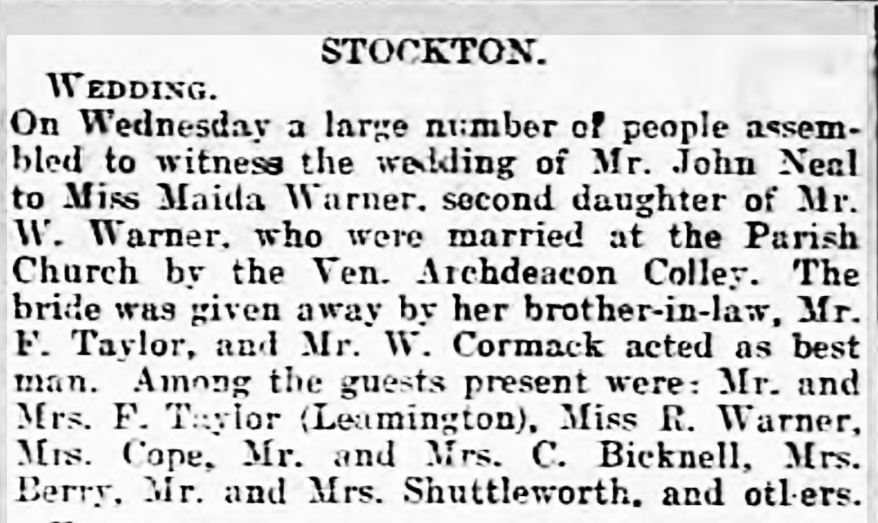
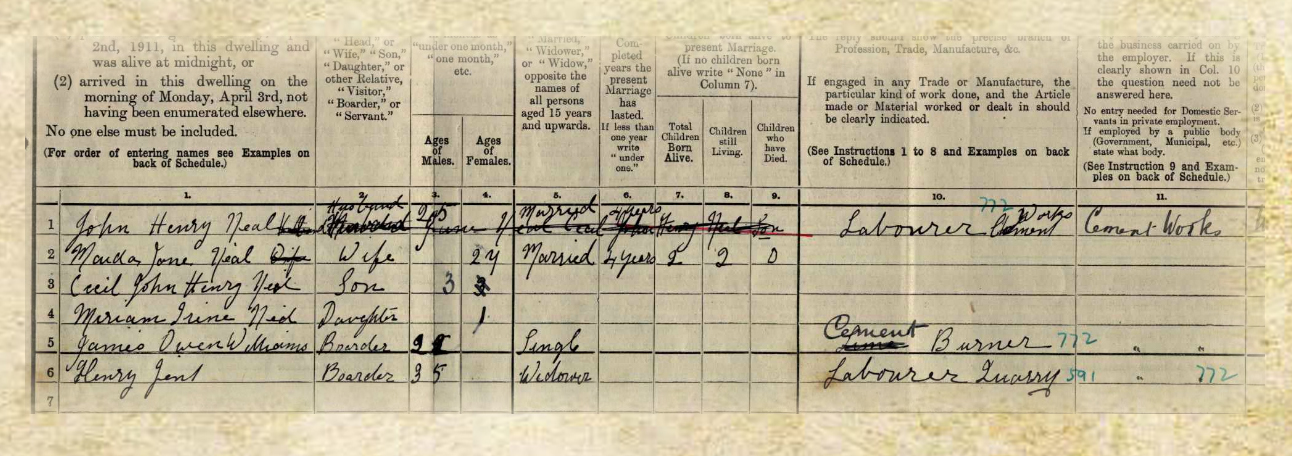
It is good to know that, whatever the truth of what happened on that fateful day at the end of May 1905, Maida went on to live her life in full. The last we see of her, at least in official records, is that in 1911 she was living with her husband in George Street, Stockton.
For me, looking back at something which happened over a century ago, it is a curious case, and no mistake. What was the string doing around the baby’s neck? Was it something to do with a young woman giving birth on her own, and perhaps misguidedly remembering – as a country girl – how calves were hauled from their mothers’ wombs with stout cord? Did the baby have “a separate existence”? We will never know. I believe there are Neals and Warners still living in and around Stockton to this day, and I hope that they will think that I have reported this strange episode with respect and fairness.
 CLICK ON ANY TAG AND THE CONTENT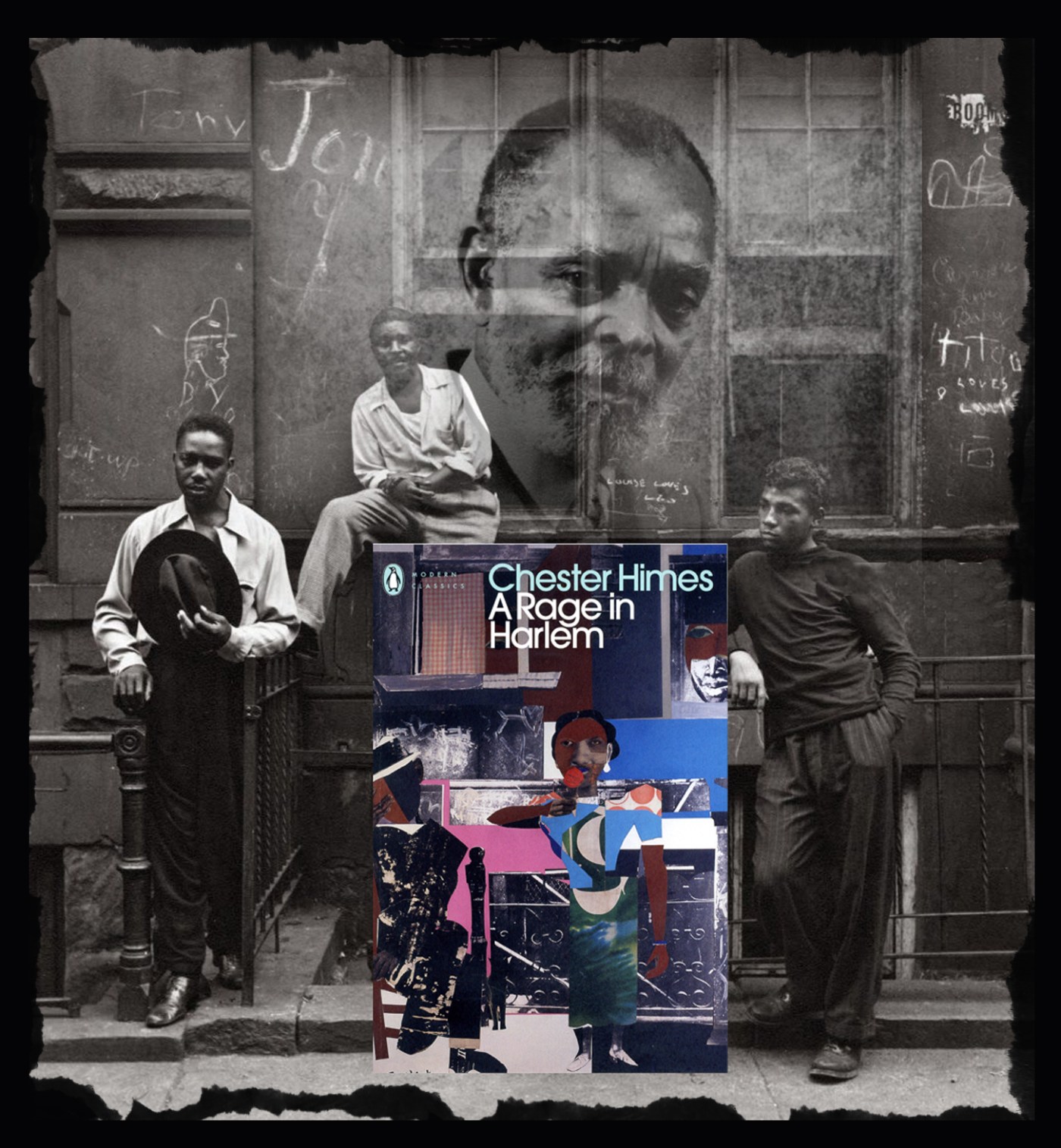

 Chester Himes was born into a middle-class family in Jefferson City, Missouri, in 1909. His parents both worked in education. When Himes was 12, his brother was blinded in an accident, and was denied treatment by the Jim Crow Laws (extensive segregation in all public services) and this shaped the way Himes viewed American society at the time. The family moved to Ohio, and after his parents divorced, Himes fell among thieves and in 1928 took part in an armed robbery, for which he was sentenced to 25 years hard labour. In prison, he began to write feature stories and articles for magazines. In 1936 he was released into the custody of his mother and, while working dead-end jobs, he continued to write. He moved to Los Angeles in the 1940s to write for movies but again, he felt the heavy hand of racial discrimination. He finally gave upon America, and moved to Paris in the 1950s. He never returned to America and died in Spain in 1984.
 Rage In Harlem is a very angry book, and the psychological scars borne by Himes are unhealed and very near the surface. There is a solid core of what appears to be slapstick comedy, but it is brutal, surreal and venomous. The mother of all car chase takes place when Jackson – an undertaker’s chauffeur – steals a hearse to shift what he thinks is a trunk full of gold ore (another scam). He is unaware that it also contains the dead body of his brother who, by the way, makes a living by dressing as a nun and soliciting alms while reciting bogus quotations from The Book of Revelations: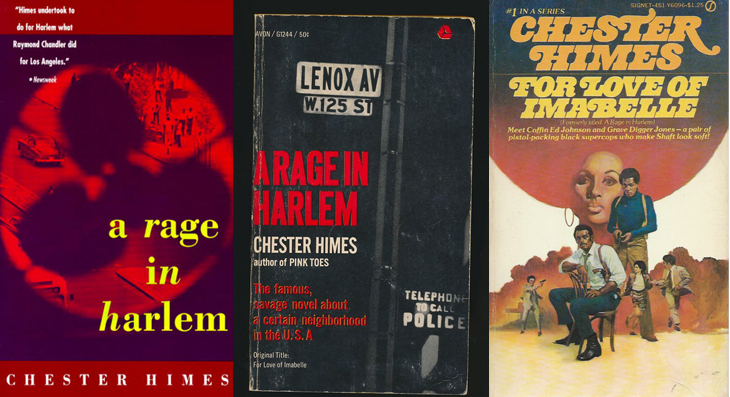


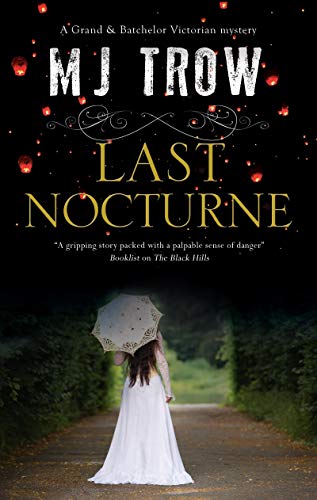 Grand & Batchelor are private investigators based in 1870s London and – much to the relief of James Batchelor, who is a terrible traveller – Last Nocturne has its feet securely on home soil. Grand is from a wealthy New England family, and fought bravely for the Union in The War Between The States, while Batchelor is a journalist by trade. Murder – what else? – is the name of the game in this book, and the victims are, you might say ‘on the game’. Cremorne Gardens were popular pleasure gardens beside the River Thames in Chelsea, but after dark, the ‘pleasure’ sought by its denizens was not of the innocent kind. ‘Ladies of the Night’ are being murdered – poisoned with arsenic – but the killer doesn’t interfere with them, as the saying goes, but instead leaves books by their dead bodies.
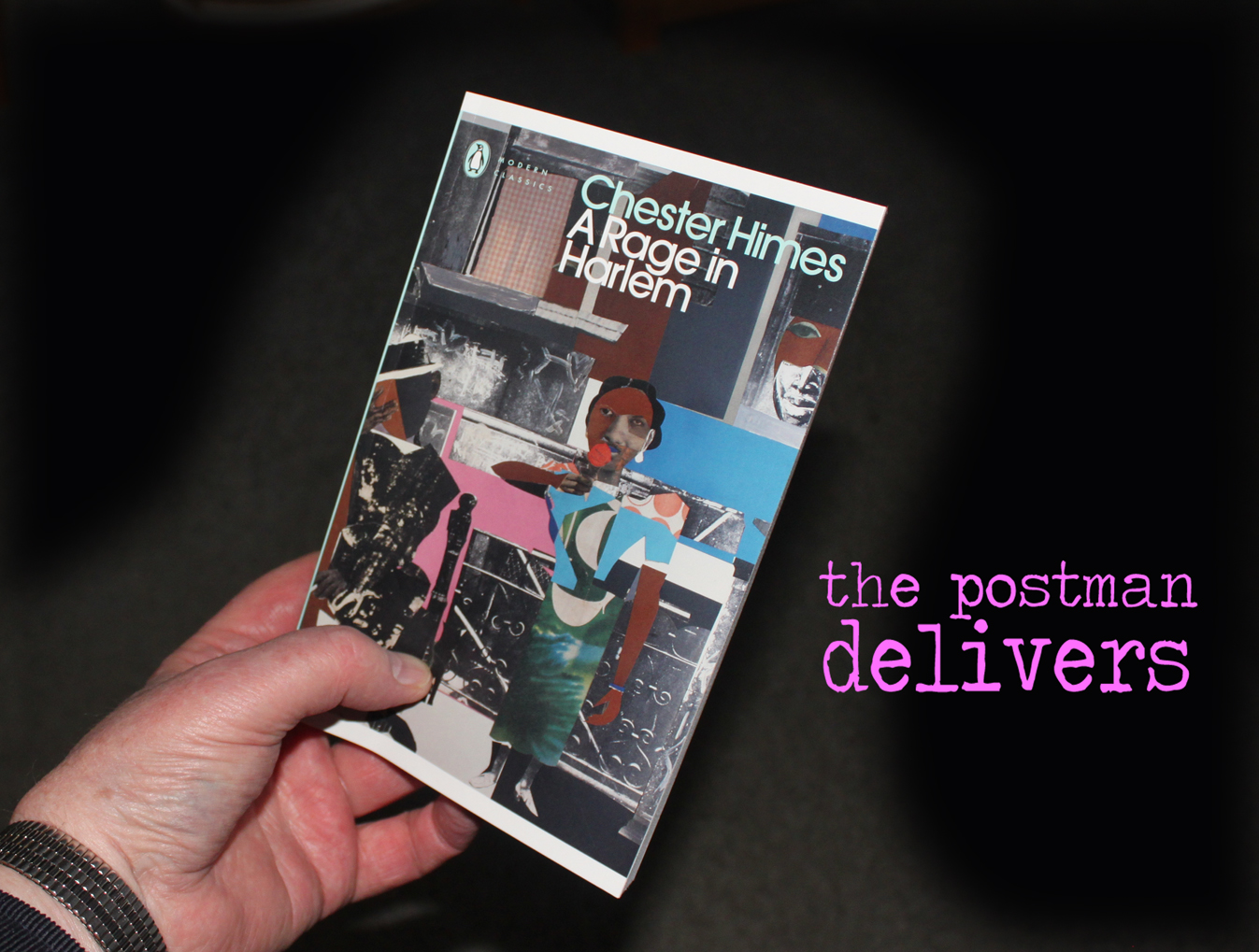

 Yes, my reviews always carry the banner ‘between the covers‘ and, at the end of the day, it’s the written content which counts. Carefully worked covers are part of the package for me, though. Of course we have to live with – and work with – digital editions, and they have their moments. They’re cheaper and in some ways more convenient, but a physical book, decently printed and bound is for many of us the nonpareil. The cover designs for – to name just a few – books by Christopher Fowler, John Connolly, Jim Kelly and Stacey Halls always add to the experience, and now Penguin have done something rather marvellous and secured images by Romare Bearden to grace their new editions of the superb Coffin Ed Johnson and Gravedigger Jones novels by Chester Himes.

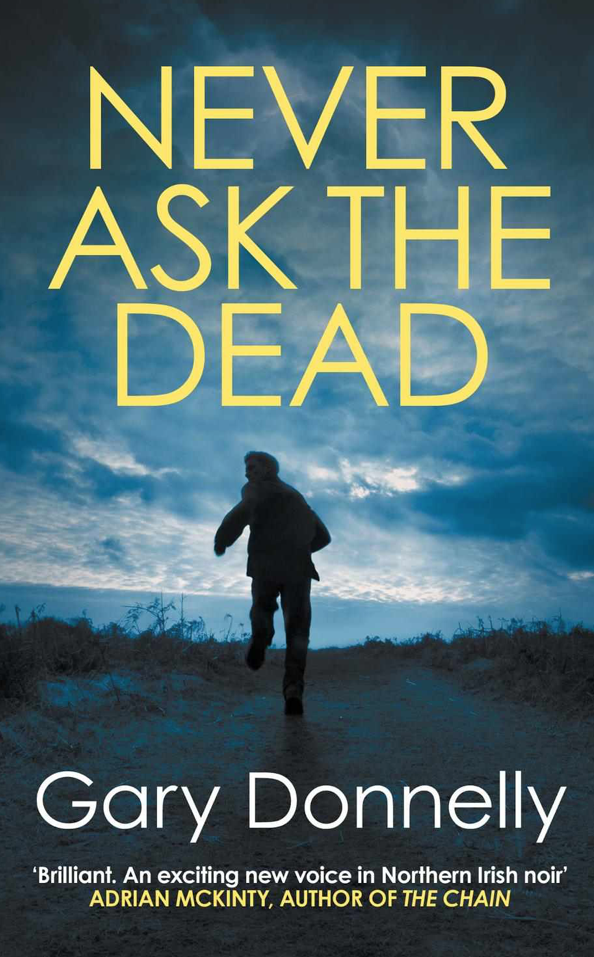 Sheen is given the task of re-investigating the Cyprus shootings, with a strong hint that it would suit the contemporary political narrative were the SAS men to be found guilty of unlawful killing. As he turns over the stones, Sheen isn’t surprised to see all kinds of unpleasant creatures scuttling away from the light. He has his own issues, as his own brother was the collateral damage of a terrorist bomb in their childhood street while they were kicking a football about.
 Donnelly has written a brilliant and terrifying novel that should remind people that despite the outward air of calm and reconstruction there is a parallel Belfast – a place where grievances are bone-deep and still burning white hot.


 fullybooked2017