

Former music journalist William Shaw (left) introduced us to Detective Sergeant Alex Cupidi in Salt Lane (2018). This was followed by Deadland in 2019, and the third in the series is Grave’s End. Alex Cupidi is socially something of a loner: she has a teenage daughter, Zoe, who she has raised pretty much on her own; her only other family is her mother, 80 miles or so up the road from the bleak Kent marshes, in London. Zoe Cupidi, like many other idealistic young people, is a fervent defender of nature, and sees the adult world in which her mother has to work as a grimy conspiracy to fell every tree and concrete over as much of green England as possible.
For those who know something of England, Alex Cupidi’s Kent is not the rosy cheeked rural idyll of The Darling Buds of May. This is the coastal Kent of the Romney Marshes and Dungeness; beautiful in its own way, perhaps, but bleak; the coastal fringes are flat, scoured by cruel winds, and shunned by holidaymakers who prefer deck-chairs and the friendly smell of fish and chips to solitude and the mournful cry of the curlew.
 This taut thriller is distinctly unusual, in that one of its main characters is neither a fellow member of Kent Police, nor one of the villains they spend their professional lives trying to put behind bars. Instead we see – or sense – some of the action through the perceptions of an elderly badger. Before such thoughts can gain foothold, I can assure you that this is no Wind In The Willows. Our badger is not an avuncular personification. He is old, fearful of younger rivals, and hungry – always hungry.
Of course, readers have to accept that the badger’s perceptions are expressed in our language. Since this particular representative of Meles Meles has none that can be written, what is the alternative? I was not convinced at the start of the book that the idea was going to work, but after reaching the last page, I think it does. Shaw keeps the badger’s subterranean activity linked to the plot, and from the very start it is his sense of smell that alerts us to the fact that something is very, very wrong.
“By now, the air should smell of fresh grass, cow parsley, other badgers and dog shit. He moves forward more cautiously in the blackness and his snout meets something hard. At the end, where darkness should change to dusk, he finds the tunnel blocked. He digs, but there is something in his way, so hard his big claws make no impression on it at all. He sniffs. It smells rank. People stink.”
When an enterprising junior estate agent decides to impress his girlfriend, he ‘borrows’ the keys to an impressive empty property, but his hopes of a passionate afternoon’s grappling on someone else’s bed are dashed when they find a dead body in a freezer. Alex Cupidi and her team soon identify the frozen corpse of that of a local wildlife activist. Further investigations lead them in the direction of a controversial housing development on a site inhabited by, among other various fauna, our friend the badger.
Alex Cupidi is like the proverbial dog with its bone as she relentlessly follows the trail leading away from the murdered activist. High profile government ministers, avaricious property speculators, a minor public school with a terrible secret – every time she lifts a stone, nasty things scuttle about, unaccustomed to the light. Grave’s End is a totally compelling read. It is published by riverrun, an imprint of Quercus, and will be available in July.

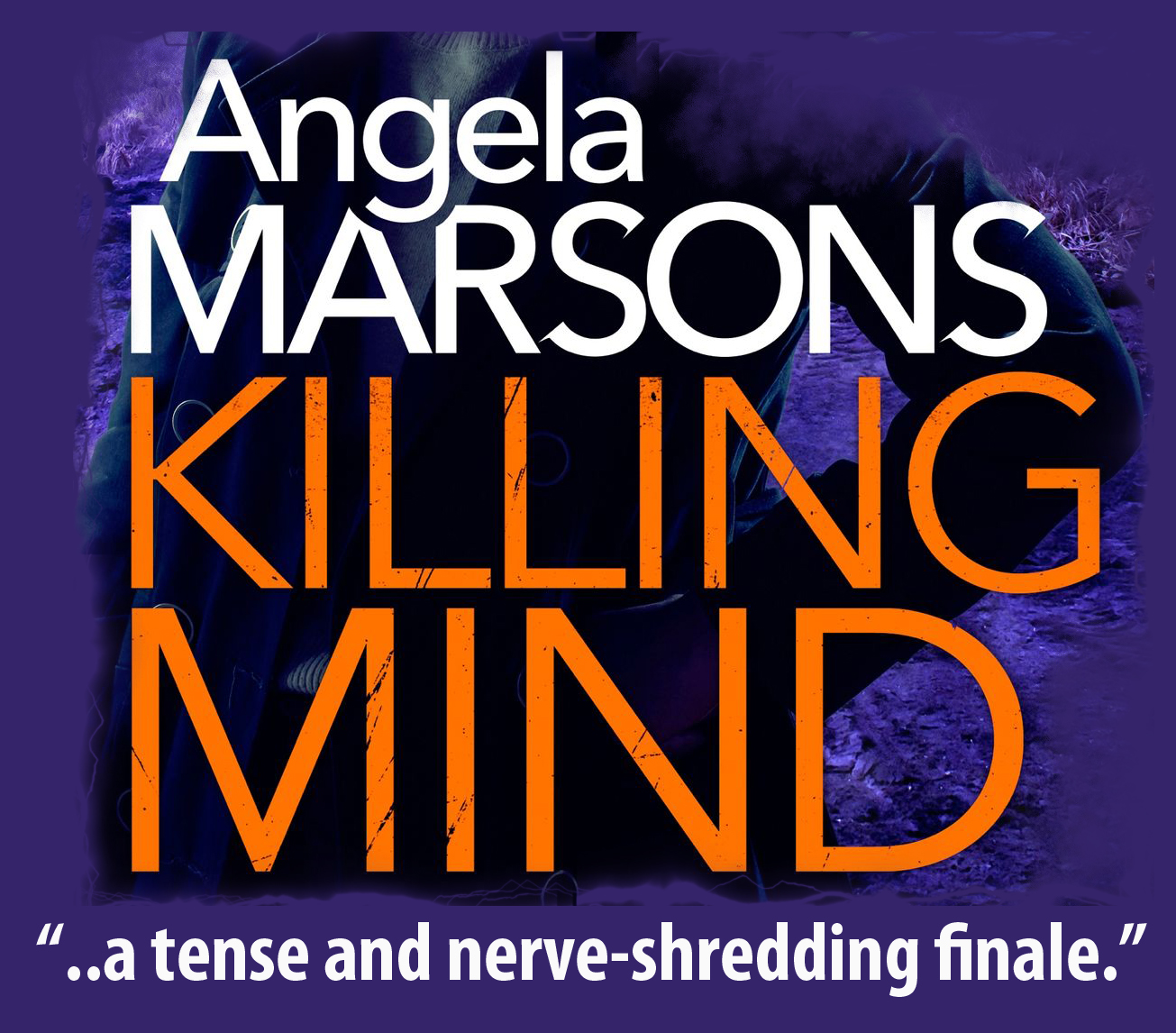

 came late to the party regarding Angela Marsons and her Kim Stone series of police procedurals set in England’s West Midlands, but I thoroughly enjoyed
 eanwhile, Stone’s assistant, DS Bryant, has his own fixation to deal with. He was involved in the capture, trial and conviction of a notorious killer, Peter Drake, and has become involved with Richard Harrison, father of one of Drake’s victims. A previously unrepentant Drake has, suspiciously, turned over a new leaf in jail and has become a model prisoner, thus transforming his application for parole from a forlorn hope into a distinct probability. Both Harrison and Bryant are powerless to prevent Drake’s release. Both have a sense of foreboding about what may follow.
 hen Stone makes the decision to send one of her younger officers into Unity Farm, posing as a distressed and unhappy young woman, things do not turn out according to plan and Marsons orchestrates a tense and nerve-shredding finale to the book. When the murderer is unmasked, it came as a cleverly constructed surprise. Killing Mind is published by Bookouture, and






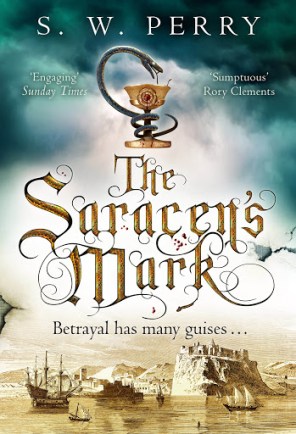


 Adam Nunn is a decent enough fellow, but like all of us, he has made his mistakes. He lives with Zara, a struggling restaurant owner, but has a child of his own, Tilly, who lives with Grace, her mother. Adam has discovered that he is adopted, and has employed a fairly seedy private investigator to try to trace his birth parents.
 Along the way, Mark (right) introduces us to some loathsome individuals who have all played their part in Adam Nunn’s terrible back story. There’s local politician Leo Riley, for example:



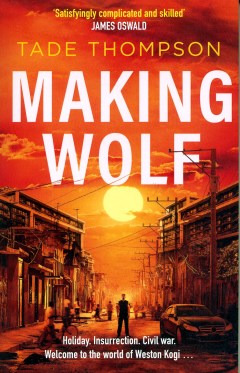 At his aunt’s funeral he meets Churchill “Church” Okuta. Church is a nightmare from Kogi’s schooldays, and the meanest person he has ever met. When asked what he does in London, Kogi, on impulse says that he is a homicide detective. Bad move. Church orchestrates the drugging and abduction of Kogi, and when he wakes up he finds that he is in the camp of the Liberation Front of Alcacia, one of two warring rebel groups trying to overthrow the government. Their leader, Enoch ‘Papa’ Olubusi has been assassinated, and the LFA, in the mistaken belief that Kogi is a crack British detective, want him to prove that the killing was the work of their bitter rivals – the People’s Christian Army.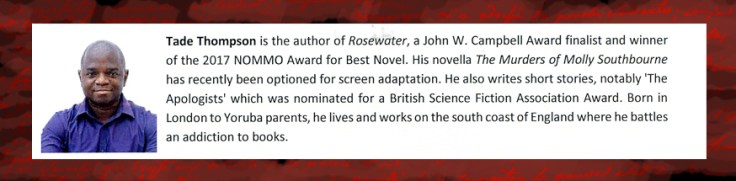


 fullybooked2017