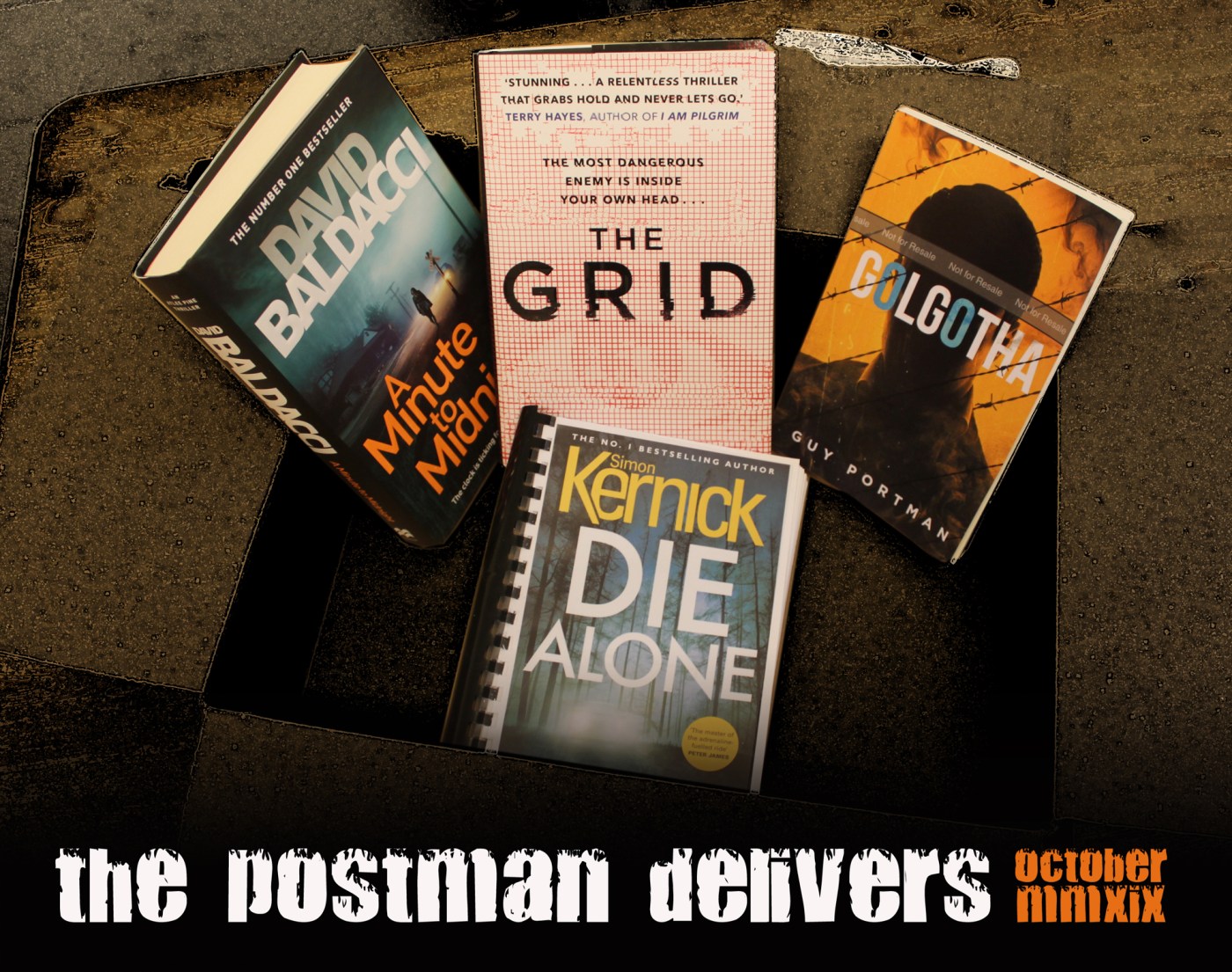
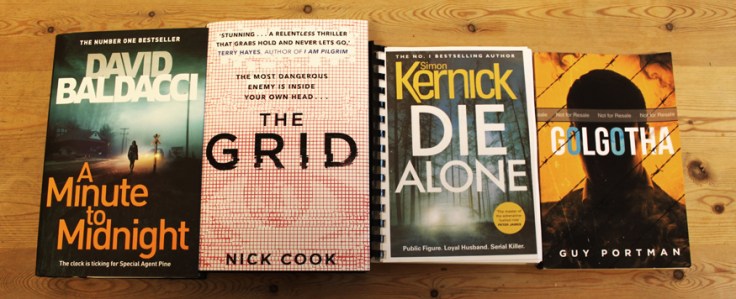
I make not even the slightest trace of an apology for not jumping on the regrettable Halloween bandwagon. Someone on my Twitter timeline was emoting about “this time of darkness and evil deeds, when spirits of the dead walk the earth.” The only beings that walk the earth where I live are over-excited children dressed in plastic tat from ASDA (other suppliers of mass produced seasonal rubbish are available) disturbing my peace and begging for tooth-destroying sweets (also available from exploitative mass retailers in handy packs) while their aggressive parents lurk not far behind, ready to leap in with an oath or three should I reject the advances of their offspring. Rant over. Instead of pumpkins I offer publications – four of the best to get stuck into as the nights lengthen.
A MINUTE TO MIDNIGHT by David Baldacci
Atlee Pine is a female FBI agent with what some like to describe as a kick-ass attitude. Like all the best fictional law enforces she has a troubled past, and hers involves the abduction and presumed murder of her twin sister when they were little. She is convinced that a serial killer called Daniel Tor – now serving thirty life sentences in a Colorado jail – either did the deed or knows who did. When Pine takes enforced holiday leave after nearly battering a child rapist to death, she is drawn back into the search for the truth about what happened to sister Mercy all those years ago. Ignoring Nietzsche’s famous homily about the Abyss, Pine becomes snared in a web of secrets, lies – and indescribable evil. A Minute To Midnight is published by Macmillan and will be out on 14th November.
THE GRID by Nick Cook
Thrills of a different kind now, from celebrated defence analyst and journalist Nick Cook. His latest novel explores the complex and controversial world of surveillance and counter intelligence work. US Presidents have an unenviable record of becoming assassination targets, so much so that it might as well be in the job description. The current occupant of The Oval Office, President Thompson has been subject to vivid recurring dreams about his own demise, so much so that he confides in Josh Cain, his personal doctor. Cain’s background is in military psychiatry, but even his experiences of dealing with the trauma caused by battle doesn’t prepare him for what he is about to discover. When a sniper’s bullet ends a startling confession from a former US Marine, Cain is served dramatic notice that he is about to participate in his President’s nightmare. Also out on 14th November, The Grid is published by Transworld.

DIE ALONE by Simon Kernick
A novel with the words Simon Kernick on the front cover is pretty much guaranteed a second look from most readers who enjoy their crime with a political flavour. We may have our doubts about the respective merits of Boris Johnson and Jeremy Corbyn (other party leaders are available) but I don’t think it is seriously suggested that either is a serial killer. Not so with Alastair Sheridan, the central character in Kernick’s latest novel. Suave, handsome and charming, Sheridan is everyone’s tip to become First Lord of The Treasury and occupant of London SW1 2AA. Everyone? Well, almost. A select group, a modern day illuminati, know that Sheridan is a killer, and they employ disgraced detective Ray Mason to kill him before he gains power and silences those who know the truth about his actions. Mason soon realises that things are not entirely what they seem, but how can he – to mix two body metaphors – keep both his hands clean and his head on his shoulders? Published by Century, Die Alone is out on 28th November.
GOLGOTHA by Guy Portman
It is a sad reflection of the state of British cultural life in this second decade of the 21st century that satirists like Guy Portman should have to go down the self-publishing route to bring his books to readers. Yes, his books shock. Yes, they direct a flamethrower into the bunkers inhabited by the politically correct and woke glad-handers in the publishing world. Yes, Portman fails to respect the notion that some cultural practices must remain immune from criticism.
His anti-hero is the delightfully despicable Dyson Devereux. We first met him as an iconoclastic manager of a municipal cemetery in Necropolis. His homicidal streak appeared to run into the buffers at the end of Sepultura, and Golgotha starts with him in an Italian jail awaiting his trial for murder. Guy Portman has an extraordinary talent to amuse – and raise eyebrows. Leave him alone if your sense of humour is only tickled by offence-averse sitcoms. If you were raised on a diet of M*A*S*H*, Catch 22 and American Psycho, then take a chance – if you injure yourself laughing, then blame me. You can buy Golgotha here.
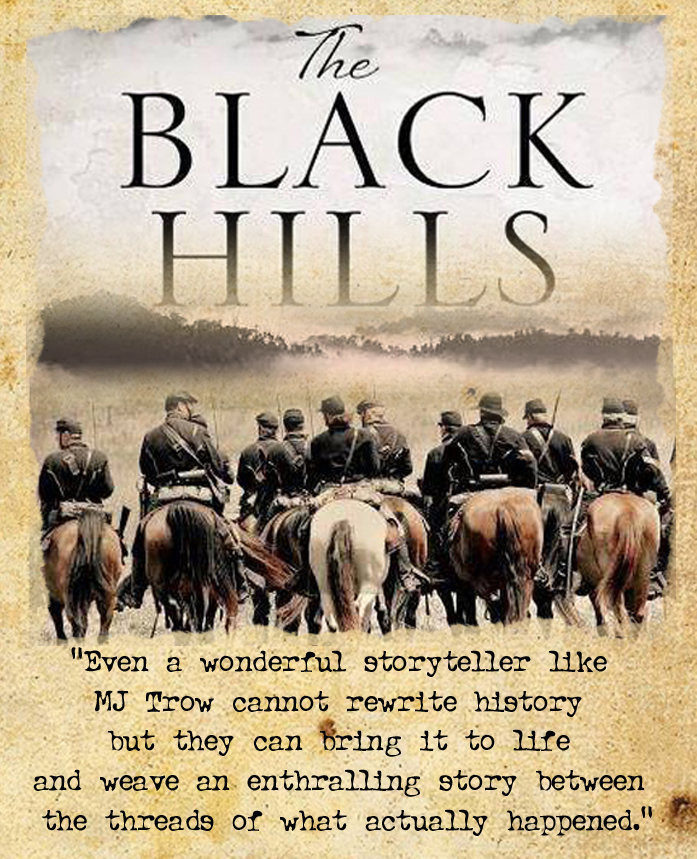
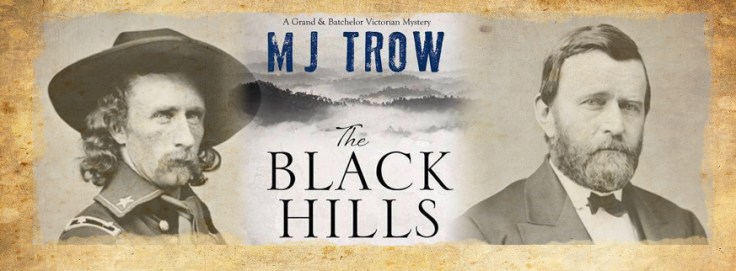
 e may not have been the first to do so, but George MacDonald Fraser entertained many of us with the idea of writing novels where we get to meet actual key players from history. His archetypal bounder Harry Flashman, himself nicked from Tom Brown’s Schooldays, rubbed shoulders and crossed swords with a variety of celebrities, including Otto von Bismarck, Abraham Lincoln, and Emperor Franz Joseph. The late Philip Kerr narrowed things down as he introduced us to Heinrich Himmler, Reinhardt Heydrich and Joseph Goebbels in his Bernie Gunther novels.
 One of the enjoyable conceits of the series is the comparison of how the two men behave when out of their cultural comfort zone. Grand is no gnarled backwoodsman, as his parents are wealthy New Hampshire patricians, but there is generally more fun to be had when Batchelor is trying to navigate the social niceties – or lack of them – in America. Trow, like MacDonald Fraser and Kerr, is a shameless name-dropper and we are not many pages into The Black Hills before we have bumped into George Armstrong Custer and broken into The White House to have a conversation with its current occupant, Ulysses Simpson Grant.
 I readily put my hand up. When I read the words The Black Hills, the first image that flashed before my eyes was that of Doris Day in her buckskins and with her blonde bob under a troopers’ hat. Yes, my age is showing, but the 1953 film Calamity Jane starring Doris Day in the title role featured great songs like The Deadwood Stage, Secret Love and The Black Hills of Dakota. Trow is pretty much of my generation. He was a couple of years behind me at a minor public school (but don’t hold that against either of us). Never one to miss a trick, he features Calamity Jane in The Black Hills but, my oh my, Doris Day she ain’t. Short, pug-ugly and a stranger to personal hygiene, Jane Cannery is a fixture at Fort Abraham Lincoln. She is rarely sober and earns her living by washing the long johns of the Seventh Cavalry men who guard the frontier. She is notoriously quick on the draw with her Navy Colt, and the soldiers take care to give her a wide berth when she is in one of her moods.


 or newcomers to the sublime world of Arthur Bryant and John May, the new collection of short stories written by their biographer, Christopher Fowler, contains a handy pull-out-and-keep guide to the personnel doings of London’s Peculiar Crimes Unit. OK, I lie – don’t try and pull it out because it will wreck a beautiful book, but the other bits are true.
 Leaving aside the pen pictures, introductions and postscripts, there are twelve stories. They are, for the most part, enjoyably formulaic in a Sherlockian way in that something inexplicable happens, May furrows his brow and Arthur comes up with a dazzling solution. Think of a dozen elegant variations of The Red Headed League, but with one or two being much darker in tone. Bryant & May and the Antichrist, for example, is a sombre tale of an elderly woman driven to suicide by the greed of a religious charlatan, while Bryant & May and the Invisible Woman reflects on the devastating effects of clinical depression. The stories are, of course set in London, apart from the delightfully improbable one where Arthur and John solve a murder within the blood-soaked walls of Bran Castle, once the des-res of Vlad Dracul III. Bryant & May and the Consul’s Son revisits Fowler’s fascination with the lost rivers of London, while Janice Longbright and the Best of Friends lets the redoubtable Ms L take centre stage.
 he gags are as good as ever. While investigating a crime in a tattoo parlour, Arthur is mistaken for a customer and asked if he has a design in mind:
 don’t know Christopher Fowler personally, but I infer from his social media presence that he is a thoroughly modern and cosmopolitan chap and, with his spending his time between homes in Barcelona and King’s Cross, he could never be described as a Little Englander. How wonderful, then, that he is the most quintessentially English writer of our time. His Bryant & May stories draw in magical threads from English culture. There is the humour, which recalls George and Weedon Grossmith, WS Gilbert, and the various ‘Beachcombers’ down the years, particularly DB Wyndham Lewis and JB Morton. Fowler’s eagle eye for the evocative power of mundane domestic ephemera mirrors that of John Betjeman, while his fascination with the magnetic pull of the layers of history beneath London’s streets channels Peter Ackroyd and Iain Sinclair.


 Alyssa Wyatt is pretty much your showcase American Mom. Not Middle American geographically, as she lives in New Mexico, but she ticks most of the other boxes; handsome successful husband, two teenage kids, nice house and a fulfilling career – as a cop. Like so many fictional law enforcement types, she has a dark past centred in childhood trauma, but what is done is done, and she lives for Holly, Isaac and husband Brock.
 harly Cox reveals to us the identity of the bad guy fairly early in the piece. Or, rather, she doesn’t. Over enigmatic? Quite probably, but to say more would ruin the fun. Alyssa and Cord chase their tails with more determination than success, while the sadist at the centre of the mayhem plans his next atrocity.
 on’t be misled, however, into thinking that All His Pretty Girls is Chick Lit. Yes, a female is the central character, but there’s no shortage of graphic violence and enough of the ‘mean streets’ to satisfy fans of hard-boiled crime.


 immy Mullen has been round the block. In the Falklands War his ship takes a direct hit from an Argentine fighter bomber and he watches his mates consumed by the ensuing fireball. Back home recuperating, with a pittance of a pension, he stacks supermarket shelves, battles with his nightmares and presides over the slow erosion of his marriage as drink becomes his only solace. Walking home one night from the boozer, he intervenes to prevent a girl being slapped around by her boyfriend. All very gallant, but the result is the boyfriend (an off-duty copper) lying insensible on the pavement in an expanding pool of blood.
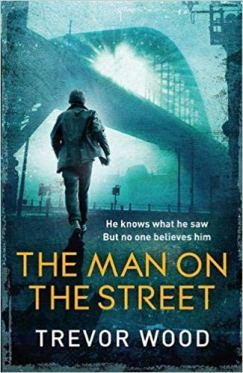 After the inevitable prison sentence Jimmy is now out on early release, but homeless, his ex-wife now remarried, and his daughter a complete stranger to him. Home is anywhere he can kip out of the rain. His social circle? A few fellow vagrants, raddled by drink, mental instability, drugs – or a toxic combination of all three. Their home-from-home is a charity called The Pit Stop where volunteers provide, food, showers and clothing.
 ome time later Jimmy sees a newspaper article featuring a young woman appealing for news about her missing father. The picture she is holding is of a man Jimmy thinks he recognises. It is the smaller man from the argumentative pair who disturbed his sleep a few weeks since. Or is it? With the help of a couple of his more social-media-savvy pals from The Pit Stop, Jimmy contacts the woman – Carrie Carpenter – and they are drawn into a mystery involving police (both complacent and corrupt), environmental activists, crooked businessmen and – as we learn near the end of the book – grim sexual deviancy.
 uthor Trevor Wood (right) has lived in Newcastle for 25 years and considers himself an adopted Geordie, though he says that he still can’t speak the language. Despite this, his phonetic version of the unique Geordie accent is good. Normally, I shy away from books where writers try too hard to convey accents in dialogue, but I think Trevor Wood does rather well here. Perhaps this is a result of my addiction to my box set of When The Boat Comes In.


 nora Andresson is a distinguished English actress. Perhaps slightly past her youthful allure, she remains a beauty who can pick and choose her projects, and her films are highly thought of. She has three problems clouding her horizon. The first is, as they say, a bastard. She has a brain tumour. It has been treated but she is only too aware that she may have won a battle, but not the war. Problems two and three are related – literally. She is separated from her Swedish husband, but they have a son – a young man called Malo – who is something of a wrong ‘un. The third problem relates to the words “they have a son”. Fact is, she does – her husband doesn’t. Malo’s father is actually a millionaire businessman named Hayden Prentice, and Malo was conceived during a drunken one-nighter just before Enora’s wedding. So why is Harold a problem? Although he is now an honest man, with legitimate investments and business interests, he made his initial fortune as a drug baron.
 he main plot of Sight Unseen hinges around the kidnapping of Malo’s Colombian girlfriend Clemmie. When a ransom demand of a million dollars is received her father, who, like many rich men from that benighted republic, has kidnap insurance, simply hands the case over to the experts. H, however, has other ideas, and decides to do things his way.
 Hayden Prentice is a brilliant creation and is, in many ways, at the centre of the book, as he was when we first met Enora in

 t was not until the middle of the nineteenth century that Britain had anything like an organised police force. The Hocus Girl is set well before that time, and even a developing community like Leeds relied largely on local Constables and The Watch – both institutions being badly paid, unsupported and mostly staffed by elderly individuals who would dodder a mile to avoid any form of trouble or confrontation. There were, however, men known as Thieftakers. The title is self-explanatory. They were men who knew how to handle themselves. They were employed privately, and were outside of the rudimentary criminal justice system.
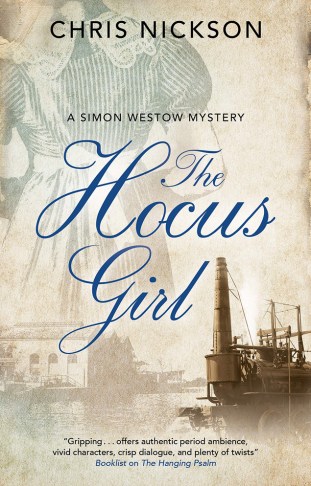 Such a man is Simon Westow. He is paid, cash in hand, to recover stolen goods, by whatever means necessary. His home town of Leeds is changing at an alarming rate as mechanised cloth mills replace the cottage weavers, and send smoke belching into the sky and chemicals into the rivers. We first met Westow in The Hanging Psalm, and there we were also introduced to young woman called Jane. She is a reject, a loner, and she is also prone to what we now call self-harm. She is a girl of the streets, but not in a sexual way; she knows every nook, cranny, and ginnel of the city; as she shrugs herself into her shawl, she can become invisible and anonymous. Her sixth sense for recognising danger and her capacity for violence – usually via a wickedly honed knife – makes her an invaluable ally to Westow. I have spent many enjoyable hours reading the author’s books, and it is my view that Jane is the darkest and most complex character he has created. In many ways The Hocus Girl is all about her.
 he 1820s were a time of great domestic upheaval in Britain. The industrial revolution was in its infancy but was already turning society on its head. The establishment was wary of challenge, and when Davey Ashton, a Leeds man with revolutionary ideas is arrested, Simon Westow – a long time friend – comes to his aid. As Ashton languishes in the filthy cell beneath Leeds Moot Hall, Westow discovers that he is treading new ground – political conspiracy and the work of an agent provocateur.


 fullybooked2017