GUEST WRITER NICHOLAS BOOTH tells the tale of a plausible and devious rogue who made some of the modern chancers in The Square Mile look like boy scouts.

The two Americans who were jammed into the cramped cell of Havana’s military jail (above) had been adversaries for years – but only now, in the spring of 1873, had they finally caught up with each other. And the circumstances were extraordinary.
One had masterminded an astonishing heist, defrauding nearly £10m in today’s money from the Bank of England during a two-month window of opportunity. (Among the most audacious of daylight robberies, it was accomplished by trading forged foreign promissory notes for cash.) The other was, by repute, the greatest detective in America, who had instigated the remarkable manhunt leading to this meeting.
 Stout, florid and perspiring in the heat, William Pinkerton, (left) scion of the famous detective dynasty, had been characteristically indefatigable in tracking down his quarry, travelling from New York to London, and thence to Havana. Glassy eyed, hollow -cheeked and very tired, his prisoner was, in one estimation, “a smooth, easy talker and a person who is likely to inspire confidence with anyone with whom he talked”.
As bankers all over the world – in Frankfurt, Liverpool, Manhattan, Rio, Paris and Chicago – could attest, that was putting it mildly. It was the prisoner’s incredible charm that explained how he had conned them in the past – and why he had been able to relieve more than £100,000 from the Old Lady of Threadneedle Street, where he had been known as Frederick Albert Warren. To the others who had fallen over backwards to lend him money, he was known as Charles J Horton. So far as bewildered officials were concerned, he was an international man of mystery. Following his plan’s collapse, they had discovered at least more 20 aliases. But his real name was Austin Biron Bidwell (below right), he was just 27, and along with his eldest brother George (a serial womaniser and ne’er do well) and a couple of accomplices, he had – in Willie Pinkerton’s judgement – carried out the most daring forgery and fraud the world had ever known.
On the first day of March 1873, it was only the accidental omission of the date on a forged document that exposed the Bidwell operation. What resulted was “a worldwide hue and cry”, as one newspaper said at the time, playing out as a cross between Ocean’s Eleven and Sherlock Holmes. Except in this case, the real-life sleuth was Willie Pinkerton who, even now, had only caught up with Austin Bidwell after yet another escape, a chase across Cuba and a dramatic sabre fight.
Austin Bidwell’s life, to date, had “surpassed the imaginations of our famous novelists” in another contemporary appraisal. Indeed, Anthony Trollope would start The Way We Live Now a few weeks later as a thinly disguised parable based on his exploits. As one of his later prosecutors aptly put it, his story was a “capital instance of misapplied genius” – which in this case included silencing their best witness by marrying her. Jeannie Devereux  (left) was a beautiful, naive girl of 18 who had fallen for Austin in the summer of 1872. Austin was a professional American criminal who had recently moved his operations to London. Her family were living in genteel poverty near Marble Arch; and though he would have preferred her as his rich man’s plaything, she declined. It was marriage or nothing. Though assuaged by his self-evident wealth, only later did she find out that her honeymoon had been paid for with stolen money. But by then, it was too late to do anything.
Austin Bidwell was one of the most elusive criminals in history. However, throughout late 1872, his various unexplained disappearances and hastily-written letters from all over the world convinced Jeannie’s mother that he was up to no good. And so it was that, one January day in 1873 – when Austin and Jeannie were about to head for St. Martin’s-in-the-Field to get married – the screaming banshee that was Mrs Devereux suddenly appeared out of nowhere. “Just as I was stepping into a cab with my fair bride,” Austin later told Pinkerton, “along came the cruel mamma”, who grabbed her daughter and gave her “a fearful pounding”.
Prevented from marrying, the couple eloped to Paris, with Austin’s assurances buoying Jeannie up: “You will have plenty of money in your pocket, and that makes all the world your slaves and you can never be embarrassed.” And so it might have been, but for a simple slip. After the February ceremony in Paris, the rest of the gang returned to London, to complete the scam before the forged bills became “due”, while the newlyweds headed via Spain for the West Indies. When it all fell apart three weeks later – because a date was left off a forged document – one accomplice was arrested and the others scattered. And Willie Pinkerton had a pretty shrewd idea of who was behind it all.
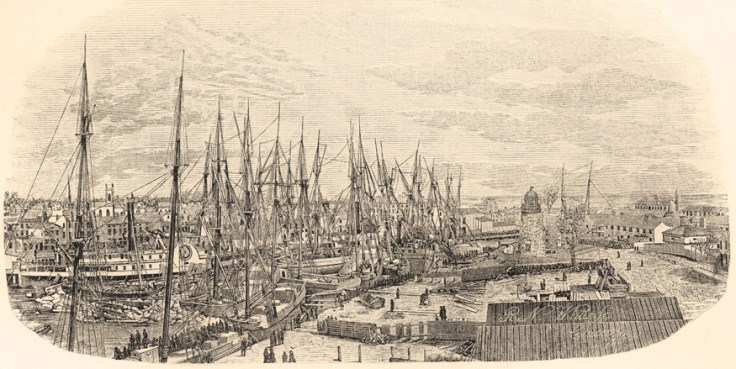
Pinkerton had first encountered the Bidwell gang in his native Chicago (above) and followed their forgeries, swindling and defrauding of banks for the best part of a decade. “So ingeniously were their schemes planned and so cleverly was their work executed,” he marvelled, “that for a long time, they escaped detection.” But thanks to his own unparalleled network of informants, in 1872 he learned something big was being planned in London and travelled there. In November of that year, he would later tell Austin, he had actually seen him on the Strand – to which his imprisoned charge, all colour drained from his face, replied: “Pinkerton, for God’s sake, why did you not speak to me? I would have given you $50,000 to mind your own affairs and not do as you have done.”
The article first appeared in The Independent in 2015,
and is used with the permission of the author
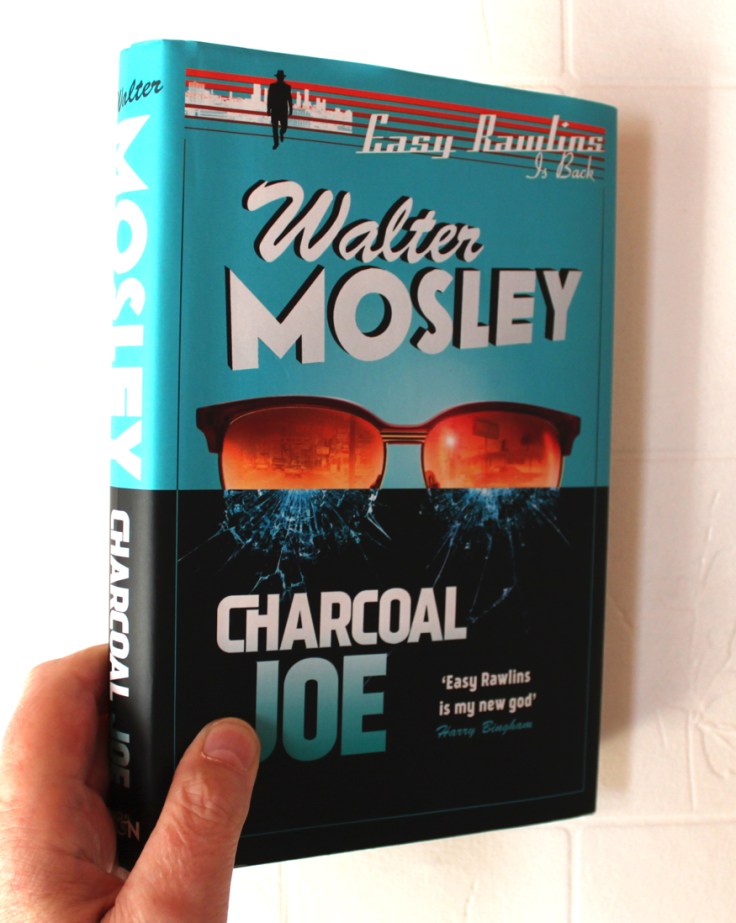

 The plot, as they say, thickens – to the point where you may need to skip back a few pages just to be sure that you are certain who has done what to whom. To me, this is neither here nor there. Sometimes cliches are unavoidable because they tell a simple truth, and with any Easy Rawlins novel it is all about the journey rather than the destination. An Easy Rawlins tale is what you get when a poet writes crime fiction. If Raymond Chandler were a deity, then I would worship him, but I would be hard pressed to summarise the detailed plots of Philip Marlow’s cases. I could, however, rattle off a dozen one-liners and brilliant descriptions which have made Chandler immortal. So it is with Mosley.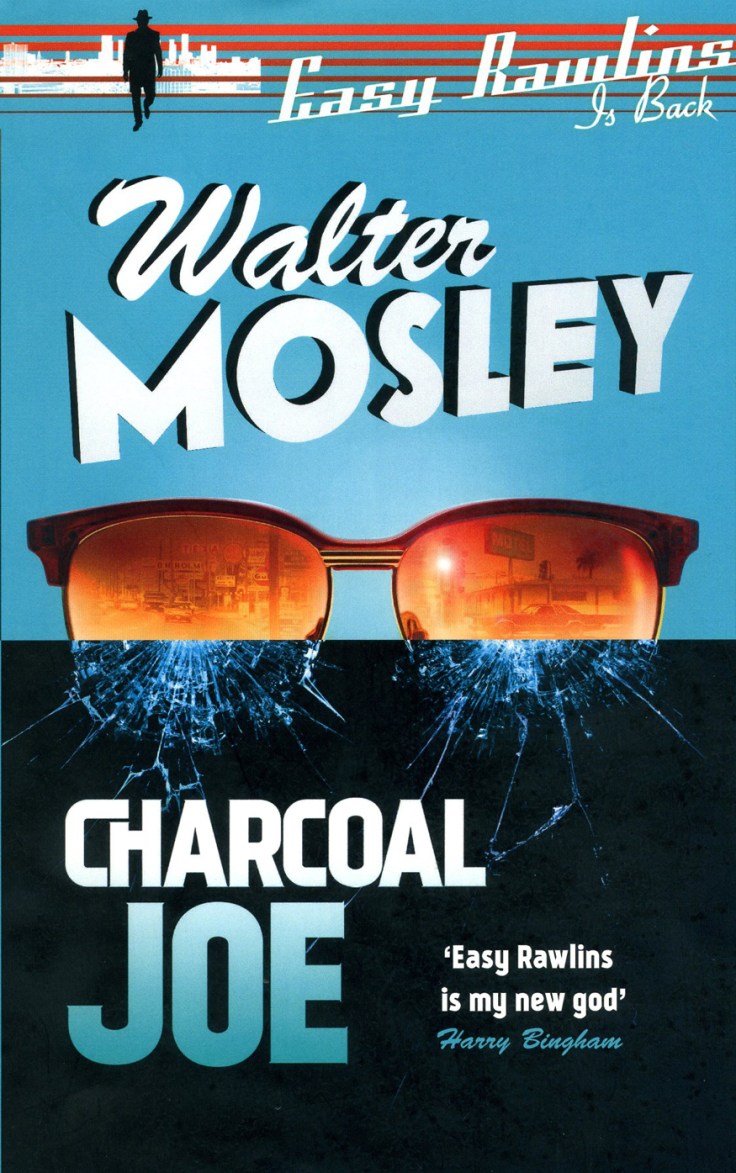
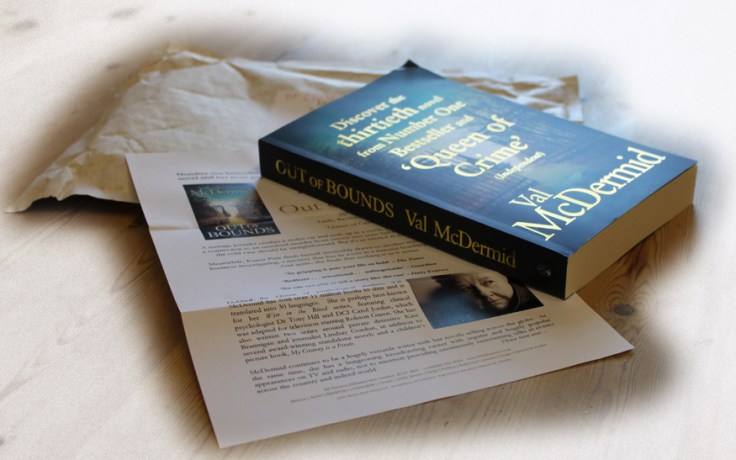 There are just a handful of authors who, when you have their latest book in your hands, remind you of the sheer unalloyed pleasure that can come from reading. For me, that is the best feeling in the creative world, bar none – and that’s from someone who spent most of his professional life teaching and playing music. One of those treasured authors is Val McDermid, who you know is never going to let you down.
 With a worldwide wave of support, optimism and hopes for a bright future, the African National Congress swept to power in 1994, and post-apartheid South Africa was born, blinking in the light, but healthy and vigorous. Paul Mendelson’s gripping novel of crime and corruption shows that the rainbow dream has not yet turned into a fully grown nightmare, but it reveals a country where racial and social tensions are never far from the surface.
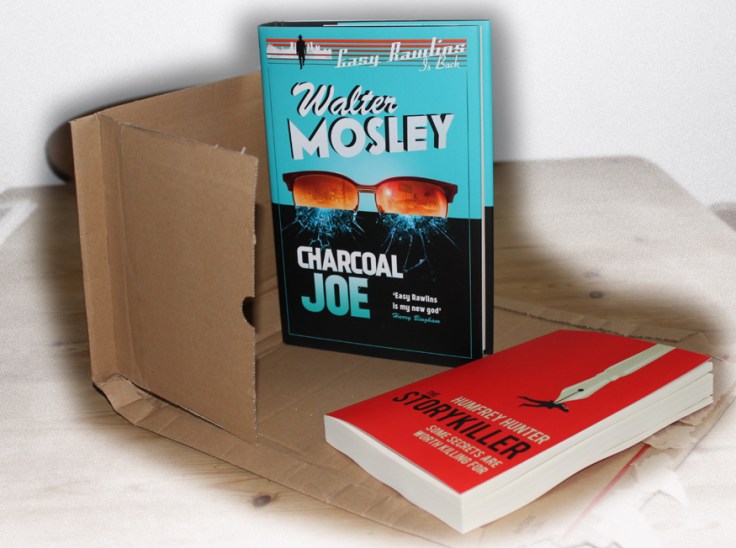 TODAY’S DELIVERY brought two books which in different ways could not offer more of a contrast. One is by a writer who has achieved near-legendary status in his own lifetime, is believed to be Bill Clinton’s favourite author, and who has created a handful of truly memorable characters. The other is by an author making his crime fiction debut, but who is no stranger to the world of books and people who write them, as he is a former journalist who now runs a literary agency in London.
 Humfrey Hunter certainly knows his way around the London literary scene, and his novel Storykiller is set in the English capital. We meet Jack Winter, a former hot-shot reporter who now puts his knowledge of how to make the headlines to a very different use – that of making them disappear if the client is rich enough. After unwisely accepting a new client, he finds himself in danger of becoming one of the headlines himself – as a corpse.
 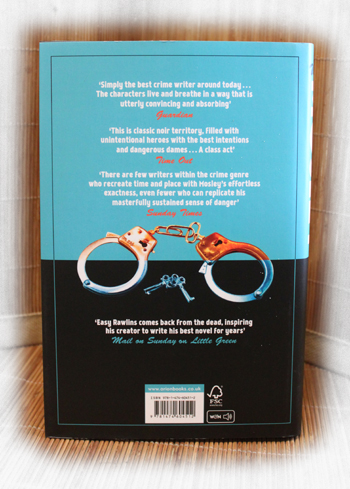 Most critics have run out of superlatives to describe the work of Walter Mosley. British crime author


 fullybooked2017