Search

fullybooked2017

Tag

Worcester

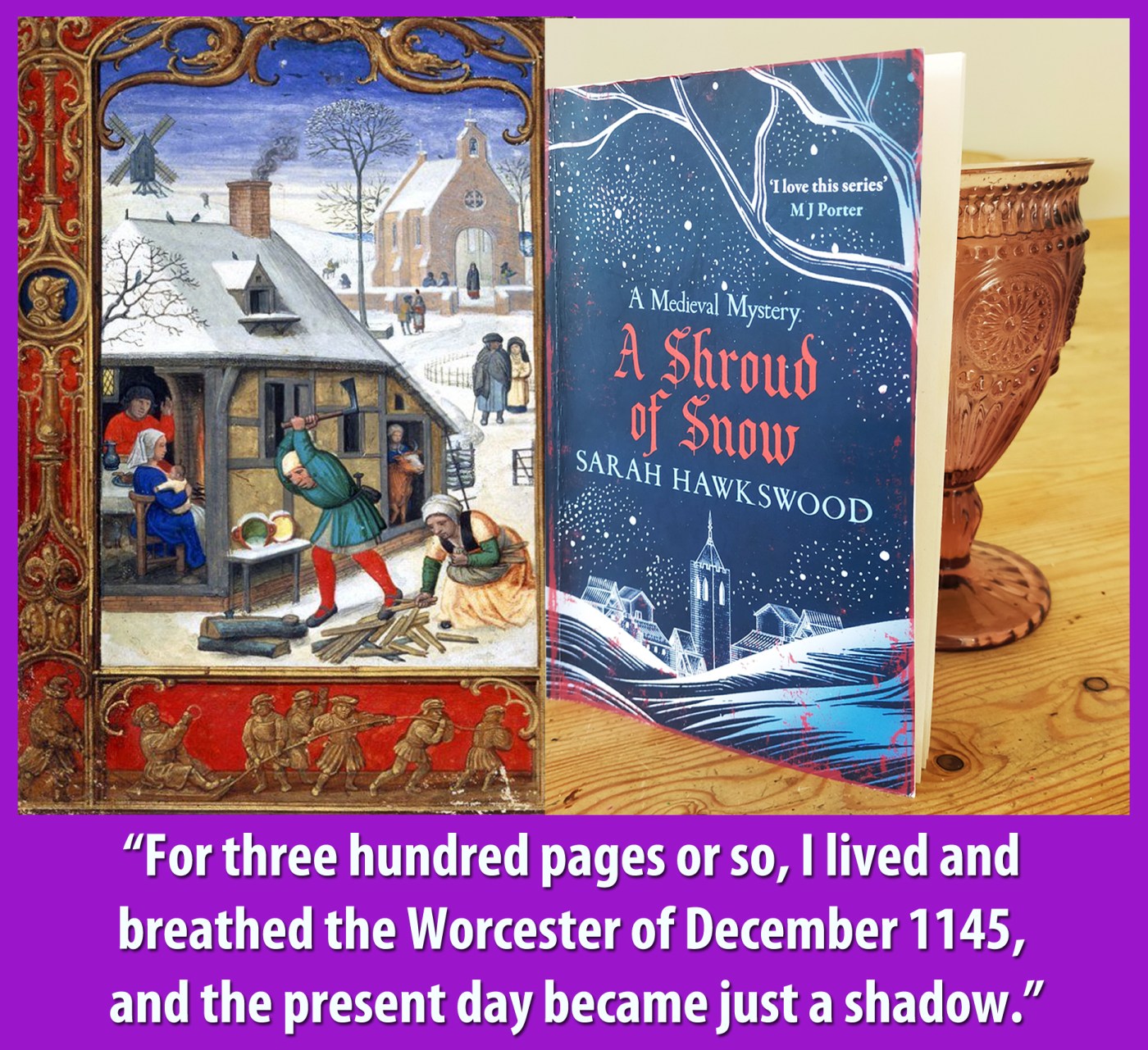
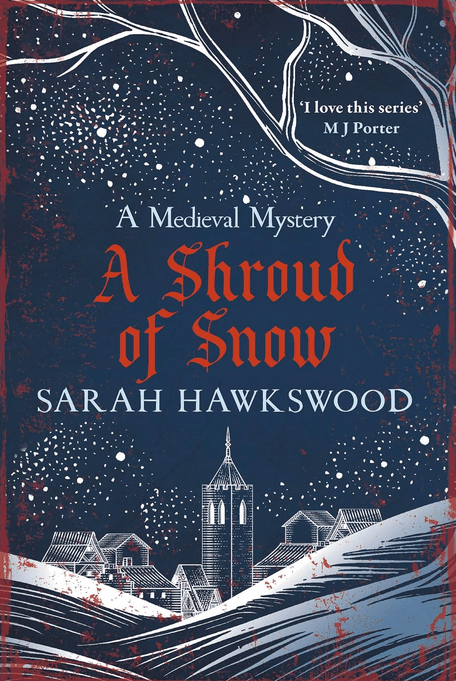
A SHROUD OF SNOW . . . Between the covers

Worcester, December 1145. Snow has dusted the frozen mud and filth of the streets, while the fringes of the city’s great artery, the River Severn, are beginning to freeze. Merchant Hamelin Isenmongere, apparently a benign and compassionate man from Gloucester, is found dead on the quayside, the side of his skull stove in by some heavy implement. No-one has a bad word to say about him. He was benevolent to the poor – including the child of the streets Godfilde (who will later play a significant part in the novel’s finale) – generous to the church, and dealt fairly with fellow traders in the city.

We are frequently reminded in this series that along with the turn of the seasons, and the implacable retreat and return of the sun, this was a society within which religious observance was deeply embedded. Early in the piece we are told that this is the third week of Advent. This season of the church’s year is a precious and significant time largely ignored these days, but one previously associated with great music and a sense of devotion.. A priest tells us that a woman, “did not come to Vespers, for her sons are still very small, but she came to Matins most days, and None sometimes.”

I am something of a lapsed Anglican and, of course, the religion of 12th century Worcester was the Roman Catholicism that was to endure for another four centuries, but the way in which the lives of rich and poor are underpinned by religious observances, both great and small is, somehow, comforting.

Readers of both authors may be surprised to find me likening Hawkswood to the great Noir writer Derek Raymond. The latter’s nameless sergeant, a relentless hunter of killers, does so as a service to the dead. Here, Bradecote, hunched over the body of a victim, whispers,
A price will be paid for this, mistress.
Like his twentieth century counterpart, Bradecote will avenge the dead, and he dedicates his labours to the lives – both noble and humble – that have been ended by acts of violence.

The English civil war of the 12th century smouldered – and occasionally burst into flames – for almost two decades. Stephen and Matilda were both grandchildren of William the Conqueror, and each claimed the throne. It has been in the background for all the Bradecote books, but here the question of dealings between noble supporters of the rival factions raises its head, causing Bradecote and his sergeants to tread very warily.

A particularly significant player in the civil war was Robert, Earl of Gloucester, the illegitimate son of Henry 1st and a fervent supporter of Matilda, and the city of Gloucester is just under 30 miles downstream in the river from Worcester. I don’t know if the Norman French version of cherchez la femme differs significantly from the modern version, but Hamelin’s widow, the Lady Sybilla seems central to the story. How genuine is her grief for her murdered husband, and what is her relationship with the boatman Ragnaill of Duiblinn? Bradecote and Catchpoll eventually confirm that espionage is at the centre of the story, but not before there are more deaths.

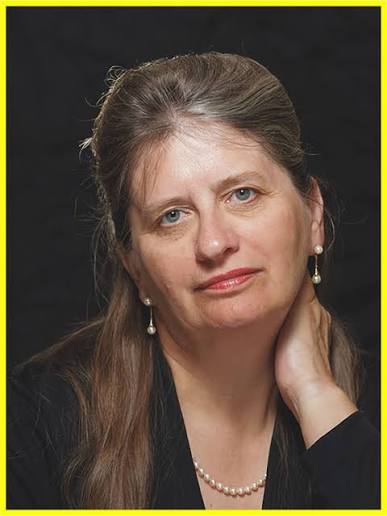
Any assiduous historical novelist can do the technical research on the customs, sounds, smells, clothing and political structure of the period in which they set their story. Weaving all these details into a convincing tapestry is something else all together. This is where Sarah Hawkswood (top left) is in a class of her own. For three hundred pages or so, I lived and breathed the Worcester of December 1145, and the present day became just a shadow. Like any murder mystery, A Shroud of Snow is riven with death, but it ends beautifully, just days of the most important Nativity of all, with a birth. It will be published by Allison and Busby on 20th August. For reviews of earlier novels in the series, click the author image.
A TASTE FOR KILLING . . . Between the covers

ATFK spine005

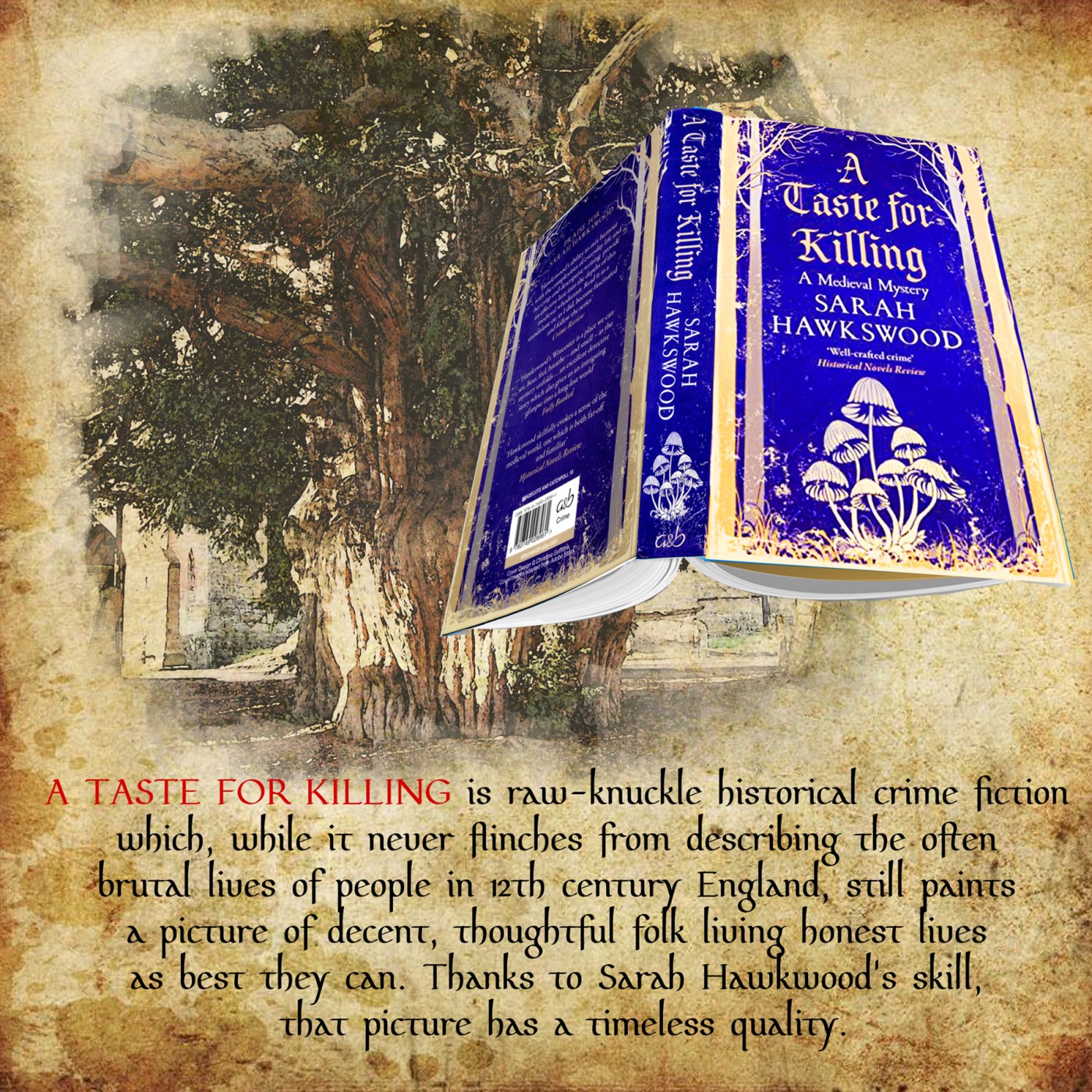
Sarah HawkswoodThose of us who are lucky enough to be sent printed copies of novels for review almost certainly have “keepers” – books which don’t go off to friends, free libraries or charity shops once they are read. Looking across at my shelves, I see books by Jim Kelly, Christopher Fowler, Philip Kerr, John Connolly, Phil Rickman, James Oswald, Peter Bartram – and Sarah Hawkswood (left). I was a late arrival at the ‘Bradecote Ball’, but these superb stories of medieval Worcester have joined my list of favourite books which I will not be parted from. A Taste For Killing is the tenth in this splendid series featuring the 12th century Worcester trio of Hugh Bradecote, Serjeant Catchpoll and Underserjeant Walkelin.

Blurb006

It is a bitter January afternoon in Worcester, 1145. The wells have frozen, the streets are empty, and decent folk are huddled around their fires. In the house of Godfrey Bowyer – remember the origin of many surnames – a skilled, but widely disliked maker of longbows, it is supper time. As Godfrey sups his pottage with his wife Blanche, the servants cower in another room, listening to the customary arguments and smashing of crockery. Godfey and Banche (his second wife) frequently disagree, but they are as one when it comes to the adage about it being better to let it all out than to keep it in. Tonight’s row takes an unexpected – and fatal – turn, as both Godfrey and Blanche collapse with the symptoms of poisoning. Blanche recovers quickly enough, but it is to be Godfrey’s last night on earth.

Catchpoll and Walkelin are summoned and are joined – reluctantly – by Bradecote, who was anxiously at the side of his heavily pregnant wife. She has miscarried before, and he is reluctant to leave her, but  suspected murder is what it is, and he joins his two colleagues. The row between Godfrey and Blanche which culminated in a dish of pottage (a soup thickened with grain, containing vegetables and – when available – meat) being thrown at the wall raises the crucial question – the contents of whose bowl redecorated the wall of the house? Was it Blanche’s, and did Godfrey then sup from the bowl intended for his wife? What was the poison, and who put it in the pottage?

It transpires that the Bowyer ménage is far from simple. Runild the servant girl is pregnant, but by whom? Alwin, Bowyer’s apprentice is out of the frame as he is too shy to even look at a girl, let alone do anything more physical, but there is another suspect. The late Godfrey’s  hands often followed not far behind his roving eye, as more than one Worcester woman can testify. Furthermore, what was Blanche’s relationship with the Steward of Worcester Castle, Simon Furneaux, a pompous individual who has a hate-hate relationship with Hugh Bradecote? There was little love lost between Godfrey Bowyer and his younger brother Herluin the Stringere, also a maker of bows, and a man who has his eyes on his late brother’s business. There is even a rumour that they do not share the same father.

medieval-bow-maker_bowyer

One of the many captivating qualities of this book is the reminder of the potent symbolism of the Yew tree in human history. The traditional home of the Yew tree in England is the village churchyard, and there is a deep irony that its wood was used to produce the fine – and lethal – bows that were to dominate medieval warfare. The Yew is also a more direct cause of death, however, as its wood contains toxins that bow makers had to wash from their hands before eating, and the seeds in the delightful red berries contain a deadly alkaloid.

When there is yet another death in the Bowyer household, a local herbalist and bone-setter called Roger the Healer, who has thus far been on the fringe of events, takes centre stage. He suspects that Yew killed Godfrey Bowyer, but a glance at the cover of the novel will give readers a clue as to what caused the second tragedy.

The chemistry between Bradecote, Catchpoll and Walkelin is a work of alchemy in itself. Bradecote is, I suppose, minor nobility, quick-witted and well educated, while Catchpoll is grizzled, rough round the edges, but wily. Walkelin, in the earlier books, was simply a clever but callow lad. Now, however, he uses his apparent naivety and lack of guile to extract information from people who would otherwise be too deferential to Bradecote, or too fearful of Catchpoll’s reputation as a street fighter.

A Taste For Killing is raw-knuckle historical crime fiction which, while it never flinches from describing the often brutal lives of people in 12th century England, still paints a picture of decent, thoughtful folk living honest lives as best they can. Thanks to Sarah Hawkwood’s skill, that picture has a timeless quality. The book is published by Allison & Busby and is out today, 12th May. Click on the images below for my reviews of earlier books in the series.

ROS

BRT

WATD

RIVER OF SINS . . . Between the covers

River Header

A little while ago I reviewed a novel set in Worcestershire – it was the beginning of WW2, and it centred on the fictional village of Ambridge and, of course, featured The Archers. History of a very different kind now. River of Sins is the seventh in a series of historical mysteries written by Sarah Hawkswood set in and around the city of Worcester in the 12th century.

Filler 1
I am new to the series but I enjoyed the fact that we have that most dependable of crime fiction tropes – a pair of investigators. There is a slight variation a theme in this case, as they are aided by an intrepid young apprentice. The dynamic between the three works well. Hugh Bradecote is the Under Sheriff, and is of noble birth with a degree of hauteur, while Sergeant Catchpoll is Worcester through-and-through, rough and ready, but very street-wise. Walkelin – the apprentice – is something of a ‘gofer’, but is bright, perceptive, and not afraid to speak his mind.

Filler 2

The novel begins with a woman being brutally done to death on a small island in the River Severn on the northern outskirts of Worcester. We learn that the woman and her killer are acquainted, but just how, and what the significance is, only unfolds with the investigation.

The dead woman is Ricolde, known throughout the city as The Whore of Worcester. She was widely despised by the gentlewomen of the city, while being used by their husbands, but as Bradecote and Catchpoll discover, there was another dimension to Ricolde. Educated, and perfectly content to talk the night through with men who demanded nothing other than her company, she also gave money to the church to be used to ameliorate the misery of other women of the street who were less resilient than she.

The investigators struggle to find a motive for the murder. Moral disapproval doesn’t usually lead to someone being dismembered with a woodsman’s axe, but does the clue to Ricolde’s death lie deep in her past, and has it to do with the horrific scars on the soles of her feet, inflicted decades earlier?

Sarah Hawkswood’s Worcester is a place we can see, hear, feel, breathe – and smell – as the mystery unfolds. What is the River of the title? It is the River Severn, broad and deep, a source of fresh food, a vital artery of transport at a time when roads were just beaten dirt, but also a means of escape and concealment. With only the most rudimentary forensic skills available, Bradecote and Catchpoll must rely on the most basic and time-honoured methods of detection, means, motive and opportunity. This is an excellent detective story which also gives us an intriguing glimpse into a long-lost world.

River of Sins is published by Allison & Busby and will be out in paperback and as a Kindle on 19th November.

Hawkswood books

Blog at WordPress.com.

Up ↑