

The latest David Raker thriller from Tim Weaver is true to form. Raker, a widowed former journalist, is an expert finder of missing persons, and the author’s speciality is setting up situations where the impossible has occurred – and then, eventually, presenting us with an explanation that fits, rather like in that classic crime fiction staple, the locked room mystery.
Here, the first mystery is what to make of the two apparently unrelated plot strands. First, we are told of the unexplained disappearance, almost two decades earlier, of a trio of women film makers who vanished while working on a story about Porthtreno, an abandoned Cornish village. More immediately, Raker is hired by a wealthy actress, Ellie Snyder to find out how and why her husband has disappeared from an exclusive private clinic where he was undergoing cosmetic surgery.
Both Raker and his assistant, ex Met Copper Colm Healy labour under the shadow of personal grief; Raker for his wife Derryn, taken by cancer, and Healy for his daughter Leanne, slain by a serial killer. Readers familiar with Tim Weaver’s style have come to expect seemingly unconnected and unexplained changes in narrative. Here, on page 125 of 437, after a second-by-second account of Raker and Healy investigating the disappearance of Preston Stewart, we are introduced, seemingly out of nowhere, to Zauna and Marco. Who they? You might well ask, but you will just have to strap in and wait for all to be revealed. This, of, course is the essential segue between the abducted surgeon to the missing women of Cornwall. Is it clunky? Yes. But does it work? Affirmative, likewise. The clincher comes when Raker and Healy are searching Preston Stewart’s house and they find a book, and a link to a YouTube video, both called The Lost Women of Porthtreno.
Central to the plot is a jailed serial killer known as Dr Glass.”It was in that forest, out in east London, that six women had been found in clear plastic coffins filled with liquid formaldehyde. A seventh had been found in a wall cavity nearby, and Glass had kept all of them hidden in a disused sewer network 30 feet under the earth.” Along the way, we also learn that on one drunken occasion, out of nowhere, Preston Stewart had confessed to Ellie that he had been involved in a murder, back in his student days in Bristol. We also know that the mysterious Marco, also a student in Bristol, went missing, never to be found. And one of the Porthtreno film makers was …. wait for it …. His sister Zauna.
A policeman who has been involved in the case sums up everything that is implausible about David Raker, and yet he also puts his finger on why the books are best sellers.
“From what I know about you, from what I’ve seen myself, you’re smart, intuitive, and I genuinely believe you’re a good man. But you’re out of touch. It’s been a long time since you worked within any kind of structure, and when the only person you have ever had to be accountable to is yourself, you forget what it’s like in the real world.”
Yes, Raker’s adventures can sometimes verge on comic strip implausibility, but, in the end, this is why we love crime fiction.Tim Weaver goes to the cupboard where crime fiction tropes are stored, and he leaves very few hanging on their pegs. We have corrupt cops, a serial killer with an astonishing ability to create murderous conspiracies from within his jail cell, drugged coffee, devastating explosions triggered by mobile ‘phones, private investigators hired by clients who are actually the principal villains and, last but not least, a central character physically immune to knives, choke holds and high explosives. The Lost Women is, however, a superb thriller, full of twists, turns, red herrings, and great dialogue. It will be published by Michael Joseph on 26th February.



 Tim Weaver’s intrepid searcher for the physically lost, David Raker, faced his hardest challenge yet in
  Clergymen writing crime novels? That can only mean cosy village mysteries centred around tweedy villages and eccentric old ladies, surely? Not if Peter Laws has his way. He is a minister in the Baptist Church in Bedforshire, but his Matthew Hunter novels are dark, scary and blood-spattered. In
  Ben Bracken is a Jack Reacher do-alike transported to contemporary England. Much as I have enjoyed the invincible Reacher over the years, Rob Parker has created a more thoughtful and vulnerable – at least psychologically – version in Ben Bracken, a former soldier who exists in the shady hinterland which lies between law enforcement, special services and officially-sanctioned skullduggery.
  Sad to say, there is no-one more vulnerable in modern society – at least in novels – than a single mother trying to bring up her child. In


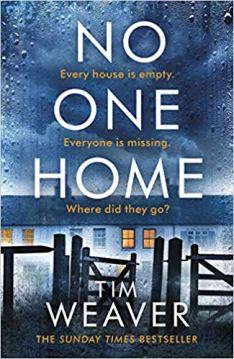
 ver the years, missing persons investigator David Raker has, courtesy of his creator Tim Weaver, solved some perplexing cases. There was the man who disappeared into the bowels of London’s underground railway system, the amnesiac who was found on a deserted south coast shingle beach, the straight ‘A’ student with the secret life who just vanishes and, memorably, the time his dead wife walked into a London police station and back into his life. Raker tends to be looking for troubled individuals, as in just the one person. But this time it’s different.
 A whole village has disappeared. OK, let’s put that into context. The village is the isolated moorland community of Black Gale, and it consists of a farm and three expensive and fairly recent houses arrayed in a semi-circle around the older building. Black Gale. Population, nine souls. And on Halloween, two years since, they vanished. Into thin air. Like Prospero’s insubstantial pageant, the four families have left not a rack behind.
 aker has problems of his own, principally in the shape of his long time friend, former police officer Colm Healy. Healy featured in the very first Raker mystery Vanished (2012) and his misfortunes have been ever present over the series (No One Home is the 10th book). Healy is officially dead – and buried, He has a gravestone to prove it, but for a variety of reasons the former copper now exists under a variety of aliases, under the protection of David Raker. A persistent and intrusive journalist wants to write Raker’s life story, but also suspects the truth about Healey, and uses his knowledge in an attempt to force Raker to co-operate. Keeping the hack at bay – just – Raker begins to unpick the mystery of Black Gale.
 ans of the series will know that Tim Weaver doesn’t like Raker’s cases to be geographically confined, and so it is that the Black Gale conundrum is linked with a grisly unsolved murder in a flyblown California motel decades earlier. I say “unsolved”. The local Sheriff’s Department think the case is a wrap. They have a vic and a perp and have moved on to other things. Detective Joline Kader, however, has other ideas. She is unconvinced that the body lying face down in a bathtub of muriatic acid is simply the victim of a drug deal gone wrong, and the case stays with her over the years, right through her police career and her subsequent vocation as a college lecturer. Right up until the moment where her old obsession collides with David Raker’s fatal unpicking of a very clever and murderous conspiracy.
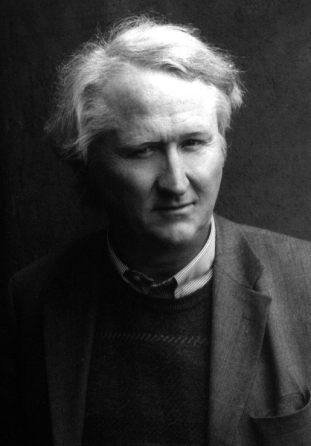
 No One Home is a brilliant thriller. It runs to over 500 pages, with not a single one wasted. The action is constant and the plot spins about all over the place, so you will need to be on your mettle to keep track of what is going on. Tim Weaver (right) has never been shy of creating apparently improbable conundrums for Raker to solve, and this is no exception. Suspend your disbelief for a few hours and go with the flow. I read it in three intense sessions and although I don’t use “Wow!” in normal speech, it certainly applies here. No One Home is published by Penguin








 But he has, as far as is possible, moved on. He has an unexpected family in the form of a daughter from an early relationship, and he keeps his chin up and his eyes bright. Because to do otherwise would mean self destruction, and he owes the physically absent but ever-present spirit of Derryn that much. His world, however, and such stability as he has been able to build into it, is rocked on its axis when a woman turns up at a West End police station claiming to be his wife. Derryn. Dead and buried these nine years. Her fragile remains consigned to the earth. He sees the woman through a viewing screen at the police station and he is astonished. In front of him sits his late wife, the love of his life, and the woman for whom he has shed nine years of tears.
 So many questions. The answers do come, and the whole journey is great fun – but occasionally nerve racking and full of tension. Tim Weaver (right) has crafted yet another brilliant piece of entertainment, and placed a further brick in the wall built for people who know that there is nothing more riveting, nothing more calculated to shut out the real world and nothing more breathtaking than a good book.

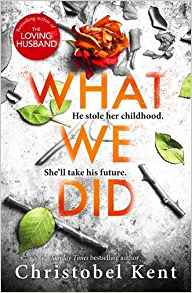 Teachers taking advantage of their unique position of trust is nothing if not topical, and few teachers can become so connected to their pupils’ progress and personality as music teachers. In Christobel Kent’s latest domestic thriller we meet Anthony Carmichael, one such person. The student he abused has now grown up and married. Bridget has a loving husband, a delightful son, and a business that demands her full attention. When Carmichael reappears, the fences protecting her comfortable life are torn down, and events take a sinister turn. Published by Sphere, What We Did is out on
  Charles Holborne is a brilliant and successful barrister specialising in criminal cases, and his work brings him into contact with the most corrupt and manipulative people in 1960s London. It will be no surprise to learn that these characters are not all associates of the notorious Kray twins, but men and women who are normally seen on the other side of the justice system. The deeply psychotic Ronnie Kray has already had a terrifying influence on Holborne’s life, and if the barrister thought that the episode was over, he is very much mistaken as he becomes involved in a sex scandal that threatens the very government of the country itself. Corrupted is published by
 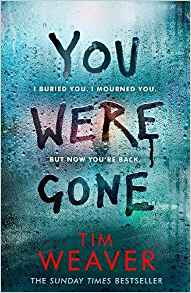 Tim Weaver’s investigator David Raker is now a well established member of fictional PI royalty in British fiction, and he is just that little bit different. His speciality is finding people – whether they wish to be found or not. This is the ninth in the series and, with existing fans well aware that Weaver is a master of plot surprises, readers new to the series are presented with another audacious premise. Raker’s late wife – repeat late wife – reappears and accuses him of faking her disappearance and death. With the police suspecting him of the crime, Raker is faced with a baffling conundrum which will ruin him if he fails to find the answers? Is this woman a clever and convincing opportunist, or does the solution lie in a breakdown of his own sanity? I have been a fan of the Tim Weaver/David Raker partnership for a good while – read why by checking out my review of
  It seems there is nowhere quite like Vienna for mystery, intrigue and international back stabbing – both literal and figurative. For so long the major crossroads between East and West, the Austrian city once again is the backdrop to a dangerous game of bluff and counter bluff and deception. Freddie Makin is a surveillance expert who is paid to watch ‘people of interest’ and report back to his paymasters. His problem is that this a risky profession; powerful people are likely to feel threatened, and when their discomposure reaches a certain level, they will lash out. After following a suspected Chinese intelligence agent, Makin is now the hunted man. Who is trying to kill him? What has he learned that has pushed his name to the top of the kill list? Thomas and Mercer are publishing




 So, who thrilled me the most? First across the line by a nose, in a very competitive field, was
 Raker agrees to take on the case on a more-or-less pro bono basis. Whatever and whoever Richard Kite once was, he has not brought wealth of any kind with him into his new life. Raker’s initial trip south to meet Kite is less than fruitful. Kite only recalls two shadowy images from his past; one is that he is looking out across a lonely beach to a grey expanse of water; is it the sea, perhaps, or a river? The other image is just as enigmatic; Kite sees a television screen, and on it is a graphic of a broadcasting pylon emitting what seems to be a children’s programme.
 Meanwhile, Weaver (right) gives us what seems to be a parallel but unconnected narrative. Two girls, sister and step sister, apparently living in a remote moorland community, perhaps in the north of England, have taken to sneaking out of their house after dark, and climbing up the hill onto the moors, where they have constructed an imaginary and malevolent presence out there in the wind and rain-swept darkness. Malevolent it certainly seems to be, but is it just a figment of the girls’ lurid imaginings?


 fullybooked2017