Search

fullybooked2017

Tag

Simon Westow

A RAGE OF SOULS . . . Between the covers

This begins as one of the most baffling and impenetrable of Simon Westow’s cases. We are in Leeds, 1826. He solves a case of fraud, the fraudster is sentence to hang, but reprieved. He then returns with his wife to shadow the man he originally tried to defraud. The man, who calls himself Fox, seems connected to his victim, a Mr Barton, via Barton’s wayward son, Andrew. Westow, like Ulysses in Tennyson’s great poem, no longer has “that strength which in old days Moved earth and heaven,” due to a serious wound sustained in a previous case, but his eyes, ears – and legs on the street are provided by his lethal young assistants Jane and Sally.

One of Nickson’s many skills as a writer is to point out the dramatic contrast between the industrial stink of Leeds and the uncorrupted countryside not many miles outside the city. Andrew Barton goes missing, so Jane and the boy’s anxious father make the journey in a chaise towards Tadcaster. Jane investigates the ancient church of St Mary, Lead, solitary and empty in a lonely field. Near the church runs the Cock Beck, which was reported to have run red with blood during the nearby Battle of Towton in 1461, and as she crosses the stream , she makes a terrible discovery.

Quietly, Nickson references the timeless joy of reading. Jane, once an illiterate street urchin, has been taught to read by Mrs Shields, the old lady who has become the mother she never had. Now, Jane spends her spare hours immersed in the novels of Sir Walter Scott and James Fenimore Cooper, borrowed from the circulating library. The printed words take Jane away from the perils and drudgery of her own existence to a world of daring, adventure and hope. In his own way. Nickson does precisely the same thing.

There is a deep sense of poetry in the book, not just in the words, but in the juxtaposition of images. The book begins with Jane witnessing the result of a horrifying industrial accident.  A young girl is being roughly carried to the surgeon, her leg mangled beyond repair. This haunts Jane throughout the book, but then, near the end, there is a kind of redemption. One of the regular characters who ekes out a living on Westow’s streets is Davy, the blind fiddler. Jane’s trauma is redeemed:

“Up by the market cross, Davy Cassidy was playing a sprightly tune that ended as she drew close. He gazed around with his sightless eyes and a girl appeared whispering a word into his ear. He lifted his bow and began to play again, low, mournful. Then the girl stepped forward and began to sing. Jane knew her face. She’d lived with it for months. She’d seen it contorted with pain as the girl was carried from the mill, her leg in shreds. Then when it returned night after night in her dreams. Now she was here, one-legged, supported by a crutch, a voice as unearthly sweet as a visitation as she sang about a girl who moved through the fair. She stood transfixed as a disbelief fragmented and disappeared. The pain she’d heard in the girl that day in February had become beauty. The small crowd was silent, caught in the words, the singing while the world receded around them. The last note ended, a stunned silence, then applause and people pushing forward to put coins into the hat on the ground.”

Eventually, by a mixture of judgment perseverance and good fortune, the mysterious Fox is run to ground in a bloodthirsty finale. A Rage of Souls is Chris Nickson at his best – complex, compelling and, above all. compassionate. It will be published by Severn House on 7th October. You can take a look at earlier Simon Westow books here.

THEM WITHOUT PAIN . . . Between the covers

TWP HEADER

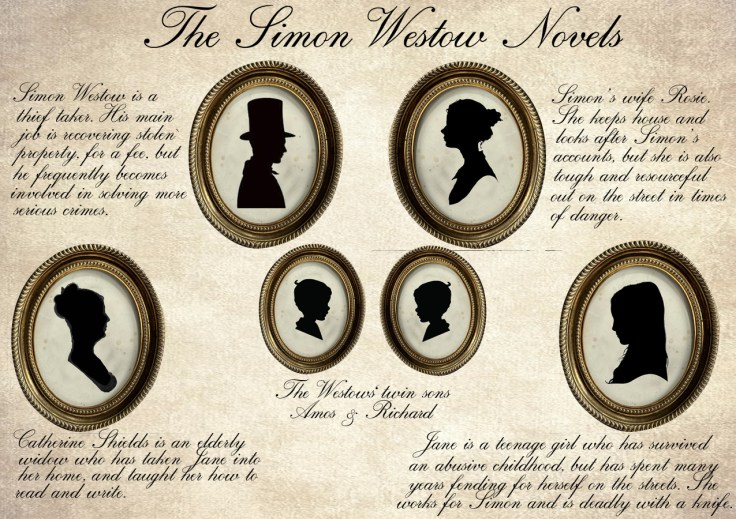
Leeds. The early early summer of 1825. Simon Westow is a Thief-taker, a man who recovers stolen goods for a percentage of their value. He has no legal powers except his own knowledge of the city and a keen intelligence. When he encounters criminals, it is up to the city Constable and the magistrates to apply the law. Followers of this series will be familiar with the dramatis personnae, but for new readers, we have:

Simon Westow, Thief-taker
Rosie, his wife
Richard and Amos, their twin sons
Jane Truscott, former assistant to Westow. Very streetwise and deadly with a knife
Catherine Shields, an elderly widow who has provided Jane with a home
Sally – another child of the streets, and Jane’s replacement

Westow is summoned to the house of Sir Robert Foley, a wealthy man whose man-servant has absconded with two valuable silver cups. Foley wants them returned. When the manservant, Thomas Kendall, is found murdered in a secret room of an old city property just about to be demolished, Westow is told, by a Mr Armistead, that the room was once the workshop of Arthur Mangey, a silversmith, who was executed over a century earlier for the crime of Coin Clipping – snipping the edges off silver coins and then re-using the silver.

When Armistead himself is found murdered, Westow finds himself chasing shadows, and unable to make the connection between the ancient misdeeds of Arthur Mangey and persons unknown who are deeply involved in all-too-recent criminality. There is a seemingly unconnected story line in the book, but old Nickson hands know that it will, eventually, merge with the main plot. A disabled Waterloo veteran, Dobson, has gained a mysterious companion known only as John, but when brutalised corpses begin to appear, John becomes the prime suspect. The corpses have been flayed and brutalised almost beyond recognition. Westow, still doggedly determined to find the missing silver cups is increasingly reliant on the quicksilver street-smarts of Sally, and the old head on young shoulders of Jane, who had hoped for a life away from the streets, but has been drawn back into the dangerous game by her determination to avenge the death of Armistead.

A recurrent theme of Nickson’s Leeds novels, both in these Simon Westow tales, and the Tom Harper stories, set eight decades later, is that of the search. Both Westow and Harper frequently become involved in a search for a key suspect, often someone from ‘out of town’. It is a very simple literary device, but a very effective one, as it provides a platform for Nickson to use his unrivalled knowledge of the city as it once was, its highways, byways, grand houses and insanitary tenements. As we follow Weston’s search for a ruthless killer, the modern streets of Leeds that many readers know are stripped away to reveal the palimpsest of the buildings that once stood there and the people who inhabited them.

Another essential feature of the books is that his heroes don’t inhabit a timeless world, where they are perpetually in their early thirties, strong and vigorous.  Tom Harper aged  as the series went on, but he was allowed a comfortable old age and peaceful death. Here, Simon Westow is shaken by the recognition that, like Tennyson Ulysses, the years have taken their toll:

“ Tho’ much is taken, much abides; and tho’
We are not now that strength which in old days
Moved earth and heaven, that which we are, we are;
One equal temper of heroic hearts,
Made weak by time and fate, but strong in will
To strive, to seek, to find, and not to yield.”

He is aware that his reflexes are slower, the antennae that once sensed danger and threat are less sensitive, and he is ever more conscious of his own mortality, and his need of people like Sally and Jane to watch his back.

The novel boils down to three pursuits. Simon Westow hunts the man who stole Sir Robert’s cups, Sally wants her knife deep inside the man, known only as John, who murdered her fellow urchin Harold, while Jane vows to kill the man who killed the amiable and blameless Armistead.

Screen Shot 2024-09-16 at 10.56.08Chris Nickson never sugar-coats history, and makes us well aware that modern Leeds, with its universities, its international sporting venues and museums, was built on the blood sweat and tears of millions of ordinary people who grew up, toiled, loved lived and died under the smoky pall of its foundry furnaces, and had the deafening percussion of industrial hammers forever ringing in their ears. Jane, Sally and Simon-at a cost-each get their man in this excellent historical thriller, which is published by Severn House and is available now. For reviews of previous Simon Westow stories, click the author image on the left.

THE SCREAM OF SINS . . . Between the covers

TSOS header

Leeds, Autumn 1824. Simon Westow is engaged by a retired military man, Captain Holcomb, to recover some papers which have been stolen from his house. They concern the career of his father, a notoriously hard-line magistrate. Newcomers to the series may find this graphic helpful to establish who is who.

TSWN graphic

Westow takes the job, but is concerned when Holcomb refuses to reveal what might be in the missing papers, thus preventing the thief taker from narrowing down a list of suspects. As is often the case in this excellent series, what begins as case of simple theft turns much darker when murder raises its viler and misshapen head.

Jane, Westow’s sometime assistant, has taken a step back from the work as, under the kind attention of Catherine Shields, she is learning that there is a world outside the dark streets she used to inhabit. The lure of books and education is markedly different from the law of the knife, and a life spent lurking in shadowy alleys. Nevertheless, she agrees to come back to help Westow with his latest case, which has turned sour. When Westow, suspecting there is more to the case than meets the eye, refuses to continue looking for the missing documents, Holcomb threatens to sue him and ruin his reputation.

More or less by accident, Westow and Jane have uncovered a dreadful series of crimes which may connected to the Holcomb documents. Young girls – and it seems the  younger the better – have been abducted for the pleasure of certain wealth and powerful ‘gentlemen’. Jane, galvanised by her own bitter memories of being sexually abused by her father, meets another youngster from the streets, Sally.

Sally is a mirror image of Jane in her younger days – street-smart, unafraid of violence, and an expert at wielding a viciously honed knife. Jane hesitates in recruiting the child to a way of life she wishes to move away from, but the men involved in the child abuse must be brought down, and Sally’s apparent innocence is a powerful weapon.

As ever in Nickson’s Leeds novels, whether they be these, the Victorian era Tom Harper stories, or those set in the 1940s and 50s, the city itself is a potent force in the narrative. The contrast between the grinding poverty of the underclass – barely surviving in their insanitary slums – and the growing wealth of the merchants and factory owners could not be starker. The paradox is not just a human one. The River Aire is the artery which keeps the city’s heart beating, but as it flows past the mills and factories, it is coloured by the poison they produce. Yet, at Kirkstall, where it passes the stately ruins of the Abbey it is still – at least in the 1820s – a pure stream home to trout and grayling. Just an hour’s walk from Westow’s beat, there are moors, larks high above, and air unsullied by sulphur and the smoke of foundry furnaces.

The scourge of paedophilia is not something regularly used as subject matter in crime fiction, perhaps because it is – and this is my personal view – if not the worst of all crimes, then at least as bad as murder.  Yes, the victims that survive may still live and breathe, but their innocence has been ripped away and, in its place, has been implanted a mental and spiritual tumour for which there is no treatment. Two little girls are rescued by Westow, Jane and Sally and are restored to their parents, but what living nightmares await them in the years to come we will never know.

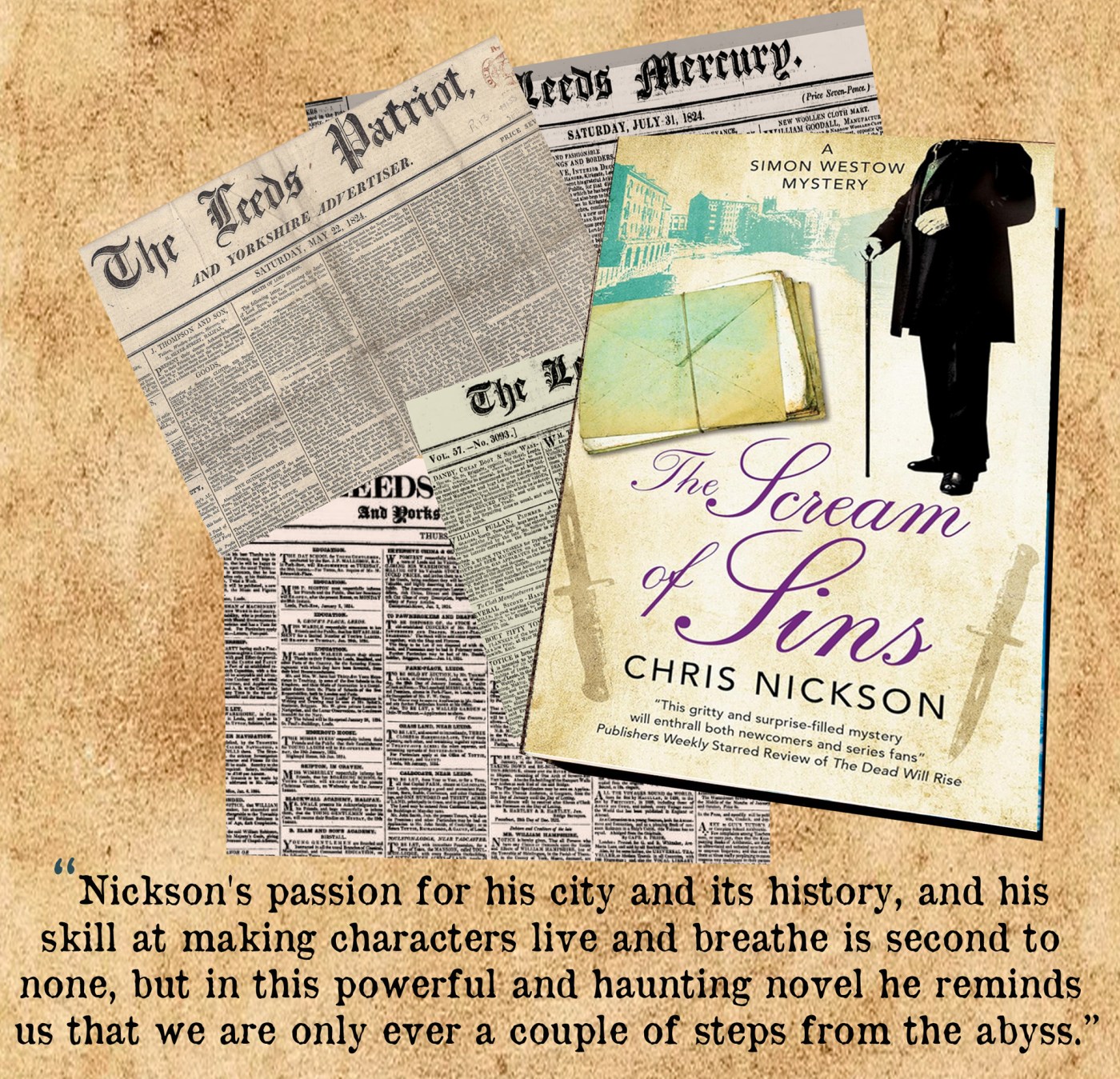
I have come to admire Nickson’s passion for his city and its history, and his skill at making characters live and breathe is second to none, but in this powerful and haunting novel he reminds us that we are only ever a couple of steps from the abyss. The Scream of Sins will be published by Severn House on 5th March.

THE DEAD WILL RISE . . . Between the covers

TDWR header

Chris Nickson is a former music journalist, and has rubbed shoulders with the Great and The Good across the history of rock music, but in these latter days he has earned a considerable reputation as a historical novelist. His books are mostly centred on Leeds, and they cover different historical periods from the 1730s to the 1950s. His latest book features Georgian thief-taker Simon Westow. Back then, there was no organised police force; the only legal officials were parish constables, who tended to be elderly, infirm and incompetent. Westow is more like the 20th century concept of a Private Eye; he recovers stolen property and catches criminals – for a fee.

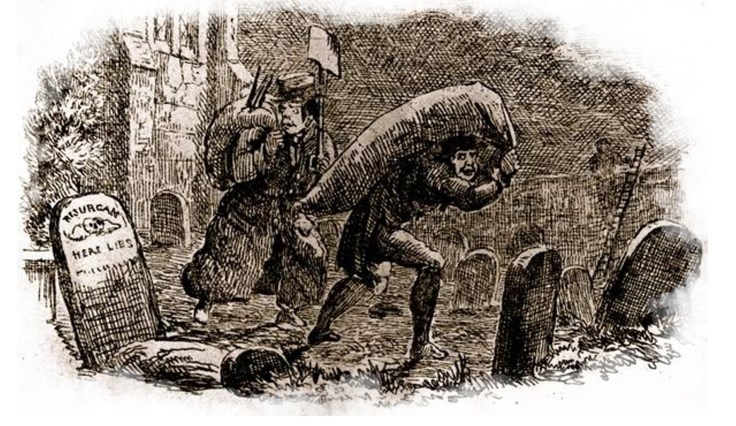
Here, he has an unusual assignment; Local factory boss Joseph Clark asks him to find the men who stole the buried corpse of Gwendolyn Jordan, the daughter of Harmony Jordan, one of his employees. The crime of body snatching is unique in that it involved acts of criminality carried out in the name – some might argue – of a greater good, that being anatomical and medical research. Westow wastes no time on moral philosophy, and with his assistant Jane he sets out to find the Resurrection Men.
RESMEN

Jane is, for me, the most compelling character in any of Nickson’s novels. Raped by her father, disowned by her mother, the teenager has made her living on the streets. Not in the conventional sense by selling her body, but by employing preternatural skills of awareness of danger, cunning and speed of thought; most fearsome of all is the fact that she will use her knife without a moment of compassion or hesitation. She is a stone-cold killer, as many men – now dead and buried – would testify, were they still able to.

Westow’s case load becomes more complex when he and Jane are summoned to the elegant mansion of the infamous Mrs Parker – infamous because she is renowned in Leeds for  marrying a series of wealthy men, who then die, leaving her with an ever expanding fortune. Just for once, she has been bested. A lover has swindled her out of £50 – over £5000 in today’s money – and she wants recompense.

When the usually invulnerable Jane is bested by one of the thugs involved in the corpse trade, and is hurled from a bridge, she is lucky to escape with cuts and bruises. Her pride is hurt more, though, and she vows vengeance. Eventually the elusive Resurrection Men are tracked down, but Westow and his wife Rosie are convinced that there is one big player in the racket left to catch, and this leads to a thrilling – and unexpected –  end to the case,

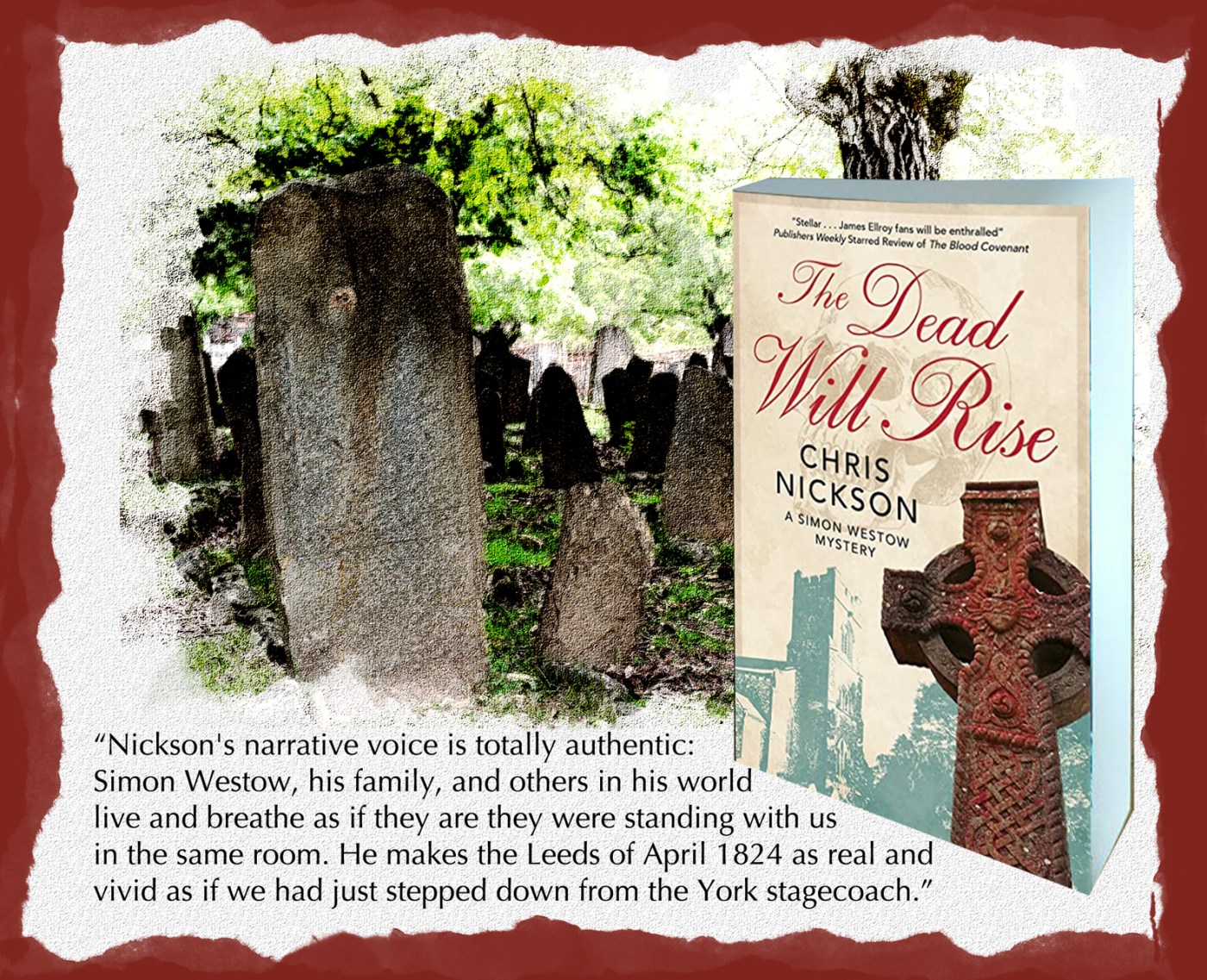
Nickson’s narrative voice is totally authentic: Simon Westow, his family, and others in his world live and breathe as if they are they were standing with us in the same room. He makes the Leeds of April 1824 as real and vivid as if we had just stepped down from the York stagecoach. The Dead Will Rise is published by Severn House and is out now.

Nickson footer

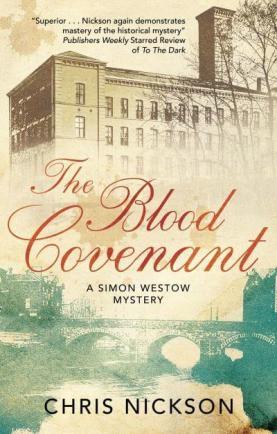
THE BLOOD COVENANT . . . Between the covers

Screen Shot 2022-01-03 at 18.33.51

One of my sons was at Leeds University, and my impression of the city during visits either to move house or to bring food and supplies, was of a place very much sure of itself, embracing the past while relishing a vibrant future. But this was largely Headingly, the university quarter, full of bookshops, trendy cafes and largely peopled by the offspring of comfortable middle class people like me and my wife.

TBCChris Nickson’s Leeds is a very different place. In the Tom Harper novels (click link) and in this,  the latest account of the career of Simon Westow, thief-taker, things are very, very different. This is Georgian England (1823, in this case) and Westow – in an age before a regular police force – earns his living recovering stolen property, for a percentage of its value. He has no judicial authority, save that of his quick wits, his fists and- occasionally – his knife. Recovering from a debilitating illness, Westow is back on the streets, and is juggling with several different investigations. A man has been hauled out of the river. His throat has been fatally slashed, and one of his hands has been hacked off. His brother hires Westow to answer ‘who?’ and ‘why?’.

A rich and powerful Leeds entrepreneur called Arden sets Westow the task of recovering a pair of valuable candlesticks, stolen from his son. But when the investigation is concluded, all too easily, Westow is forced to wonder if he is not being used as a dupe in some larger scheme. To add to his workload, Westow sets out to avenge the deaths of two lads, apparently starved then beaten to death by brutal overseers at a Leeds factory owned by a mysterious man named Seaton.

Westow’s assistant is a deceptively fragile young woman called Jane. Raped by her father and then thrown out on the street by her mother, she has learned to survive by cunning – and a fatal ability to use a knife, without a second thought, or her dreams being haunted by her victims. She has, to some extent, ‘come in from the cold’ as she no longer lives on the street, but with an elderly lady of infinite kindness.

As Leeds is cut off from the rest of the world by deep snow, there are more deaths, but few answers. The only thing that is clear in Westow’s mind is that there is that – for whatever reason – a blood covenant exists between Arden and Seaton. Two rich and powerful men who have the rudimentary criminal justice system within Leeds at their beck and call. Two men who want ruin – and death – to come to Westow and those he loves.

TBC footer

Before we reach a terrifying finale at a remote farm in the hills beyond Leeds, Nickson demonstrates why he is such a good – and impassioned – novelist. He burns with an anger at the decades of of injustice, hardship and misery inflicted on working people by the men who built industrial Leeds, and made their fortunes on the broken bodies of the poor strugglers who lived such dark lives in the insanitary terraces that clustered around the mills and foundries. In terms of modern politics, Chris Nickson and I are worlds apart and there is, of course, a separate debate to be had about the long term effects of the industrial  revolution, but it would be a callous person who could remain unmoved by the accounts of the human wreckage caused by the huge technological upheavals of the 18th and 19th centuries.

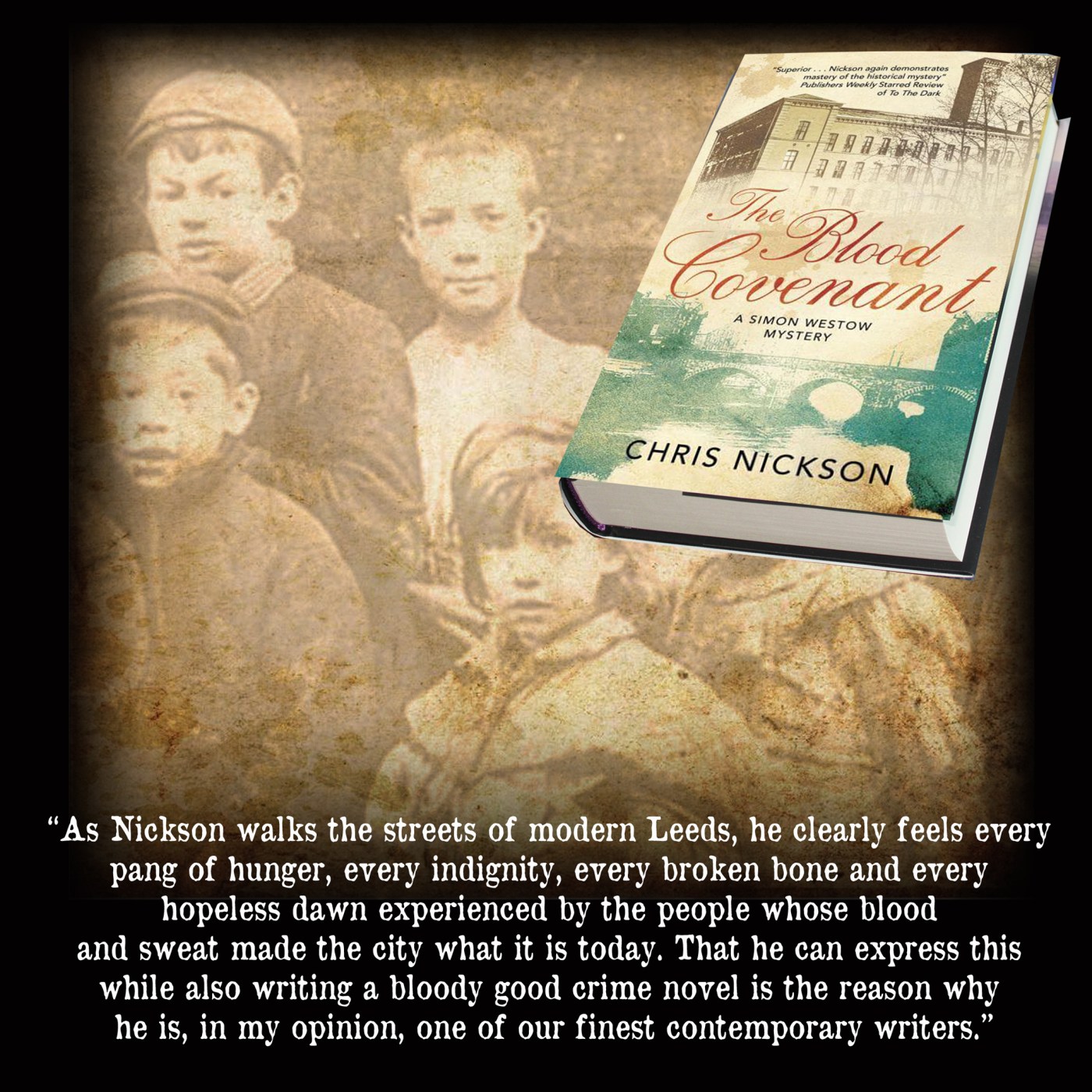
There is. of course, a noble tradition of writers who exposed social injustice nearer to their own times – Charles Dickens, Charles Kingsley, Robert Tressell and John Steinbeck, to name but a few, but we shouldn’t dismiss Nickson’s anger because of the distance between his books and the events he describes. As he walks the streets of modern Leeds, he clearly feels every pang of hunger, every indignity, every broken bone and every hopeless dawn experienced by the people whose blood and sweat made the city what it is today. That he can express this while also writing a bloody good crime novel is the reason why he is, in my opinion, one of our finest contemporary writers. The Blood Covenant is published by Severn House and is out now.

TO THE DARK . . . Between the covers

TTD header

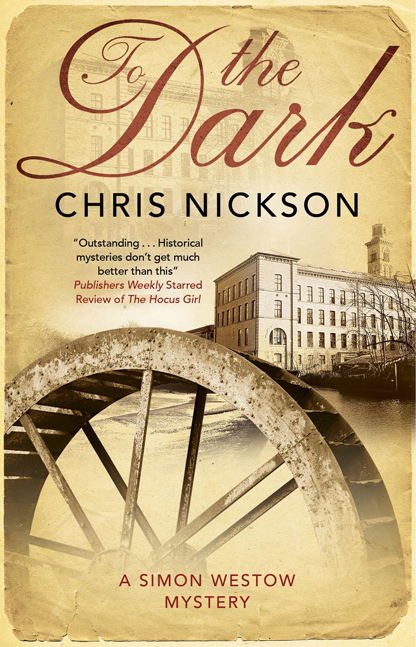
Screen Shot 2021-01-03 at 21.02.58I am delighted to say that my first review for 2021 is a new book by the reliably excellent story-teller, Chris Nickson. For those new to his books, he is a widely travelled former music journalist, who has rubbed shoulders with some of the big names in rock, but now pursues a rather more sedentary lifestyle in the Yorkshire city of Leeds. When he is not tending his treasured allotment, he writes historical novels, based around crime-solvers across the  centuries, most of them based in Leeds.

You can click the link to check out his late 19th century novels featuring the Leeds copper Tom Harper, but his latest book takes us back a little further, to Georgian times. Leeds is undergoing a violent transformation from being a bustling, but still largely bucolic centre of the wool trade, to a smoky, clattering child of the Industrial Revolution.

There are fortunes to be made in Leeds, but crime is still crime, and Simon Westow is known as a thief-taker. Remember, this is before the emergence of a regular police force, and what law there is is enforced by (usually incompetent) town constables, and men like Westow who will recover stolen property – for a fee.

the-darkWestow is a man who has survived a brutal upbringing as an institutionalised orphan, and there is not a Leeds back alley, courtyard or row of shoddily-built cottages that he doesn’t know. He doesn’t work alone. He has an unusual ally. We know her only as Jane. Like Westow, this young woman has survived an abusive childhood, but unlike Westow – who isn’t afraid to use his fists, but is largely peaceable – Jane is a killer. She carries a razor sharp knife, and uses it completely without conscience if she is threatened by men who remind her of the degradation she suffered when younger.

When a petty criminal is found dead in a drift of frozen snow, Westow frets that he will be linked with the murder as, only a week or so earlier, he had completed a lucrative assignment that involved returning to their owner stolen goods that had come into the hands of the dead man. Instead of being harassed by the lazy and vindictive town constable, Westow is asked to try to solve the crime. It seems that two aristocratic officers from the town’s cavalry barracks might be involved with the killing, and this sets Westow a formidable challenge, as the soldiers are very much a law unto themselves. Meanwhile a notebook has been found which is connected to one of murdered criminal’s associates, but it reveals little, as it is mostly in code. Someone cracks the cipher for Westow, but he is little the wiser, especially when the text contains the enigmatic phrase ‘To The Dark.’

Douville-Hours

The discovery of a stolen handwritten Book of Hours, potentially worth thousands of gold sovereigns, further complicates the issue for Westow, and when the seemingly invincible Jane suffers a crippling injury, his eyes and ears on the Leeds streets are severely diminished. Still, the significance of ‘To The Dark’ escapes him, and when his life and those of his wife and children are threatened he is forced to face the fact that this seemingly intractable mystery may be beyond his powers to solve.

As ever with Chris Nickson’s novels we smell the streets and ginnels of Leeds and breathe in its heady mixture of soot, sweat and violence. In one ear is the deafening and relentless collision of iron and steel in the factories, but in the other is the still, small voice of the countryside, just a short walk from the bustle of the town. Nickson is a saner version of The Ancient Mariner. He has a tale to tell, and he will not let go of your sleeve until it is told. To The Dark is published by Severn House and is out now.

THE HOCUS GIRL . . . Between the covers

THG header

I redt was not until the middle of the nineteenth century that Britain had anything like an organised police force. The Hocus Girl is set well before that time, and even a developing community like Leeds relied largely on local Constables and The Watch – both institutions being badly paid, unsupported and mostly staffed by elderly individuals who would dodder a mile to avoid any form of trouble or confrontation. There were, however, men known as Thieftakers. The title is self-explanatory. They were men who knew how to handle themselves. They were employed privately, and were outside of the rudimentary criminal justice system.

THG coverSuch a man is Simon Westow. He is paid, cash in hand, to recover stolen goods, by whatever means necessary. His home town of Leeds is changing at an alarming rate as mechanised cloth mills replace the cottage weavers, and send smoke belching into the sky and chemicals into the rivers. We first met Westow in The Hanging Psalm, and there we were also introduced to young woman called Jane. She is a reject, a loner, and she is also prone to what we now call self-harm. She is a girl of the streets, but not in a sexual way; she knows every nook, cranny, and ginnel of the city; as she shrugs herself into her shawl, she can become invisible and anonymous. Her sixth sense for recognising danger and her capacity for violence – usually via a wickedly honed knife – makes her an invaluable ally to Westow. I have spent many enjoyable hours reading the author’s books, and it is my view that Jane is the darkest and most complex character he has created. In many ways The Hocus Girl is all about her.

T redhe 1820s were a time of great domestic upheaval in Britain. The industrial revolution was in its infancy but was already turning society on its head. The establishment was wary of challenge, and when Davey Ashton, a Leeds man with revolutionary ideas is arrested, Simon Westow – a long time friend – comes to his aid. As Ashton languishes in the filthy cell beneath Leeds Moot Hall, Westow discovers that he is treading new ground – political conspiracy and the work of an agent provocateur.

The books of Chris Nickson which are set in the nineteenth century have echoes of Blake contrasting England’s “green and pleasant land ” with the “dark satanic mills”. Yes, scholars will tell us that this is metaphor, and that the Blake’s mills were the churches and chapels of organised religion, but a more literal interpretation works, too. By the time we follow the career of Tom Harper, all the green has turned black, and the pounding of the heavy machinery is a soundtrack which only ceases on high days and holidays. Simon Westow, on the other hand, half a century or more earlier, sees a Leeds where twenty minutes walk will still find you a cottage built of stone that is still golden and unblackened by industrial soot. There are still becks and streams which run clear, uncoloured by cloth dyes and industrial sludge. Just occasionally – very occasionally – there is an old woman still working on her hand loom, determined and defiant in the face of mechanised ‘progress’.

“Up on a ridge, a large steam engine thudded, powering a hoist. A single stone chimney rose, belching out its smoke. No grass anywhere. The land seemed desolate and wasted, people by miners in pale trousers ans waistcoats, blue kerchiefs knotted at the neck. Women and children bent over heaps of coal, breaking up bog black chunks as they sorted them.

This was progress, Simon thought as he watched. It looked more like a vision of hell on earth.”

I red am not sure if Nickson would have been battling with the Luddites as they fought to hold back mechanisation. He is too intelligent a writer to be unaware that the pre-industrial age may have had its golden aspects but life, for the poor man, was still nasty, brutish and short. His anger at the results of ordinary people being sucked into cities such as Leeds to be set to work tending the clattering looms and feeding the furnaces is palpable. Chris Nickson is a political writer of almost religious intensity who, paradoxically, never preaches. He lets his characters have their hour on the stage, and lets us make of it what we will. The Hocus Girl is powerful, persuasive and almost impossible to put down. It is published by Severn House and is available now.

For more on Chris Nickson’s historical novels click the image below.

Click image


THE HANGING PSALM . . . Between the covers

THP header

Honest broker that I am, and the modern equivalent of Robespierre in my sea-green incorruptibility, I must declare an interest here. I am an unashamed and avid fan of anything written by Chris Nickson. I hope that if he did write a duff book – or chapter – or page – or sentence – I would say so. Happily, that dilemma is one that I have yet to face.

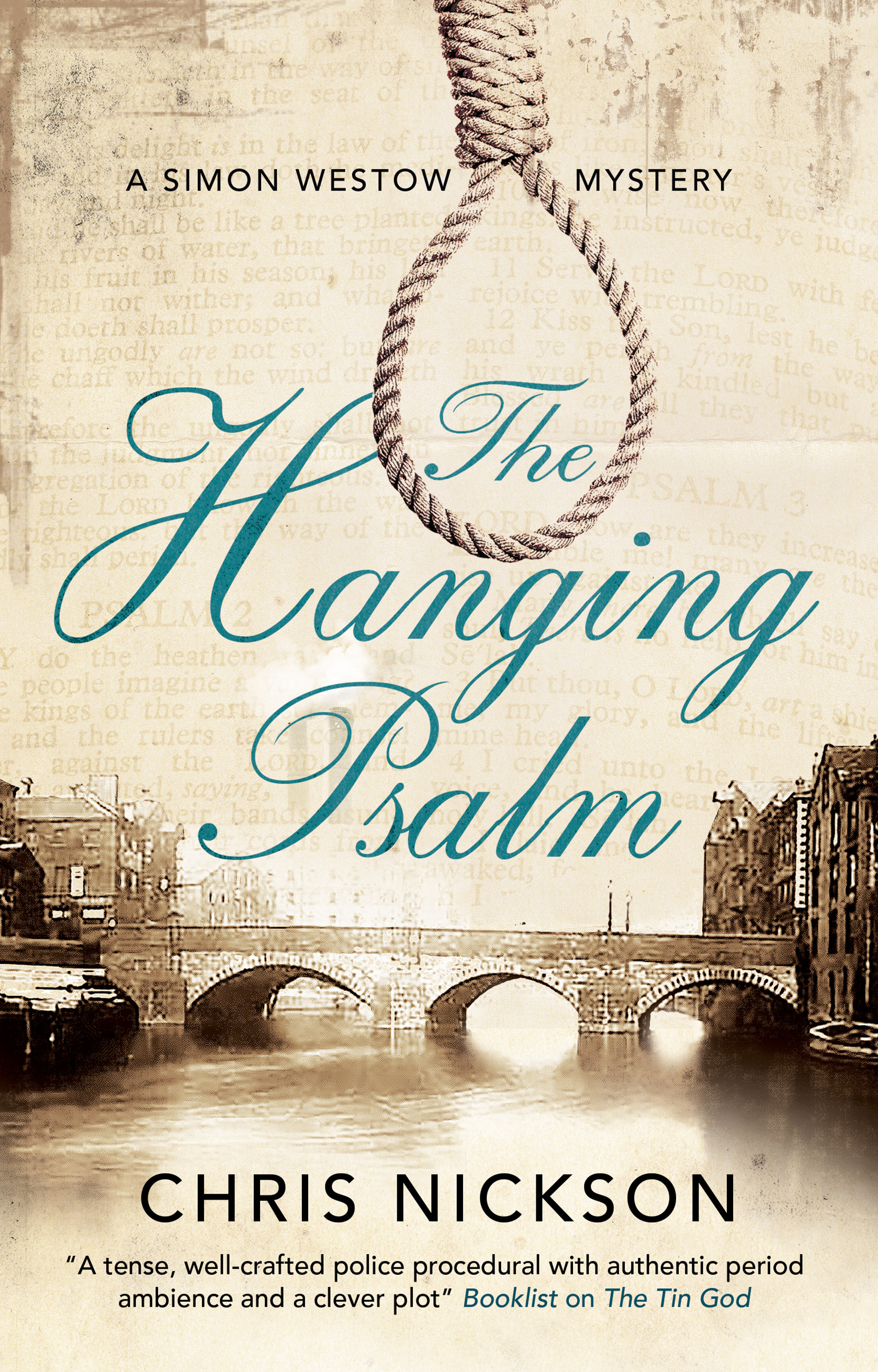
hanging-psalm-revisedNickson’s latest book introduces a new character, Simon Westow, who walks familiar streets – those of Leeds – but our man is living in Georgian times. England in 1820 was a kingdom of uncertainty. Poor, mad King George was dead, succeeded by his fat and feckless son, the fourth George. Veterans of the war against Napoleon, like many others in later years, found that their homeland was not a land fit for heroes. The Cato Street conspirators, having failed to assassinate the Cabinet, were executed.

Simon Westow is a thief-taker. These days, he might be a bounty hunter or a PI. There is no established official police force, merely a Constable who is neither use nor ornament.
“The constable. It was a name rather than a job. A position. All the ceremony and the money that went with the post, but none of the work. Cecil Freeman had been part of the council long enough to earn the sop, a nest to gild his retirement. He supervised the watch, old men who covered the different wards of Leeds and hobbled a mile rather than risk a fight.”

Westow is a tradesman, just like a plumber. He is paid by results, and when he is tasked with finding the kidnapped daughter of a prominent mill owner, it poses no major problem and the young woman is soon found and returned to her family. But – and it is a huge ‘but’ – Westow and his ally, a wraith-like and embittered girl of the streets called Jane, learn that there is much more to the kidnapping than meets the eye. Their nemesis is a vengeful and resourceful man called Julius White, who has returned from a seven year transportation sentence to settle scores with those who put him on the prison ship sailing to Australia.

Samuel Johnson said, “When a man is tired of London, he is tired of life,” but Nickson has eyes and ears only for Leeds. I am always drawn to writers who make a vivid sense of place a major character in their novels, hence my fascination with the London of Christopher Fowler, Jim Kelly’s Fenland and the brooding hills of the Welsh Marches as portrayed by Phil Rickman. Nickson, and his Leeds across the generations, is up there with the best. Think of the subtleties of a Rembrandt portrait, every line and wrinkle faithfully reproduced, but also think of that great painter’s warmth and the deep compassion of his vision.

Nickson employs a simple but astonishingly effective plot device, that readers of his novels will recognise. A crime is committed. The perpetrator is either unknown, or a known villain who has gone to ground in the alleys and ginnels of Leeds. The central character, be it Richard Nottingham, Tom Harper, Lottie Armstrong or Dan Armstrong, must then call in favours, walk the streets, mingle with pub low-life or knock on the front doors of posh houses in search of information. This enables Nickson to bring Leeds to life across the centuries, its dark places with poverty so intense that it reeks, and those airy vaulted buildings where men of property and money take their leisure and talk business.

The author is also a highly respected music journalist, and he will be aware that the great Woody Guthrie said something along the lines of, “I only use three chords; maybe four, if I’m trying to impress a girlfriend.” Nickson is equally parsimonious with his prose. There are no flounces, no frills and no flourishes but, maybe because of this economy, there is memorable poetry, albeit bleak, such as when he describes the ‘fallen women’ of Leeds.

“Too many were desperate. All it took was the promise of a meal and a bed. And then enough gin and laudanum to dull the pain of living and the agony men inflicted. If a few died, there was ample room for the burials. Girls without names, without pasts; no one would ever ask questions.”

Westow’s pursuit of Julius White is thrilling stuff. The ex-convict’s desire for revenge has created a fire, and the character forged in its flames emerges as the embodiment of evil. Maybe it’s just me, but this novel casts a more sombre shadow than previous Nickson Leeds novels. Westow certainly carries deep psychological scars from his institutional upbringing, and Jane is a very dark, complex and troubled soul.

The Hanging Psalm is published by Severn House and will be available from 28th September. In case you are puzzled by the price on the Amazon listing, you need to know that the publishers sell mainly to public libraries, so check that your own library has this book on its acquisition list.

If you are new to the books of Chris Nickson, then click the blue link to discover why I am such an admirer.

Severn House

Blog at WordPress.com.

Up ↑