

Lee Goldberg baits the hook irresistibly within the first few pages of this novel. Disgraced former LAPD cop Beth McDade has been exiled to the desert wastes of Barstow, on edge of the Mojave Desert. She attends what seems to be a routine road death- pedestrian collides with motor home, only one winner – but the autopsy on the victim is astonishing. He was wearing jeans that hadn’t been made that way since the 1880s. What remains of his dental fillings reveal an amalgam not used in decades. His tobacco tin isn’t just repro. It is original, and contains tobacco not produced commercially since the end of the nineteenth century.
Things become even more baffling when a construction company doing groundwork for a new development unearth an old coffin containing equally old bones. Beth finds her ultra rational mindset severely challenged when the bones are dated to the early 20th century, but contain titanium implants only available to surgeons in more recent times. She then receives a visit from a former LA colleague (and lover) who is on a missing persons case. He is looking for Owen Slader, a very 21st century social media personality and chef,who was last seen filling up his car with gas on the way to visit his daughter.
There are two parallel narratives, one being that of present day Beth McDade, and the other being the views and experiences of Owen Slader. On that February night he was engulfed by what appears to be a lightning storm and, when he recovers his senses, the freeway no longer exists, and he is stranded near the primitive and rumbustious silver mining settlement of Calico. And it is 1882. Slader hides his hired Mercedes in a cave, rigs up a solar battery charger to power his iPhone and, using his 21st century culinary skills, caries out a profitable life for himself cooking up delicacies for the hungry miners of Calico. He meets – and marries another refugee from another time, a woman called Wendy, but she was ‘taken’ by the Time Gods a couple of decades earlier than Slader. This is when the complexities and total unknowables of the time travel concept begin to cause brain hurt, and the obvious questions like the one below, can never be answered:
“If stamps on the titanium implants found in the bones within the ancient coffin identify the recipient as Owen Slader who, identifying as Ben Cartwright (1960s TV Western reference!), died in the early 1900s, how did he then father a daughter in the early decades of the 21st century?”
The author certainly has fun with some of the more bizarre aspects of being a time traveller. He has Ben Cartwright buying copies of new novels by writers like Mark Twain and Robert Louis Stevenson knowing that (as first editions) they will become immensely valuable decades ahead. When a cholera epidemic hits Calico, Cartwright, nursing the town judge in what seems to be his final fevered moments, takes out his iPhone and plays the dying man some music. Problem is, the judge doesn’t die, and when he recovers he goes around loudly humming ‘Somewhere Over The Rainbow.’
Meanwhile, Beth McDade struggles to reconcile facts that are, at the same time, impossible but also incontrovertible. She even finds, boarded up in a cave, the 2019 rental that Owen Slader was driving when he disappeared. It is, needless to say, improbably decayed and weathered given that it can only have been there a matter of months. Eventually, our heroine tackles – and bests – the FBI and the implacable American military machine.
Lee Goldberg’s audacious plot and premise will not be for everyone, particularly those who think that Hamlet’s famous remark to Horatio was just the rambling of a confused and conflicted young man. Of course, time travel novels are nothing new, and Goldberg does nod in homage to the grand-daddy of the genre, Herbert George Wells, but also develops the ‘stepping on a butterfly’ trope that began with Ray Bradbury’s 1952 short story ‘A Sound of Thunder’. Key question, though. Does Lee Goldberg’s book work? Of course it does. The writer is also an experienced screenwriter, producer and TV executive, far too well versed in his trade to stretch the credulity of his readers and viewers to beyond breaking point. Calico is immensely entertaining, with a runaway-train narrative drive. Published by Severn House, it came out in hardback and Kindlle in November 2023 and this paperback edition was published on 4th July.


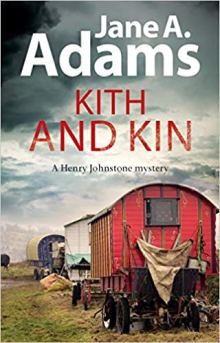 Coming across a very, very good book by an author one has never encountered before and then realising that she has been around for a while is a shock to the system, and if the downside is that the experience further highlights one’s own ignorance, then the blessing is that as a reviewer and blogger, there is something new to shout about. Jane A Adams made her debut with The Greenway back in 1995, and has been writing crime fiction ever since, notably with four-well established mystery series featuring Mike Croft, Ray Flowers, Naomi Blake and Rina Martin. She began the saga of London coppers Henry Johnstone and Micky Hitchens in 2016, with The Murder Book. Their latest case is Kith and Kin.
 The period is set to perfection, and Adams (right) skilfully combines past, present and future. The past? There can scarcely have been a man, woman or child who escaped the malign effects of what politicians swore would be the war to end wars. The present? 1928 saw devastating flooding on the banks of the River Thames, a book called Decline And Fall was published, and in Beckenham, not a million miles away from where this novel plays out, Robert ‘Bob’ Monkhouse was born. The future? Johnstone’s sister, who has married into money, has a head on her shoulders, and senses that in the financial world, a dam is about to break – with devastating effects.

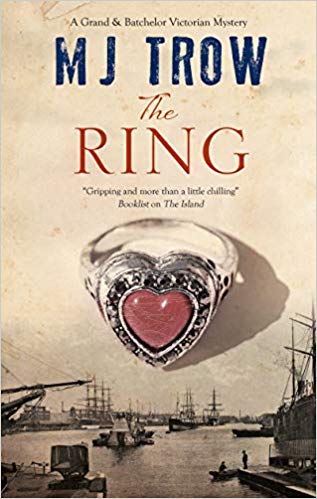 The River Thames plays a central part in The Ring. Although Joseph Bazalgette’s efforts to clean it up with his sewerage works were almost complete, the river was still a bubbling and noxious body of dirty brown effluent, not helped by the frequent appearance of human bodies bobbing along on its tides. In this case, however, we must say that the bodies come in instalments, as someone has been chopping them to bits. PC Crossland makes the first grisly discovery:
 MJ Trow (right) has been entertaining us for over thirty years with such series at the Inspector Lestrade novels and the adventures of the semi-autobiographical school master detective Peter Maxwell. Long-time readers will know that jokes are never far away, even when the pages are littered with sudden death, violence and a profusion of body parts. Grand and Batchelor eventually solve the mystery of what happened to Emilia Byng, both helped and hindered by the ponderous ‘Daddy’ Bliss and a random lunatic, recently escaped from Broadmoor. Trow writes with panache and a love of language equalled by few other British writers. His grasp of history is unrivalled, but he wears his learning lightly. The Ring is a bona fide crime mystery, but the gags are what lifts the narrative from the ordinary to the sublime:


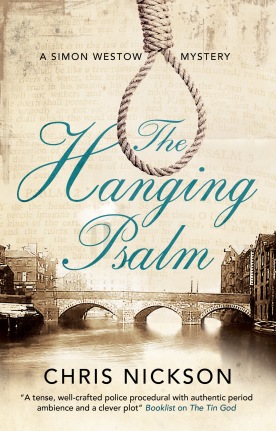 Nickson’s latest book introduces a new character, Simon Westow, who walks familiar streets – those of Leeds – but our man is living in Georgian times. England in 1820 was a kingdom of uncertainty. Poor, mad King George was dead, succeeded by his fat and feckless son, the fourth George. Veterans of the war against Napoleon, like many others in later years, found that their homeland was not a land fit for heroes. The Cato Street conspirators, having failed to assassinate the Cabinet, were executed.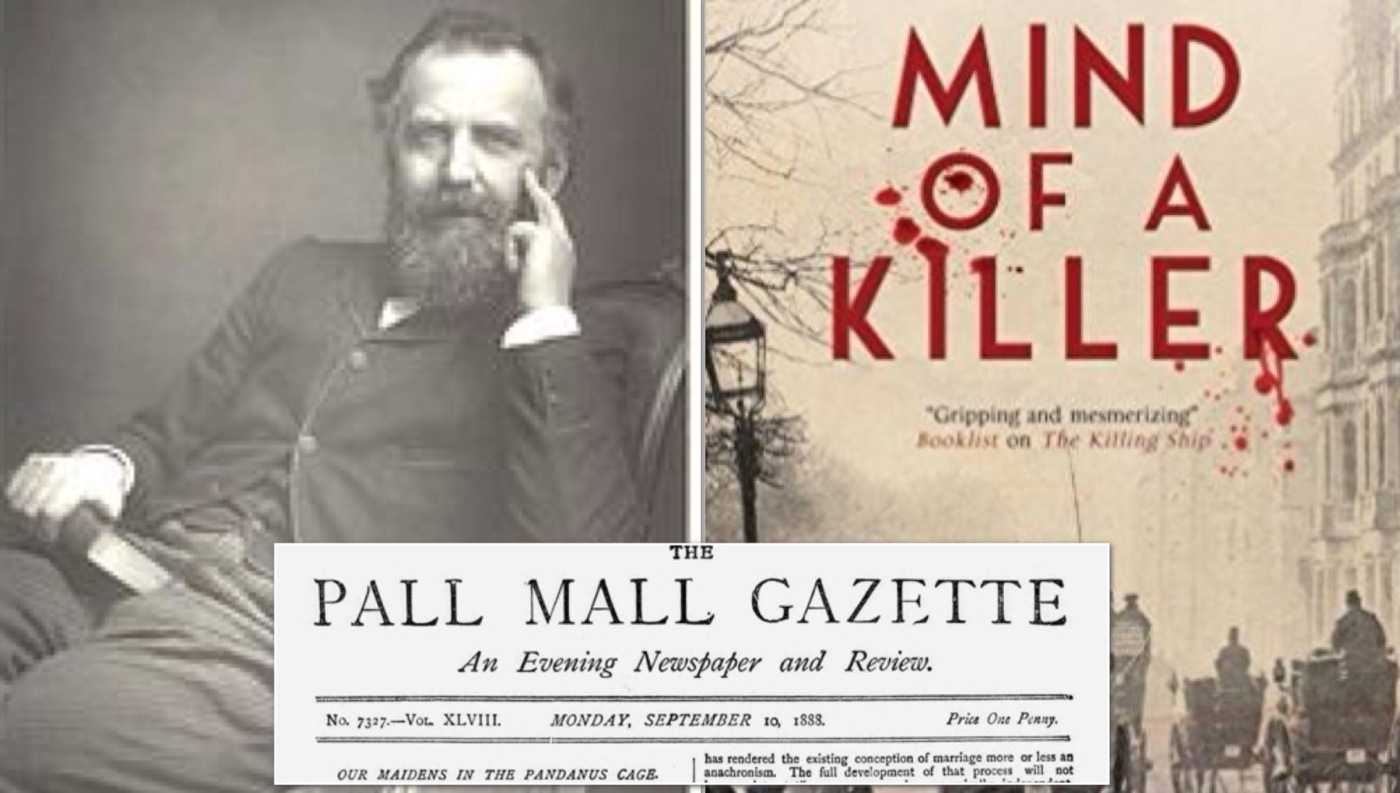
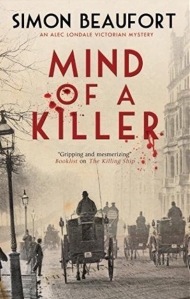 Simon Beaufort provides an exhilarating and madcap journey through the contrasting mileus of Victorian London. We experience gentlemen’s clubs with their subtle ambience of brandy and fine cigars, the visceral stench of low-life pubs and doss houses and the clatter of the hot lead printing presses of a vibrant daily newspaper. Lonsdale – with the assistance of Hulda Friedrichs, a fiercely independent early feminist journalist – painstakingly uncovers a nightmarish plot hatched by scientists who are obsessed with eugenics, and believe that the future of the human race depends on selective breeding and the suppression of ‘the undeserving poor’.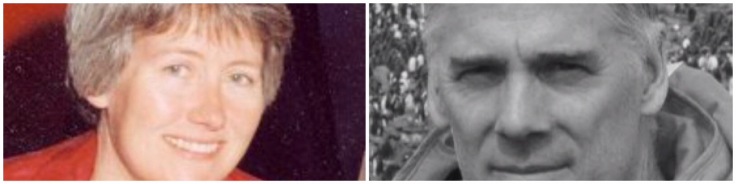
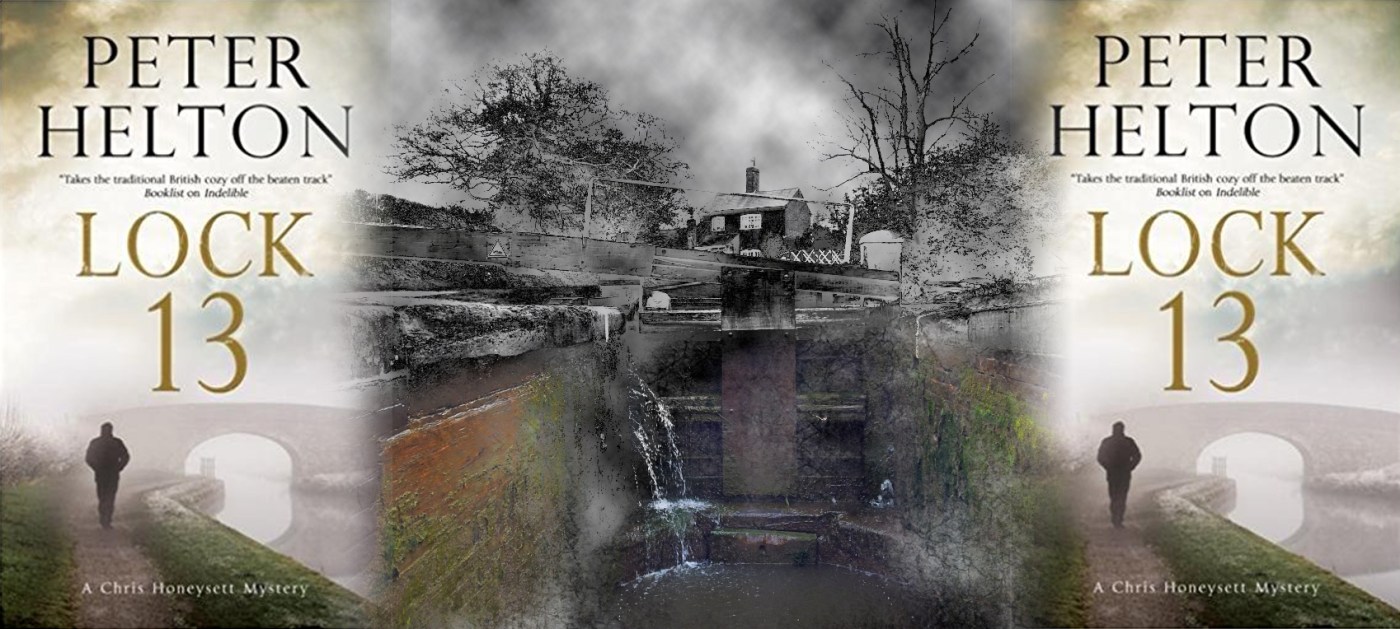
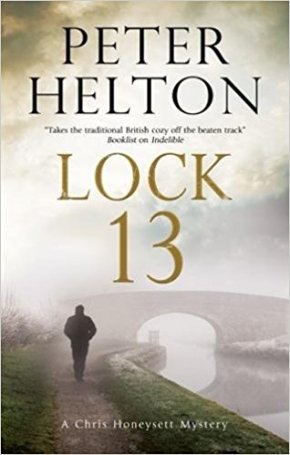 Lock 13 features Chris Honeysett, a private detective whose cases I had never read before, despite this being the sixth in what is clearly a popular series. The previous episodes are Headcase (2005), Slim Chance (2006) Rainstone Fall (2008) An Inch of Time (2012) Worthless Remains (2013) and Indelible (2014). Honeysett, like his creator Peter Helton (more on Helton’s website
  Sometimes a novel is so delightfully written that a reader can reach the last page with a smile and sense of contentment, despite the fact that nothing very dramatic or shocking, at least by the standards of some modern thrillers, has happened during the 200 pages or so which have made up the narrative. Lock 13 is one such book. Peter Helton (right) tells the story through the eyes of Chris Honeysett, and the style is fluent, conversational, occasionally erudite, often witty – but always very, very, readable. Established fans of the Honeysett series can feel duly smug that the amiable painter-sleuth has found another convert, and they can rest assured that I shall be working my way through the file of Honeysett’s previous cases. Lock 13 is published by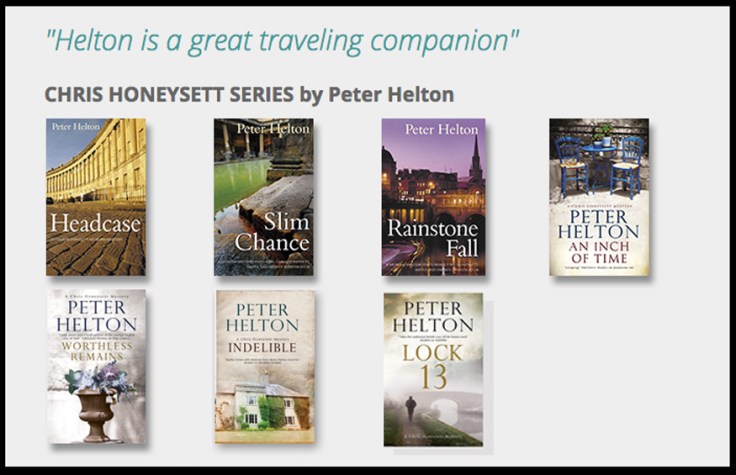


 fullybooked2017