FICTIONAL SCOTTISH COPPERS – rather like single malt whiskies – are spread the length and breadth of that fine country. Highlands, Lowlands, islands, stately university cities, gritty oil and gas ports, mistily romantic glens and litter-strewn council estates where hope goes to die. Chris Longmuir has set her DS Bill Murphy novels in Dundee, but she has by no means cornered the Tayside market, for now comes Hania Allen with the first in a series set in Dundee and featuring Polish-born DS Dania Gorska.
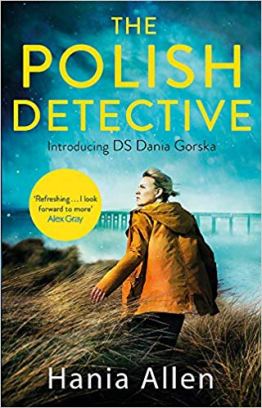 Dania Gorska has come to work in Dundee after starting her career in London with the Met. A divorce from husband Tony (watch out for the clever twist) has left her footloose and fancy free. Her exemplary record has meant she has enjoyed a swift and welcome transfer to Police Scotland. She lodges with her brother Marek, who is an investigative journalist.
The discovery, in a farmer’s field, of the body of a female academic displayed in the manner of a scarecrow sets in train a murder enquiry which takes Gorska and her colleagues down a twisty and circuitous road where they come across Druids, an eccentric Laird, two missing schoolgirls – and another girl obsessed with studying how dead creatures decay. As you might expect, the killer hasn’t finished and more corpses end up on the pathologist’s cutting table. Early on in the narrative, one of the characters comes across as a definite ‘wrong ‘un’, but Allen weaves the threads of the plot into a cunning riddle with a surprising and satisfying solution.
 The Polish Detective is in some ways a standard police procedural which chugs along nicely on its accustomed rails. All the usual characters are present and correct; no such story would be complete without a dyspeptic senior officer, the obligatory post mortem scene with a sarcastic medical professor wielding the bone saw, the male junior detective who thinks he’s Jack – or perhaps Jock – the Lad, and the mind numbing tedium of the door knocking and CCTV scanning that sits behind every brilliant solution to a murder mystery. What lifts this book above the average is the character of Dania Gorska herself, and in particular her musical passion for, naturally, her great countryman Frédéric François Chopin and his sublime piano music. Hania Allen (right) describes herself as a pianist who makes up in enthusiasm what she lacks in talent, but under the fingers of DS Gorska, the great man’s preludes and nocturnes shimmer and sparkle throughout the pages, and the darker notes of the Polish soul are never far away.
The events in The Polish Detective take place on the eve of the June 2016 EU referendum, the result of which I suspect Hania Allen disapproves, as she has her heroine declaring at one point, that Chopin was “ also a European, as we all are..” I live in a town full of lovely Polskie people who have come to Britain in the last fifteen years or so, and those that I know well are intensely proud – in the best way possible – of their nation and its culture. Dania Gorska’s claim, therefore, may be something of a leap of faith, but Hania Allen makes a serious point about the debt this country owes to Polish men and women stretching back to the dark days of WW2.
Politics aside, Hania Allen may be allowed self deprecation of her skills as a pianist, but on this evidence there is do doubt whatsoever about her skills as a crime novelist. The Polish Detective is tautly plotted, full of intriguing characters and settings, with a thoroughly engaging new central character. It is published by Constable and is out in paperback on 9th August.
Fans of Scottish crime fiction might like to see what Fully Booked has in the way of reviews and features centred on this popular genre. Click the blue link to see what’s on offer.


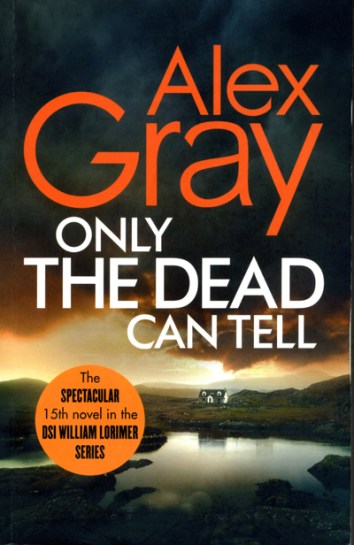 Lorimer has become bogged down in a partially – and only partially – successful investigation into murder, prostitution and people trafficking based in Aberdeen. In the Granite City some entrepreneurs, denied a living by the decline in the oil and gas industries, have taken to trading in other commodities – human lives. However, to borrow the memorable line from The Scottish Play, Lorimer’s team have “scotch’d the snake, not kill’d it.” The head of the gang responsible for taking young and innocent Romany women from impoverished Slovakian villages, and setting them to work in Scottish brothels is known only as “Max”. The very mention of his name is enough to silence witnesses, even those who have every reason to long for his downfall. But how – if at all – is Max connected to Peter Guilford, arrested for his wife’s murder, but now beaten within an inch of his life while on remand in Glasgow’s Barlinnie prison?
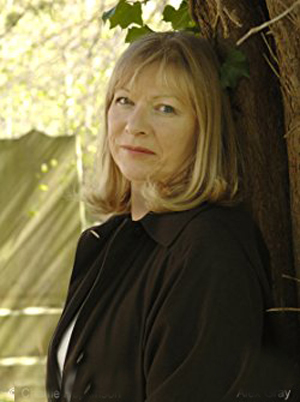 The British police procedural – the Scottish police procedural, even – is a crowded field, and each author and their characters tries to bring something different to choosy readers. Where Alex Gray (right) makes her mark, time and time again, is that she is unafraid to show the better things of life, the timeless touches of nature in a summer garden, or the warmth of affection between characters, particularly, of course, the bond between William and Margaret Lorimer. Here is one such moment:


 By 22nd March 2018, there should be catkins on the willow and hazel, daffodils should be getting into their stride and, even if it’s a little early to be looking for summer migrants like swallows and warblers, nothing will be more welcome to lovers of good crime fiction than the return of William Lorimer in another – the fifteenth, unbelievably – police procedural set in Scotland. Since Alex Gray (left) saw Never Somewhere Else published in 2002, she has made Lorimer and his world one of the go-to destinations for anyone who loves a well-crafted crime novel, with a sympathetically portrayed central character.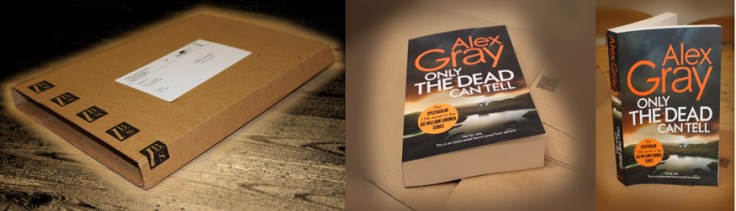

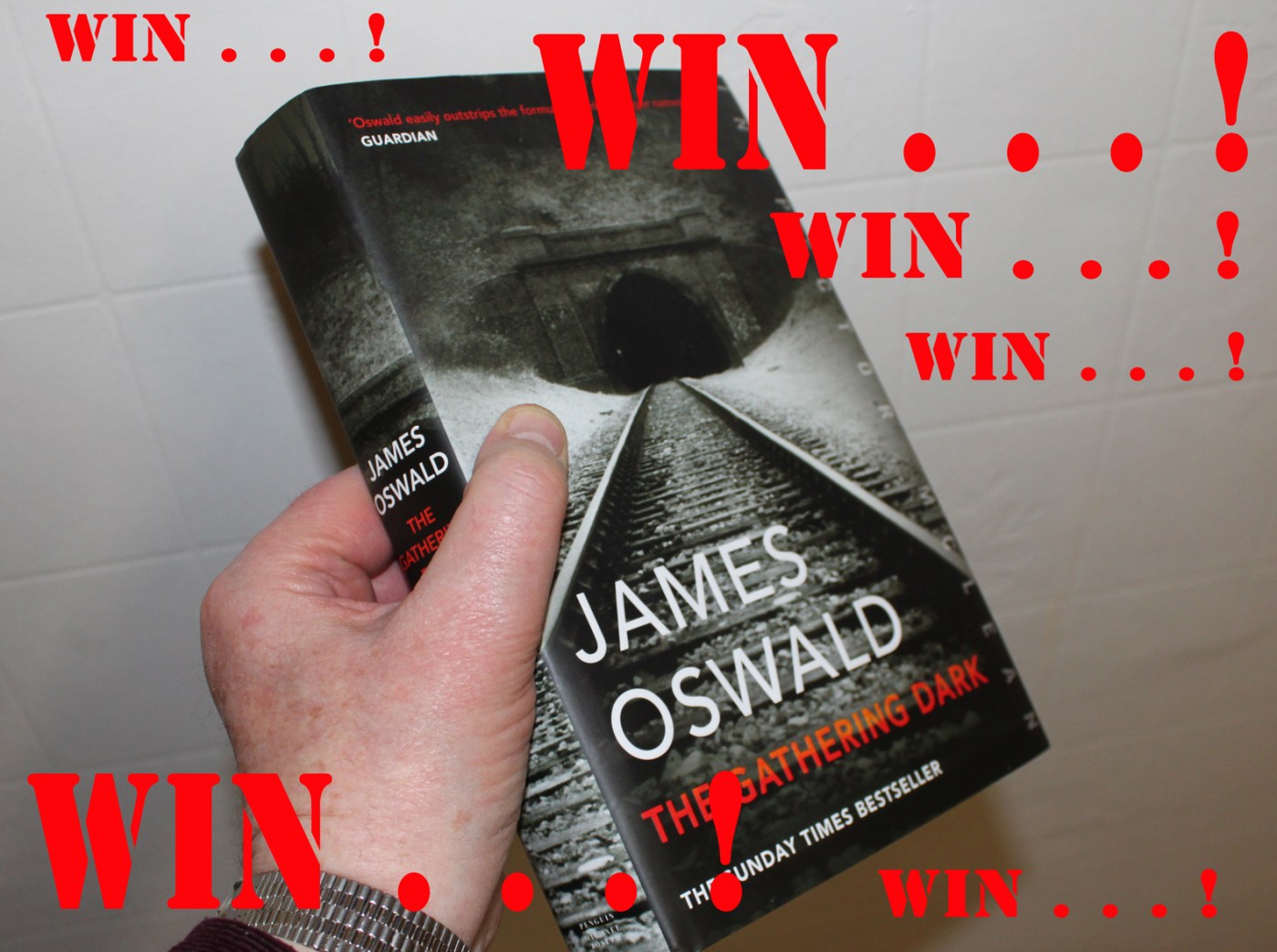
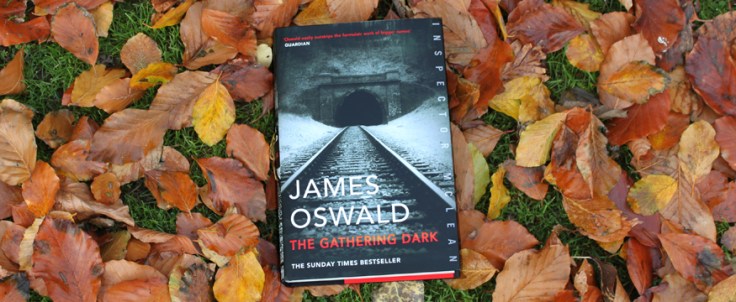
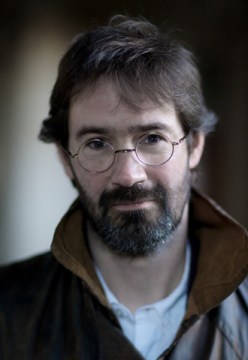 I should add, at this point, that James Oswald (left) is not your regulation writer of crime fiction novels. He has a rather demanding ‘day job’, which is running a 350 acre livestock farm in North East Fife, where he raises pedigree Highland Cattle and New Zealand Romney Sheep. His entertaining Twitter feed is, therefore, just as likely to contain details of ‘All Creatures Great and Small’ obstetrics as it is to reveal insights into the art of writing great books. But I digress. I don’t know James Oswald well enough to say whether or not he puts anything of himself into the character of Tony McLean, but the scenery and routine of McLean’s life is nothing like that of his creator.
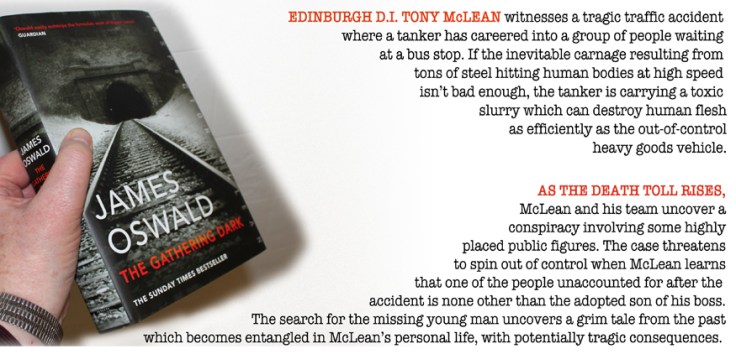
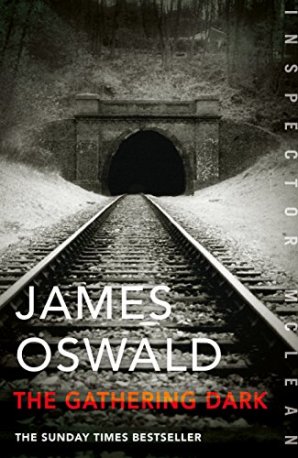 McLean is going about his daily business when he is witness to a tragedy. A tanker carrying slurry is diverted through central Edinburgh by traffic congestion on the bypass. The driver has a heart attack, and the lorry becomes a weapon of mass destruction as it ploughs into a crowded bus stop. McLean is the first police officer on the scene, and he is immediately aware that whatever the lorry was carrying, it certainly wasn’t harmless – albeit malodorous – sewage waste. People whose bodies have not been shattered by thirty tonnes of hurtling steel are overcome and burned by a terrible toxic sludge which floods from the shattered vehicle.


 The woman is eventually identified as Alice Hickson, a journalist, and the woman who provided the ID, a literary editor called Manikandan Lal, is flying home from holiday to give further background to her friend’s disappearance and death. ‘Kandi’ Lal fails to make her appointment with Gilchrist, however, and soon the police team realise that they may be hunting for a second victim of whoever killed Alice Hickson. Gilchrist’s partner, DS Jessie Janes has problems of own, which are become nagging distractions from her professional duties. As if it were not bad enough to learn that her junkie mother has been murdered by a family member, Jessie is faced with the heartbreaking task of explaining to her son that an operation to correct his deafness has been cancelled permanently.
 Detective Inspector characters have become a staple in British crime fiction, mainly because their position gives them a complete overview of what is usually a murder case, while also allowing them to “get their hands dirty” and provide us readers with action and excitement. So, the concept has become a genre within a genre, and there must be enough fictional DCIs and DIs to fill a conference hall. This said, the stories still need to be written well, and Frank Muir (right) has real pedigree. This latest book will disappoint neither Andy Gilchrist’s growing army of fans nor someone for whom reading The Killing Connection is by way of an introduction.

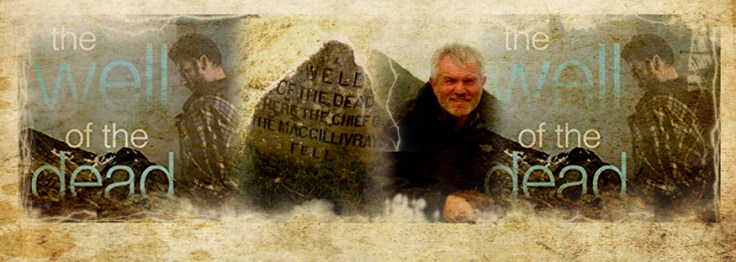
 In the icy Scottish dawn of 16th April 1746, the last battle to be fought on British soil was just hours away. The soldiers of the Hanoverian army of William Duke of Cumberland were shaking off their brandy-befuddled sleep, caused by extra rations to celebrate the Duke’s birthday. Just a mile or two distant, the massed ranks of the Scottish clans loyal to Charles Edward Stuart, the Young Pretender, were shivering in their plaid cloaks, wet and exhausted after an abortive night march to attack the enemy.
 The Well Of The Dead is a winning combination of several different elements. It’s a brisk and authentic police procedural, written by someone who clearly knows how a major enquiry works. For those who enjoy a costume drama with a dash of buried treasure, there is interest a-plenty. Military history buffs will admire the broad sweep of how Allan (right) describes the glorious failure that was the Jacobite rebellion, as well as being gripped by the detailed knowledge of the men who fought and died on that sleet-swept April day in 1746, bitter both in the grim weather conditions and what would prove to be a disastrous legacy for the Scottish Highlanders and their proud culture.
 This is the second outing for Clive Allan’s Detective Inspector Neil Strachan and, as in the first book in the series, The Drumbeater, past and present collide. Glenruthven, a tiny community in the Scottish Highlands, is dominated by its distillery. When the owner, Hugh Fraser is murdered alongside his wife, the village is shattered at the thought of there being a killer in their midst.
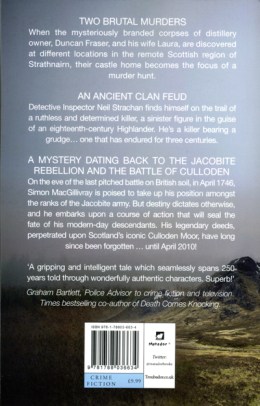 As Strachan and his police partner DS Holly Anderson set about finding the killer, they discover that the man they suspect of the double murder is obsessed with his own ancestry, and believes that he is related to a Jacobite soldier who, like so many of his fellow rebels, was slain on the bloody battlefield of Culloden on 16th April 1746.
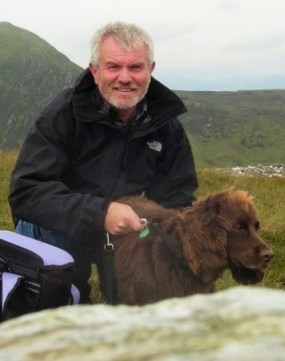 Clive Allan (right) is a former police officer of thirty years’ service, and is also a keen aficionado of his country’s military history. This mixture of experience and passion combines to create a novel which will blend the lure of momentous events of the past with the gritty reality of modern policing.


 fullybooked2017