
Search

fullybooked2017

Tag

Sal Delaney

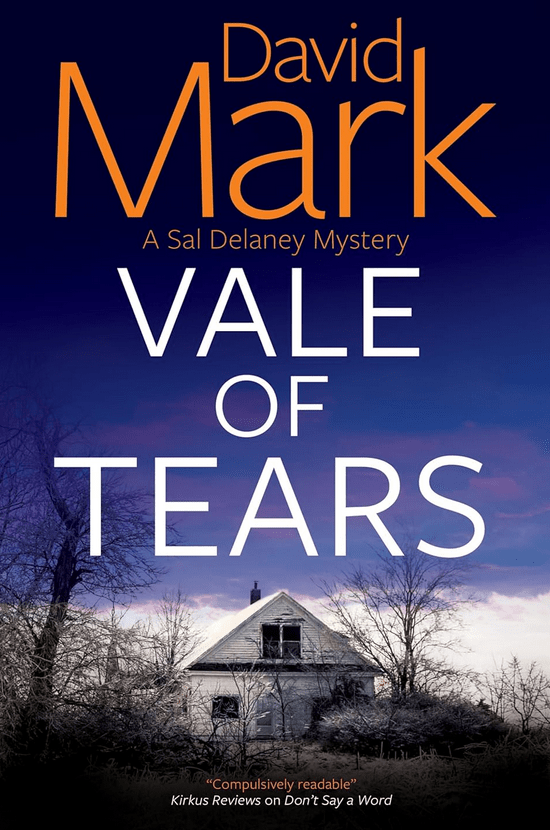
VALE OF TEARS . . . Between the covers

Salome (Sal) Delaney is different from your run-of-the-mill fictional copper. Her speciality is investigating road accidents for Cumbria police and preparing cases for investigation if criminality is involved. It’s certainly unglamorous – and can be gory. Her home situation is also unusual. She lives in Carlisle with Lewis Beecher, fitfully recovering from a catastrophic head injury – and his young daughters. There is a backstory, which is as grim as it is complex. We have Wulfric Hagman, a former copper who served years in jail for a murder he didn’t commit. Dagmar Scrowther MBE, a widely lauded social worker and children’s advocate is now in a secure hospital, serving time for murders she certainly did commit. And then we have Jarod Delaney, Sal’s twin brother. He has taken himself off. To ‘find himself’? Explore the student trail in Bali and Thailand? No-one knows.

Crime novelists who use the device of a prologue have to be careful. A prologue has to appear unconnected to the central narrative timeline, and is meant to keep the reader guessing. For me, if the writer makes us wait too long before revealing the connection, then the device becomes an irritation. Here, David Mark gives us the link fairly quickly. One of Sal’s unofficial stepdaughters is Nola and she, with other friends, has gone out in a boy’s car, to investigate a notorious ruined cottage historically called the Murder House. There, they discover a much more recent cadaver. As they leave in panic, a 4×4 plunges off the road and down the hillside. The woman driver is now in intensive care, fighting for her life.

When Sal attends the RTA, a hill walker alerts her. He, too, has found the corpse in the Murder House. The link? The seriously injured driver is the mother of the boy who drove Nola and her friends out to the old house. As ever in a David Mark novel, just when you think it couldn’t get any darker, he comes up with something to make the reader squirm with yet more unease. Dagmar Scrowther, sitting in her hospital cell, has perfected a ‘dotty old lady’s persona. Brilliantly feigning amnesia she is sitting, like a particularly loathsome spider, waiting for the tell-tale twitches that tell her that yet another gullible victim is stuck in her web.

Another malignant presence hiding in plain sight is Chief Inspector Magda Quinn. Corrupt and ambitious, she has history with Sal and her extended family. The body in the Murder House is identified as that of Rollo Savage a local eccentric, who was obsessed with the unexplained death of Trevelyan Mara in 1880, the event which gave the house its local nickname. Years earlier, Savage had been innocently involved with the Jesus Fraternity, a cult of evangelical Christians subsequently exposed as sexual predators and fraudsters.

David Mark has a dark sense of humour:

“The police constable guarding the scene looks so young that for a moment Sal wonders whether she’s missed an email and that today is really Bring Your Children To Work Day. His fluoro jacket hangs on him as if still on the hanger; There’s a smudgy mustache of pimples across his upper lip and air of general vacancy behind the eyes. Sal can’t help thinking she may be looking at a future chief constable.”

There is a brooding atmosphere of the supernatural that runs through the novel, although it comes from people seeking to find phantoms, rather than the spectres actually appearing. The old practice of scrying is mentioned, an attempt by humans to gaze into mirrors or glass in an attempt to pierce the vale and discover the truth about the past – in this case the real story behind the death of Trevelyan Mara.

Salome herself is not psychic in the accepted sense, but she is sensitive to objects and places that hold particular significance, especially relating to her tortuous – and tortured upbringing. David Mark has a talent for creating memorable and truly nasty villains, but he also peoples his novels with kinder souls whose hearts beat with human compassion. Vale of Tears will be published by Severn House on 2nd June. If you click the author image (above left) the link will take you to my reviews of other David Mark novels.
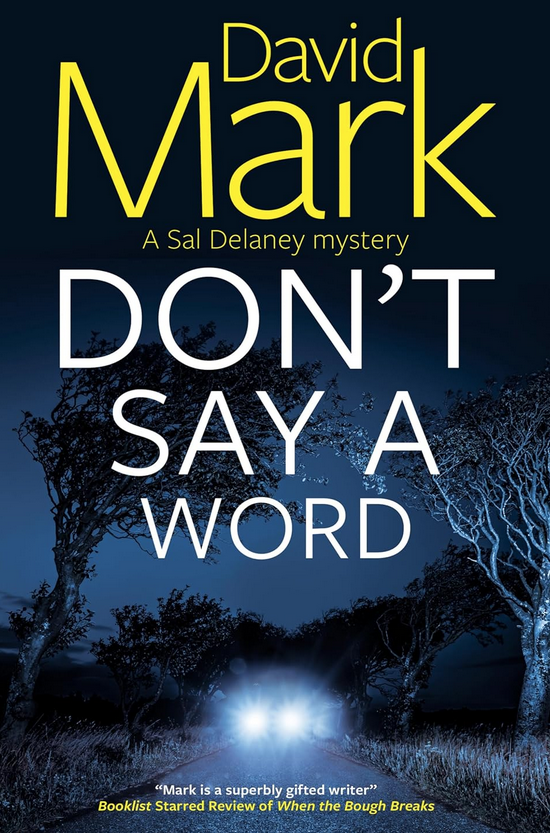
DON’T SAY A WORD . . . Between the covers

Cumbria traffic cop Salome ‘Sal’ Delaney has a startling back-story, which you can speed-read by checking my review of the previous novel, When The Bough Breaks. Now, we have a mysterious prologue which seems to describe a man being buried alive, but then Sal is called out on a bleak and rainy night to discover why a 4×4 has swerved into an unforgiving dry stone walk out in the middle of nowhere. The past hangs over this narrative like a pall, forcing the reader to be very careful about distinguishing between then and now.

Former drama student Theo Myers has spent an age in prison for a murder he did not commit. Now, finally, he is free of his prison walls, but shackled to a life of uncompensated poverty and a society that views him with suspicion. He reconnects with someone from his past, former policeman Wulf Hagman, who has also spent long years in jail.

Sal’s road accident takes a bizarre turn. The driver of the 4×4 swears he swerved into the wall to avoid what he calls a ‘zombie’. 4×4 man Sycamore Le Gros is stone cold sober but, hearing unearthly noises in a thicket beside the road, Sal discovers a stricken creature, whose state justifies the description Le Gros has given.

We are reunited with Detective Superintendent Magdalena Quinn, a police officer nicknamed The Succubus by male colleagues. She is certainly the embodiment of evil, devious, beautiful, manipulative and corrupt. If you are a Thomas Hardy aficionado, think Eustacia Vye, but with the moral compass of Lucretia Borgia.

The ragged, undead thing with horror in his eyes that Sal discovered in the undergrowth now has a name – Mahee Gamage, a solicitor of Sri Lanka origin, last known to be living in a village near Middlesbrough. The case takes an even more sinister turn when Sal learns that Gamage was the duty solicitor on the fateful night that Theo was arrested, and it looks probable that the advice he gave the young man was fatally flawed.

David Mark, like a cat with a mouse, enjoys playing games with his readers. As Mahee Gamage hovers between life and death in his intensive care bed, it seems clear that he was captured, imprisoned and brutalised because of his incompetence in representing Theo Myers. Was the culprit Theo himself, his obsessive mother Tara, or maybe her second husband Alec, the campaigner with his hatred of the British establishment? Perhaps it was joint enterprise? Or is Gamage’s torturer someone completely from Left Field? Further evidence, if any were needed, that the ambience of this novel is not sun dappled Cotswold limestone, thatched cottages and Inspector Barnaby, comes by way of an examination of the contents of Mahee Gamage’s stomach where the investigators find clear evidence of partially digested human flesh. Like Aector McAvoy, David Mark’s other memorable character, Sal Delaney frequently has to face a world of almost unfathomable moral blackness, and it is only her own spiritual integrity which enables her to survive. Don’t Say A Word is compulsive, dark – and sometimes extremely graphic. It is published by Severn House, and  available now.

WHEN THE BOUGH BREAKS . . . Between the covers

WTBB header

David Mark has taken a temporary break from his excellent Aector McAvoy series (click the link to find out more) and his latest novel has a prologue that is as violent and visceral as any of the disturbing scenes in Derek Raymond’s I Was Dora Suarez. If you have read that masterpiece, you will know what I am talking about. If you haven’t, then you should. Here, copper Wulfric Hagman wakes up in a charnel house, apparently of his own creation. His former lover, Trina Delany lies butchered on the bed, while he seems to have tried to hang himself with a length of baler twine.

That was then, but now, Hagman has served a prison sentence, been released, and is now living in a moorland farmhouse he gifted by Jarod, one of Trina’s children. His twin sister, Salome is also living there. She is a traffic cop, formally known,in today’s jargon, as Collision Investigation Officer. At Hagman’s original trial, both Sal and Jarod gave chilling evidence testifying to the abuse they – and the other children – received at Trina’s hands.

Against this unusual human background and with the Northumbrian hills carpeted in deep snow, David Mark weaves his magic. The plot is complex, but this is a breakdown of the main characters.

Salome Delaney, police officer.
Jarod Delaney, Sal’s twin. Now a farmer, living in a house signed over to him by …
Wulfric Hagman, former policeman, served a long prison term for the murder of Trina Delaney. He now lodges with the Delaneys.
Dagmara Scrowther, charismatic Children’s Services officer. Worked with the Delaney family.
Lewis Beecher, senior police officer, divorced. Has recently ended a long term relationship with Sal Delaney.
Barry Ford. Once a child tearaway, now relatively respectable. Former lover of Trina Delaney.
Detective Superintendent Magda Quinn. Has re-opened the Hagman case, believing him to be guilty of more murders.

With transport paralysed by deep snow, Salome – although on leave – receives a call from a fellow officer asking her to go and investigate a car that has come off the road just a couple of miles away. She clings on grimly as Jarod’s quad-bike makes light work of the snow drifts. She finds the wrecked car, but the macabre feeding habits of local crows lead her to a man’s body. Some of the crows who have fed on the corpse are collapsing and dying. The reason? The body has had acid poured into his throat.

This grim discovery sets off a train of events that are as violent and disturbing as anything I have read in recent crime fiction. I am a great admirer of David Mark’s writing, and I make no apology for frequently comparing his style to that of Derek Raymond. Like Raymond, Mark takes us into dark places where monsters – in human form – ply their trade. Like Raymond’s nameless Sergeant in the five Factory novels, Mark’s heroes are often gravely damaged, but have a depth of compassion that always brings about a sense of redemption at the end of the journey, no matter how hellish the road.

The body in the snow is eventually identified as being that of Barry Ford, a man who was a troubled youngster but, thanks to the perseverance of Dagmara Scrowther, seems to have turned himself into something of a decent citizen. However, when Salome, hastily drafted back to work as a Family Liaison Officer, has to break the news of Ford’s demise to his current girlfriend, she opens a Pandora’s Box from which fly demons of cruelty and bestial abuse. Also in the mix is the fate of Lewis Beecher’s divorced wife. She and her two daughters – Nola and Lottie – have a new ‘dad’. He seems jolly and full of jokes, but is he genuine?

In this superb novel we cross paths with many human monsters. Trina Delaney is one, certainly, and Barry Ford is not far behind. But a third monster lurks in plain sight. Its identity is known to me, but you will have to find out for yourselves. When The Bough Breaks is published by Severn House and is available now.

Blog at WordPress.com.

Up ↑