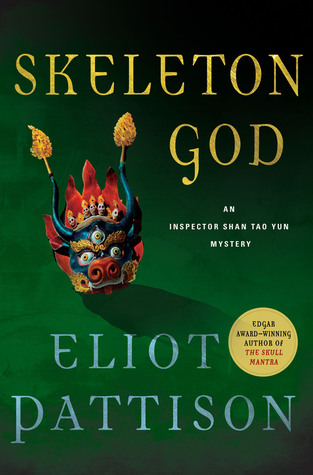
It is hard to believe that in the not-so-distant past western crime authors were prone to portraying Chinese detectives as little more than grotesques, acting out every preconception of what such a person must look and sound like, and how they should behave. The excellent Robert van Gulik, with his Judge Dee novels (1950 – 1968), was one of the earliest writers to move crime fiction set in China out of the Fu Manchu mode, and into a more credible world. Eliot Pattison introduced us to his modern day Chinese policeman, Shan Tao Yun, in Mandarin Gate (2012).
Shan is a former Beijing Police Inspector who has managed the not-so-difficult task of upsetting the monolithic party machine which controls The Motherland. After exile to the Chinese equivalent of the gulags, he has been paroled to an isolated town in Tibet, where he is officially The Constable. His main tasks seem to be rescuing yaks stranded in the winter mud or chasing goats away from municipal buildings. Above all, he must and uphold the law in a community largely stripped of its traditional identity by decades of Chinese Imperialism.
 The book actually begins with Shan rescuing one of the aforementioned yaks, but events take a more sinister turn. An ancient grave is uncovered, but the inhabitants are unlikely bedfellows. The original occupant is a long dead priest, mummified and gilded. But his companions are the remains of a Chinese soldier, and the very recent corpse of an American visitor. There is cultural confusion when a mobile ‘phone, presumably not the property of either the priest of the soldier, chimes out Handel’s Hallelujah Chorus across the chill mountain air and into the ears of alarmed Yangkar locals.
Shan discovers that the American is an ex-US Navy rating called Jake Bartram. Unlikely though it may seem, Bartram’s mother is Tibetan, and came from Yangkar itself, before marrying an American citizen and settling in Pennsylvania. Rather like the relationship between Philip Kerr’s Bernie Gunther and his Nazi bosses, Shan is regarded with a mixture of caution and tolerance by those who sit in power within the Communist Party of China and, ipso facto by every single one of its eighty million members.
Shan walks a never-ending tight-rope. If he falls to one side he risks the wrath of The Party, and he is ever aware of their power. Should he fall to the other side, he knows that he will betray the Tibetan people with whom he lives. A young Chinese Public Security officer who is, effectively, moonlighting, alerts Shan to the misdeeds of a prominent retired military hero, General Lau, and the resultant investigation taxes to the limit both Shan’s integrity and his instinctive desire to keep his head in physiological contact with the rest of his body.
Pattison’s evocation of the fragile remnants of Tibetan culture is masterly. The rich and mystical Buddhist past is now little more than the rags on a scarecrow, buffeted and shredded by the savage winds of conformity which have howled from the east since the 1950s. The monasteries have gone, and their timbers and stone recycled to build barns. Gone, too, are the monks, but the ancient Tibetan ghosts remain, at least in the minds and imaginations of those who still scratch out a living in the valleys and high passes.
Readers are left in little doubt as to where Pattison’s sympathies lie, between the hard put-upon Tibetans and their Chinese masters. The sheer enormity of the chain of command between Sinophile officials in the windswept uplands of Tibet and their  masters far away to the east is described with wit and a certain degree of compassion. I am never completely convinced by the regular use of italicised foreign language nouns in novels, particularly when the original words would have used an entirely different alphabet, but this is a tiny complaint dwarfed by what is a brilliant and evocative police procedural, albeit one set in a world as far away from our European certainties as it is possible to recreate. Pattison (right) has written a novel which reminds us that China’s eminence as a world power has not been achieved painlessly.
Skeleton God is published by Minotaur Books and is out now.


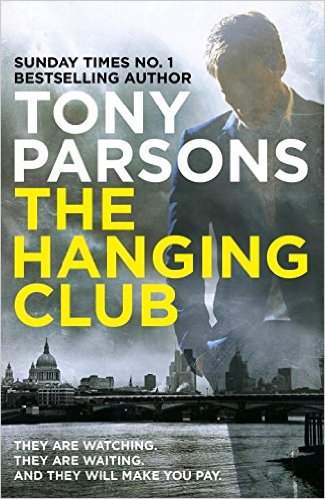
 His London copper, DC Max Wolfe, becomes involved when a refrigerated lorry is abandoned on a street in London’s Chinatown. The emergency services breathe a huge sigh of relief when they discover that the truck is not carrying a bomb, but their relaxed mood is short-lived when they break open the doors to discover that the vehicle contains the frozen bodies of twelve young women. The bundle of passports – mostly fake – found in the lorry’s cab poses an instant conundrum. There are thirteen passports, but only twelve girls. Who – and where – is the missing person?
 Max Wolfe certainly gets around for a humble Detective Constable, but he is an engaging character and his home background of the Smithfield flat, young daughter, motherly Irish childminder and adorable pooch make a welcome change from the usual domestic arrangements of fictional London coppers with their neglected wives, alcohol dependency and general misanthropy. Parsons (right) is clearly angry about many aspects of modern life in Britain, but he is too good to allow his writing to descend into mere polemic. Instead, he uses his passion to drive the narrative and lend credibility to the way his characters behave.


 A 15 year-old girl, Tania Mills, walks out of her front door and out of the lives of her parents, her family and her friends. She becomes just another statistic. Just another missing person for the police to make a dutiful attempt to appear involved. Just another file, first of all gathering dust on a shelf, and then occupying a tiny space on someone’s hard drive.


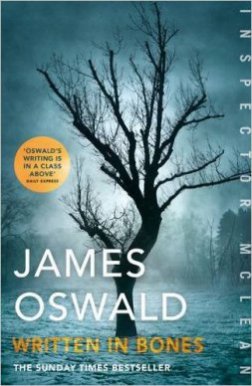 As the pathologists – literally – piece together the evidence they conclude that the shattered remains in the tree is that all that is left of Bill Chalmers, a copper who was not so much bent as tangled and doubled up on himself. After surviving a jail sentence for his misdeeds, he used his connections and his wits to found a drug rehabilitation charity, which drew immense support from the community.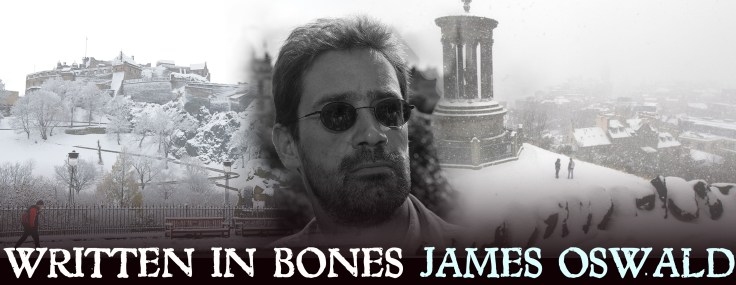

 The random murder of an innocent man? Not exactly. Mahmud Irani was part of a gang of men who groomed, raped and abused a number of white teenage girls. He served a jail term which many believe was too short, considering his crimes.

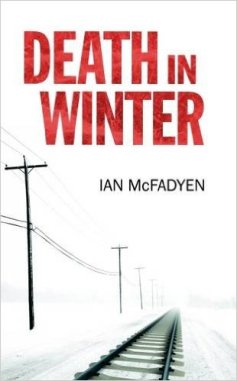 Hayley Bell has not returned home after a night out with some lady friends, and husband Duncan is seriously concerned. Mr Bell is a disagreeably pompous fellow with some serious affectations, such as calling four rooms in his grand house after the seasons, and decorating them accordingly. Carmichael and his team, however, have no reason to suspect Duncan Bell – despite his unpleasant manner – of having anything to do with his wife’s disappearance.
 If there is a league table which ranks ‘Every Parent’s Worst Nightmare’ events in terms of trauma, torment and terror, having a child kidnapped must come near the top. It could be argued that death is at least final and offers – however bleak a prospect that may be – a sense of closure and a chance for the living to rebuild their lives. But kidnap? Uh-uh; cue uncertainty, recrimination, the anxious waiting for that ‘phone call, the wondering, the sheer agony of not knowing. That is the fate of Tony and Yvonne Richards in the latest novel from Rachel Amphlett (left) when they return to their Kent home from a trip to Milan to find that their daughter Melanie has been taken. Neither Tony nor Yvonne is cut out to be Bryan Mills /Liam Neeson, and so they scrape together the ransom, make the drop, and frantically drive to the derelict industrial estate where Melanie, they hope, will be waiting for them. What they actually find delivers a killer blow – literally.
 Hunter tugs away at the few available frayed threads of the investigation until she has enough twine to weave a recognisable tapestry that shows a victim and those culpable for the crime. Larch does his best to belittle her efforts, but she has a strong supporter in her immediate boss, DI Devon Sharp. There is a very clever twist in the final third of the story when it becomes apparent that the latest kidnap victim is the estranged daughter of a member of the investigating team. It has become commonplace for fictional coppers to have chaotic personal lives, but there is a feelgood corner of this novel where the reader can take comfort in the warm relationship between Kay Hunter and her veterinarian husband, Adam.

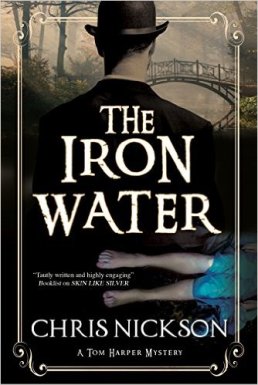 Two gang bosses, one of Irish heritage and the other local, are engaged in a tense truce. They will hold off attacking each other while Harper and his fellow officers track down the mysterious copper-headed man who appears to be connected to the deaths. Time is running out, however, and there is an even more calamitous threat hanging over the heads of the police. The powers-that-be want answers, and as Harper runs around in ever decreasing circles, he is told that if he doesn’t find the killer, then men from Scotland Yard will travel north and take over the case. This, for Harper and his boss Superintendent Kendall, will be the ultimate disgrace.
 and Selena’s qualifications as a psychologist made them the go-to people for corporations and wealthy families who had fallen foul of the highly lucrative business of international kidnapping. But then, on a blisteringly hot morning in Brasilia, it all went badly wrong. Selena went shopping for children’s toys prior to her addressing a meeting of fellow professionals in the afternoon. While she was selecting gifts for their little daughters, the bad guys attacked the hotel and conference centre, shooting, bombing and delivering a stark message. “You may think you are smarter than us, but look at the body count, and then tell us how clever you are.”
 One of the many delights of this excellent novel is that Finna Hale and Leah Mackay are brother and sister. Finn has leap-frogged his sister in the promotion stakes, despite her evident superiority – evident, that is, to us readers, but not the local constabulary personnel department. Kavanagh plays the relationship between the siblings with the touch of a concert violinist. There are all manner of clever nuances and deft little touches which enhance the narrative.


 fullybooked2017