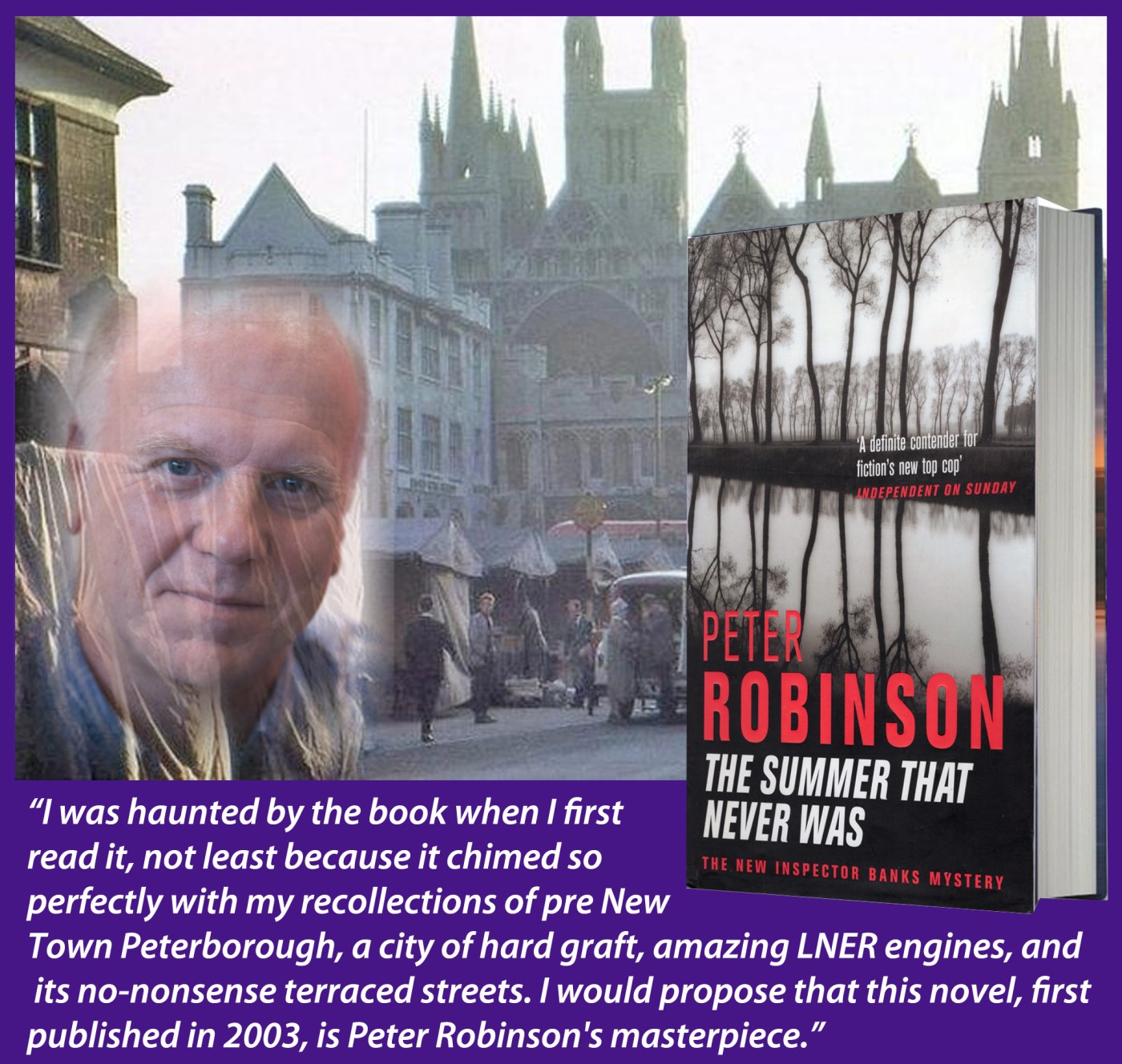
Yes, I know, I am cheating here. My PT-OC limit was supposed to be 2000, but I am making an exception here. After all, what is three years in a lifetime? In the lovely song Just A Song At Twilight, there is a phrase, “Once in the dear dead days beyond recall..”. I had those days, and back then, before publishers and authors trusted me with free copies of their novels, I was an inveterate user of our local public library. I mostly borrowed crime fiction, and I came to love the books of writers like Phil Rickman, Nick Oldham, Jonathan Kellerman, Jim Kelly and Peter Robinson. I quote another memorable song, “Some are dead and some are living..” and, sadly, Peter Robinson is one of the latter.
He is best remembered for his Inspector Banks novels, and I have chosen one of those for this feature. Banks, of course, does his coppering in the Yorkshire Dales, but this story takes him back to his childhood in Peterborough. Peterborough is, in some ways, a strange place. It has a majestic cathedral, was once in Northamptonshire, but now seems to be in Cambridgeshire. Like Banks in the novel, I remember it in the 1960s, when it was a grimy little town, surrounded by brickworks but, even then, a vital railway hub. I knew it from my days as a trainspotter, hair excessively Brylcreemed, and with a school satchel packed with sandwiches, fizzy pop and Ian Allen train books. Then came Peterborough’s designation as a New Town, with the massive expansion turning it into a kind of Milton Keynes, all roundabouts and fancifully named new housing estates.

Strangely, there is nothing in online information to suggest that Robinson was a youngster in Peterborough (he was born and brought up in Leeds) but then novelists make us believe things that actually never happened – that’s what they are good at. Here, Robinson creates a brilliant counterpoint, like two independent melodies dancing along together in perfect harmony, Banks, of course, is the link.
Down in Peterborough, a skeleton is discovered on a building site. It is that of a childhood friend of Banks, who disappeared when he was a teenager. Graham Marshall disappeared one morning while doing his paper round and, despite an extensive police investigation, no trace of him was ever found. Back in the present day, Banks’s offsider and onetime lover, Annie Cabbot is investigating the disappearance of Luke Armitage, a brooding and rather troubled youngster with celebrity parents. After what appears to be a fake kidnap-ransom demand, his body is found in a moorland tarn.
For Banks, with the aid of a resourceful Peterborough copper Michelle Hart, the solution to Graham Marshall’s murder involves a painful dismantling of what he remembers of an innocent friendship. The death of Luke Armitage involves individuals who, while innocent of malice, are certainly guilty of several of the Deadly Sins.
Banks, in his determination to secure justice for both boys, comes to realise that the boundaries between victim and perpetrator, between law guardian and law breaker can sometimes be blurred almost into indistinction. Faulkner said, in his memorable line from Requiem For A Nun, “The past is never dead. It’s not even past” and here, Banks’s return to the unremarkable Peterborough housing estate of his youth brings about not only the warmth of nostalgia brought about by the magazines and pop songs of his teenage years, but something darker and much more discomforting. I was haunted by the book when I first read it, not least because it chimed so perfectly with my recollections of pre New Town Peterborough, a city of hard graft, amazing LNER engines, and its no-nonsense terraced streets. I would propose that this novel, first published in 2003, is Peter Robinson’s masterpiece.
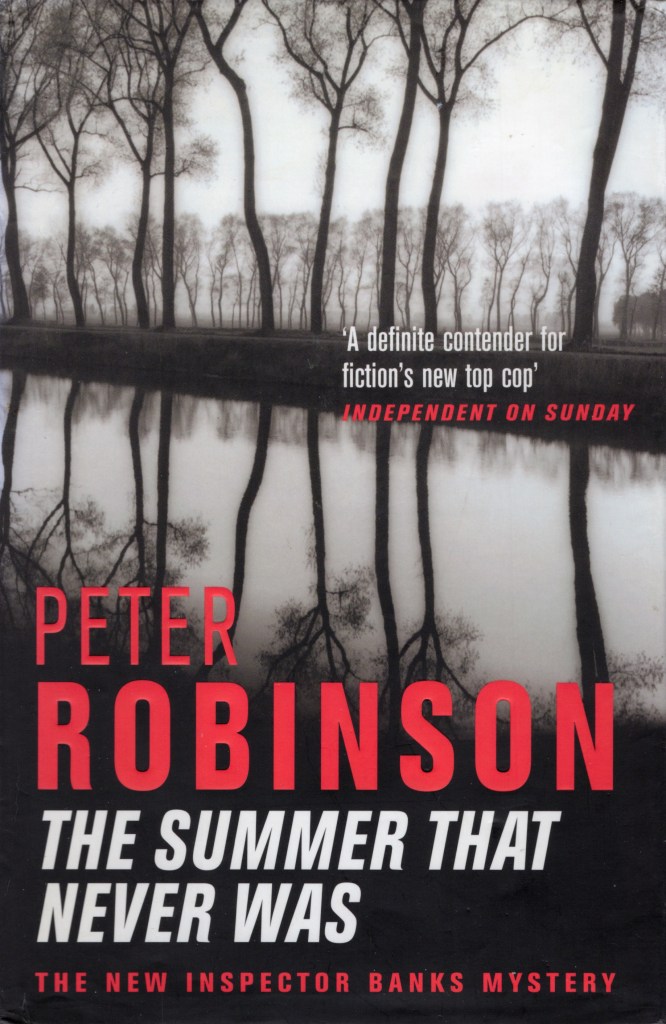


 Late again! My excuse is that I am a one-man-band here at Fully Booked, and notwithstanding the occasional erudite contribution from Stuart Radmore (who has forgotten more about crime fiction than most people will ever know), there are only so many books I can read and review properly. My first experience of Peterborough copper DI Barton is the fifth of the series (written by Ross Greenwood), The Fire Killer. Peterborough is a big place, at least for us Fenland townies, but is rarely featured in CriFi novels. I am pretty sure that Peter Robinson’s DI Banks grew up there (The Summer That Never Was) and Eva Dolan’s Zigic and Ferreira books are certainly set in the city.
 Ross Greenwood (right) has fun inviting us to make out own guesses, but also makes the game a little more interesting by giving us intermittent chapters narrated by The Fire Killer, but he is very wary about giving us too many clues. The dead girl, Jess Craven had been involved with a very rich dentist with links – as a customer – to the London drug trade.

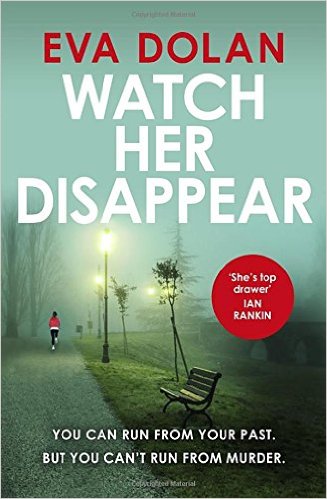 Not the least of Eva Dolan’s achievements in this remarkable novel is to pinpoint with painful accuracy and honesty what happens to children and wives when a father – originally Colin Sawyer – decides to abandon the male role and become a woman. Even after the nightmare scene where Sawyer’s daughters come back to the house unexpectedly, and find their father en femme at the sink, doing the dishes, Jessica and Lily have come to think of their dad as ‘mum’. The pain that this must cause a biological mother in this situation can only be imagined, and it is interesting that Nina Sawyer is drawn as a fairly unpleasant piece of work.
 Aside from the nuanced description of gender politics and psychological challenges faced by the characters in this novel, we have to ask the burning question. Does Watch Her Disappear work as a crime story? My answer is a resounding and emphatc ‘Yes”. The whodunnit aspect of the story is teasingly effective, with Dolan (right) scattering little hints, false leads and blind alleys in her wake as she races along ahead of us. Crime fiction is full almost to the brim with Detective Inspectors and their trusty Sergeants, but Dolan breathes on those particular embers and makes them fire up afresh in the shape of Detective Inspector Dushan Zigic and Detective Sergeant Mel Ferreira of the Hate Crimes Unit. The neat twist is, of course, that both Zigic and Ferreira are themselves children of immigrants, and the chemistry between the two is potent and complex.

 Watch Her Disappear, the latest episode in the career of Zigic and Ferreira is expected to be on the shelves in January 2017, and it reminds us that hate crime can involve other issues than the colour of someone’s skin or the language they speak. A wave of sexual assaults has left Peterborough women wary and fretful, but when the next victim – a fatality – is revealed to have been a genetic man, the case becomes something different altogether.


 fullybooked2017