

Imagine a world without liars. Imagine a world without novelists. OK, I know that we all know that novelists are, most of the time, describing things that never actually happened, but that’s what we pay them for. Lying is deeply embedded in the human psyche. Think of all the memorable quotes:
“If you tell a big enough lie and tell it frequently enough, it will be believed.”
“History is a set of lies agreed upon.”
“The visionary lies to himself, the liar only to others.”
“The worst part about being lied to is knowing you weren’t worth the truth”
“There’s only two people in your life you should lie to… the police and your girlfriend.”
 Also Sprach, in no particular order (put the name to the quote for a bit of fun, but no prizes, sadly) Napoleon, Jack Nicholson, Hitler, Sartre, and Nietzsche. In this brilliant new novel by Simon Lelic we have, in theatrical terms, an intense two-hander between Susanna (a counsellor) and Adam (a troubled young man). Just a couple of problems here, though. First, neither person is exactly who they claim to be and, second, Adam has abducted Susanna’s daughter Emily and, for reasons which emerge as this extraordinary dialogue develops, wants her dead.
This is one of those books which reviewers dread. Not because of the quality of the writing and not because the pages drag. The problem is that the plot is so fiendish and so beautifully designed to suck the reader into a series of emotional quicksands, that any commentary has to be very carefully judged so that it gives nothing away.
What I can say is that Susanna lives alone with her daughter in a house where there are secret drawers, hidden bundles of photographs and memories which are witnesses to Susanna’s past. A past that she hopes she has left behind, just as her visions of the dead have receded so that they are now merely mental shadows. You will learn that Adam is connected to Susanna. Connected by memory, circumstance – and by something much, much more powerful.
The Liar’s Room (interesting placing of the possessive apostrophe) starts with a tiny giveaway, but then proceeds at a leisurely pace before a real sense of menace kicks in. I am not sure if ‘chromatologist’ is a real word, but I think anyone who studies the science of colour would agree that there are places in this novel where the mood goes beyond black into a place where the emotional darkness is so intense that we have no words to describe it.
Simon Lelic (right) 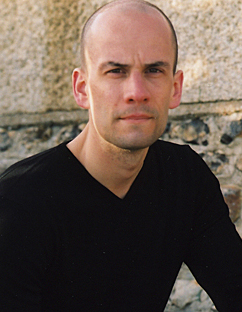 is a writer who views the human condition with what some might term a jaundiced eye, as witnessed in his previous novel, The House – follow the link to read my review. He is all too aware of our weakness, our fallibility, and the lengths we will go to in order to preserve our fragile sense of normality. He doesn’t judge, however. He simply reports. This excellent book shows just how shrewd, how perceptive and how entertaining – in a swirling and disturbing sense – his writing is. The Liar’s Room is published by Viking/Penguin Random House and is out now.

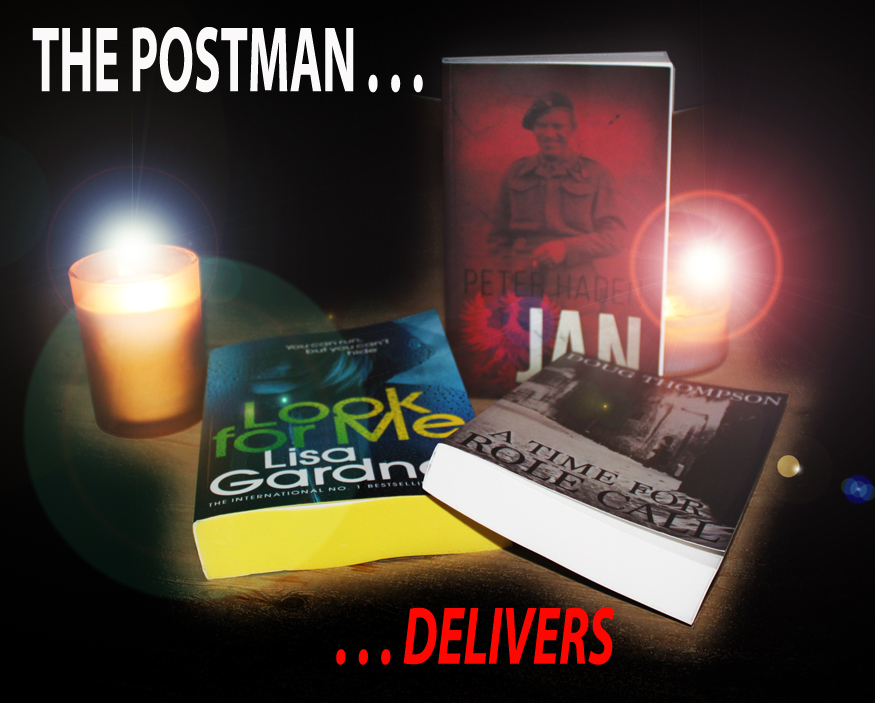

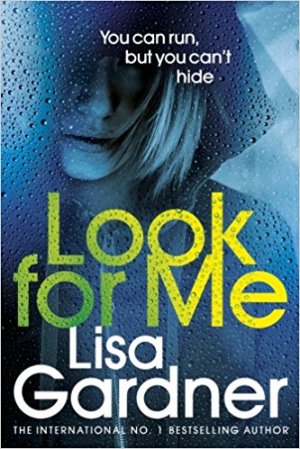 Look For Me is a return to active duty for Boston Detective D D Warren. In the twelfth book of an obviously popular series, Gardner brings back a character – Flora Dane – from an earlier book, Find Her, in which Dane was a resilient but haunted survivor of kidnap and abduction. Now, Dane’s thirst for vengeance on her tormentor is a mixed blessing for Warren who is faced with a murder scene of almost unimaginable violence. Four members of the same family lie slaughtered in the family home, a refuge transformed into a charnel house. But where is the fifth member of the family? Has the sixteen year-old girl escaped, or is her disappearance the prelude to an even greater evil? Look For Me is published by Century, part of the Penguin Random House group, and will be available in early February 2018. You can pre-order a copy
  Polish history in the twentieth century shows us a region constantly in the thick of conflict between rival military forces. It was the scene of many of the battles on the Eastern Front during WWI, and Poland suffered hugely at the hands of the Nazis during WWII. The very worst concentration camps set up by Hitler were on what is now Polish territory. Then, post-war, came what was, to all intents and purposes, a Russian occupation. Peter Haden’s novel Jan actually deals with a real person, his uncle, Jan Janicki and his exploits both before and during the Nazi occupation of his homeland. The novel tells of a flight from desperate domestic poverty, the humiliation of working for the ruthless German invaders, but then a determination to fight back, which sees Jan laying his life on the line to support the Polish resistance movement. Jan is published by Matador, and is available from
 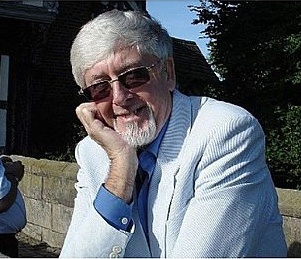 From Poland to Italy, where much of A Time For Role Call by Doug Thompson (left) is set. Former Professor of Modern Italian language, history and literature, Doug Thompson draws on his intimate knowledge of Italy to write a lively novel with a feisty protagonist and colourful cast of supporting characters. Sally Jardine-Fell is recruited by the wartime Special Operations Executive to travel to Italy. Her mission? To insinuate herself into the life of none other than Count Galeazo Ciano, Foreign Minister to Il Duce – Benito Mussolini – himself. Inevitably, things do not go according to plan, and, despite both the war and Mussolini himself becoming consigned to history, events conspire against Sally, and she finds herself in a cell, charged with murder. A Time For Role Call is published by Matador, and is available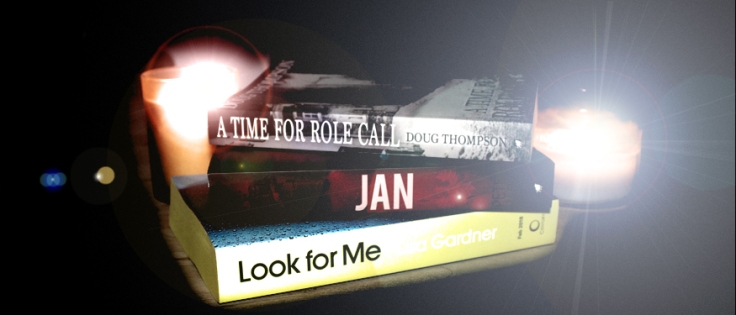

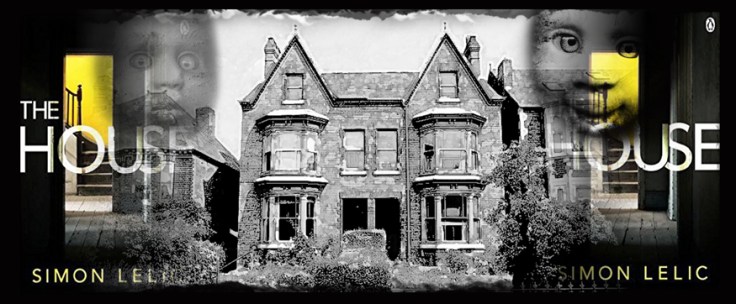
 There is, however, that strange smell. A certain je ne sais quoi which will not go away, despite the couple’s best efforts. When Jack finally plucks up the courage to climb up into the roof space, he finds the physical source of the smell but unpleasant as that is, he also finds something which is much more disturbing. Simon Lelic (right) then has us walking on pins and needles as he unwraps a plot which involves obsession, child abuse, psychological torture and plain old-fashioned violence.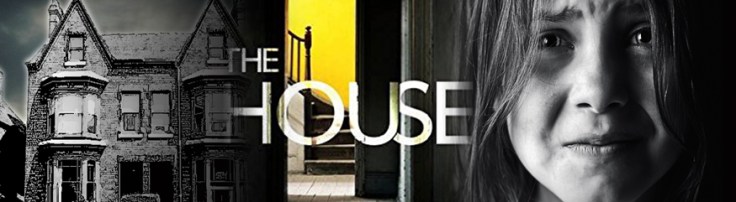


 fullybooked2017