
Search

fullybooked2017

Tag

Paranormal

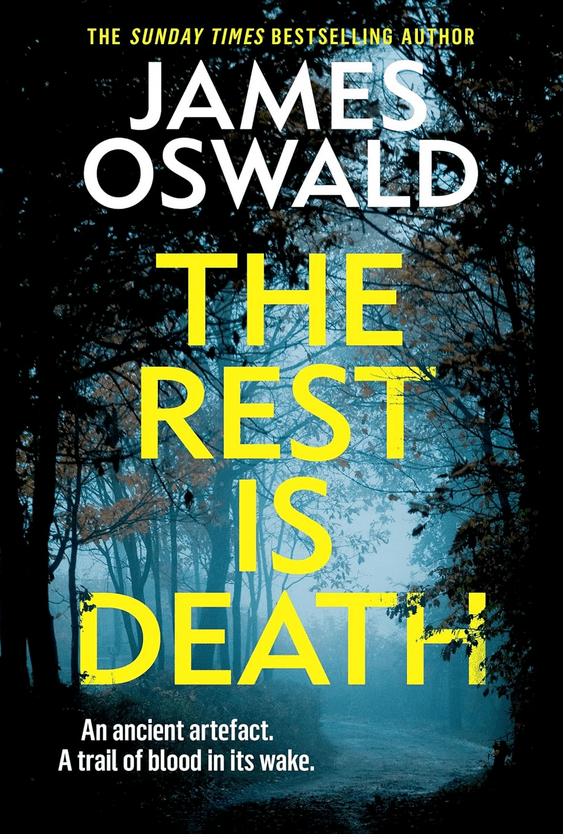
THE REST IS DEATH . . . Between the covers

In a silky smooth segue from 2024’s For Our Sins, Edinburgh copper Tony McLean has returned from temporary retirement and is asked to investigate an apparently trivial break-in at a Biotech facility. Nothing seems to have been taken, no-one was harmed, so why is a Detective Chief Inspector sent on the job when it would normally be handled by a uniformed Sergeant? The answer is simple. Drake Biotech is owned and funded by billion are Nathanial Drake, who just happens to be on WhatsApp terms with Scotland’s First Minister.

When an old school chum approaches DI Janie Harrison with a request to look, for her missing boyfriend, a Serbian carpenter, Janie does a perfunctory search, but assumes the man has gone to ply his trade elsewhere. She has logged the photos from her chum’s phone, and is horrified to find, that when she is called out to woodland where a hastily buried body has been found, the remains are that of Vaclav Mihailovic.When the autopsy is carried out on the Serbian, the pathologist is both baffled and shocked. The unfortunate man is opened up, but there is no stench of decay. It seems that the gut bacteria that continue working away after the heart stops beating are mysteriously absent. There is no bloating and no breakdown of tissue.

Halfway through the book, Oswald escalates and complicates the narrative. First, the driver of the van that took the intruders to Blake Biotech is identified, but then rapidly disappears. McLean suspects he is working for an external intelligence agency. A professional protester called Sanderson, believed to be one of the Biotech vandals is found sitting on a park bench, stone dead. Then the bodies of both Sanderson and Mihailovic are stolen from the city mortuary. Long time fans of the Tony McLean novels have become accustomed to an element of the supernatural appearing in the narrative. Here, it comes in page one, but it is another 60 pages before we realise the relevance to Nathaniel Drake and his interests.

McLean ponders the situation:

“We’ve got a break-in at the lab by animal rights activists who turn out to be a diversion for some MI5 spook doing God knows what. One of the team turns up dead in the park, looking like he’s not eaten in months and shouldn’t have had the strength to wield a spray can, let alone smash up a lab. I’d really like to know what he died from, just in case I’ve got a new disease about to spread through the city.

But someone breaks into the mortuary and steals his body before the pathologist can have a proper look. And whoever does that has the ability to break the servers of a sophisticated security services company to order.

A company that, it turns out, is a fully owned subsidiary of Drake Corporation, whose labs were broken into. And am I going round in circles?”

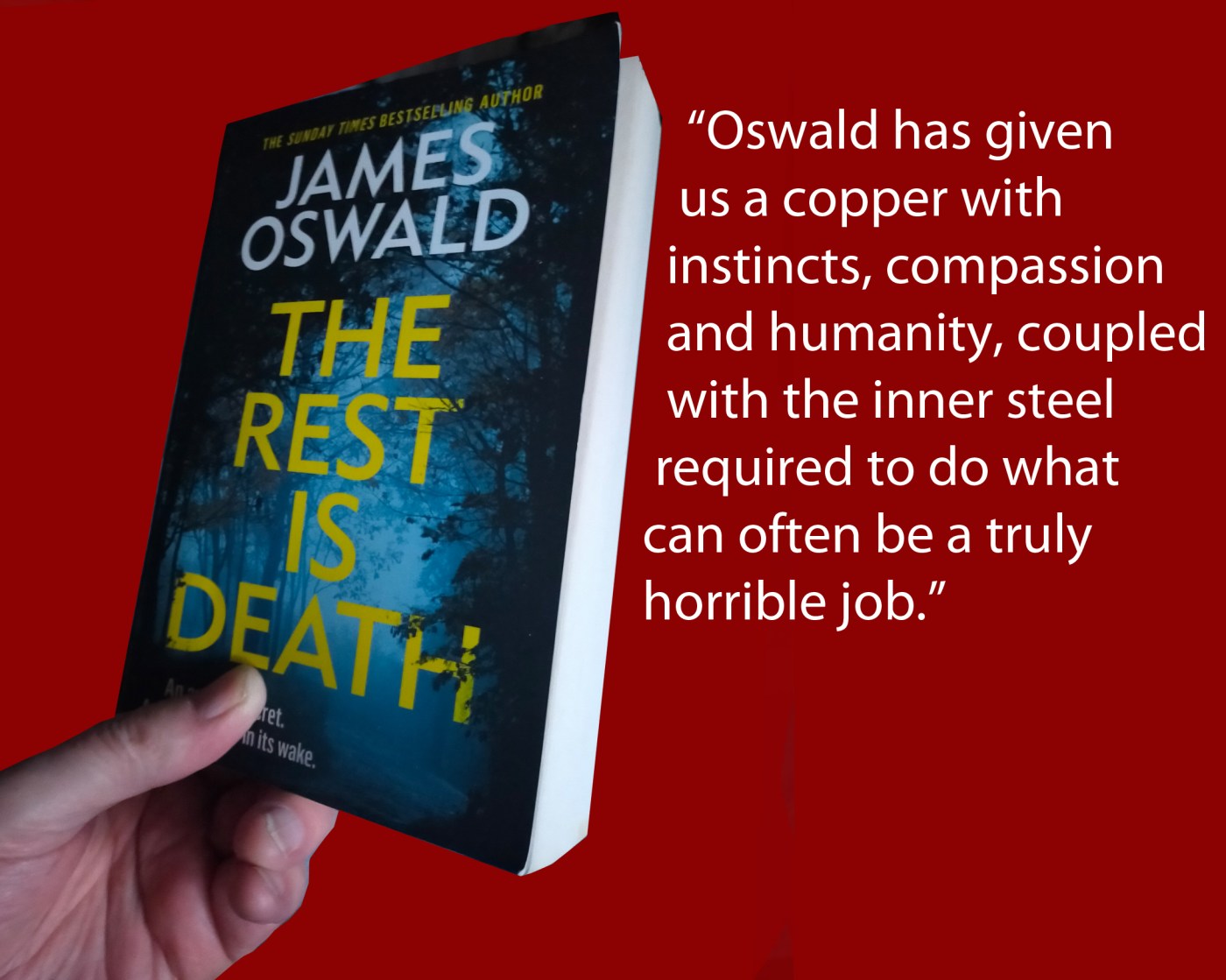
Within the CriFi genre, police procedural investigations are not natural bedfellows with the paranormal. The late Phil Rickman made it work – in spades – and James Oswald does a pretty good job. He certainly pushes the boundaries here, and gives us a finale with an archetypal mad professor locked in a life or death struggle with McLean, Harrison, and the mummified heart of a man who was court magus to Vlad Dracul in the medieval Carpathian Mountains. All this aside, Oswald has given us a copper with instincts, compassion and humanity, coupled with the inner steel required to do what can often be a truly horrible job. The Rest is Death is published by Headline, and is available now.
 

THE ECHO OF CROWS . . . Between the covers

The late Phil Rickman’s genius was to blend intriguing crime mysteries with with events that tapped into our sense of unease about the Unexplained, and I use the upper case with good reason. Here, in the final Merrily Watkins novel,a young multi million pound lottery winner is found shot dead in a field beside his Purdy shotgun, but there is more – so much more- going on.

I don’t know if Phil was religious, but he certainly knew so much about religion. Here, veteran exorcist Huw Owen, driven to distraction by the anaemic, lanyard-wearing leadership of the corporate Church of England, is about to throw in the towel, until he is distracted by a former colleague’s description of a frightening experience in the church at Clodock, allegedly built on the tomb of a murdered Dark Ages king, Clydawg. He visits his former mentee, Rev Merrily Watkins, vicar of Leintwardine, and responsible for exorcism in the diocese of Hereford. Naturally, given the state of the church’s corporate image, she is formally titled ‘Deliverance Consultant’

Longstanding readers of the series will know that the churches and chapels of Rickman’s border region are often deeply sinister places with tangible links to a pagan past, for example the celebrated carvings at St Mary and David church in Kilpeck, which featured prominently in All of a Winter’s Night.

The lottery winner – Eddy Davies – had bought a local farm, and had renovated the collection of neglected buildings. In one lived a young woman called Autumn Wise, whose parents had not long since been killed in an horrific car crash. We learn that Autumn is obsessed with the past and, in particular, the part played in folklore by Corvus Carone.

On a more practical and immediate level, when the police arrived at the farm following the discovery of Eddy’s body, Autumn was found in the farmhouse, cradling a shotgun. Autumn’s cottage was known as The Old Dairy, and it was there, centuries earlier that a man poisoned his wife in order to be with his young lover. The killer and his girlfriend were subsequently hanged outside Hereford gaol.

Across the series, which began in 1998 with The Wine of Angels, Merrily has tended not to see spirits or apparitions, but rather senses them, and believes that other people can see them. Here, when she visits The Old Dairy she actually witnesses something which shakes her to the core. The killer of Eddy Davis is eventually unmasked, but with little intervention in this case from spiritual forces. Rather, it is the intuition and hard work of the police in Hereford that close the case.

Phil Rickman died on 29th October 2024, therefore this is valete to what we might call the Merrily Watkins repertory company. There will be no more Gomer Parry, the aged digger driver, who acted like a one-man Greek Chorus throughout the series; no more Frannie Bliss the canny Scouse copper from Hereford; no more of Merrily’s quixotic daughter Jane, and her complex relationship with boyfriend Eiron; and no more Lol Robinson, the tortured singer songwriter and Merrily’s not-so-secret boyfriend. The Echo of Crows is a magnificent end to a much-loved series, and will be published by Corvus on 6th November. If you click the author image on the left, it will link to other reviews and features on the series.

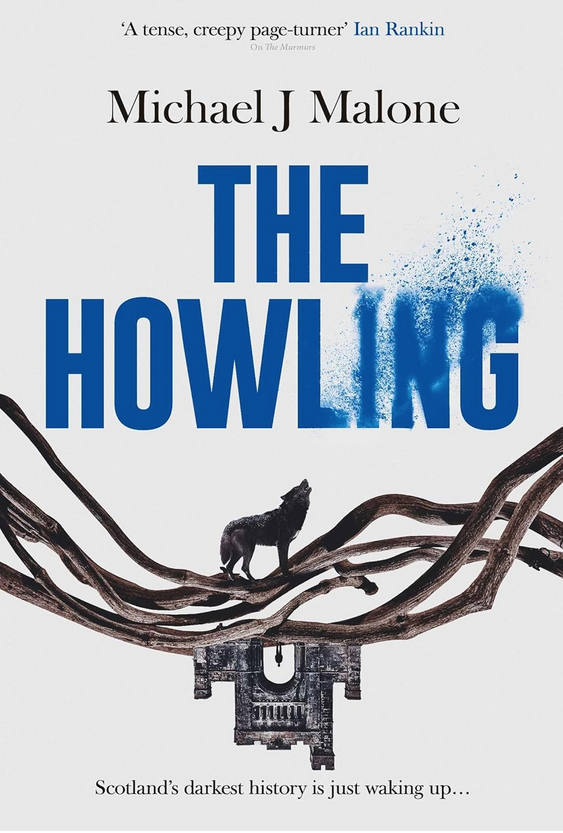
THE HOWLING . . . Between the covers

I reviewed an earlier novel in this series twelve months ago, and you can read what I thought of The Torments by clicking the link. Now, Annie Jackson (with her brother Lewis) returns in another mystery set in the evocative landscape of the Scottish Highlands. Annie’s USP, to be flippant for a moment, is that she has inherited a curse, passed down through female ancestors. She is subject to terrifying revelations that show how certain people she knows are going to meet their death. In the last book her vision was that of a young man from the local lifeboat crew being killed in a car accident. He duly was, and Annie suffered opprobrium for her perceived inability to issue a credible warning.

In that previous novel, she survived a life-and-death struggle with a satanic madwoman called Sylvia Lowry-Law. Lowry-Law is now a permanent resident of a secure mental hospital but, exercising her rights under the bizarrely liberal UK legal system, she requests a meeting with Annie. The prisoner offers to remove Annie’s familial curse, but asks, in return, that Annie searches for – and finds – Lowry-Law’s long lost son.

Annie is sent in the direction of Lowry-Law’s former solicitor in Edinburgh, but the office is now empty except for the former receptionist, an elderly woman called Joan Torrans. She reveals that her former boss took his own life some weeks earlier. Returning to the now deserted office a few days later, after Torrans suddenly dies, Annie and Lewis discover a mysterious room, its door concealed behind a bookcase. In the room is a sinister altar surmounted with a horned skull and spent candles. It seems that the solicitors were connected to a satanic cult known as The Order.

As Annie and Lewis discover that The Order dates back centuries, and is deeply embedded in Scottish history, they learn that its modern operations are financed by a poisonous web of blackmail aimed at some of the richest families in the land. Then, a shocking act of violence turns the narrative on its head.

The author reminds us that in some parts of Britain, the past lays a heavy hand on the shoulder of the present. Annie and Lewis face a struggle, not only against the present day black arts of Sylvia Lowry-Law, but against centuries of superstition, folk memory, and bloody deeds soaked into the very landscape. The finale is worthy (and this is for older readers) of something the cult director Roger Corman might have concocted for one of his Edgar Allan Poe adaptations.

The Howling is a gripping read, and mines into a deep seam of violence embedded in Scottish history and legend. The misty lochs, forbidding hillsides and bleak settlements are perfect settings for memories of witchcraft and lycanthropy. I am normally no fan of split time narratives, but that is just a personal gripe, and the device is skillfully used here to tell the story of a terrible wrong that was done centuries earlier. The Howling is published by Orenda Books and is available now.


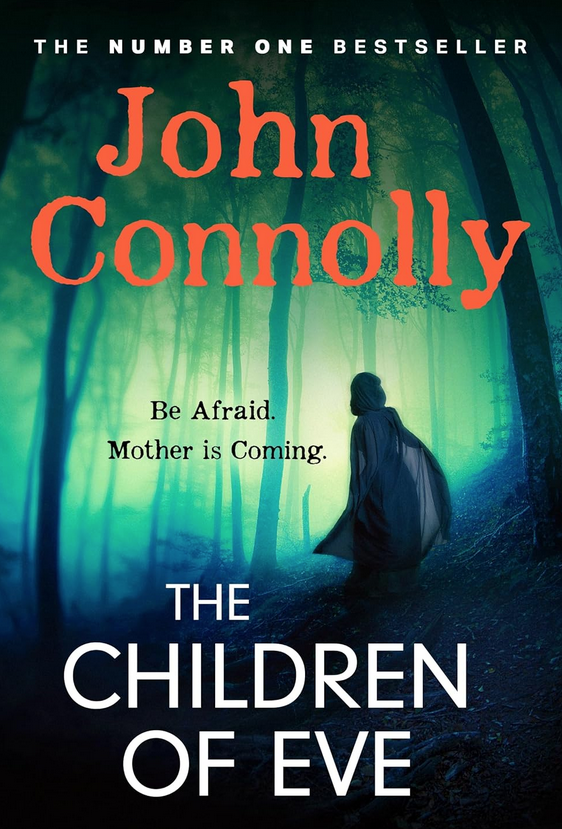
THE CHILDREN OF EVE . . . Between the covers

John Connolly, just like his great predecessor MR James knows what scares us. Although James had a cupboard full of spectres at his disposal, he knew the visceral fear many of us have of dry, clicking, leathery things that may be actually alive – or long dead. Arachnids, and things like them, can be fearsome. Remember the creatures that dwelt in the eponymous The Ash Tree? Across the Charlie Parker canon, Connolly has often introduced the spider – usually something truly nasty like the Brown Recluse – as evidence that evil is abroad. Here, just nine pages in, a relatively honest Mexican antique dealer, Antonio Elizalde, has resorted to finding and selling something (we have let to yearn what) truly astonishing to pay for expensive private medical care. The night before he is due to fly north to begin treatment, he buys everyone in the bar a tequila, and walks home. What he finds when he unlocks his front door will have every registered arachnophobe trembling. I had to read the next few pages, but I didn’t want to.

Incidentally, Connolly doesn’t expect his readers to be deeply immersed in Meso-American history, but he knows we have Google, and so he introduces the Great Goddess of Teotihuacan. Newcomers to Charlie Parker need to believe, or at least believe that Charlie Parker believes. In what? The world of the ever-present dead or, put simply, ghosts. These are not cartoon spooks in white sheets, but people who have, usually, died violently. I suppose the basic presumption is that the violence of their passing somehow denies them the sleep of ages. I don’t know, but there are plenty of pages out with with more time and space to speculate than I have.

Parker’s ghost is his daughter Jennifer. Brutally murdered years ago, she is a largely benign presence, but uneasy and restless. Connolly doesn’t just skirt round the ghost issue. He takes risks, perhaps “In for a penny, in for a pound.” The ghostly Jennifer still thinks like a living person and has the same kinda of trials and tribulations experienced by her corporeal father and his friends.

As in all good crime novels, Connolly presents us with several apparently disparate plot strands, and no doubt enjoys the fact that his readers will be speculating on how they can possibly converge. As an antiques smuggler, Roland Bibas (an associate of Antonio Elizalde) is nabbed by Federal customs agents, Parker is employed by an avante-gard sculptor, Zetta Nadeau, to trace her companion, Wyatt Riggins, who has suddenly disappeared. As Parker (and his not so angelic guardians Louis and Angel) investigate the disappearance of Wyatt Riggins, they realise that they ate intruding on private grief, that being a fatal contretemps between Riggins’s boss Devin Vaughn, and a Mexican cartel jefe called Blas Urrea. Urrea has sent Seeley, one of his fixers, over the border to deal with the problem. Seeley is sinister enough, but he has a female companion who is far more terrifying than any of the cartel enforcers. Seeley’s female companion, known only as Señora, commits several more killings.

‘Murders’ isn’t quite the word, as anyone vaguely familiar with Inca methods of execution may well know. Let’s just say that a kind of open heart surgery is involved. Chillingly, Connolly describes Señora using a word I had to Google. The quote is, “There was a dryness to her tegument.” The online dictionary tells us, “the outer body covering of flatworms, including tapeworms and flukes.” The next few paragraphs are not for the faint of heart. Connolly often strays into what I call David Cronenberg territory. Here, he not so much strays as buys a plot and builds his own house.


Obviously under pressure from powerful people, Zetta unhires Parker, but her action is a red rag to a bull. Our man is nothing if not a terrier and, to mix a metaphor and quote The Bard (Conan Doyle borrowed the phrase) “The game is afoot.” Along the way, Connolly’s dialogue is tack-sharp. A long term acquaintance of Parker says,

“From what I’ve heard, you’ve been at Death’s door so often, he’s probably left a key under the mat for you.”

Quite late in the piece for a Charlie Parker novel, the exact nature of what is being smuggled north from Mexico is revealed, and it doesn’t make for comfortable reading. Old Charlie Parker hands may have become inured to some of the evils he has faced over the years, but this is something else altogether.

“I have good news and bad.”
“I’ll take the bad news first.”
“Those children Riggins stole from Mexico are already dead,” said Louis.
I felt like crawling under the sheets and never coming out again.
“And the good news?”
“They’ve been dead for a long, long time.”

This is vintage Charlie Parker, with snappy dialogue, glimpses of a darker world than the one we inhabit, and a brilliant plot. Published by Hodder & Stoughton it is out now. Anyone new to the series can click this link, and it will take to you to reviews of some of the previous novels.

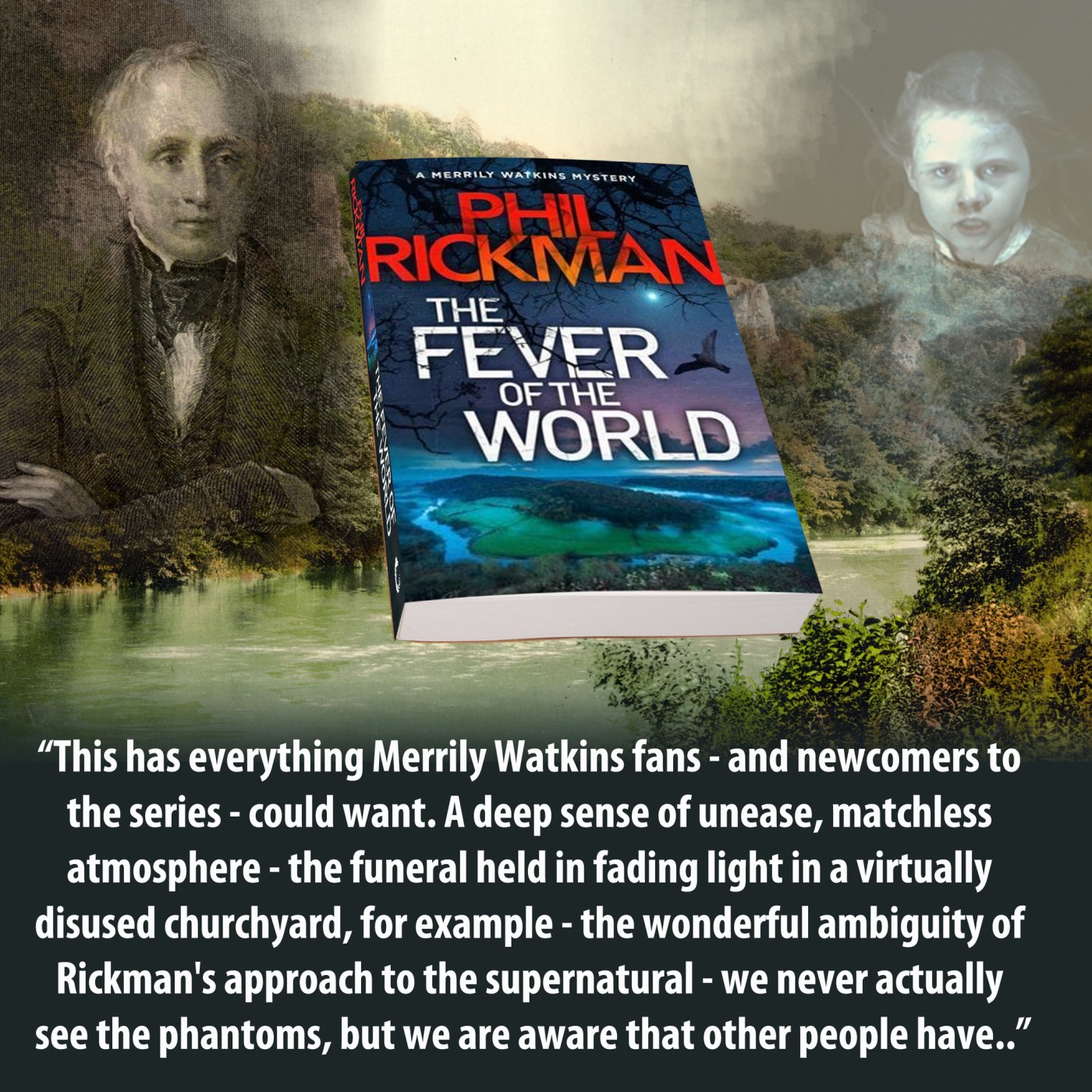
THE FEVER OF THE WORLD . . . Between the covers

TFOTW spine013

It seems like half a lifetime since there was a Merrily Watkins novel – it was All of a Winter’s Night back in 2017 (click the title to read my review) and there has been one hell of a lot of water under the bridge for all of us since then including, sadly, Phil Rickman suffering serious illness. His many fans will join me in hoping that he is on the mend, and at last we have a new book! Old Ledwardine hands won’t need reminding, but for newcomers this graphic may be helpful.

MW CAST CORRECTED2

Now, as another celebrated solver of mysteries once said, “The game’s afoot!” We are in relatively modern times, March 2020, and the Covid Curse has begun to cast its awful spell. The senior Anglican clergy, including the Bishop of Hereford, are relentlessly determined to be woker than woke, and have decided that exorcism – or, to use the other term, deliverance – is the stuff or the middle ages, and clergy are being advised to refer any strange events to the NHS mental health teams. This, of course, puts Merrily Watkins’ ‘night job’ under threat. She and her mentor Huw Owen know that some people experience events which cannot simply be the result of their poor mental health.

The Merrily Watkins novels have a template. This is not to say they are formulaic in a derogatory sense. The template involves a crime – most often a murder or mysterious death. This is investigated by the West Mercia police, usually in the form of Inspector Frannie Bliss. The investigation then reveals what appear to be supernatural or paranormal characteristics, which then secures the involvement of the Rev. Merrily Watkins, vicar of Ledwardine.

Here, a prominent Hereford estate agent and enthusiastic rock climber, Peter Portis, has plummeted to his death from one of the peaks of a Wye Valley rock formation known as The Seven Sisters. A tragic accident? Perhaps. A parallel plot develops. In another parish, the vicar – a former TV actor called Arlo Ripley – has asked Merrily for help. One of his flock has reported seeing the spectre of a young girl and isn’t sure what to do. Enter, stage left, William Wordsworth. Not in person, obviously, but on a visit to the Wye Valley, the poet apparently met a young girl who claimed she could communicate with her dead siblings. The result was his poem We are Seven. That, and Lines Composed a Few Miles above Tintern Abbey are the spine of this novel. Click the titles, and you will see the full texts of the poems. The girl who has entered the life of Maya Madden – a TV producer renting a cottage in the village of Goodrich – seems to be one and the same as Wordsworth’s muse.

Enter, stage right, another Hereford copper, David Vaynor. Nicknamed ‘Darth’ by his boss Frannie Bliss, he is an unusual chap. For starters, he has  a PhD in English literature, and his thesis was based on Wordsworth’s time in Herefordshire. To add to the strangeness, while he was researching his work, he went into what is known as King Arthur’s Cave, a natural cavity in the rock close to where Portis met his end. While he was in there, he has a residual memory of sinking – exhausted – into what was a natural rock chair – and then being visited by a succubus.¹

Yes, yes, – the poor lad was tired, a bit hormonal and having bad dreams. But wait. As Vaynor is doing his job, and interviewing those who knew Portis, he meets his daughter in law, and she reminds him horribly of the woman he ‘met’ on that fateful afternoon in King Arthur’s Cave.

This has everything Merrily Watkins fans – and newcomers to the series – could want. A deep sense of unease, matchless atmosphere – the funeral held in fading light in a virtually disused churchyard, for example – the wonderful ambiguity of Rickman’s approach to the supernatural – we never actually see the phantoms, but we are aware that other people have – the wonderful repertory company of characters who interact so well, and also a deep sense that the past is never far away. There is also a palpable sense of irony that ‘the fever of the world’ is not just a metaphor from a Wordsworth poem, but was actually happening as the coronavirus took hold.

The Fever of the World is published by Corvus/Atlantic books and is out now.

¹A succubus is a demon or supernatural entity in folklore, in female form, that appears in dreams to seduce men, usually through sexual activity.

THE APPARITION PHASE . . . Between the covers

Screen Shot 2021-10-22 at 18.36.32

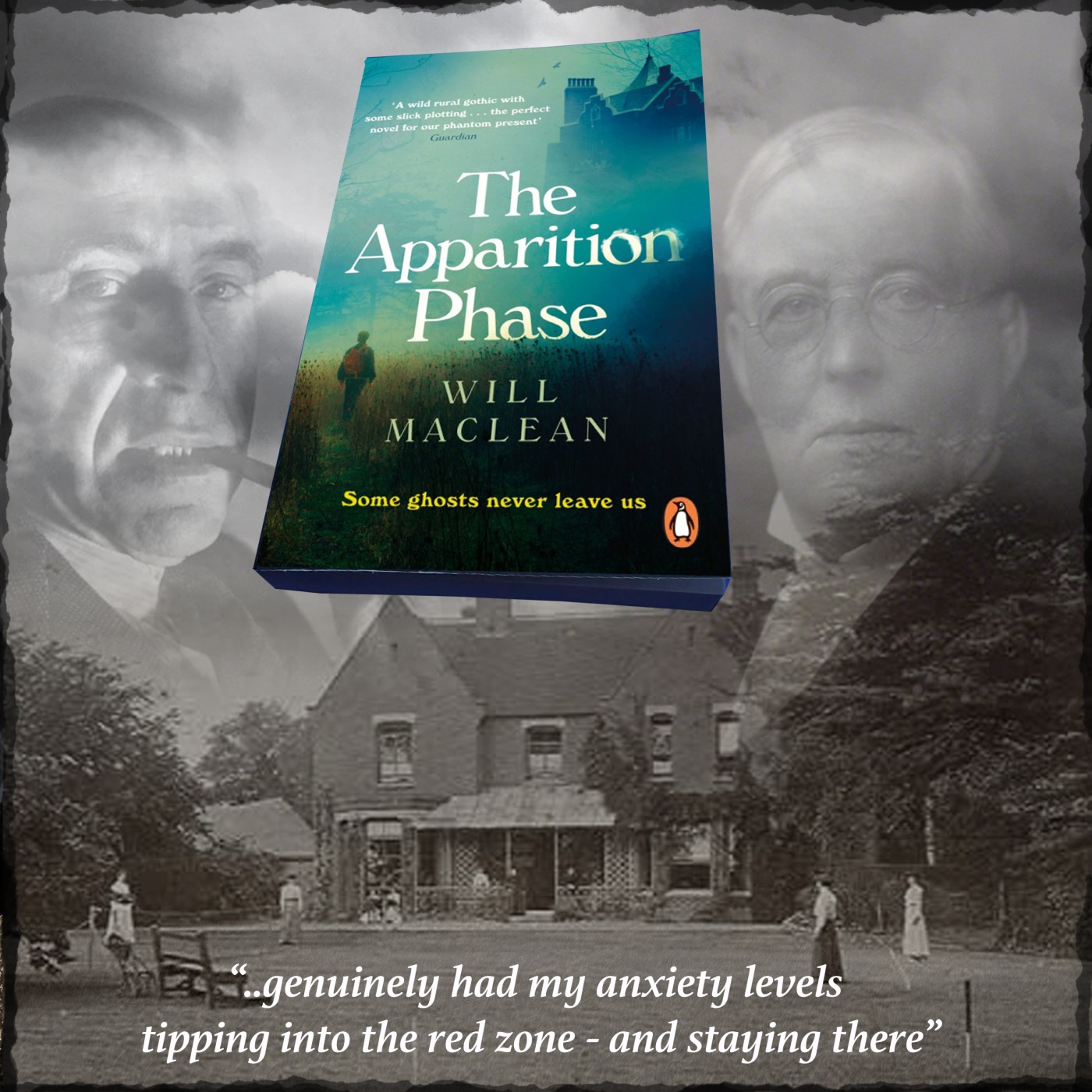
BorleyI don’t review too many non-crime novels on here, but this one really appealed to me. It begins in the 1970s in an unnamed English town. Tim and Abi are teenage twins and, like many such siblings, have an almost preternatural bond that often transcends the spoken word and visual communication. They also have what might be called an unhealthy fascination with ghosts and the paranormal. One of Tim’s hobbies is painting pictures of bygone execution methods, and their favourite book is a well worn copy of The End of Borley Rectory (1946) by Harry Price. Price was a well-known ‘ghost-hunter’ in the 1930s and 1940s and although he is widely regarded as a charlatan these days, he was a celebrated and popular author, particularly on the topic of Borley Rectory in Suffolk, once known as “the most haunted house in England”.

greenwich-ghost

The twins are also keen photographers, but bear in mind that this is the 1970s, and unless you had a home darkroom, photography for most people involved taking the roll of film from the camera and handing it over to Boots to be developed and printed. Tim and Abi are connoisseurs of paranormal photography and, even though they do not have the expertise to create elaborate fakes such as the celebrated ghost that haunted The Queen’s House Greenwich (right), they have imagination to spare. They have sole use of the attic in their house, and their well-meaning but rather ‘hands-off’ parents seldom venture up the ladder into Tim and Abi’s terrain.

TAP coverOn a blank wall, they draw a rather convincing image of a tormented woman, and take a whole roll of photographs of it. Harmless fun? Yes, it might have been, until they decide to take one of the more convincing images to school, and show it to a classmate, backed up with an elaborate story that Abi has seen the ghost of a former occupant of their house, a young woman who, shamed by her cheating fiancé, hanged herself in that very attic. The victim of their prank is Janice Tupp, a seemingly unremarkable girl who the twins despise because of her very ordinariness. Rather like those who tormented Carrie White, they have picked the wrong victim. Janice collapses at school after being shown the photograph, and when, some days later, the twins invite her round to their house in order to explain their deception (and to avoid getting into serious trouble) Janice shocks them by making a puzzling prediction which Tim and Abi can make no sense of. A few weeks later, however, something shocking happens which will change everything – for ever.

Further references by me to specifics of the plot will be, perforce, cautious, as I have no wish to diminish readers’ enjoyment – if that is the right word. I add that caveat, because Will Maclean takes us into  very dark territory. Suffice it to say that Tim becomes involved with two researchers and a group of people more or less his own age who have rented an old Suffolk manor house with the purpose of conducting experiments into the paranormal. At this point, cynical readers are entitled to use the cliché “And what could possibly go wrong…?” but Maclean skillfully avoids the more obvious pitfalls, and steers an intriguing course between Hamlet’s famous statement to Horatio, and our knowledge of the nature of reality and deception.

I wouldn’t say that I am a blasé reader, but any reviewer of mostly crime and thriller novels encounters fictional grief and trauma on a daily basis. The Apparition Phase genuinely had my anxiety levels tipping into the red zone – and staying there. Will Maclean references the unrivaled master of ghost stories – MR James – but in a sense, he goes one better. James wrote short stories, and therefore had only to keep the menace going for twenty pages or so, but to keep us engaged and anxious for four hundred is something else altogether.

This deeply unsettling novel, published by William Heinemann, came out in paperback earlier this month and will be available in Kindle and hardback on 29th October

THE NAMELESS ONES . . . Between the covers

nameless045

Fans of the series can skip this paragraph. Charlie Parker is private eye based in Portland, Maine. His life has been shaped by the savage murder of his wife and daughter some years earlier, and he is – literally – haunted by the spirit of the dead daughter Jennifer. His cases frequently involve contact with people who are not actually spirits but although they have human shape, they are not entirely of this world. Long standing members of the dramatis personnae of the novels include Louis – an African American assassin, very loyal to Parker, and his personal and professional partner Angel, a skillful thief and locksmith who is recovering slowly from cancer. For more on Charlie Parker, click this link.

nameless046Parker takes something of a back seat in this novel (which is the 20th in a magnificent series) as Louis & Angel take centre stage. The first backdrop to this stage is Amsterdam, where a criminal ‘fixer’ called De Jaager goes to an address he uses as a safe house to meet three of his colleagues. He finds one of them, a man called Paulus, shot dead, while the two women, Anouk and Liesl, have been tied up. In control of the house are two Serbian gangsters, Radovan and Spiridon Vuksan. They have come to avenge the death – in which De Jaager was complicit – of one of their acquaintances, who was nicknamed Timmerman (Timber Man) for his love of crucifying his victims on wooden beams. What follows is not for the faint of heart, but sets up a terrific revenge plot.
At this point it is essential to replay what author John Connolly tells us about modern Serbia. Those with a strong stomach can find plenty on the internet and in books about the atrocities committed by Serbians against Bosnian Muslims – and others – in the brutal wars which erupted after the death of President Tito, the communist strongman who had kept the historical enemies – Croatia, Bosnia, Kosovo, Montenegro, Serbia and Macedonia – from each others’ throats between 1945 and 1980. Connolly paints a picture of a state where, despite former leaders like Milošević, Karadžić and Mladić being brought to justice by war crimes courts, Serbia is still largely run by career criminals who, while they may wear suits rather than Kevlar vests, are at the centre of a huge web of international crime which ranges from human trafficking to the drug trade.

I am guessing that John Connolly might not be on the top table of any future festival of crime fiction in Belgrade, but no matter – we have a seriously good story on our hands. Louis, for a variety of reasons, owes De Jaager, and when news reaches him of the Dutchman’s death he prepares to fly to Europe with the physically fragile Angel, but he is also aware that key USA figures inside The White House and the CIA would not be too dismayed were the Vuksan brothers to come to a sticky end.

With Parker otherwise engaged back in Maine, the supernatural element is largely absent here, as Louis and Angel don’t operate on the same psychic wavelength as their buddy. Largely absent, but not totally. Spiridon Vuksan has a murderous little friend called Zorya. She looks, at first glance, like a little girl, but on closer inspection she is a woman, and not a young one. She reminded me of the malevolent red-hooded little figure in Don’t Look Now – and we all know how that ended. Zorya is, as far as her human form goes, one of the Vlachs people, an ethnic group from the southern Balkans. She is also a strigoi.  in Romanian mythology they are troubled spirits that are said to have risen from the grave. They are attributed with the abilities to transform into an animal, become invisible, and to gain vitality from the blood of their victims. Her fate is not in the hands of Louis and Angel, however, but governed by the spirit of Jennifer Parker who, once a victim, is now distinctly menacing.

John Connolly is an inspired storyteller, and if this novel doesn’t play merry hell with your heartbeat, then you may need medical attention. The Nameless Ones is published by Hodder & Stoughton and is out now.

POSSESSED . . .Between the covers

POSSESSED HEADER

Possessed coverPeter Laws introduced us to Matt Hunter in Purged (2017) and we learned that he is a former priest whose total loss of faith coincided with tragic personal events. Now, he lectures in the sociology of religion and belief systems, and has a reputation (one which does not sit lightly with him) for being the go-to guy when the police have a case which is ‘not dream’t of in our philosophy’.

When a good old fashioned milkman, driving his ecological sound electric milk float, makes an horrific discovery in a suburban greenhouse, the result is that the police have an apparently raving madman on their hands. He is emaciated, disheveled and both frightened and frightening. This creature from hell does, however, have a day job. Tom Riley is the chef at a local pub and has, apparently, a Shepherds’ Pie to die for. When the baffled police summon Matt Hunter to talk to this fellow he finds him manacled to a chair and spitting out Exorcist-style obscenities.

H redunter discovers that Riley is a devotee of a local church, one which, depending on your view might be termed either ‘charismatic’ or ‘a bunch of eyeball-rollers’. Things take a dramatic turn for the worse when Riley’s wife is discovered, horribly mutilated, in one of the customer chairs of her home hairdressing salon.

As the case begins to attract lurid national interest, Hunter is roped into a no-holds-barred reality TV show, to be one of the talking heads in an investigation into demonic possession. While stoutly sticking to his sceptical opinions Hunter is swept along in the flood-tide of the media frenzy, and comes face to face with an infamous American evangelist who makes a living from casting out demons. The TV company, cameras eagerly devouring every second of the interplay between the apparently tormented victims of demonic possession and their potential saviour, book a rural retreat for a blockbuster special which will see Good and Evil come face to face, interrupted only with tasteful ads from the show’s sponsors.

W redhat happens next is violent, bloody, improbable – but totally gripping. Of course, Matt Hunter survives to return to his delightful wife and children, but not before he is forced to question his firmly-held disbelief in ‘ghoulies and ghosties, and long-leggedy beasties, and things that go bump in the night.’

There are two interlinked paradoxes in Possessed. The first is that Matt Hunter is a disbeliever in all things paranormal and in any possibility that there are any beings or forces outside man’s own imagination and mental state. He is, however,the creation of an ordained church minister whose own sense of the spiritual life is, I assume, central to his faith. Secondly – and do read the afterword to Possessed which is separate from the usual authorial Oscars speech thanking all and sundry – behind all the comic book gore and satirical swipes at the grossness of TV reality shows, Laws makes a serious point about troubled people searching desperately for supernatural answers to problems which come from within themselves.

LawsLaws (right) doesn’t exactly play it for laughs, but amid the knockabout spookery and Hunter’s own predilection for making wisecracks, there is serious stuff going on. It is worth comparing Matt Hunter with another fictional investigator of strange things – Phil Rickman’s Merrily Watkins. Like the real life Peter Laws, Merrily Watkins is a priest. Like Matt Hunter, merrily doesn’t necessarily believe in the supernatural, but she is totally convinced that some folk do.

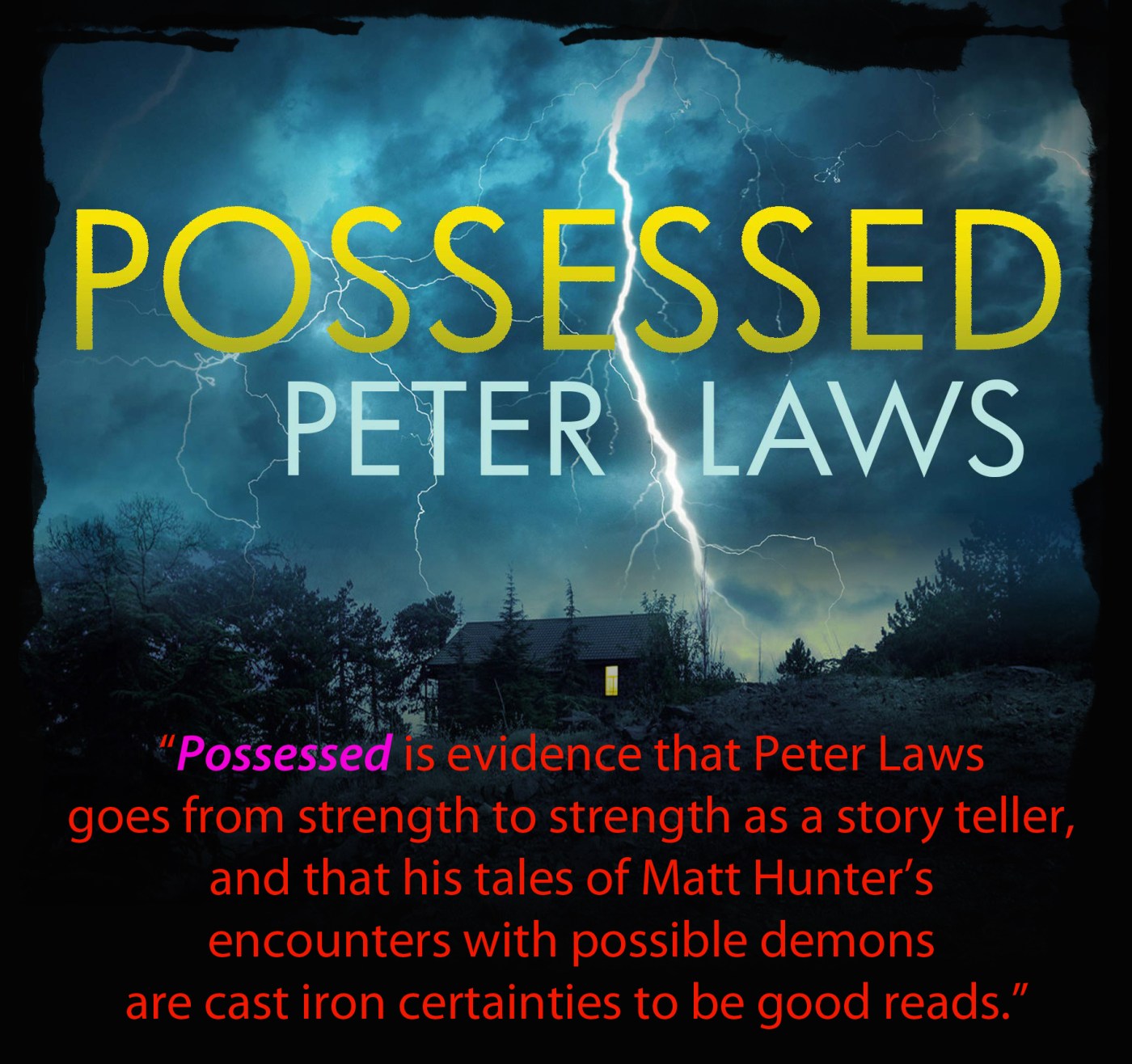
Possessed is evidence that Peter Laws goes from strength to strength as a story teller, and that his tales of Matt Hunter’s encounters with possible demons are cast iron certainties to be good reads. Possessed is published by Allison & Busby and is out now.

Read more about the previous Matt Hunter novels by clicking this link.

Allison

Blog at WordPress.com.

Up ↑