
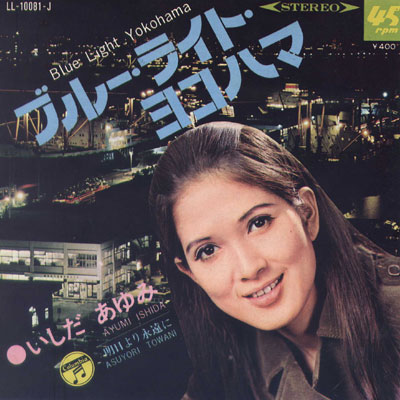
The lights of the city are so pretty
Yokohama, Blue Light Yokohama
I’m happy with you
Please let me hear
Yokohama, Blue Light Yokohama
Those words of love from you
I walk and walk, swaying
Like a small boat in your arms
I hear your footsteps coming
Yokohama, Blue Light Yokohama
Give me one more tender kiss
This 1960s Japanese pop song, banal though it is, provides a chilling soundtrack to this fascinating novel by Nicolás Obregón. The lyrics pepper the narrative, and the very triteness of the song with its synthetic and saccharin sentiments, is in stark contrast to the grim and bloodstained efforts of a discredited and damaged Tokyo detective to bring a brutal killer to justice.
 Inspector Kosuke Iwata’s personal life is as scarred and trauma-ridden as the human tragedies he faces daily as a member of the Homicide division of the Tokyo Municipal Police Department. He was abandoned by his mother in a bus station when he was a child, but has become partly Americanised since she reappeared, now married to a prosperous US citizen, to reclaim him. In the intervening years, Iwata grew up in a Catholic orphanage, and his sleep is frequently disturbed by fretful dreams of those days, with the voices of both his disturbed best friend, as well as the abusive head of the institution, forever whispering in his ear.
Even in adulthood, Iwata has attracted tragedy like a flame attracts winged creatures of the night. His marriage to an American girl ended in horror, when she threw herself off a cliff, clutching their little child. The child perished on the rocks, but the woman survived, after a fashion. She now sits mute in a care home, her body reconstructed, but her mind and soul long since scattered, just as her daughter’s bones were on the jagged rocks at the foot of the cliff.
Iwata has been assigned a murder case which has, albeit briefly, shocked Tokyo. The Kaneshiro family, parents and children have been butchered in their home. The fact that they were of Korean origin, and the much more newsworthy death of Mina Hong, a glamorous celebrity, has consigned the story to the inside pages of the newspapers. Iwata and his assistant, the beautiful but aloof Sakai, discover that the reason they have been given the Kaneshiro case is that the previous investigating officer, Hideo Akashi, inexplicably threw himself to death from a towering Tokyo bridge just weeks earlier.
Iwata is disgusted when the police department announces to the press that it has hunted down the Kaneshiro’s killer – a confused and obsessive young man known to have stalked Mrs Kaneshiro. The fires of Iwata’s suspicions are further stoked when he hears that the so-called killer has died in custody before he could be brought to trial. Now, Iwata is told that he is off the case. Problem solved. Move on, nothing to see here. As fictional detectives usually do, Iwata goes it alone and, after traveling to Hong Kong, he senses that the real killer – who adorns his victims with a mysterious image of a black sun – is within his reach.
He is wrong. Obregón leads Iwata – and us – on an elaborately constructed and beautifully executed wild goose chase. I can’t remember a book where all the apparently random and disconnected threads of the story are finally woven together so cleverly, and with such aplomb. And all the while, the studio kitsch of the song jingles, jangles and jars on our senses as one death leads to another, and deception heaps on deception.
I hear your footsteps coming
Yokohama, Blue Light Yokohama
Give me one more tender kiss
I walk and walk, swaying
Like a small boat in your arms
The scent of your favorite cigarettes
Yokohama, Blue Light Yokohama
This will always be our world
 This a superb novel and goes way beyond the restraints and conventions of crime fiction. In his afterword, Obregón says of Iwata:
He wouldn’t be wisecracking and he wouldn’t be tough. He would be alone and full of sorrow, fighting the battles of the dead.
Of the novel itself, he adds:
I realised then that Blue Light Yokohama would be a crime novel only in façade. At its heart, I wanted to write about people in pain. About people who had lost something. So it was that Inspector Kosuke Iwata was born.
Blue Light Yokohama is out now, and is published by Michael Joseph. Click the image below to hear the original song.


 The main character of ES Thomson’s Dark Asylum – the second in a series of Victorian crime novels – is Jem Flockhart. Jem is not who he seems to be. In fact, he isn’t ‘he’ at all. Jem is actually a young lady who is forced to transform herself into a man in order to be accepted in the medical profession. She first made an appearance in Beloved Poison (2016) and now she returns to investigate the murder of the principal physician at an insane asylum. Among all the usual tropes of Victorian London, including grim slum ‘rookeries’, brothels, violent convicts and brothels that cater for every depravity, Jem and her partner in solving crime, Will Quartermain search for the person who killed Dr Rutherford – after cutting off his ears and sewing his eyes and lips tight shut.


 Then, as Noah is trying to tempt Charlie into marrying him, and agree to their moving into a luxurious new home, comes the ‘phone call which triggers the enthralling next chapter in Charlie’s life. She takes a call from a distant aunt, and the news is that Charlie’s estranged mother Donna, and her half sister Jasmine, have been found shot dead in Jasmine’s Tucson apartment. There is another complication. Jasmine’s daughter Micky was also in the apartment but in another room. She is shaken, but very much alive, and has been taken into protective care.
 The greatest strength of the book is the magical spell Hester Young (right) casts as she links the reader to Charlie Cates. As a cynical, autumnal English male, with a downbeat view of life and the tricks it can play, I am not the obvious candidate to be entranced by a slightly manic, conflicted and complex American female journalist, but by the time the novel reached its gripping conclusion in the Arizona desert, I was ready to crawl over broken glass to make sure that Charlie survived with body and soul intact. Hester Young slaps a winning hand down on the green baize table – dry humour, suspense, atmosphere, superb characterisation – and deservedly rakes in all the chips.
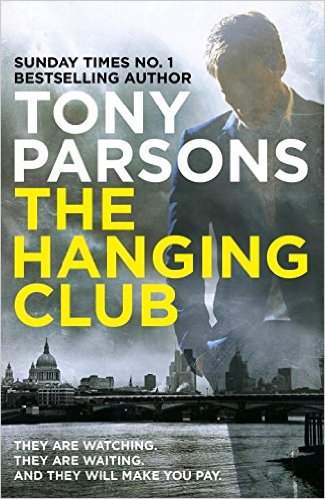
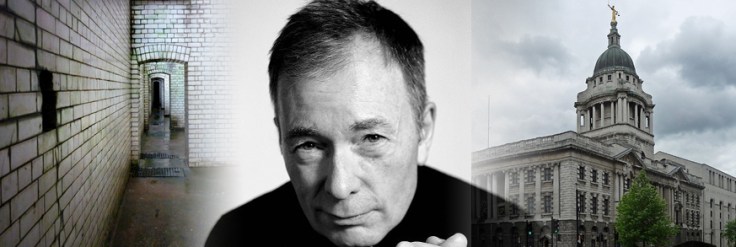
 The random murder of an innocent man? Not exactly. Mahmud Irani was part of a gang of men who groomed, raped and abused a number of white teenage girls. He served a jail term which many believe was too short, considering his crimes.

 Jill Dando was an elegant woman, a typical English Rose with more than a little of the Princess Diana about her. As on-screen partner to Nick Ross in BBC’s Crimewatch, she had become one of the best known faces in living rooms across the country. Dando had spent the night with her fiancee in Chiswick, West London, but as she turned the key to enter her own house in nearby Gowan Avenue, Fulham (right), she was attacked. The investigative journalist Bob Woffinden describes what he believes happened next.
 In a move which seems more bizarre as every day passes, police arrested a man named Barry George (left) for the killing. George had extensive mental problems, was a fantasist, and had form as being a total indaquate who was obsessed with celebrities. He was convicted of Jill Dando’s muder on 2nd July 2001 but, beyond the jury at his trial, and a few desperate police officers, no-one really believed that he was the killer. After a retrial, he was acquitted of the killing in August 2008. To say he was a loser is misleading, because since his acquittal he has won substantial damages from various newspapers and media outlets. How much of this money has been retained by the wronged man is uncertain: what is more likely is that opportunist lawyers and publicists have trousered much of the loot as a reward for their services.


 Not the least of Eva Dolan’s achievements in this remarkable novel is to pinpoint with painful accuracy and honesty what happens to children and wives when a father – originally Colin Sawyer – decides to abandon the male role and become a woman. Even after the nightmare scene where Sawyer’s daughters come back to the house unexpectedly, and find their father en femme at the sink, doing the dishes, Jessica and Lily have come to think of their dad as ‘mum’. The pain that this must cause a biological mother in this situation can only be imagined, and it is interesting that Nina Sawyer is drawn as a fairly unpleasant piece of work.
 Aside from the nuanced description of gender politics and psychological challenges faced by the characters in this novel, we have to ask the burning question. Does Watch Her Disappear work as a crime story? My answer is a resounding and emphatc ‘Yes”. The whodunnit aspect of the story is teasingly effective, with Dolan (right) scattering little hints, false leads and blind alleys in her wake as she races along ahead of us. Crime fiction is full almost to the brim with Detective Inspectors and their trusty Sergeants, but Dolan breathes on those particular embers and makes them fire up afresh in the shape of Detective Inspector Dushan Zigic and Detective Sergeant Mel Ferreira of the Hate Crimes Unit. The neat twist is, of course, that both Zigic and Ferreira are themselves children of immigrants, and the chemistry between the two is potent and complex.


 Being as this book is, in one sense, a police procedural, an introduction to the investigating officers is essential. Detective Sergeant Karen Willis is an elegant and well educated woman, whose personal life is complex. She is courted by two suitors; the first, Dr Peter Collins, is a consultant psychologist who, although undeniably clever, may not be entirely of sound mind himself, as he is prone to nervous attacks. When with Karen, he also tends to drop into a Lord Peter Wimsey persona and, yes, he does insist on calling Karen “Harriet”. The other claimant to the hand of Willis is Detective Inspector Bob Metcalfe, a much more grounded fellow who certainly does not mimic characters from Golden Age fiction. In fact, he could be said to be very worthy, but rather dull. Overseeing the investigations is Detective Superintendent Simon Collison, an urbane and civilised man who is regarded with a certain suspicion by more belt-and-braces officers such as Chief Inspector Tom Allen. One stock police character who is very much noticeable by his absence is a badly dressed, misanthropic and foul mouthed Detective Inspector type, much loved of many crime authors. If any such person did operate out of Hampstead nick, he must long ago have been transferred elsewhere.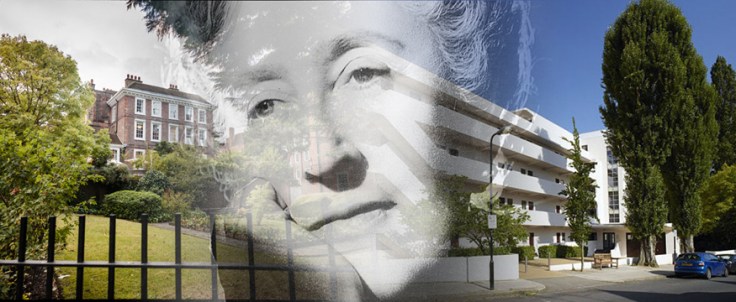

 The town of Kiewarra is a dusty five hour drive from Melbourne. Five hours. Six, maybe, if you weren’t that anxious to get there. Five hours, under the same relentless sun, but it might as well be fifty, for all the similarity there is. Melbourne, with its prosperity, its glass and steel central business district, its internationally renowned restaurants and its louche air as a cosmopolitan city. Kiewarra. A pub, a couple of bottle shops and a milk bar; a run-down school, starved of funds; a farming economy choked and parched by two years without rain; families turned bitter and taciturn by the shared misery of failed crops and burgeoning overdrafts. Author Jane Harper (left) takes us right into the deep dark blue centre of this community.
 Seeing the coffin of a contemporary being carried through the church is bad enough for Falk, but when it is followed by two smaller ones, one being very much smaller, that is a different thing altogether. For the other two coffins are occupied by Hadler’s wife Karen, and his young son Billy. The story has played out across the mainstream media as a suicide-killing. Luke Hadler, driven mad by debt, failure, jealousy, despair – who knows? – has shot dead his wife and son, and then turned the gun on himself, albeit leaving his thirteen month old daughter Charlotte in her cot, screaming, terrified, but very much alive.

 So, Waits plays a dangerous double game which involves being undercover yet in full view. This paradox is essential. Obviously drug lord Zain Carver will know that Waits is a suspended copper; the deception will only work if Waits can convince the gangster that he is prepared to damage his former employers with leaked information. It requires no acting ability whatsoever for Waits to appear dissolute, addicted and troubled – that is his normal persona. However, a big problem looms. A rich and influential Member of Parliament has “lost” his teenage daughter. Isabelle Rossitter is one of the satellites fizzing around the planet Carver. Daddy is desperate to get her back, and Waits is given the task.


